ANTIDOTE FOR NOACs
VISHAL VANANI
Mumbai 2015
NOACS ARE GOOD
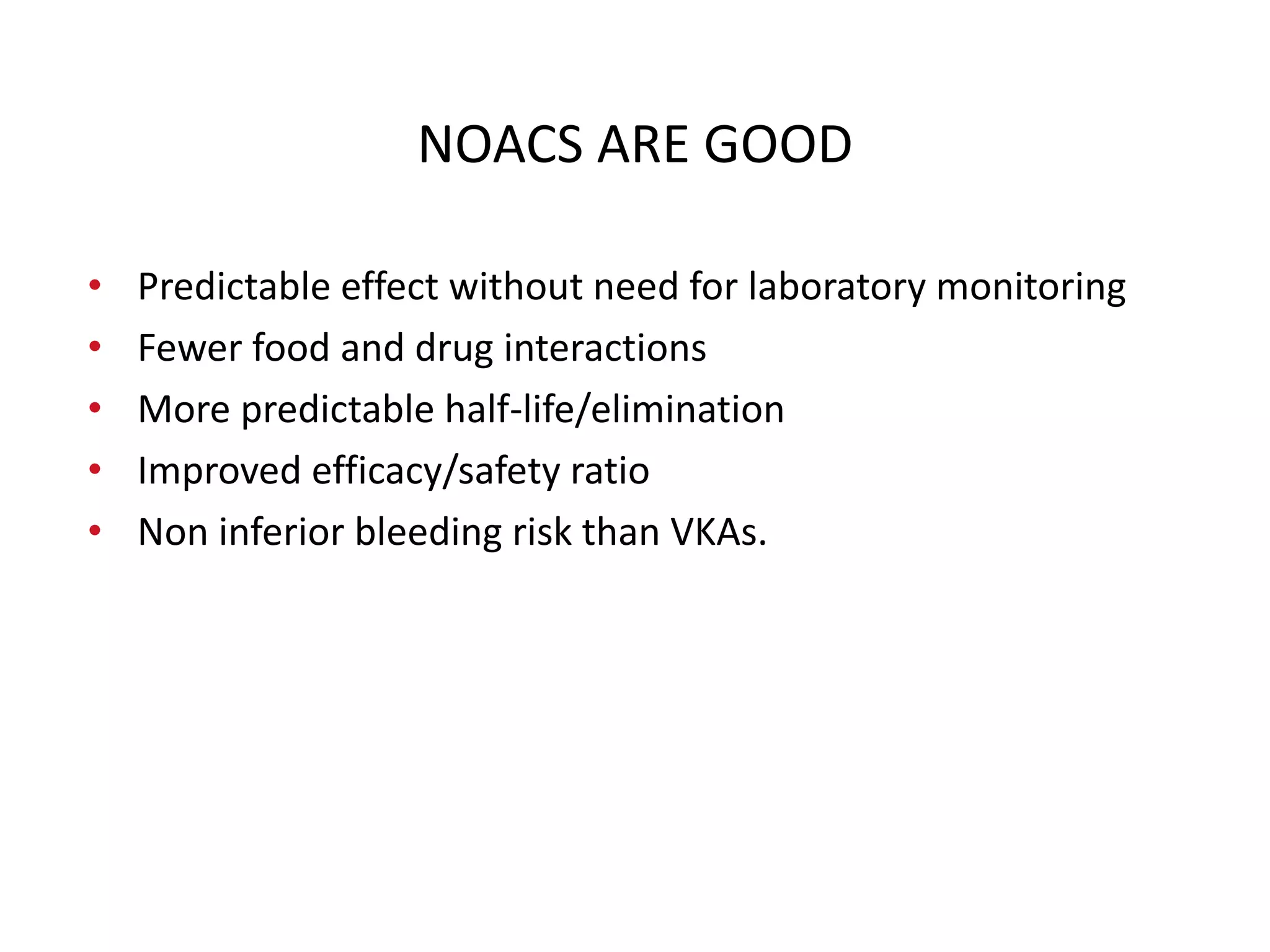
• Predictable effect without need for laboratory monitoring
• Fewer food and drug interactions
• More predictable half-life/elimination
• Improved efficacy/safety ratio
• Non inferior bleeding risk than VKAs.
BLEEDING RISK
• Risks of bleeding from NOACs are generally lower or similar to other
agents, with some limited exceptions.
• The overall risk of bleeding with NOACs versus vitamin K antagonists was
reviewed in a meta-analysis of 12 randomized trials that included
102,607 patients with atrial fibrillation or venous thromboembolism.
• Compared with vitamin K antagonists, NOACs were associated with
lower risks of
• major bleeding (relative risk [RR] 0.72; 95% CI 0.62-0.85),
• fatal bleeding (RR 0.53; 95% CI 0.43-0.64), and
• intracranial bleeding (0.43; 95% CI 0.370.50);
• Major gastrointestinal bleeding was not increased (RR 0.94; 95% CI 0.75-
1.99)
• Routine monitoring of coagulation not required, but
quantitative assessment of drug exposure may be needed in
emergency situations:
• Serious bleeding events
• Urgent surgery
• renal or hepatic insufficiency
• Thrombotic events
• potential DDI
• suspected overdosing
MEASURING THE ANTICOAGULANT EFFECT OF
NOACS
MEASURING THE ANTICOAGULANT EFFECT OF
NOACS
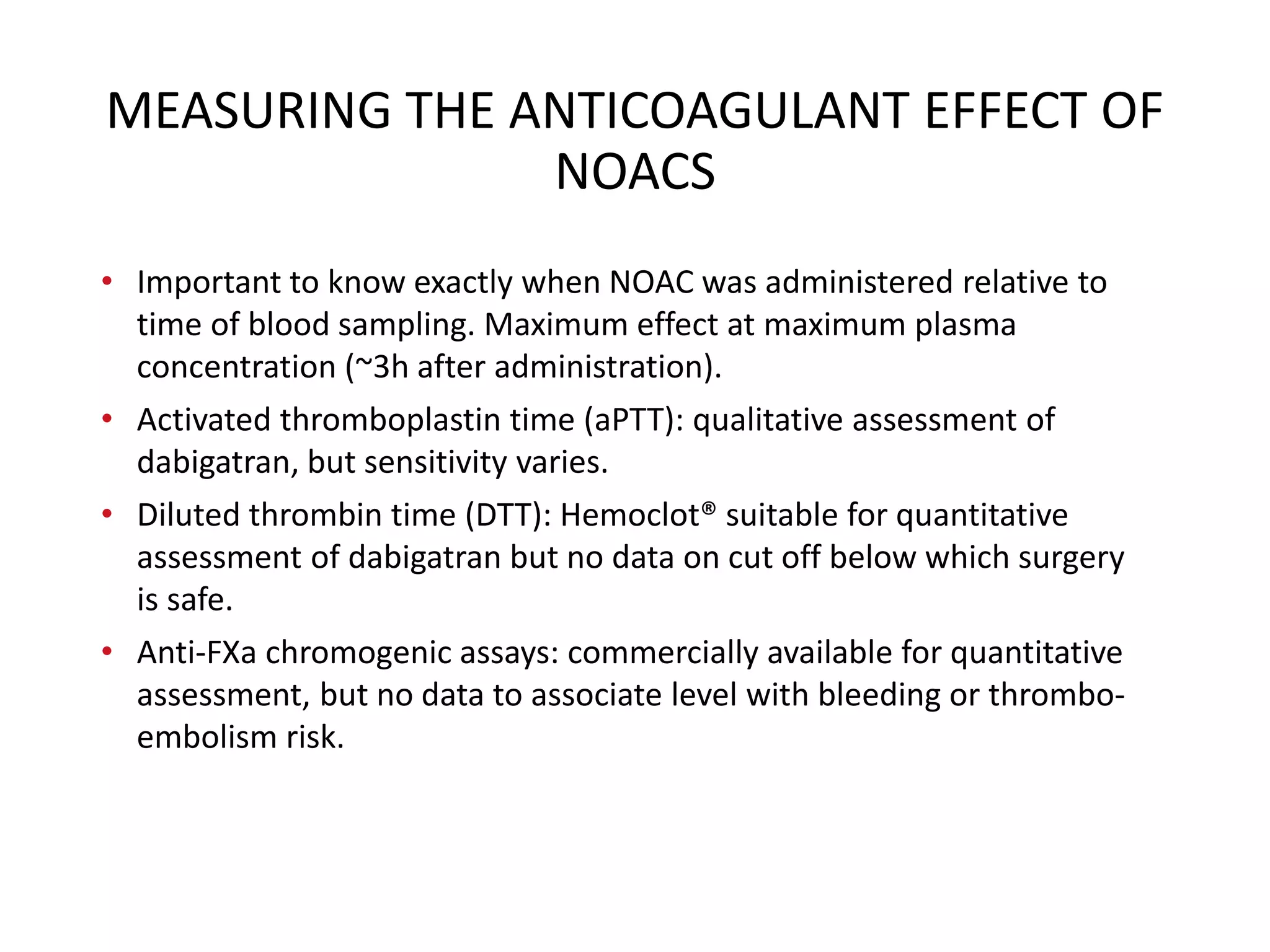
• Important to know exactly when NOAC was administered relative to
time of blood sampling. Maximum effect at maximum plasma
concentration (~3h after administration).
• Activated thromboplastin time (aPTT): qualitative assessment of
dabigatran, but sensitivity varies.
• Diluted thrombin time (DTT): Hemoclot® suitable for quantitative
assessment of dabigatran but no data on cut off below which surgery
is safe.
• Anti-FXa chromogenic assays: commercially available for quantitative
assessment, but no data to associate level with bleeding or thrombo-
embolism risk.
MEASURING THE ANTICOAGULANT EFFECT OF
NOACS
Dabigatran Apixaban Edoxaban Rivaroxaban
Plasma peak 2h after ingestion 1-4h post ingestion 1-2h after ingestion 2-4h after ingestion
Plasma trough 12-24h after ingestion 12-24h after
ingestion
12-24h after ingestion 16-24h after ingestion
PT cannot be used cannot be used prolonged but no known
relation with bleeding risk
prolonged: may indicate
excess bleeding risk but
local calibration required
INR cannot be used cannot be used cannot be used cannot be used
aPTT at trough >2x ULN
suggests excess bleeding
risk
cannot be used prolonged but no known
relation with bleeding risk
cannot be used
dTT At trough >200ng/ml ≥
65s: excess bleeding risk
cannot be used cannot be used cannot be used
Anti-FXa assays n/a no data yet quantitative; no data on
threshold values for
bleeding or thrombosis
quantitative; no data on
threshold values for
bleeding or thrombosis
Ecarin clotting
time
at trough >2x ULN:
excess bleeding risk
not affected; cannot
be used
not affected; cannot be
used
not affected; cannot be
used
WHAT TO DO IF THERE IS A (SUSPECTED)
OVERDOSE WITHOUT BLEEDING
OR
A CLOTTING TEST IS INDICATING A RISK OF
BLEEDING
• Acute recent ingestion of overdose: activated charcoal to reduce
absorption (standard dosing scheme for adults of 30 to 50 g).
• Consider coagulation tests to assess possible bleeding risk.
• In absence of bleeding, wait-and see approach.
NON LIFE THREATENING BLEEDING
DABIGATRAN FXa INHIBITORS
Inquire last intake + dosing regimen
Estimate normalization of haemostasis
Normal renal function: ±24h
• CrCl 50-80 ml/min: 24-36h
• CrCl 30-50 ml/min: 36-48h
• CrCl <30 ml/min: ≥48h
Maintain diuresis
Normalisation of haemostasis: ±24h
Local haemostatic measures
Fluid replacement (colloids if needed)
• RBC substitution if necessary
• Platelet substitution (in case of thrombocytopenia ≤ 60 x 109 /L or thrombopathy)
• Fresh frozen plasma as plasma expander (not as reversal agent)
• Tranexamic acid can be considered as adjuvans
• Desmopressin can be considered in special cases (coagulopathy or thrombopathy)
• Consider dialysis (primary evidence: - 65%
after 4h)
• Charcoal haemoperfusion not
recommended (no data)
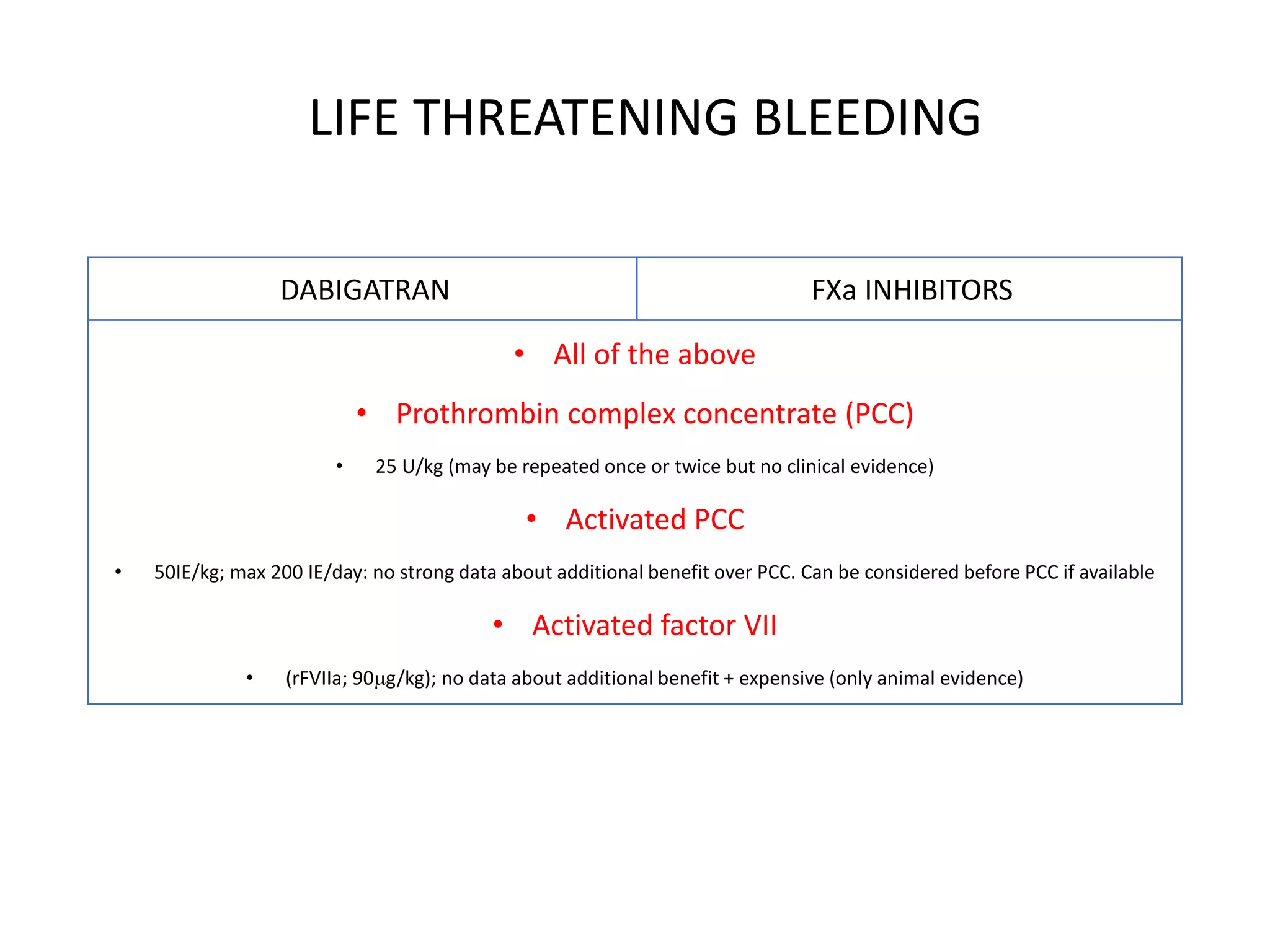
DABIGATRAN FXa INHIBITORS
• All of the above
• Prothrombin complex concentrate (PCC)
• 25 U/kg (may be repeated once or twice but no clinical evidence)
• Activated PCC
• 50IE/kg; max 200 IE/day: no strong data about additional benefit over PCC. Can be considered before PCC if available
• Activated factor VII
• (rFVIIa; 90g/kg); no data about additional benefit + expensive (only animal evidence)
LIFE THREATENING BLEEDING
PATIENTS UNDERGOING AN URGENT SURGICAL
INTERVENTION
• Discontinue NOAC.
• Try to defer surgery at least 12 h and ideally 24 h after last dose.
• Urgent surgery associated with much higher rates of bleeding than
elective procedures, but lower than VKA-treated patients. 1
• Coagulation tests can be considered (classical test or specific tests) but
strategy based on these results has never been evaluated. Therefore
such strategy cannot be recommended and should not be used routinely.
1. Healey et al, Circulation 2012:126;343-8
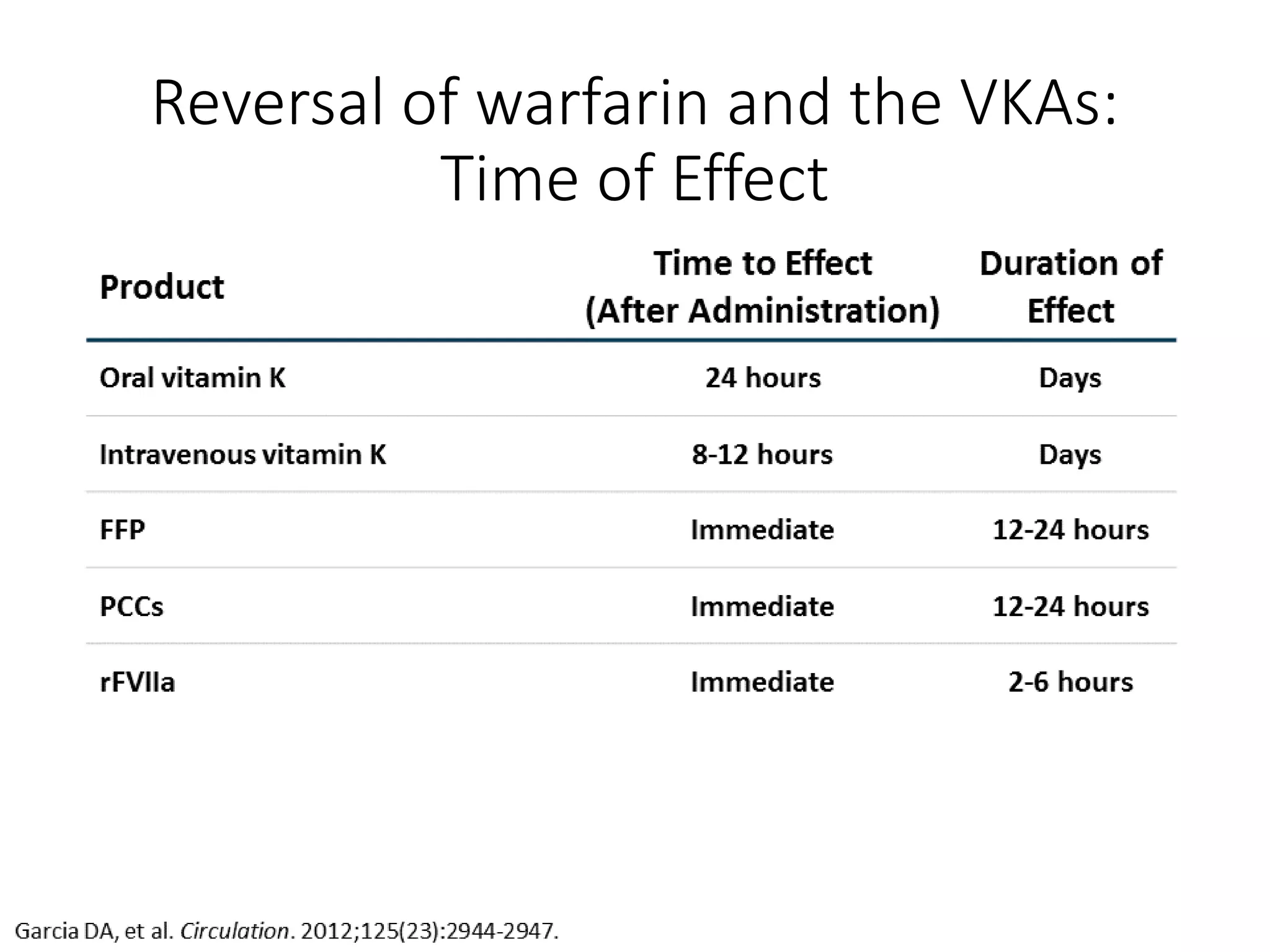
Reversal of warfarin and the VKAs:
Time of Effect
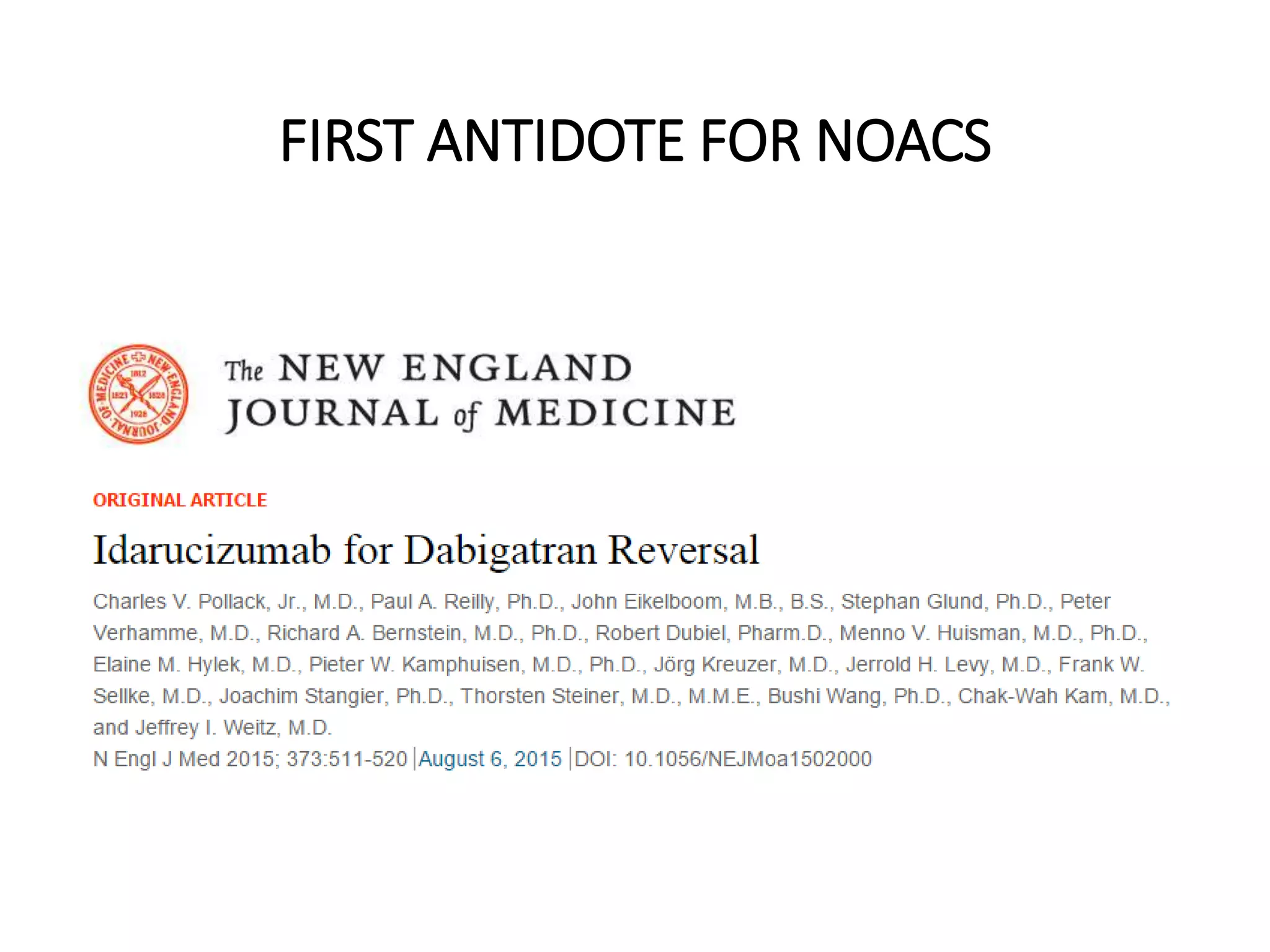
FIRST ANTIDOTE FOR NOACS
REVERSE-AD TRIAL
• Reversal Effects of Idarucizumab on Active Dabigatran
REVERSE-AD TRIAL
• RE-VERSE AD : Multicenter, Open label, Single arm, Phase 3
Study
• Target is to complete 300 patients
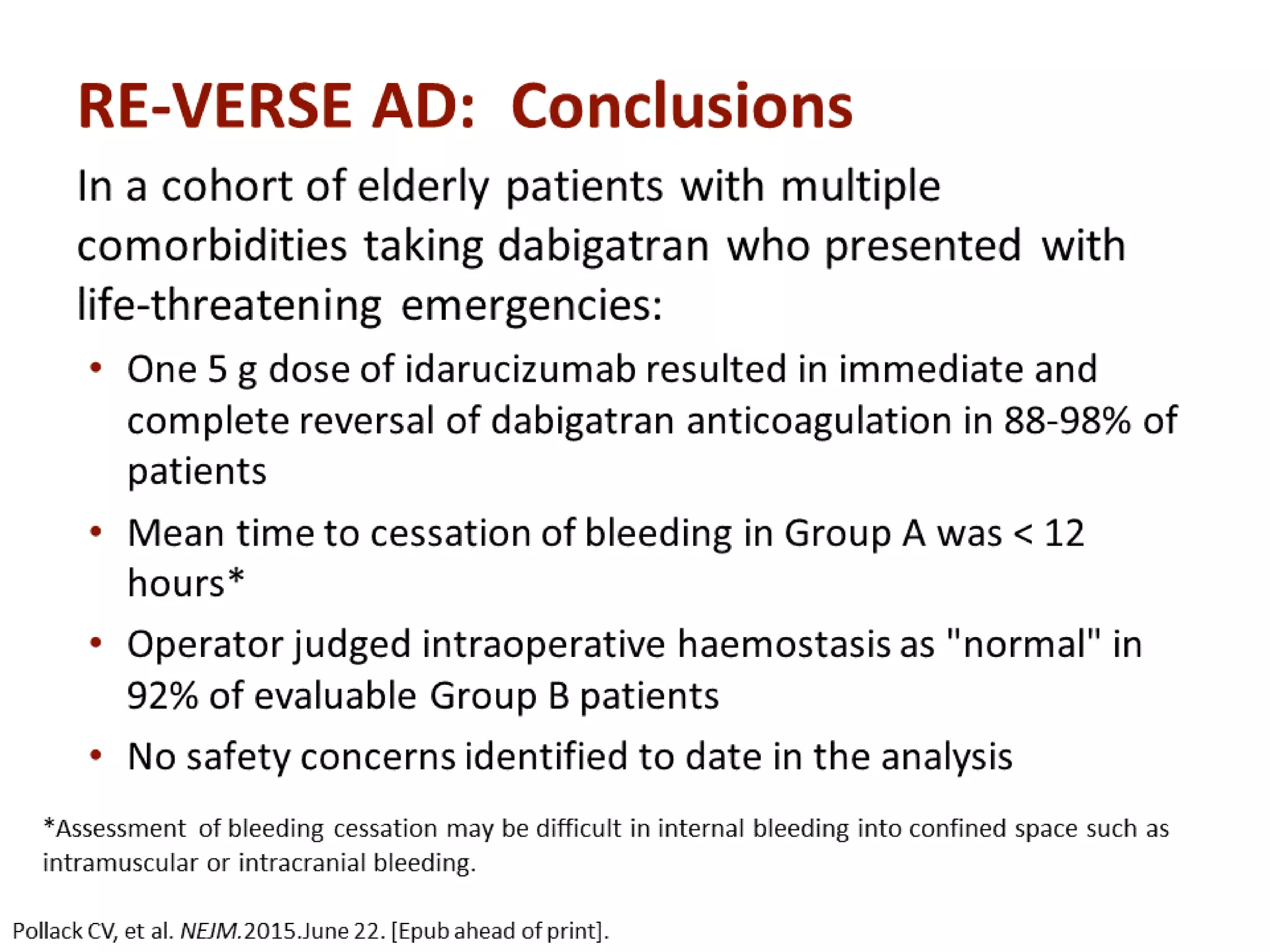
• The interim analysis from RE-VERSE AD included data from
90 patients in the emergency setting who were taking
dabigatran and required reversal.
REVERSE-AD TRIAL
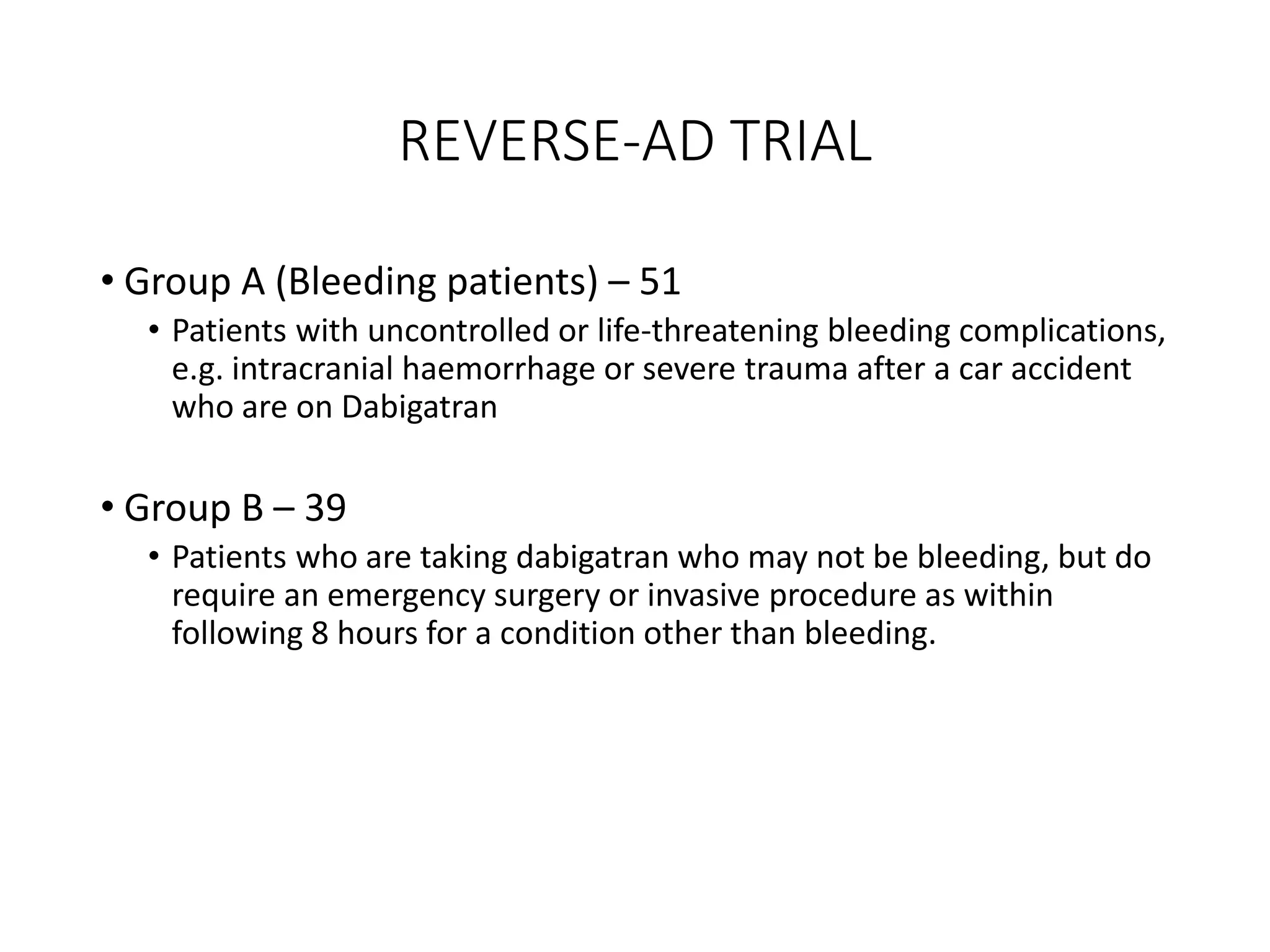
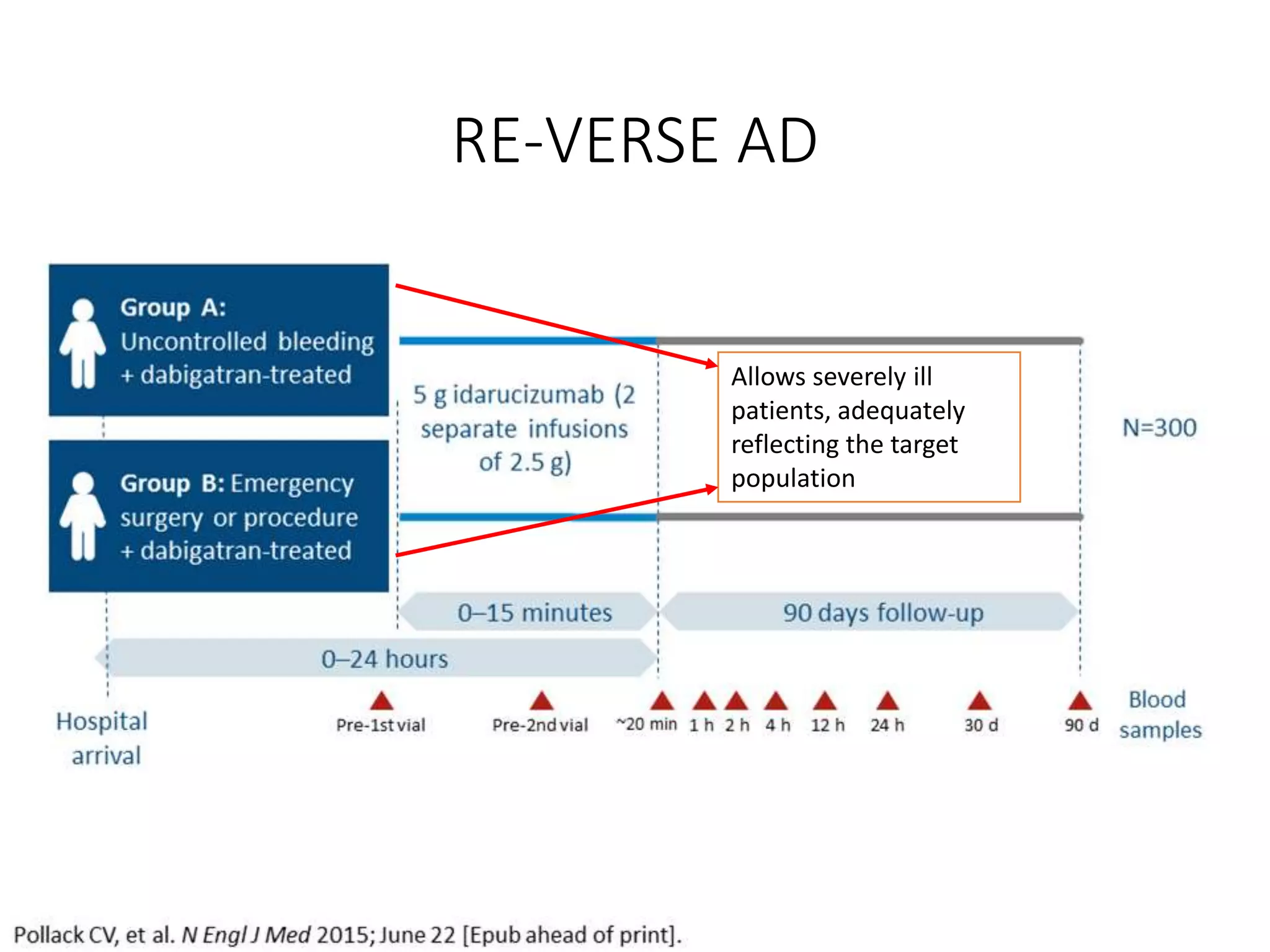
• Group A (Bleeding patients) – 51
• Patients with uncontrolled or life-threatening bleeding complications,
e.g. intracranial haemorrhage or severe trauma after a car accident
who are on Dabigatran
• Group B – 39
• Patients who are taking dabigatran who may not be bleeding, but do
require an emergency surgery or invasive procedure as within
following 8 hours for a condition other than bleeding.
Idarucizumab: A Specific Reversal Agent for
Anticoagulant Activity of Dabigatran
RE-VERSE AD
Allows severely ill
patients, adequately
reflecting the target
population
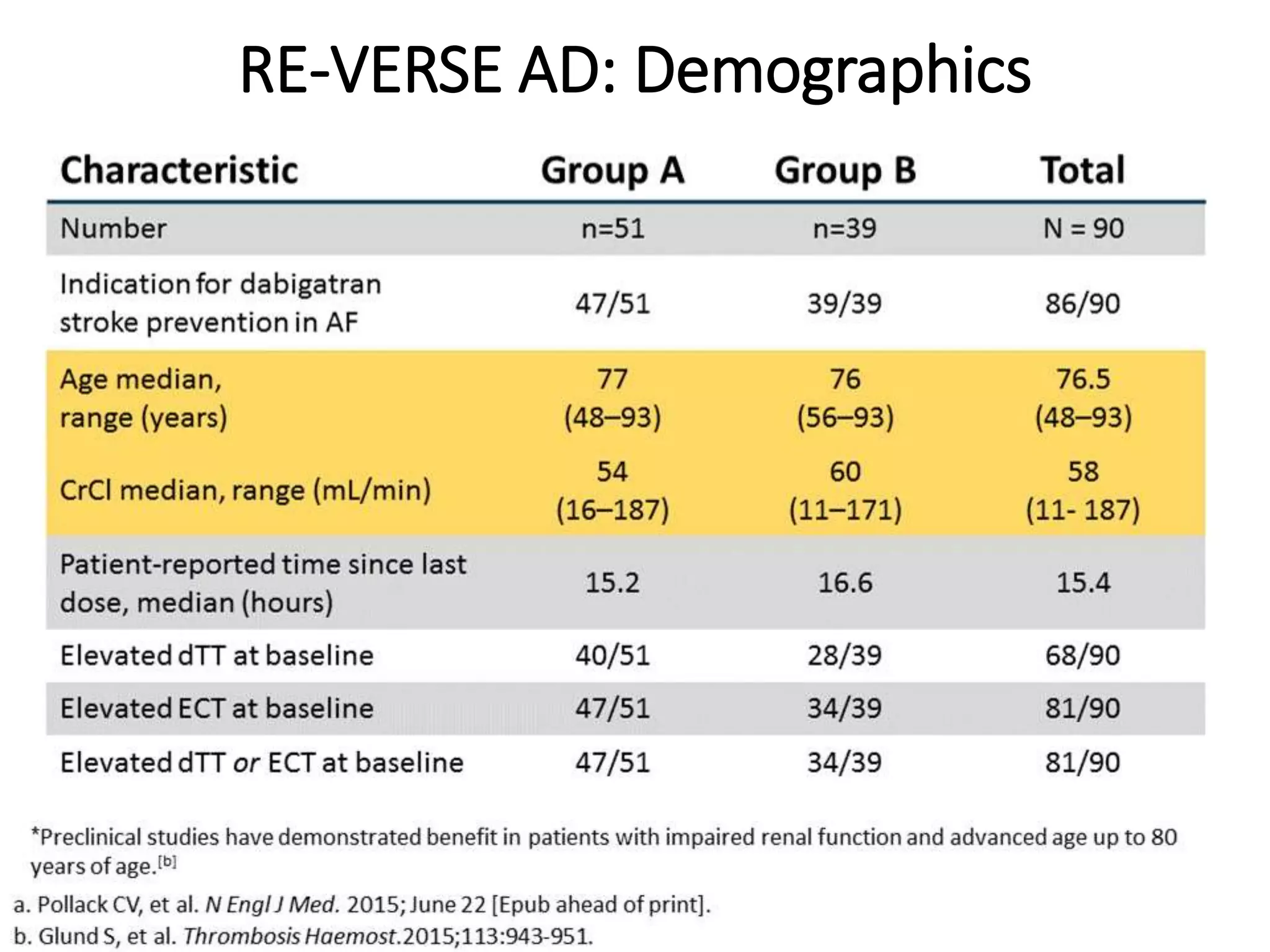
RE-VERSE AD: Demographics
RE-VERSE AD: Primary Endpoints
• Time to cessation of bleeding in Group A
• Hemostasis during procedure in Group B, assessed as normal, mildly,
moderately or severely abnormal
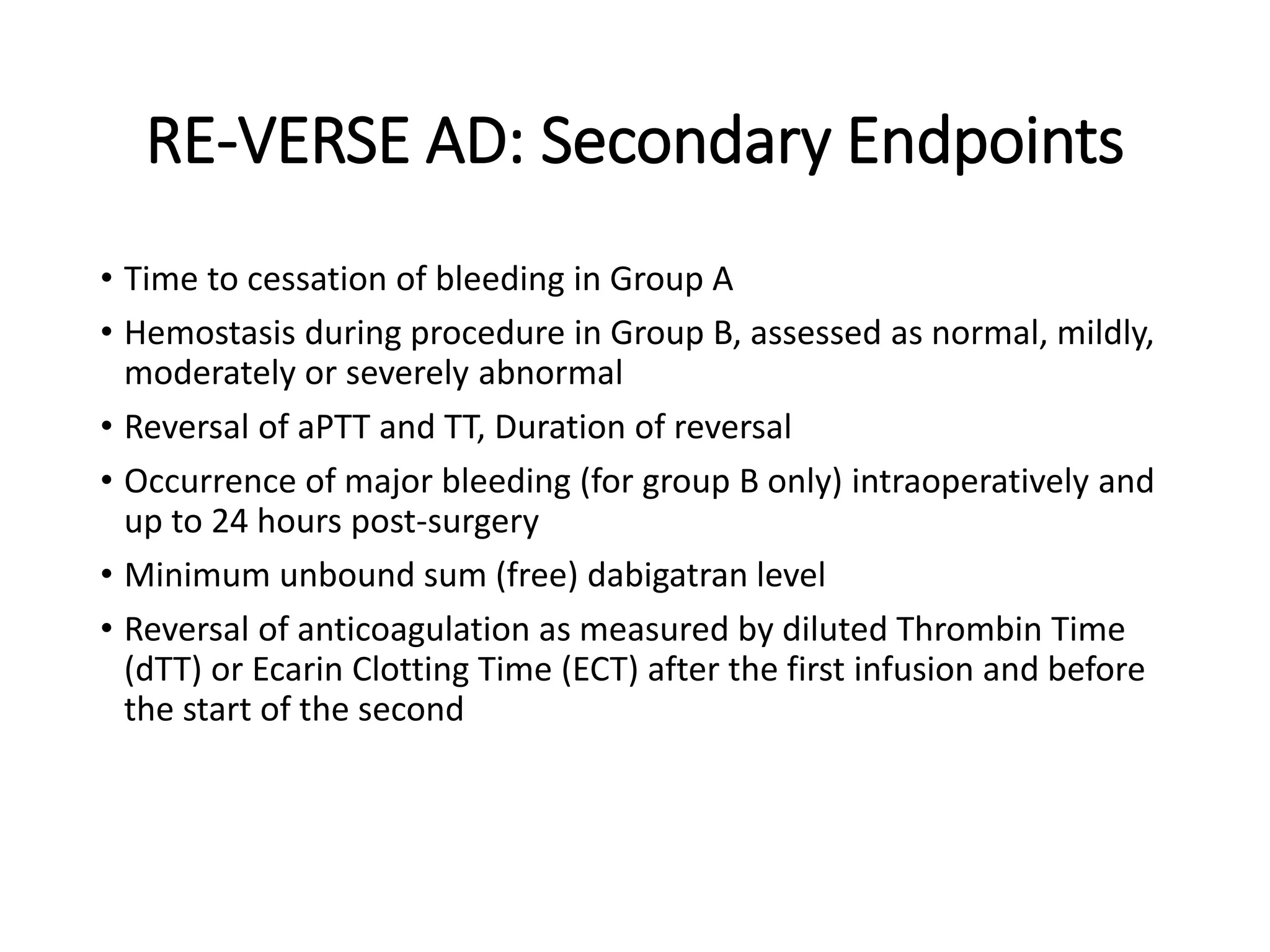
• Reversal of aPTT and TT, Duration of reversal
• Occurrence of major bleeding (for group B only) intraoperatively and
up to 24 hours post-surgery
• Minimum unbound sum (free) dabigatran level
• Reversal of anticoagulation as measured by diluted Thrombin Time
(dTT) or Ecarin Clotting Time (ECT) after the first infusion and before
the start of the second
RE-VERSE AD: Secondary Endpoints
RESULTS
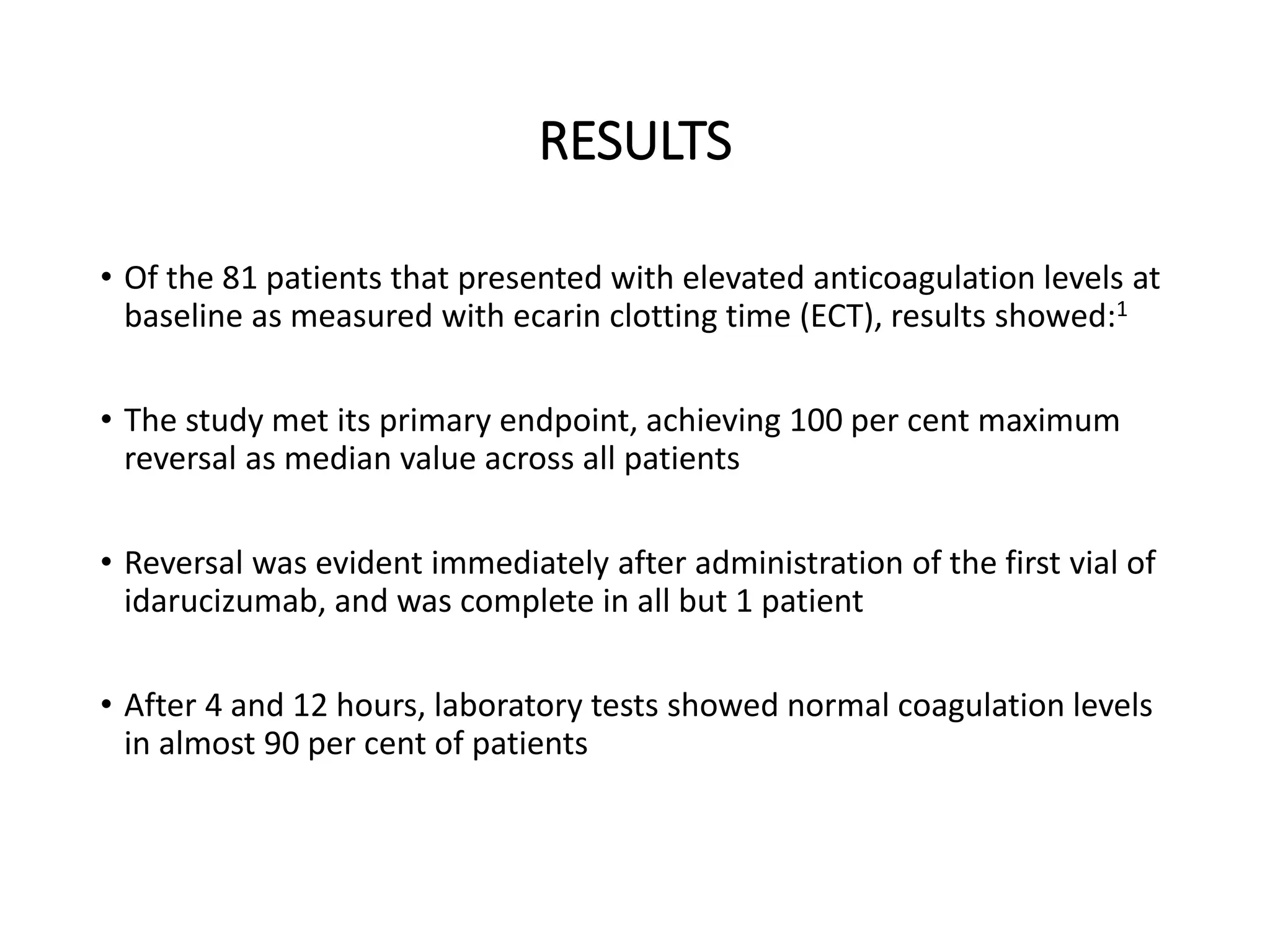
• Of the 81 patients that presented with elevated anticoagulation levels at
baseline as measured with ecarin clotting time (ECT), results showed:1
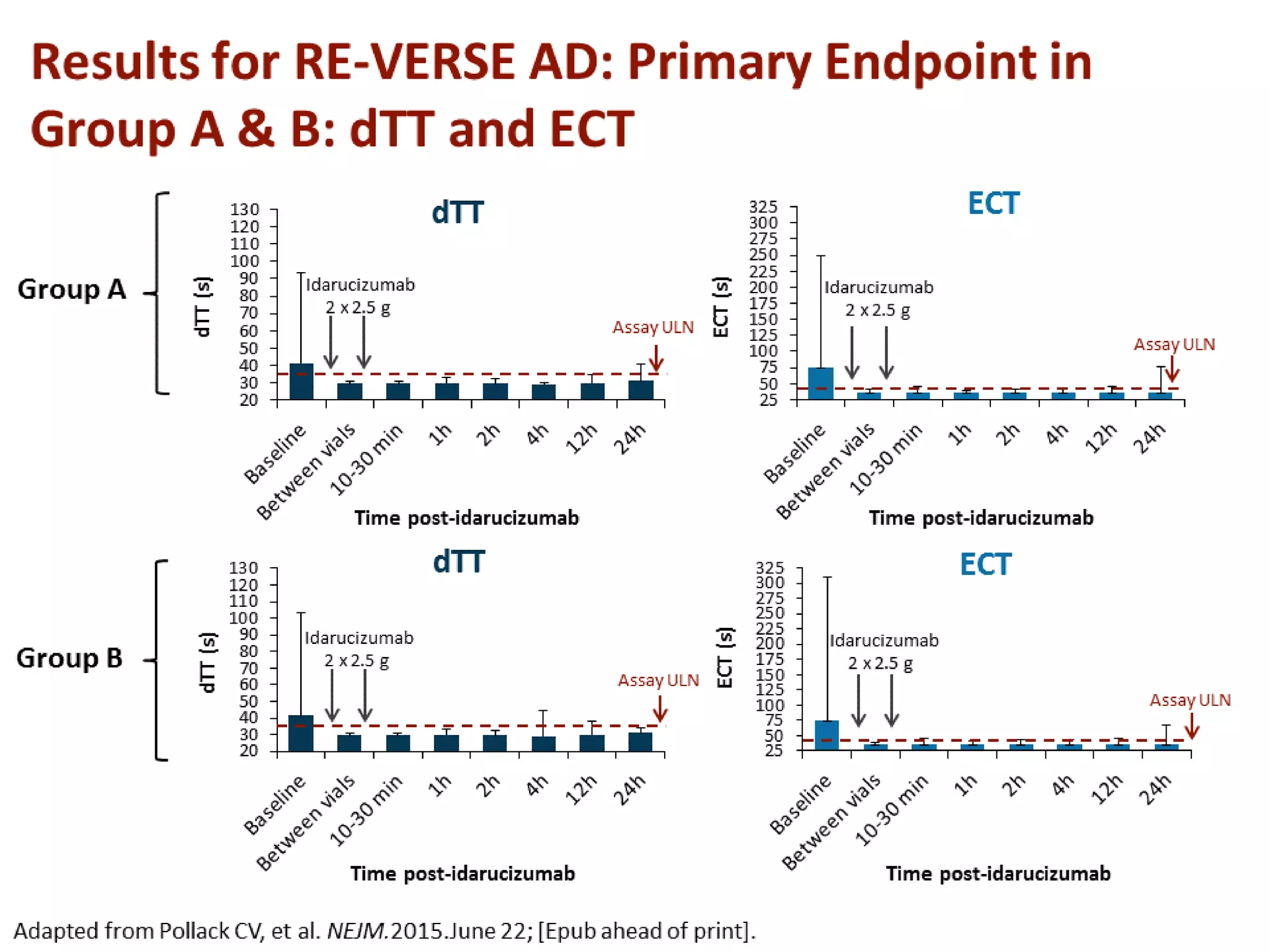
• The study met its primary endpoint, achieving 100 per cent maximum
reversal as median value across all patients
• Reversal was evident immediately after administration of the first vial of
idarucizumab, and was complete in all but 1 patient
• After 4 and 12 hours, laboratory tests showed normal coagulation levels
in almost 90 per cent of patients
RESULTS
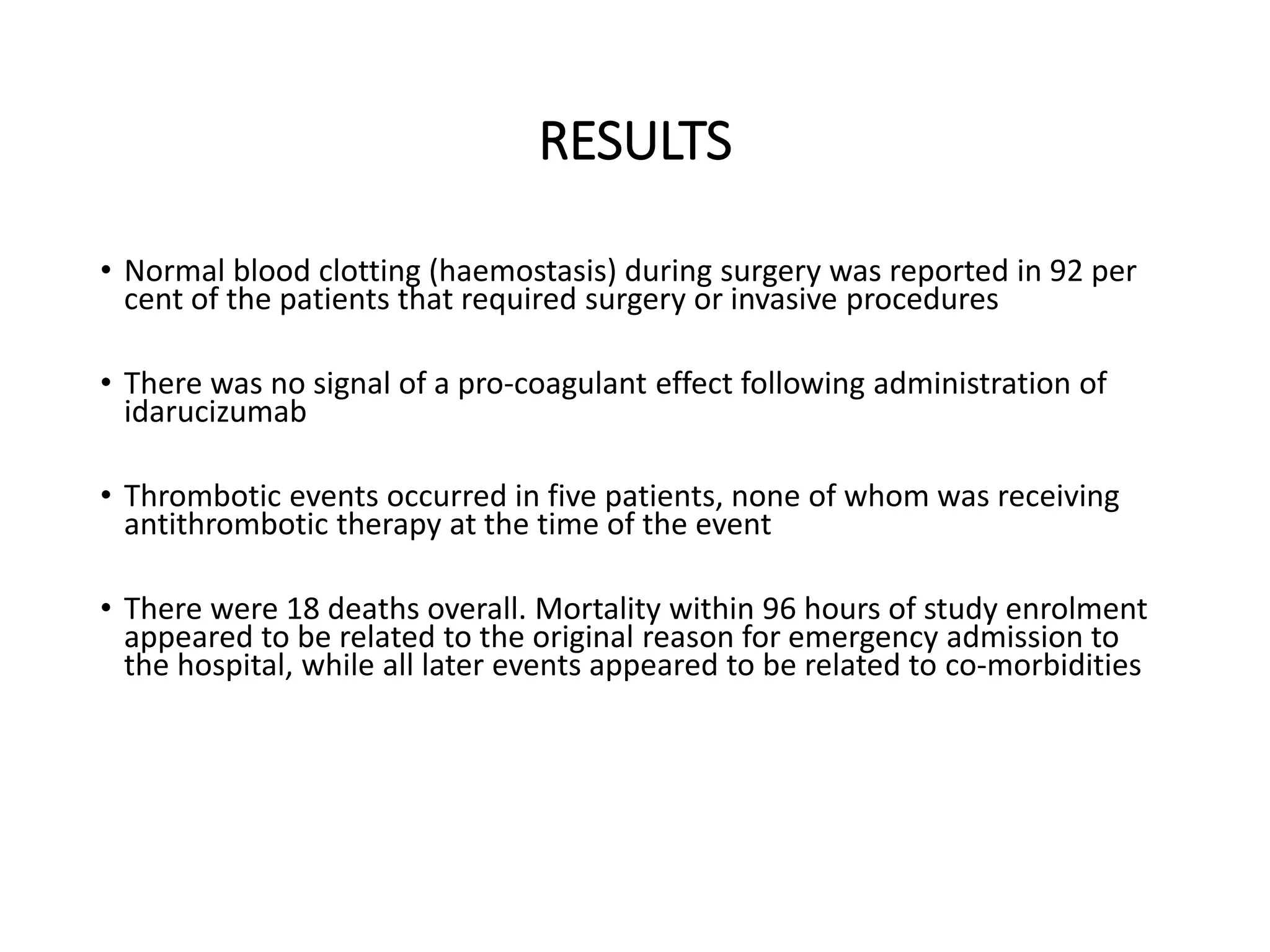
• Normal blood clotting (haemostasis) during surgery was reported in 92 per
cent of the patients that required surgery or invasive procedures
• There was no signal of a pro-coagulant effect following administration of
idarucizumab
• Thrombotic events occurred in five patients, none of whom was receiving
antithrombotic therapy at the time of the event
• There were 18 deaths overall. Mortality within 96 hours of study enrolment
appeared to be related to the original reason for emergency admission to
the hospital, while all later events appeared to be related to co-morbidities
CONCLUSIONS
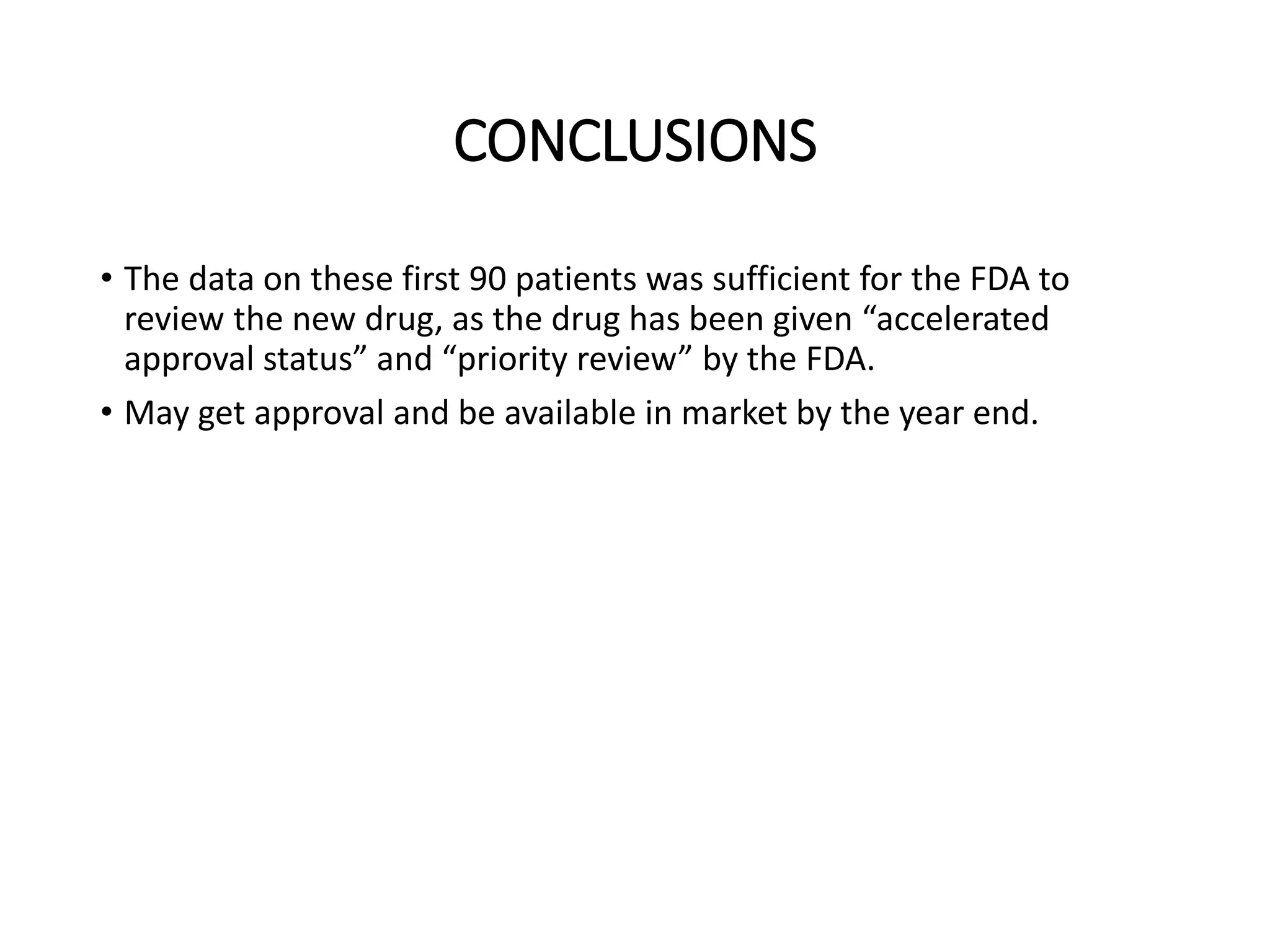
• The data on these first 90 patients was sufficient for the FDA to
review the new drug, as the drug has been given “accelerated
approval status” and “priority review” by the FDA.
• May get approval and be available in market by the year end.
ANDEXANET
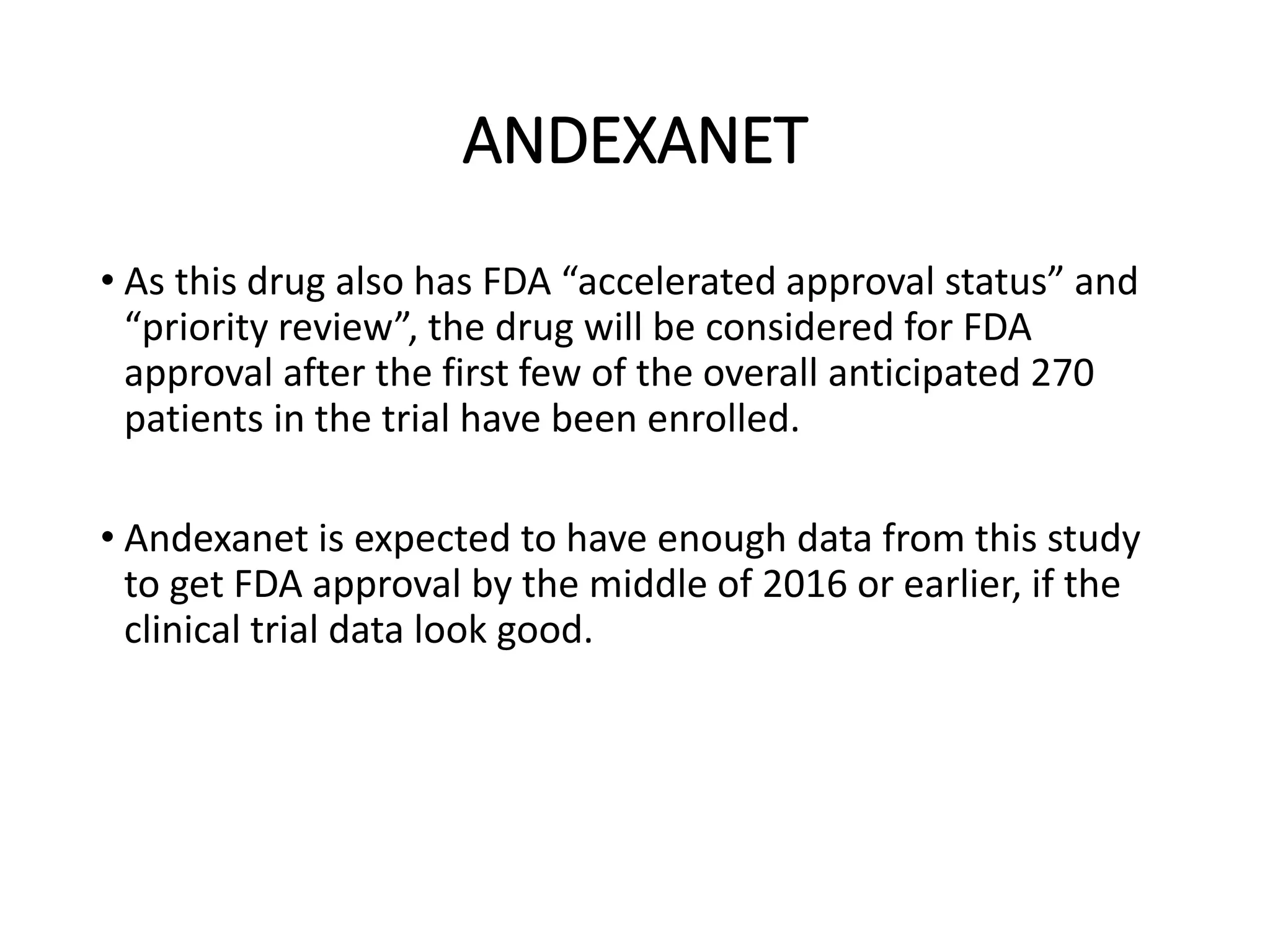
• As this drug also has FDA “accelerated approval status” and
“priority review”, the drug will be considered for FDA
approval after the first few of the overall anticipated 270
patients in the trial have been enrolled.
• Andexanet is expected to have enough data from this study
to get FDA approval by the middle of 2016 or earlier, if the
clinical trial data look good.
…THANK YOU…

Antidote for NOACs

  • 1.
    ANTIDOTE FOR NOACs VISHALVANANI Mumbai 2015
  • 2.
    NOACS ARE GOOD •Predictable effect without need for laboratory monitoring • Fewer food and drug interactions • More predictable half-life/elimination • Improved efficacy/safety ratio • Non inferior bleeding risk than VKAs.
  • 3.
    BLEEDING RISK • Risksof bleeding from NOACs are generally lower or similar to other agents, with some limited exceptions. • The overall risk of bleeding with NOACs versus vitamin K antagonists was reviewed in a meta-analysis of 12 randomized trials that included 102,607 patients with atrial fibrillation or venous thromboembolism. • Compared with vitamin K antagonists, NOACs were associated with lower risks of • major bleeding (relative risk [RR] 0.72; 95% CI 0.62-0.85), • fatal bleeding (RR 0.53; 95% CI 0.43-0.64), and • intracranial bleeding (0.43; 95% CI 0.370.50); • Major gastrointestinal bleeding was not increased (RR 0.94; 95% CI 0.75- 1.99)
  • 4.
    • Routine monitoringof coagulation not required, but quantitative assessment of drug exposure may be needed in emergency situations: • Serious bleeding events • Urgent surgery • renal or hepatic insufficiency • Thrombotic events • potential DDI • suspected overdosing MEASURING THE ANTICOAGULANT EFFECT OF NOACS
  • 5.
    MEASURING THE ANTICOAGULANTEFFECT OF NOACS • Important to know exactly when NOAC was administered relative to time of blood sampling. Maximum effect at maximum plasma concentration (~3h after administration). • Activated thromboplastin time (aPTT): qualitative assessment of dabigatran, but sensitivity varies. • Diluted thrombin time (DTT): Hemoclot® suitable for quantitative assessment of dabigatran but no data on cut off below which surgery is safe. • Anti-FXa chromogenic assays: commercially available for quantitative assessment, but no data to associate level with bleeding or thrombo- embolism risk.
  • 6.
    MEASURING THE ANTICOAGULANTEFFECT OF NOACS Dabigatran Apixaban Edoxaban Rivaroxaban Plasma peak 2h after ingestion 1-4h post ingestion 1-2h after ingestion 2-4h after ingestion Plasma trough 12-24h after ingestion 12-24h after ingestion 12-24h after ingestion 16-24h after ingestion PT cannot be used cannot be used prolonged but no known relation with bleeding risk prolonged: may indicate excess bleeding risk but local calibration required INR cannot be used cannot be used cannot be used cannot be used aPTT at trough >2x ULN suggests excess bleeding risk cannot be used prolonged but no known relation with bleeding risk cannot be used dTT At trough >200ng/ml ≥ 65s: excess bleeding risk cannot be used cannot be used cannot be used Anti-FXa assays n/a no data yet quantitative; no data on threshold values for bleeding or thrombosis quantitative; no data on threshold values for bleeding or thrombosis Ecarin clotting time at trough >2x ULN: excess bleeding risk not affected; cannot be used not affected; cannot be used not affected; cannot be used
  • 7.
    WHAT TO DOIF THERE IS A (SUSPECTED) OVERDOSE WITHOUT BLEEDING OR A CLOTTING TEST IS INDICATING A RISK OF BLEEDING • Acute recent ingestion of overdose: activated charcoal to reduce absorption (standard dosing scheme for adults of 30 to 50 g). • Consider coagulation tests to assess possible bleeding risk. • In absence of bleeding, wait-and see approach.
  • 8.
    NON LIFE THREATENINGBLEEDING DABIGATRAN FXa INHIBITORS Inquire last intake + dosing regimen Estimate normalization of haemostasis Normal renal function: ±24h • CrCl 50-80 ml/min: 24-36h • CrCl 30-50 ml/min: 36-48h • CrCl <30 ml/min: ≥48h Maintain diuresis Normalisation of haemostasis: ±24h Local haemostatic measures Fluid replacement (colloids if needed) • RBC substitution if necessary • Platelet substitution (in case of thrombocytopenia ≤ 60 x 109 /L or thrombopathy) • Fresh frozen plasma as plasma expander (not as reversal agent) • Tranexamic acid can be considered as adjuvans • Desmopressin can be considered in special cases (coagulopathy or thrombopathy) • Consider dialysis (primary evidence: - 65% after 4h) • Charcoal haemoperfusion not recommended (no data)
  • 9.
    DABIGATRAN FXa INHIBITORS •All of the above • Prothrombin complex concentrate (PCC) • 25 U/kg (may be repeated once or twice but no clinical evidence) • Activated PCC • 50IE/kg; max 200 IE/day: no strong data about additional benefit over PCC. Can be considered before PCC if available • Activated factor VII • (rFVIIa; 90g/kg); no data about additional benefit + expensive (only animal evidence) LIFE THREATENING BLEEDING
  • 10.
    PATIENTS UNDERGOING ANURGENT SURGICAL INTERVENTION • Discontinue NOAC. • Try to defer surgery at least 12 h and ideally 24 h after last dose. • Urgent surgery associated with much higher rates of bleeding than elective procedures, but lower than VKA-treated patients. 1 • Coagulation tests can be considered (classical test or specific tests) but strategy based on these results has never been evaluated. Therefore such strategy cannot be recommended and should not be used routinely. 1. Healey et al, Circulation 2012:126;343-8
  • 11.
    Reversal of warfarinand the VKAs: Time of Effect
  • 12.
  • 13.
    REVERSE-AD TRIAL • ReversalEffects of Idarucizumab on Active Dabigatran
  • 14.
    REVERSE-AD TRIAL • RE-VERSEAD : Multicenter, Open label, Single arm, Phase 3 Study • Target is to complete 300 patients • The interim analysis from RE-VERSE AD included data from 90 patients in the emergency setting who were taking dabigatran and required reversal.
  • 15.
    REVERSE-AD TRIAL • GroupA (Bleeding patients) – 51 • Patients with uncontrolled or life-threatening bleeding complications, e.g. intracranial haemorrhage or severe trauma after a car accident who are on Dabigatran • Group B – 39 • Patients who are taking dabigatran who may not be bleeding, but do require an emergency surgery or invasive procedure as within following 8 hours for a condition other than bleeding.
  • 16.
    Idarucizumab: A SpecificReversal Agent for Anticoagulant Activity of Dabigatran
  • 17.
    RE-VERSE AD Allows severelyill patients, adequately reflecting the target population
  • 18.
  • 19.
  • 20.
    • Time tocessation of bleeding in Group A • Hemostasis during procedure in Group B, assessed as normal, mildly, moderately or severely abnormal • Reversal of aPTT and TT, Duration of reversal • Occurrence of major bleeding (for group B only) intraoperatively and up to 24 hours post-surgery • Minimum unbound sum (free) dabigatran level • Reversal of anticoagulation as measured by diluted Thrombin Time (dTT) or Ecarin Clotting Time (ECT) after the first infusion and before the start of the second RE-VERSE AD: Secondary Endpoints
  • 21.
    RESULTS • Of the81 patients that presented with elevated anticoagulation levels at baseline as measured with ecarin clotting time (ECT), results showed:1 • The study met its primary endpoint, achieving 100 per cent maximum reversal as median value across all patients • Reversal was evident immediately after administration of the first vial of idarucizumab, and was complete in all but 1 patient • After 4 and 12 hours, laboratory tests showed normal coagulation levels in almost 90 per cent of patients
  • 23.
    RESULTS • Normal bloodclotting (haemostasis) during surgery was reported in 92 per cent of the patients that required surgery or invasive procedures • There was no signal of a pro-coagulant effect following administration of idarucizumab • Thrombotic events occurred in five patients, none of whom was receiving antithrombotic therapy at the time of the event • There were 18 deaths overall. Mortality within 96 hours of study enrolment appeared to be related to the original reason for emergency admission to the hospital, while all later events appeared to be related to co-morbidities
  • 25.
    CONCLUSIONS • The dataon these first 90 patients was sufficient for the FDA to review the new drug, as the drug has been given “accelerated approval status” and “priority review” by the FDA. • May get approval and be available in market by the year end.
  • 27.
    ANDEXANET • As thisdrug also has FDA “accelerated approval status” and “priority review”, the drug will be considered for FDA approval after the first few of the overall anticipated 270 patients in the trial have been enrolled. • Andexanet is expected to have enough data from this study to get FDA approval by the middle of 2016 or earlier, if the clinical trial data look good.
  • 30.

Editor's Notes

  • #3 Heparin and warfarin both have a relatively narrow therapeutic window and more variable dose-response relationship that depends on a variety of factors; these features lead to a requirement for frequent monitoring of clotting times to optimize the therapeutic dose range and prevent bleeding. It remains to be determined whether laboratory monitoring of any of the target-specific oral agents can further improve their efficacy or safety.
  • #4 higher risk of gastrointestinal bleeding in patients older than 65 years receiving dabigatran 150 mg twice daily compared with warfarin