NOACs and Bleeding
Huy Tran
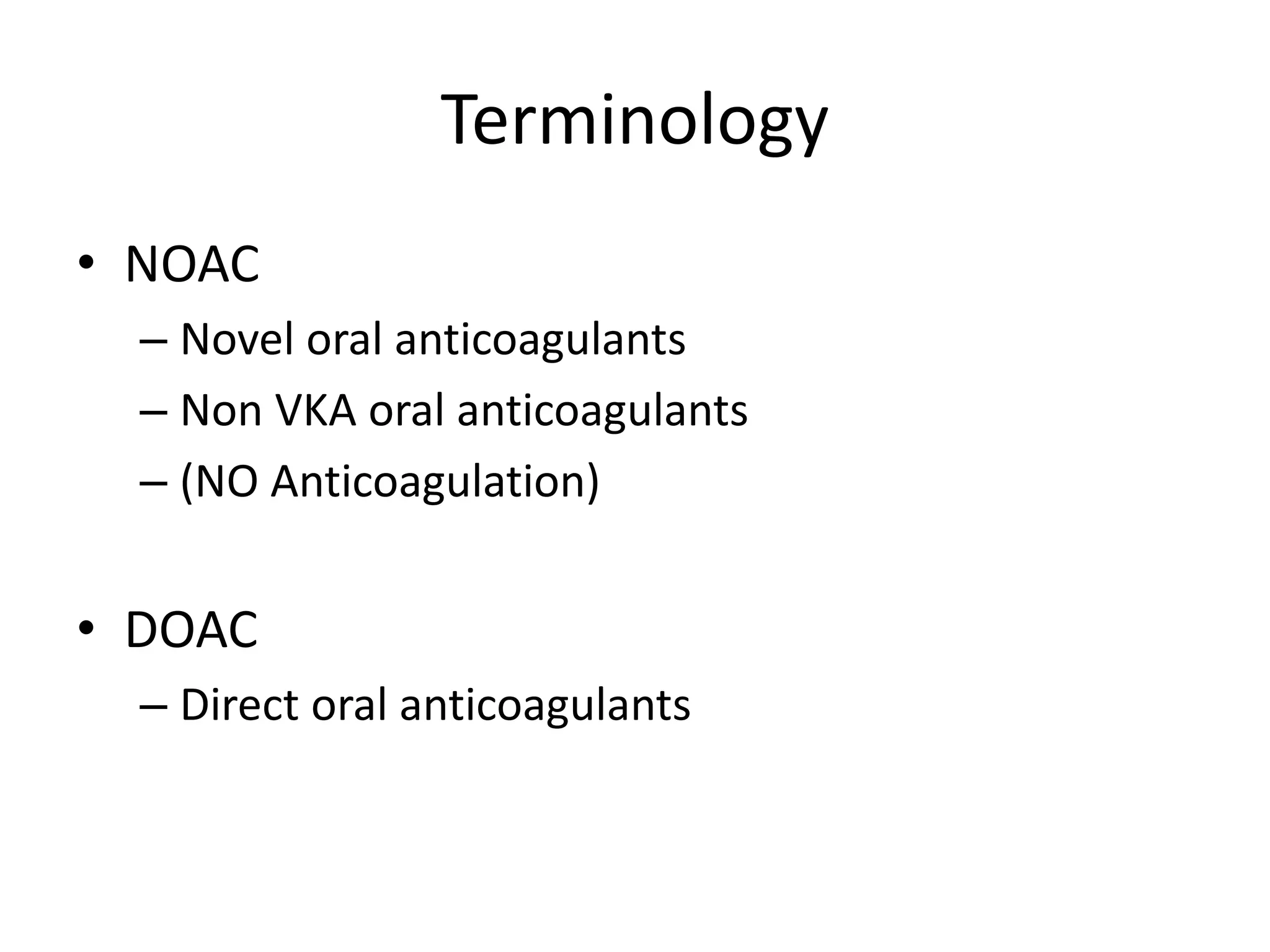
Terminology
• NOAC
– Novel oral anticoagulants
– Non VKA oral anticoagulants
– (NO Anticoagulation)
• DOAC
– Direct oral anticoagulants
Other Terms
• ODI
– Oral Direct Inhibitors
• SODA
– Specific Oral Direct Anticoagulant
• TSOAC
– Target Specific Oral Anticoagulant
Vote 2014
• DOAC 29.9%
• NOAC 28.6%
• TSOAC 23.4%
• North America and European
• Australasia not asked to participate
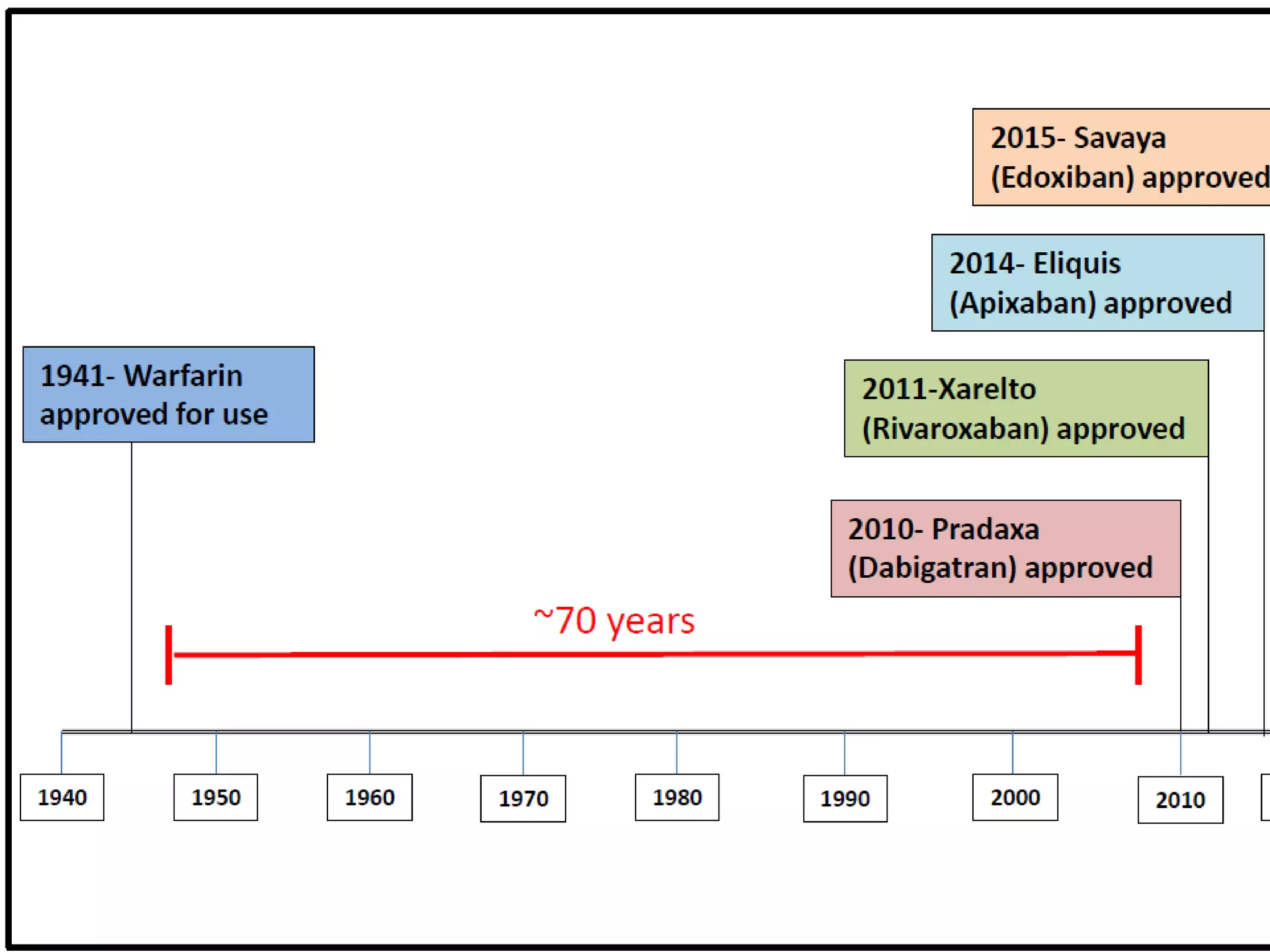
New anticoagulants
Direct Thrombin Inhibitors
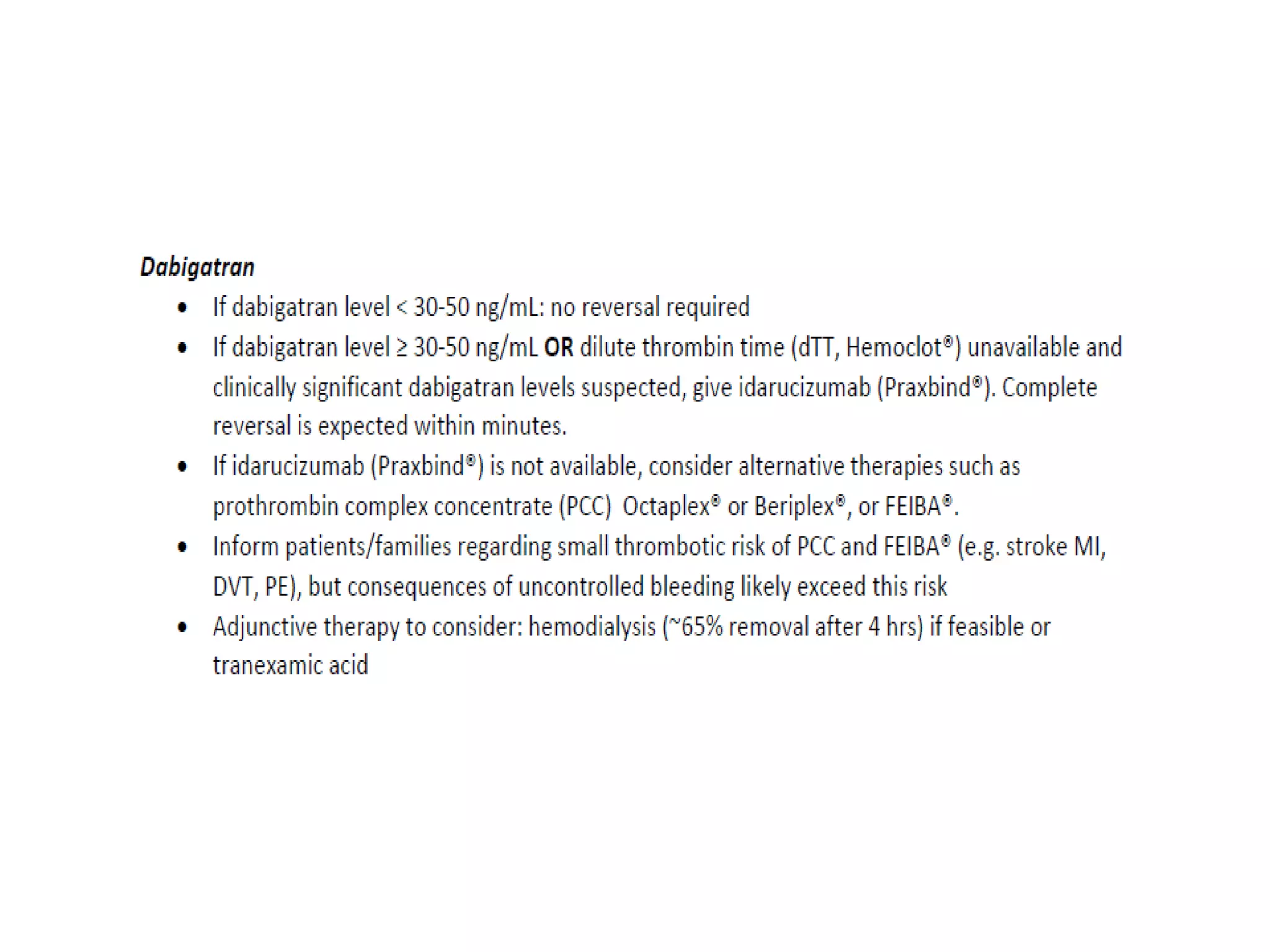
- Dabigatran
Factor Xa Inhibitors
- Rivaroxaban
- Apixaban
- Edoxaban
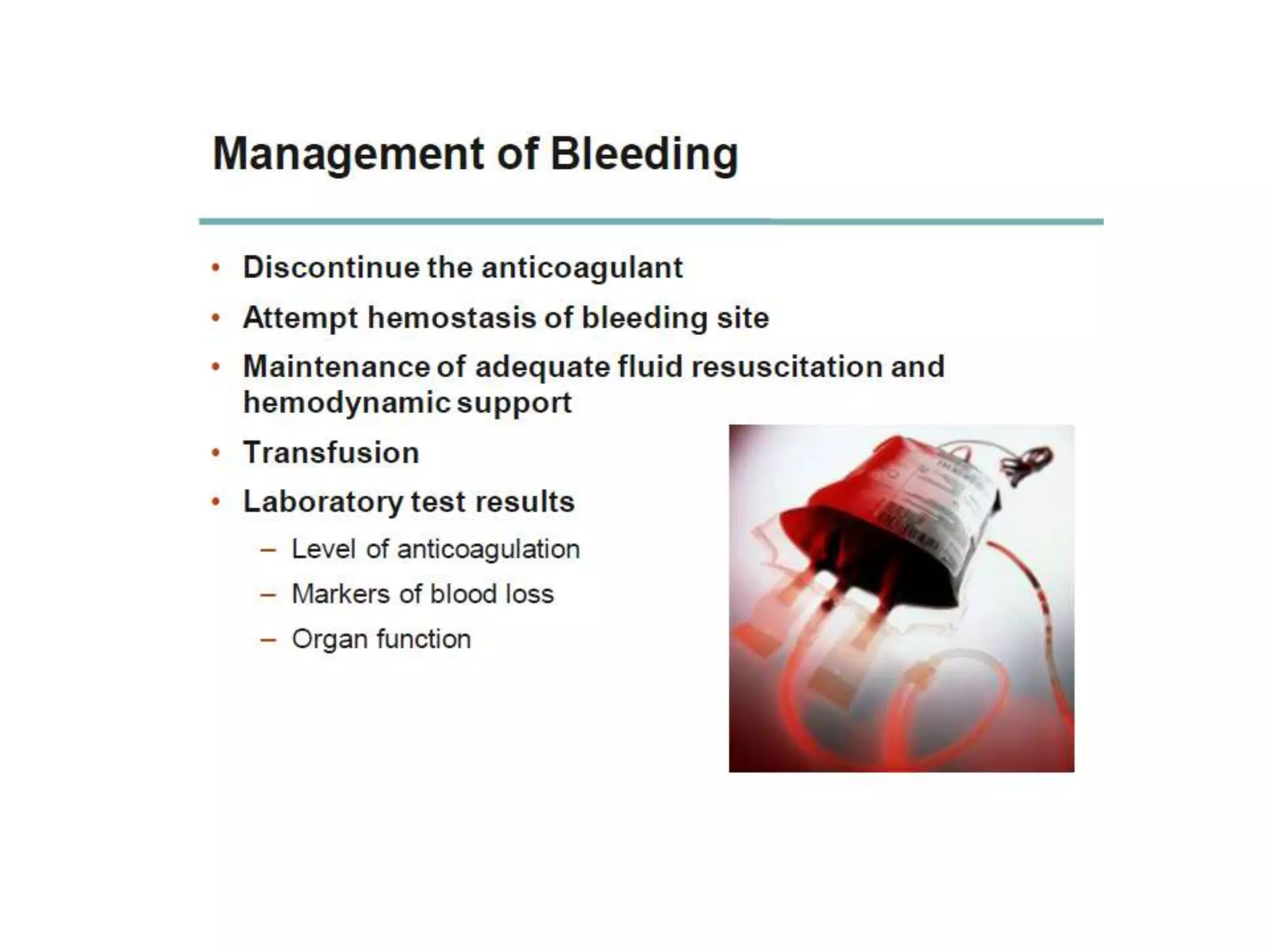
Management of Bleeding
• Prevention
• Treatment
Prevention of Bleeding
• Anticoagulant Selection
• Patient and Dose Selection
• Management of Interruption of Treatment
-5 -4 -3 -2 -1 OR 1 2 3 4 5 6
DAYS
“No”: DVT
prophylaxis
with LMWH
or
prophylacti
c dose of
NOAC
Post -Procedure Use of NOACs
Restart
NOAC at
therapeutic
doses
“Yes”: Restart NOAC
at
therapeutic doses
Ask yourself: “Is it
OK that the
patient be fully
anticoagulated 2
hours after 1st
dose?”
1
3
“No” Delay
restart of DOAC
at therapeutic
doses
2
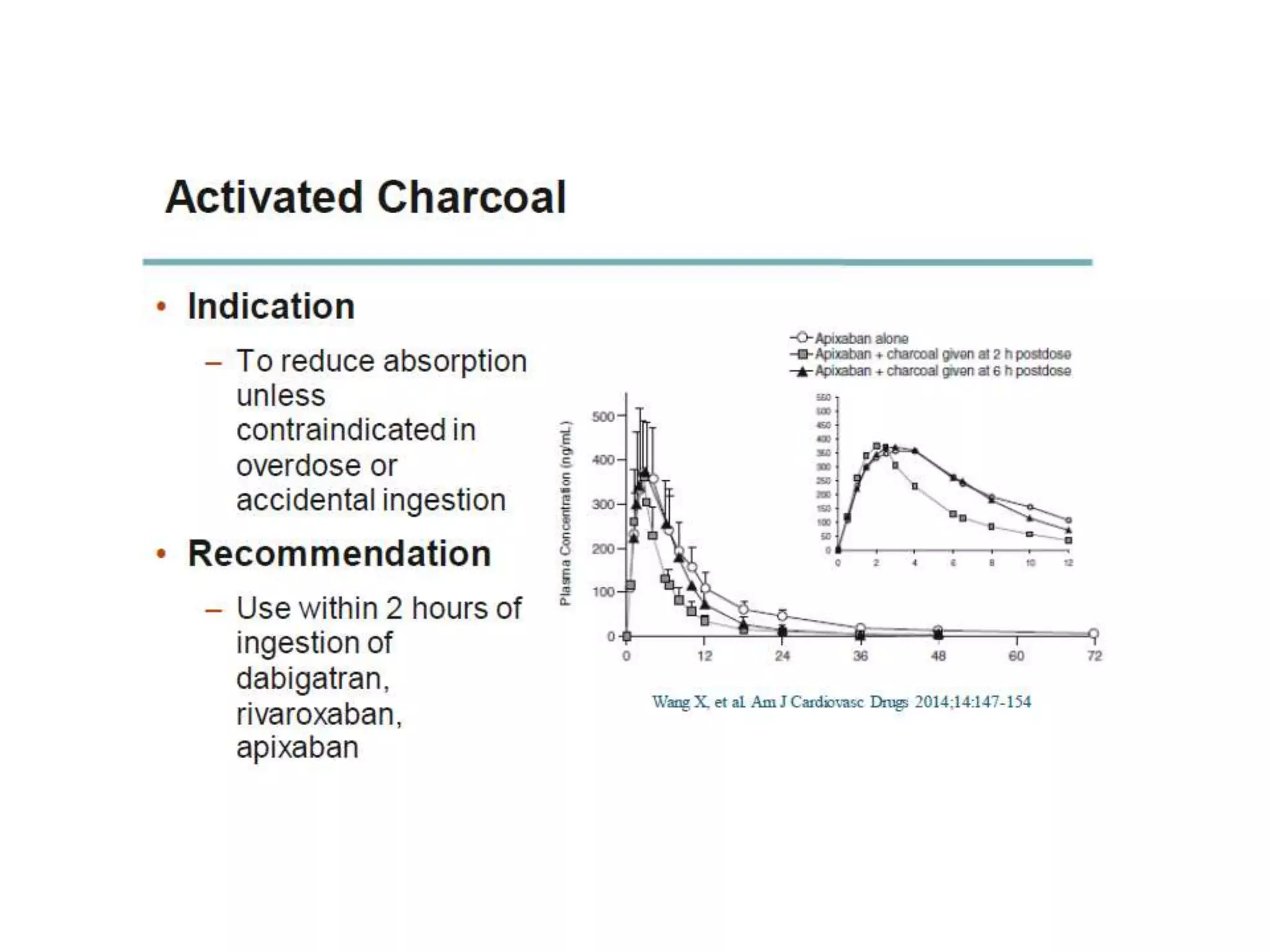
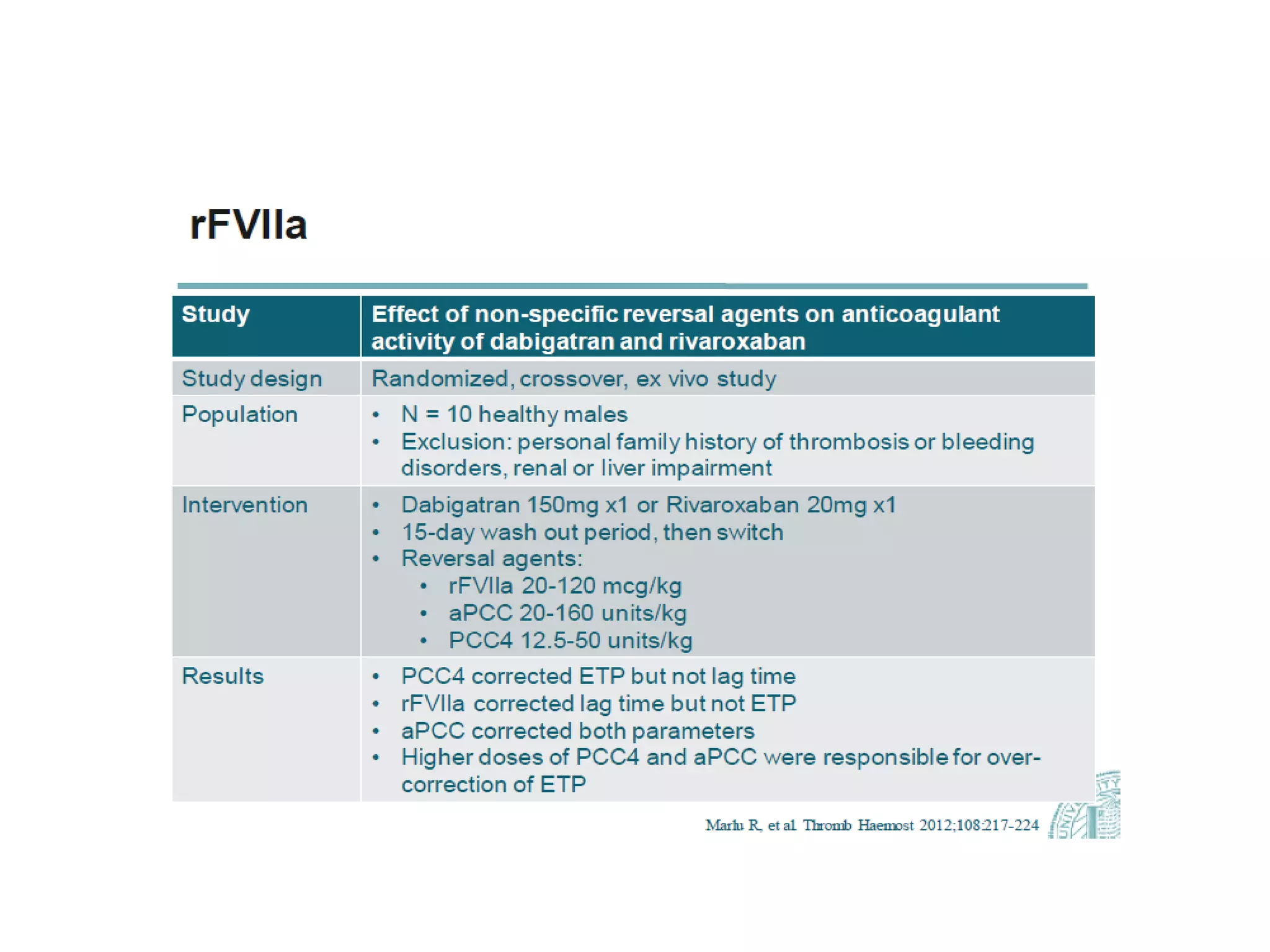
Reversal of NOACs
• Remove Drug
• Active coagulation to overcome drug effect
• Neutralise drug
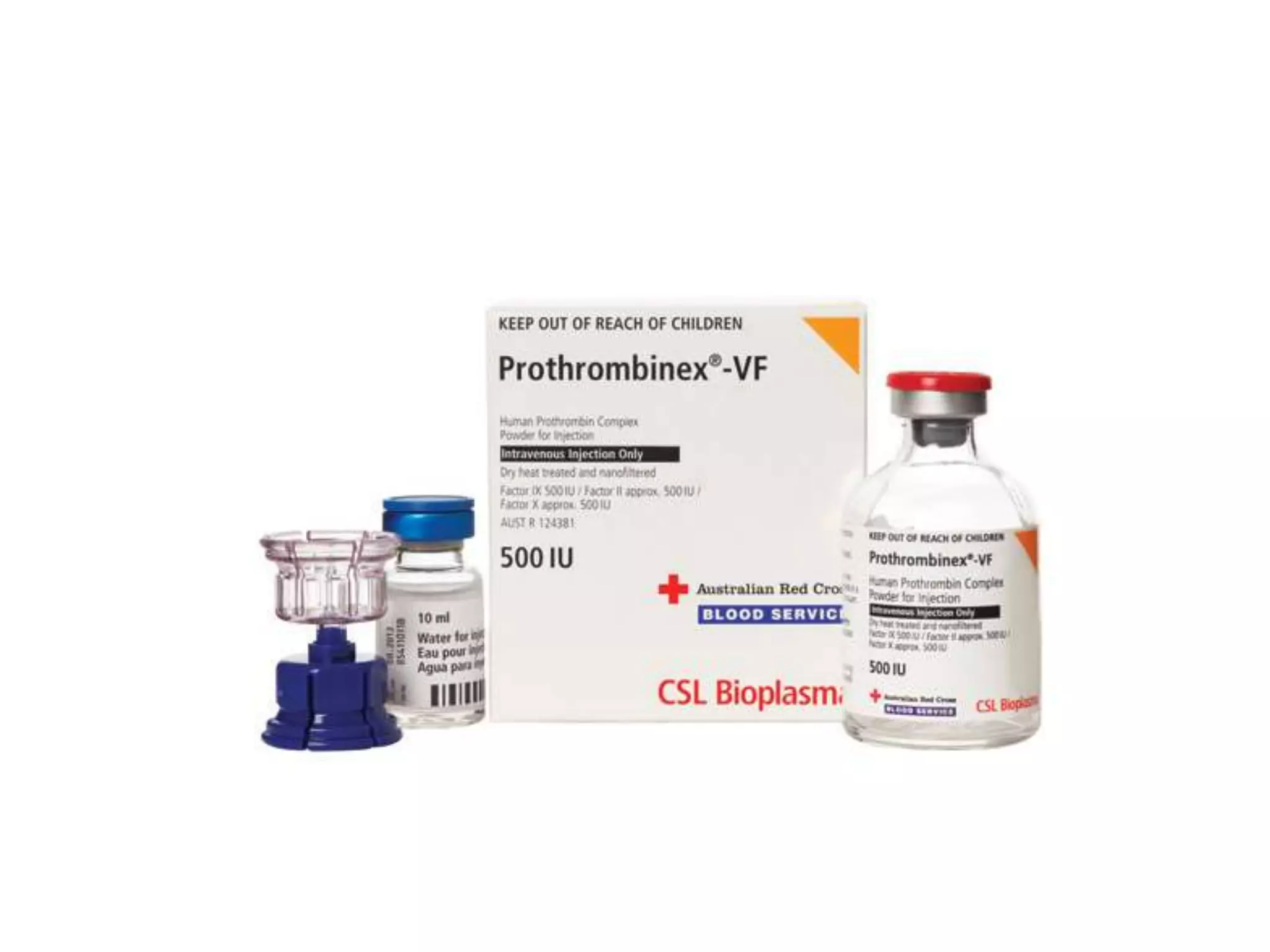
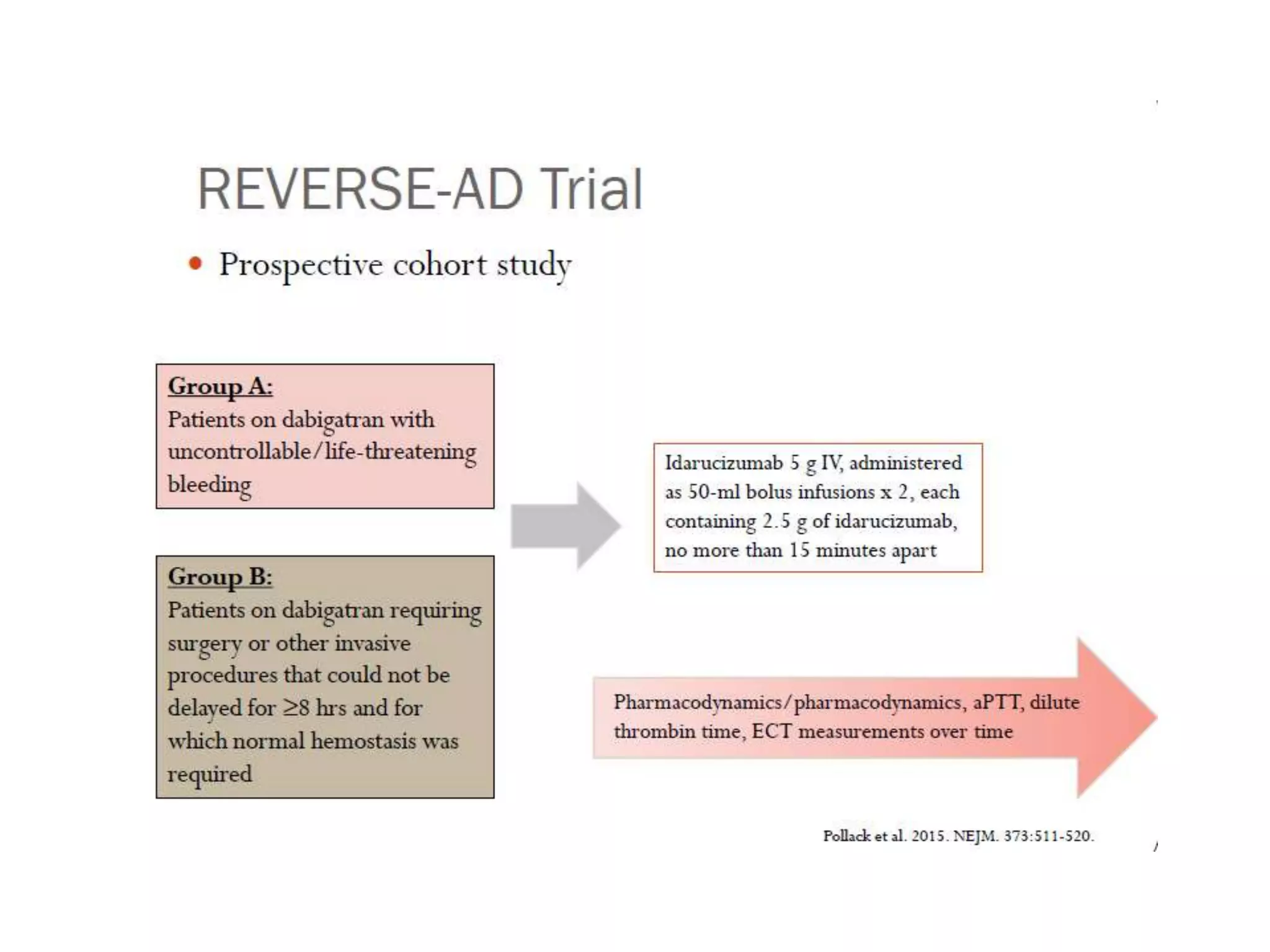
Pradaxa (Dabigatran) Reversal
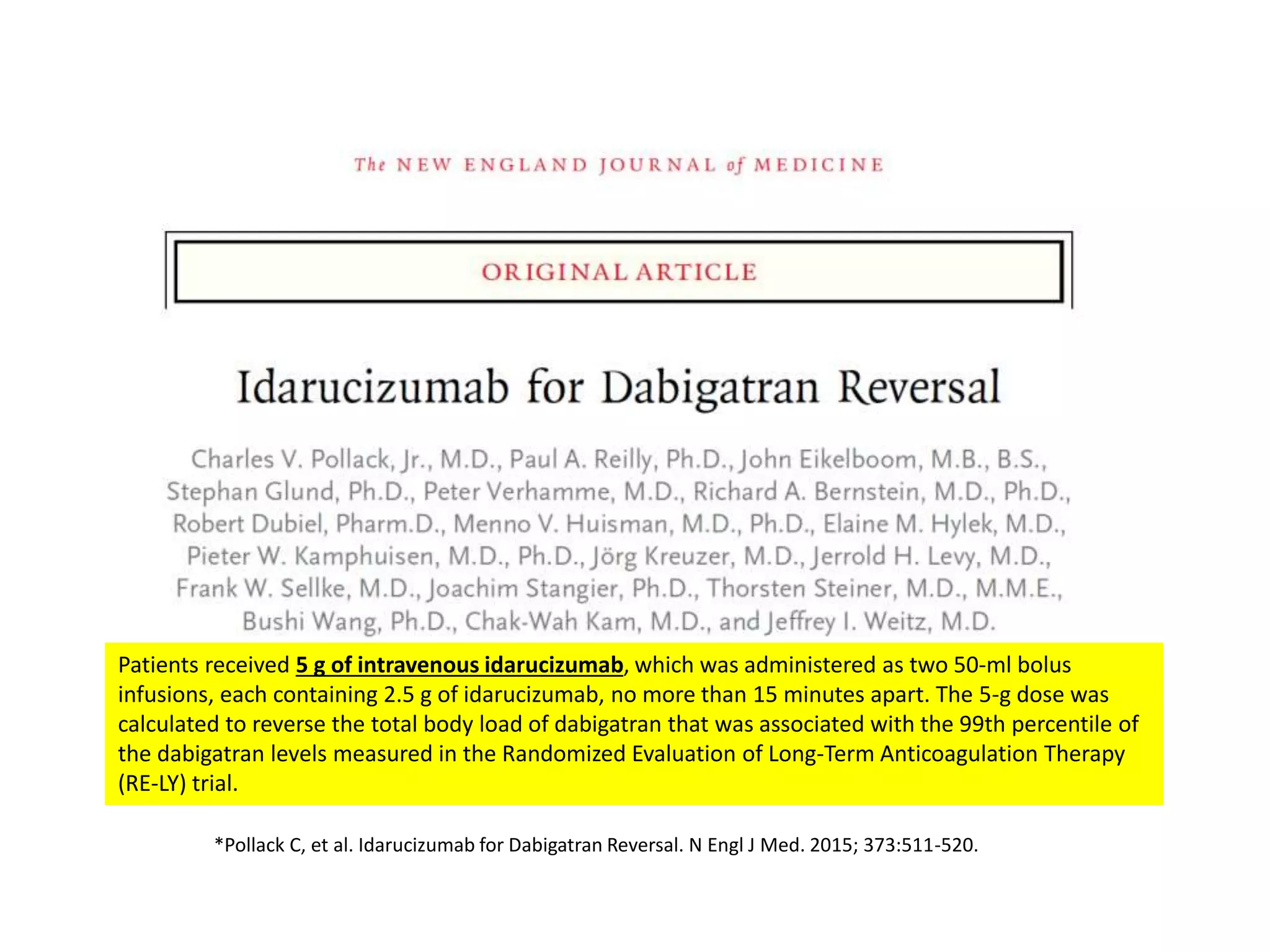
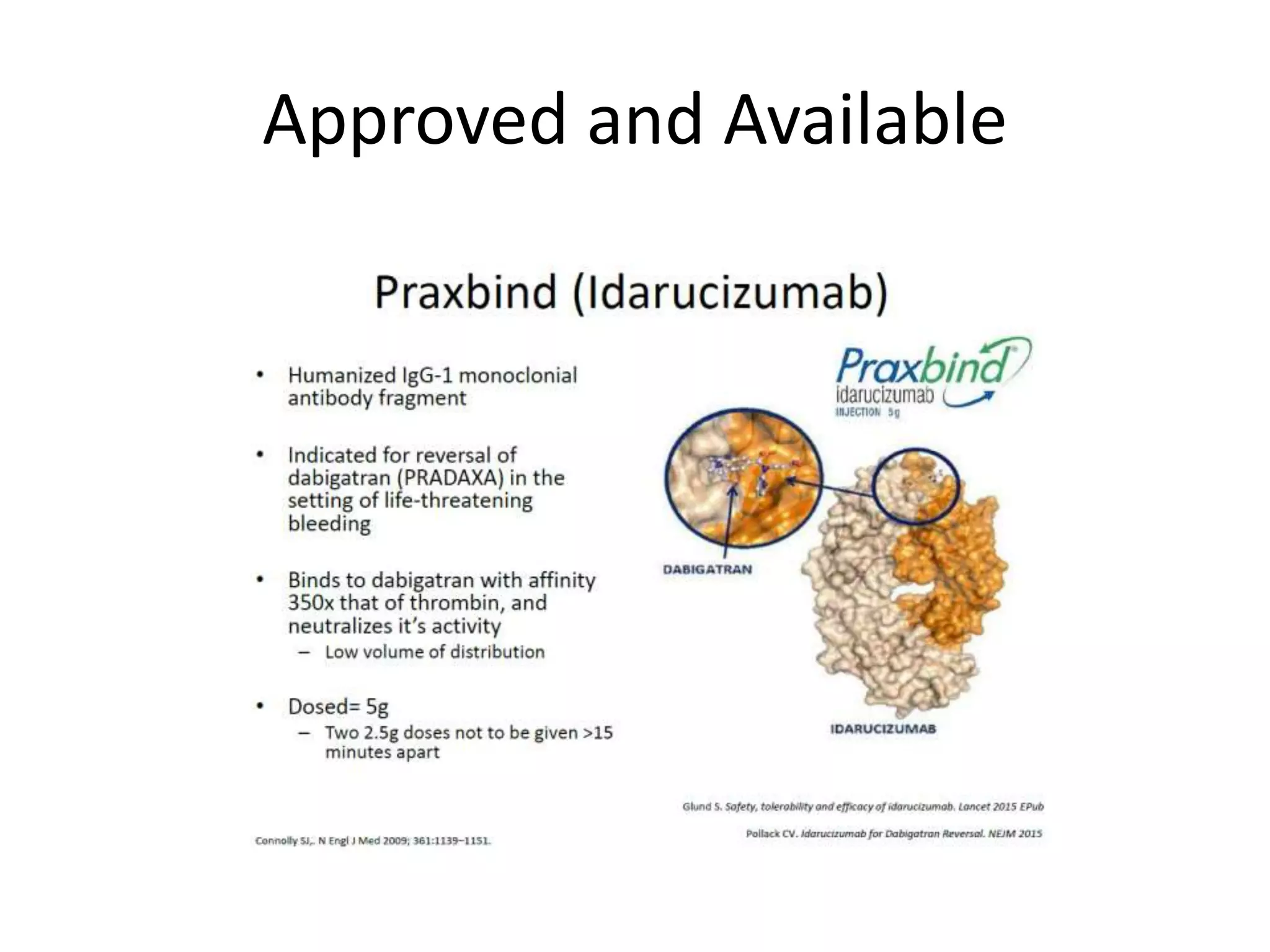
Patients received 5 g of intravenous idarucizumab, which was administered as two 50-ml bolus
infusions, each containing 2.5 g of idarucizumab, no more than 15 minutes apart. The 5-g dose was
calculated to reverse the total body load of dabigatran that was associated with the 99th percentile of
the dabigatran levels measured in the Randomized Evaluation of Long-Term Anticoagulation Therapy
(RE-LY) trial.
*Pollack C, et al. Idarucizumab for Dabigatran Reversal. N Engl J Med. 2015; 373:511-520.
Approved and Available
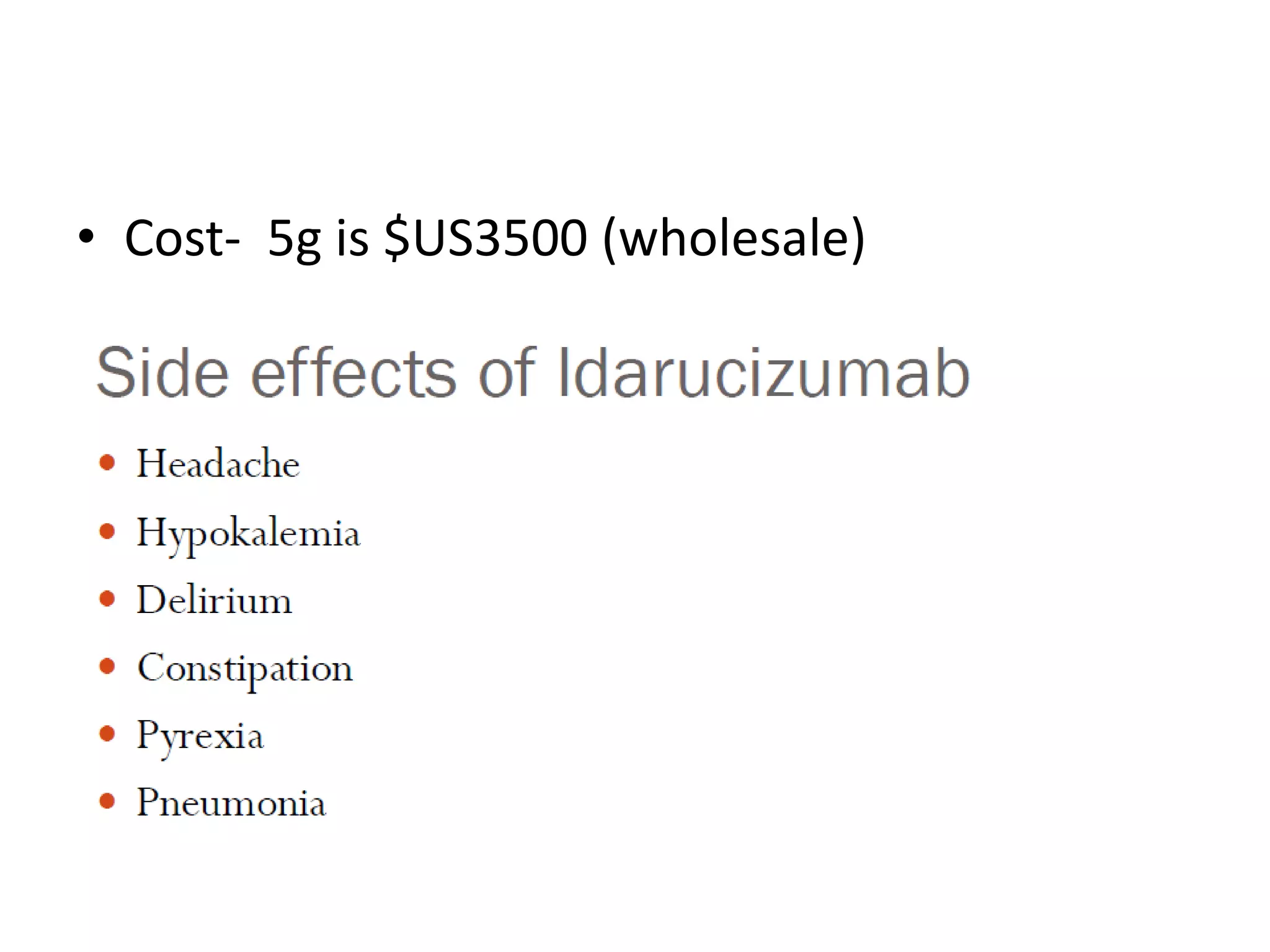
• Cost- 5g is $US3500 (wholesale)
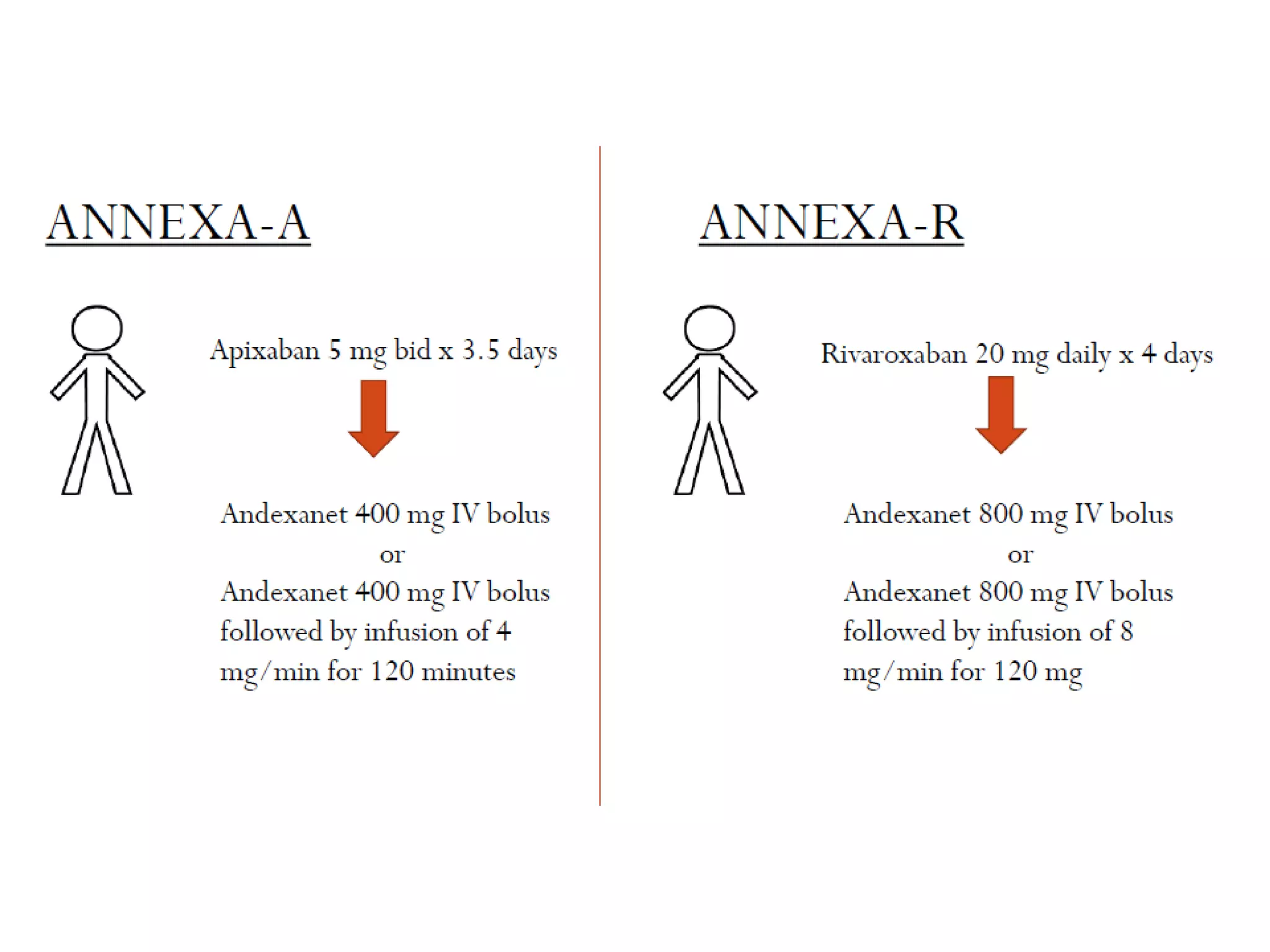
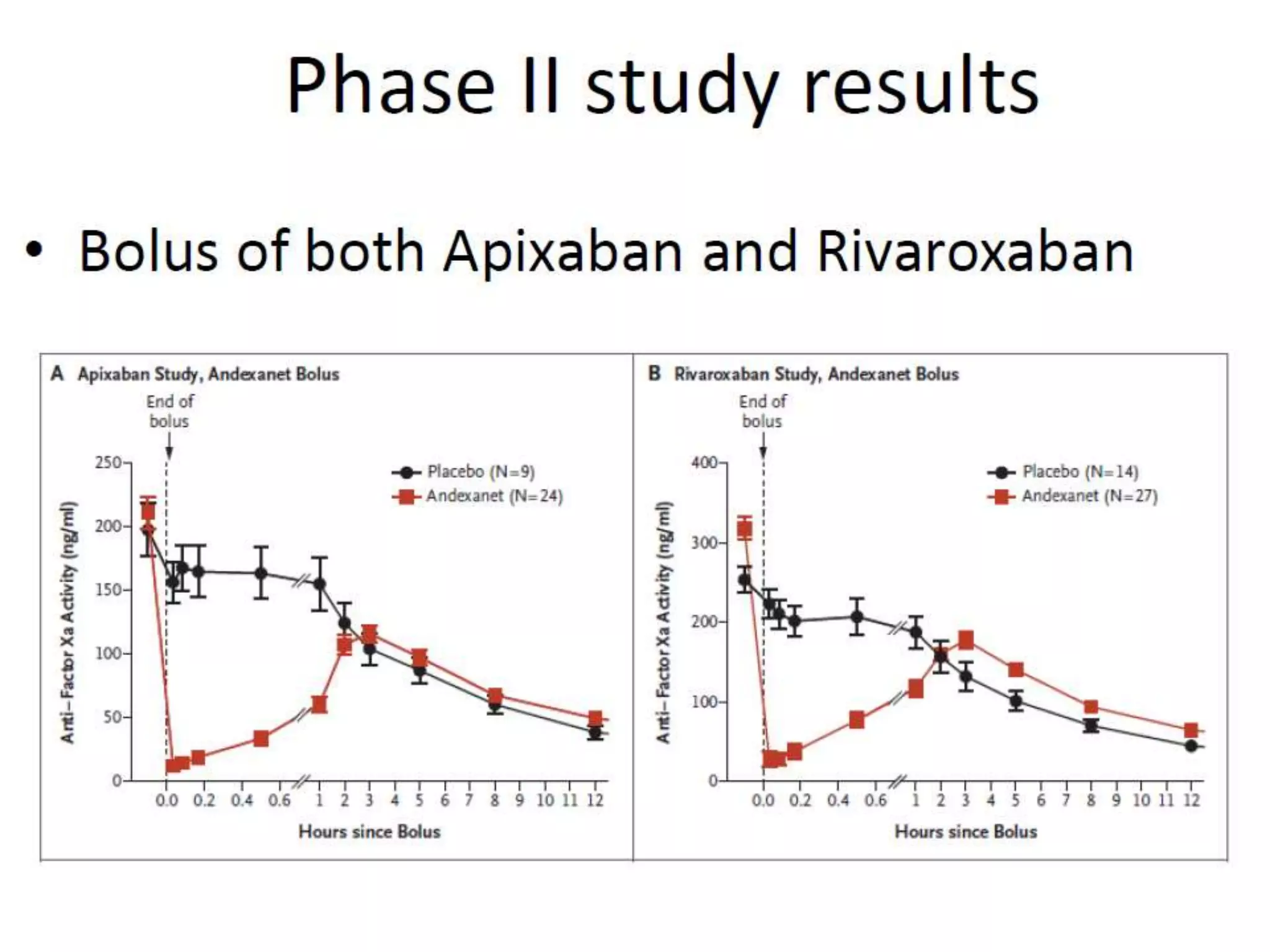
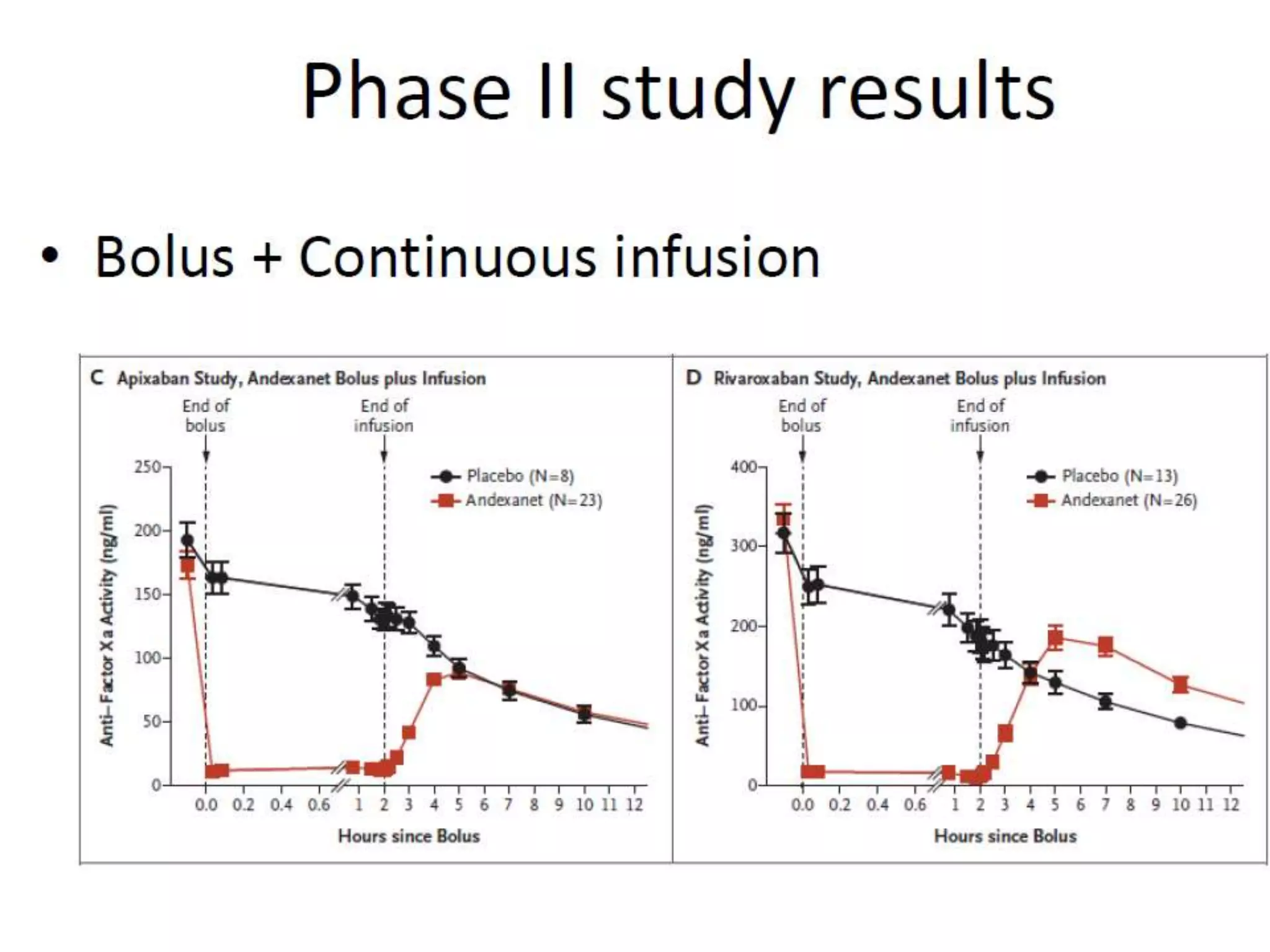
*Siegal DM, et al. Andexanet Alfa for the Reversal of Factor Xa Inhibitor Activity. N Engl J Med. 2015; 373:2413-2424.
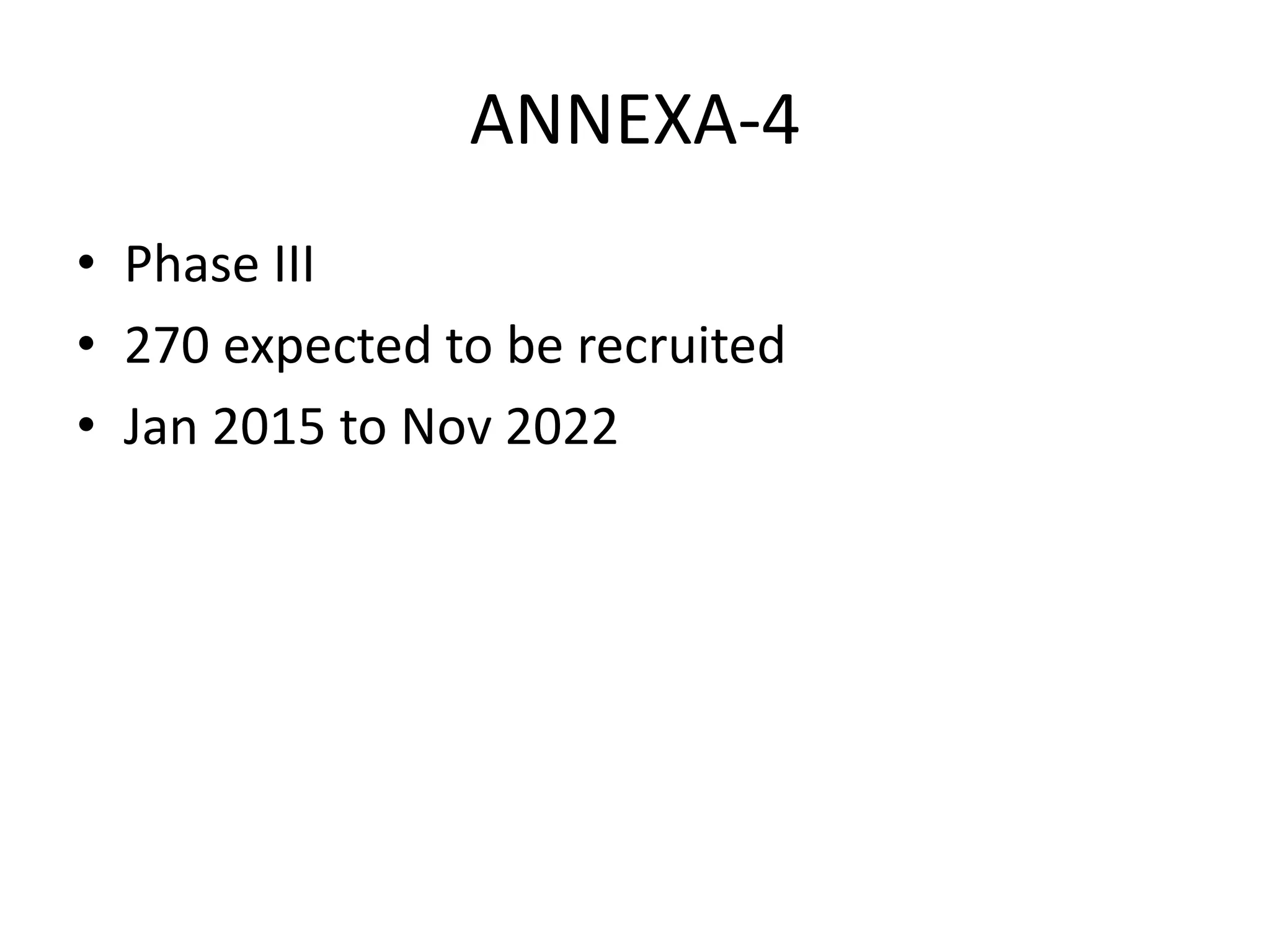
ANNEXA-4
• Phase III
• 270 expected to be recruited
• Jan 2015 to Nov 2022
 Local
hemostatic
measures
 Hold 1 or more
doses of
dabigatran
Mild bleeding
Moderate-severe
Bleeding*
Life-threatening
Bleeding*
 Manage bleeding
(compression,
surgery)
 Fluid  diuresis
 Transfuse RBCs or
platelets if needed
 Oral charcoal if dose
<2 hrs before
If aPTT >40 sec, consult TE or
Transfusion Medicine
 When was last dose?
FBE, creatinine
 aPTT, TT (dTT)
Patient with bleeding on
dabigatran
 Contact
Transfusion
Medicine
 Tranexamic acid (1
G IV followed by 1
G infusion over 8
hours)
 Hemodialysis
might be helpful
 Consider FEIBA*
*
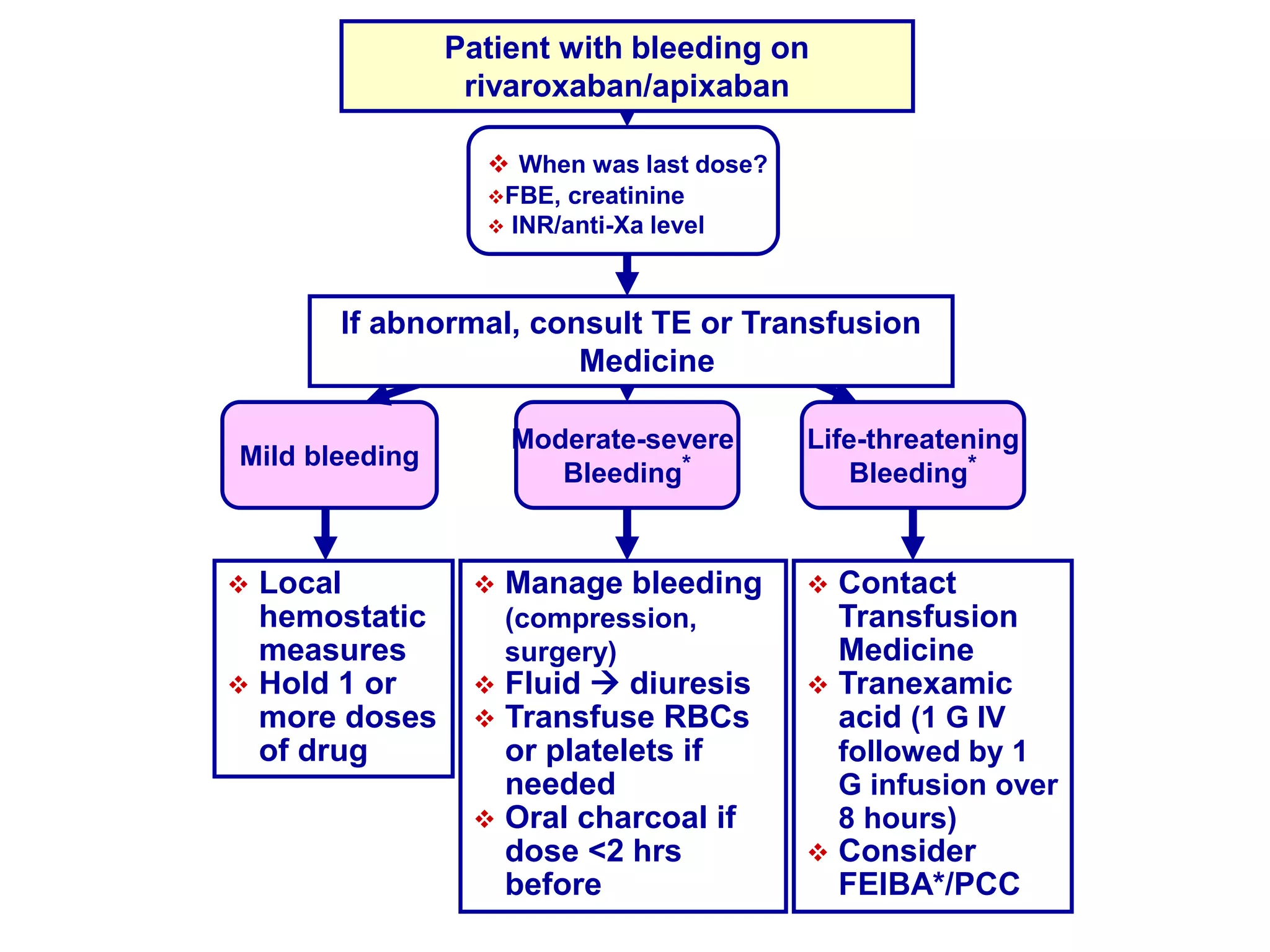
 Local
hemostatic
measures
 Hold 1 or
more doses
of drug
Mild bleeding
Moderate-severe
Bleeding*
Life-threatening
Bleeding*
 Manage bleeding
(compression,
surgery)
 Fluid  diuresis
 Transfuse RBCs
or platelets if
needed
 Oral charcoal if
dose <2 hrs
before
If abnormal, consult TE or Transfusion
Medicine
 When was last dose?
FBE, creatinine
 INR/anti-Xa level
Patient with bleeding on
rivaroxaban/apixaban
 Contact
Transfusion
Medicine
 Tranexamic
acid (1 G IV
followed by 1
G infusion over
8 hours)
 Consider
FEIBA*/PCC
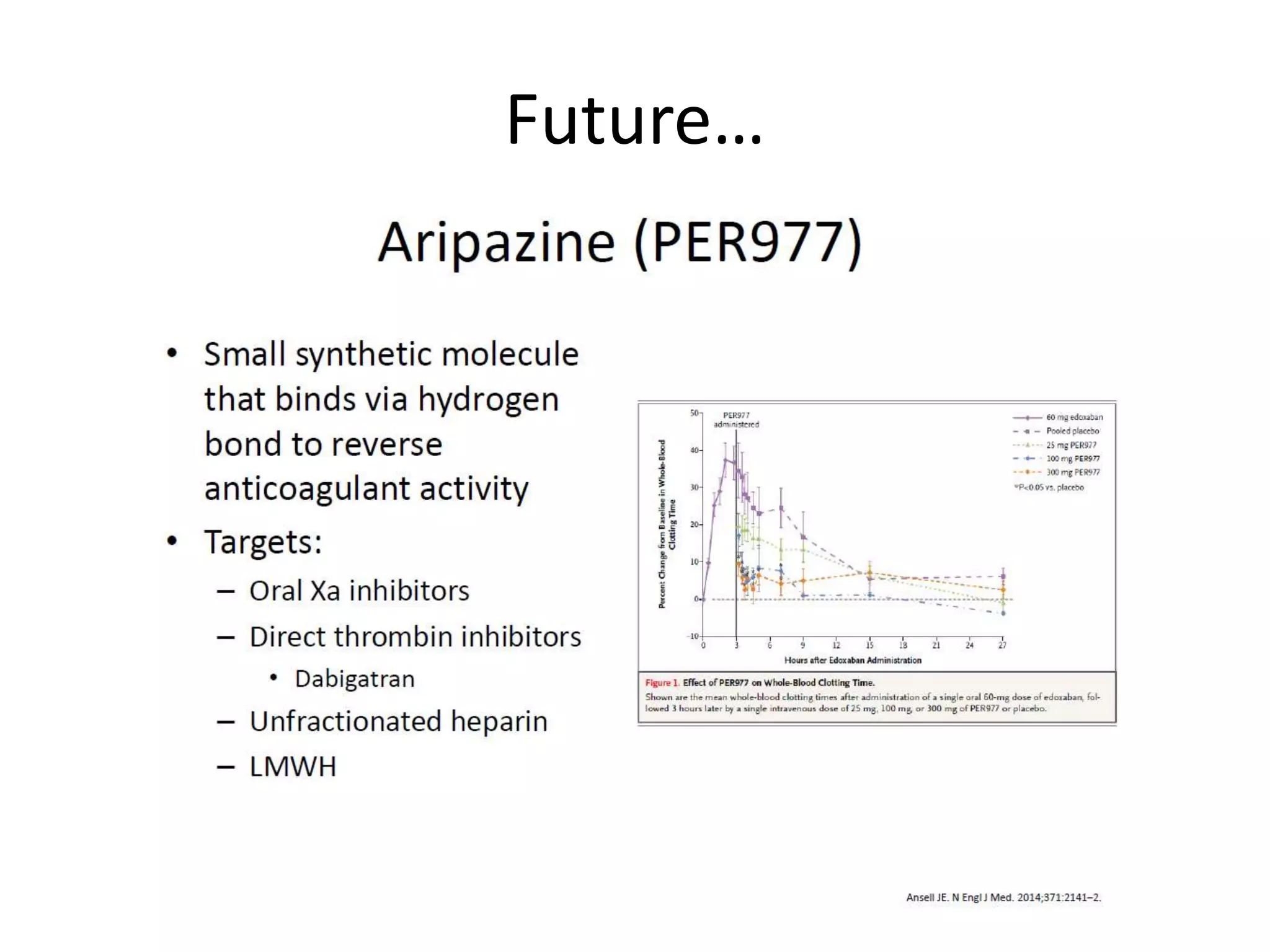
Future…

NOACS and bleeding

  • 1.
  • 2.
    Terminology • NOAC – Noveloral anticoagulants – Non VKA oral anticoagulants – (NO Anticoagulation) • DOAC – Direct oral anticoagulants
  • 3.
  • 5.
    • ODI – OralDirect Inhibitors • SODA – Specific Oral Direct Anticoagulant • TSOAC – Target Specific Oral Anticoagulant
  • 6.
    Vote 2014 • DOAC29.9% • NOAC 28.6% • TSOAC 23.4% • North America and European • Australasia not asked to participate
  • 10.
    New anticoagulants Direct ThrombinInhibitors - Dabigatran Factor Xa Inhibitors - Rivaroxaban - Apixaban - Edoxaban
  • 20.
    Management of Bleeding •Prevention • Treatment
  • 21.
    Prevention of Bleeding •Anticoagulant Selection • Patient and Dose Selection • Management of Interruption of Treatment
  • 24.
    -5 -4 -3-2 -1 OR 1 2 3 4 5 6 DAYS “No”: DVT prophylaxis with LMWH or prophylacti c dose of NOAC Post -Procedure Use of NOACs Restart NOAC at therapeutic doses “Yes”: Restart NOAC at therapeutic doses Ask yourself: “Is it OK that the patient be fully anticoagulated 2 hours after 1st dose?” 1 3 “No” Delay restart of DOAC at therapeutic doses 2
  • 29.
    Reversal of NOACs •Remove Drug • Active coagulation to overcome drug effect • Neutralise drug
  • 32.
  • 38.
    Patients received 5g of intravenous idarucizumab, which was administered as two 50-ml bolus infusions, each containing 2.5 g of idarucizumab, no more than 15 minutes apart. The 5-g dose was calculated to reverse the total body load of dabigatran that was associated with the 99th percentile of the dabigatran levels measured in the Randomized Evaluation of Long-Term Anticoagulation Therapy (RE-LY) trial. *Pollack C, et al. Idarucizumab for Dabigatran Reversal. N Engl J Med. 2015; 373:511-520.
  • 39.
  • 45.
    • Cost- 5gis $US3500 (wholesale)
  • 46.
    *Siegal DM, etal. Andexanet Alfa for the Reversal of Factor Xa Inhibitor Activity. N Engl J Med. 2015; 373:2413-2424.
  • 54.
    ANNEXA-4 • Phase III •270 expected to be recruited • Jan 2015 to Nov 2022
  • 57.
     Local hemostatic measures  Hold1 or more doses of dabigatran Mild bleeding Moderate-severe Bleeding* Life-threatening Bleeding*  Manage bleeding (compression, surgery)  Fluid  diuresis  Transfuse RBCs or platelets if needed  Oral charcoal if dose <2 hrs before If aPTT >40 sec, consult TE or Transfusion Medicine  When was last dose? FBE, creatinine  aPTT, TT (dTT) Patient with bleeding on dabigatran  Contact Transfusion Medicine  Tranexamic acid (1 G IV followed by 1 G infusion over 8 hours)  Hemodialysis might be helpful  Consider FEIBA* *
  • 59.
     Local hemostatic measures  Hold1 or more doses of drug Mild bleeding Moderate-severe Bleeding* Life-threatening Bleeding*  Manage bleeding (compression, surgery)  Fluid  diuresis  Transfuse RBCs or platelets if needed  Oral charcoal if dose <2 hrs before If abnormal, consult TE or Transfusion Medicine  When was last dose? FBE, creatinine  INR/anti-Xa level Patient with bleeding on rivaroxaban/apixaban  Contact Transfusion Medicine  Tranexamic acid (1 G IV followed by 1 G infusion over 8 hours)  Consider FEIBA*/PCC
  • 60.

Editor's Notes