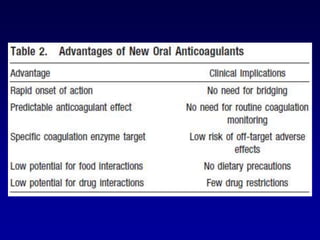
Newer anti-coagulants13.10.11
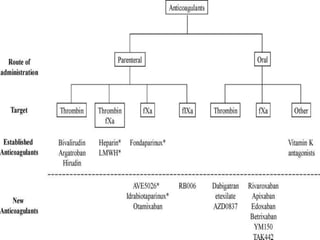
Coagulation systemAvailable anticoagulants:Heparin ,LMWH ,fondaparinux, Direct thrombin inhibitors, WarfarinLimitations  of established parenteral and oral anticoagulantsPotential  advantages of the new agentsPharmacology and clinical trial results with new anticoagulantsConclusions and Future Directions
Hemostatic  system   The major components of the hemostatic system are:Vascular  endotheliumPlateletsCoagulation  system Fibrinolytic  system.
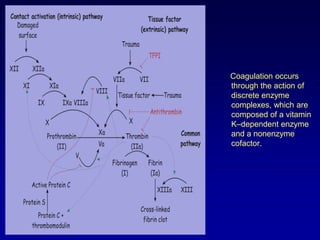
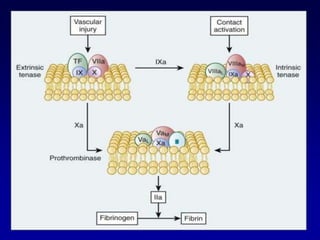
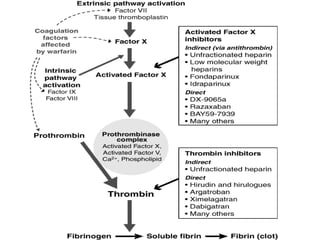
     Coagulation occurs through the action of discrete enzyme complexes, which are composed of a vitamin K–dependent enzyme and a nonenzyme cofactor.
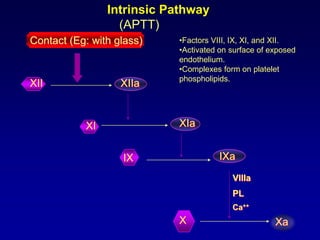
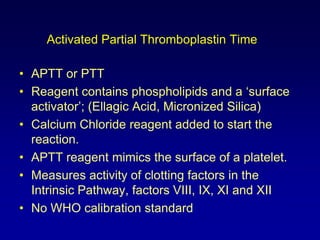
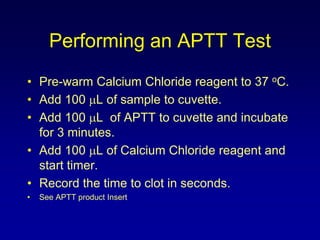
Intrinsic Pathway (APTT)Factors VIII, IX, XI, and XII.
Activated on surface of exposed endothelium.
Complexes form on platelet phospholipids.Contact (Eg: with glass)XIIXIIaXIaXIIXaIXVIIIaPLCa++XXa
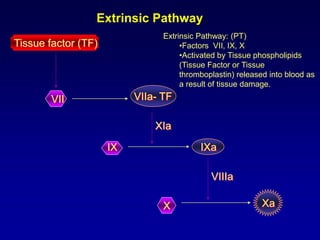
Extrinsic PathwayExtrinsic Pathway: (PT)Factors  VII, IX, X
Activated by Tissue phospholipids (Tissue Factor or Tissue thromboplastin) released into blood as a result of tissue damage. Tissue factor (TF)VIIa- TFVIIXIaIXIXaVIIIaXaX
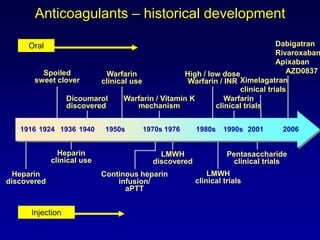
Anticoagulants – historical developmentDabigatranRivaroxabanApixaban     AZD0837OralSpoiled sweet cloverWarfarinclinical useHigh / low doseWarfarin / INRXimelagatranclinical trialsDicoumaroldiscoveredWarfarin / Vitamin KmechanismWarfarinclinical trials19161924193619401950s20061970s19761980s1990s2001Heparinclinical useLMWHdiscoveredPentasaccharideclinical trialsLMWHclinical trialsHeparindiscoveredContinous heparininfusion/aPTTInjection
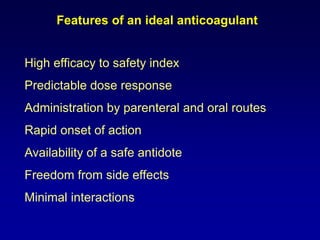
Features of an ideal anticoagulantHigh efficacy to safety indexPredictable dose responseAdministration by parenteral and oral routesRapid onset of actionAvailability of a safe antidoteFreedom from side effectsMinimal interactions
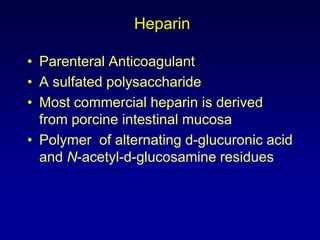
HeparinParenteralAnticoagulantA sulfated polysaccharideMost commercial heparin is derived from porcine intestinal mucosa Polymer  of alternating d-glucuronic acid and N-acetyl-d-glucosamine residues
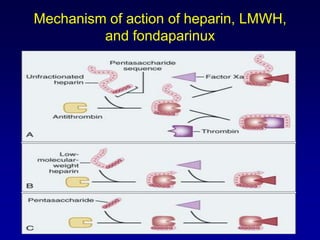
Mechanism of ActionActivates  antithrombin and accelerates the rate at which it inhibits clotting enzymes, particularly thrombin and factor XaHeparin  binds to the serpin via a unique pentasaccharide sequence found on one third of the chains of commercial heparin
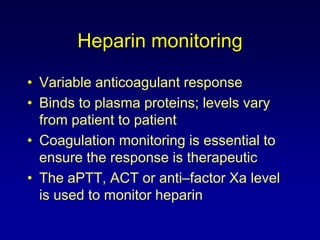
Mechanism of action of heparin, LMWH, and fondaparinux
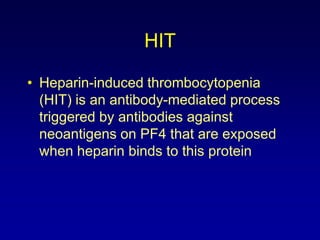
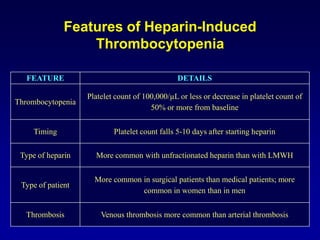
Side effects of heparinBleeding - the most common side effectThrombocytopeniaOsteoporosisElevated  levels of transaminases.
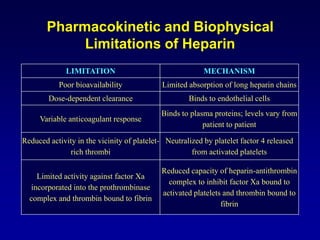
Pharmacokinetic and Biophysical Limitations of Heparin
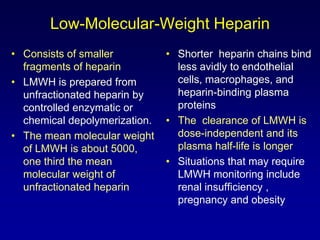
Low-Molecular-Weight HeparinConsists of smaller fragments of heparinLMWH is prepared from unfractionated heparin by controlled enzymatic or chemical depolymerization. The mean molecular weight of LMWH is about 5000, one third the mean molecular weight of unfractionatedheparinShorter  heparin chains bind less avidly to endothelial cells, macrophages, and heparin-binding plasma proteinsThe  clearance of LMWH is dose-independent and its plasma half-life is longerSituations that may require LMWH monitoring include renal insufficiency , pregnancy and obesity
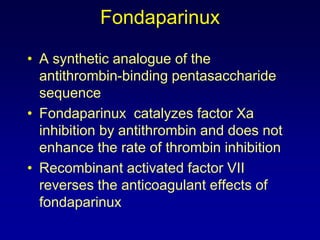
FondaparinuxA synthetic analogue of the antithrombin-binding pentasaccharidesequenceFondaparinuxcatalyzes factor Xa inhibition by antithrombin and does not enhance the rate of thrombin inhibitionRecombinant activated factor VII reverses the anticoagulant effects of fondaparinux
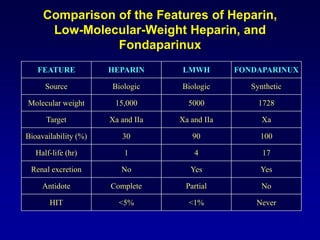
Comparison of the Features of Heparin, Low-Molecular-Weight Heparin, and Fondaparinux
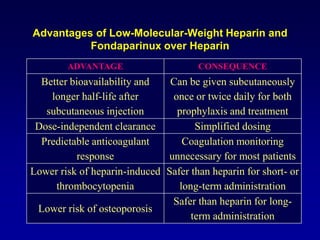
Advantages of Low-Molecular-Weight Heparin and Fondaparinux over Heparin
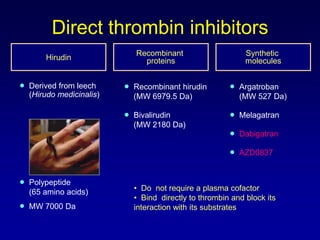
Direct thrombin inhibitorsHirudinRecombinant proteinsSynthetic moleculesDerived from leech (Hirudo medicinalis)
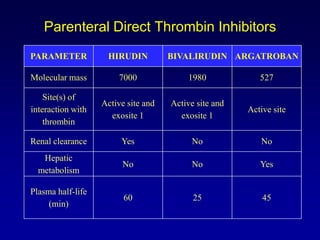
Recombinant hirudin (MW 6979.5 Da)
Bivalirudin (MW 2180 Da)
Argatroban(MW 527 Da)
Melagatran
Dabigatran
AZD0837
Polypeptide (65 amino acids)
MW 7000 Da
  Do  not require a plasma cofactor
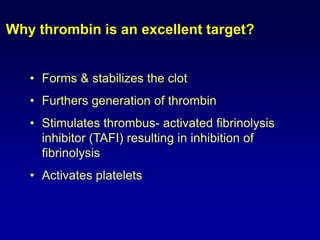
  Bind  directly to thrombin and block its   interaction with its substratesWhy thrombin is an excellent target?Forms & stabilizes the clot
Furthers generation of thrombin
Stimulates thrombus- activated fibrinolysis inhibitor (TAFI) resulting in inhibition of fibrinolysis
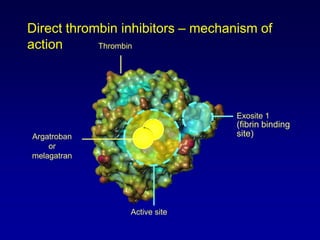
Activates plateletsDirect thrombin inhibitors – mechanism of actionThrombinExosite 1(fibrin bindingsite)ArgatrobanormelagatranActive site
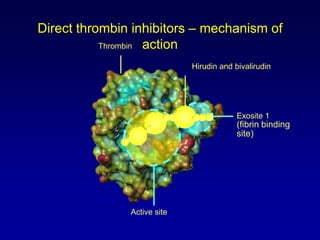
Direct thrombin inhibitors – mechanism of actionThrombinHirudin and bivalirudinExosite 1(fibrin bindingsite)Active site
Parenteral Direct Thrombin Inhibitors
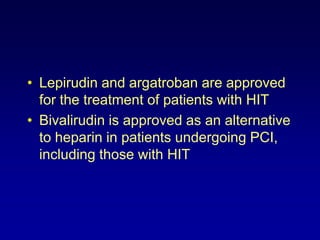
Lepirudin and argatroban are approvedfor the treatment of patients with HITBivalirudin is approved as an alternative to heparin in patients undergoing PCI, including those with HIT
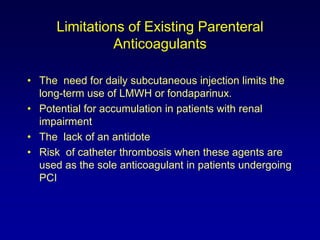
Limitations of Existing Parenteral AnticoagulantsThe  need for daily subcutaneous injection limits the long-term use of LMWH or fondaparinux. Potential for accumulation in patients with renal impairmentThe  lack of an antidoteRisk  of catheter thrombosis when these agents are used as the sole anticoagulant in patients undergoing PCI
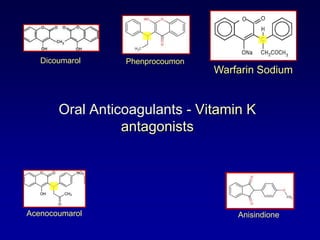
DicoumarolPhenprocoumonWarfarin SodiumOral Anticoagulants - Vitamin K antagonistsAcenocoumarolAnisindione
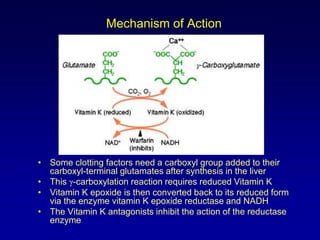
Mechanism of ActionSome clotting factors need a carboxyl group added to their carboxyl-terminal glutamates after synthesis in the liverThis γ-carboxylation reaction requires reduced Vitamin KVitamin K epoxide is then converted back to its reduced form via the enzyme vitamin K epoxidereductase and NADHThe Vitamin K antagonists inhibit the action of the reductase enzyme
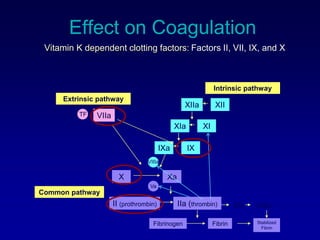
Effect on CoagulationIntrinsic pathwayExtrinsic pathwayXIIXIIaVIIaTFXIaXIIXaIXVIIIaVaXXaCommon pathwayII (prothrombin)IIa (thrombin)XIIIXIIIaFibrinogenFibrinStabilized Fibrin       Vitamin K dependent clotting factors:Factors II, VII, IX, and X
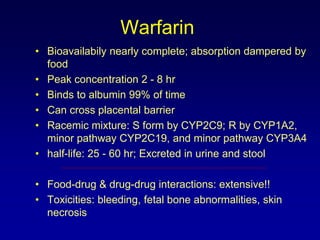
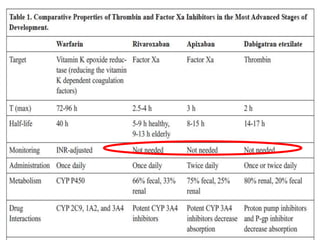
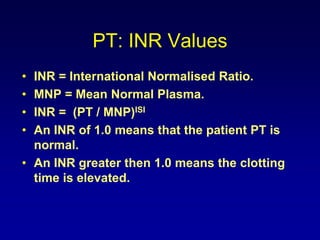
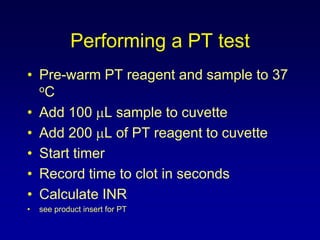
WarfarinBioavailabilynearly complete; absorption dampered by foodPeak concentration 2 - 8 hrBinds to albumin 99% of timeCan cross placental barrierRacemic mixture: S form by CYP2C9; R by CYP1A2, minor pathway CYP2C19, and minor pathway CYP3A4half-life: 25 - 60 hr; Excreted in urine and stoolFood-drug & drug-drug interactions: extensive!!Toxicities: bleeding, fetal bone abnormalities, skin necrosis
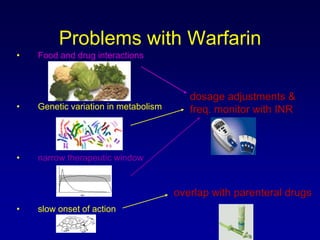
Problems with WarfarinFood and drug interactionsGenetic variation in metabolismnarrow therapeutic windowslow onset of actiondosage adjustments & freq. monitor with INRoverlap with parenteral drugs
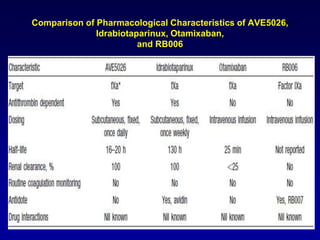
Comparison of Pharmacological Characteristics of AVE5026, Idrabiotaparinux, Otamixaban,and RB006
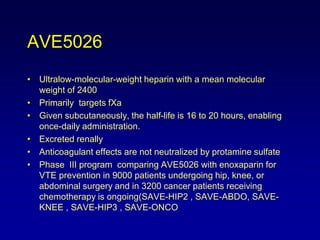
AVE5026Ultralow-molecular-weight heparin with a mean molecular weight of 2400Primarily  targets fXaGiven subcutaneously, the half-life is 16 to 20 hours, enabling once-daily administration. Excreted renallyAnticoagulant effects are not neutralized by protaminesulfatePhase  III program comparing AVE5026 with enoxaparin for VTE prevention in 9000 patients undergoing hip, knee, or abdominal surgery and in 3200 cancer patients receiving chemotherapy is ongoing(SAVE-HIP2 , SAVE-ABDO, SAVE-KNEE , SAVE-HIP3 , SAVE-ONCO
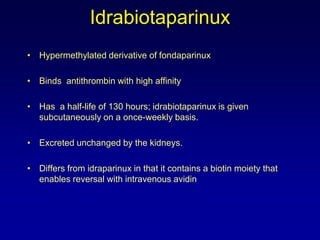
IdrabiotaparinuxHypermethylated derivative of fondaparinuxBinds  antithrombin with high affinity Has  a half-life of 130 hours; idrabiotaparinux is given subcutaneously on a once-weekly basis. Excreted unchanged by the kidneys. Differs from idraparinuxin that it contains a biotin moiety that enables reversal with intravenous avidin
The Van Gogh deep vein thrombosis (DVT) trial compared 3 to 6 months of idraparinux with conventional anticoagulant therapy in 2904 patients with acute DVT.At 3 months, the incidence of recurrent VTE (nonfatal or fatal) was similar in the 2 treatment groupsIdraparinuxwas associated with significantly fewer major plus clinically relevant nonmajor bleeds than conventional therapyThe AMADEUS trial compared idraparinux with a VKA  for prevention of thromboembolism in patients with AF. The trial was stopped early because of an excess of clinically relevant bleeds with idraparinux compared with a VKAEQUINOX bioequivalence study suggested that idrabiotaparinux and idraparinux are similarly effective for DVT treatmentCASSIOPEA trial is comparing 3 to 6 months of idrabiotaparinux with conventional anticoagulation therapy for prevention of recurrent VTE
OtamixabanA parenteral direct fXainhibitorHas  a rapid onset of actionproduces a predictable anticoagulant effectHas a short half-life25% of the drug is cleared by the kidneys.These features render otamixaban an attractive candidate to replace heparin in patients with ACSSEPIA-ACS 1(TIMI) 42, a phase II dose-finding study that compared 5 different doses of otamixabanwith the combination of heparin plus eptifibatide in 3241 patients with non–ST-segment elevation ACS
RB006An RNA aptamerthat targets factor IXa with high affinity and specificity, When given intravenously, produces a rapid and dose-proportional anticoagulant effect Immediately  reversed by intravenous administration of RB007, the complementary oligonucleotide antidote.RB006 is not cleared renallydoes not appear to be immunogenichas the potential to inhibit the activation of coagulation induced by exposure of blood to artificial surfaces, such as stents or cardiac bypass circuitspotential to replace heparin and protaminesulfate in patients undergoing cardiopulmonary bypass surgery. May also be useful for patients at high risk of bleeding and for those with renal impairmentPhase  II REVERSAL-PCI study, the efficacy and safety of RB006/RB007 are being compared with those of heparin in 26 patients undergoing elective PCI
Oral Thrombin Inhibitors
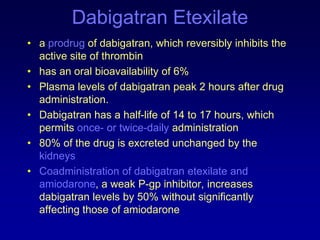
DabigatranEtexilatea prodrug of dabigatran, which reversibly inhibits the active site of thrombinhas an oral bioavailability of 6%Plasma levels of dabigatran peak 2 hours after drug administration. Dabigatranhas a half-life of 14 to 17 hours, which permits once- or twice-daily administration80% of the drug is excreted unchanged by the kidneysCoadministration of dabigatranetexilate and amiodarone, a weak P-gp inhibitor, increases dabigatran levels by 50% without significantly affecting those of amiodarone
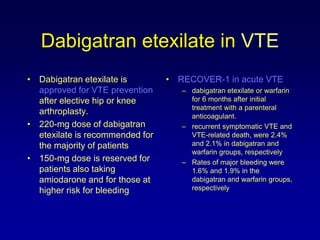
Dabigatranetexilatein VTEDabigatranetexilate is approved for VTE prevention after elective hip or knee arthroplasty. 220-mg dose of dabigatranetexilate is recommended for the majority of patients150-mg dose is reserved for patients also taking amiodarone and for those at higher risk for bleedingRECOVER-1 in acute VTEdabigatranetexilateor warfarinfor 6 months after initial treatment with a parenteral anticoagulant.recurrent symptomatic VTE and VTE-related death, were 2.4% and 2.1% in dabigatranand warfarin groups, respectively Rates of major bleeding were 1.6% and 1.9% in the dabigatran and warfarin groups, respectively
Dabigatranetexilate in AFThe RE-LY trial randomized 18 113 patients with AF and at least 1 additional risk factor for stroke to receive dabigatranetexilate (at doses of 110 or 150 mg twice daily) or warfarinDabigatran110 mg b.i.d. was non-inferior to VKA for the prevention of stroke and systemic embolism with lower rates of major bleedingDabigatran 150 mg b.i.d. was associated with lower rates of stroke and systemic embolism with similar rates of major haemorrhage, compared with VKA.
Dabigatranetexilate in ACSDabigatranetexilate has also been evaluated in the phase II RE-DEEM study in ACS to determine whether it reduces the risk of recurrent ischemia when given in conjunction with antiplatelet drugs
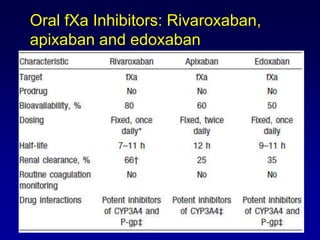
Oral fXa Inhibitors:Rivaroxaban, apixaban and edoxaban
RivaroxabanAn active compound with an oral bioavailability of 80%Has a rapid onset of action and a half-life of 7 to11 hours.Has a dual mode of eliminationconcomitant administration of potent inhibitors or both P-gp and CYP3A4 is contraindicatedOn the basis of the results of RECORD trials, rivaroxaban is approved for the prevention of VTE in patients undergoing elective hip or knee arthroplasty
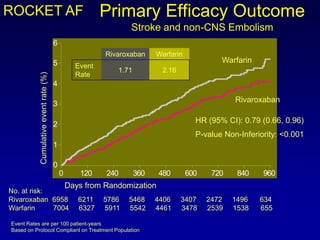
ROCKET AFPrimary Efficacy OutcomeStroke and non-CNS EmbolismWarfarinRivaroxabanCumulative event rate (%)HR (95% CI): 0.79 (0.66, 0.96)P-value Non-Inferiority: <0.001Days from RandomizationNo. at risk:Rivaroxaban  6958     6211     5786     5468     4406     3407     2472     1496      634Warfarin         7004     6327     5911     5542     4461     3478     2539     1538      655Event Rates are per 100 patient-yearsBased on Protocol Compliant on Treatment Population
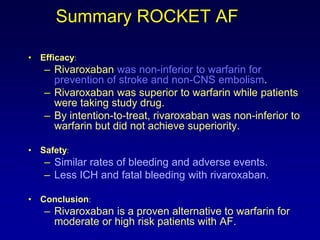
Summary ROCKET AFEfficacy:Rivaroxabanwas non-inferior to warfarin for prevention of stroke and non-CNS embolism.Rivaroxaban was superior to warfarin while patients were taking study drug.By intention-to-treat, rivaroxaban was non-inferior to warfarin but did not achieve superiority.Safety:Similar rates of bleeding and adverse events.Less ICH and fatal bleeding with rivaroxaban.Conclusion:Rivaroxaban is a proven alternative to warfarin for moderate or high risk patients with AF.
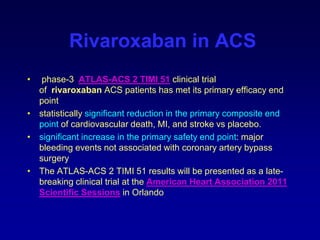
 Rivaroxaban in ACS phase-3  ATLAS-ACS 2 TIMI 51 clinical trial of  rivaroxaban ACS patients has met its primary efficacy end pointstatistically significant reduction in the primary composite end point of cardiovascular death, MI, and stroke vs placebo. significant increase in the primary safety end point: major bleeding events not associated with coronary artery bypass surgeryThe ATLAS-ACS 2 TIMI 51 results will be presented as a late-breaking clinical trial at the American Heart Association 2011 Scientific Sessions in Orlando
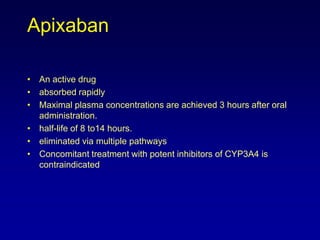
ApixabanAn active drugabsorbed rapidlyMaximal plasma concentrations are achieved 3 hours after oral administration.half-life of 8 to14 hours. eliminated via multiple pathwaysConcomitant treatment with potent inhibitors of CYP3A4 is contraindicated
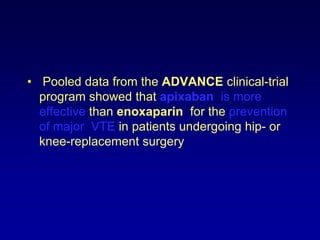
 Pooled data from the ADVANCE clinical-trial program showed that apixaban is more effective than enoxaparin for the prevention of major  VTEin patients undergoing hip- or knee-replacement surgery
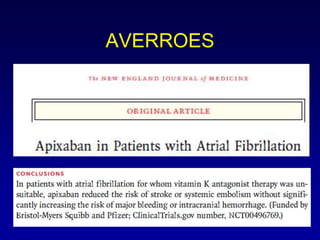
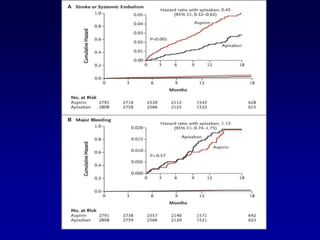
AVERROES
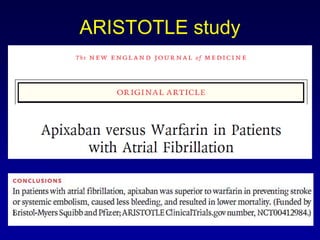
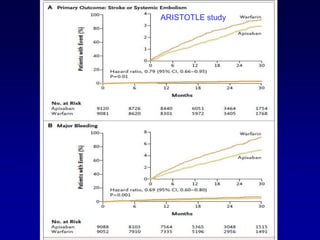
ARISTOTLE study
ARISTOTLE study
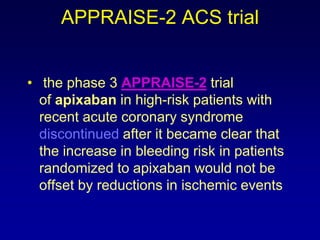
APPRAISE-2 ACS trial the phase 3 APPRAISE-2 trial of apixaban in high-risk patients with recent acute coronary syndrome discontinuedafter it became clear that the increase in bleeding risk in patients randomized to apixaban would not be offset by reductions in ischemic events
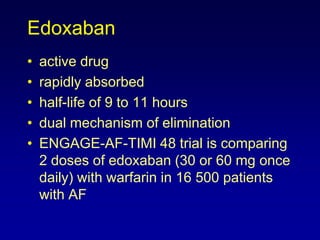
Edoxabanactive drug rapidly absorbedhalf-life of 9 to 11 hours dual mechanism of eliminationENGAGE-AF-TIMI 48 trial is comparing 2 doses of edoxaban (30 or 60 mg once daily) with warfarin in 16 500 patients with AF
Other oral fXa inhibitors under development include betrixaban(15-hour half-life and extrarenal   		    clearance)

Newer anticoagulants

  • 1.
  • 2.
    Coagulation systemAvailable anticoagulants:Heparin,LMWH ,fondaparinux, Direct thrombin inhibitors, WarfarinLimitations of established parenteral and oral anticoagulantsPotential advantages of the new agentsPharmacology and clinical trial results with new anticoagulantsConclusions and Future Directions
  • 3.
    Hemostatic system The major components of the hemostatic system are:Vascular endotheliumPlateletsCoagulation system Fibrinolytic system.
  • 4.
    Coagulation occurs through the action of discrete enzyme complexes, which are composed of a vitamin K–dependent enzyme and a nonenzyme cofactor.
  • 5.
    Intrinsic Pathway (APTT)FactorsVIII, IX, XI, and XII.
  • 6.
    Activated on surfaceof exposed endothelium.
  • 7.
    Complexes form onplatelet phospholipids.Contact (Eg: with glass)XIIXIIaXIaXIIXaIXVIIIaPLCa++XXa
  • 8.
  • 9.
    Activated by Tissuephospholipids (Tissue Factor or Tissue thromboplastin) released into blood as a result of tissue damage. Tissue factor (TF)VIIa- TFVIIXIaIXIXaVIIIaXaX
  • 11.
    Anticoagulants – historicaldevelopmentDabigatranRivaroxabanApixaban AZD0837OralSpoiled sweet cloverWarfarinclinical useHigh / low doseWarfarin / INRXimelagatranclinical trialsDicoumaroldiscoveredWarfarin / Vitamin KmechanismWarfarinclinical trials19161924193619401950s20061970s19761980s1990s2001Heparinclinical useLMWHdiscoveredPentasaccharideclinical trialsLMWHclinical trialsHeparindiscoveredContinous heparininfusion/aPTTInjection
  • 14.
    Features of anideal anticoagulantHigh efficacy to safety indexPredictable dose responseAdministration by parenteral and oral routesRapid onset of actionAvailability of a safe antidoteFreedom from side effectsMinimal interactions
  • 15.
    HeparinParenteralAnticoagulantA sulfated polysaccharideMostcommercial heparin is derived from porcine intestinal mucosa Polymer of alternating d-glucuronic acid and N-acetyl-d-glucosamine residues
  • 16.
    Mechanism of ActionActivates antithrombin and accelerates the rate at which it inhibits clotting enzymes, particularly thrombin and factor XaHeparin binds to the serpin via a unique pentasaccharide sequence found on one third of the chains of commercial heparin
  • 17.
    Mechanism of actionof heparin, LMWH, and fondaparinux
  • 18.
    Side effects ofheparinBleeding - the most common side effectThrombocytopeniaOsteoporosisElevated levels of transaminases.
  • 19.
    Pharmacokinetic and BiophysicalLimitations of Heparin
  • 20.
    Low-Molecular-Weight HeparinConsists ofsmaller fragments of heparinLMWH is prepared from unfractionated heparin by controlled enzymatic or chemical depolymerization. The mean molecular weight of LMWH is about 5000, one third the mean molecular weight of unfractionatedheparinShorter heparin chains bind less avidly to endothelial cells, macrophages, and heparin-binding plasma proteinsThe clearance of LMWH is dose-independent and its plasma half-life is longerSituations that may require LMWH monitoring include renal insufficiency , pregnancy and obesity
  • 21.
    FondaparinuxA synthetic analogueof the antithrombin-binding pentasaccharidesequenceFondaparinuxcatalyzes factor Xa inhibition by antithrombin and does not enhance the rate of thrombin inhibitionRecombinant activated factor VII reverses the anticoagulant effects of fondaparinux
  • 22.
    Comparison of theFeatures of Heparin, Low-Molecular-Weight Heparin, and Fondaparinux
  • 23.
    Advantages of Low-Molecular-WeightHeparin and Fondaparinux over Heparin
  • 24.
    Direct thrombin inhibitorsHirudinRecombinantproteinsSynthetic moleculesDerived from leech (Hirudo medicinalis)
  • 25.
  • 26.
  • 27.
  • 28.
  • 29.
  • 30.
  • 31.
  • 32.
  • 33.
    Do not require a plasma cofactor
  • 34.
    Bind directly to thrombin and block its interaction with its substratesWhy thrombin is an excellent target?Forms & stabilizes the clot
  • 35.
  • 36.
    Stimulates thrombus- activatedfibrinolysis inhibitor (TAFI) resulting in inhibition of fibrinolysis
  • 37.
    Activates plateletsDirect thrombininhibitors – mechanism of actionThrombinExosite 1(fibrin bindingsite)ArgatrobanormelagatranActive site
  • 38.
    Direct thrombin inhibitors– mechanism of actionThrombinHirudin and bivalirudinExosite 1(fibrin bindingsite)Active site
  • 39.
  • 40.
    Lepirudin and argatrobanare approvedfor the treatment of patients with HITBivalirudin is approved as an alternative to heparin in patients undergoing PCI, including those with HIT
  • 41.
    Limitations of ExistingParenteral AnticoagulantsThe need for daily subcutaneous injection limits the long-term use of LMWH or fondaparinux. Potential for accumulation in patients with renal impairmentThe lack of an antidoteRisk of catheter thrombosis when these agents are used as the sole anticoagulant in patients undergoing PCI
  • 42.
    DicoumarolPhenprocoumonWarfarin SodiumOral Anticoagulants- Vitamin K antagonistsAcenocoumarolAnisindione
  • 43.
    Mechanism of ActionSomeclotting factors need a carboxyl group added to their carboxyl-terminal glutamates after synthesis in the liverThis γ-carboxylation reaction requires reduced Vitamin KVitamin K epoxide is then converted back to its reduced form via the enzyme vitamin K epoxidereductase and NADHThe Vitamin K antagonists inhibit the action of the reductase enzyme
  • 44.
    Effect on CoagulationIntrinsicpathwayExtrinsic pathwayXIIXIIaVIIaTFXIaXIIXaIXVIIIaVaXXaCommon pathwayII (prothrombin)IIa (thrombin)XIIIXIIIaFibrinogenFibrinStabilized Fibrin Vitamin K dependent clotting factors:Factors II, VII, IX, and X
  • 45.
    WarfarinBioavailabilynearly complete; absorptiondampered by foodPeak concentration 2 - 8 hrBinds to albumin 99% of timeCan cross placental barrierRacemic mixture: S form by CYP2C9; R by CYP1A2, minor pathway CYP2C19, and minor pathway CYP3A4half-life: 25 - 60 hr; Excreted in urine and stoolFood-drug & drug-drug interactions: extensive!!Toxicities: bleeding, fetal bone abnormalities, skin necrosis
  • 46.
    Problems with WarfarinFoodand drug interactionsGenetic variation in metabolismnarrow therapeutic windowslow onset of actiondosage adjustments & freq. monitor with INRoverlap with parenteral drugs
  • 48.
    Comparison of PharmacologicalCharacteristics of AVE5026, Idrabiotaparinux, Otamixaban,and RB006
  • 49.
    AVE5026Ultralow-molecular-weight heparin witha mean molecular weight of 2400Primarily targets fXaGiven subcutaneously, the half-life is 16 to 20 hours, enabling once-daily administration. Excreted renallyAnticoagulant effects are not neutralized by protaminesulfatePhase III program comparing AVE5026 with enoxaparin for VTE prevention in 9000 patients undergoing hip, knee, or abdominal surgery and in 3200 cancer patients receiving chemotherapy is ongoing(SAVE-HIP2 , SAVE-ABDO, SAVE-KNEE , SAVE-HIP3 , SAVE-ONCO
  • 50.
    IdrabiotaparinuxHypermethylated derivative offondaparinuxBinds antithrombin with high affinity Has a half-life of 130 hours; idrabiotaparinux is given subcutaneously on a once-weekly basis. Excreted unchanged by the kidneys. Differs from idraparinuxin that it contains a biotin moiety that enables reversal with intravenous avidin
  • 51.
    The Van Goghdeep vein thrombosis (DVT) trial compared 3 to 6 months of idraparinux with conventional anticoagulant therapy in 2904 patients with acute DVT.At 3 months, the incidence of recurrent VTE (nonfatal or fatal) was similar in the 2 treatment groupsIdraparinuxwas associated with significantly fewer major plus clinically relevant nonmajor bleeds than conventional therapyThe AMADEUS trial compared idraparinux with a VKA for prevention of thromboembolism in patients with AF. The trial was stopped early because of an excess of clinically relevant bleeds with idraparinux compared with a VKAEQUINOX bioequivalence study suggested that idrabiotaparinux and idraparinux are similarly effective for DVT treatmentCASSIOPEA trial is comparing 3 to 6 months of idrabiotaparinux with conventional anticoagulation therapy for prevention of recurrent VTE
  • 52.
    OtamixabanA parenteral directfXainhibitorHas a rapid onset of actionproduces a predictable anticoagulant effectHas a short half-life25% of the drug is cleared by the kidneys.These features render otamixaban an attractive candidate to replace heparin in patients with ACSSEPIA-ACS 1(TIMI) 42, a phase II dose-finding study that compared 5 different doses of otamixabanwith the combination of heparin plus eptifibatide in 3241 patients with non–ST-segment elevation ACS
  • 53.
    RB006An RNA aptamerthattargets factor IXa with high affinity and specificity, When given intravenously, produces a rapid and dose-proportional anticoagulant effect Immediately reversed by intravenous administration of RB007, the complementary oligonucleotide antidote.RB006 is not cleared renallydoes not appear to be immunogenichas the potential to inhibit the activation of coagulation induced by exposure of blood to artificial surfaces, such as stents or cardiac bypass circuitspotential to replace heparin and protaminesulfate in patients undergoing cardiopulmonary bypass surgery. May also be useful for patients at high risk of bleeding and for those with renal impairmentPhase II REVERSAL-PCI study, the efficacy and safety of RB006/RB007 are being compared with those of heparin in 26 patients undergoing elective PCI
  • 55.
  • 56.
    DabigatranEtexilatea prodrug ofdabigatran, which reversibly inhibits the active site of thrombinhas an oral bioavailability of 6%Plasma levels of dabigatran peak 2 hours after drug administration. Dabigatranhas a half-life of 14 to 17 hours, which permits once- or twice-daily administration80% of the drug is excreted unchanged by the kidneysCoadministration of dabigatranetexilate and amiodarone, a weak P-gp inhibitor, increases dabigatran levels by 50% without significantly affecting those of amiodarone
  • 57.
    Dabigatranetexilatein VTEDabigatranetexilate isapproved for VTE prevention after elective hip or knee arthroplasty. 220-mg dose of dabigatranetexilate is recommended for the majority of patients150-mg dose is reserved for patients also taking amiodarone and for those at higher risk for bleedingRECOVER-1 in acute VTEdabigatranetexilateor warfarinfor 6 months after initial treatment with a parenteral anticoagulant.recurrent symptomatic VTE and VTE-related death, were 2.4% and 2.1% in dabigatranand warfarin groups, respectively Rates of major bleeding were 1.6% and 1.9% in the dabigatran and warfarin groups, respectively
  • 58.
    Dabigatranetexilate in AFTheRE-LY trial randomized 18 113 patients with AF and at least 1 additional risk factor for stroke to receive dabigatranetexilate (at doses of 110 or 150 mg twice daily) or warfarinDabigatran110 mg b.i.d. was non-inferior to VKA for the prevention of stroke and systemic embolism with lower rates of major bleedingDabigatran 150 mg b.i.d. was associated with lower rates of stroke and systemic embolism with similar rates of major haemorrhage, compared with VKA.
  • 59.
    Dabigatranetexilate in ACSDabigatranetexilatehas also been evaluated in the phase II RE-DEEM study in ACS to determine whether it reduces the risk of recurrent ischemia when given in conjunction with antiplatelet drugs
  • 60.
  • 61.
    RivaroxabanAn active compoundwith an oral bioavailability of 80%Has a rapid onset of action and a half-life of 7 to11 hours.Has a dual mode of eliminationconcomitant administration of potent inhibitors or both P-gp and CYP3A4 is contraindicatedOn the basis of the results of RECORD trials, rivaroxaban is approved for the prevention of VTE in patients undergoing elective hip or knee arthroplasty
  • 62.
    ROCKET AFPrimary EfficacyOutcomeStroke and non-CNS EmbolismWarfarinRivaroxabanCumulative event rate (%)HR (95% CI): 0.79 (0.66, 0.96)P-value Non-Inferiority: <0.001Days from RandomizationNo. at risk:Rivaroxaban 6958 6211 5786 5468 4406 3407 2472 1496 634Warfarin 7004 6327 5911 5542 4461 3478 2539 1538 655Event Rates are per 100 patient-yearsBased on Protocol Compliant on Treatment Population
  • 63.
    Summary ROCKET AFEfficacy:Rivaroxabanwasnon-inferior to warfarin for prevention of stroke and non-CNS embolism.Rivaroxaban was superior to warfarin while patients were taking study drug.By intention-to-treat, rivaroxaban was non-inferior to warfarin but did not achieve superiority.Safety:Similar rates of bleeding and adverse events.Less ICH and fatal bleeding with rivaroxaban.Conclusion:Rivaroxaban is a proven alternative to warfarin for moderate or high risk patients with AF.
  • 64.
     Rivaroxaban in ACS phase-3 ATLAS-ACS 2 TIMI 51 clinical trial of  rivaroxaban ACS patients has met its primary efficacy end pointstatistically significant reduction in the primary composite end point of cardiovascular death, MI, and stroke vs placebo. significant increase in the primary safety end point: major bleeding events not associated with coronary artery bypass surgeryThe ATLAS-ACS 2 TIMI 51 results will be presented as a late-breaking clinical trial at the American Heart Association 2011 Scientific Sessions in Orlando
  • 65.
    ApixabanAn active drugabsorbedrapidlyMaximal plasma concentrations are achieved 3 hours after oral administration.half-life of 8 to14 hours. eliminated via multiple pathwaysConcomitant treatment with potent inhibitors of CYP3A4 is contraindicated
  • 66.
     Pooled data fromthe ADVANCE clinical-trial program showed that apixaban is more effective than enoxaparin for the prevention of major VTEin patients undergoing hip- or knee-replacement surgery
  • 67.
  • 69.
  • 70.
  • 71.
    APPRAISE-2 ACS trial thephase 3 APPRAISE-2 trial of apixaban in high-risk patients with recent acute coronary syndrome discontinuedafter it became clear that the increase in bleeding risk in patients randomized to apixaban would not be offset by reductions in ischemic events
  • 72.
    Edoxabanactive drug rapidlyabsorbedhalf-life of 9 to 11 hours dual mechanism of eliminationENGAGE-AF-TIMI 48 trial is comparing 2 doses of edoxaban (30 or 60 mg once daily) with warfarin in 16 500 patients with AF
  • 73.
    Other oral fXainhibitors under development include betrixaban(15-hour half-life and extrarenal clearance)

Editor's Notes

  • #8 assemble on anionic phospholipid membranes in a calcium-dependent fashion. Vascular injury exposes tissue factor (TF), which binds factor VIIa to form extrinsic tenase. Extrinsic tenase activates factors IX and X. Factor IXa binds to factor VIIIa to form intrinsic tenase, which activates factor X. Factor Xa binds to factor Va to form prothrombinase, which converts prothrombin (II) to thrombin (IIa). Thrombin then converts soluble fibrinogen into insoluble fibrin.
  • #32 some action for 2 to 5 days after tablet is taken