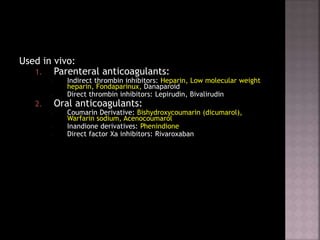
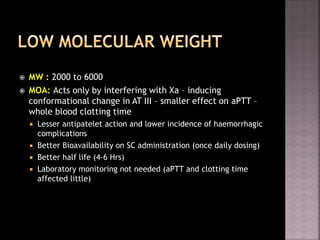
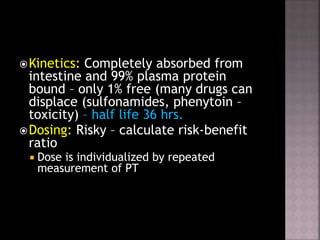
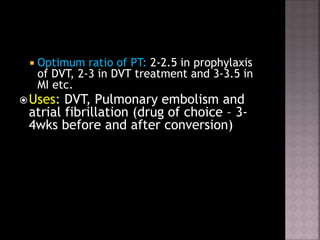
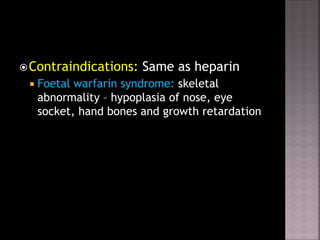
- Heparin and warfarin are commonly used anticoagulant drugs. Heparin works by activating antithrombin, which inactivates coagulation factors, while warfarin interferes with vitamin K recycling and reduces coagulation factor synthesis.
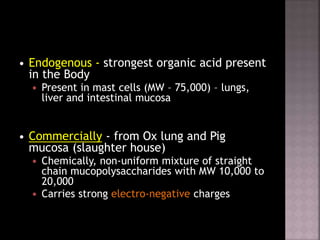
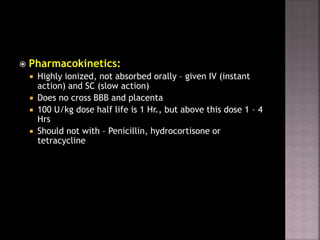
- Heparin is derived from animal tissues and administered intravenously or subcutaneously. Warfarin is an oral medication that takes several days to achieve its anticoagulant effect.
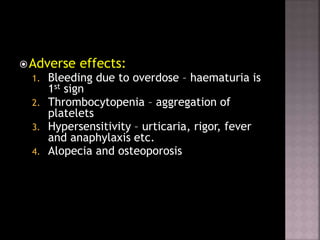
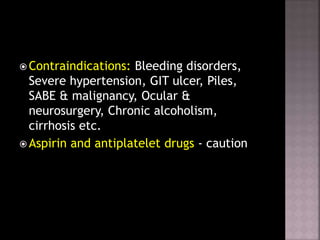
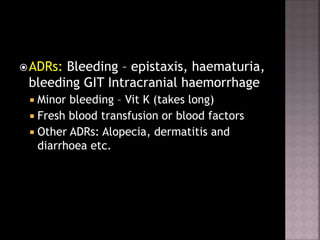
- Both drugs increase the risk of bleeding and require monitoring to ensure therapeutic levels are achieved without side effects. Protamine sulfate can reverse the anticoagulant effect of heparin.