

ANTIBIOTICS
JAI NARAIN VYAS UNIVERSITY, JODHPUR
ASSISTANT PROFESSOR:- ASHWIN SINGH
CHOUHAN
DEPARTMENT:- PHARMACOLOGY
E-mail:- ashwinsingh26061992@gmail.com
JNVU PHARMACY, JODHPUR
ANTIBIOTICS
Antibiotics are chemical compounds used to kill
or inhibit the growth of bacteria. Strictly speaking,
antibiotics are a subgroup of organic anti-infective agents
that are derived from bacteria or moulds that are toxic to
other bacteria. However, the term antibiotic is now used
loosely to include anti-infectives produced from synthetic
and semisynthetic compounds.
The term antibiotic may be used interchangeably with
the term antibacterial. However, it is incorrect to use the
term antibiotic when referring to antiviral, antiprotozoal
and antifungal agents.
HISTORY OF ANTIBIOTICS
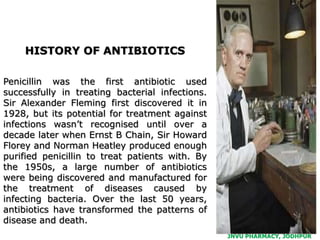
Penicillin was the first antibiotic used
successfully in treating bacterial infections.
Sir Alexander Fleming first discovered it in
1928, but its potential for treatment against
infections wasn’t recognised until over a
decade later when Ernst B Chain, Sir Howard
Florey and Norman Heatley produced enough
purified penicillin to treat patients with. By
the 1950s, a large number of antibiotics
were being discovered and manufactured for
the treatment of diseases caused by
infecting bacteria. Over the last 50 years,
antibiotics have transformed the patterns of
disease and death.
JNVU PHARMACY, JODHPUR
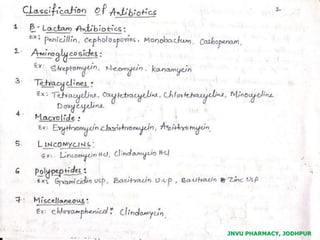
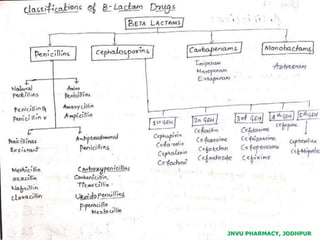
CLASSIFICATION OF ANTIBIOTICS
Antibiotics can be classified in several ways.
The most common method classifies them according to
their chemical structure as antibiotics sharing the same
or similar chemical structure will generally show similar
patterns of antibacterial activity,
effectiveness, toxicity and allergic potential.
B-lactam antibiotics inhibit bacterial cell wall
synthesis. They include:
Penicillins
Cephalosporins
Carbapenems
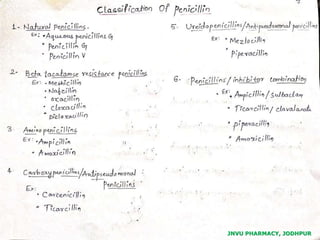
Penicillins
Penicillin G
Amoxicillin
Flucloxacillin
Cephalosporins
Cefoxitin
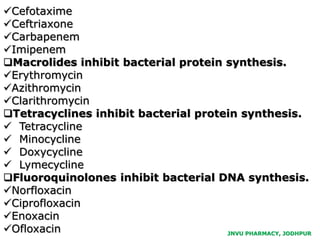
Cefotaxime
Ceftriaxone
Carbapenem
Imipenem
Macrolides inhibit bacterial protein synthesis.
Erythromycin
Azithromycin
Clarithromycin
Tetracyclines inhibit bacterial protein synthesis.
 Tetracycline
 Minocycline
 Doxycycline
 Lymecycline
Fluoroquinolones inhibit bacterial DNA synthesis.
Norfloxacin
Ciprofloxacin
Enoxacin
Ofloxacin JNVU PHARMACY, JODHPUR
JNVU PHARMACY, JODHPUR
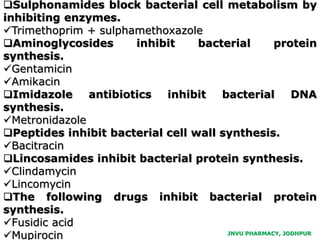
Sulphonamides block bacterial cell metabolism by
inhibiting enzymes.
Trimethoprim + sulphamethoxazole
Aminoglycosides inhibit bacterial protein
synthesis.
Gentamicin
Amikacin
Imidazole antibiotics inhibit bacterial DNA
synthesis.
Metronidazole
Peptides inhibit bacterial cell wall synthesis.
Bacitracin
Lincosamides inhibit bacterial protein synthesis.
Clindamycin
Lincomycin
The following drugs inhibit bacterial protein
synthesis.
Fusidic acid
Mupirocin
JNVU PHARMACY, JODHPUR
USES OF ANTIBIOTICS
Antibiotics only work against infections caused by
bacteria. Bacterial infections are much less common
than viral infections. Most coughs and colds are of viral
origin so antibiotics should not be prescribed for these.
Antibiotics should only used when absolutely necessary,
because:
There is increasing resistance of bacteria to treatment
Resistant bacteria are selected out by the use of
antibiotics.
Antibiotics may have serious adverse effects in some
people Some common bacterial infections that do require
antibiotic therapy include:
Staphyloccal skin infections, eg, impetigo (school sores)
Streptococcal skin infections, eg, cellulitis
Some ear and sinus infections
JNVU PHARMACY, JODHPUR
'Strep throat' — sore throat caused by Streptococcus
If these infections remain untreated, the resulting disease
may be serious and even fatal.
In severe bacterial infections where patients may be
hospitalized, often an intravenous broad-spectrum
antibiotic (one that is active against many different
bacteria) is given to start treatment. As soon as
laboratory tests confirm the infecting bacteria, the
antibiotic should be changed to one that is active against
specific bacteria. After 48 hours of intravenous treatment,
if there is clinical improvement, the patient may be
switched to an oral form of the antibiotic.
JNVU PHARMACY, JODHPUR
ANTIBIOTIC RESISTANCE
The overuse and inappropriate use of antibiotics has led
to antibiotic resistance.
Bacteria that were once susceptible to antibiotics have
developed ways to survive the drugs that were meant to
kill or weaken them. This is also known as antibacterial
resistance or drug resistance. Some diseases such as
tuberculosis, gonorrhoea and childhood bacterial ear
infections, that were once easily treated with antibiotics
are now again becoming difficult to treat as bacteria have
become resistant to these drugs. About 70% of bacteria
that cause infections in hospitals are resistant to at least
one of the antibiotics most commonly used to treat
infections. Methicillin (meticillin) resistant Staphylococcus
aureus (MRSA) is a particular problem for patients with
skin diseases, ulcers and surgical wounds.
JNVU PHARMACY, JODHPUR
Doctor responsibility
Only prescribe antibiotics if bacterial infection present
Prescribe the approved dose and duration or as
recommended by experts
Educate patient about the importance of completing
their course of antibiotics as instructed
Patient responsibility
Understand that not all infections are bacterial and that
not all bacterial infections will clear on antibiotics
(eg, folliculitis)
Take antibiotics exactly as instructed (ie, with or without
food etc)
Ensure you finish the course of antibiotics
JNVU PHARMACY, JODHPUR
SIDE EFFECTS OF ANTIBIOTICS
Antibiotics are associated with many side effects,
including cutaneous adverse reactions. Some side effects
are class-related but most reactions are specific to the
agent in that individual.
Some common problems with antibiotics are listed below:
Allergy to certain antibiotics or classes of antibiotics (eg,
penicillin allergy)
Many antibiotics cause gastrointestinal problems (eg,
diarrhoea, vomiting, nausea)
Antibiotics kill not only their targets but other useful
micro-organisms that live in and on our body (flora) to
prevent other diseases (eg, oral and/or vaginal thrush).
A variety of skin rashes can occur, which may be
mild(eg,hives)or
devastating (eg, toxic epidermal necrolysis).
JNVU PHARMACY, JODHPUR
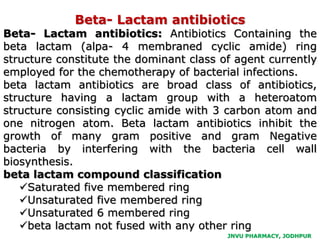
Beta- Lactam antibiotics
Beta- Lactam antibiotics: Antibiotics Containing the
beta lactam (alpa- 4 membraned cyclic amide) ring
structure constitute the dominant class of agent currently
employed for the chemotherapy of bacterial infections.
beta lactam antibiotics are broad class of antibiotics,
structure having a lactam group with a heteroatom
structure consisting cyclic amide with 3 carbon atom and
one nitrogen atom. Beta lactam antibiotics inhibit the
growth of many gram positive and gram Negative
bacteria by interfering with the bacteria cell wall
biosynthesis.
beta lactam compound classification
Saturated five membered ring
Unsaturated five membered ring
Unsaturated 6 membered ring
beta lactam not fused with any other ring
JNVU PHARMACY, JODHPUR
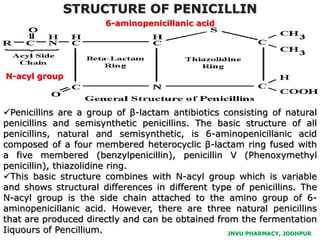
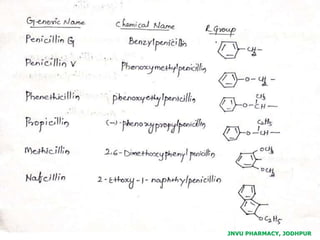
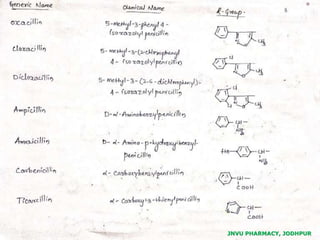
STRUCTURE OF PENICILLIN
Penicillins are a group of β-lactam antibiotics consisting of natural
penicillins and semisynthetic penicillins. The basic structure of all
penicillins, natural and semisynthetic, is 6-aminopenicillanic acid
composed of a four membered heterocyclic β-lactam ring fused with
a five membered (benzylpenicillin), penicillin V (Phenoxymethyl
penicillin), thiazolidine ring.
This basic structure combines with N-acyl group which is variable
and shows structural differences in different type of penicillins. The
N-acyl group is the side chain attached to the amino group of 6-
aminopenicillanic acid. However, there are three natural penicillins
that are produced directly and can be obtained from the fermentation
Iiquours of Pencillium.
6-aminopenicillanic acid
N-acyl group
JNVU PHARMACY, JODHPUR
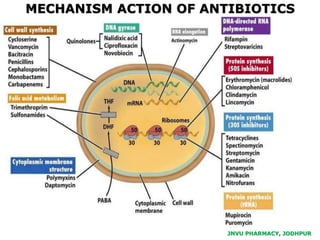
MECHANISM ACTION OF ANTIBIOTICS
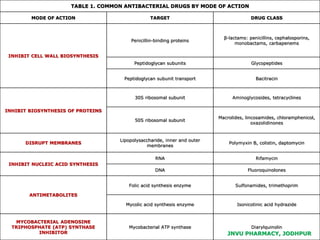
TABLE 1. COMMON ANTIBACTERIAL DRUGS BY MODE OF ACTION
MODE OF ACTION TARGET DRUG CLASS
INHIBIT CELL WALL BIOSYNTHESIS
Penicillin-binding proteins
β-lactams: penicillins, cephalosporins,
monobactams, carbapenems
Peptidoglycan subunits Glycopeptides
Peptidoglycan subunit transport Bacitracin
INHIBIT BIOSYNTHESIS OF PROTEINS
30S ribosomal subunit Aminoglycosides, tetracyclines
50S ribosomal subunit
Macrolides, lincosamides, chloramphenicol,
oxazolidinones
DISRUPT MEMBRANES
Lipopolysaccharide, inner and outer
membranes
Polymyxin B, colistin, daptomycin
INHIBIT NUCLEIC ACID SYNTHESIS
RNA Rifamycin
DNA Fluoroquinolones
ANTIMETABOLITES
Folic acid synthesis enzyme Sulfonamides, trimethoprim
Mycolic acid synthesis enzyme Isonicotinic acid hydrazide
MYCOBACTERIAL ADENOSINE
TRIPHOSPHATE (ATP) SYNTHASE
INHIBITOR
Mycobacterial ATP synthase Diarylquinolin
JNVU PHARMACY, JODHPUR
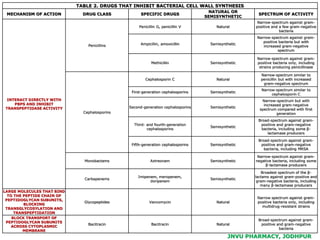
TABLE 2. DRUGS THAT INHIBIT BACTERIAL CELL WALL SYNTHESIS
MECHANISM OF ACTION DRUG CLASS SPECIFIC DRUGS
NATURAL OR
SEMISYNTHETIC
SPECTRUM OF ACTIVITY
INTERACT DIRECTLY WITH
PBPS AND INHIBIT
TRANSPEPTIDASE ACTIVITY
Penicillins
Penicillin G, penicillin V Natural
Narrow-spectrum against gram-
positive and a few gram-negative
bacteria
Ampicillin, amoxicillin Semisynthetic
Narrow-spectrum against gram-
positive bacteria but with
increased gram-negative
spectrum
Methicillin Semisynthetic
Narrow-spectrum against gram-
positive bacteria only, including
strains producing penicillinase
Cephalosporins
Cephalosporin C Natural
Narrow-spectrum similar to
penicillin but with increased
gram-negative spectrum
First-generation cephalosporins Semisynthetic
Narrow-spectrum similar to
cephalosporin C
Second-generation cephalosporins Semisynthetic
Narrow-spectrum but with
increased gram-negative
spectrum compared with first
generation
Third- and fourth-generation
cephalosporins
Semisynthetic
Broad-spectrum against gram-
positive and gram-negative
bacteria, including some β-
lactamase producers
Fifth-generation cephalosporins Semisynthetic
Broad-spectrum against gram-
positive and gram-negative
bacteria, including MRSA
Monobactams Aztreonam Semisynthetic
Narrow-spectrum against gram-
negative bacteria, including some
β-lactamase producers
Carbapenems
Imipenem, meropenem,
doripenem
Semisynthetic
Broadest spectrum of the β-
lactams against gram-positive and
gram-negative bacteria, including
many β-lactamase producers
LARGE MOLECULES THAT BIND
TO THE PEPTIDE CHAIN OF
PEPTIDOGLYCAN SUBUNITS,
BLOCKING
TRANSGLYCOSYLATION AND
TRANSPEPTIDATION
Glycopeptides Vancomycin Natural
Narrow spectrum against gram-
positive bacteria only, including
multidrug-resistant strains
BLOCK TRANSPORT OF
PEPTIDOGLYCAN SUBUNITS
ACROSS CYTOPLASMIC
MEMBRANE
Bacitracin Bacitracin Natural
Broad-spectrum against gram-
positive and gram-negative
bacteria
JNVU PHARMACY, JODHPUR
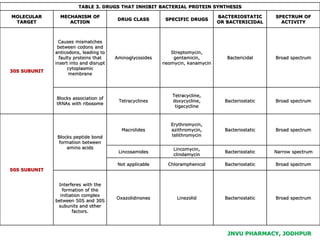
TABLE 3. DRUGS THAT INHIBIT BACTERIAL PROTEIN SYNTHESIS
MOLECULAR
TARGET
MECHANISM OF
ACTION
DRUG CLASS SPECIFIC DRUGS
BACTERIOSTATIC
OR BACTERICIDAL
SPECTRUM OF
ACTIVITY
30S SUBUNIT
Causes mismatches
between codons and
anticodons, leading to
faulty proteins that
insert into and disrupt
cytoplasmic
membrane
Aminoglycosides
Streptomycin,
gentamicin,
neomycin, kanamycin
Bactericidal Broad spectrum
Blocks association of
tRNAs with ribosome
Tetracyclines
Tetracycline,
doxycycline,
tigecycline
Bacteriostatic Broad spectrum
50S SUBUNIT
Blocks peptide bond
formation between
amino acids
Macrolides
Erythromycin,
azithromycin,
telithromycin
Bacteriostatic Broad spectrum
Lincosamides
Lincomycin,
clindamycin
Bacteriostatic Narrow spectrum
Not applicable Chloramphenicol Bacteriostatic Broad spectrum
Interferes with the
formation of the
initiation complex
between 50S and 30S
subunits and other
factors.
Oxazolidinones Linezolid Bacteriostatic Broad spectrum
JNVU PHARMACY, JODHPUR
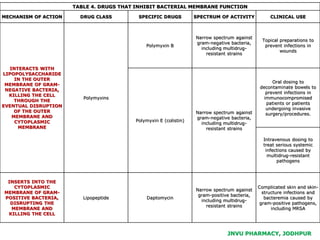
TABLE 4. DRUGS THAT INHIBIT BACTERIAL MEMBRANE FUNCTION
MECHANISM OF ACTION DRUG CLASS SPECIFIC DRUGS SPECTRUM OF ACTIVITY CLINICAL USE
INTERACTS WITH
LIPOPOLYSACCHARIDE
IN THE OUTER
MEMBRANE OF GRAM-
NEGATIVE BACTERIA,
KILLING THE CELL
THROUGH THE
EVENTUAL DISRUPTION
OF THE OUTER
MEMBRANE AND
CYTOPLASMIC
MEMBRANE
Polymyxins
Polymyxin B
Narrow spectrum against
gram-negative bacteria,
including multidrug-
resistant strains
Topical preparations to
prevent infections in
wounds
Polymyxin E (colistin)
Narrow spectrum against
gram-negative bacteria,
including multidrug-
resistant strains
Oral dosing to
decontaminate bowels to
prevent infections in
immunocompromised
patients or patients
undergoing invasive
surgery/procedures.
Intravenous dosing to
treat serious systemic
infections caused by
multidrug-resistant
pathogens
INSERTS INTO THE
CYTOPLASMIC
MEMBRANE OF GRAM-
POSITIVE BACTERIA,
DISRUPTING THE
MEMBRANE AND
KILLING THE CELL
Lipopeptide Daptomycin
Narrow spectrum against
gram-positive bacteria,
including multidrug-
resistant strains
Complicated skin and skin-
structure infections and
bacteremia caused by
gram-positive pathogens,
including MRSA
JNVU PHARMACY, JODHPUR
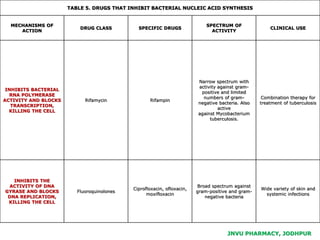
TABLE 5. DRUGS THAT INHIBIT BACTERIAL NUCLEIC ACID SYNTHESIS
MECHANISMS OF
ACTION
DRUG CLASS SPECIFIC DRUGS
SPECTRUM OF
ACTIVITY
CLINICAL USE
INHIBITS BACTERIAL
RNA POLYMERASE
ACTIVITY AND BLOCKS
TRANSCRIPTION,
KILLING THE CELL
Rifamycin Rifampin
Narrow spectrum with
activity against gram-
positive and limited
numbers of gram-
negative bacteria. Also
active
against Mycobacterium
tuberculosis.
Combination therapy for
treatment of tuberculosis
INHIBITS THE
ACTIVITY OF DNA
GYRASE AND BLOCKS
DNA REPLICATION,
KILLING THE CELL
Fluoroquinolones
Ciprofloxacin, ofloxacin,
moxifloxacin
Broad spectrum against
gram-positive and gram-
negative bacteria
Wide variety of skin and
systemic infections
JNVU PHARMACY, JODHPUR
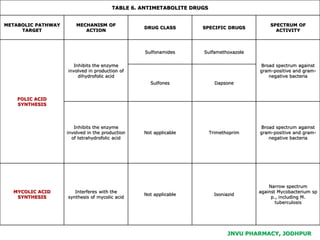
TABLE 6. ANTIMETABOLITE DRUGS
METABOLIC PATHWAY
TARGET
MECHANISM OF
ACTION
DRUG CLASS SPECIFIC DRUGS
SPECTRUM OF
ACTIVITY
FOLIC ACID
SYNTHESIS
Inhibits the enzyme
involved in production of
dihydrofolic acid
Sulfonamides Sulfamethoxazole
Broad spectrum against
gram-positive and gram-
negative bacteria
Sulfones Dapsone
Inhibits the enzyme
involved in the production
of tetrahydrofolic acid
Not applicable Trimethoprim
Broad spectrum against
gram-positive and gram-
negative bacteria
MYCOLIC ACID
SYNTHESIS
Interferes with the
synthesis of mycolic acid
Not applicable Isoniazid
Narrow spectrum
against Mycobacterium sp
p., including M.
tuberculosis
JNVU PHARMACY, JODHPUR
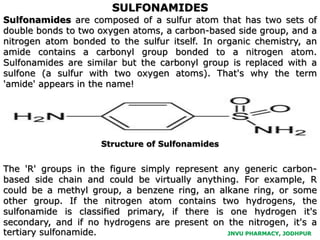
Sulfonamides are composed of a sulfur atom that has two sets of
double bonds to two oxygen atoms, a carbon-based side group, and a
nitrogen atom bonded to the sulfur itself. In organic chemistry, an
amide contains a carbonyl group bonded to a nitrogen atom.
Sulfonamides are similar but the carbonyl group is replaced with a
sulfone (a sulfur with two oxygen atoms). That's why the term
'amide' appears in the name!
The 'R' groups in the figure simply represent any generic carbon-
based side chain and could be virtually anything. For example, R
could be a methyl group, a benzene ring, an alkane ring, or some
other group. If the nitrogen atom contains two hydrogens, the
sulfonamide is classified primary, if there is one hydrogen it's
secondary, and if no hydrogens are present on the nitrogen, it's a
tertiary sulfonamide.
SULFONAMIDES
Structure of Sulfonamides
AMINOGLYCOSIDES
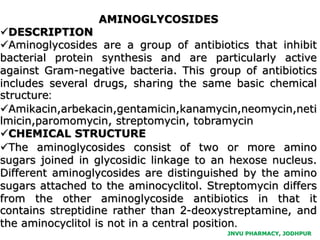
DESCRIPTION
Aminoglycosides are a group of antibiotics that inhibit
bacterial protein synthesis and are particularly active
against Gram-negative bacteria. This group of antibiotics
includes several drugs, sharing the same basic chemical
structure:
Amikacin,arbekacin,gentamicin,kanamycin,neomycin,neti
lmicin,paromomycin, streptomycin, tobramycin
CHEMICAL STRUCTURE
The aminoglycosides consist of two or more amino
sugars joined in glycosidic linkage to an hexose nucleus.
Different aminoglycosides are distinguished by the amino
sugars attached to the aminocyclitol. Streptomycin differs
from the other aminoglycoside antibiotics in that it
contains streptidine rather than 2-deoxystreptamine, and
the aminocyclitol is not in a central position.
JNVU PHARMACY, JODHPUR
TETRACYCLINES
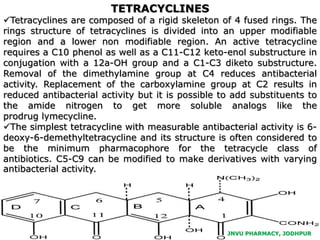
Tetracyclines are composed of a rigid skeleton of 4 fused rings. The
rings structure of tetracyclines is divided into an upper modifiable
region and a lower non modifiable region. An active tetracycline
requires a C10 phenol as well as a C11-C12 keto-enol substructure in
conjugation with a 12a-OH group and a C1-C3 diketo substructure.
Removal of the dimethylamine group at C4 reduces antibacterial
activity. Replacement of the carboxylamine group at C2 results in
reduced antibacterial activity but it is possible to add substituents to
the amide nitrogen to get more soluble analogs like the
prodrug lymecycline.
The simplest tetracycline with measurable antibacterial activity is 6-
deoxy-6-demethyltetracycline and its structure is often considered to
be the minimum pharmacophore for the tetracycle class of
antibiotics. C5-C9 can be modified to make derivatives with varying
antibacterial activity.
JNVU PHARMACY, JODHPUR
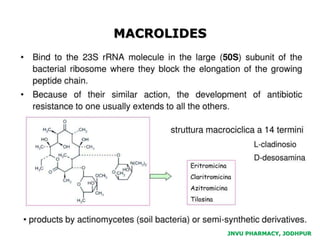
MACROLIDES
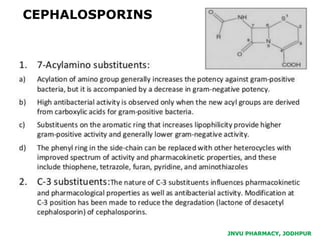
CEPHALOSPORINS
JNVU PHARMACY, JODHPUR
THANK YOU

ANTIBIOTICS

  • 2.
    ANTIBIOTICS JAI NARAIN VYASUNIVERSITY, JODHPUR ASSISTANT PROFESSOR:- ASHWIN SINGH CHOUHAN DEPARTMENT:- PHARMACOLOGY E-mail:- ashwinsingh26061992@gmail.com
  • 3.
    JNVU PHARMACY, JODHPUR ANTIBIOTICS Antibioticsare chemical compounds used to kill or inhibit the growth of bacteria. Strictly speaking, antibiotics are a subgroup of organic anti-infective agents that are derived from bacteria or moulds that are toxic to other bacteria. However, the term antibiotic is now used loosely to include anti-infectives produced from synthetic and semisynthetic compounds. The term antibiotic may be used interchangeably with the term antibacterial. However, it is incorrect to use the term antibiotic when referring to antiviral, antiprotozoal and antifungal agents.
  • 4.
    HISTORY OF ANTIBIOTICS Penicillinwas the first antibiotic used successfully in treating bacterial infections. Sir Alexander Fleming first discovered it in 1928, but its potential for treatment against infections wasn’t recognised until over a decade later when Ernst B Chain, Sir Howard Florey and Norman Heatley produced enough purified penicillin to treat patients with. By the 1950s, a large number of antibiotics were being discovered and manufactured for the treatment of diseases caused by infecting bacteria. Over the last 50 years, antibiotics have transformed the patterns of disease and death. JNVU PHARMACY, JODHPUR
  • 5.
    JNVU PHARMACY, JODHPUR CLASSIFICATIONOF ANTIBIOTICS Antibiotics can be classified in several ways. The most common method classifies them according to their chemical structure as antibiotics sharing the same or similar chemical structure will generally show similar patterns of antibacterial activity, effectiveness, toxicity and allergic potential. B-lactam antibiotics inhibit bacterial cell wall synthesis. They include: Penicillins Cephalosporins Carbapenems Penicillins Penicillin G Amoxicillin Flucloxacillin Cephalosporins Cefoxitin
  • 6.
    Cefotaxime Ceftriaxone Carbapenem Imipenem Macrolides inhibit bacterialprotein synthesis. Erythromycin Azithromycin Clarithromycin Tetracyclines inhibit bacterial protein synthesis.  Tetracycline  Minocycline  Doxycycline  Lymecycline Fluoroquinolones inhibit bacterial DNA synthesis. Norfloxacin Ciprofloxacin Enoxacin Ofloxacin JNVU PHARMACY, JODHPUR
  • 7.
    JNVU PHARMACY, JODHPUR Sulphonamidesblock bacterial cell metabolism by inhibiting enzymes. Trimethoprim + sulphamethoxazole Aminoglycosides inhibit bacterial protein synthesis. Gentamicin Amikacin Imidazole antibiotics inhibit bacterial DNA synthesis. Metronidazole Peptides inhibit bacterial cell wall synthesis. Bacitracin Lincosamides inhibit bacterial protein synthesis. Clindamycin Lincomycin The following drugs inhibit bacterial protein synthesis. Fusidic acid Mupirocin
  • 8.
    JNVU PHARMACY, JODHPUR USESOF ANTIBIOTICS Antibiotics only work against infections caused by bacteria. Bacterial infections are much less common than viral infections. Most coughs and colds are of viral origin so antibiotics should not be prescribed for these. Antibiotics should only used when absolutely necessary, because: There is increasing resistance of bacteria to treatment Resistant bacteria are selected out by the use of antibiotics. Antibiotics may have serious adverse effects in some people Some common bacterial infections that do require antibiotic therapy include: Staphyloccal skin infections, eg, impetigo (school sores) Streptococcal skin infections, eg, cellulitis Some ear and sinus infections
  • 9.
    JNVU PHARMACY, JODHPUR 'Strepthroat' — sore throat caused by Streptococcus If these infections remain untreated, the resulting disease may be serious and even fatal. In severe bacterial infections where patients may be hospitalized, often an intravenous broad-spectrum antibiotic (one that is active against many different bacteria) is given to start treatment. As soon as laboratory tests confirm the infecting bacteria, the antibiotic should be changed to one that is active against specific bacteria. After 48 hours of intravenous treatment, if there is clinical improvement, the patient may be switched to an oral form of the antibiotic.
  • 10.
    JNVU PHARMACY, JODHPUR ANTIBIOTICRESISTANCE The overuse and inappropriate use of antibiotics has led to antibiotic resistance. Bacteria that were once susceptible to antibiotics have developed ways to survive the drugs that were meant to kill or weaken them. This is also known as antibacterial resistance or drug resistance. Some diseases such as tuberculosis, gonorrhoea and childhood bacterial ear infections, that were once easily treated with antibiotics are now again becoming difficult to treat as bacteria have become resistant to these drugs. About 70% of bacteria that cause infections in hospitals are resistant to at least one of the antibiotics most commonly used to treat infections. Methicillin (meticillin) resistant Staphylococcus aureus (MRSA) is a particular problem for patients with skin diseases, ulcers and surgical wounds.
  • 11.
    JNVU PHARMACY, JODHPUR Doctorresponsibility Only prescribe antibiotics if bacterial infection present Prescribe the approved dose and duration or as recommended by experts Educate patient about the importance of completing their course of antibiotics as instructed Patient responsibility Understand that not all infections are bacterial and that not all bacterial infections will clear on antibiotics (eg, folliculitis) Take antibiotics exactly as instructed (ie, with or without food etc) Ensure you finish the course of antibiotics
  • 12.
    JNVU PHARMACY, JODHPUR SIDEEFFECTS OF ANTIBIOTICS Antibiotics are associated with many side effects, including cutaneous adverse reactions. Some side effects are class-related but most reactions are specific to the agent in that individual. Some common problems with antibiotics are listed below: Allergy to certain antibiotics or classes of antibiotics (eg, penicillin allergy) Many antibiotics cause gastrointestinal problems (eg, diarrhoea, vomiting, nausea) Antibiotics kill not only their targets but other useful micro-organisms that live in and on our body (flora) to prevent other diseases (eg, oral and/or vaginal thrush). A variety of skin rashes can occur, which may be mild(eg,hives)or devastating (eg, toxic epidermal necrolysis).
  • 13.
  • 14.
    JNVU PHARMACY, JODHPUR Beta-Lactam antibiotics Beta- Lactam antibiotics: Antibiotics Containing the beta lactam (alpa- 4 membraned cyclic amide) ring structure constitute the dominant class of agent currently employed for the chemotherapy of bacterial infections. beta lactam antibiotics are broad class of antibiotics, structure having a lactam group with a heteroatom structure consisting cyclic amide with 3 carbon atom and one nitrogen atom. Beta lactam antibiotics inhibit the growth of many gram positive and gram Negative bacteria by interfering with the bacteria cell wall biosynthesis. beta lactam compound classification Saturated five membered ring Unsaturated five membered ring Unsaturated 6 membered ring beta lactam not fused with any other ring
  • 15.
  • 16.
    JNVU PHARMACY, JODHPUR STRUCTUREOF PENICILLIN Penicillins are a group of β-lactam antibiotics consisting of natural penicillins and semisynthetic penicillins. The basic structure of all penicillins, natural and semisynthetic, is 6-aminopenicillanic acid composed of a four membered heterocyclic β-lactam ring fused with a five membered (benzylpenicillin), penicillin V (Phenoxymethyl penicillin), thiazolidine ring. This basic structure combines with N-acyl group which is variable and shows structural differences in different type of penicillins. The N-acyl group is the side chain attached to the amino group of 6- aminopenicillanic acid. However, there are three natural penicillins that are produced directly and can be obtained from the fermentation Iiquours of Pencillium. 6-aminopenicillanic acid N-acyl group
  • 17.
  • 18.
  • 19.
  • 20.
    JNVU PHARMACY, JODHPUR MECHANISMACTION OF ANTIBIOTICS
  • 21.
    TABLE 1. COMMONANTIBACTERIAL DRUGS BY MODE OF ACTION MODE OF ACTION TARGET DRUG CLASS INHIBIT CELL WALL BIOSYNTHESIS Penicillin-binding proteins β-lactams: penicillins, cephalosporins, monobactams, carbapenems Peptidoglycan subunits Glycopeptides Peptidoglycan subunit transport Bacitracin INHIBIT BIOSYNTHESIS OF PROTEINS 30S ribosomal subunit Aminoglycosides, tetracyclines 50S ribosomal subunit Macrolides, lincosamides, chloramphenicol, oxazolidinones DISRUPT MEMBRANES Lipopolysaccharide, inner and outer membranes Polymyxin B, colistin, daptomycin INHIBIT NUCLEIC ACID SYNTHESIS RNA Rifamycin DNA Fluoroquinolones ANTIMETABOLITES Folic acid synthesis enzyme Sulfonamides, trimethoprim Mycolic acid synthesis enzyme Isonicotinic acid hydrazide MYCOBACTERIAL ADENOSINE TRIPHOSPHATE (ATP) SYNTHASE INHIBITOR Mycobacterial ATP synthase Diarylquinolin JNVU PHARMACY, JODHPUR
  • 22.
    JNVU PHARMACY, JODHPUR TABLE2. DRUGS THAT INHIBIT BACTERIAL CELL WALL SYNTHESIS MECHANISM OF ACTION DRUG CLASS SPECIFIC DRUGS NATURAL OR SEMISYNTHETIC SPECTRUM OF ACTIVITY INTERACT DIRECTLY WITH PBPS AND INHIBIT TRANSPEPTIDASE ACTIVITY Penicillins Penicillin G, penicillin V Natural Narrow-spectrum against gram- positive and a few gram-negative bacteria Ampicillin, amoxicillin Semisynthetic Narrow-spectrum against gram- positive bacteria but with increased gram-negative spectrum Methicillin Semisynthetic Narrow-spectrum against gram- positive bacteria only, including strains producing penicillinase Cephalosporins Cephalosporin C Natural Narrow-spectrum similar to penicillin but with increased gram-negative spectrum First-generation cephalosporins Semisynthetic Narrow-spectrum similar to cephalosporin C Second-generation cephalosporins Semisynthetic Narrow-spectrum but with increased gram-negative spectrum compared with first generation Third- and fourth-generation cephalosporins Semisynthetic Broad-spectrum against gram- positive and gram-negative bacteria, including some β- lactamase producers Fifth-generation cephalosporins Semisynthetic Broad-spectrum against gram- positive and gram-negative bacteria, including MRSA Monobactams Aztreonam Semisynthetic Narrow-spectrum against gram- negative bacteria, including some β-lactamase producers Carbapenems Imipenem, meropenem, doripenem Semisynthetic Broadest spectrum of the β- lactams against gram-positive and gram-negative bacteria, including many β-lactamase producers LARGE MOLECULES THAT BIND TO THE PEPTIDE CHAIN OF PEPTIDOGLYCAN SUBUNITS, BLOCKING TRANSGLYCOSYLATION AND TRANSPEPTIDATION Glycopeptides Vancomycin Natural Narrow spectrum against gram- positive bacteria only, including multidrug-resistant strains BLOCK TRANSPORT OF PEPTIDOGLYCAN SUBUNITS ACROSS CYTOPLASMIC MEMBRANE Bacitracin Bacitracin Natural Broad-spectrum against gram- positive and gram-negative bacteria
  • 23.
    JNVU PHARMACY, JODHPUR TABLE3. DRUGS THAT INHIBIT BACTERIAL PROTEIN SYNTHESIS MOLECULAR TARGET MECHANISM OF ACTION DRUG CLASS SPECIFIC DRUGS BACTERIOSTATIC OR BACTERICIDAL SPECTRUM OF ACTIVITY 30S SUBUNIT Causes mismatches between codons and anticodons, leading to faulty proteins that insert into and disrupt cytoplasmic membrane Aminoglycosides Streptomycin, gentamicin, neomycin, kanamycin Bactericidal Broad spectrum Blocks association of tRNAs with ribosome Tetracyclines Tetracycline, doxycycline, tigecycline Bacteriostatic Broad spectrum 50S SUBUNIT Blocks peptide bond formation between amino acids Macrolides Erythromycin, azithromycin, telithromycin Bacteriostatic Broad spectrum Lincosamides Lincomycin, clindamycin Bacteriostatic Narrow spectrum Not applicable Chloramphenicol Bacteriostatic Broad spectrum Interferes with the formation of the initiation complex between 50S and 30S subunits and other factors. Oxazolidinones Linezolid Bacteriostatic Broad spectrum
  • 24.
    JNVU PHARMACY, JODHPUR TABLE4. DRUGS THAT INHIBIT BACTERIAL MEMBRANE FUNCTION MECHANISM OF ACTION DRUG CLASS SPECIFIC DRUGS SPECTRUM OF ACTIVITY CLINICAL USE INTERACTS WITH LIPOPOLYSACCHARIDE IN THE OUTER MEMBRANE OF GRAM- NEGATIVE BACTERIA, KILLING THE CELL THROUGH THE EVENTUAL DISRUPTION OF THE OUTER MEMBRANE AND CYTOPLASMIC MEMBRANE Polymyxins Polymyxin B Narrow spectrum against gram-negative bacteria, including multidrug- resistant strains Topical preparations to prevent infections in wounds Polymyxin E (colistin) Narrow spectrum against gram-negative bacteria, including multidrug- resistant strains Oral dosing to decontaminate bowels to prevent infections in immunocompromised patients or patients undergoing invasive surgery/procedures. Intravenous dosing to treat serious systemic infections caused by multidrug-resistant pathogens INSERTS INTO THE CYTOPLASMIC MEMBRANE OF GRAM- POSITIVE BACTERIA, DISRUPTING THE MEMBRANE AND KILLING THE CELL Lipopeptide Daptomycin Narrow spectrum against gram-positive bacteria, including multidrug- resistant strains Complicated skin and skin- structure infections and bacteremia caused by gram-positive pathogens, including MRSA
  • 25.
    JNVU PHARMACY, JODHPUR TABLE5. DRUGS THAT INHIBIT BACTERIAL NUCLEIC ACID SYNTHESIS MECHANISMS OF ACTION DRUG CLASS SPECIFIC DRUGS SPECTRUM OF ACTIVITY CLINICAL USE INHIBITS BACTERIAL RNA POLYMERASE ACTIVITY AND BLOCKS TRANSCRIPTION, KILLING THE CELL Rifamycin Rifampin Narrow spectrum with activity against gram- positive and limited numbers of gram- negative bacteria. Also active against Mycobacterium tuberculosis. Combination therapy for treatment of tuberculosis INHIBITS THE ACTIVITY OF DNA GYRASE AND BLOCKS DNA REPLICATION, KILLING THE CELL Fluoroquinolones Ciprofloxacin, ofloxacin, moxifloxacin Broad spectrum against gram-positive and gram- negative bacteria Wide variety of skin and systemic infections
  • 26.
    JNVU PHARMACY, JODHPUR TABLE6. ANTIMETABOLITE DRUGS METABOLIC PATHWAY TARGET MECHANISM OF ACTION DRUG CLASS SPECIFIC DRUGS SPECTRUM OF ACTIVITY FOLIC ACID SYNTHESIS Inhibits the enzyme involved in production of dihydrofolic acid Sulfonamides Sulfamethoxazole Broad spectrum against gram-positive and gram- negative bacteria Sulfones Dapsone Inhibits the enzyme involved in the production of tetrahydrofolic acid Not applicable Trimethoprim Broad spectrum against gram-positive and gram- negative bacteria MYCOLIC ACID SYNTHESIS Interferes with the synthesis of mycolic acid Not applicable Isoniazid Narrow spectrum against Mycobacterium sp p., including M. tuberculosis
  • 27.
    JNVU PHARMACY, JODHPUR Sulfonamidesare composed of a sulfur atom that has two sets of double bonds to two oxygen atoms, a carbon-based side group, and a nitrogen atom bonded to the sulfur itself. In organic chemistry, an amide contains a carbonyl group bonded to a nitrogen atom. Sulfonamides are similar but the carbonyl group is replaced with a sulfone (a sulfur with two oxygen atoms). That's why the term 'amide' appears in the name! The 'R' groups in the figure simply represent any generic carbon- based side chain and could be virtually anything. For example, R could be a methyl group, a benzene ring, an alkane ring, or some other group. If the nitrogen atom contains two hydrogens, the sulfonamide is classified primary, if there is one hydrogen it's secondary, and if no hydrogens are present on the nitrogen, it's a tertiary sulfonamide. SULFONAMIDES Structure of Sulfonamides
  • 28.
    AMINOGLYCOSIDES DESCRIPTION Aminoglycosides are agroup of antibiotics that inhibit bacterial protein synthesis and are particularly active against Gram-negative bacteria. This group of antibiotics includes several drugs, sharing the same basic chemical structure: Amikacin,arbekacin,gentamicin,kanamycin,neomycin,neti lmicin,paromomycin, streptomycin, tobramycin CHEMICAL STRUCTURE The aminoglycosides consist of two or more amino sugars joined in glycosidic linkage to an hexose nucleus. Different aminoglycosides are distinguished by the amino sugars attached to the aminocyclitol. Streptomycin differs from the other aminoglycoside antibiotics in that it contains streptidine rather than 2-deoxystreptamine, and the aminocyclitol is not in a central position. JNVU PHARMACY, JODHPUR
  • 29.
    TETRACYCLINES Tetracyclines are composedof a rigid skeleton of 4 fused rings. The rings structure of tetracyclines is divided into an upper modifiable region and a lower non modifiable region. An active tetracycline requires a C10 phenol as well as a C11-C12 keto-enol substructure in conjugation with a 12a-OH group and a C1-C3 diketo substructure. Removal of the dimethylamine group at C4 reduces antibacterial activity. Replacement of the carboxylamine group at C2 results in reduced antibacterial activity but it is possible to add substituents to the amide nitrogen to get more soluble analogs like the prodrug lymecycline. The simplest tetracycline with measurable antibacterial activity is 6- deoxy-6-demethyltetracycline and its structure is often considered to be the minimum pharmacophore for the tetracycle class of antibiotics. C5-C9 can be modified to make derivatives with varying antibacterial activity. JNVU PHARMACY, JODHPUR
  • 30.
  • 31.
  • 32.