SIVASANGARI SHANMUGAM
CONTENTS
 Antibacterial
 Antibacterial agents
 Classification
 Bactericidal
 Bacteriostatic
 Mechanisms
 Advantages
 Disadvantages
ANTIBACTERIALS
 Antibacterial is an agent that interferes with the growth and reproduction
of bacteria.
 These agents kill or prevent bacterial infection by fighting against bacteria.
 Heat, chemicals such as chlorine, and all antibiotic drugs have antibacterial
properties.
 Antibiotics and antibacterial both attack bacteria. Antibiotics, also known
as antibacterial
 Antibacterial can’t treat viral infections like flue,cold
There are some essential related terms for studying the antibacterial agents that are
mentioned as following;
 Biocides - A widespread chemical/physical agents which inactivate
microorganisms.
 Bacteriostatic - Property of a specific biocide agent which is able to bacterial
multiplication.
 Bacteriocidal - A biocide able to kill bacteria.
 Disinfectant - To reduce only viable organisms on the inanimate object.
 Septic - characterized by the presence of pathogenic microbes in living tissues.
 Antiseptic - Which inhibit the growth of microorganisms in/on living tissues.
 Aseptic - To keep free of microorganisms.
 Antibiotics - Naturally occuring / synthetic organic compound which inhibit or
destroy selective bacteria at low concentration.
ANTIBACTERIAL AGENTS
1. Soaps
2. Hand lotions
3. Disinfectants
4. Surface sprays
5. Mouthwashes
6. Toothpastes
7. Antibiotics
CLASSIFICATION
Antibacterial is a
subclasses of
antibiotics.
Can classified into five groups based on:
1.Type of action
2. Source
3. Spectrum activity
4. Chemical structure
5. Function
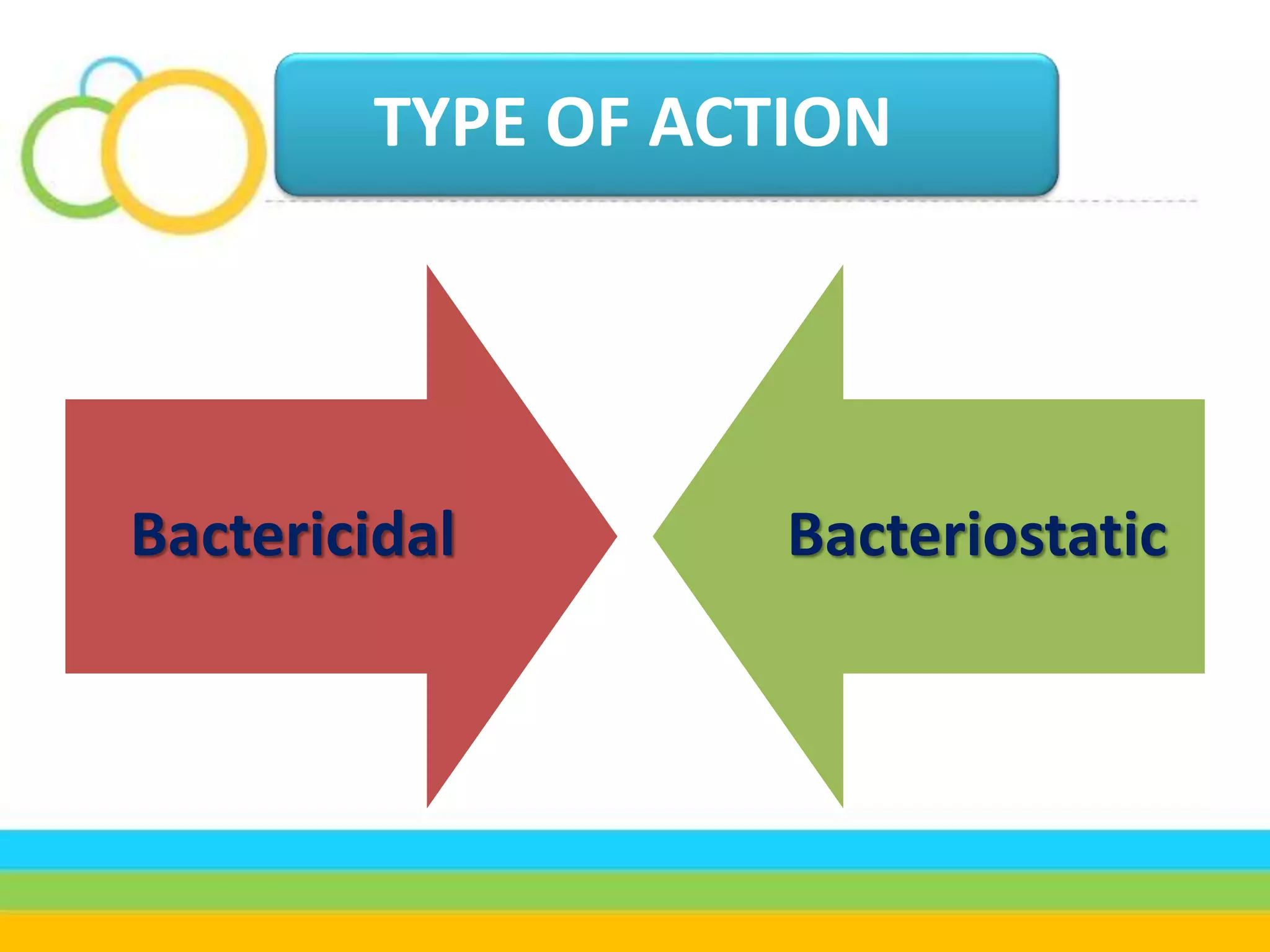
TYPE OF ACTION
Bactericidal Bacteriostatic
BACTERICIDAL
• Those antibiotics that actually kills bacteria by any mechanism depending on
the antibiotic.
• It inhibit cell wall synthesis.
• Action is irreversible.
• Do not work with the immune system of the host.
• Minimal bactericidal concentrated drug is required for kill 99.99% of bacterial
population.
• Example : beta-lactum , daptomycin, aminoglycosides, metrnidazole,
fluroquinolones and vancomycin.
BACTERIOSTATIC
• Those antibiotics that stops (or) inhibit the growth of bacteria that
means no multiplication or generation of bacteria but they do not kill
bacteria.
• Slow their growth and reproduction.
• Inhibits the DNA replication and protein synthesis of bacteria.
• Work with the immune system of the host.
• Minimum drug concentrated is required.
• For example : tetracycline and penicillin,sulfonamides, linezolid,
chloramphenicol, clindamycin, macrolides.
MECHANISMS
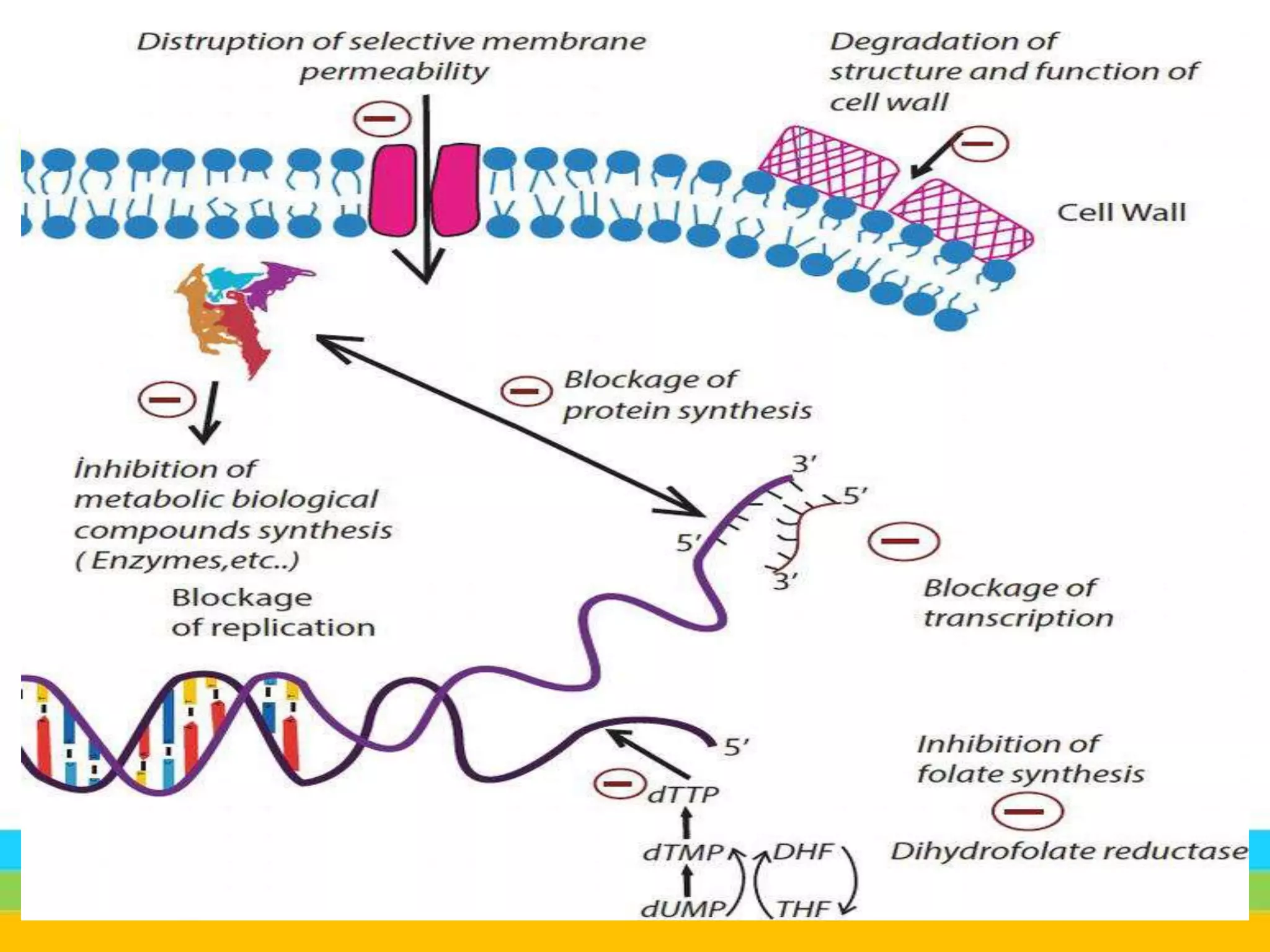
1. Inhibition /Target of bacterial cell wall biosynthesis
2. Inhibition /Target bacterial protein biosynthesis
3. Inhibition/ Target bacterial nucleic acid synthesis
4. Target bacterial cell membrane function
5. Inhibition of metabolic pathway
6. Inhibition of ATP synthase
• Inhibition /Target of bacterial cell wall biosynthesis
• Target bacterial cell membrane function
• Inhibition /Target bacterial protein biosynthesis
• Inhibition/ Target bacterial nucleic acid synthesis
Bactericidal
• Inhibition of metabolic pathway
• Inhibition of ATP synthase
• Inhibition/ Target bacterial nucleic acid synthesis
• Inhibition /Target bacterial protein biosynthesis
Bacteriostatic
INHIBITION OF CELL WALL
• Antibacterials block steps in the biosynthesis of peptidoglycan, making cells more
susceptible to osmotic lysis.
• Therefore, antibacterials that target cell wall biosynthesis are bactericidal in their
action.
• Because human cells do not make peptidoglycan, this mode of action is an
excellent example of selective toxicity.
• The β-Lactam antibiotics, consisting of all antibiotic agents that contains a β-
lactam nucleus in their molecular structures. This includes penicillin derivatives
(penams), cephalosporins (cephems), monobactams, and carbapenems.
• β-Lactam antibiotics are bacteriocidal and act by inhibiting the synthesis of the
peptidoglycan layer of bacterial cell walls. The final step in the synthesis of the
peptidoglycan is facilitated by penicillin-binding proteins. PBPs vary in their affinity
for binding penicillin or other β-lactam antibiotics.
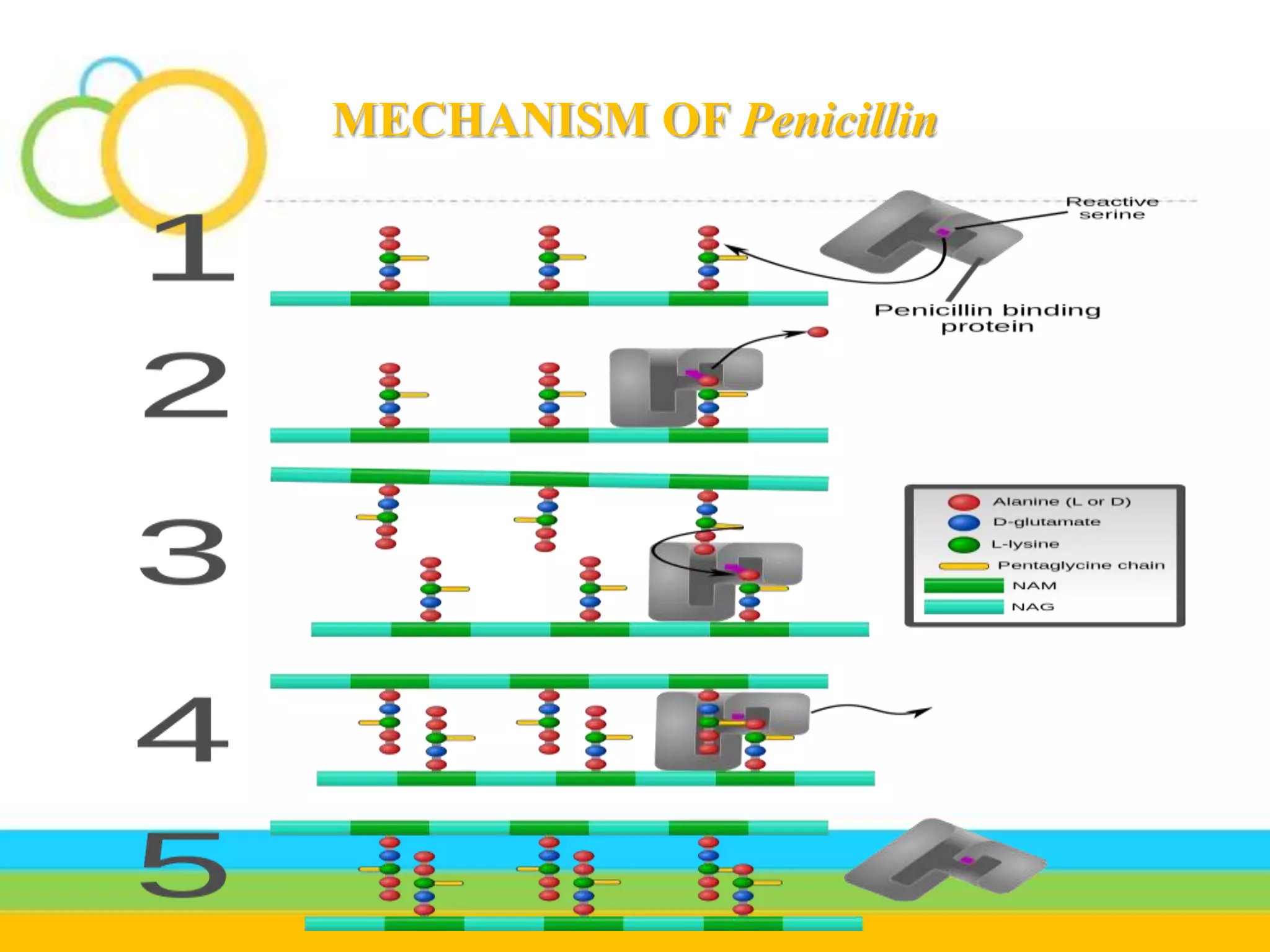
1. Penicillin is added to the growth medium with a
dividing bacterium.
2. The cell begins to grow, but is unable to
synthesize new cell wall to accommdate the
expanding cell.
3. As cellular growth continues, cytoplasm
covered by plasma membrane begins to
squeeze out through the gap(s) in the cell
wall.
4. Cell wall integrity is further violated. The cell
continues to increase in size, but is unable to
“pinch off” the extra cytoplasmic material
into two daughter cells because the
formation of a division furrow depends on
the ability to synthesize new cell wall.
5. The loss of the cell wall also causes its shape, so
even if the original bacterium were rod-
shaped, the sphereoplast is generally
spherical.
MECHANISM OF Penicillin
INHIBITION OF PROTEIN SYNTHESIS
Protein Synthesis Inhibitors That Bind the 30S Subunit
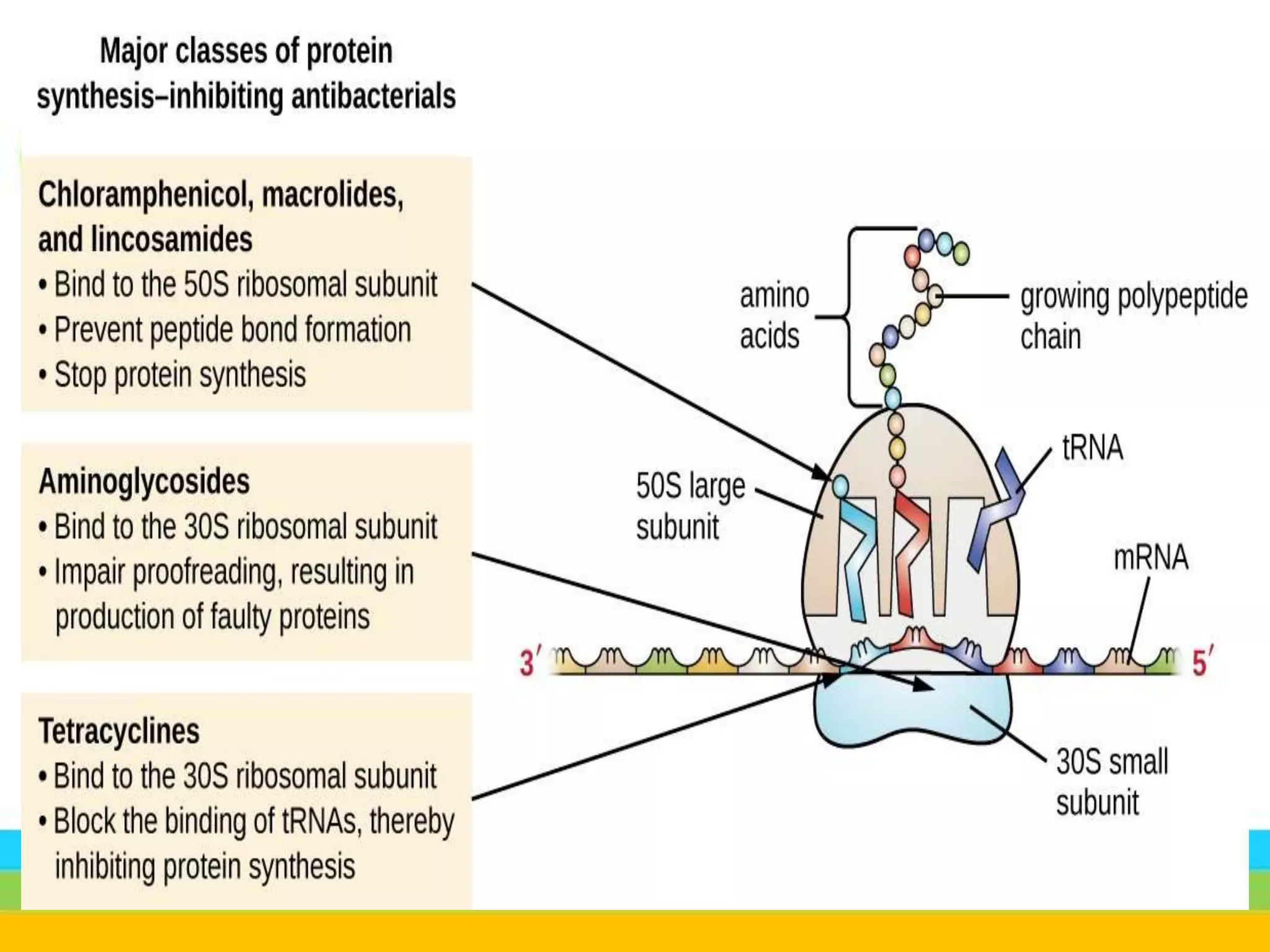
• Aminoglycosides binds to the 30S of bacterial ribosomes, impairing the
proofreading ability of the ribosomal complex.
• This impairment causes mismatches between codons and anticodons.
• Resulting in the production of proteins with incorrect amino acids and shortened
proteins that insert into the cytoplasmic membrane.
• Disruption of the cytoplasmic membrane by the faulty proteins kills the bacterial
cells.
• The aminoglycosides, which include drugs such as streptomycin, gentamicin,
neomycin, and kanamycin, effect translocation by binding to A site and are potent
broad-spectrum antibacterials
• Tetracycline is bind to the 30S subunit ,these drugs are bacteriostatic and
inhibit protein synthesis by blocking the association of tRNAs with the
ribosome during translation.
• Naturally occurring tetracyclines produced by various strains of Streptomyces
were first discovered in the 1940s.
• Semisynthetic tetracyclines, including doxycycline and tigecycline have also
been produced.
• Although the tetracyclines are broad spectrum in their coverage of bacterial
pathogens.
Protein Synthesis Inhibitors That Bind the 50S Subunit
• There are several classes of antibacterial drugs that work through binding to
the 50S subunit of bacterial ribosomes.
• Macrolides are broad-spectrum, bacteriostatic drugs that block elongation of
proteins by inhibiting peptide bond formation between specific combinations
of amino acids.
• The first macrolide was erythromycin.
• It was isolated in 1952 from Streptomyces erythreus and prevents
translocation.
• Semisynthetic macrolides include azithromycin and telithromycin.
INHIBITION OF NUCLEIC ACID
SYNTHESIS
• It interferes with DNA replication in target cells.
• The drug rifampin ,functions by blocking RNA polymerase activity in bacteria. The
RNA polymerase enzymes in bacteria are structurally different from those in
eukaryotes, providing for selective toxicity against bacterial cells.
Example : Metronidazole.
• It is used for the treatment of a variety of infections.
• Inhibits the activity of DNA gyrase and blocks DNA replication, killing the cell.
Example : Fluoroquinolones
INHIBITION OF CELL MEMBRANE
FUNCTION
• Interacts with lipopolysaccharide in the outer membrane of gram-negative
bacteria, killing the cell through the eventual disruption of the outer membrane
and cytoplasmic membrane.
Example : Polymyxin B
• Inserts into the cytoplasmic membrane of gram-positive bacteria, disrupting the
membrane and killing the cell.
Example : Daptomycin
INHIBITION OF METABOLIC PATHWAY
• The sulfonamides (sulfa drugs) are
the oldest synthetic antibacterial
agents and are structural analogues
of para-aminobenzoic acid (PABA),
an early intermediate in folic acid
synthesis
• Inhibits the enzyme involved in
production of dihydrofolic acid
Ex : Sulfamethoxazole
• Inhibits the enzyme involved in the
production of tetrahydrofolic acid
Ex : Trimethoprim
• Interferes with the synthesis of
mycolic acid
Ex : Isoniazid
INHIBITION OF ATP SYNTHASE
• Diarylquinolones, that specifically inhibits mycobacterial growth.
• Although the specific mechanism has yet to be elucidated, this compound
appears to interfere with the function of ATP synthases, perhaps by interfering
with the use of the hydrogen ion gradient for ATP synthesis by oxidative
phosphorylation, leading to reduced ATP production.
• Due to its side effects, including hepatotoxicity and potentially lethal heart
arrhythmia, otherwise untreatable cases of tuberculosis.
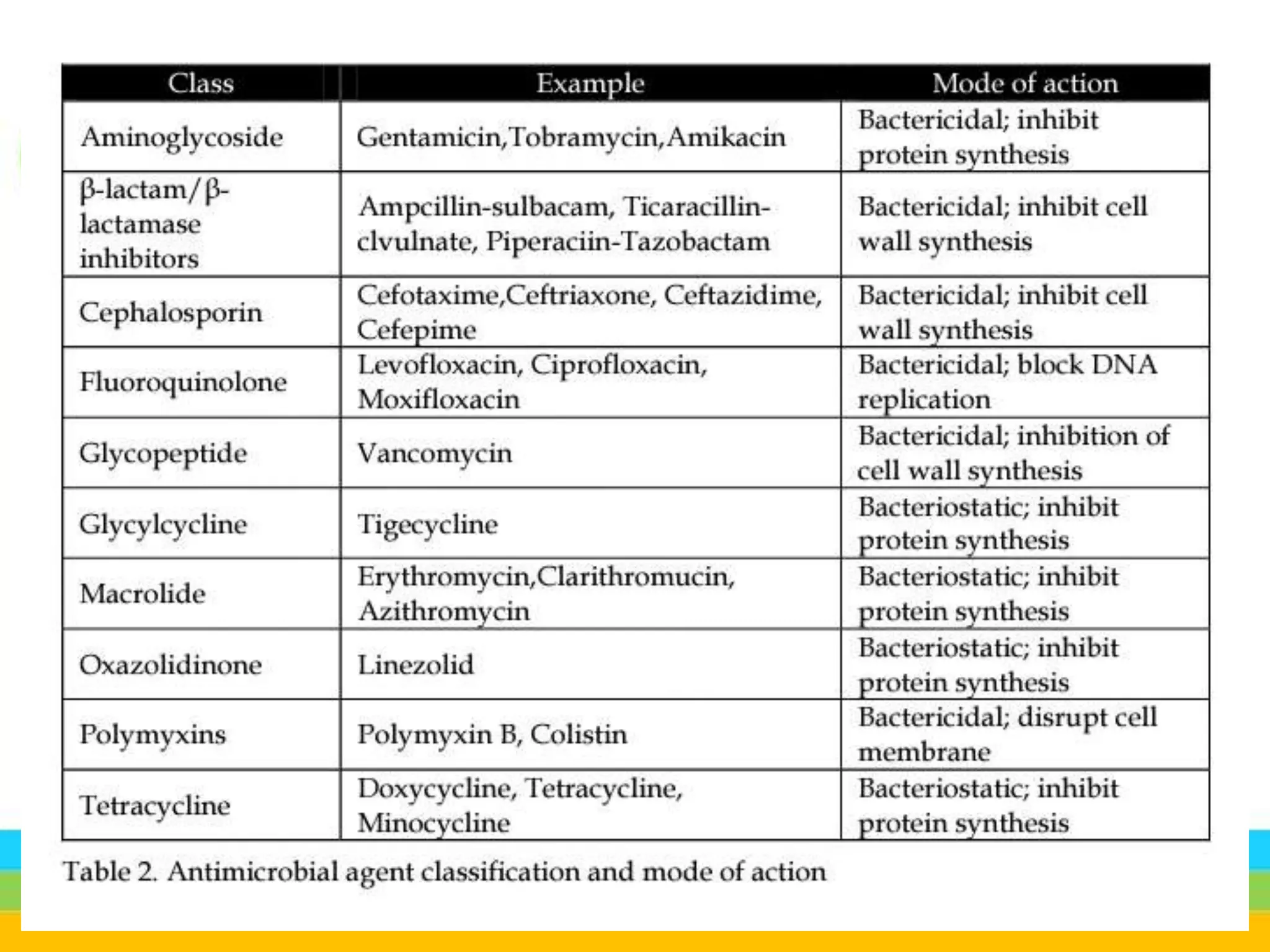
Bactericidal antibacterials Function
Beta – lactum and cephalosporin They work by interfering the synthesis of the
bacterial cell wall
Gentamycin and aminoglycosides They inhibit protein synthesis
Quinolones and flouroquinolones These block bacterial DNA replication
vancomycine These inhibit cell wall synthesis
Polymixin B and colistin These antibiotic
Bacteriostatics antibacterials Function
sulphonamides They act to inhibit folate synthesis at initial
stages
chloramphenicol Amphenicols works as protein synthesis
inhibitors
spectinomycin It binds to the 30S ribosomal subunit, thereby
interrupting protein synthesis
trimethoprim It disturbs the tetrahydrofolate synthesis
pathway
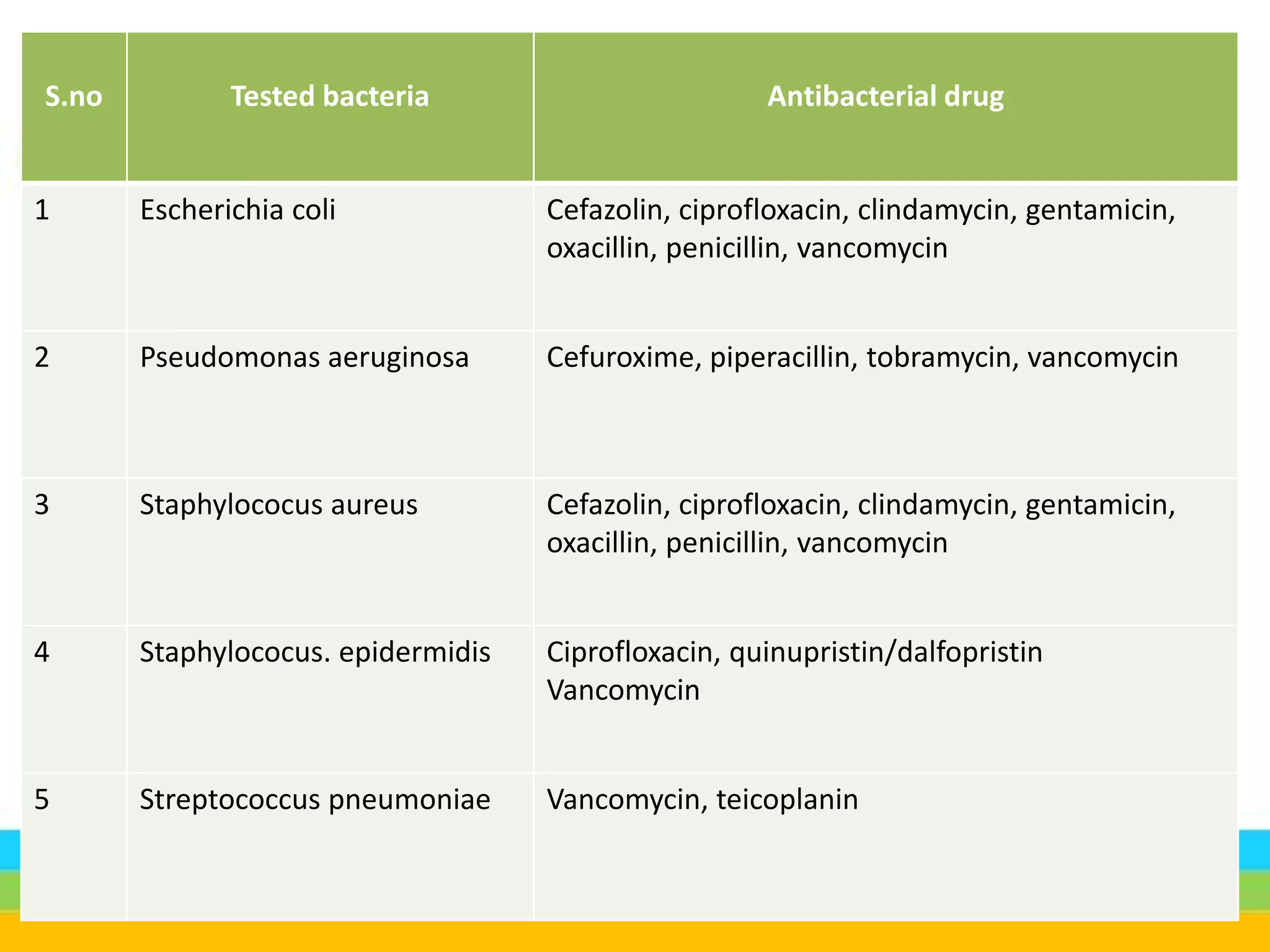
S.no Tested bacteria Antibacterial drug
1 Escherichia coli Cefazolin, ciprofloxacin, clindamycin, gentamicin,
oxacillin, penicillin, vancomycin
2 Pseudomonas aeruginosa Cefuroxime, piperacillin, tobramycin, vancomycin
3 Staphylococus aureus Cefazolin, ciprofloxacin, clindamycin, gentamicin,
oxacillin, penicillin, vancomycin
4 Staphylococus. epidermidis Ciprofloxacin, quinupristin/dalfopristin
Vancomycin
5 Streptococcus pneumoniae Vancomycin, teicoplanin
Advantages
• The antibiotics do not harm other normal body cells, It is possible to
treat the diseases.
• Macrolide antibiotics are strongly germ-killing medicines.
• Usually relieves symptoms in a few days.
• They are reasonably harmless to the humans.
Disadvantages
• Antibiotics can have many side effects as diarrhea.
• Antibiotics can kill the healthy bacteria in the body.
• Some antibiotics may be allergic depending on your drug allergies such as
sulfa that is commonly present in many antibiotics.
• If the antibiotic is used long time, The bacteria will mutate to withstand
the antibiotic, This is known as the antibiotic resistance.
References
• https://www.newscientist.com/article/2116448-what-are-antibacterial-agents-
and-should-we-avoid-using-them/#ixzz60FTxOM7x
• https://www.intechopen.com/books/antimicrobials-antibiotic-resistance-
antibiofilm-strategies-and-activity-methods/introductory-chapter-the-action-
mechanisms-of-antibiotics-and-antibiotic-resistance
• https://courses.lumenlearning.com/microbiology/chapter/mechanisms-of-
antibacterial-drugs/
• https://www.intechopen.com/books/concepts-compounds-and-the-alternatives-
of-antibacterials/antibacterial-drugs-from-basic-concepts-to-complex-therapeutic-
mechanisms-of-polymer-systems
• https://courses.lumenlearning.com/boundless-microbiology/chapter/functions-of-
antimicrobial-drugs/
• https://www.online-sciences.com/health/antibiotics-advantages-and-
disadvantages/
Thank you

Antibacterial chemicals bactericidal and bacteriostatic agents

  • 1.
  • 2.
    CONTENTS  Antibacterial  Antibacterialagents  Classification  Bactericidal  Bacteriostatic  Mechanisms  Advantages  Disadvantages
  • 3.
    ANTIBACTERIALS  Antibacterial isan agent that interferes with the growth and reproduction of bacteria.  These agents kill or prevent bacterial infection by fighting against bacteria.  Heat, chemicals such as chlorine, and all antibiotic drugs have antibacterial properties.  Antibiotics and antibacterial both attack bacteria. Antibiotics, also known as antibacterial  Antibacterial can’t treat viral infections like flue,cold
  • 4.
    There are someessential related terms for studying the antibacterial agents that are mentioned as following;  Biocides - A widespread chemical/physical agents which inactivate microorganisms.  Bacteriostatic - Property of a specific biocide agent which is able to bacterial multiplication.  Bacteriocidal - A biocide able to kill bacteria.  Disinfectant - To reduce only viable organisms on the inanimate object.  Septic - characterized by the presence of pathogenic microbes in living tissues.  Antiseptic - Which inhibit the growth of microorganisms in/on living tissues.  Aseptic - To keep free of microorganisms.  Antibiotics - Naturally occuring / synthetic organic compound which inhibit or destroy selective bacteria at low concentration.
  • 5.
    ANTIBACTERIAL AGENTS 1. Soaps 2.Hand lotions 3. Disinfectants 4. Surface sprays 5. Mouthwashes 6. Toothpastes 7. Antibiotics
  • 6.
    CLASSIFICATION Antibacterial is a subclassesof antibiotics. Can classified into five groups based on: 1.Type of action 2. Source 3. Spectrum activity 4. Chemical structure 5. Function
  • 7.
  • 8.
    BACTERICIDAL • Those antibioticsthat actually kills bacteria by any mechanism depending on the antibiotic. • It inhibit cell wall synthesis. • Action is irreversible. • Do not work with the immune system of the host. • Minimal bactericidal concentrated drug is required for kill 99.99% of bacterial population. • Example : beta-lactum , daptomycin, aminoglycosides, metrnidazole, fluroquinolones and vancomycin.
  • 9.
    BACTERIOSTATIC • Those antibioticsthat stops (or) inhibit the growth of bacteria that means no multiplication or generation of bacteria but they do not kill bacteria. • Slow their growth and reproduction. • Inhibits the DNA replication and protein synthesis of bacteria. • Work with the immune system of the host. • Minimum drug concentrated is required. • For example : tetracycline and penicillin,sulfonamides, linezolid, chloramphenicol, clindamycin, macrolides.
  • 10.
    MECHANISMS 1. Inhibition /Targetof bacterial cell wall biosynthesis 2. Inhibition /Target bacterial protein biosynthesis 3. Inhibition/ Target bacterial nucleic acid synthesis 4. Target bacterial cell membrane function 5. Inhibition of metabolic pathway 6. Inhibition of ATP synthase
  • 11.
    • Inhibition /Targetof bacterial cell wall biosynthesis • Target bacterial cell membrane function • Inhibition /Target bacterial protein biosynthesis • Inhibition/ Target bacterial nucleic acid synthesis Bactericidal • Inhibition of metabolic pathway • Inhibition of ATP synthase • Inhibition/ Target bacterial nucleic acid synthesis • Inhibition /Target bacterial protein biosynthesis Bacteriostatic
  • 13.
    INHIBITION OF CELLWALL • Antibacterials block steps in the biosynthesis of peptidoglycan, making cells more susceptible to osmotic lysis. • Therefore, antibacterials that target cell wall biosynthesis are bactericidal in their action. • Because human cells do not make peptidoglycan, this mode of action is an excellent example of selective toxicity. • The β-Lactam antibiotics, consisting of all antibiotic agents that contains a β- lactam nucleus in their molecular structures. This includes penicillin derivatives (penams), cephalosporins (cephems), monobactams, and carbapenems. • β-Lactam antibiotics are bacteriocidal and act by inhibiting the synthesis of the peptidoglycan layer of bacterial cell walls. The final step in the synthesis of the peptidoglycan is facilitated by penicillin-binding proteins. PBPs vary in their affinity for binding penicillin or other β-lactam antibiotics.
  • 14.
    1. Penicillin isadded to the growth medium with a dividing bacterium. 2. The cell begins to grow, but is unable to synthesize new cell wall to accommdate the expanding cell. 3. As cellular growth continues, cytoplasm covered by plasma membrane begins to squeeze out through the gap(s) in the cell wall. 4. Cell wall integrity is further violated. The cell continues to increase in size, but is unable to “pinch off” the extra cytoplasmic material into two daughter cells because the formation of a division furrow depends on the ability to synthesize new cell wall. 5. The loss of the cell wall also causes its shape, so even if the original bacterium were rod- shaped, the sphereoplast is generally spherical.
  • 15.
  • 18.
    INHIBITION OF PROTEINSYNTHESIS Protein Synthesis Inhibitors That Bind the 30S Subunit • Aminoglycosides binds to the 30S of bacterial ribosomes, impairing the proofreading ability of the ribosomal complex. • This impairment causes mismatches between codons and anticodons. • Resulting in the production of proteins with incorrect amino acids and shortened proteins that insert into the cytoplasmic membrane. • Disruption of the cytoplasmic membrane by the faulty proteins kills the bacterial cells. • The aminoglycosides, which include drugs such as streptomycin, gentamicin, neomycin, and kanamycin, effect translocation by binding to A site and are potent broad-spectrum antibacterials
  • 19.
    • Tetracycline isbind to the 30S subunit ,these drugs are bacteriostatic and inhibit protein synthesis by blocking the association of tRNAs with the ribosome during translation. • Naturally occurring tetracyclines produced by various strains of Streptomyces were first discovered in the 1940s. • Semisynthetic tetracyclines, including doxycycline and tigecycline have also been produced. • Although the tetracyclines are broad spectrum in their coverage of bacterial pathogens.
  • 20.
    Protein Synthesis InhibitorsThat Bind the 50S Subunit • There are several classes of antibacterial drugs that work through binding to the 50S subunit of bacterial ribosomes. • Macrolides are broad-spectrum, bacteriostatic drugs that block elongation of proteins by inhibiting peptide bond formation between specific combinations of amino acids. • The first macrolide was erythromycin. • It was isolated in 1952 from Streptomyces erythreus and prevents translocation. • Semisynthetic macrolides include azithromycin and telithromycin.
  • 22.
    INHIBITION OF NUCLEICACID SYNTHESIS • It interferes with DNA replication in target cells. • The drug rifampin ,functions by blocking RNA polymerase activity in bacteria. The RNA polymerase enzymes in bacteria are structurally different from those in eukaryotes, providing for selective toxicity against bacterial cells. Example : Metronidazole. • It is used for the treatment of a variety of infections. • Inhibits the activity of DNA gyrase and blocks DNA replication, killing the cell. Example : Fluoroquinolones
  • 23.
    INHIBITION OF CELLMEMBRANE FUNCTION • Interacts with lipopolysaccharide in the outer membrane of gram-negative bacteria, killing the cell through the eventual disruption of the outer membrane and cytoplasmic membrane. Example : Polymyxin B • Inserts into the cytoplasmic membrane of gram-positive bacteria, disrupting the membrane and killing the cell. Example : Daptomycin
  • 24.
    INHIBITION OF METABOLICPATHWAY • The sulfonamides (sulfa drugs) are the oldest synthetic antibacterial agents and are structural analogues of para-aminobenzoic acid (PABA), an early intermediate in folic acid synthesis • Inhibits the enzyme involved in production of dihydrofolic acid Ex : Sulfamethoxazole • Inhibits the enzyme involved in the production of tetrahydrofolic acid Ex : Trimethoprim • Interferes with the synthesis of mycolic acid Ex : Isoniazid
  • 25.
    INHIBITION OF ATPSYNTHASE • Diarylquinolones, that specifically inhibits mycobacterial growth. • Although the specific mechanism has yet to be elucidated, this compound appears to interfere with the function of ATP synthases, perhaps by interfering with the use of the hydrogen ion gradient for ATP synthesis by oxidative phosphorylation, leading to reduced ATP production. • Due to its side effects, including hepatotoxicity and potentially lethal heart arrhythmia, otherwise untreatable cases of tuberculosis.
  • 28.
    Bactericidal antibacterials Function Beta– lactum and cephalosporin They work by interfering the synthesis of the bacterial cell wall Gentamycin and aminoglycosides They inhibit protein synthesis Quinolones and flouroquinolones These block bacterial DNA replication vancomycine These inhibit cell wall synthesis Polymixin B and colistin These antibiotic Bacteriostatics antibacterials Function sulphonamides They act to inhibit folate synthesis at initial stages chloramphenicol Amphenicols works as protein synthesis inhibitors spectinomycin It binds to the 30S ribosomal subunit, thereby interrupting protein synthesis trimethoprim It disturbs the tetrahydrofolate synthesis pathway
  • 29.
    S.no Tested bacteriaAntibacterial drug 1 Escherichia coli Cefazolin, ciprofloxacin, clindamycin, gentamicin, oxacillin, penicillin, vancomycin 2 Pseudomonas aeruginosa Cefuroxime, piperacillin, tobramycin, vancomycin 3 Staphylococus aureus Cefazolin, ciprofloxacin, clindamycin, gentamicin, oxacillin, penicillin, vancomycin 4 Staphylococus. epidermidis Ciprofloxacin, quinupristin/dalfopristin Vancomycin 5 Streptococcus pneumoniae Vancomycin, teicoplanin
  • 30.
    Advantages • The antibioticsdo not harm other normal body cells, It is possible to treat the diseases. • Macrolide antibiotics are strongly germ-killing medicines. • Usually relieves symptoms in a few days. • They are reasonably harmless to the humans.
  • 31.
    Disadvantages • Antibiotics canhave many side effects as diarrhea. • Antibiotics can kill the healthy bacteria in the body. • Some antibiotics may be allergic depending on your drug allergies such as sulfa that is commonly present in many antibiotics. • If the antibiotic is used long time, The bacteria will mutate to withstand the antibiotic, This is known as the antibiotic resistance.
  • 32.
    References • https://www.newscientist.com/article/2116448-what-are-antibacterial-agents- and-should-we-avoid-using-them/#ixzz60FTxOM7x • https://www.intechopen.com/books/antimicrobials-antibiotic-resistance- antibiofilm-strategies-and-activity-methods/introductory-chapter-the-action- mechanisms-of-antibiotics-and-antibiotic-resistance •https://courses.lumenlearning.com/microbiology/chapter/mechanisms-of- antibacterial-drugs/ • https://www.intechopen.com/books/concepts-compounds-and-the-alternatives- of-antibacterials/antibacterial-drugs-from-basic-concepts-to-complex-therapeutic- mechanisms-of-polymer-systems • https://courses.lumenlearning.com/boundless-microbiology/chapter/functions-of- antimicrobial-drugs/ • https://www.online-sciences.com/health/antibiotics-advantages-and- disadvantages/
  • 33.