MICROBIOLOGY QUICK LEARN
BACTERIOSTATIC
AND
BACTERICIDAL
ANTIBIOTICS
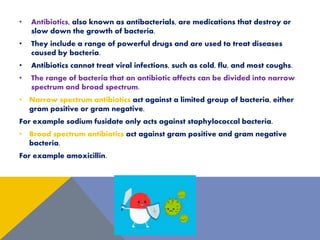
• Antibiotics, also known as antibacterials, are medications that destroy or
slow down the growth of bacteria.
• They include a range of powerful drugs and are used to treat diseases
caused by bacteria.
• Antibiotics cannot treat viral infections, such as cold, flu, and most coughs.
• The range of bacteria that an antibiotic affects can be divided into narrow
spectrum and broad spectrum.
• Narrow spectrum antibiotics act against a limited group of bacteria, either
gram positive or gram negative.
For example sodium fusidate only acts against staphylococcal bacteria.
• Broad spectrum antibiotics act against gram positive and gram negative
bacteria.
For example amoxicillin.
Antibiotics can be divided into two classes based on their mechanism of action.
“Bacteriostatic” and “Bactericidal”
• “Bacteriostatic” means that the agent prevents the growth or reproduction
of bacteria (i.e., keeping them in the stationary phase of growth).
• Bacteriostatic antibiotics limit the growth of bacteria by interfering with
bacterial protein production, DNA replication, or other aspects of bacterial
cellular metabolism.
• This group includes: tetracyclines, sulfonamides, spectinomycin,
trimethoprim, chloramphenicol, macrolides and lincosamides.
• They must work together with the immune system to remove the
microorganisms from the body. However, there is not always a precise
distinction between them and bactericidal antibiotics.
• High concentrations of some bacteriostatic agents are also bactericidal. The
MIC (minimum inhibitory concentration) is the minimum concentration of
drug which can inhibit the growth of the microorganism.
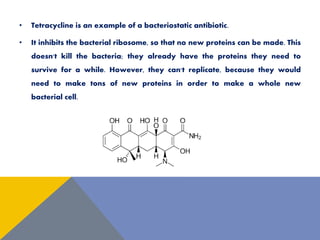
• Tetracycline is an example of a bacteriostatic antibiotic.
• It inhibits the bacterial ribosome, so that no new proteins can be made. This
doesn't kill the bacteria; they already have the proteins they need to
survive for a while. However, they can't replicate, because they would
need to make tons of new proteins in order to make a whole new
bacterial cell.
• “Bactericidal” means that it kills bacteria.
• Rather, those agents that are called “bactericidal” usually fail to kill every
organism (if, for instance, when the the inoculum is large) within 18–24 h after the
test, and most so-called “bacteriostatic” agents kill some bacteria within the 18–24
h after the test—often more than 90%–99% of the inoculum, but not enough (>99.9%)
to be called “bactericidal.”
• One way that bactericidal antibodies kill bacteria is by inhibiting cell wall
synthesis.
• Examples include the Beta-lactam antibiotics (penicillin derivatives (penams),
cephalosporins (cephems), monobactams, and carbapenems) and vancomycin.
• Other ways that bactericidal antibiotics kill bacteria include inhibiting bacterial
enzymes or protein translation. Other batericidal agents include daptomycin,
fluoroquinolones, metronidazole, nitrofurantoin, co-trimoxazole and
telithromycin. Aminoglycosidic antibiotics are usually considered bactericidal,
although they may be bacteriostatic with some organisms.
• The MBC (minimum bactericidal concentration) is the minimum concentration of
drug which can kill 99.99% of the population.
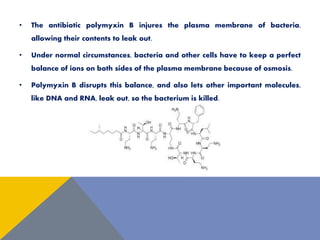
• The antibiotic polymyxin B injures the plasma membrane of bacteria,
allowing their contents to leak out.
• Under normal circumstances, bacteria and other cells have to keep a perfect
balance of ions on both sides of the plasma membrane because of osmosis.
• Polymyxin B disrupts this balance, and also lets other important molecules,
like DNA and RNA, leak out, so the bacterium is killed.
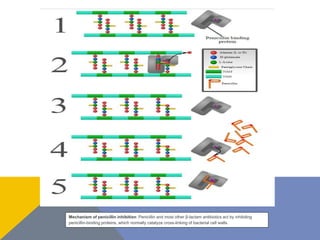
Mechanism of penicillin inhibition: Penicillin and most other β-lactam antibiotics act by inhibiting
penicillin-binding proteins, which normally catalyze cross-linking of bacterial cell walls.
The in vitro microbiological determination of whether an antibacterial agent is
bactericidal or bacteriostatic may be influenced by
growth conditions,
bacterial density,
test duration, and
Extent of reduction in bacterial numbers.
The clinical definition is even more arbitrary. Most antibacterials are better described as
potentially being both bactericidal and bacteriostatic.
Microbiological definition. Various in vitro microbiological techniques to determine the
bactericidal activity of antibacterial agents against different isolates include
the minimum bactericidal concentration (MBC),
time-kill curve, and
serum bactericidal titer (SBT).
Each technique may provide useful information, but the clinical values of these
techniques arelimited by technical problems and difficulty in practical interpretation.
Reference
• https://courses.lumenlearning.com/boundless-microbiology/chapter/overview-
of-antimicrobial-therapy/
• https://study.com/academy/lesson/types-of-antibiotics-bacteriocidal-
vsbacteriostatic-narrow-spectrum-vs-broad-spectrum.html
• https://academic.oup.com/cid/article/38/6/864/320723#4319965
• https://www.medicalnewstoday.com/articles/10278.php
THANK YOU

Bacteriostatic and Bactericidal antibiotics-MICROBIOLOGY QUICK LEARN

  • 1.
  • 2.
    • Antibiotics, alsoknown as antibacterials, are medications that destroy or slow down the growth of bacteria. • They include a range of powerful drugs and are used to treat diseases caused by bacteria. • Antibiotics cannot treat viral infections, such as cold, flu, and most coughs. • The range of bacteria that an antibiotic affects can be divided into narrow spectrum and broad spectrum. • Narrow spectrum antibiotics act against a limited group of bacteria, either gram positive or gram negative. For example sodium fusidate only acts against staphylococcal bacteria. • Broad spectrum antibiotics act against gram positive and gram negative bacteria. For example amoxicillin.
  • 3.
    Antibiotics can bedivided into two classes based on their mechanism of action. “Bacteriostatic” and “Bactericidal” • “Bacteriostatic” means that the agent prevents the growth or reproduction of bacteria (i.e., keeping them in the stationary phase of growth). • Bacteriostatic antibiotics limit the growth of bacteria by interfering with bacterial protein production, DNA replication, or other aspects of bacterial cellular metabolism. • This group includes: tetracyclines, sulfonamides, spectinomycin, trimethoprim, chloramphenicol, macrolides and lincosamides. • They must work together with the immune system to remove the microorganisms from the body. However, there is not always a precise distinction between them and bactericidal antibiotics. • High concentrations of some bacteriostatic agents are also bactericidal. The MIC (minimum inhibitory concentration) is the minimum concentration of drug which can inhibit the growth of the microorganism.
  • 4.
    • Tetracycline isan example of a bacteriostatic antibiotic. • It inhibits the bacterial ribosome, so that no new proteins can be made. This doesn't kill the bacteria; they already have the proteins they need to survive for a while. However, they can't replicate, because they would need to make tons of new proteins in order to make a whole new bacterial cell.
  • 5.
    • “Bactericidal” meansthat it kills bacteria. • Rather, those agents that are called “bactericidal” usually fail to kill every organism (if, for instance, when the the inoculum is large) within 18–24 h after the test, and most so-called “bacteriostatic” agents kill some bacteria within the 18–24 h after the test—often more than 90%–99% of the inoculum, but not enough (>99.9%) to be called “bactericidal.” • One way that bactericidal antibodies kill bacteria is by inhibiting cell wall synthesis. • Examples include the Beta-lactam antibiotics (penicillin derivatives (penams), cephalosporins (cephems), monobactams, and carbapenems) and vancomycin. • Other ways that bactericidal antibiotics kill bacteria include inhibiting bacterial enzymes or protein translation. Other batericidal agents include daptomycin, fluoroquinolones, metronidazole, nitrofurantoin, co-trimoxazole and telithromycin. Aminoglycosidic antibiotics are usually considered bactericidal, although they may be bacteriostatic with some organisms. • The MBC (minimum bactericidal concentration) is the minimum concentration of drug which can kill 99.99% of the population.
  • 6.
    • The antibioticpolymyxin B injures the plasma membrane of bacteria, allowing their contents to leak out. • Under normal circumstances, bacteria and other cells have to keep a perfect balance of ions on both sides of the plasma membrane because of osmosis. • Polymyxin B disrupts this balance, and also lets other important molecules, like DNA and RNA, leak out, so the bacterium is killed.
  • 7.
    Mechanism of penicillininhibition: Penicillin and most other β-lactam antibiotics act by inhibiting penicillin-binding proteins, which normally catalyze cross-linking of bacterial cell walls.
  • 8.
    The in vitromicrobiological determination of whether an antibacterial agent is bactericidal or bacteriostatic may be influenced by growth conditions, bacterial density, test duration, and Extent of reduction in bacterial numbers. The clinical definition is even more arbitrary. Most antibacterials are better described as potentially being both bactericidal and bacteriostatic. Microbiological definition. Various in vitro microbiological techniques to determine the bactericidal activity of antibacterial agents against different isolates include the minimum bactericidal concentration (MBC), time-kill curve, and serum bactericidal titer (SBT). Each technique may provide useful information, but the clinical values of these techniques arelimited by technical problems and difficulty in practical interpretation.
  • 9.