ANTI PATTERNS
in IT Project Management
Agile Vietnam Conference 2016
Nguyễn Vũ Hưng
2016/10/16, Hà Nội
Agenda
1. Warmup with a real world case study
2. List of anti patterns; my stories
3. Your stories; discussions
4. Q&A
5. Closing
About Myself
1. Nguyễn Vũ Hưng, 1978
2. CTO, Fuji Technology
3. POS:
a. Agile
b. Open Source
c. Project Management
"Nguyen Vu Hung is the CTO of Fuji Technology.He has numerous years of IT and software development, project/product management in
both Japan and Vietnam. Considering himself as a FOSS and Agile evangelist and being a Agile lover and an CTO, he is also interested in
not-so-related domains such as human resource management and (organization) (re)structuring."
facebook.com/nguyenvuhung
vuhung16plus@gmail.com
+84-904-28-7878
2016/09/07, @VJU - Nguyen Vu Hung
Target Audiences
1. CEO, CIO, CTO
2. (IT) Project Managers
3. Project Leaders
4. Team Lead
Design Pattern
“In software engineering, a design pattern
is a general repeatable solution to a
commonly occurring problem in software
design. A design pattern isn't a finished
design that can be transformed directly
into code. It is a description or template
for how to solve a problem that can be
used in many different situations.”
“AntiPatterns, like their design pattern
counterparts, define an industry vocabulary for
the common defective processes and
implementations within organizations. A
higher-level vocabulary simplifies
communication between software practitioners
and enables concise description of higher-level
concepts.”
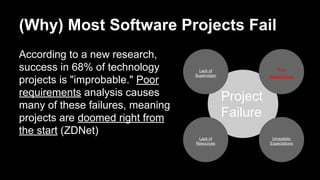
(Why) Most Software Projects Fail
According to a new research,
success in 68% of technology
projects is "improbable." Poor
requirements analysis causes
many of these failures, meaning
projects are doomed right from
the start (ZDNet)
Project
Failure
Poor
Requirements
Lack of
Supervision
Lack of
Resources
Unrealistic
Expectations
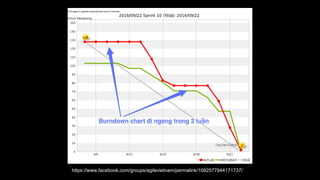
A Word Before We Start
https://www.facebook.com/groups/agilevietnam/permalink/1092577944171737/
Avalance: Mixing Waterfall and Agile
(Quy trình hiệu quả hay quy trình ”chuẩn"?)
99% Rule: It is NEARLY done
(nhưng mãi mãi không bao giờ xong)
Gần DONE, nhưng không CLOSE được, hoặc mãi mãi không close được.
The first 90 percent of the code accounts for the first 90 percent of the
development time. The remaining 10 percent of the code accounts for
the other 90 percent of the development time.[1]
— Tom Cargill, Bell Labs
Gold Plating:
Optimize Beyond the Scope
(nên/cần hay không?)
Scope Creep:
Keep Scope Under Control
Uncontrolled changes or continuous growth in a project’s scope, or adding new features to
the project after the original requirements have been drafted and accepted (also known as
requirement creep and feature creep)
Possible cauues:
1. poor change control
2. lack of proper initial identification of what is required to bring
about the project objectives
3. weak project manager or executive sponsor
4. poor communication between parties
5. lack of initial product versatility
Brooks' Law
Adding more resources to a project to increase velocity,
when the project is already slowed down by coordination overhead.
Vào cuối dự án, càng thêm người dự án càng chậm.
Tester Driven Development
Software projects in which new requirements are specified in bug reports
Để testers lead cuộc chơi là hỏng. Khách hàng/PO hãy dẫn đầu.
Software Bloat: Fat & Heavy
Ví dụ: Windows, ERP.
Triết lý Unix: KISS
Overengineering:
(Spending resources making a project more robust and complex than is needed, tương tự gold plating)
Micromanagement:
Pay(too much) Attention to Details
Hãy để team membes chủ động
Vendor Lock-in:
(FOSS is the Way to Go)
Death by Planning:
(Don’t take too much time on planning. Thay vào đó, thãy tạo value cho sản phẩm/khách hàng)
Too Many Reports
Too Many Meetings
Developers spend too much time answering the concerns of managers and decision makers.
Họp dài nhất: Liên tục 12h
2 tuần qua: Họp liên tục 6h
Analysis Paralysis:
Don’t think, just start any way in an Agile way
Phân tích qua nhiều. Thay vào đó, hãy làm prototype, làm luôn, chấp nhận technical debt và kaizen vào sprints tiếp theo.
Viewgraph Engineering
Too much document, they are interim output that end-users don’t really want
Agile không chú trọng tài liệu bằng giá trị.
Fear of Success
Declare your success! Make your team confident.
Sợ không thành công.
Lo nhiều quá và không bắt đầu.
Suy nghĩ tiêu cực
Irrational Management:
1. Tạm dịch: Bất cập trong Quản lý
2. PM thiếu năng lực
3. Tính (xấu) của người quản lý dự án
4. “Tôi - PM - là người chạy dự án này, chứ không phải cách anh"
5. Độc tài
6. Gây khó chịu, mâu thuẫn nội bộ
7. Có bias (về kỹ thuật, con người, quy trình)
8. Không đưa ra được quyết định
9. Micromanagement là một ví dụ
10. Người lãnh đạo dự án (PM) không gây được ảnh hưởng, không động viên,
khích lệ được nhân viên
Project Mismanagement
1. Tạm dịch: Quản lý sai
2. Quản lý không đúng chỗ, cái cần quản lý thì không quản lý
3. Monitor và controll sai cái cần làm
4. Không priority được cái quan trọng nhất
5. Không nhìn ra được rủi ro lớn nhất (để hạn chế)
Guessworks
1. Vừa làm vừa đoán
2. Đầu vào (tài liệu thiết kế, test, code, yêu
cầu…) không rõ ràng
3. Phải vừa làm vừa đoán
4. Tăng chi phí communication
5. Trao đổi
a. Hệ quả là gì?
b. Phát sinh muda, muri, mura ra sao?
Throw It over the Wall:
The Code is finished (no testing, no documentation)
Technical debt cực lớn
Conway's Law
1. Thiết kế chương trình phản ánh cơ cấu tổ chức
2. Việc ra quyết định phức tạp dần nếu tổ chức phức tạp
3. Luồng thông tin trao đổi trong tổ chức ra sao thì dự án
chạy cũng như vậy
Death March
Chạy nước rút vào phút cuối.
"In project management, a death march is a project where
the members feel it is destined to fail, or requires a stretch
of unsustainable overwork. "
Zoombies
Thành viên nhóm không nói, không hỏi.
Không ai biết họ nghĩ gì, có issue gì, hiểu hay không hiểu.
Hệ quả: Thường là chìm xuồng.
Q&A
ANTI PATTERNS
in IT Project Management
Agile Vietnam Conference 2016
Nguyễn Vũ Hưng
2016/10/16, Hà Nội
REFERENCES
References
1. http://en.wikipedia.org/wiki/Anti-pattern#Project_management
2. AntiPatterns: Refactoring Software, Architectures, and Projects in Crisis
3. http://sourcemaking.com/antipatterns/software-project-management-antipatterns
4. http://www.javagyan.com/tutorials/anti-patterns/software-architecture-antipatterns
5. AntiPatterns in Project Management 1st Edition
Software Development AntiPatterns
● Golden Hammer
● Dead End
● Spaghetti Code
● Input Kludge
● Walking through a Minefield
● Cut-And-Paste Programming
● Mushroom Management
● Golden Hammer
● Dead End
● Spaghetti Code
● Input Kludge
● Walking through a Minefield
● Cut-And-Paste Programming
● Mushroom Management
Software Architecture AntiPatterns
● Software Architecture AntiPatterns
● Autogenerated Stovepipe
● Stovepipe Enterprise
● Jumble
● Stovepipe System
● Cover Your Assets
● Vendor Lock-In
● Software Architecture AntiPatterns
● Autogenerated Stovepipe
● Stovepipe Enterprise
● Jumble
● Stovepipe System
● Cover Your Assets
● Vendor Lock-In
Dark Launching
Dark launching is a technique of "wrapping" the code of
new software features in a way that let you turn them on or
off. Perhaps turning them on and off for all your users, or
perhaps turning them on and off for only a subset of your
users (that meet some criteria).
E-mail Is Dangerous:
Không trao đổi thông tin nhạy cảm qua email.
Trao đổi trực tiếp
Không có log, chứng cứ
Intellectual Violence:
A form of communication breakdown
Đề cập tới một lý thuyết, phương pháp mới mà mọi người không hiểu (không follow được)
Corncob:
My ex-colleague, a difficult person (khó chịu, luôn phản đối, đưa ra ý kiến tiêu cực, tự nâng cao bản thân, ghen tị)
Fire Drill:
Months of boredom followed by demands for immediate delivery
Bình thường không có việc. Nhưng tự nhiên bắt làm luôn và ngay.
The Feud:
Conflicts between Managers
Developers ăn đòn
Endless Development:
Phát triển mãi không xong.
Change is Bad:
Nghĩ rằng Thay đổi (Change, Change Request) là không tốt, muốn stick mà plan/design/requirement ban đầu.
Thực tế: Sản phẩm, thị trường, yêu cầu, mọi thứ luôn biến động thay đổi.
Endless Meetings:

Anti patterns in it project management

  • 1.
    ANTI PATTERNS in ITProject Management Agile Vietnam Conference 2016 Nguyễn Vũ Hưng 2016/10/16, Hà Nội
  • 2.
    Agenda 1. Warmup witha real world case study 2. List of anti patterns; my stories 3. Your stories; discussions 4. Q&A 5. Closing
  • 3.
    About Myself 1. NguyễnVũ Hưng, 1978 2. CTO, Fuji Technology 3. POS: a. Agile b. Open Source c. Project Management "Nguyen Vu Hung is the CTO of Fuji Technology.He has numerous years of IT and software development, project/product management in both Japan and Vietnam. Considering himself as a FOSS and Agile evangelist and being a Agile lover and an CTO, he is also interested in not-so-related domains such as human resource management and (organization) (re)structuring." facebook.com/nguyenvuhung vuhung16plus@gmail.com +84-904-28-7878 2016/09/07, @VJU - Nguyen Vu Hung
  • 4.
    Target Audiences 1. CEO,CIO, CTO 2. (IT) Project Managers 3. Project Leaders 4. Team Lead
  • 5.
    Design Pattern “In softwareengineering, a design pattern is a general repeatable solution to a commonly occurring problem in software design. A design pattern isn't a finished design that can be transformed directly into code. It is a description or template for how to solve a problem that can be used in many different situations.”
  • 6.
    “AntiPatterns, like theirdesign pattern counterparts, define an industry vocabulary for the common defective processes and implementations within organizations. A higher-level vocabulary simplifies communication between software practitioners and enables concise description of higher-level concepts.”
  • 7.
    (Why) Most SoftwareProjects Fail According to a new research, success in 68% of technology projects is "improbable." Poor requirements analysis causes many of these failures, meaning projects are doomed right from the start (ZDNet) Project Failure Poor Requirements Lack of Supervision Lack of Resources Unrealistic Expectations
  • 8.
    A Word BeforeWe Start
  • 9.
  • 10.
    Avalance: Mixing Waterfalland Agile (Quy trình hiệu quả hay quy trình ”chuẩn"?)
  • 11.
    99% Rule: Itis NEARLY done (nhưng mãi mãi không bao giờ xong) Gần DONE, nhưng không CLOSE được, hoặc mãi mãi không close được. The first 90 percent of the code accounts for the first 90 percent of the development time. The remaining 10 percent of the code accounts for the other 90 percent of the development time.[1] — Tom Cargill, Bell Labs
  • 12.
    Gold Plating: Optimize Beyondthe Scope (nên/cần hay không?)
  • 13.
    Scope Creep: Keep ScopeUnder Control Uncontrolled changes or continuous growth in a project’s scope, or adding new features to the project after the original requirements have been drafted and accepted (also known as requirement creep and feature creep) Possible cauues: 1. poor change control 2. lack of proper initial identification of what is required to bring about the project objectives 3. weak project manager or executive sponsor 4. poor communication between parties 5. lack of initial product versatility
  • 14.
    Brooks' Law Adding moreresources to a project to increase velocity, when the project is already slowed down by coordination overhead. Vào cuối dự án, càng thêm người dự án càng chậm.
  • 15.
    Tester Driven Development Softwareprojects in which new requirements are specified in bug reports Để testers lead cuộc chơi là hỏng. Khách hàng/PO hãy dẫn đầu.
  • 16.
    Software Bloat: Fat& Heavy Ví dụ: Windows, ERP. Triết lý Unix: KISS
  • 17.
    Overengineering: (Spending resources makinga project more robust and complex than is needed, tương tự gold plating)
  • 18.
    Micromanagement: Pay(too much) Attentionto Details Hãy để team membes chủ động
  • 19.
  • 20.
    Death by Planning: (Don’ttake too much time on planning. Thay vào đó, thãy tạo value cho sản phẩm/khách hàng)
  • 21.
    Too Many Reports TooMany Meetings Developers spend too much time answering the concerns of managers and decision makers. Họp dài nhất: Liên tục 12h 2 tuần qua: Họp liên tục 6h
  • 22.
    Analysis Paralysis: Don’t think,just start any way in an Agile way Phân tích qua nhiều. Thay vào đó, hãy làm prototype, làm luôn, chấp nhận technical debt và kaizen vào sprints tiếp theo.
  • 23.
    Viewgraph Engineering Too muchdocument, they are interim output that end-users don’t really want Agile không chú trọng tài liệu bằng giá trị.
  • 24.
    Fear of Success Declareyour success! Make your team confident. Sợ không thành công. Lo nhiều quá và không bắt đầu. Suy nghĩ tiêu cực
  • 25.
    Irrational Management: 1. Tạmdịch: Bất cập trong Quản lý 2. PM thiếu năng lực 3. Tính (xấu) của người quản lý dự án 4. “Tôi - PM - là người chạy dự án này, chứ không phải cách anh" 5. Độc tài 6. Gây khó chịu, mâu thuẫn nội bộ 7. Có bias (về kỹ thuật, con người, quy trình) 8. Không đưa ra được quyết định 9. Micromanagement là một ví dụ 10. Người lãnh đạo dự án (PM) không gây được ảnh hưởng, không động viên, khích lệ được nhân viên
  • 26.
    Project Mismanagement 1. Tạmdịch: Quản lý sai 2. Quản lý không đúng chỗ, cái cần quản lý thì không quản lý 3. Monitor và controll sai cái cần làm 4. Không priority được cái quan trọng nhất 5. Không nhìn ra được rủi ro lớn nhất (để hạn chế)
  • 27.
    Guessworks 1. Vừa làmvừa đoán 2. Đầu vào (tài liệu thiết kế, test, code, yêu cầu…) không rõ ràng 3. Phải vừa làm vừa đoán 4. Tăng chi phí communication 5. Trao đổi a. Hệ quả là gì? b. Phát sinh muda, muri, mura ra sao?
  • 28.
    Throw It overthe Wall: The Code is finished (no testing, no documentation) Technical debt cực lớn
  • 29.
    Conway's Law 1. Thiếtkế chương trình phản ánh cơ cấu tổ chức 2. Việc ra quyết định phức tạp dần nếu tổ chức phức tạp 3. Luồng thông tin trao đổi trong tổ chức ra sao thì dự án chạy cũng như vậy
  • 30.
    Death March Chạy nướcrút vào phút cuối. "In project management, a death march is a project where the members feel it is destined to fail, or requires a stretch of unsustainable overwork. "
  • 31.
    Zoombies Thành viên nhómkhông nói, không hỏi. Không ai biết họ nghĩ gì, có issue gì, hiểu hay không hiểu. Hệ quả: Thường là chìm xuồng.
  • 32.
  • 33.
    ANTI PATTERNS in ITProject Management Agile Vietnam Conference 2016 Nguyễn Vũ Hưng 2016/10/16, Hà Nội
  • 34.
  • 35.
    References 1. http://en.wikipedia.org/wiki/Anti-pattern#Project_management 2. AntiPatterns:Refactoring Software, Architectures, and Projects in Crisis 3. http://sourcemaking.com/antipatterns/software-project-management-antipatterns 4. http://www.javagyan.com/tutorials/anti-patterns/software-architecture-antipatterns 5. AntiPatterns in Project Management 1st Edition
  • 36.
    Software Development AntiPatterns ●Golden Hammer ● Dead End ● Spaghetti Code ● Input Kludge ● Walking through a Minefield ● Cut-And-Paste Programming ● Mushroom Management ● Golden Hammer ● Dead End ● Spaghetti Code ● Input Kludge ● Walking through a Minefield ● Cut-And-Paste Programming ● Mushroom Management
  • 37.
    Software Architecture AntiPatterns ●Software Architecture AntiPatterns ● Autogenerated Stovepipe ● Stovepipe Enterprise ● Jumble ● Stovepipe System ● Cover Your Assets ● Vendor Lock-In ● Software Architecture AntiPatterns ● Autogenerated Stovepipe ● Stovepipe Enterprise ● Jumble ● Stovepipe System ● Cover Your Assets ● Vendor Lock-In
  • 38.
    Dark Launching Dark launchingis a technique of "wrapping" the code of new software features in a way that let you turn them on or off. Perhaps turning them on and off for all your users, or perhaps turning them on and off for only a subset of your users (that meet some criteria).
  • 39.
    E-mail Is Dangerous: Khôngtrao đổi thông tin nhạy cảm qua email. Trao đổi trực tiếp Không có log, chứng cứ
  • 40.
    Intellectual Violence: A formof communication breakdown Đề cập tới một lý thuyết, phương pháp mới mà mọi người không hiểu (không follow được)
  • 41.
    Corncob: My ex-colleague, adifficult person (khó chịu, luôn phản đối, đưa ra ý kiến tiêu cực, tự nâng cao bản thân, ghen tị)
  • 42.
    Fire Drill: Months ofboredom followed by demands for immediate delivery Bình thường không có việc. Nhưng tự nhiên bắt làm luôn và ngay.
  • 43.
    The Feud: Conflicts betweenManagers Developers ăn đòn
  • 44.
  • 45.
    Change is Bad: Nghĩrằng Thay đổi (Change, Change Request) là không tốt, muốn stick mà plan/design/requirement ban đầu. Thực tế: Sản phẩm, thị trường, yêu cầu, mọi thứ luôn biến động thay đổi.
  • 46.