 Anorexia is a serious eating disorder
that affects women and men of all ages.
It can damage your health and even
threaten your life. When you have
anorexia, the desire to lose weight
becomes more important than anything
else. You may even lose the ability to
see yourself as you truly are.
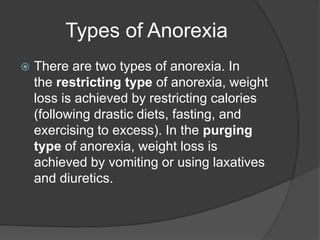
Types of Anorexia
 There are two types of anorexia. In
the restricting type of anorexia, weight
loss is achieved by restricting calories
(following drastic diets, fasting, and
exercising to excess). In the purging
type of anorexia, weight loss is
achieved by vomiting or using laxatives
and diuretics.
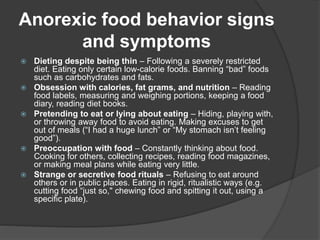
Anorexic food behavior signs
and symptoms
 Dieting despite being thin – Following a severely restricted
diet. Eating only certain low-calorie foods. Banning “bad” foods
such as carbohydrates and fats.
 Obsession with calories, fat grams, and nutrition – Reading
food labels, measuring and weighing portions, keeping a food
diary, reading diet books.
 Pretending to eat or lying about eating – Hiding, playing with,
or throwing away food to avoid eating. Making excuses to get
out of meals (“I had a huge lunch” or “My stomach isn’t feeling
good”).
 Preoccupation with food – Constantly thinking about food.
Cooking for others, collecting recipes, reading food magazines,
or making meal plans while eating very little.
 Strange or secretive food rituals – Refusing to eat around
others or in public places. Eating in rigid, ritualistic ways (e.g.
cutting food “just so," chewing food and spitting it out, using a
specific plate).
Anorexic appearance and body
image signs and symptoms
 Dramatic weight loss – Rapid, drastic weight loss with
no medical cause.
 Feeling fat, despite being underweight – You may feel
overweight in general or just “too fat” in certain places,
such as the stomach, hips, or thighs.
 Fixation on body image – Obsessed with weight, body
shape, or clothing size. Frequent weigh-ins and concern
over tiny fluctuations in weight.
 Harshly critical of appearance – Spending a lot of time
in front of the mirror checking for flaws. There’s always
something to criticize. You’re never thin enough.
 Denial that you’re too thin – You may deny that your low
body weight is a problem, while trying to conceal it
(drinking a lot of water before being weighed, wearing
baggy or oversized clothes).
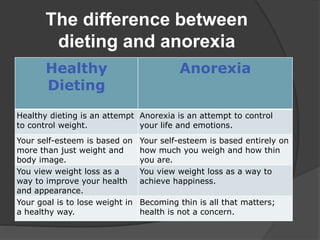
The difference between
dieting and anorexia
Healthy
Dieting
Anorexia
Healthy dieting is an attempt
to control weight.
Anorexia is an attempt to control
your life and emotions.
Your self-esteem is based on
more than just weight and
body image.
Your self-esteem is based entirely on
how much you weigh and how thin
you are.
You view weight loss as a
way to improve your health
and appearance.
You view weight loss as a way to
achieve happiness.
Your goal is to lose weight in
a healthy way.
Becoming thin is all that matters;
health is not a concern.
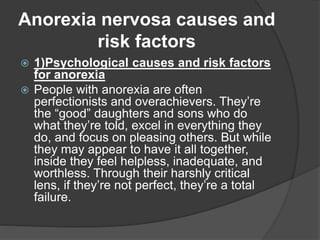
Anorexia nervosa causes and
risk factors
 1)Psychological causes and risk factors
for anorexia
 People with anorexia are often
perfectionists and overachievers. They’re
the “good” daughters and sons who do
what they’re told, excel in everything they
do, and focus on pleasing others. But while
they may appear to have it all together,
inside they feel helpless, inadequate, and
worthless. Through their harshly critical
lens, if they’re not perfect, they’re a total
failure.
2)Family and social pressures
 In addition to the cultural pressure to be thin,
there are other family and social pressures
that can contribute to anorexia. This includes
participation in an activity that demands
slenderness, such as ballet, gymnastics, or
modeling. It also includes having parents who
are overly controlling, put a lot of emphasis on
looks, diet themselves, or criticize their
children’s bodies and appearance. Stressful
life events—such as the onset of puberty, a
breakup, or going away to school—can also
trigger anorexia.
 3) Biological causes of anorexia
 Research suggests that a genetic
predisposition to anorexia may run in families.
If a girl has a sibling with anorexia, she is 10 to
20 times more likely than the general
population to develop anorexia herself. Brain
chemistry also plays a significant role. People
with anorexia tend to have high levels of
cortisol, the brain hormone most related to
stress, and decreased levels of serotonin and
norepinephrine, which are associated with
feelings of well-being.
Steps to anorexia recovery
 Admit you have a problem. Up until now, you’ve been invested in the
idea that life will be better—that you’ll finally feel good—if you lose
more weight. The first step in anorexia recovery is admitting that your
relentless pursuit of thinness is out of your control and acknowledging
the physical and emotional damage that you’ve suffered because of it.
 Talk to someone. It can be hard to talk about what you’re going
through, especially if you’ve kept your anorexia a secret for a long time.
You may be ashamed, ambivalent, or afraid. But it’s important to
understand that you’re not alone. Find a good listener—someone who
will support you as you try to get better.
 Stay away from people, places, and activities that trigger your
obsession with being thin.You may need to avoid looking at fashion
or fitness magazines, spend less time with friends who constantly diet
and talk about losing weight, and stay away from weight loss web sites
and “pro-ana” sites that promote anorexia.
 Seek professional help. The advice and support of trained eating
disorder professionals can help you regain your health, learn to eat
normally again, and develop healthier attitudes about food and your
body.
Anna Papoutsa
Marianthi Rapti
Irene Stamouli

Eating disorders

  • 2.
     Anorexia isa serious eating disorder that affects women and men of all ages. It can damage your health and even threaten your life. When you have anorexia, the desire to lose weight becomes more important than anything else. You may even lose the ability to see yourself as you truly are.
  • 3.
    Types of Anorexia There are two types of anorexia. In the restricting type of anorexia, weight loss is achieved by restricting calories (following drastic diets, fasting, and exercising to excess). In the purging type of anorexia, weight loss is achieved by vomiting or using laxatives and diuretics.
  • 4.
    Anorexic food behaviorsigns and symptoms  Dieting despite being thin – Following a severely restricted diet. Eating only certain low-calorie foods. Banning “bad” foods such as carbohydrates and fats.  Obsession with calories, fat grams, and nutrition – Reading food labels, measuring and weighing portions, keeping a food diary, reading diet books.  Pretending to eat or lying about eating – Hiding, playing with, or throwing away food to avoid eating. Making excuses to get out of meals (“I had a huge lunch” or “My stomach isn’t feeling good”).  Preoccupation with food – Constantly thinking about food. Cooking for others, collecting recipes, reading food magazines, or making meal plans while eating very little.  Strange or secretive food rituals – Refusing to eat around others or in public places. Eating in rigid, ritualistic ways (e.g. cutting food “just so," chewing food and spitting it out, using a specific plate).
  • 5.
    Anorexic appearance andbody image signs and symptoms  Dramatic weight loss – Rapid, drastic weight loss with no medical cause.  Feeling fat, despite being underweight – You may feel overweight in general or just “too fat” in certain places, such as the stomach, hips, or thighs.  Fixation on body image – Obsessed with weight, body shape, or clothing size. Frequent weigh-ins and concern over tiny fluctuations in weight.  Harshly critical of appearance – Spending a lot of time in front of the mirror checking for flaws. There’s always something to criticize. You’re never thin enough.  Denial that you’re too thin – You may deny that your low body weight is a problem, while trying to conceal it (drinking a lot of water before being weighed, wearing baggy or oversized clothes).
  • 6.
    The difference between dietingand anorexia Healthy Dieting Anorexia Healthy dieting is an attempt to control weight. Anorexia is an attempt to control your life and emotions. Your self-esteem is based on more than just weight and body image. Your self-esteem is based entirely on how much you weigh and how thin you are. You view weight loss as a way to improve your health and appearance. You view weight loss as a way to achieve happiness. Your goal is to lose weight in a healthy way. Becoming thin is all that matters; health is not a concern.
  • 7.
    Anorexia nervosa causesand risk factors  1)Psychological causes and risk factors for anorexia  People with anorexia are often perfectionists and overachievers. They’re the “good” daughters and sons who do what they’re told, excel in everything they do, and focus on pleasing others. But while they may appear to have it all together, inside they feel helpless, inadequate, and worthless. Through their harshly critical lens, if they’re not perfect, they’re a total failure.
  • 8.
    2)Family and socialpressures  In addition to the cultural pressure to be thin, there are other family and social pressures that can contribute to anorexia. This includes participation in an activity that demands slenderness, such as ballet, gymnastics, or modeling. It also includes having parents who are overly controlling, put a lot of emphasis on looks, diet themselves, or criticize their children’s bodies and appearance. Stressful life events—such as the onset of puberty, a breakup, or going away to school—can also trigger anorexia.
  • 9.
     3) Biologicalcauses of anorexia  Research suggests that a genetic predisposition to anorexia may run in families. If a girl has a sibling with anorexia, she is 10 to 20 times more likely than the general population to develop anorexia herself. Brain chemistry also plays a significant role. People with anorexia tend to have high levels of cortisol, the brain hormone most related to stress, and decreased levels of serotonin and norepinephrine, which are associated with feelings of well-being.
  • 11.
    Steps to anorexiarecovery  Admit you have a problem. Up until now, you’ve been invested in the idea that life will be better—that you’ll finally feel good—if you lose more weight. The first step in anorexia recovery is admitting that your relentless pursuit of thinness is out of your control and acknowledging the physical and emotional damage that you’ve suffered because of it.  Talk to someone. It can be hard to talk about what you’re going through, especially if you’ve kept your anorexia a secret for a long time. You may be ashamed, ambivalent, or afraid. But it’s important to understand that you’re not alone. Find a good listener—someone who will support you as you try to get better.  Stay away from people, places, and activities that trigger your obsession with being thin.You may need to avoid looking at fashion or fitness magazines, spend less time with friends who constantly diet and talk about losing weight, and stay away from weight loss web sites and “pro-ana” sites that promote anorexia.  Seek professional help. The advice and support of trained eating disorder professionals can help you regain your health, learn to eat normally again, and develop healthier attitudes about food and your body.
  • 12.