PRESENTED TO:-
Mrs Anita Asrani mam
Ms Pinky pathidar mam
PRESENTED BY:-
JECIKA JOSHWA
Bsc Nursing 3rd year
SUBJECT :- CHILD HEALTH NURSING
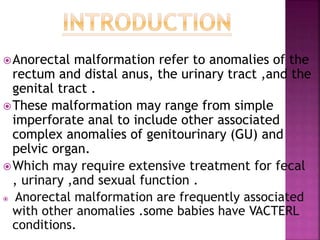
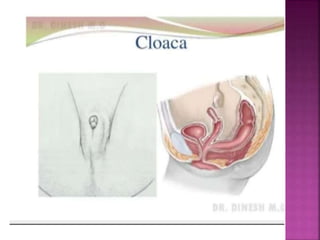
Anorectal malformation refer to anomalies of the
rectum and distal anus, the urinary tract ,and the
genital tract .
These malformation may range from simple
imperforate anal to include other associated
complex anomalies of genitourinary (GU) and
pelvic organ.
Which may require extensive treatment for fecal
, urinary ,and sexual function .
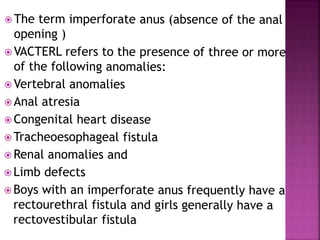
 Anorectal malformation are frequently associated
with other anomalies .some babies have VACTERL
conditions.
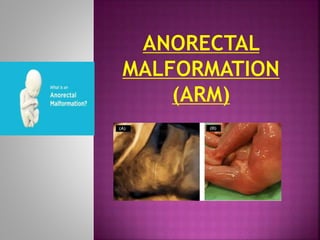
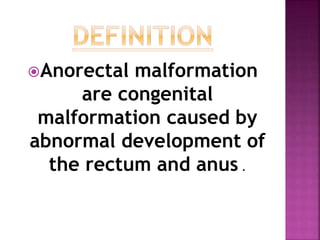
Anorectal malformation
are congenital
malformation caused by
abnormal development of
the rectum and anus .
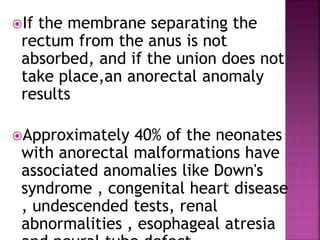
The exact cause of these malformation
is not known. It occurs due to the arrest
in the embryonic development of the
anus , lower rectum and urogenital
tract at the 8 th week of embryonic life
The membrane that separatevthe
endodermal hindgut from the
ectodermal and dimple perforates and a
continuous canal is formed, the outlet
of which is the anus.
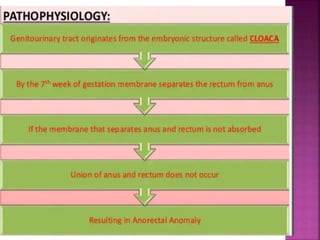
If the membrane separating the
rectum from the anus is not
absorbed, and if the union does not
take place,an anorectal anomaly
results
Approximately 40% of the neonates
with anorectal malformations have
associated anomalies like Down's
syndrome , congenital heart disease
, undescended tests, renal
abnormalities , esophageal atresia
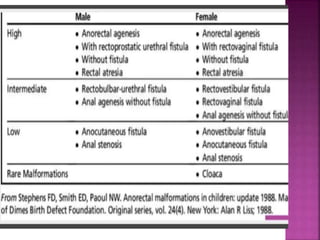
A. Infant with out normal anus
 With a visible abnormal opening
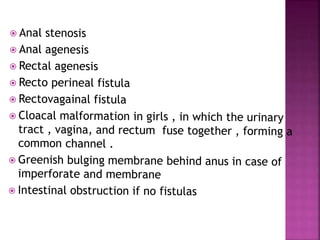
1. Anal stenosis
2. Ano perineal fistula
3. Anovestibular fistula
 With an invisible but manifested opening of the bowel
1. Rectovagainal fistal
2. Recto urethral fistula
3. Rectovestibular fistula
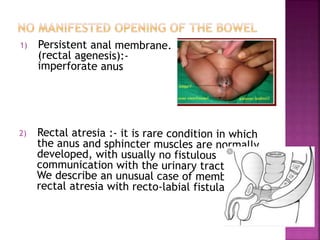
 No manifested opening of the bowel
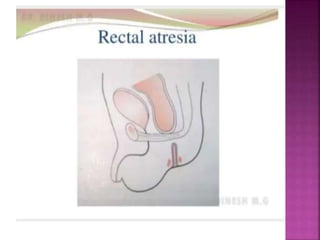
1. Persistent anal membrane
2. Rectal atresia
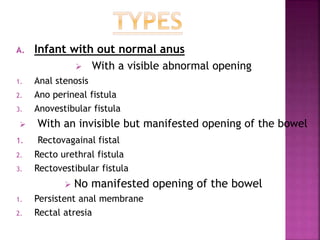
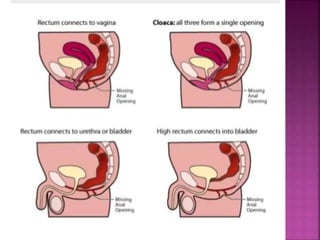
 1) Anal stenosis :- which is narrowing of the canal
that makes it difficult to pass stool , can lead to serious
complications it left untreated. Also referred to as
stricture , this condition occurs when the muscle in the
anus - which expand and contract to regulate the
passage of the fecal material - narrow
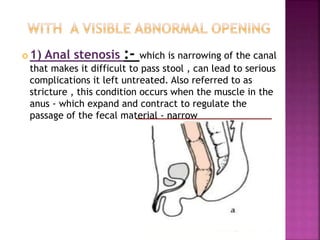
 The presence of a fistula (abnormal tunnel ) between
the anal canal and the perineum
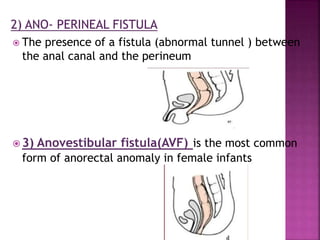
 3) Anovestibular fistula(AVF) is the most common
form of anorectal anomaly in female infants
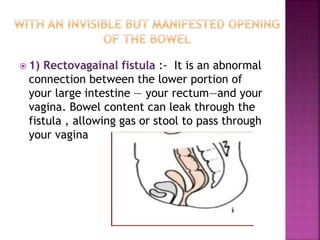
 1) Rectovagainal fistula :- It is an abnormal
connection between the lower portion of
your large intestine — your rectum—and your
vagina. Bowel content can leak through the
fistula , allowing gas or stool to pass through
your vagina
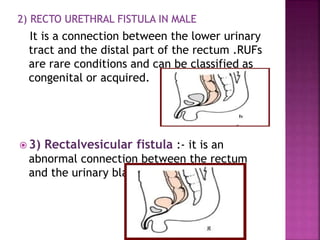
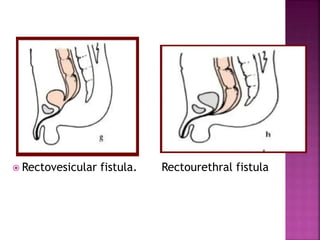
It is a connection between the lower urinary
tract and the distal part of the rectum .RUFs
are rare conditions and can be classified as
congenital or acquired.
 3) Rectalvesicular fistula :- it is an
abnormal connection between the rectum
and the urinary bladder .
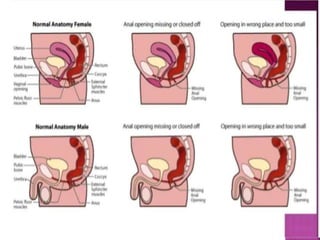
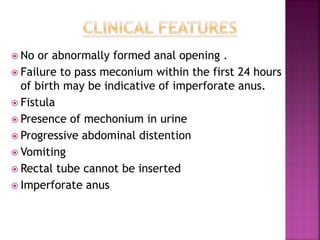
 No or abnormally formed anal opening .
 Failure to pass meconium within the first 24 hours
of birth may be indicative of imperforate anus.
 Fistula
 Presence of mechonium in urine
 Progressive abdominal distention
 Vomiting
 Rectal tube cannot be inserted
 Imperforate anus
 Physical examination by passing the gloves little finger
through the anus and by observing the passage through
which meconium was passed .
 Cystoscopy
 An IV pyelogram and a voiding cystourethrogram are
performed to evaluate associated anomalies involving
the urinary tract .
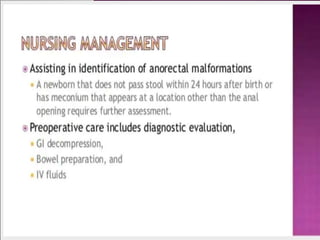
 Newborn is stabilized and kept NPO for
further evaluation
 IV fluids are provided to maintain glucose
and fluid and electrolyte balance
 Current recommendation is that surgery be
delayed at least 24 hours to properly
evaluate for the presence of a fistula and
possibly other anomalies
 Various according to the defect
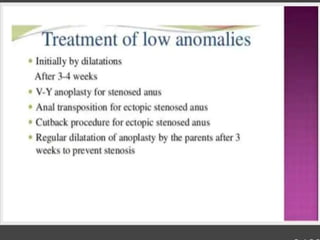
 Low ARM
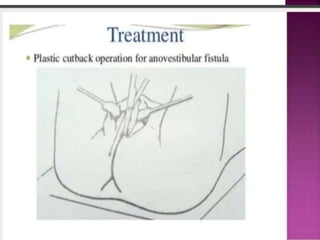
 Rectal cut back anaplasty or Y-V plasty
 Dialation of fistula
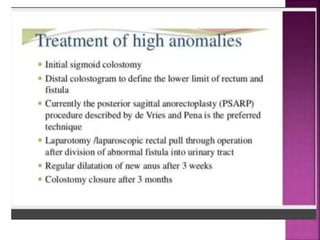
 High ARM
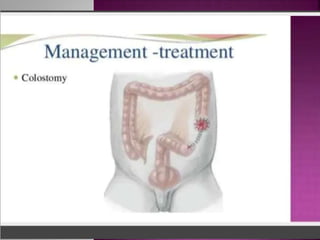
 Colostomy
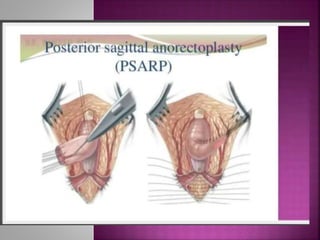
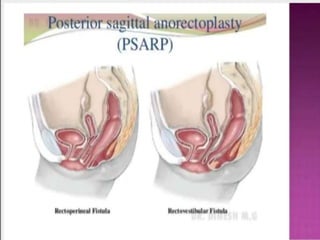
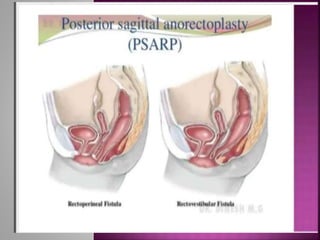
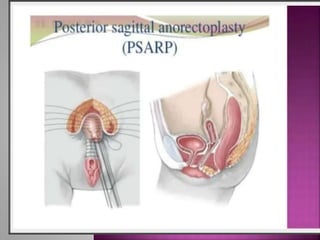
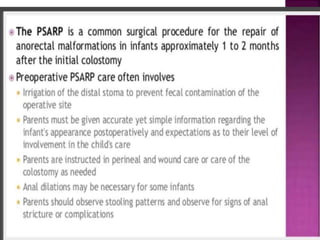
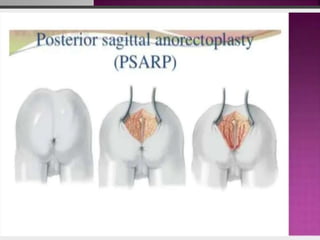
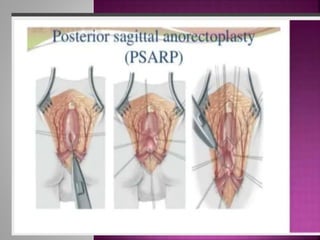
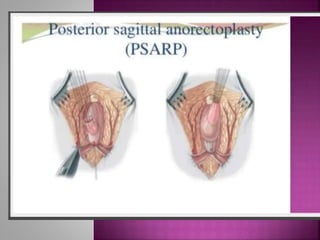
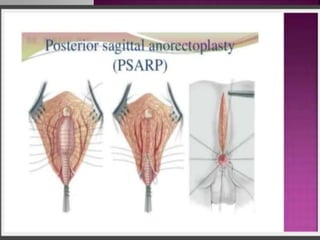
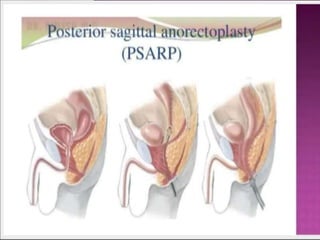
 Posterior sagittal anorectoplasty (PSARP) or
other pull- through with colostomy .
 This surgery generally occur between 3 to 6 months
of age , although timing varies among surgeons.
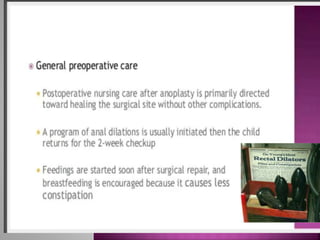
 When the operative site has healed , approximately 2
weeks after surgery , anal dilations are begun.
 When the desired size of the anal opening has been
achieved, the colostomy is closed.
 In case of imperforate anal membrane , the memy is
perforated with a blunt instrument. Repeated
dilations might be necessary to prevent scar
formation.
 In case of fistulas, the colon can be brought down
through the anal dimple by an abdominoperineal
procedure. The anus is positioned in the area of
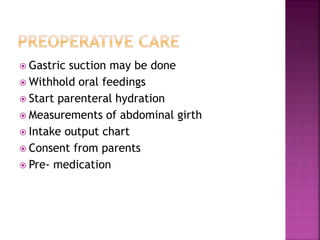
 Gastric suction may be done
 Withhold oral feedings
 Start parenteral hydration
 Measurements of abdominal girth
 Intake output chart
 Consent from parents
 Pre- medication
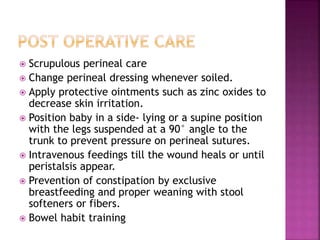
 Scrupulous perineal care
 Change perineal dressing whenever soiled.
 Apply protective ointments such as zinc oxides to
decrease skin irritation.
 Position baby in a side- lying or a supine position
with the legs suspended at a 90° angle to the
trunk to prevent pressure on perineal sutures.
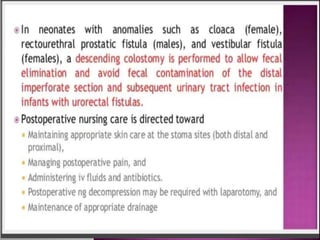
 Intravenous feedings till the wound heals or until
peristalsis appear.
 Prevention of constipation by exclusive
breastfeeding and proper weaning with stool
softeners or fibers.
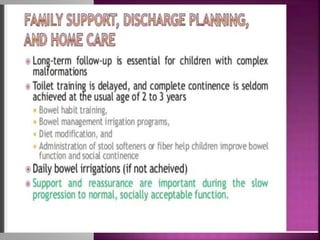
 Bowel habit training
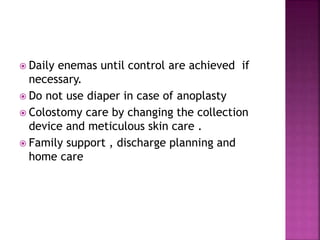
 Daily enemas until control are achieved if
necessary.
 Do not use diaper in case of anoplasty
 Colostomy care by changing the collection
device and meticulous skin care .
 Family support , discharge planning and
home care
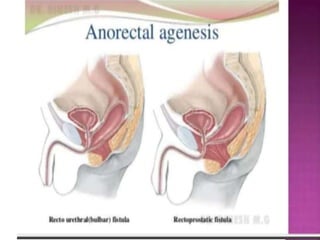
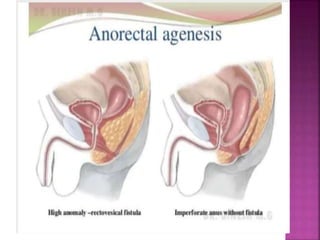
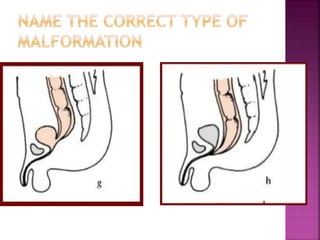
 Rectovesicular fistula. Rectourethral fistula
 All patients born with anorectal
malformations can be kept clean of stool and
dry of urine , either because they achieve
bowel control or because they are subjected
to a bowel management program
 Manoj yadav "A textbook of Child health nsg
 Edition 2011 published by s.vikas and
 Company
 Parul Datta " Pediatric Nursing"
 2nd edition published by Jaypee
Brothers
 Internet :-
 www.slideshare .com
 Wikipedia
Anorectal jecika ppt

Anorectal jecika ppt

  • 1.
    PRESENTED TO:- Mrs AnitaAsrani mam Ms Pinky pathidar mam PRESENTED BY:- JECIKA JOSHWA Bsc Nursing 3rd year SUBJECT :- CHILD HEALTH NURSING
  • 3.
    Anorectal malformation referto anomalies of the rectum and distal anus, the urinary tract ,and the genital tract . These malformation may range from simple imperforate anal to include other associated complex anomalies of genitourinary (GU) and pelvic organ. Which may require extensive treatment for fecal , urinary ,and sexual function .  Anorectal malformation are frequently associated with other anomalies .some babies have VACTERL conditions.
  • 5.
    Anorectal malformation are congenital malformationcaused by abnormal development of the rectum and anus .
  • 7.
    The exact causeof these malformation is not known. It occurs due to the arrest in the embryonic development of the anus , lower rectum and urogenital tract at the 8 th week of embryonic life The membrane that separatevthe endodermal hindgut from the ectodermal and dimple perforates and a continuous canal is formed, the outlet of which is the anus.
  • 8.
    If the membraneseparating the rectum from the anus is not absorbed, and if the union does not take place,an anorectal anomaly results Approximately 40% of the neonates with anorectal malformations have associated anomalies like Down's syndrome , congenital heart disease , undescended tests, renal abnormalities , esophageal atresia
  • 10.
    A. Infant without normal anus  With a visible abnormal opening 1. Anal stenosis 2. Ano perineal fistula 3. Anovestibular fistula  With an invisible but manifested opening of the bowel 1. Rectovagainal fistal 2. Recto urethral fistula 3. Rectovestibular fistula  No manifested opening of the bowel 1. Persistent anal membrane 2. Rectal atresia
  • 11.
     1) Analstenosis :- which is narrowing of the canal that makes it difficult to pass stool , can lead to serious complications it left untreated. Also referred to as stricture , this condition occurs when the muscle in the anus - which expand and contract to regulate the passage of the fecal material - narrow
  • 12.
     The presenceof a fistula (abnormal tunnel ) between the anal canal and the perineum  3) Anovestibular fistula(AVF) is the most common form of anorectal anomaly in female infants
  • 13.
     1) Rectovagainalfistula :- It is an abnormal connection between the lower portion of your large intestine — your rectum—and your vagina. Bowel content can leak through the fistula , allowing gas or stool to pass through your vagina
  • 14.
    It is aconnection between the lower urinary tract and the distal part of the rectum .RUFs are rare conditions and can be classified as congenital or acquired.  3) Rectalvesicular fistula :- it is an abnormal connection between the rectum and the urinary bladder .
  • 23.
     No orabnormally formed anal opening .  Failure to pass meconium within the first 24 hours of birth may be indicative of imperforate anus.  Fistula  Presence of mechonium in urine  Progressive abdominal distention  Vomiting  Rectal tube cannot be inserted  Imperforate anus
  • 25.
     Physical examinationby passing the gloves little finger through the anus and by observing the passage through which meconium was passed .  Cystoscopy  An IV pyelogram and a voiding cystourethrogram are performed to evaluate associated anomalies involving the urinary tract .
  • 27.
     Newborn isstabilized and kept NPO for further evaluation  IV fluids are provided to maintain glucose and fluid and electrolyte balance  Current recommendation is that surgery be delayed at least 24 hours to properly evaluate for the presence of a fistula and possibly other anomalies
  • 28.
     Various accordingto the defect  Low ARM  Rectal cut back anaplasty or Y-V plasty  Dialation of fistula  High ARM  Colostomy  Posterior sagittal anorectoplasty (PSARP) or other pull- through with colostomy .
  • 29.
     This surgerygenerally occur between 3 to 6 months of age , although timing varies among surgeons.  When the operative site has healed , approximately 2 weeks after surgery , anal dilations are begun.  When the desired size of the anal opening has been achieved, the colostomy is closed.  In case of imperforate anal membrane , the memy is perforated with a blunt instrument. Repeated dilations might be necessary to prevent scar formation.  In case of fistulas, the colon can be brought down through the anal dimple by an abdominoperineal procedure. The anus is positioned in the area of
  • 46.
     Gastric suctionmay be done  Withhold oral feedings  Start parenteral hydration  Measurements of abdominal girth  Intake output chart  Consent from parents  Pre- medication
  • 48.
     Scrupulous perinealcare  Change perineal dressing whenever soiled.  Apply protective ointments such as zinc oxides to decrease skin irritation.  Position baby in a side- lying or a supine position with the legs suspended at a 90° angle to the trunk to prevent pressure on perineal sutures.  Intravenous feedings till the wound heals or until peristalsis appear.  Prevention of constipation by exclusive breastfeeding and proper weaning with stool softeners or fibers.  Bowel habit training
  • 49.
     Daily enemasuntil control are achieved if necessary.  Do not use diaper in case of anoplasty  Colostomy care by changing the collection device and meticulous skin care .  Family support , discharge planning and home care
  • 56.
     Rectovesicular fistula.Rectourethral fistula
  • 57.
     All patientsborn with anorectal malformations can be kept clean of stool and dry of urine , either because they achieve bowel control or because they are subjected to a bowel management program
  • 58.
     Manoj yadav"A textbook of Child health nsg  Edition 2011 published by s.vikas and  Company  Parul Datta " Pediatric Nursing"  2nd edition published by Jaypee Brothers  Internet :-  www.slideshare .com  Wikipedia