
C.V.AJAY KUMAR
IV th B.Tech
Computer Science Engineering
ANIMATION
 The basic definition of the word “animate” is
  referring to the concept of bringing
  something to life, or mimicking to life.

 In the multimedia term animation is the quick
  display from a sequence of numerous images
  whether from 2-D or 3-D model in different
  position to make an optical illusion of
  movement
 CEL animation


 2D animation


 3D animation
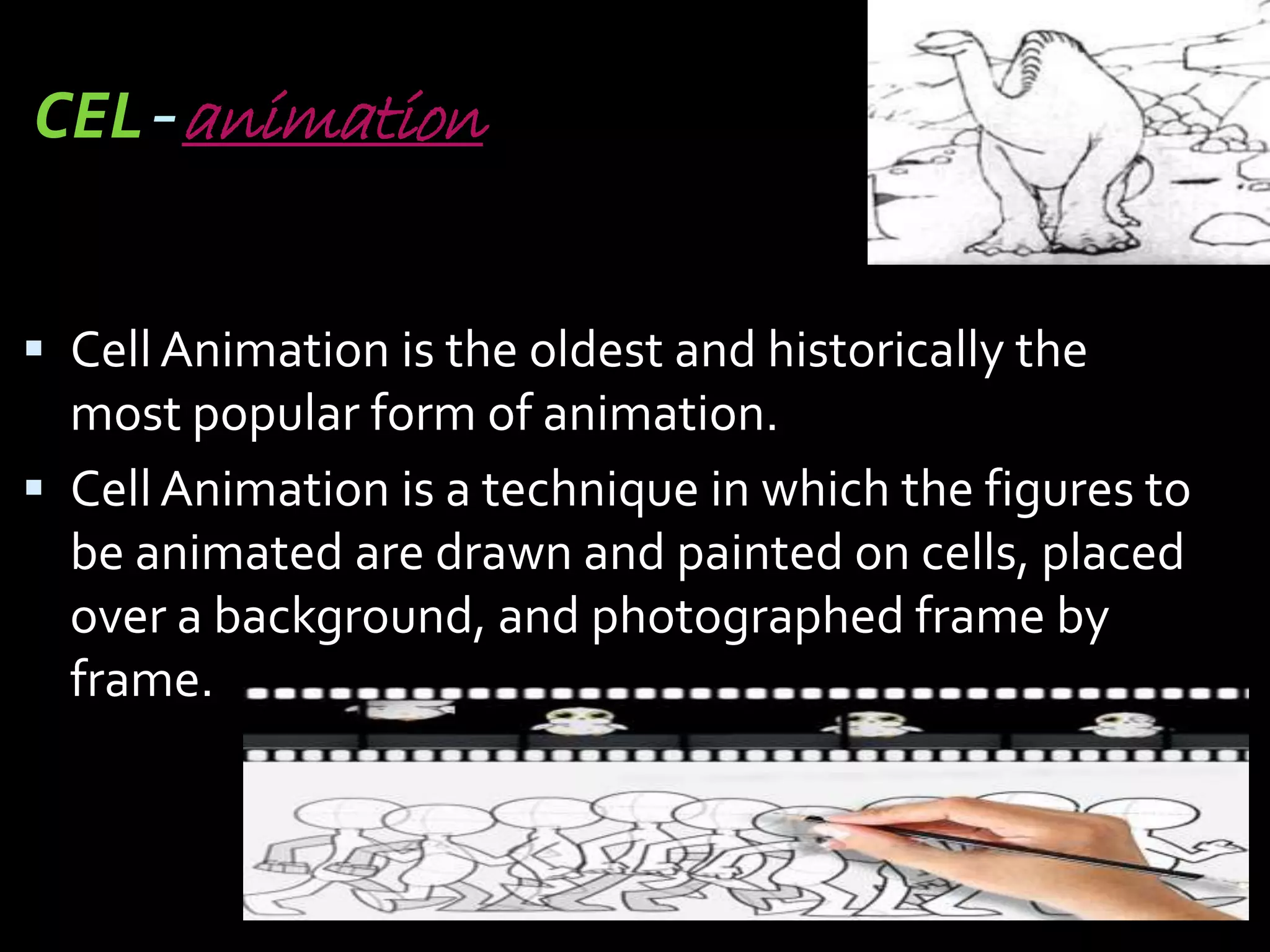
CEL-animation


 Cell Animation is the oldest and historically the
  most popular form of animation.
 Cell Animation is a technique in which the figures to
  be animated are drawn and painted on cells, placed
  over a background, and photographed frame by
  frame.
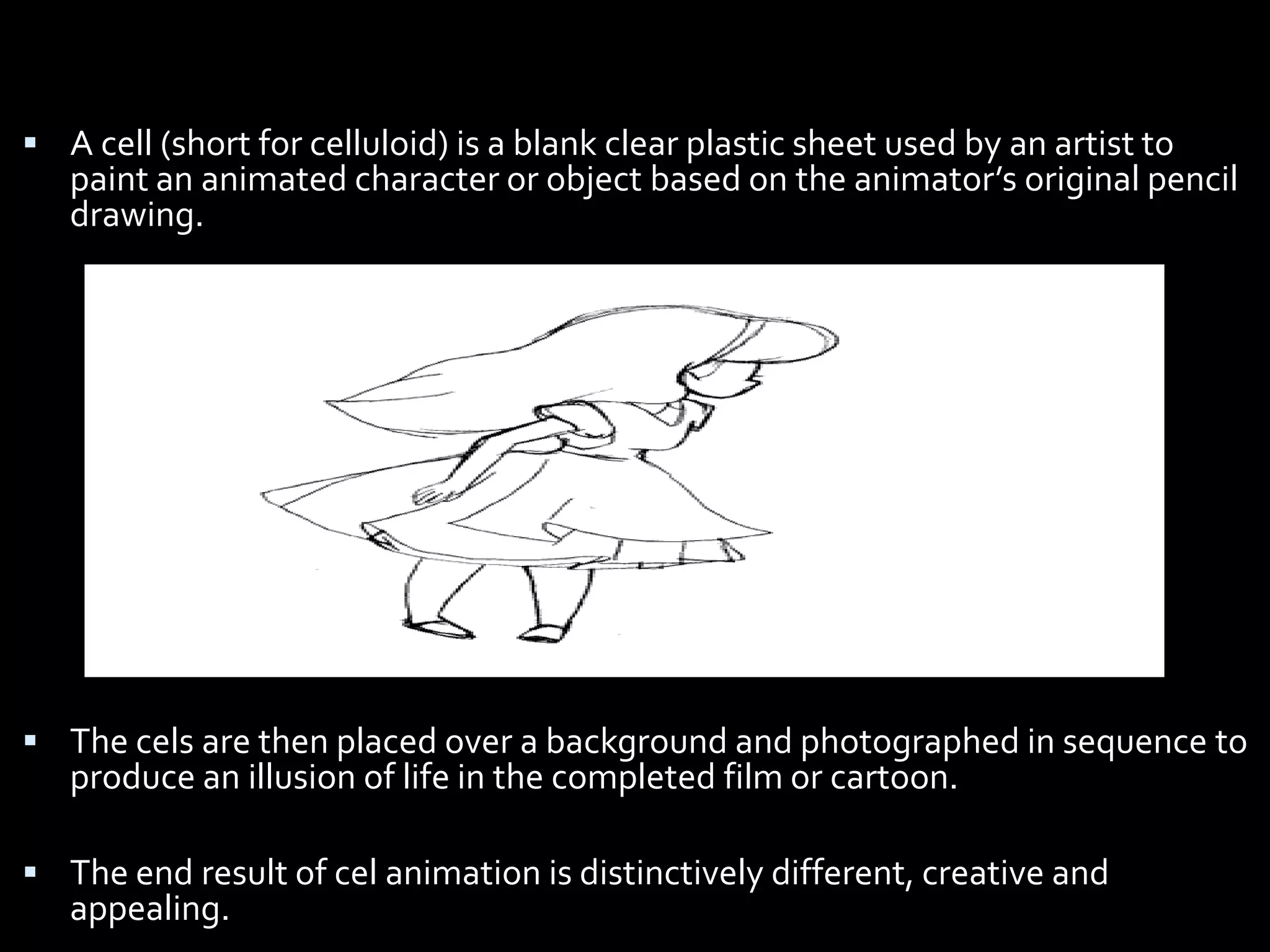
 A cell (short for celluloid) is a blank clear plastic sheet used by an artist to
   paint an animated character or object based on the animator’s original pencil
   drawing.


 The cels are then placed over a background and photographed in sequence to
   produce an illusion of life in the completed film or cartoon.

 The end result of cel animation is distinctively different, creative and
   appealing.
APPLICATIONS OF CEL

 Cartoons
 Marketing and Advertising
 Educational Multimedia
  Programmers
 Training Programmes
 Health Care Programmers
 Cyber Art
 Interactive Magazines
 Internet
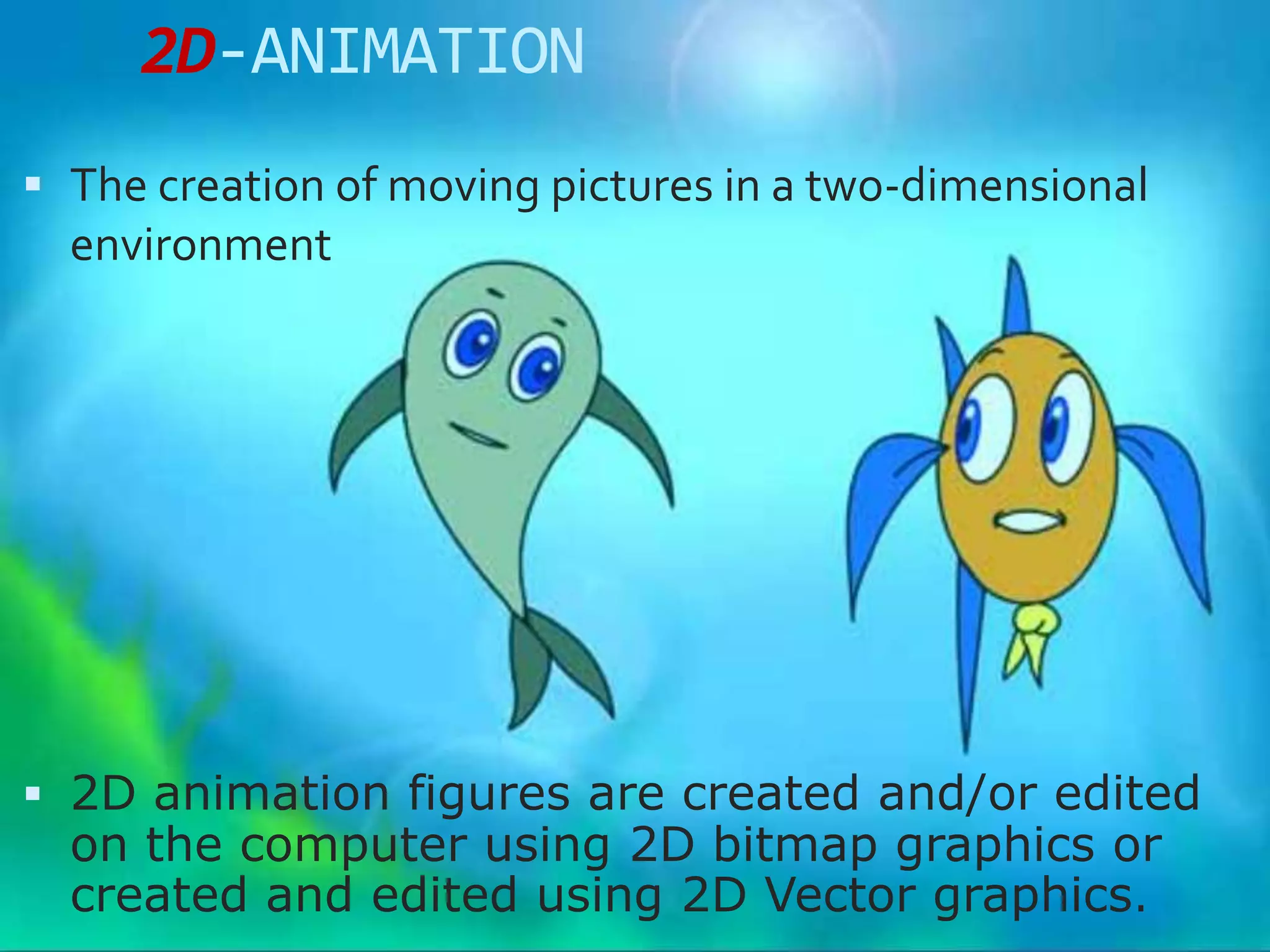
2D-ANIMATION
 The creation of moving pictures in a two-dimensional
  environment


 2D animation figures are created and/or edited
  on the computer using 2D bitmap graphics or
  created and edited using 2D Vector graphics.
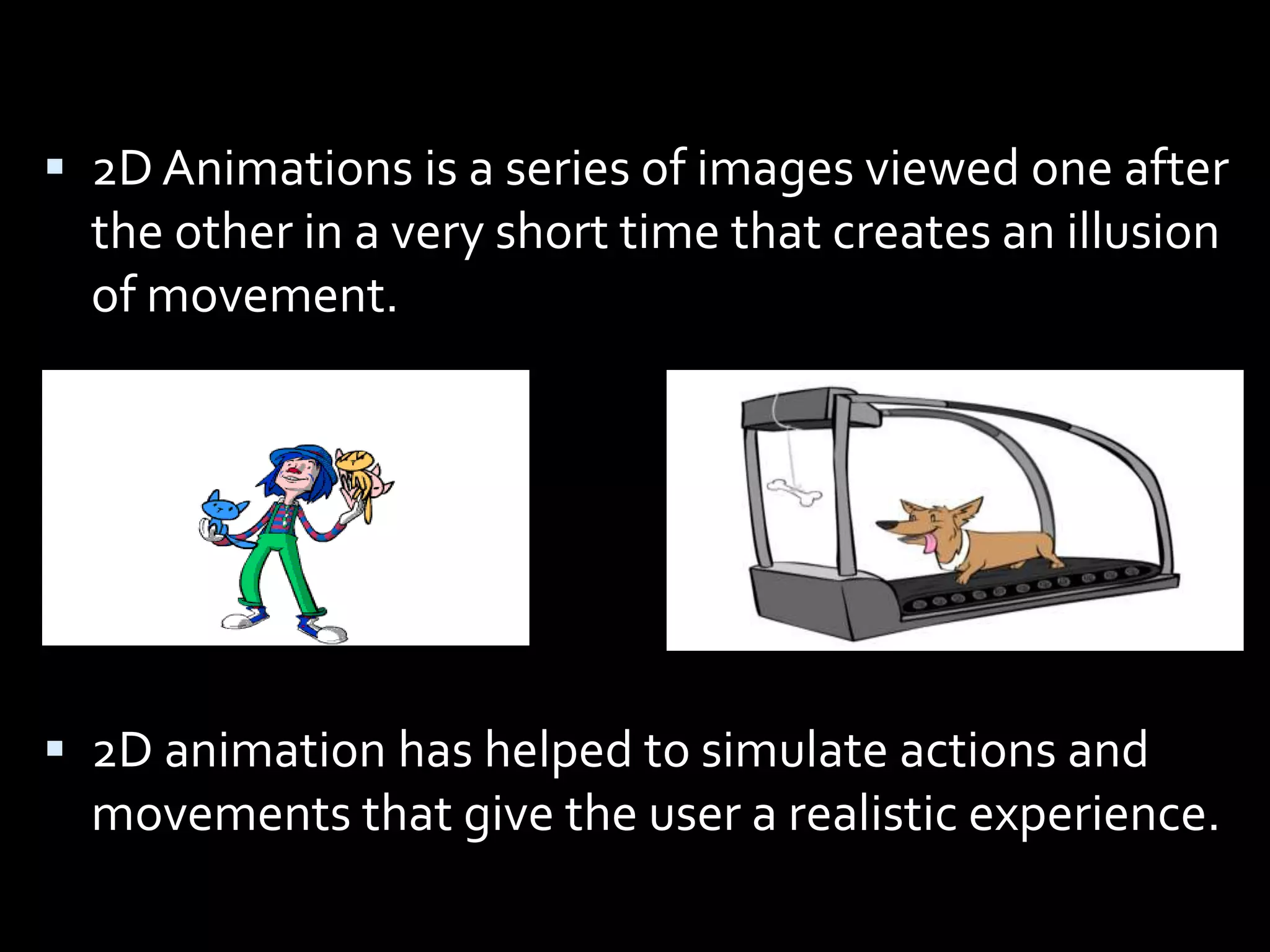
 2D Animations is a series of images viewed one after
  the other in a very short time that creates an illusion
  of movement.


 2D animation has helped to simulate actions and
  movements that give the user a realistic experience.
Applications

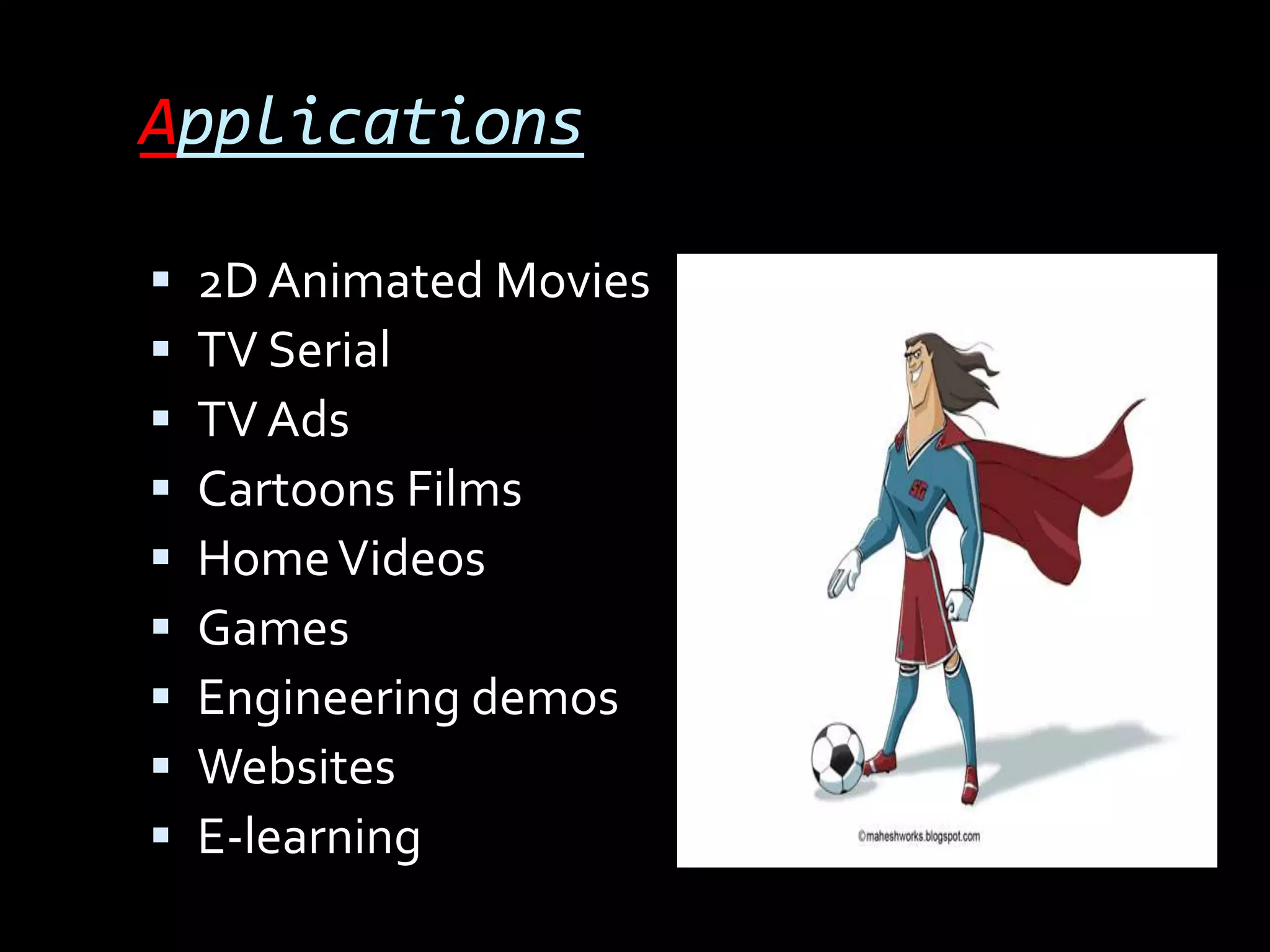
   2D Animated Movies
   TV Serial
   TV Ads
   Cartoons Films
   Home Videos
   Games
   Engineering demos
   Websites
   E-learning
3D-Animation

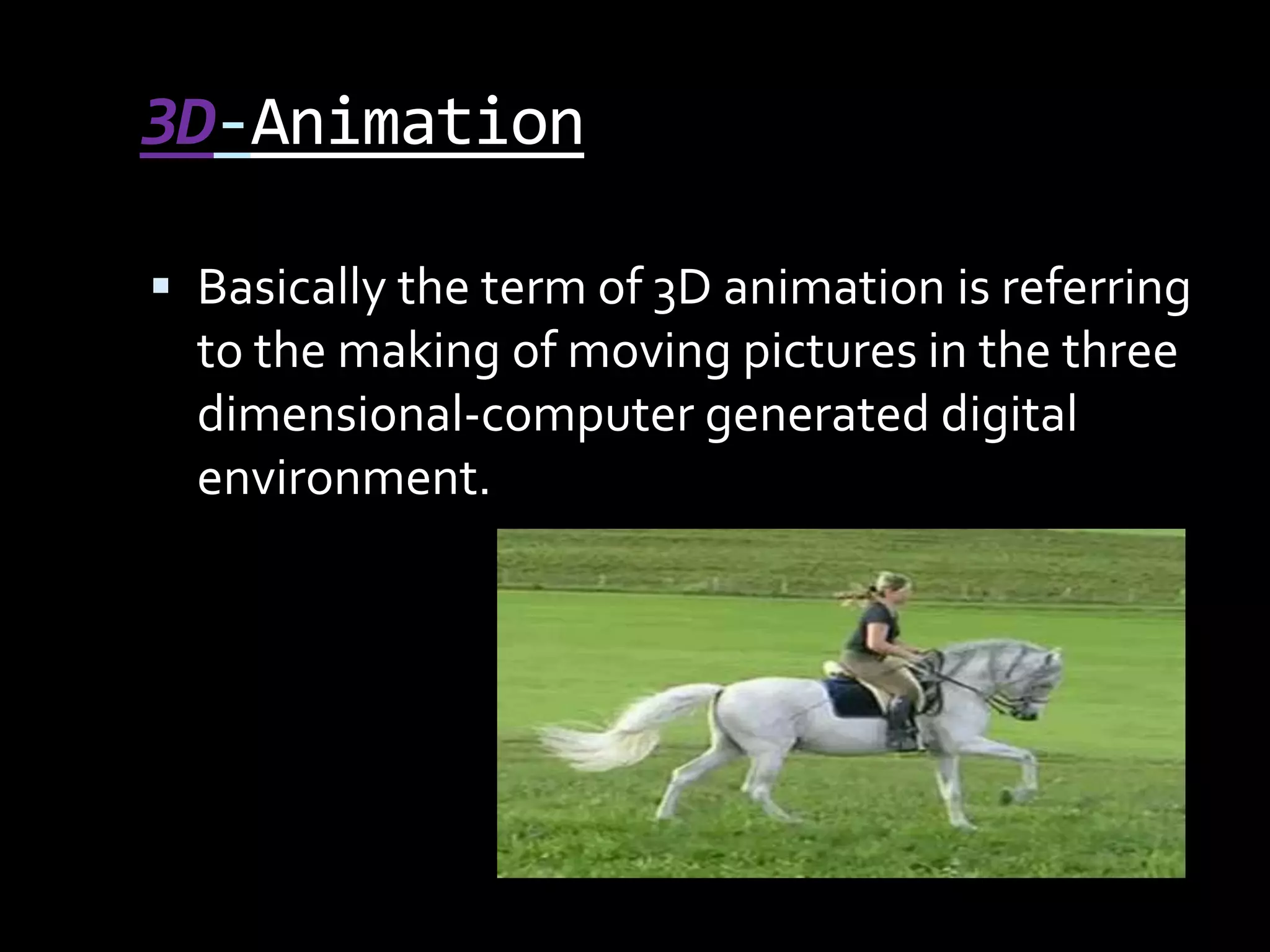
 Basically the term of 3D animation is referring
  to the making of moving pictures in the three
  dimensional-computer generated digital
  environment.
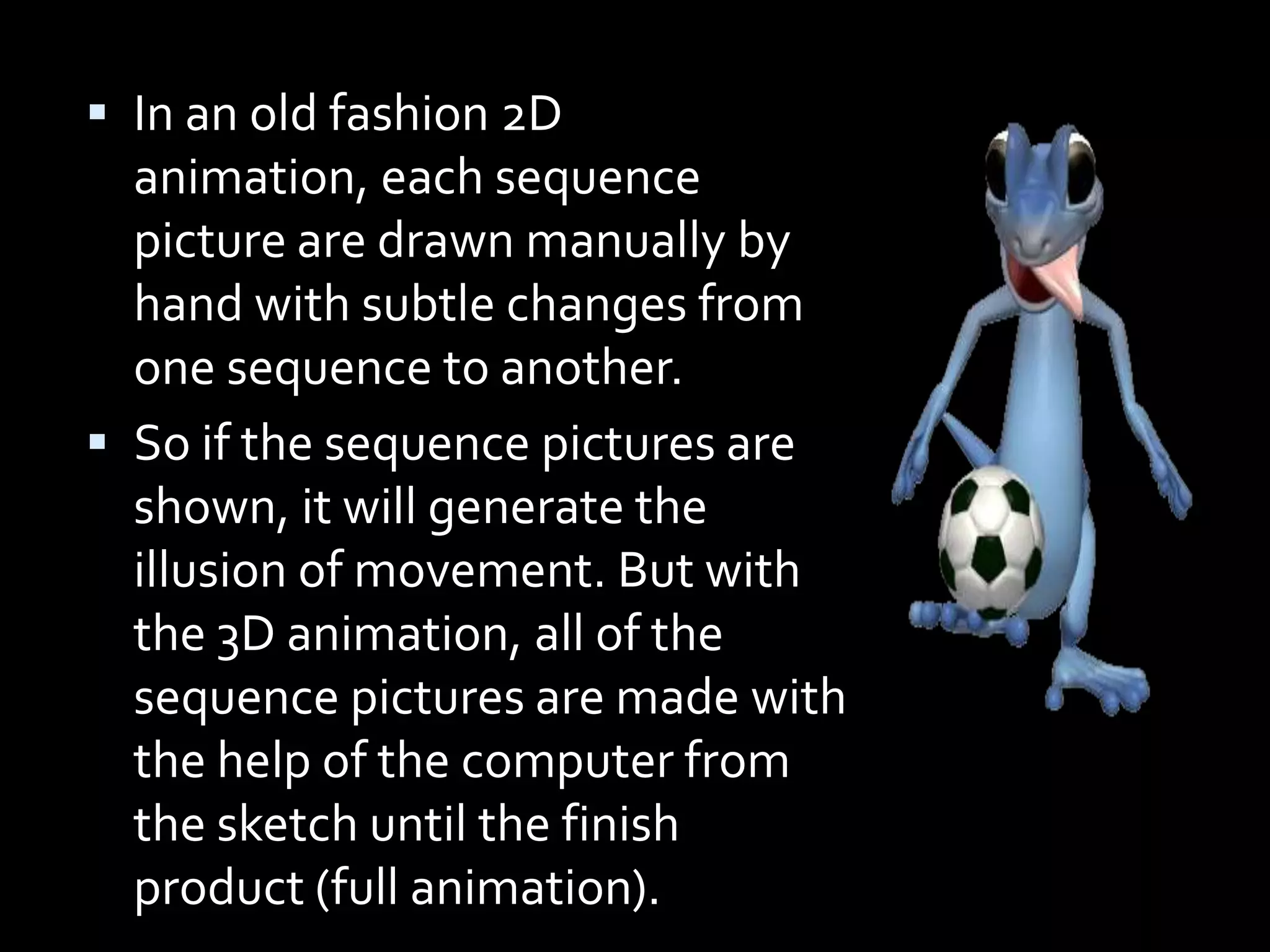
 In an old fashion 2D
  animation, each sequence
  picture are drawn manually by
  hand with subtle changes from
  one sequence to another.
 So if the sequence pictures are
  shown, it will generate the
  illusion of movement. But with
  the 3D animation, all of the
  sequence pictures are made with
  the help of the computer from
  the sketch until the finish
  product (full animation).
Making of 3D animation

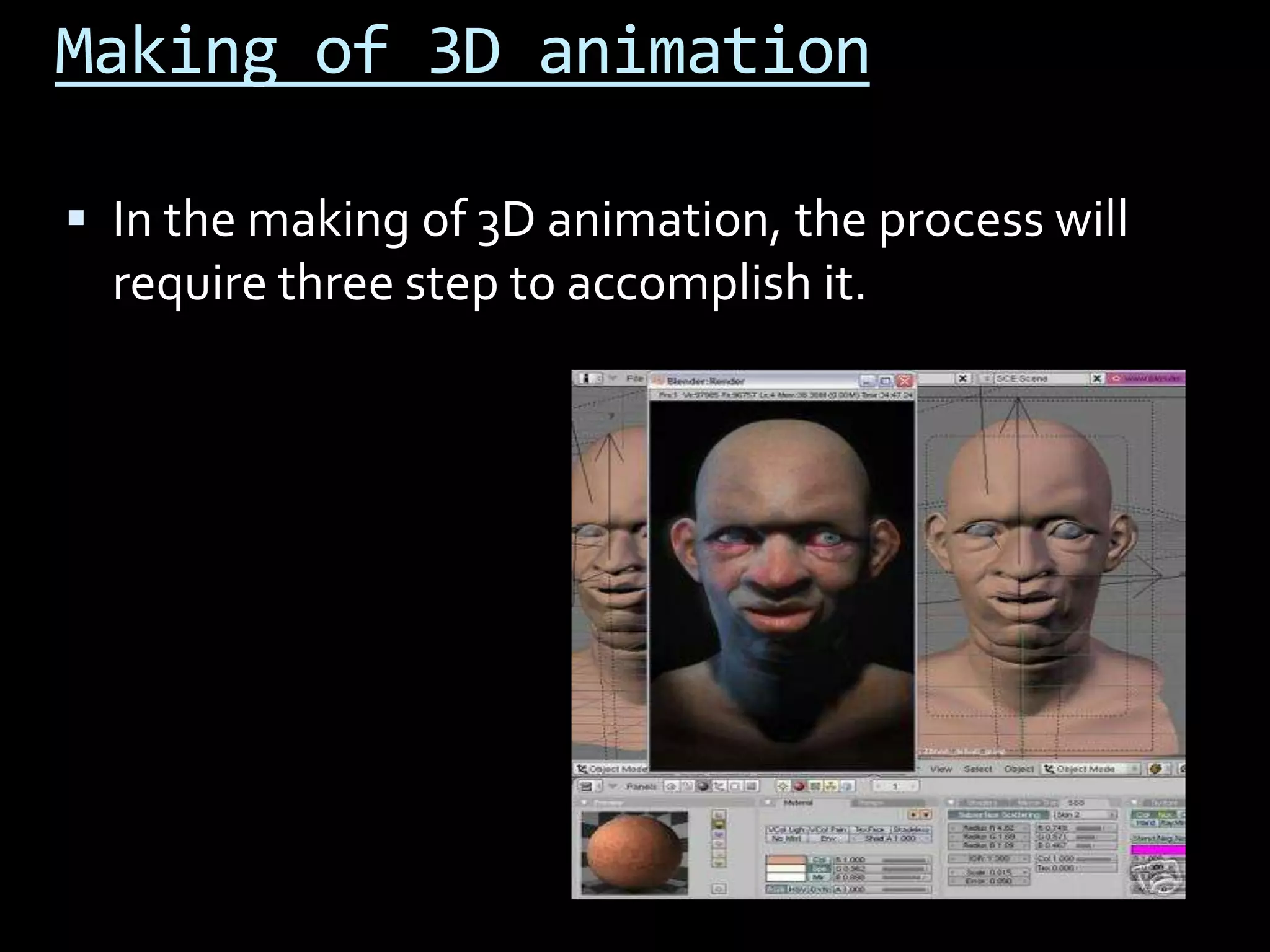
 In the making of 3D animation, the process will
  require three step to accomplish it.
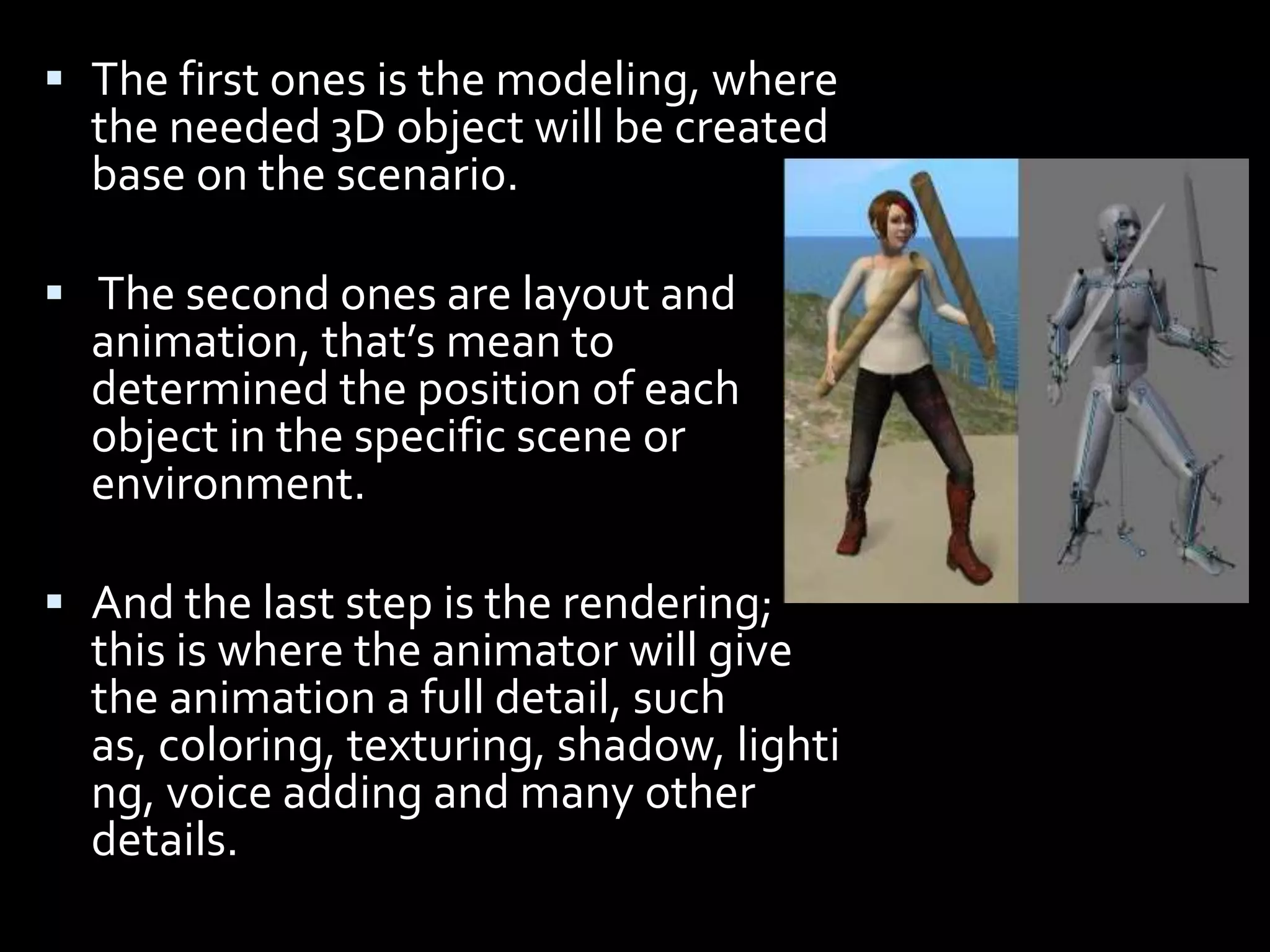
 The first ones is the modeling, where
  the needed 3D object will be created
  base on the scenario.

 The second ones are layout and
  animation, that’s mean to
  determined the position of each
  object in the specific scene or
  environment.

 And the last step is the rendering;
  this is where the animator will give
  the animation a full detail, such
  as, coloring, texturing, shadow, lighti
  ng, voice adding and many other
  details.
3D-MODELING

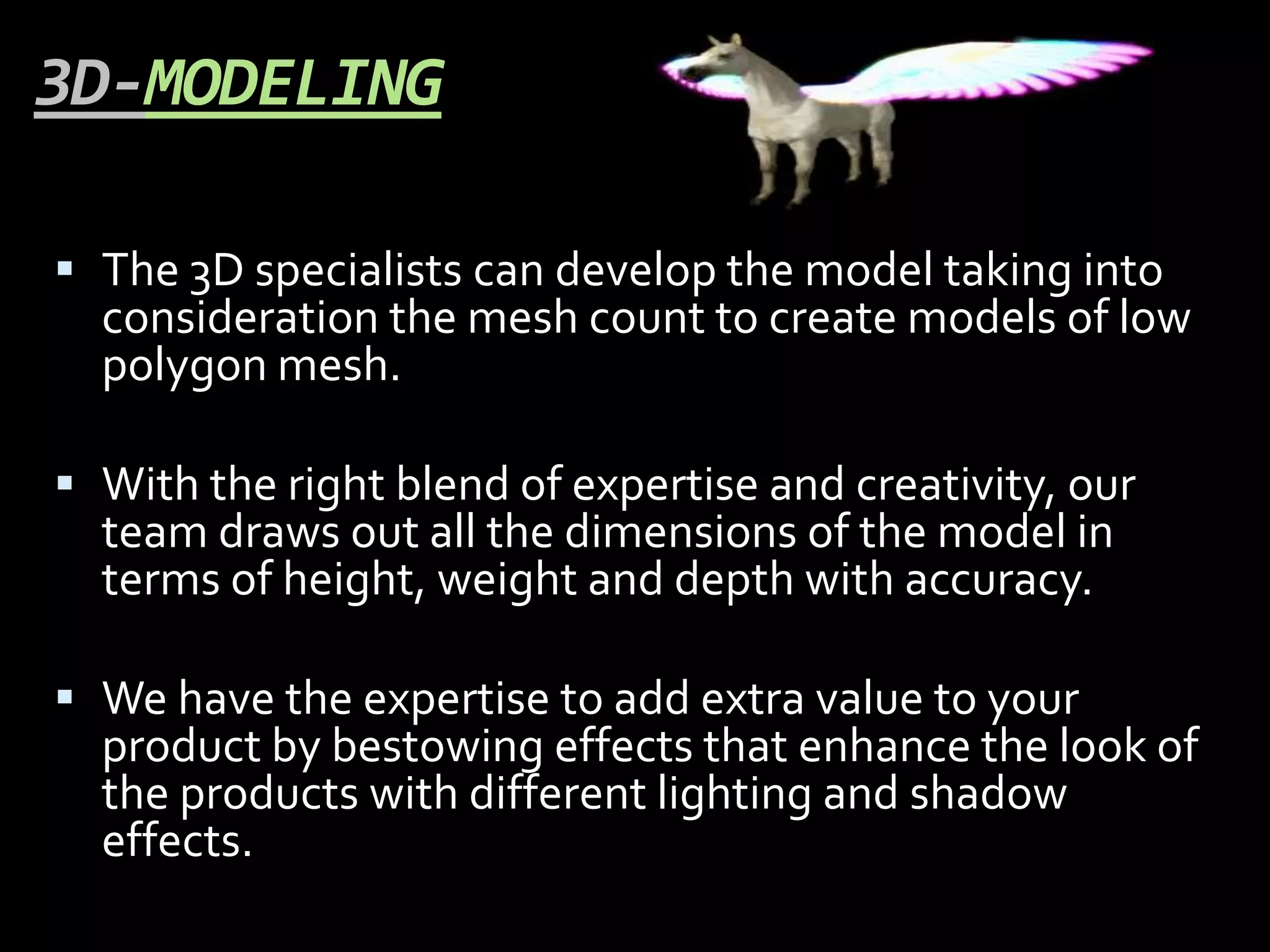
 The 3D specialists can develop the model taking into
  consideration the mesh count to create models of low
  polygon mesh.

 With the right blend of expertise and creativity, our
  team draws out all the dimensions of the model in
  terms of height, weight and depth with accuracy.

 We have the expertise to add extra value to your
  product by bestowing effects that enhance the look of
  the products with different lighting and shadow
  effects.
3D Simulations
 3D Simulations are the new age
  demonstration and visualization tools that
  have significant role to play in
  marketing, training and entertainment.

 It has also revolutionized the way the
  movie making and the game development
  with its mind-blowing effects resulting in
  complete immersing experience.

 Visual simulation provides convincing and
  effective solutions for the visual
  representation of an environment or
  functioning of a machine or a process.
Applications

   Architecture
   Medical
   Aerospace
   Engineering
   Biotechnology
   Automobile
   Games
   Movies
   Advertising
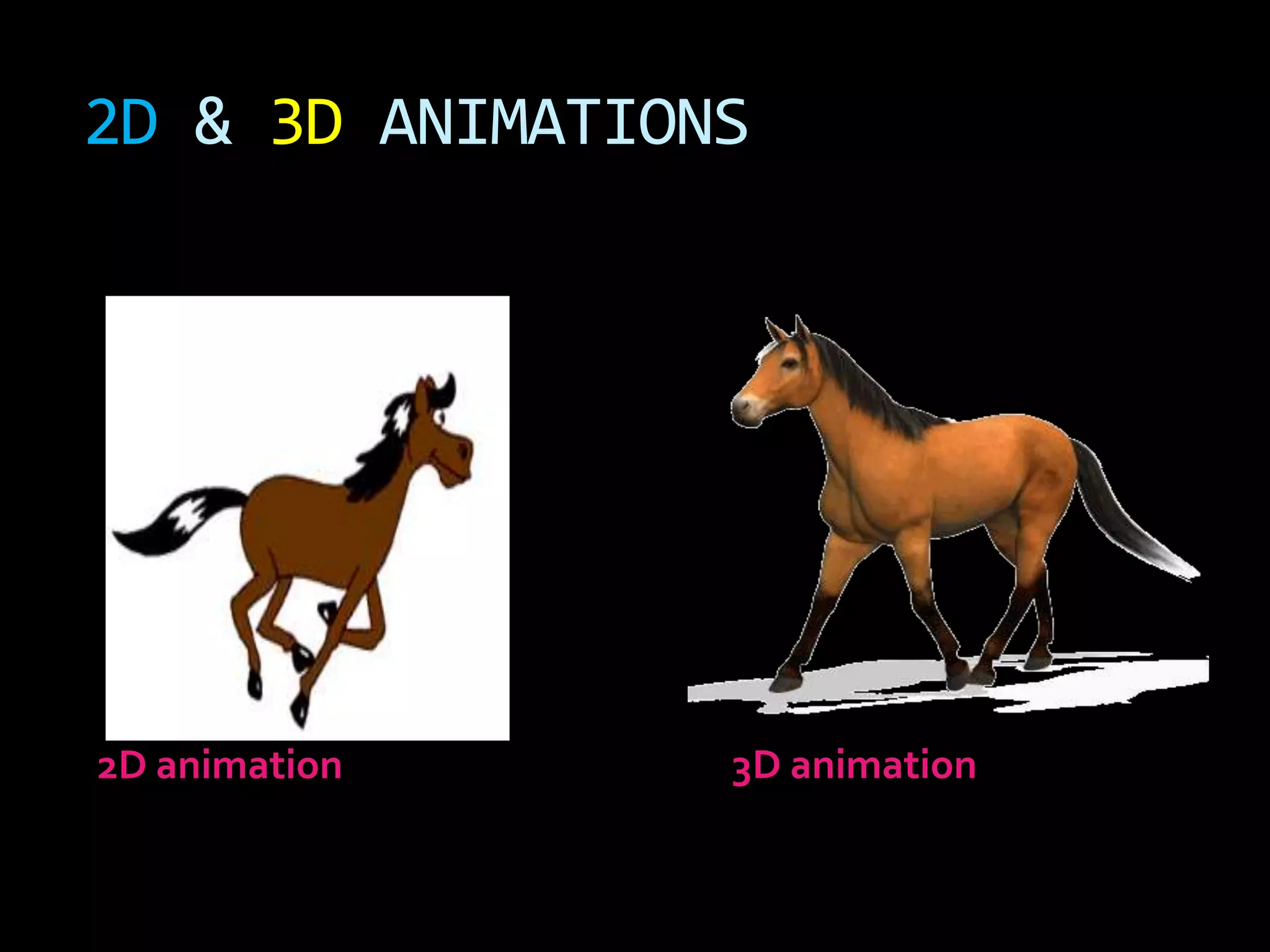
2D & 3D ANIMATIONS


2D animation     3D animation
Flash animation

 Flash Animation is becoming one the best
  tools to add dynamic content to your
  projects.
 Using a variety of techniques, it is now
  possible to make low bandwidth, high quality
  2D games and movies for direct online use (or
  others).
 2D Flash animation software has become one
  of the most popular and widely distributed
  plug-ins on the internet today.
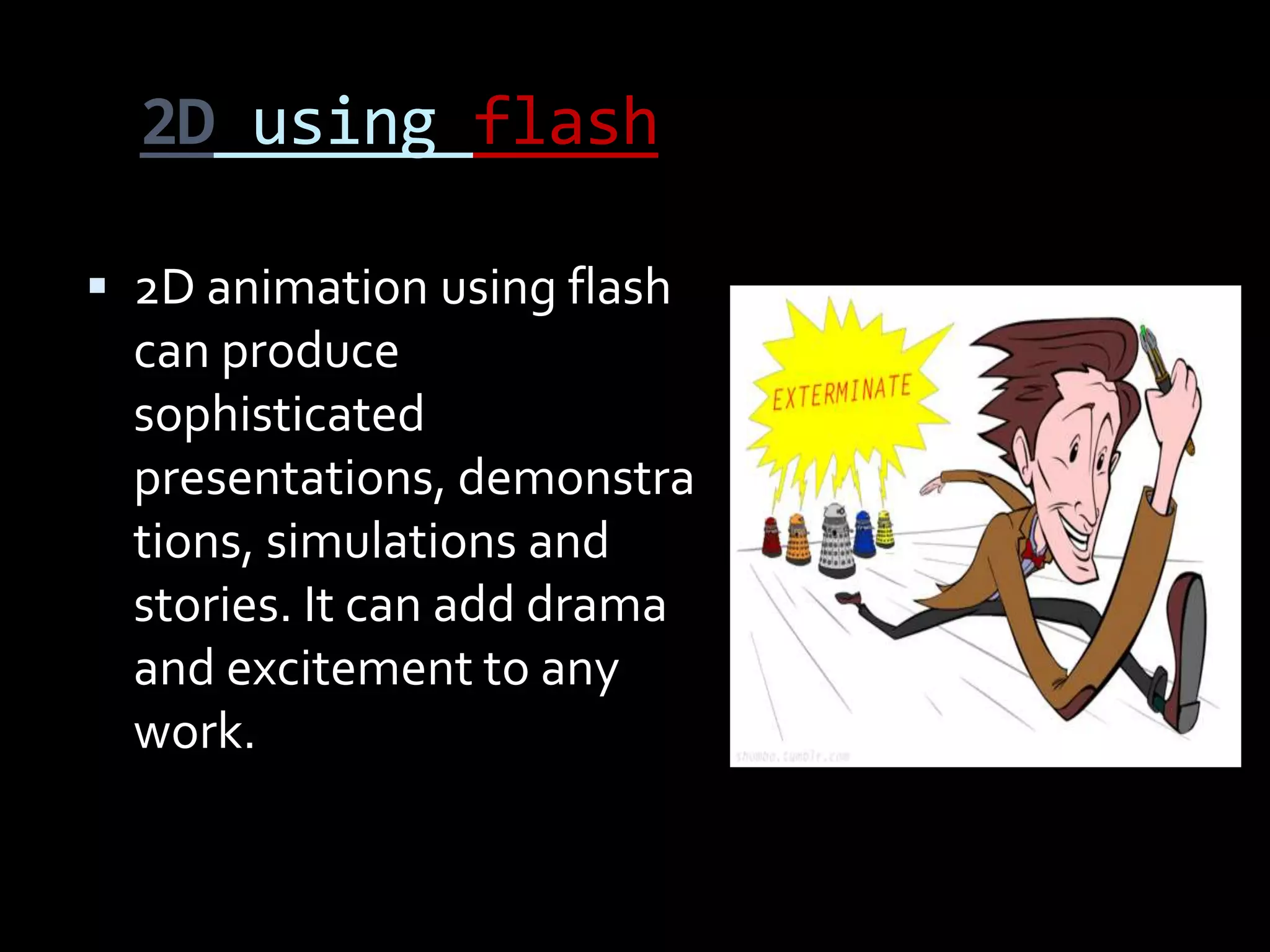
2D using flash

 2D animation using flash
  can produce
  sophisticated
  presentations, demonstra
  tions, simulations and
  stories. It can add drama
  and excitement to any
  work.
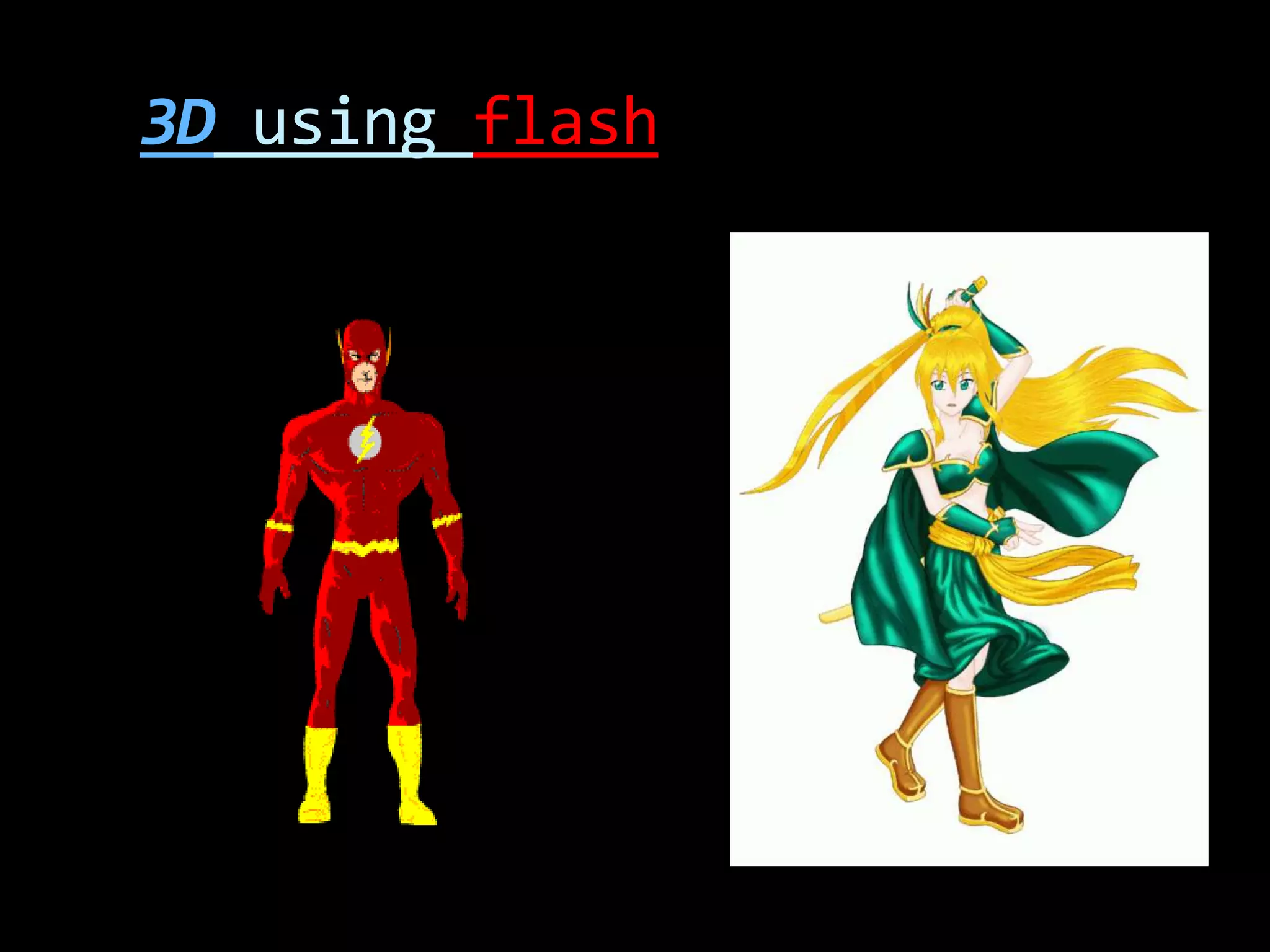
3D using flash
Flash cartoon

 A Flash animation or Flash cartoon is an animated
  film which is created using Adobe Flash or similar
  animation software and often distributed in the .swf
  file format.

 Flash animations are typically distributed by way of
  the World Wide Web, in which case they are often
  referred to as Internet cartoons, online cartoons, or
  webtoons.

 A Flash animation is distinguished from a
  Webcomic, which is a comic strip distributed via the
  Web, rather than an animated cartoon.
Flash in internet
Applications

 Mobiles
 I-pads
 Tabs
 Websites
 Advertisements
 Games
 Social networking websites like
  facebook,orkut,G-Mail,Yahoo,twitter…etc
CONCLUSION

 Society is well served by computer animation. It is
  an industry that combines art and technology to
  entertain, educate and inform us.
 Working on this paper resulted in my realization
  that computer animation is everywhere – in the
  movies we watch, in the commercials we see, in
  animated cartoons on televisions, on the internet, in
  our workplace, from the jury box in a trial, in the
  doctor’s office and on our cell phones.
ANIMATION

ANIMATION

  • 1.
    C.V.AJAY KUMAR IV thB.Tech Computer Science Engineering
  • 2.
    ANIMATION  The basicdefinition of the word “animate” is referring to the concept of bringing something to life, or mimicking to life.  In the multimedia term animation is the quick display from a sequence of numerous images whether from 2-D or 3-D model in different position to make an optical illusion of movement
  • 3.
     CEL animation 2D animation  3D animation
  • 4.
    CEL-animation  Cell Animationis the oldest and historically the most popular form of animation.  Cell Animation is a technique in which the figures to be animated are drawn and painted on cells, placed over a background, and photographed frame by frame.
  • 5.
     A cell(short for celluloid) is a blank clear plastic sheet used by an artist to paint an animated character or object based on the animator’s original pencil drawing.  The cels are then placed over a background and photographed in sequence to produce an illusion of life in the completed film or cartoon.  The end result of cel animation is distinctively different, creative and appealing.
  • 6.
    APPLICATIONS OF CEL Cartoons  Marketing and Advertising  Educational Multimedia Programmers  Training Programmes  Health Care Programmers  Cyber Art  Interactive Magazines  Internet
  • 7.
    2D-ANIMATION  The creationof moving pictures in a two-dimensional environment  2D animation figures are created and/or edited on the computer using 2D bitmap graphics or created and edited using 2D Vector graphics.
  • 8.
     2D Animationsis a series of images viewed one after the other in a very short time that creates an illusion of movement.  2D animation has helped to simulate actions and movements that give the user a realistic experience.
  • 9.
    Applications  2D Animated Movies  TV Serial  TV Ads  Cartoons Films  Home Videos  Games  Engineering demos  Websites  E-learning
  • 10.
    3D-Animation  Basically theterm of 3D animation is referring to the making of moving pictures in the three dimensional-computer generated digital environment.
  • 11.
     In anold fashion 2D animation, each sequence picture are drawn manually by hand with subtle changes from one sequence to another.  So if the sequence pictures are shown, it will generate the illusion of movement. But with the 3D animation, all of the sequence pictures are made with the help of the computer from the sketch until the finish product (full animation).
  • 12.
    Making of 3Danimation  In the making of 3D animation, the process will require three step to accomplish it.
  • 13.
     The firstones is the modeling, where the needed 3D object will be created base on the scenario.  The second ones are layout and animation, that’s mean to determined the position of each object in the specific scene or environment.  And the last step is the rendering; this is where the animator will give the animation a full detail, such as, coloring, texturing, shadow, lighti ng, voice adding and many other details.
  • 14.
    3D-MODELING  The 3Dspecialists can develop the model taking into consideration the mesh count to create models of low polygon mesh.  With the right blend of expertise and creativity, our team draws out all the dimensions of the model in terms of height, weight and depth with accuracy.  We have the expertise to add extra value to your product by bestowing effects that enhance the look of the products with different lighting and shadow effects.
  • 15.
    3D Simulations  3DSimulations are the new age demonstration and visualization tools that have significant role to play in marketing, training and entertainment.  It has also revolutionized the way the movie making and the game development with its mind-blowing effects resulting in complete immersing experience.  Visual simulation provides convincing and effective solutions for the visual representation of an environment or functioning of a machine or a process.
  • 16.
    Applications  Architecture  Medical  Aerospace  Engineering  Biotechnology  Automobile  Games  Movies  Advertising
  • 17.
    2D & 3DANIMATIONS 2D animation 3D animation
  • 18.
    Flash animation  FlashAnimation is becoming one the best tools to add dynamic content to your projects.  Using a variety of techniques, it is now possible to make low bandwidth, high quality 2D games and movies for direct online use (or others).  2D Flash animation software has become one of the most popular and widely distributed plug-ins on the internet today.
  • 19.
    2D using flash 2D animation using flash can produce sophisticated presentations, demonstra tions, simulations and stories. It can add drama and excitement to any work.
  • 20.
  • 21.
    Flash cartoon  AFlash animation or Flash cartoon is an animated film which is created using Adobe Flash or similar animation software and often distributed in the .swf file format.  Flash animations are typically distributed by way of the World Wide Web, in which case they are often referred to as Internet cartoons, online cartoons, or webtoons.  A Flash animation is distinguished from a Webcomic, which is a comic strip distributed via the Web, rather than an animated cartoon.
  • 22.
  • 23.
    Applications  Mobiles  I-pads Tabs  Websites  Advertisements  Games  Social networking websites like facebook,orkut,G-Mail,Yahoo,twitter…etc
  • 24.
    CONCLUSION  Society iswell served by computer animation. It is an industry that combines art and technology to entertain, educate and inform us.  Working on this paper resulted in my realization that computer animation is everywhere – in the movies we watch, in the commercials we see, in animated cartoons on televisions, on the internet, in our workplace, from the jury box in a trial, in the doctor’s office and on our cell phones.