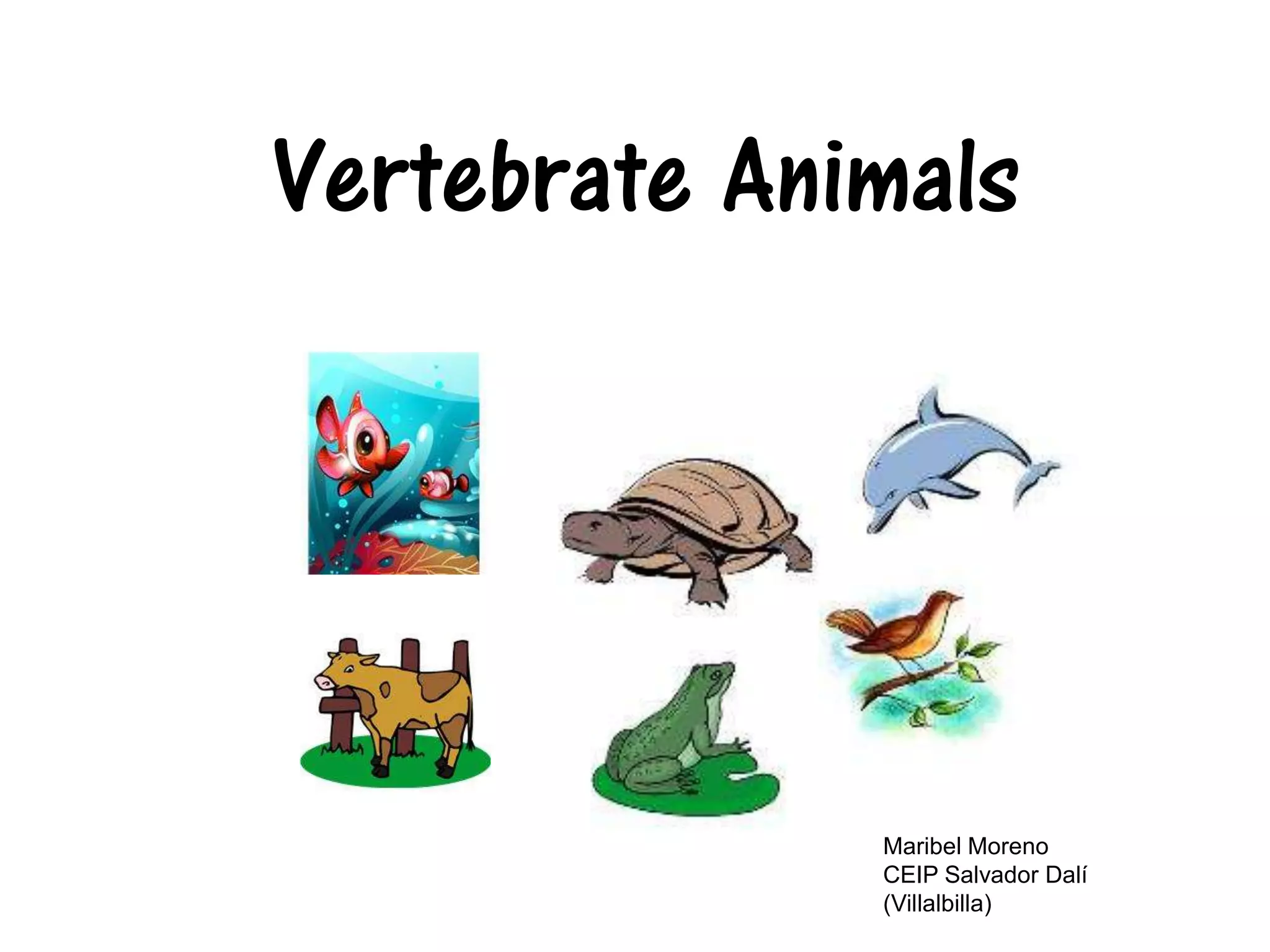
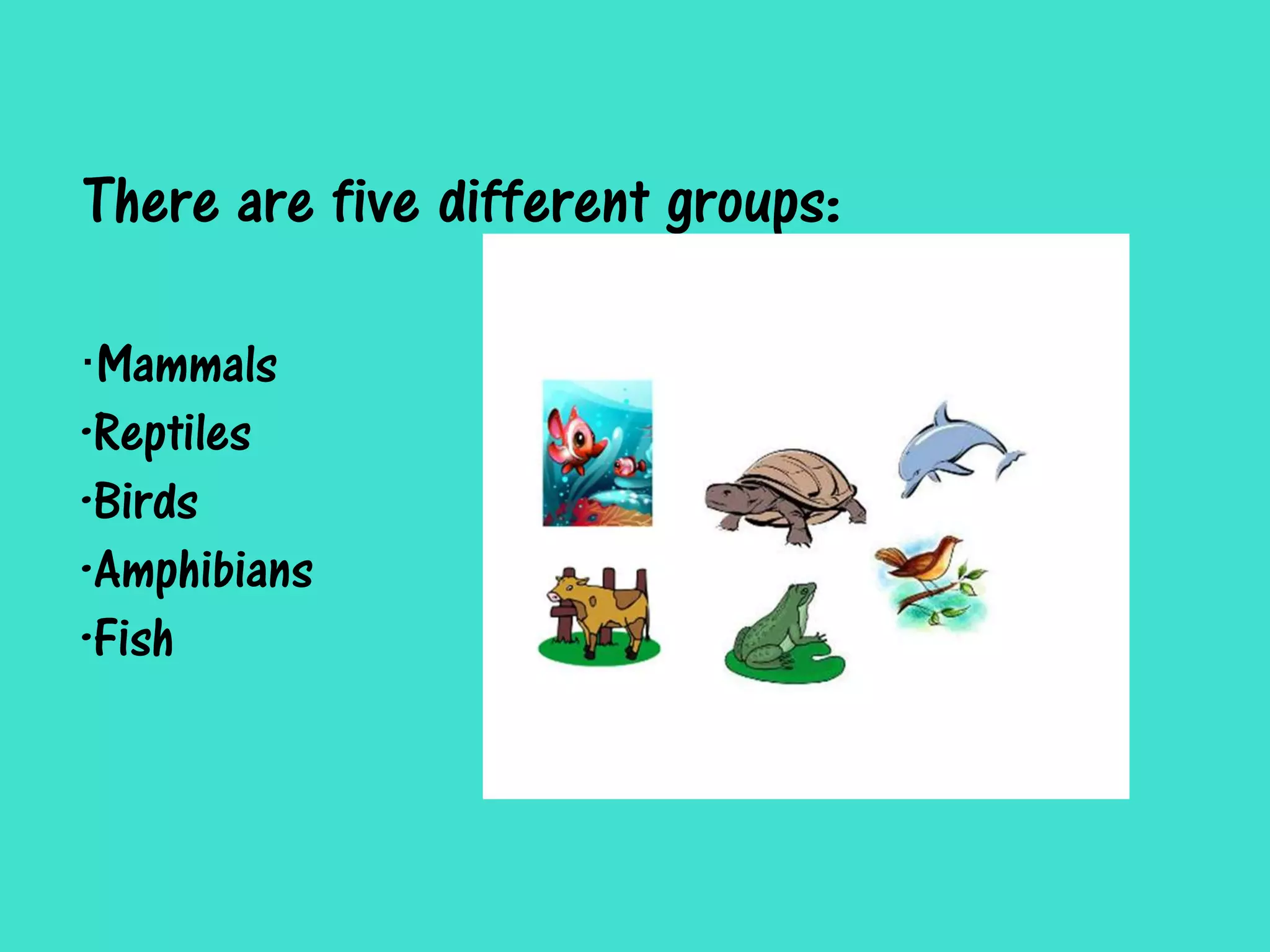
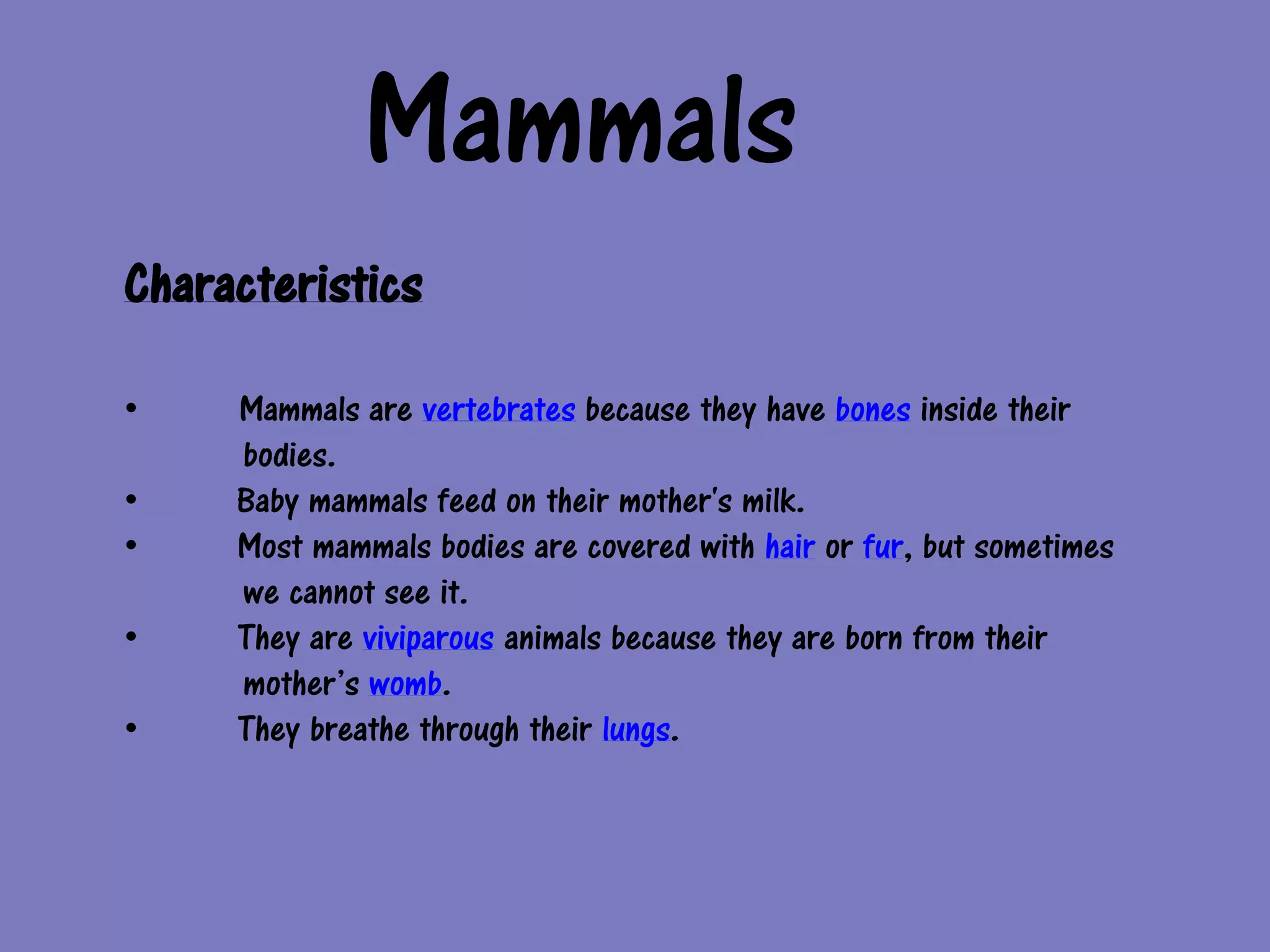
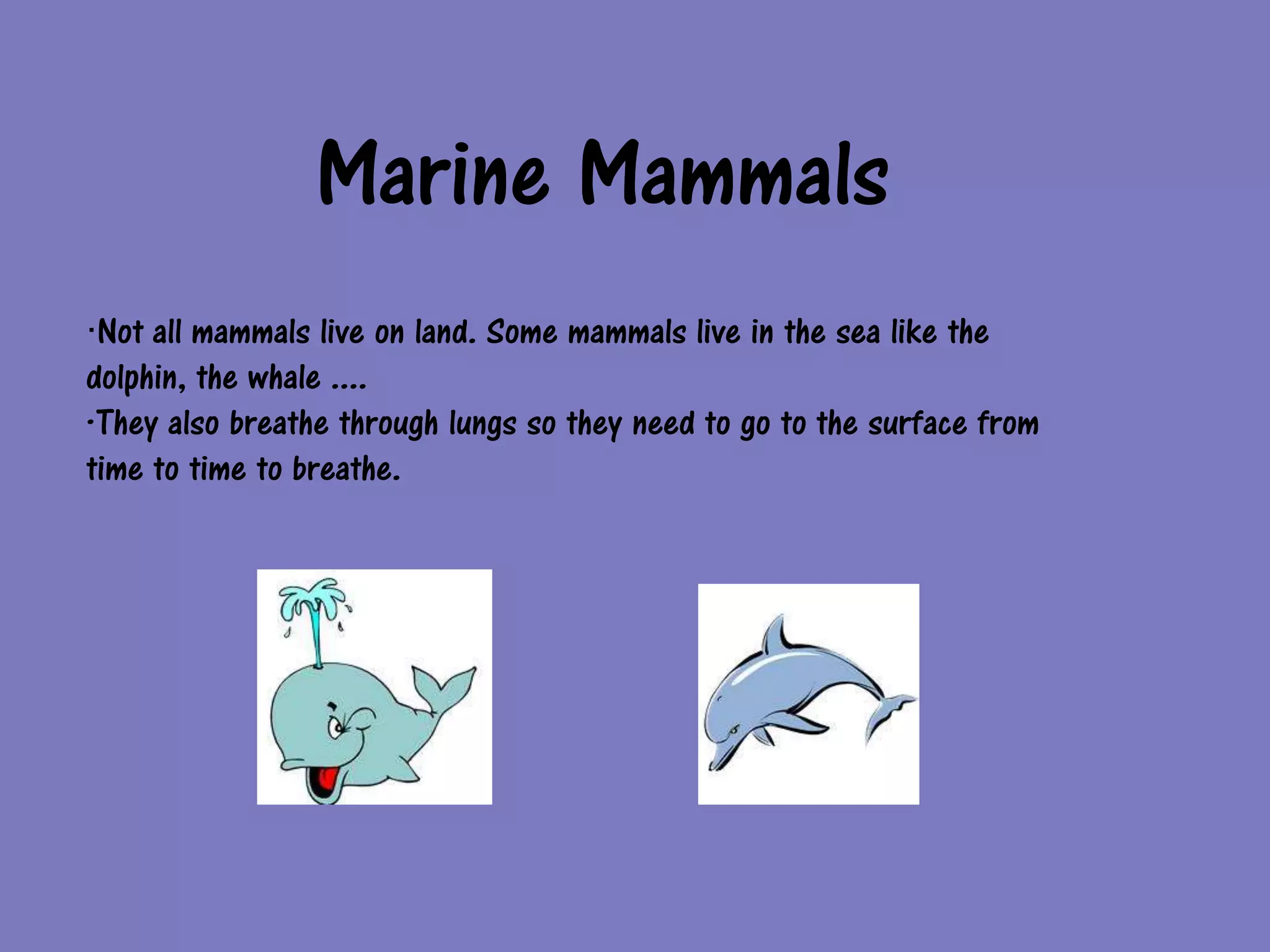
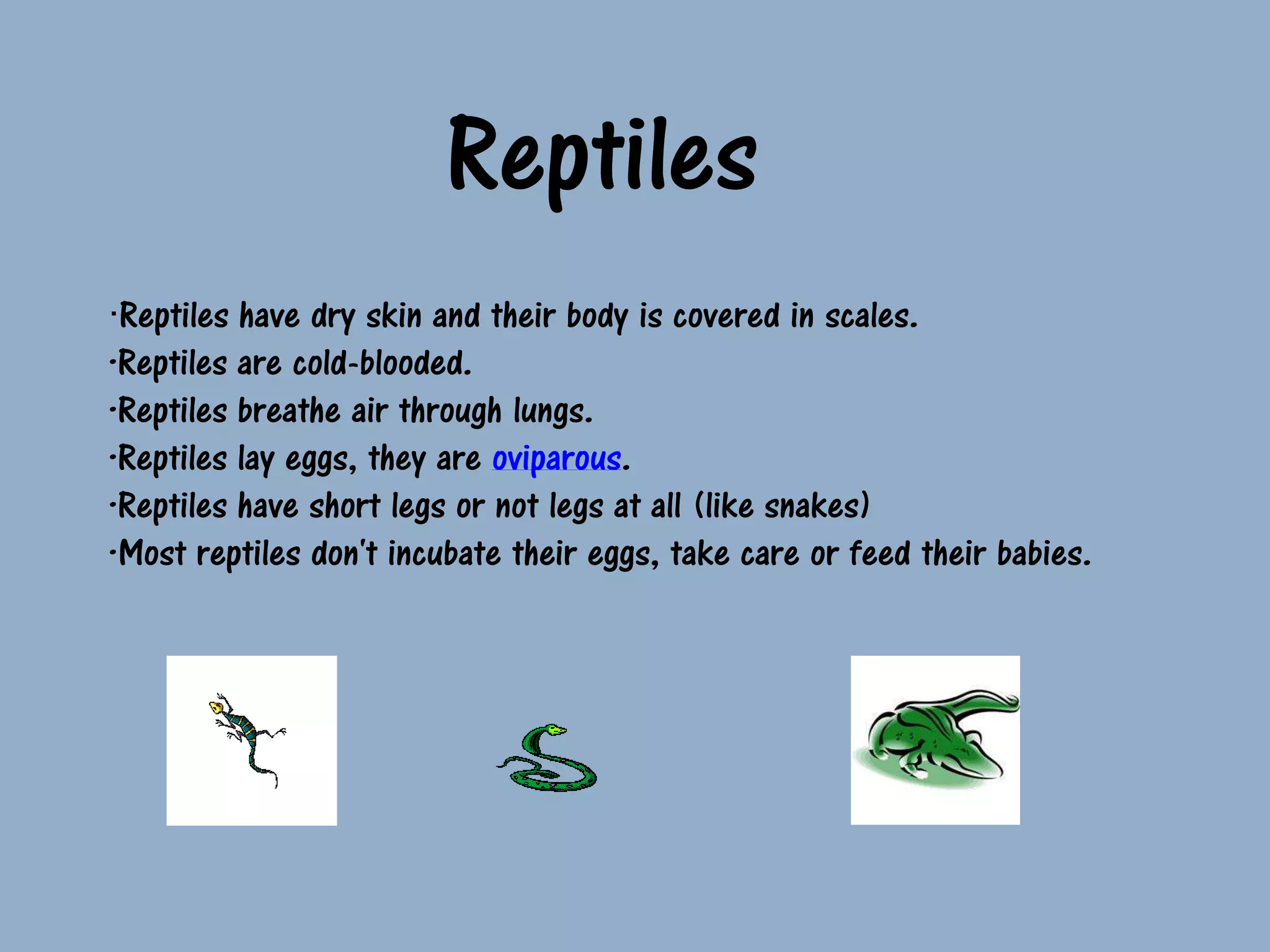
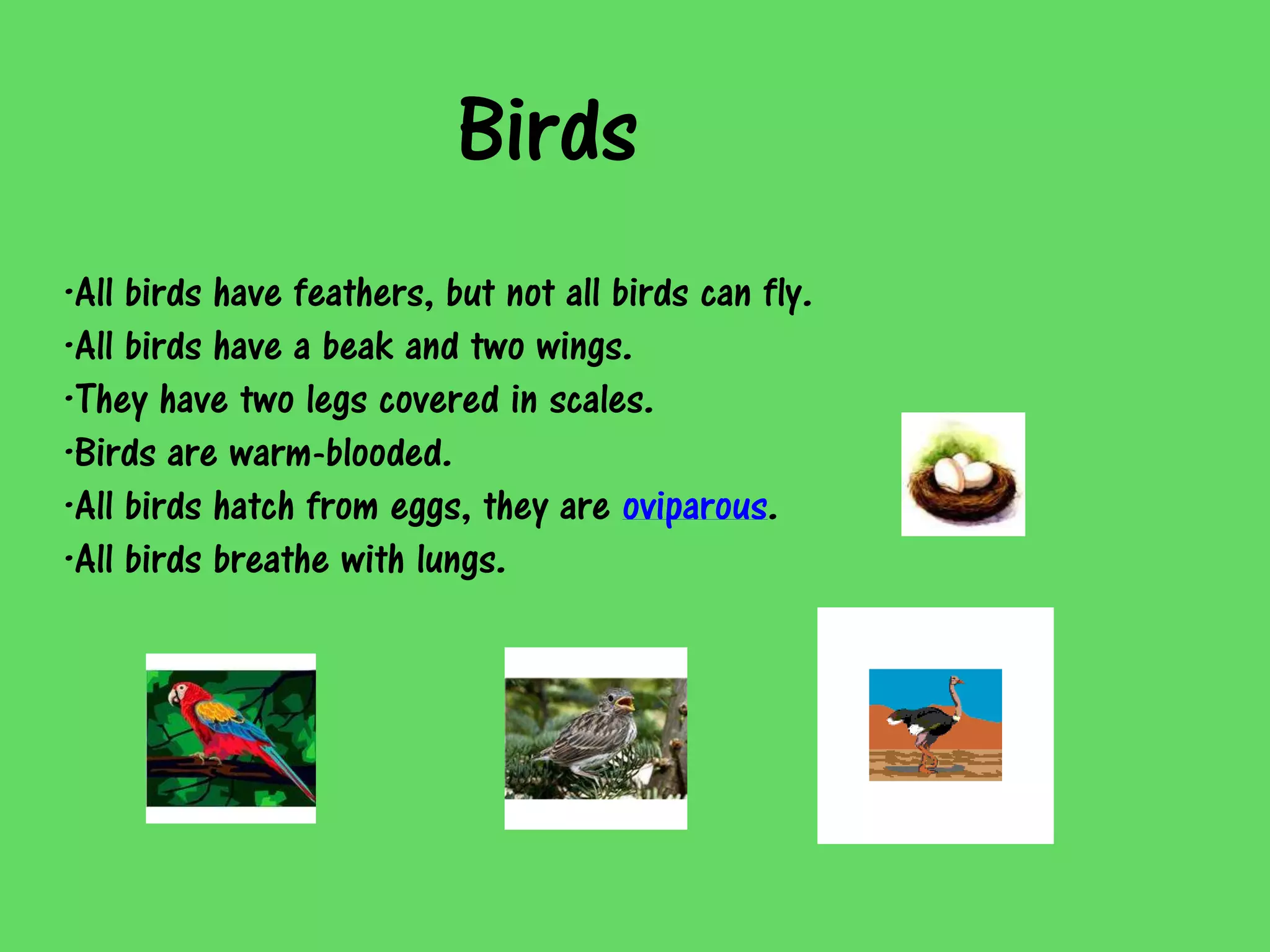
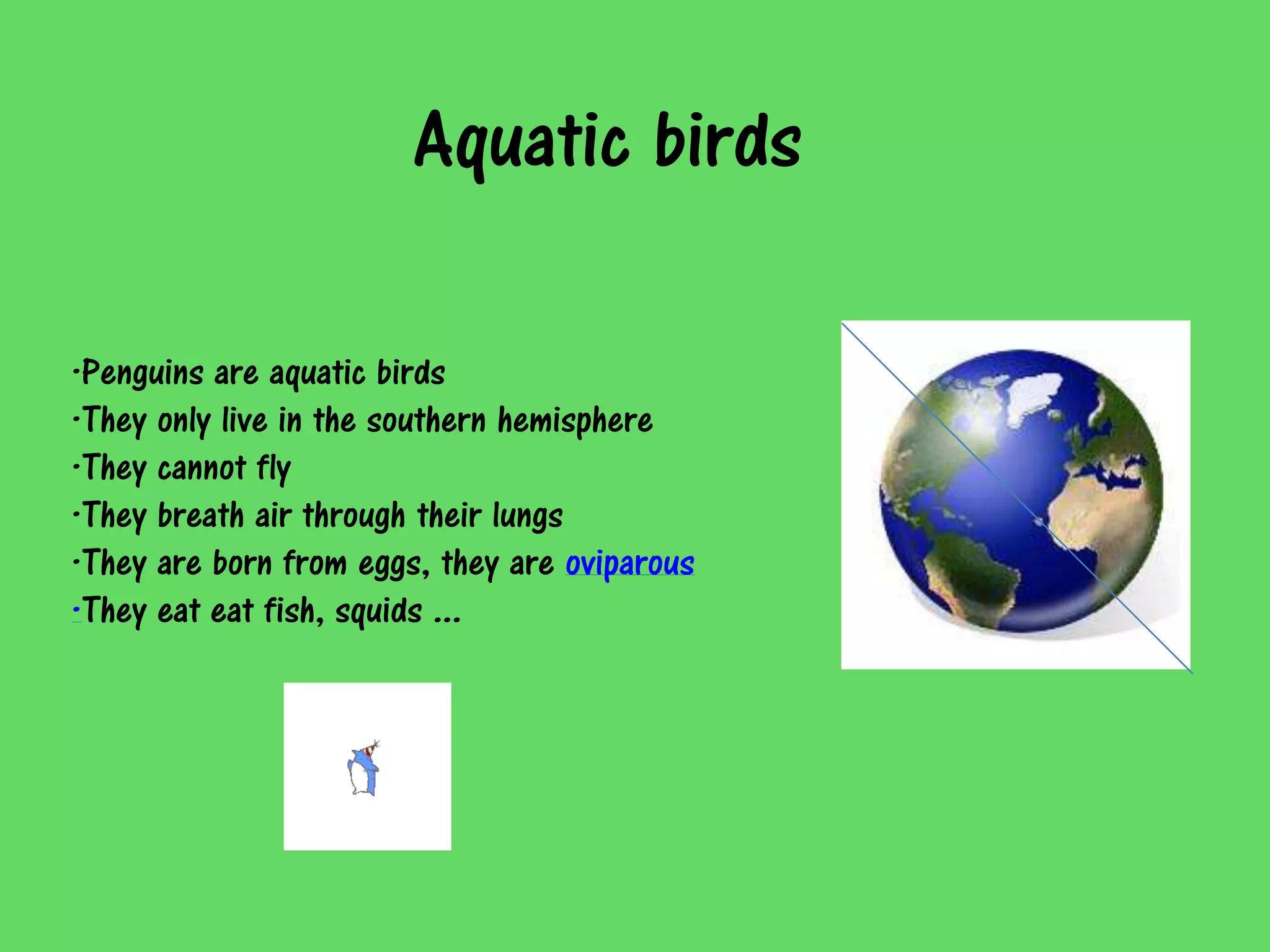
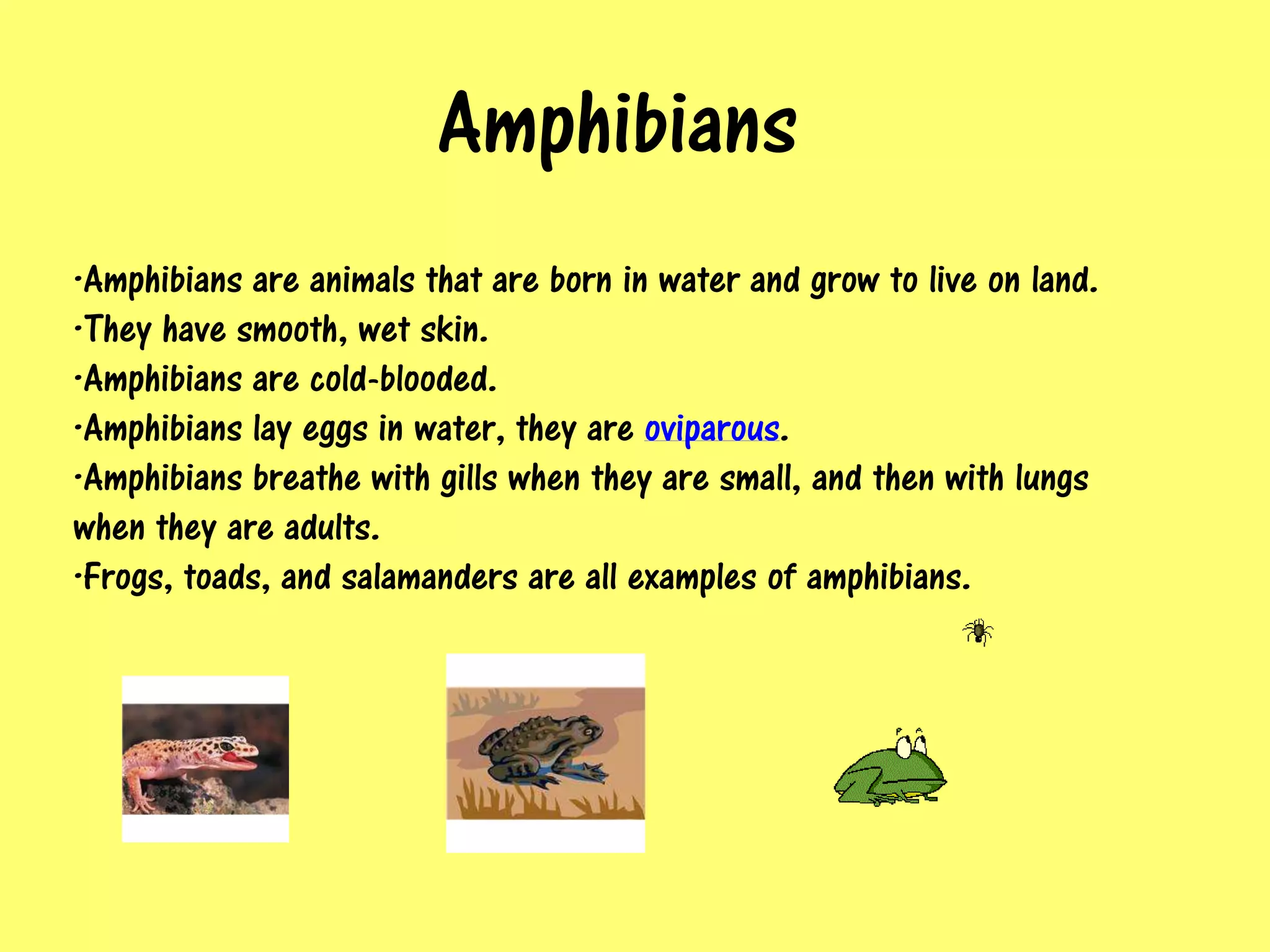
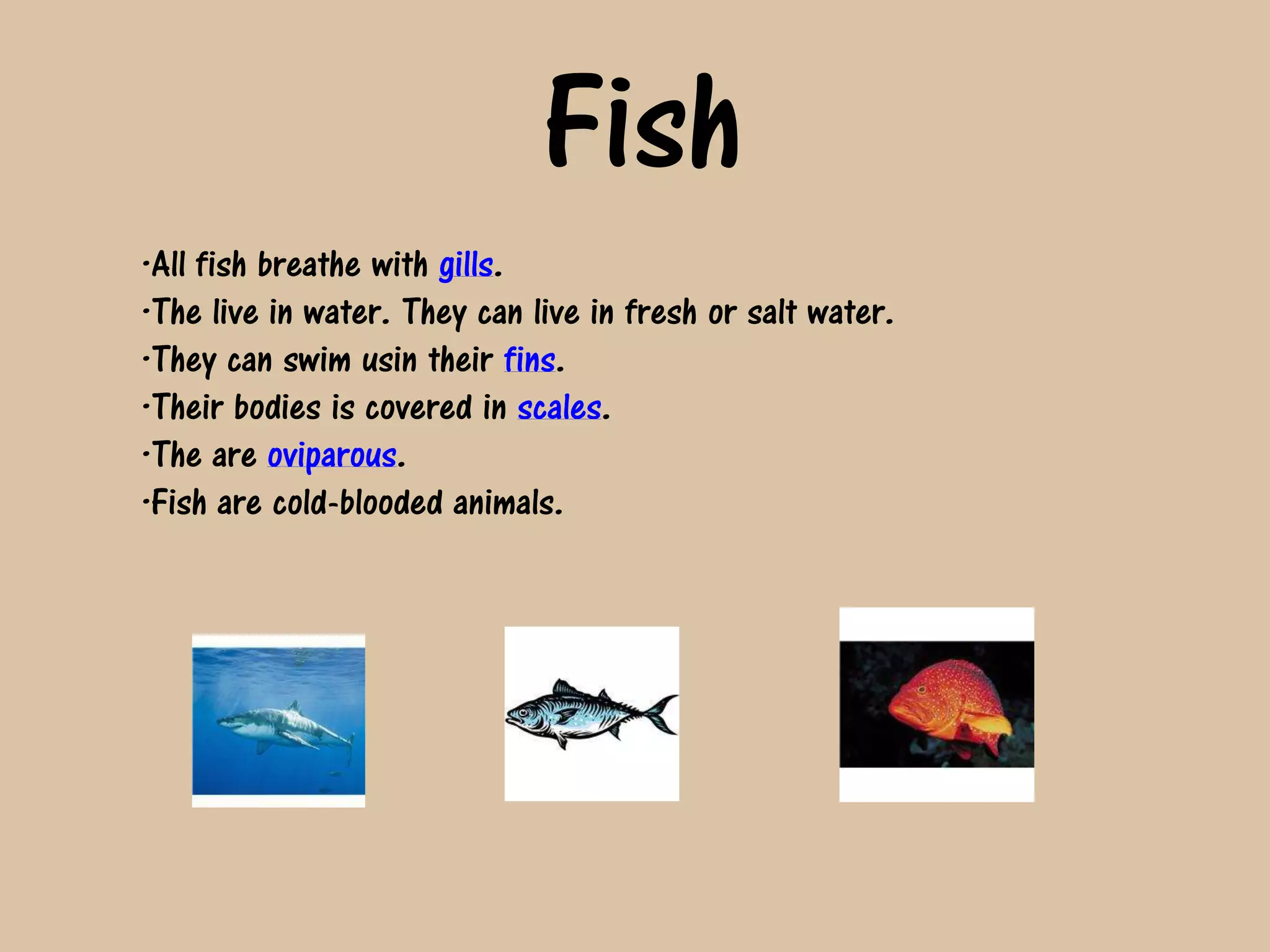
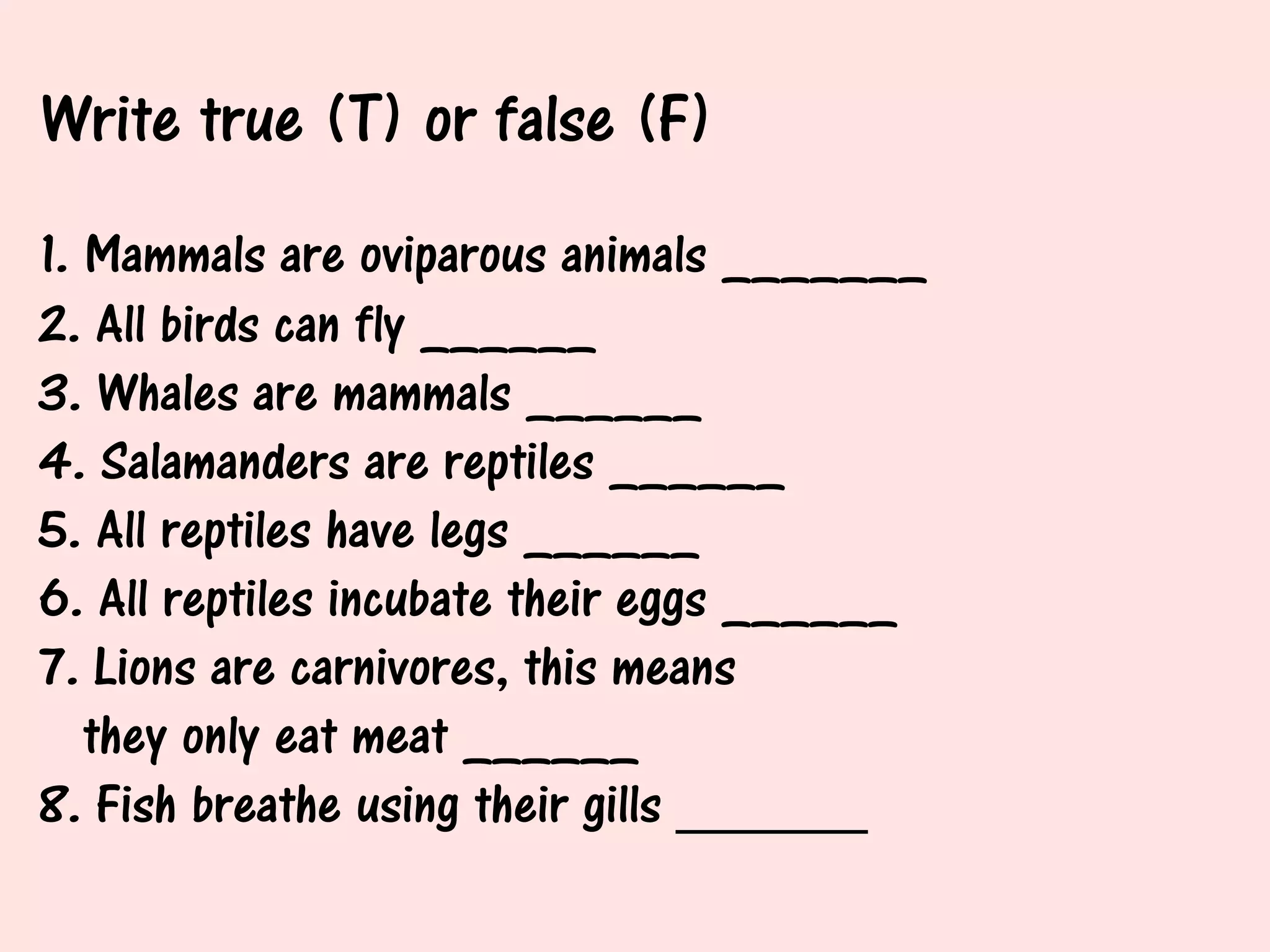
This document discusses the five main groups of vertebrate animals: mammals, reptiles, birds, amphibians, and fish. It provides characteristics for each group and examples. Mammals are defined as animals that are warm-blooded, feed their young milk, have hair or fur, and are viviparous. Reptiles have scales and lay eggs. Birds have feathers and a beak, most can fly but some cannot, and they lay eggs. Amphibians live both on land and in water, have moist skin, lay eggs in water, and breathe through gills as larvae and lungs as adults. Fish breathe through gills, live in water, have fins and scales, and lay eggs