Md. Najmul Hossain
Biotechnology & Genetic Engineering, UODA
Md. Najmul Hossain
Biotechnology & Genetic Engineering, UODA
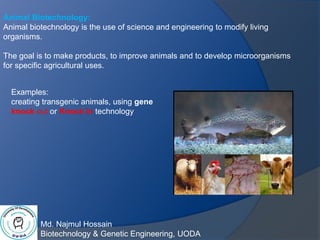
Animal Biotechnology:
Animal biotechnology is the use of science and engineering to modify living
organisms.
The goal is to make products, to improve animals and to develop microorganisms
for specific agricultural uses.
Examples:
creating transgenic animals, using gene
knock out or Knock in technology
Md. Najmul Hossain
Biotechnology & Genetic Engineering, UODA
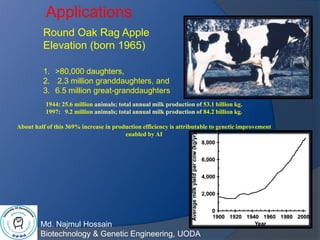
Round Oak Rag Apple
Elevation (born 1965)
1. >80,000 daughters,
2. 2.3 million granddaughters, and
3. 6.5 million great-granddaughters
1944: 25.6 million animals; total annual milk production of 53.1 billion kg.
1997: 9.2 million animals; total annual milk production of 84.2 billion kg.
About half of this 369% increase in production efficiency is attributable to genetic improvement
enabled by AI
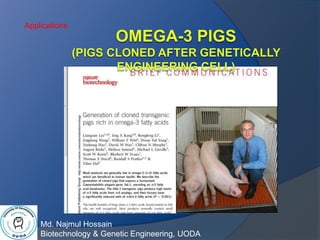
Applications
Md. Najmul Hossain
Biotechnology & Genetic Engineering, UODA
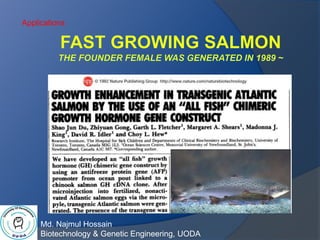
Applications
Md. Najmul Hossain
Biotechnology & Genetic Engineering, UODA
Applications
Md. Najmul Hossain
Biotechnology & Genetic Engineering, UODA
Applications
Md. Najmul Hossain
Biotechnology & Genetic Engineering, UODA
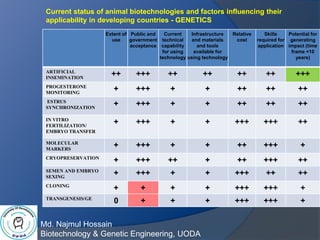
Extent of
use
Public and
government
acceptance
Current
technical
capability
for using
technology
Infrastructure
and materials
and tools
available for
using technology
Relative
cost
Skills
required for
application
Potential for
generating
impact (time
frame <10
years)
ARTIFICIAL
INSEMINATION
++ +++ ++ ++ ++ ++ +++
PROGESTERONE
MONITORING
+ +++ + + ++ ++ ++
ESTRUS
SYNCHRONIZATION
+ +++ + + ++ ++ ++
IN VITRO
FERTILIZATION/
EMBRYO TRANSFER
+ +++ + + +++ +++ ++
MOLECULAR
MARKERS
+ +++ + + ++ +++ +
CRYOPRESERVATION
+ +++ ++ + ++ +++ ++
SEMEN AND EMBRYO
SEXING
+ +++ + + +++ ++ ++
CLONING
+ + + + +++ +++ +
TRANSGENESIS/GE
0 + + + +++ +++ +
Current status of animal biotechnologies and factors influencing their
applicability in developing countries - GENETICS
Md. Najmul Hossain
Biotechnology & Genetic Engineering, UODA
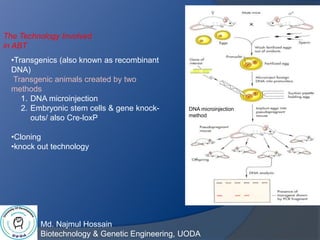
The Technology Involved
in ABT
•Transgenics (also known as recombinant
DNA)
Transgenic animals created by two
methods
1. DNA microinjection
2. Embryonic stem cells & gene knock-
outs/ also Cre-loxP
•Cloning
•knock out technology
DNA microinjection
method
Md. Najmul Hossain
Biotechnology & Genetic Engineering, UODA
EDUCATIONAL ACTIVITY
Thinking Critically
1) Is it acceptable to create an animal that feels no pain through the use of
animal biotechnology? Why or why not?
2) An animal has been used to create a promising new drug for the treatment
of many types of cancer. However, the process involved might bring pain to
the animal used to make the drug. Is this acceptable considering the end
result? Why or why not?
• Should we make the animal incapable of pain in this case? Why or
why not?
Md. Najmul Hossain
Biotechnology & Genetic Engineering, UODA
ETHICAL AND SOCIAL CONSIDERATIONS: “playing God”
Two main areas of debate:
1. Animal Welfare
2. Religious Issues
Course Outline
 Animal physiology and metabolism- an overview.
 The principles of cell differentiation, growth and differentiation of
blood cells, genetic control of muscle cell differentiation, potency of
stem cells and prospects for medical uses.
 Hormonal control of development.
 Introduction to transgenic animals and overview of methodologies
for nuclear transfer.
Md. Najmul Hossain
Biotechnology & Genetic Engineering, UODA
Thank You
&
Welcome to the world of Animal Biotechnology

Animal biotechnology course

  • 1.
    Md. Najmul Hossain Biotechnology& Genetic Engineering, UODA
  • 2.
    Md. Najmul Hossain Biotechnology& Genetic Engineering, UODA Animal Biotechnology: Animal biotechnology is the use of science and engineering to modify living organisms. The goal is to make products, to improve animals and to develop microorganisms for specific agricultural uses. Examples: creating transgenic animals, using gene knock out or Knock in technology
  • 3.
    Md. Najmul Hossain Biotechnology& Genetic Engineering, UODA Round Oak Rag Apple Elevation (born 1965) 1. >80,000 daughters, 2. 2.3 million granddaughters, and 3. 6.5 million great-granddaughters 1944: 25.6 million animals; total annual milk production of 53.1 billion kg. 1997: 9.2 million animals; total annual milk production of 84.2 billion kg. About half of this 369% increase in production efficiency is attributable to genetic improvement enabled by AI Applications
  • 4.
    Md. Najmul Hossain Biotechnology& Genetic Engineering, UODA Applications
  • 5.
    Md. Najmul Hossain Biotechnology& Genetic Engineering, UODA Applications
  • 6.
    Md. Najmul Hossain Biotechnology& Genetic Engineering, UODA Applications
  • 7.
    Md. Najmul Hossain Biotechnology& Genetic Engineering, UODA Extent of use Public and government acceptance Current technical capability for using technology Infrastructure and materials and tools available for using technology Relative cost Skills required for application Potential for generating impact (time frame <10 years) ARTIFICIAL INSEMINATION ++ +++ ++ ++ ++ ++ +++ PROGESTERONE MONITORING + +++ + + ++ ++ ++ ESTRUS SYNCHRONIZATION + +++ + + ++ ++ ++ IN VITRO FERTILIZATION/ EMBRYO TRANSFER + +++ + + +++ +++ ++ MOLECULAR MARKERS + +++ + + ++ +++ + CRYOPRESERVATION + +++ ++ + ++ +++ ++ SEMEN AND EMBRYO SEXING + +++ + + +++ ++ ++ CLONING + + + + +++ +++ + TRANSGENESIS/GE 0 + + + +++ +++ + Current status of animal biotechnologies and factors influencing their applicability in developing countries - GENETICS
  • 8.
    Md. Najmul Hossain Biotechnology& Genetic Engineering, UODA The Technology Involved in ABT •Transgenics (also known as recombinant DNA) Transgenic animals created by two methods 1. DNA microinjection 2. Embryonic stem cells & gene knock- outs/ also Cre-loxP •Cloning •knock out technology DNA microinjection method
  • 9.
    Md. Najmul Hossain Biotechnology& Genetic Engineering, UODA EDUCATIONAL ACTIVITY Thinking Critically 1) Is it acceptable to create an animal that feels no pain through the use of animal biotechnology? Why or why not? 2) An animal has been used to create a promising new drug for the treatment of many types of cancer. However, the process involved might bring pain to the animal used to make the drug. Is this acceptable considering the end result? Why or why not? • Should we make the animal incapable of pain in this case? Why or why not?
  • 10.
    Md. Najmul Hossain Biotechnology& Genetic Engineering, UODA ETHICAL AND SOCIAL CONSIDERATIONS: “playing God” Two main areas of debate: 1. Animal Welfare 2. Religious Issues
  • 11.
    Course Outline  Animalphysiology and metabolism- an overview.  The principles of cell differentiation, growth and differentiation of blood cells, genetic control of muscle cell differentiation, potency of stem cells and prospects for medical uses.  Hormonal control of development.  Introduction to transgenic animals and overview of methodologies for nuclear transfer.
  • 12.
    Md. Najmul Hossain Biotechnology& Genetic Engineering, UODA Thank You & Welcome to the world of Animal Biotechnology