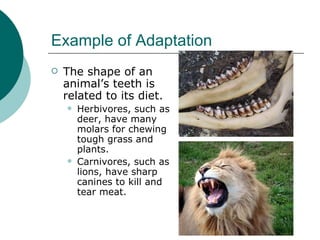
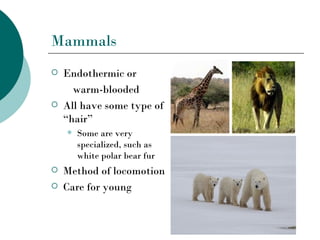
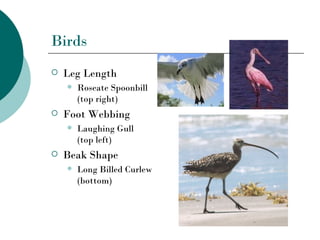
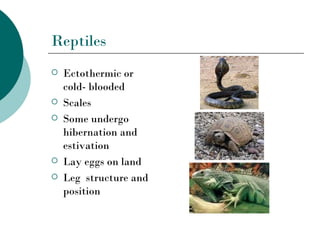
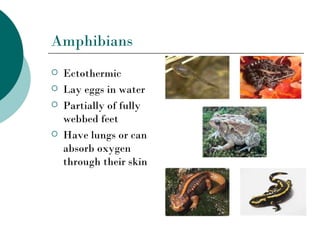
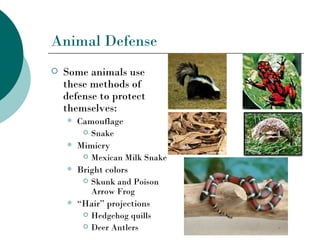
Animal adaptations are physical or behavioral traits that help animals survive in their habitats, such as a bird's beak shape or the color of a mammal's fur, and develop over generations rather than a single lifetime. Examples provided include how a lion's eyes and mane help with hunting and appearance, a giraffe's long neck aids visibility, and zebras defend themselves with speed, kicking, and biting while their coloration provides camouflage from predators. The document also outlines adaptations in mammals, birds, reptiles, amphibians as well as defenses like camouflage, mimicry, and protective coatings.