



Anemia Management In CKD patients:
where we stand ?
By
Alaa Sabry., MD, FACP.
Mansoura University, Egypt
Focus Of The Presentation
•Magnitude of the problem.
•Clinical management.
•Future therapy.
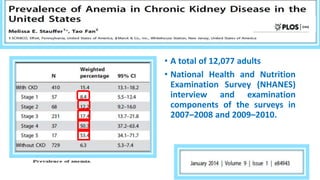
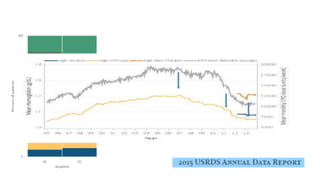
• A total of 12,077 adults
• National Health and Nutrition
Examination Survey (NHANES)
interview and examination
components of the surveys in
2007–2008 and 2009–2010.
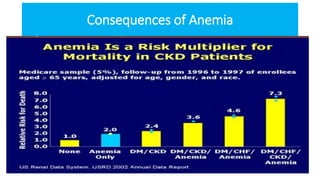
Consequences of Anemia
• The majority (65%) have Hgb
levels in the range of 10-12 g/dL,
with 13.5% having Hgb ≥12 g/dL.
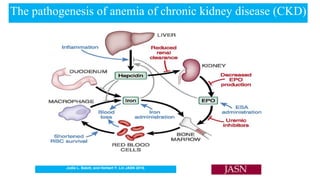
The pathogenesis of anemia of chronic kidney disease (CKD)
Jodie L. Babitt, and Herbert Y. Lin JASN 2016.
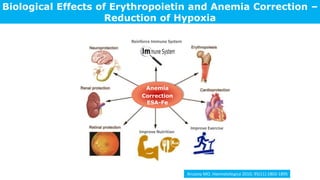
Biological Effects of Erythropoietin and Anemia Correction –
Reduction of Hypoxia
Arcasoy MO. Haematologica 2010; 95(11):1803-1895
Anemia
Correction
ESA-Fe
Improve Nutrition
Improve Exercise
Reinforce Immune System
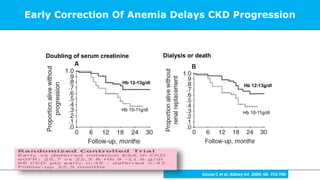
Early Correction Of Anemia Delays CKD Progression
Gouva C et al, Kidney Int 2004; 66: 753-760
Dialysis or death
Hb 12-13g/dl
Hb 10-11g/dl
Doubling of serum creatinine
Hb 12-13g/dl
Hb 10-11g/dl
Focus Of The Presentation
•Magnitude of the problem.
•Clinical management.
•Future therapy.
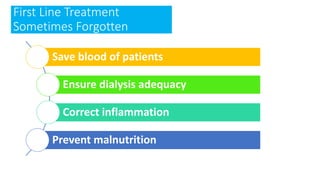
First Line Treatment
Sometimes Forgotten
Save blood of patients
Ensure dialysis adequacy
Correct inflammation
Prevent malnutrition
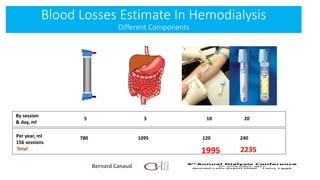
Blood Losses Estimate In Hemodialysis
Different Components
By session
& day, ml
Per year, ml
156 sessions
5 3 10 20
780 1095 120 240
Total
1995 2235
Bernard Canaud
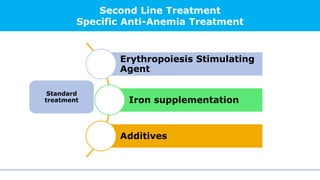
Second Line Treatment
Specific Anti-Anemia Treatment
Erythropoiesis Stimulating
Agent
Iron supplementation
Additives
Standard
treatment
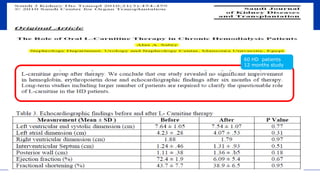
60 HD patients
12 months study
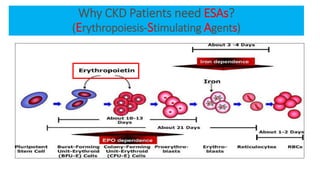
Why CKD Patients need ESAs?
(Erythropoiesis-Stimulating Agents)
Managing Iron Needs
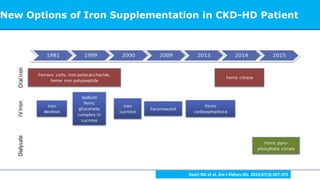
New Options of Iron Supplementation in CKD-HD Patient
Vaziri ND et al, Am J Kidney Dis. 2016;67(3):367-375
Diagnosing iron deficiency
Absolute deficiency
• TSat
• Flaws related to nutitional
transferrin deficiency
• Ferritin
• Flaws related to inflammation
• Percentage microcytic cells
• Flaws related to cell swelling
• Reticulocyte Hb content
Functional deficiency
• Pathophysiology
• Inflammation, hepcidin, transferrin
deficiency
• Lab diagnosis
• High ferritin, low TSAT
• Clinical
• Therapeutic testing
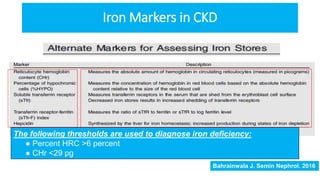
Iron Markers in CKD
Bahrainwala J. Semin Nephrol. 2016
The following thresholds are used to diagnose iron deficiency:
● Percent HRC >6 percent
● CHr <29 pg
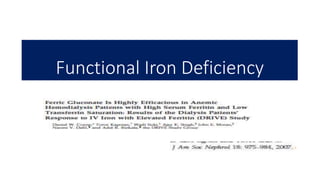
Functional Iron Deficiency
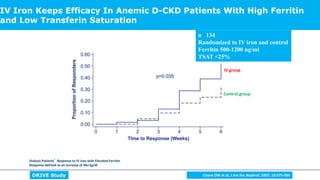
IV Iron Keeps Efficacy In Anemic D-CKD Patients With High Ferritin
and Low Transferin Saturation
Coyne DW et al, J Am Soc Nephrol. 2007; 18:975-984
Dialysis Patients’ Response to IV iron with Elevated Ferritin
Response defined as an increase of Hb>2g/dl
IV group
Control group
DRIVE Study
n 134
Randomized to IV iron and control
Ferritin 500-1200 ng/ml
TSAT <25%
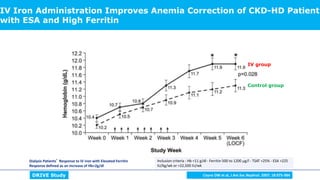
IV Iron Administration Improves Anemia Correction of CKD-HD Patient
with ESA and High Ferritin
IV group
Control group
Dialysis Patients’ Response to IV iron with Elevated Ferritin
Response defined as an increase of Hb>2g/dl
DRIVE Study
Inclusion criteria : Hb <11 g/dl - Ferritin 500 to 1200 g/l - TSAT <25% - ESA >225
IU/kg/wk or >22,500 IU/wk
Coyne DW et al, J Am Soc Nephrol. 2007; 18:975-984
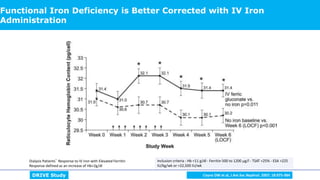
Functional Iron Deficiency is Better Corrected with IV Iron
Administration
DRIVE Study
Dialysis Patients’ Response to IV iron with Elevated Ferritin
Response defined as an increase of Hb>2g/dl
Inclusion criteria : Hb <11 g/dl - Ferritin 500 to 1200 g/l - TSAT <25% - ESA >225
IU/kg/wk or >22,500 IU/wk
Coyne DW et al, J Am Soc Nephrol. 2007; 18:975-984
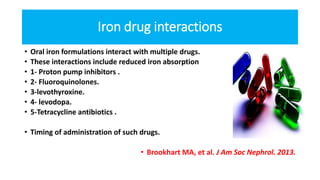
Iron drug interactions
• Oral iron formulations interact with multiple drugs.
• These interactions include reduced iron absorption
• 1- Proton pump inhibitors .
• 2- Fluoroquinolones.
• 3-levothyroxine.
• 4- levodopa.
• 5-Tetracycline antibiotics .
• Timing of administration of such drugs.
• Brookhart MA, et al. J Am Soc Nephrol. 2013.
CKD-ND Oral Versus IV?
v
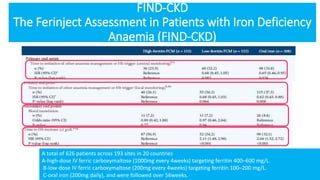
A total of 626 patients across 193 sites in 20 countries
A-high-dose IV ferric carboxymaltose (1000mg every 4weeks) targeting ferritin 400–600 mg/L.
B-low-dose IV ferric carboxymaltose (200mg every 4weeks) targeting ferritin 100–200 mg/L.
C-oral iron (200mg daily), and were followed over 56weeks.
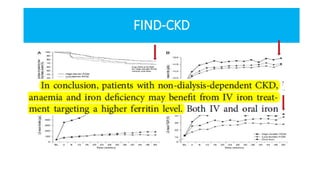
FIND-CKD
The Ferinject Assessment in Patients with Iron Deficiency
Anaemia (FIND-CKD)
FIND-CKD
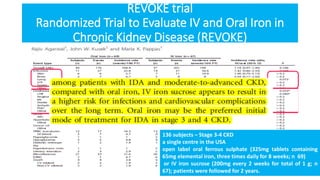
REVOKE trial
Randomized Trial to Evaluate IV and Oral Iron in
Chronic Kidney Disease (REVOKE)
136 subjects – Stage 3-4 CKD
a single centre in the USA
open label oral ferrous sulphate (325mg tablets containing
65mg elemental iron, three times daily for 8 weeks; n 69)
or IV iron sucrose (200mg every 2 weeks for total of 1 g; n
67); patients were followed for 2 years.
IV iron and Mortality
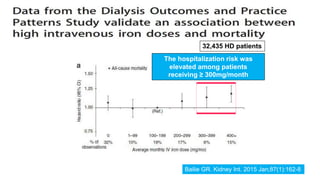
Bailie GR. Kidney Int. 2015 Jan;87(1):162-8
32,435 HD patients
The hospitalization risk was
elevated among patients
receiving ≥ 300mg/month
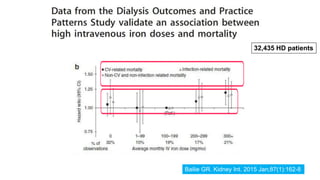
32,435 HD patients
Bailie GR. Kidney Int. 2015 Jan;87(1):162-8
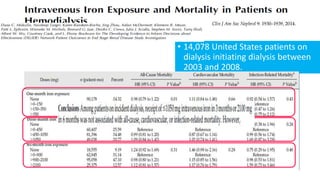
• 14,078 United States patients on
dialysis initiating dialysis between
2003 and 2008.
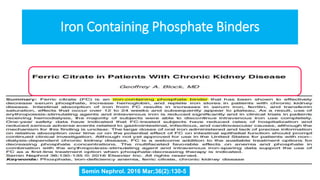
Semin Nephrol. 2016 Mar;36(2):130-5
Iron Containing Phosphate Binders
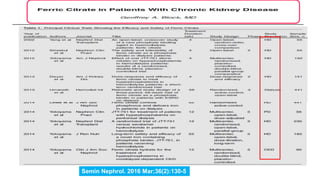
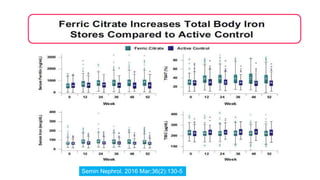
Semin Nephrol. 2016 Mar;36(2):130-5
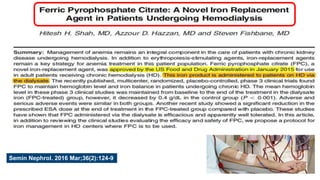
Semin Nephrol. 2016 Mar;36(2):124-9
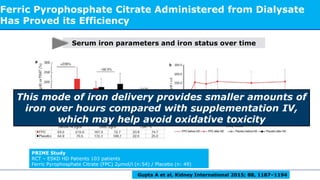
Ferric Pyrophosphate Citrate Administered from Dialysate
Has Proved its Efficiency
Gupta A et al, Kidney International 2015; 88, 1187–1194
PRIME Study
RCT – ESKD HD Patients 103 patients
Ferric Pyrophosphate Citrate (FPC) 2μmol/l (n:54) / Placebo (n: 49)
Serum iron parameters and iron status over time
This mode of iron delivery provides smaller amounts of
iron over hours compared with supplementation IV,
which may help avoid oxidative toxicity
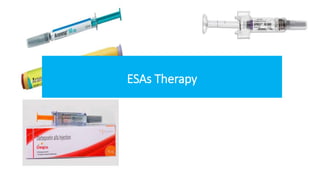
ESAs Therapy
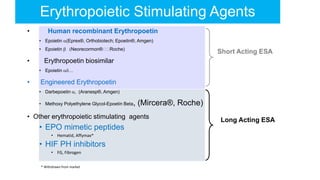
• Human recombinant Erythropoetin
• Epoietin a(Eprex®, Orthobiotech; Epoetin®, Amgen)
• Epoietin bNeorecormon® Roche)
• Erythropoetin biosimilar
• Epoietin a…
• Engineered Erythropoetin
• Darbepoetin a (Aranesp®, Amgen)
• Methoxy Polyethylene Glycol-Epoetin Beta, (Mircera®, Roche)
• Other erythropoietic stimulating agents
• EPO mimetic peptides
• Hematid, Affymax*
• HIF PH inhibitors
• FG, Fibrogen
Erythropoietic Stimulating Agents
Long Acting ESA
Short Acting ESA
* Withdrawn from market
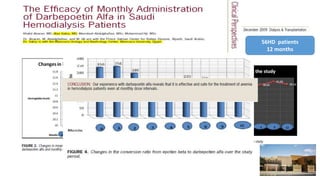
56HD patients
12 months
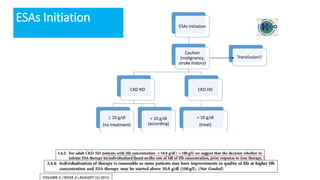
ESAs Initiation
Caution
(malignancy,
stroke history)
CKD ND
 10 g/dl
(no treatment)
< 10 g/dl
(according)
CKD HD
< 10 g/dl
(treat)
Transfusion!!
Individualization
(treat if > 10 g/dl)
ESAs Initiation
ESAs Initiation
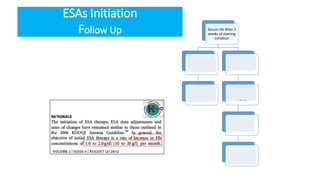
Follow Up Serum Hb After 2
weeks of starting
initiation
If Hb increases
>1 g/dL
Decrease dose by
≥25%
If Hb increases
<1 g/dL
Repeat serum Hb
after another 2
weeks
If Hb does not
increase by >1
g/dL
Increase dose by
25%
ESAs Therapy
The target Hb level.
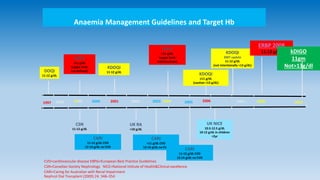
CSN
11-12 g/dL
EBPG
>11 g/dL
(upper limit
not defined)DOQI
11-12 g/dL
CARI
11-12 g/dL CVD
12-14 g/dL no CVD
KDOQI
11-12 g/dL
CARI
>11 g/dL CVD
12-14 g/dL no CVD
UK RA
>10 g/dL
EBPG
>11 g/dL
(upper limit
individualised)
CARI
11-12 g/dL CVD
12-14 g/dL no CVD
CVD=cardiovascular disease EBPG=European Best Practice Guidelines
CSN=Canadian Society Nephrology NICE=National Intitute of Health&Clinical excellence
CARI=Caring for Australian with Renal Impairment
Nephrol Dial Transplant (2009) 24: 348–354
1997 1998 1999 2000 2001 2002 2003 2004 2005 2006 2007
KDOQI
≥11 g/dL
(caution >13 g/dL)
Anaemia Management Guidelines and Target Hb
KDOQI
2007 update
11-12 g/dL
(not intentionally >13 g/dL)
UK NICE
10.5-12.5 g/dL
10-12 g/dL in children
<2yr
2008
ERBP 2008
11-12 g/dL kDIGO
11gm
Not>13g/dl
2012
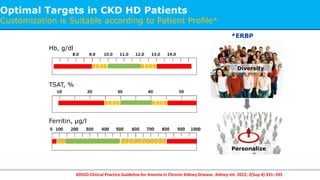
Optimal Targets in CKD HD Patients
Customization is Suitable according to Patient Profile*
Hb, g/dl
TSAT, %
Ferritin, µg/l
KDIGO Clinical Practice Guideline for Anemia in Chronic Kidney Disease. Kidney Int. 2012; 2(Sup 4):331–335
*ERBP
Diversity
Personalize
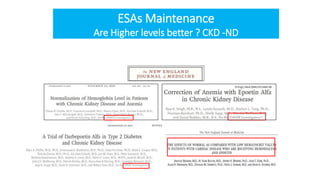
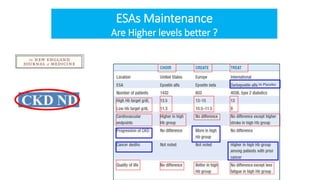
ESAs Maintenance
Are Higher levels better ? CKD -ND
Vs Placebo
`
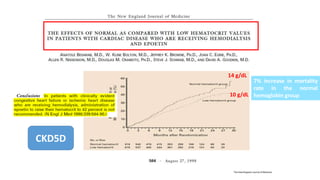
ESAs Maintenance
Are Higher levels better ?
CKD5D
14 g/dL
10 g/dL
7% increase in mortality
rate in the normal
hemoglobin group
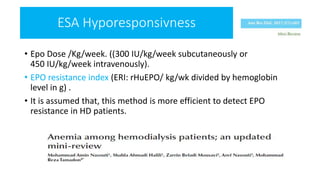
• Epo Dose /Kg/week. ((300 IU/kg/week subcutaneously or
450 IU/kg/week intravenously).
• EPO resistance index (ERI: rHuEPO/ kg/wk divided by hemoglobin
level in g) .
• It is assumed that, this method is more efficient to detect EPO
resistance in HD patients.
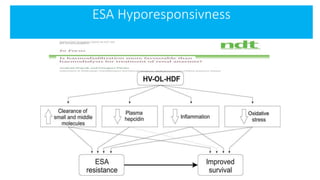
ESA Hyporesponsivness
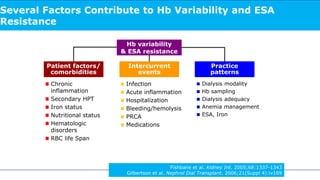
Several Factors Contribute to Hb Variability and ESA
Resistance
Patient factors/
comorbidities
Intercurrent
events
Hb variability
& ESA resistance
Practice
patterns
Chronic
inflammation
Secondary HPT
Iron status
Nutritional status
Hematologic
disorders
RBC life Span
Infection
Acute inflammation
Hospitalization
Bleeding/hemolysis
PRCA
Medications
Dialysis modality
Hb sampling
Dialysis adequacy
Anemia management
ESA, Iron
Fishbane et al. Kidney Int. 2005;68:1337-1343
Gilbertson et al. Nephrol Dial Transplant. 2006;21(Suppl 4):iv169
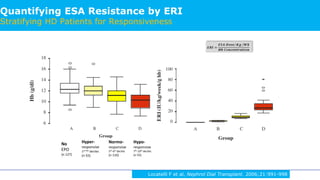
Quantifying ESA Resistance by ERI
Stratifying HD Patients for Responsiveness
Locatelli F et al, Nephrol Dial Transplant. 2006;21:991-998
No
EPO
(n 127)
Hyper-
responsive
1st-4th deciles
(n 55)
Normo-
responsive
5th-6th deciles
(n 110)
Hypo-
responsive
7th-10th deciles
(n 55)
Effect Of Dialysis Modality
Effect Of Dialysis Modality on ESA Response
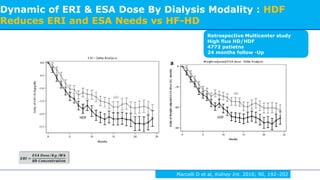
Marcelli D et al, Kidney Int. 2016; 90, 192–202
Dynamic of ERI & ESA Dose By Dialysis Modality : HDF
Reduces ERI and ESA Needs vs HF-HD
Retrospective Multicenter study
High flux HD/HDF
4772 patietns
24 months follow -Up
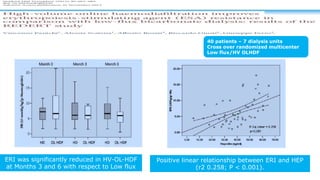
ERI was significantly reduced in HV-OL-HDF
at Months 3 and 6 with respect to Low flux
Positive linear relationship between ERI and HEP
(r2 0.258; P < 0.001).
40 patients – 7 dialysis units
Cross over randomized multicenter
Low flux/HV OLHDF
ESA Hyporesponsivness
Blood Transfusion
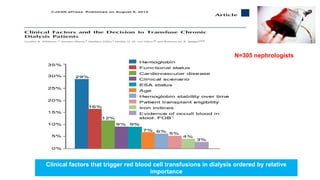
Clinical factors that trigger red blood cell transfusions in dialysis ordered by relative
importance
N=305 nephrologists
Benefits of red cell transfusions may outweigh the risks in patients
in whom:
1. ESA therapy is ineffective (e.g., hemoglobinopathies, bone
marrow failure, ESA resistance)
2. The risks of ESA therapy may outweigh its benefits (e.g.,
previous or current malignancy, previous stroke)
3. If rapid correction is required to stabilize the patient’s condition
(e.g., acute hemorrhage, unstable coronary artery disease)
4. When rapid pre-operative Hb correction is required
Blood Transfusion
Avoid, when possible, red cell transfusions to minimize the
general risks related to their use.
In patients eligible for organ transplantation, avoid, when possible,
red cell transfusions to minimize the risk of allosensitization.
Blood Transfusion
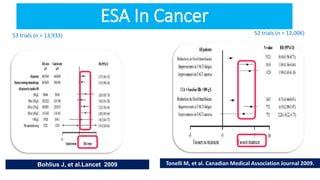
ESA In Cancer
Bohlius J, et al.Lancet 2009
53 trials (n = 13,933)
Tonelli M, et al. Canadian Medical Association Journal 2009.
52 trials (n = 12,006)
ASCOT: American Society of Clinical Oncology.
ASH: American Society of Hematology.
EORTC: European Organization for Research and Treatment of
Cancer.
NCCN: National Comprehensive Cancer Network
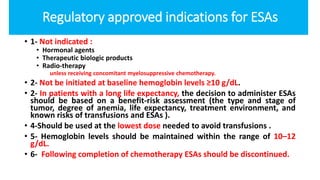
Regulatory approved indications for ESAs
• 1- Not indicated :
• Hormonal agents
• Therapeutic biologic products
• Radio-therapy
unless receiving concomitant myelosuppressive chemotherapy.
• 2- Not be initiated at baseline hemoglobin levels ≥10 g/dL.
• 2- In patients with a long life expectancy, the decision to administer ESAs
should be based on a benefit-risk assessment (the type and stage of
tumor, degree of anemia, life expectancy, treatment environment, and
known risks of transfusions and ESAs ).
• 4-Should be used at the lowest dose needed to avoid transfusions .
• 5- Hemoglobin levels should be maintained within the range of 10–12
g/dL.
• 6- Following completion of chemotherapy ESAs should be discontinued.
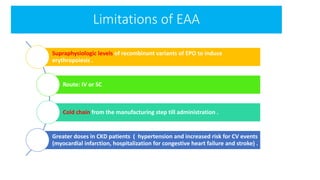
Limitations of EAA
Supraphysiologic levels of recombinant variants of EPO to induce
erythropoiesis .
Route: IV or SC
Cold chain from the manufacturing step till administration .
Greater doses in CKD patients ( hypertension and increased risk for CV events
(myocardial infarction, hospitalization for congestive heart failure and stroke) .
Foley RN. Nat. Rev. Nephrol. 2010; 6, 218–223 .
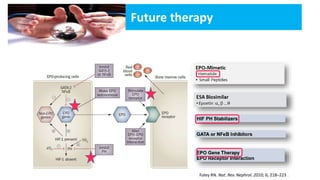
Future therapy
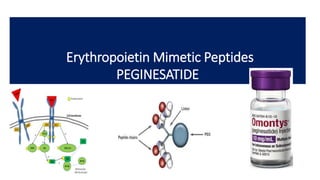
Erythropoietin Mimetic Peptides
PEGINESATIDE
Peginesatide
Phase 3 Clinical Trials
HIF STABILIZATION
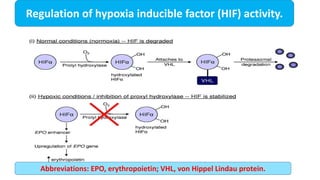
Regulation of hypoxia inducible factor (HIF) activity.
Abbreviations: EPO, erythropoietin; VHL, von Hippel Lindau protein.
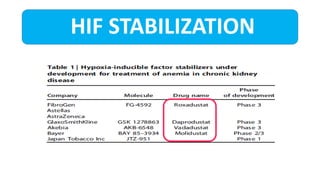
HIF STABILIZATION
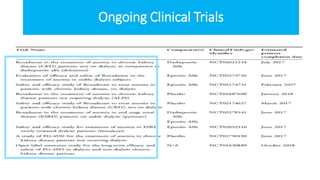
Ongoing Clinical Trials
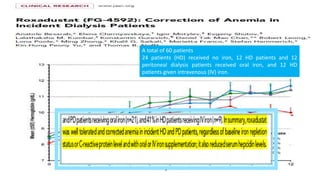
Hb response Mean change from BL in serum hepcidin
A Phase II randomized placebo-controlled
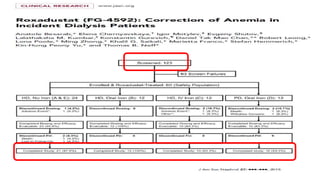
roxadustat given at different doses.
A total of 60 patients
24 patients (HD) received no iron, 12 HD patients and 12
peritoneal dialysis patients received oral iron, and 12 HD
patients given intravenous (IV) iron.
Hepcidin Modulation
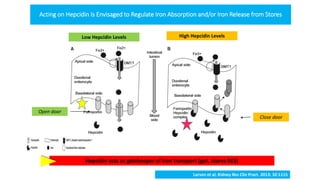
Acting on Hepcidin Is Envisaged to Regulate Iron Absorption and/or Iron Release from Stores
Larson et al, Kidney Res Clin Pract. 2013; 32:1115
Low Hepcidin Levels High Hepcidin Levels
Hepcidin acts as gatekeeper of iron transport (gut, stores RES)
Open door
Close door
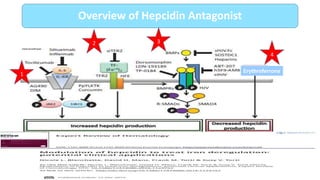
Overview of Hepcidin Antagonist
1
2 3
4
Erythroferrone
ERYTHROPOIETIN
GENE THERAPY
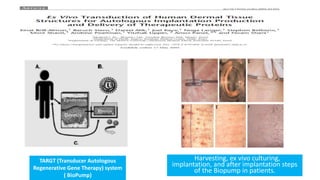
TARGT (Transducer Autologous
Regenerative Gene Therapy) system
( BioPump)
Harvesting, ex vivo culturing,
implantation, and after implantation steps
of the Biopump in patients.
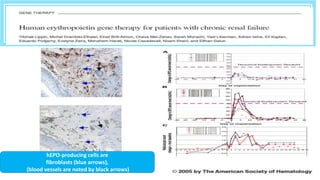
hEPO-producing cells are
fibroblasts (blue arrows),
(blood vessels are noted by black arrows)
Conclusion
The field of anemia therapy in CKD and ESRD has progressed from one with very
limited options in the pre-ESA era to one in which novel agents are developed to
induce therapeutic effects that more closely mimic the body’s own responses to
hypoxia, raising hope that the complications caused by the prevailing ESA-based
paradigms can be eliminated.
Non dialysis CKD and patients on dialysis have disordered iron metabolism
Clinically, physicians Administering i.v. iron, but this may have adverse long-term
effects due iron increasing oxidative stress.
Conclusion
• The lack of long-term clinical trials assessing clinical outcomes associated with various iron administration
strategies makes it difficult to determine whether or not the current therapeutic paradigms of i.v. iron
administration in dialysis patients are safe, and leaves many unanswered questions about what the best
approach should be for the optimization of iron homeostasis
• In early clinical trials, Hypoxia inducible factor (HIF) activators appear to be capable of replacing ESA therapy
and minimizing the need for i.v. iron therapy for chronic kidney disease–related anemia.
There are multiple small molecule HIF-inhibitors currently in clinical development .
Drugs in this class share the same mechanism of action but differ in dosing and frequency.
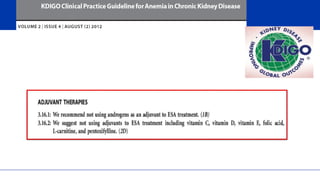
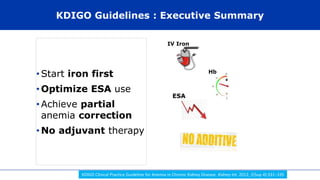
KDIGO Guidelines : Executive Summary
• Start iron first
• Optimize ESA use
• Achieve partial
anemia correction
• No adjuvant therapy
Hb
ESA
IV Iron
KDIGO Clinical Practice Guideline for Anemia in Chronic Kidney Disease. Kidney Int. 2012; 2(Sup 4):331–335
Despite new drugs, our ‘good old friend’ erythropoietin
stimulating agents are our everyday life in nephrology
practice.
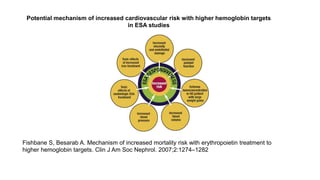
Potential mechanism of increased cardiovascular risk with higher hemoglobin targets
in ESA studies
Fishbane S, Besarab A. Mechanism of increased mortality risk with erythropoietin treatment to
higher hemoglobin targets. Clin J Am Soc Nephrol. 2007;2:1274–1282
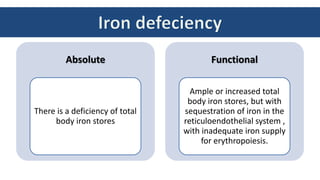
Absolute
There is a deficiency of total
body iron stores
Functional
Ample or increased total
body iron stores, but with
sequestration of iron in the
reticuloendothelial system ,
with inadequate iron supply
for erythropoiesis.
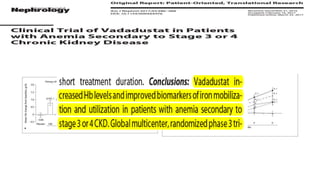
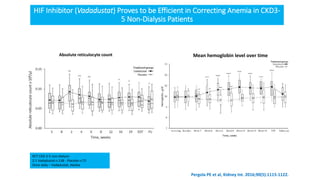
HIF Inhibitor (Vadadustat) Proves to be Efficient in Correcting Anemia in CKD3-
5 Non-Dialysis Patients
Absolute reticulocyte count Mean hemoglobin level over time
RCT CKD 3-5 non-dialysis
2:1 Vadadustat n:138 - Placebo n:72
Once daily – Vadadustat, Akebia
Pergola PE et al, Kidney Int. 2016;90(5):1115-1122.
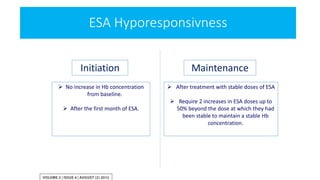
Initiation Maintenance
 No increase in Hb concentration
from baseline.
 After the first month of ESA.
 After treatment with stable doses of ESA
 Require 2 increases in ESA doses up to
50% beyond the dose at which they had
been stable to maintain a stable Hb
concentration.
ESA Hyporesponsivness
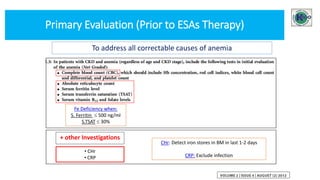
• CHr
• CRP
Primary Evaluation (Prior to ESAs Therapy)
+ other Investigations
To address all correctable causes of anemia
Fe Deficiency when:
S. Ferritin  500 ng/ml
S.TSAT  30%
CHr: Detect iron stores in BM in last 1-2 days
CRP: Exclude infection
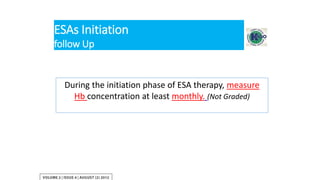
ESAs Initiation
follow Up
During the initiation phase of ESA therapy, measure
Hb concentration at least monthly. (Not Graded)
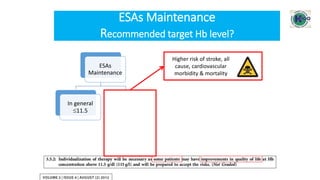
ESAs Maintenance
Recommended target Hb level?
ESAs
Maintenance
In general
11.5
Individualized
>11.5
In all adults
not >13
Higher risk of stroke, all
cause, cardiovascular
morbidity & mortality
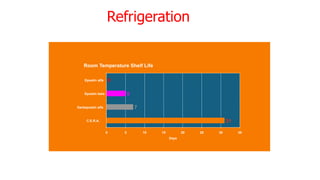
Refrigeration
Room Temperature Shelf Life
0
5
7
31
0 5 10 15 20 25 30 35
Darbepoetin alfa
Epoetin beta
Epoetin alfa
Days
C.E.R.A.
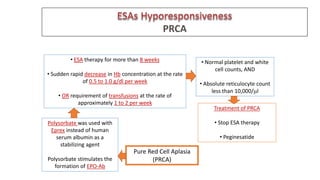
Pure Red Cell Aplasia
(PRCA)
Polysorbate was used with
Eprex instead of human
serum albumin as a
stabilizing agent
Polysorbate stimulates the
formation of EPO-Ab
• ESA therapy for more than 8 weeks
• Sudden rapid decrease in Hb concentration at the rate
of 0.5 to 1.0 g/dl per week
• OR requirement of transfusions at the rate of
approximately 1 to 2 per week
• Normal platelet and white
cell counts, AND
• Absolute reticulocyte count
less than 10,000/l
Treatment of PRCA
• Stop ESA therapy
• Peginesatide
• The World Health Organization (WHO) defines anemia as a blood hemoglobin concentration of <13 g/dL in men and postmenopausal women and of <12 g/dL in women of
childbearing age
• KDIGO guidelines mirror the WHO definition of anemia for patients with CKD.
• Serum Feritin: Main Iron storage protein <100 Absolute Iron deficiency.
• Transferin sat: Glycoprotein secreted from the liver, main iron carrier to the cells.
• Reticulocyte hemoglobin content (equivalent)
• Under normal erythropoietic conditions, young erythrocytes (reticulocytes) are released from the bone marrow into circulation and become mature erythrocytes after
several days.
• Reticulocyte hemoglobin content (CHr),, quantifies hemoglobin mass in reticulocytes, providing information about a short-term change in iron status.
• When measuring CHr (RetHe) in clinical practice, the time delay between blood sample draw and analysis should be taken into account when interpreting the results.
Dialysis organizations in the United States typically use centralized laboratories with specimen shipment times ranging between 24 and 48 hours. Due to the quick
maturation process of reticulocytes, there is a risk that this time delay may introduce measurement bias.
• Percentage hypochromic red cells:
• HRC are erythrocytes with mean cellular hemoglobin concentration (MCHC) less than 28 g/dL.
• Soluble transferrin receptor
• Iron uptake into erythroid precursors occurs through internalizing transferrin bound iron. The transferrin bound iron binds to transferrin receptors present on the surface of
the plasma membrane and is internalized through endosomes ultimately leading to the release of iron. Plasma membrane bound transferrin receptors are released into the
blood in form of a truncated sTfR. Ironrestricted erythropoiesis may cause overexpression of sTfR, as increased number of transferrin receptors may come off the surface of
the erythroblasts and become detectable.53–55
• Hepcidin ?????
ENT-CNE Assiut Course, April 8-10, 2015
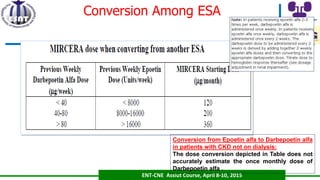
Conversion Among ESA
Conversion from Epoetin alfa to Darbepoetin alfa
in patients with CKD not on dialysis:
The dose conversion depicted in Table does not
accurately estimate the once monthly dose of
Darbepoetin alfa .
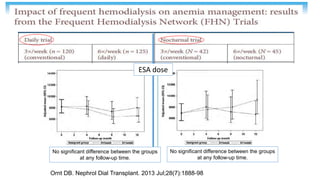
ESA dose
No significant difference between the groups
at any follow-up time.
No significant difference between the groups
at any follow-up time.
Ornt DB. Nephrol Dial Transplant. 2013 Jul;28(7):1888-98
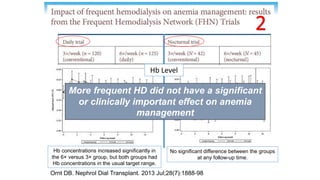
More frequent HD did not have a significant
or clinically important effect on anemia
management
Hb Level
Hb concentrations increased significantly in
the 6× versus 3× group, but both groups had
Hb concentrations in the usual target range.
No significant difference between the groups
at any follow-up time.
Ornt DB. Nephrol Dial Transplant. 2013 Jul;28(7):1888-98

Anemia el-menyia

  • 1.
    Anemia Management InCKD patients: where we stand ? By Alaa Sabry., MD, FACP. Mansoura University, Egypt
  • 2.
    Focus Of ThePresentation •Magnitude of the problem. •Clinical management. •Future therapy.
  • 3.
    • A totalof 12,077 adults • National Health and Nutrition Examination Survey (NHANES) interview and examination components of the surveys in 2007–2008 and 2009–2010.
  • 4.
  • 5.
    • The majority(65%) have Hgb levels in the range of 10-12 g/dL, with 13.5% having Hgb ≥12 g/dL.
  • 6.
    The pathogenesis ofanemia of chronic kidney disease (CKD) Jodie L. Babitt, and Herbert Y. Lin JASN 2016.
  • 7.
    Biological Effects ofErythropoietin and Anemia Correction – Reduction of Hypoxia Arcasoy MO. Haematologica 2010; 95(11):1803-1895 Anemia Correction ESA-Fe Improve Nutrition Improve Exercise Reinforce Immune System
  • 8.
    Early Correction OfAnemia Delays CKD Progression Gouva C et al, Kidney Int 2004; 66: 753-760 Dialysis or death Hb 12-13g/dl Hb 10-11g/dl Doubling of serum creatinine Hb 12-13g/dl Hb 10-11g/dl
  • 9.
    Focus Of ThePresentation •Magnitude of the problem. •Clinical management. •Future therapy.
  • 10.
    First Line Treatment SometimesForgotten Save blood of patients Ensure dialysis adequacy Correct inflammation Prevent malnutrition
  • 11.
    Blood Losses EstimateIn Hemodialysis Different Components By session & day, ml Per year, ml 156 sessions 5 3 10 20 780 1095 120 240 Total 1995 2235 Bernard Canaud
  • 13.
    Second Line Treatment SpecificAnti-Anemia Treatment Erythropoiesis Stimulating Agent Iron supplementation Additives Standard treatment
  • 15.
    60 HD patients 12months study
  • 16.
    Why CKD Patientsneed ESAs? (Erythropoiesis-Stimulating Agents)
  • 17.
  • 18.
    New Options ofIron Supplementation in CKD-HD Patient Vaziri ND et al, Am J Kidney Dis. 2016;67(3):367-375
  • 19.
    Diagnosing iron deficiency Absolutedeficiency • TSat • Flaws related to nutitional transferrin deficiency • Ferritin • Flaws related to inflammation • Percentage microcytic cells • Flaws related to cell swelling • Reticulocyte Hb content Functional deficiency • Pathophysiology • Inflammation, hepcidin, transferrin deficiency • Lab diagnosis • High ferritin, low TSAT • Clinical • Therapeutic testing
  • 20.
    Iron Markers inCKD Bahrainwala J. Semin Nephrol. 2016 The following thresholds are used to diagnose iron deficiency: ● Percent HRC >6 percent ● CHr <29 pg
  • 21.
  • 22.
    IV Iron KeepsEfficacy In Anemic D-CKD Patients With High Ferritin and Low Transferin Saturation Coyne DW et al, J Am Soc Nephrol. 2007; 18:975-984 Dialysis Patients’ Response to IV iron with Elevated Ferritin Response defined as an increase of Hb>2g/dl IV group Control group DRIVE Study n 134 Randomized to IV iron and control Ferritin 500-1200 ng/ml TSAT <25%
  • 23.
    IV Iron AdministrationImproves Anemia Correction of CKD-HD Patient with ESA and High Ferritin IV group Control group Dialysis Patients’ Response to IV iron with Elevated Ferritin Response defined as an increase of Hb>2g/dl DRIVE Study Inclusion criteria : Hb <11 g/dl - Ferritin 500 to 1200 g/l - TSAT <25% - ESA >225 IU/kg/wk or >22,500 IU/wk Coyne DW et al, J Am Soc Nephrol. 2007; 18:975-984
  • 24.
    Functional Iron Deficiencyis Better Corrected with IV Iron Administration DRIVE Study Dialysis Patients’ Response to IV iron with Elevated Ferritin Response defined as an increase of Hb>2g/dl Inclusion criteria : Hb <11 g/dl - Ferritin 500 to 1200 g/l - TSAT <25% - ESA >225 IU/kg/wk or >22,500 IU/wk Coyne DW et al, J Am Soc Nephrol. 2007; 18:975-984
  • 25.
    Iron drug interactions •Oral iron formulations interact with multiple drugs. • These interactions include reduced iron absorption • 1- Proton pump inhibitors . • 2- Fluoroquinolones. • 3-levothyroxine. • 4- levodopa. • 5-Tetracycline antibiotics . • Timing of administration of such drugs. • Brookhart MA, et al. J Am Soc Nephrol. 2013.
  • 26.
  • 27.
    v A total of626 patients across 193 sites in 20 countries A-high-dose IV ferric carboxymaltose (1000mg every 4weeks) targeting ferritin 400–600 mg/L. B-low-dose IV ferric carboxymaltose (200mg every 4weeks) targeting ferritin 100–200 mg/L. C-oral iron (200mg daily), and were followed over 56weeks. FIND-CKD The Ferinject Assessment in Patients with Iron Deficiency Anaemia (FIND-CKD)
  • 28.
  • 29.
    REVOKE trial Randomized Trialto Evaluate IV and Oral Iron in Chronic Kidney Disease (REVOKE) 136 subjects – Stage 3-4 CKD a single centre in the USA open label oral ferrous sulphate (325mg tablets containing 65mg elemental iron, three times daily for 8 weeks; n 69) or IV iron sucrose (200mg every 2 weeks for total of 1 g; n 67); patients were followed for 2 years.
  • 30.
    IV iron andMortality
  • 31.
    Bailie GR. KidneyInt. 2015 Jan;87(1):162-8 32,435 HD patients The hospitalization risk was elevated among patients receiving ≥ 300mg/month
  • 32.
    32,435 HD patients BailieGR. Kidney Int. 2015 Jan;87(1):162-8
  • 33.
    • 14,078 UnitedStates patients on dialysis initiating dialysis between 2003 and 2008.
  • 35.
    Semin Nephrol. 2016Mar;36(2):130-5 Iron Containing Phosphate Binders
  • 36.
    Semin Nephrol. 2016Mar;36(2):130-5
  • 37.
    Semin Nephrol. 2016Mar;36(2):130-5
  • 38.
    Semin Nephrol. 2016Mar;36(2):124-9
  • 39.
    Ferric Pyrophosphate CitrateAdministered from Dialysate Has Proved its Efficiency Gupta A et al, Kidney International 2015; 88, 1187–1194 PRIME Study RCT – ESKD HD Patients 103 patients Ferric Pyrophosphate Citrate (FPC) 2μmol/l (n:54) / Placebo (n: 49) Serum iron parameters and iron status over time This mode of iron delivery provides smaller amounts of iron over hours compared with supplementation IV, which may help avoid oxidative toxicity
  • 40.
  • 41.
    • Human recombinantErythropoetin • Epoietin a(Eprex®, Orthobiotech; Epoetin®, Amgen) • Epoietin bNeorecormon® Roche) • Erythropoetin biosimilar • Epoietin a… • Engineered Erythropoetin • Darbepoetin a (Aranesp®, Amgen) • Methoxy Polyethylene Glycol-Epoetin Beta, (Mircera®, Roche) • Other erythropoietic stimulating agents • EPO mimetic peptides • Hematid, Affymax* • HIF PH inhibitors • FG, Fibrogen Erythropoietic Stimulating Agents Long Acting ESA Short Acting ESA * Withdrawn from market
  • 44.
  • 45.
    ESAs Initiation Caution (malignancy, stroke history) CKDND  10 g/dl (no treatment) < 10 g/dl (according) CKD HD < 10 g/dl (treat) Transfusion!! Individualization (treat if > 10 g/dl) ESAs Initiation
  • 46.
    ESAs Initiation Follow UpSerum Hb After 2 weeks of starting initiation If Hb increases >1 g/dL Decrease dose by ≥25% If Hb increases <1 g/dL Repeat serum Hb after another 2 weeks If Hb does not increase by >1 g/dL Increase dose by 25%
  • 47.
  • 48.
    CSN 11-12 g/dL EBPG >11 g/dL (upperlimit not defined)DOQI 11-12 g/dL CARI 11-12 g/dL CVD 12-14 g/dL no CVD KDOQI 11-12 g/dL CARI >11 g/dL CVD 12-14 g/dL no CVD UK RA >10 g/dL EBPG >11 g/dL (upper limit individualised) CARI 11-12 g/dL CVD 12-14 g/dL no CVD CVD=cardiovascular disease EBPG=European Best Practice Guidelines CSN=Canadian Society Nephrology NICE=National Intitute of Health&Clinical excellence CARI=Caring for Australian with Renal Impairment Nephrol Dial Transplant (2009) 24: 348–354 1997 1998 1999 2000 2001 2002 2003 2004 2005 2006 2007 KDOQI ≥11 g/dL (caution >13 g/dL) Anaemia Management Guidelines and Target Hb KDOQI 2007 update 11-12 g/dL (not intentionally >13 g/dL) UK NICE 10.5-12.5 g/dL 10-12 g/dL in children <2yr 2008 ERBP 2008 11-12 g/dL kDIGO 11gm Not>13g/dl 2012
  • 49.
    Optimal Targets inCKD HD Patients Customization is Suitable according to Patient Profile* Hb, g/dl TSAT, % Ferritin, µg/l KDIGO Clinical Practice Guideline for Anemia in Chronic Kidney Disease. Kidney Int. 2012; 2(Sup 4):331–335 *ERBP Diversity Personalize
  • 50.
    ESAs Maintenance Are Higherlevels better ? CKD -ND
  • 51.
    Vs Placebo ` ESAs Maintenance AreHigher levels better ?
  • 52.
    CKD5D 14 g/dL 10 g/dL 7%increase in mortality rate in the normal hemoglobin group
  • 53.
    • Epo Dose/Kg/week. ((300 IU/kg/week subcutaneously or 450 IU/kg/week intravenously). • EPO resistance index (ERI: rHuEPO/ kg/wk divided by hemoglobin level in g) . • It is assumed that, this method is more efficient to detect EPO resistance in HD patients. ESA Hyporesponsivness
  • 54.
    Several Factors Contributeto Hb Variability and ESA Resistance Patient factors/ comorbidities Intercurrent events Hb variability & ESA resistance Practice patterns Chronic inflammation Secondary HPT Iron status Nutritional status Hematologic disorders RBC life Span Infection Acute inflammation Hospitalization Bleeding/hemolysis PRCA Medications Dialysis modality Hb sampling Dialysis adequacy Anemia management ESA, Iron Fishbane et al. Kidney Int. 2005;68:1337-1343 Gilbertson et al. Nephrol Dial Transplant. 2006;21(Suppl 4):iv169
  • 55.
    Quantifying ESA Resistanceby ERI Stratifying HD Patients for Responsiveness Locatelli F et al, Nephrol Dial Transplant. 2006;21:991-998 No EPO (n 127) Hyper- responsive 1st-4th deciles (n 55) Normo- responsive 5th-6th deciles (n 110) Hypo- responsive 7th-10th deciles (n 55)
  • 56.
    Effect Of DialysisModality Effect Of Dialysis Modality on ESA Response
  • 57.
    Marcelli D etal, Kidney Int. 2016; 90, 192–202 Dynamic of ERI & ESA Dose By Dialysis Modality : HDF Reduces ERI and ESA Needs vs HF-HD Retrospective Multicenter study High flux HD/HDF 4772 patietns 24 months follow -Up
  • 58.
    ERI was significantlyreduced in HV-OL-HDF at Months 3 and 6 with respect to Low flux Positive linear relationship between ERI and HEP (r2 0.258; P < 0.001). 40 patients – 7 dialysis units Cross over randomized multicenter Low flux/HV OLHDF
  • 59.
  • 60.
  • 61.
    Clinical factors thattrigger red blood cell transfusions in dialysis ordered by relative importance N=305 nephrologists
  • 62.
    Benefits of redcell transfusions may outweigh the risks in patients in whom: 1. ESA therapy is ineffective (e.g., hemoglobinopathies, bone marrow failure, ESA resistance) 2. The risks of ESA therapy may outweigh its benefits (e.g., previous or current malignancy, previous stroke) 3. If rapid correction is required to stabilize the patient’s condition (e.g., acute hemorrhage, unstable coronary artery disease) 4. When rapid pre-operative Hb correction is required Blood Transfusion
  • 63.
    Avoid, when possible,red cell transfusions to minimize the general risks related to their use. In patients eligible for organ transplantation, avoid, when possible, red cell transfusions to minimize the risk of allosensitization. Blood Transfusion
  • 65.
    ESA In Cancer BohliusJ, et al.Lancet 2009 53 trials (n = 13,933) Tonelli M, et al. Canadian Medical Association Journal 2009. 52 trials (n = 12,006)
  • 66.
    ASCOT: American Societyof Clinical Oncology. ASH: American Society of Hematology. EORTC: European Organization for Research and Treatment of Cancer. NCCN: National Comprehensive Cancer Network
  • 67.
    Regulatory approved indicationsfor ESAs • 1- Not indicated : • Hormonal agents • Therapeutic biologic products • Radio-therapy unless receiving concomitant myelosuppressive chemotherapy. • 2- Not be initiated at baseline hemoglobin levels ≥10 g/dL. • 2- In patients with a long life expectancy, the decision to administer ESAs should be based on a benefit-risk assessment (the type and stage of tumor, degree of anemia, life expectancy, treatment environment, and known risks of transfusions and ESAs ). • 4-Should be used at the lowest dose needed to avoid transfusions . • 5- Hemoglobin levels should be maintained within the range of 10–12 g/dL. • 6- Following completion of chemotherapy ESAs should be discontinued.
  • 68.
    Limitations of EAA Supraphysiologiclevels of recombinant variants of EPO to induce erythropoiesis . Route: IV or SC Cold chain from the manufacturing step till administration . Greater doses in CKD patients ( hypertension and increased risk for CV events (myocardial infarction, hospitalization for congestive heart failure and stroke) .
  • 69.
    Foley RN. Nat.Rev. Nephrol. 2010; 6, 218–223 . Future therapy
  • 70.
  • 71.
  • 72.
  • 73.
    Regulation of hypoxiainducible factor (HIF) activity. Abbreviations: EPO, erythropoietin; VHL, von Hippel Lindau protein.
  • 74.
  • 75.
  • 76.
    Hb response Meanchange from BL in serum hepcidin A Phase II randomized placebo-controlled roxadustat given at different doses.
  • 77.
    A total of60 patients 24 patients (HD) received no iron, 12 HD patients and 12 peritoneal dialysis patients received oral iron, and 12 HD patients given intravenous (IV) iron.
  • 79.
  • 80.
    Acting on HepcidinIs Envisaged to Regulate Iron Absorption and/or Iron Release from Stores Larson et al, Kidney Res Clin Pract. 2013; 32:1115 Low Hepcidin Levels High Hepcidin Levels Hepcidin acts as gatekeeper of iron transport (gut, stores RES) Open door Close door
  • 81.
    Overview of HepcidinAntagonist 1 2 3 4 Erythroferrone
  • 82.
  • 83.
    TARGT (Transducer Autologous RegenerativeGene Therapy) system ( BioPump) Harvesting, ex vivo culturing, implantation, and after implantation steps of the Biopump in patients.
  • 84.
    hEPO-producing cells are fibroblasts(blue arrows), (blood vessels are noted by black arrows)
  • 86.
    Conclusion The field ofanemia therapy in CKD and ESRD has progressed from one with very limited options in the pre-ESA era to one in which novel agents are developed to induce therapeutic effects that more closely mimic the body’s own responses to hypoxia, raising hope that the complications caused by the prevailing ESA-based paradigms can be eliminated. Non dialysis CKD and patients on dialysis have disordered iron metabolism Clinically, physicians Administering i.v. iron, but this may have adverse long-term effects due iron increasing oxidative stress.
  • 87.
    Conclusion • The lackof long-term clinical trials assessing clinical outcomes associated with various iron administration strategies makes it difficult to determine whether or not the current therapeutic paradigms of i.v. iron administration in dialysis patients are safe, and leaves many unanswered questions about what the best approach should be for the optimization of iron homeostasis • In early clinical trials, Hypoxia inducible factor (HIF) activators appear to be capable of replacing ESA therapy and minimizing the need for i.v. iron therapy for chronic kidney disease–related anemia. There are multiple small molecule HIF-inhibitors currently in clinical development . Drugs in this class share the same mechanism of action but differ in dosing and frequency.
  • 88.
    KDIGO Guidelines :Executive Summary • Start iron first • Optimize ESA use • Achieve partial anemia correction • No adjuvant therapy Hb ESA IV Iron KDIGO Clinical Practice Guideline for Anemia in Chronic Kidney Disease. Kidney Int. 2012; 2(Sup 4):331–335
  • 89.
    Despite new drugs,our ‘good old friend’ erythropoietin stimulating agents are our everyday life in nephrology practice.
  • 91.
    Potential mechanism ofincreased cardiovascular risk with higher hemoglobin targets in ESA studies Fishbane S, Besarab A. Mechanism of increased mortality risk with erythropoietin treatment to higher hemoglobin targets. Clin J Am Soc Nephrol. 2007;2:1274–1282
  • 92.
    Absolute There is adeficiency of total body iron stores Functional Ample or increased total body iron stores, but with sequestration of iron in the reticuloendothelial system , with inadequate iron supply for erythropoiesis.
  • 93.
    HIF Inhibitor (Vadadustat)Proves to be Efficient in Correcting Anemia in CKD3- 5 Non-Dialysis Patients Absolute reticulocyte count Mean hemoglobin level over time RCT CKD 3-5 non-dialysis 2:1 Vadadustat n:138 - Placebo n:72 Once daily – Vadadustat, Akebia Pergola PE et al, Kidney Int. 2016;90(5):1115-1122.
  • 94.
    Initiation Maintenance  Noincrease in Hb concentration from baseline.  After the first month of ESA.  After treatment with stable doses of ESA  Require 2 increases in ESA doses up to 50% beyond the dose at which they had been stable to maintain a stable Hb concentration. ESA Hyporesponsivness
  • 95.
    • CHr • CRP PrimaryEvaluation (Prior to ESAs Therapy) + other Investigations To address all correctable causes of anemia Fe Deficiency when: S. Ferritin  500 ng/ml S.TSAT  30% CHr: Detect iron stores in BM in last 1-2 days CRP: Exclude infection
  • 96.
    ESAs Initiation follow Up Duringthe initiation phase of ESA therapy, measure Hb concentration at least monthly. (Not Graded)
  • 97.
    ESAs Maintenance Recommended targetHb level? ESAs Maintenance In general 11.5 Individualized >11.5 In all adults not >13 Higher risk of stroke, all cause, cardiovascular morbidity & mortality
  • 99.
    Refrigeration Room Temperature ShelfLife 0 5 7 31 0 5 10 15 20 25 30 35 Darbepoetin alfa Epoetin beta Epoetin alfa Days C.E.R.A.
  • 100.
    Pure Red CellAplasia (PRCA) Polysorbate was used with Eprex instead of human serum albumin as a stabilizing agent Polysorbate stimulates the formation of EPO-Ab • ESA therapy for more than 8 weeks • Sudden rapid decrease in Hb concentration at the rate of 0.5 to 1.0 g/dl per week • OR requirement of transfusions at the rate of approximately 1 to 2 per week • Normal platelet and white cell counts, AND • Absolute reticulocyte count less than 10,000/l Treatment of PRCA • Stop ESA therapy • Peginesatide
  • 101.
    • The WorldHealth Organization (WHO) defines anemia as a blood hemoglobin concentration of <13 g/dL in men and postmenopausal women and of <12 g/dL in women of childbearing age • KDIGO guidelines mirror the WHO definition of anemia for patients with CKD. • Serum Feritin: Main Iron storage protein <100 Absolute Iron deficiency. • Transferin sat: Glycoprotein secreted from the liver, main iron carrier to the cells. • Reticulocyte hemoglobin content (equivalent) • Under normal erythropoietic conditions, young erythrocytes (reticulocytes) are released from the bone marrow into circulation and become mature erythrocytes after several days. • Reticulocyte hemoglobin content (CHr),, quantifies hemoglobin mass in reticulocytes, providing information about a short-term change in iron status. • When measuring CHr (RetHe) in clinical practice, the time delay between blood sample draw and analysis should be taken into account when interpreting the results. Dialysis organizations in the United States typically use centralized laboratories with specimen shipment times ranging between 24 and 48 hours. Due to the quick maturation process of reticulocytes, there is a risk that this time delay may introduce measurement bias. • Percentage hypochromic red cells: • HRC are erythrocytes with mean cellular hemoglobin concentration (MCHC) less than 28 g/dL. • Soluble transferrin receptor • Iron uptake into erythroid precursors occurs through internalizing transferrin bound iron. The transferrin bound iron binds to transferrin receptors present on the surface of the plasma membrane and is internalized through endosomes ultimately leading to the release of iron. Plasma membrane bound transferrin receptors are released into the blood in form of a truncated sTfR. Ironrestricted erythropoiesis may cause overexpression of sTfR, as increased number of transferrin receptors may come off the surface of the erythroblasts and become detectable.53–55 • Hepcidin ?????
  • 102.
    ENT-CNE Assiut Course,April 8-10, 2015 Conversion Among ESA Conversion from Epoetin alfa to Darbepoetin alfa in patients with CKD not on dialysis: The dose conversion depicted in Table does not accurately estimate the once monthly dose of Darbepoetin alfa .
  • 106.
    ESA dose No significantdifference between the groups at any follow-up time. No significant difference between the groups at any follow-up time. Ornt DB. Nephrol Dial Transplant. 2013 Jul;28(7):1888-98
  • 107.
    More frequent HDdid not have a significant or clinically important effect on anemia management Hb Level Hb concentrations increased significantly in the 6× versus 3× group, but both groups had Hb concentrations in the usual target range. No significant difference between the groups at any follow-up time. Ornt DB. Nephrol Dial Transplant. 2013 Jul;28(7):1888-98