Android meets Arduino
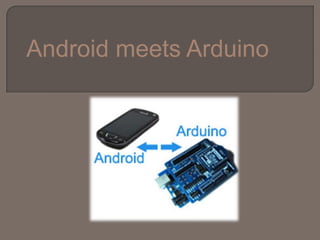
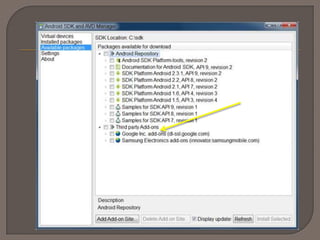
The Android 3.1 platform (also backported to Android 2.3.4) introduces Android Open Accessory support, which allows external USB hardware to interact with an Android-powered device in a special "accessory" mode on this 11th May 2011. Google have released this functionality called the Android Open Accessory toolkit that will allow developers to use open source hardware interfaces to connect multiple input devices to almost any Android system. Intelligent selection ofArduino“the open-source electronics” leverage the widely available Arduino Shields to be used with Android. This shield enables developers to work with the Android controlled Arduino to create real world solutions incorporating sensors, displays, motors, and robotics that interface directly to Android mobiles and tablets.First time the open source Android OS of mobile phone can interact with the environment through the special purpose devices (Android IO). These open-source OS and the open-source electronic prototype platforms allowing us to create low cost useful devices for regular uses. The future research projects will be in that direction to make mobile phone accessories to interact with the real-world. This will help to “Bridging the Digital Divide” as the processing power of computer will be in the form of mobile phone for the underserved communities ( farmer can test his soil property using his mobile to add appropriate fertilizer, a fisherman can use sonar from his mobile, etc.). Our aspiration is to make the world more livable for everyone through the science and technology.
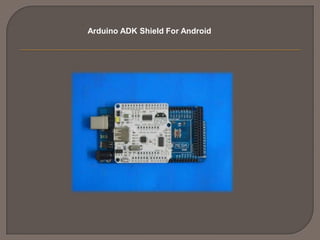
http://developer.android.com/The power of well documentationThe Arduino Store provides the Arduino Mega ADK that is based on the ATmega2560 and supports the ADK firmware.
DIY Drones provides an Arduino-compatible board geared towards RC (radio controlled) and UAV (unmanned aerial vehicle) enthusiasts.
Microchip provides a PIC based USB microcontroller board.
Modern Device provides an Arduino-compatible board that supports the ADK firmware.
RT Corp provides an Arduino-compatible board based on the Android ADK board design.
Seeed Studio provides an Arduino-compatible board that supports the ADK firmware.
SparkFun's IOIO board now has beta support for the ADK firmware.Big dealThe Accessory Development Kit  (ADK) is a Time to wave of creativity around interfacing external devices to phones and tablets. A phone or a tablet can become a personal data collection device, a general control, whatever you can imagine. By choosing Arduino (a physical computing platform based on an ATmega328 microcontroller) as the hardware platform for the ADK, Google has chosen to make Android hacking as easy as possible, as open as it can be. There are already more than 300,000 Arduinos in the world and a corresponding number of developers already up to speed and ready to hack, “Wave of creativity“. Competitor: The accessory API takes Android into territory that the iOS world is unlikely to explore. May Apple would not allow an iOS attachment with non Apple-branded device.
Objective:An Android based device should capable of running real time and real world t task, cause Linux in core. Incentive -  A smartphone is technological warehouse with sensors and connectivity, you name it …. A desk top, a laptop, a note book or a net book not even close to it according to its sensors and connectivity. An ant is mightier than elephant!
++ points:- •Robust embedded linuxkernel•Community  supportedopen source  native libraries•Well thought  partitioning between managed and unmanaged code•Well developed/documented APIs for HMI. Android Kernel

Android meets Arduino

  • 1.
  • 2.
    The Android 3.1platform (also backported to Android 2.3.4) introduces Android Open Accessory support, which allows external USB hardware to interact with an Android-powered device in a special "accessory" mode on this 11th May 2011. Google have released this functionality called the Android Open Accessory toolkit that will allow developers to use open source hardware interfaces to connect multiple input devices to almost any Android system. Intelligent selection ofArduino“the open-source electronics” leverage the widely available Arduino Shields to be used with Android. This shield enables developers to work with the Android controlled Arduino to create real world solutions incorporating sensors, displays, motors, and robotics that interface directly to Android mobiles and tablets.First time the open source Android OS of mobile phone can interact with the environment through the special purpose devices (Android IO). These open-source OS and the open-source electronic prototype platforms allowing us to create low cost useful devices for regular uses. The future research projects will be in that direction to make mobile phone accessories to interact with the real-world. This will help to “Bridging the Digital Divide” as the processing power of computer will be in the form of mobile phone for the underserved communities ( farmer can test his soil property using his mobile to add appropriate fertilizer, a fisherman can use sonar from his mobile, etc.). Our aspiration is to make the world more livable for everyone through the science and technology.
  • 3.
    http://developer.android.com/The power ofwell documentationThe Arduino Store provides the Arduino Mega ADK that is based on the ATmega2560 and supports the ADK firmware.
  • 4.
    DIY Drones providesan Arduino-compatible board geared towards RC (radio controlled) and UAV (unmanned aerial vehicle) enthusiasts.
  • 5.
    Microchip provides aPIC based USB microcontroller board.
  • 6.
    Modern Device providesan Arduino-compatible board that supports the ADK firmware.
  • 7.
    RT Corp providesan Arduino-compatible board based on the Android ADK board design.
  • 8.
    Seeed Studio providesan Arduino-compatible board that supports the ADK firmware.
  • 9.
    SparkFun's IOIO boardnow has beta support for the ADK firmware.Big dealThe Accessory Development Kit (ADK) is a Time to wave of creativity around interfacing external devices to phones and tablets. A phone or a tablet can become a personal data collection device, a general control, whatever you can imagine. By choosing Arduino (a physical computing platform based on an ATmega328 microcontroller) as the hardware platform for the ADK, Google has chosen to make Android hacking as easy as possible, as open as it can be. There are already more than 300,000 Arduinos in the world and a corresponding number of developers already up to speed and ready to hack, “Wave of creativity“. Competitor: The accessory API takes Android into territory that the iOS world is unlikely to explore. May Apple would not allow an iOS attachment with non Apple-branded device.
  • 11.
    Objective:An Android baseddevice should capable of running real time and real world t task, cause Linux in core. Incentive - A smartphone is technological warehouse with sensors and connectivity, you name it …. A desk top, a laptop, a note book or a net book not even close to it according to its sensors and connectivity. An ant is mightier than elephant!
  • 12.
    ++ points:- •Robustembedded linuxkernel•Community supportedopen source native libraries•Well thought partitioning between managed and unmanaged code•Well developed/documented APIs for HMI. Android Kernel