Brad Andrews, CISSP, CSSLP
North Texas Cyber Security Conference
2015
 Long time in the tech field
 Wide range of jobs – Defense, Online,
Banking, Airlines, Doc-Com, Medical, etc.
 20+ Years software development experience
 10+ in Information Security
 M.S. and B.S. in Computer Science from the
University of Illinois
 Active Certifications – CISSP, CSSLP, CISM
 Work for one of the largest providers of
pharmacy software and services in the
country
 Serve as Lead Faculty-Area Chair and for
Information Systems Security for the
University of Phoenix Online Campus
 Carry out independent reading and research
for my own company, RBA Communications
The views and opinions expressed in this
session are mine and mine alone. They do
not necessarily represent the opinions of my
employers or anyone associated with
anything!
 Part 1 – Threat Modeling Overview
 Part 2 – Applying STRIDE to a System
 Part 3 – Applying DREAD to a System
 A way to evaluate and rank risks
 Evaluate each risk / threat for:
Damage
Reproducibility
Exploitability
Affected Users
Discoverability
Details from
https://www.owasp.org/index.php/Threat_Risk_Modeling
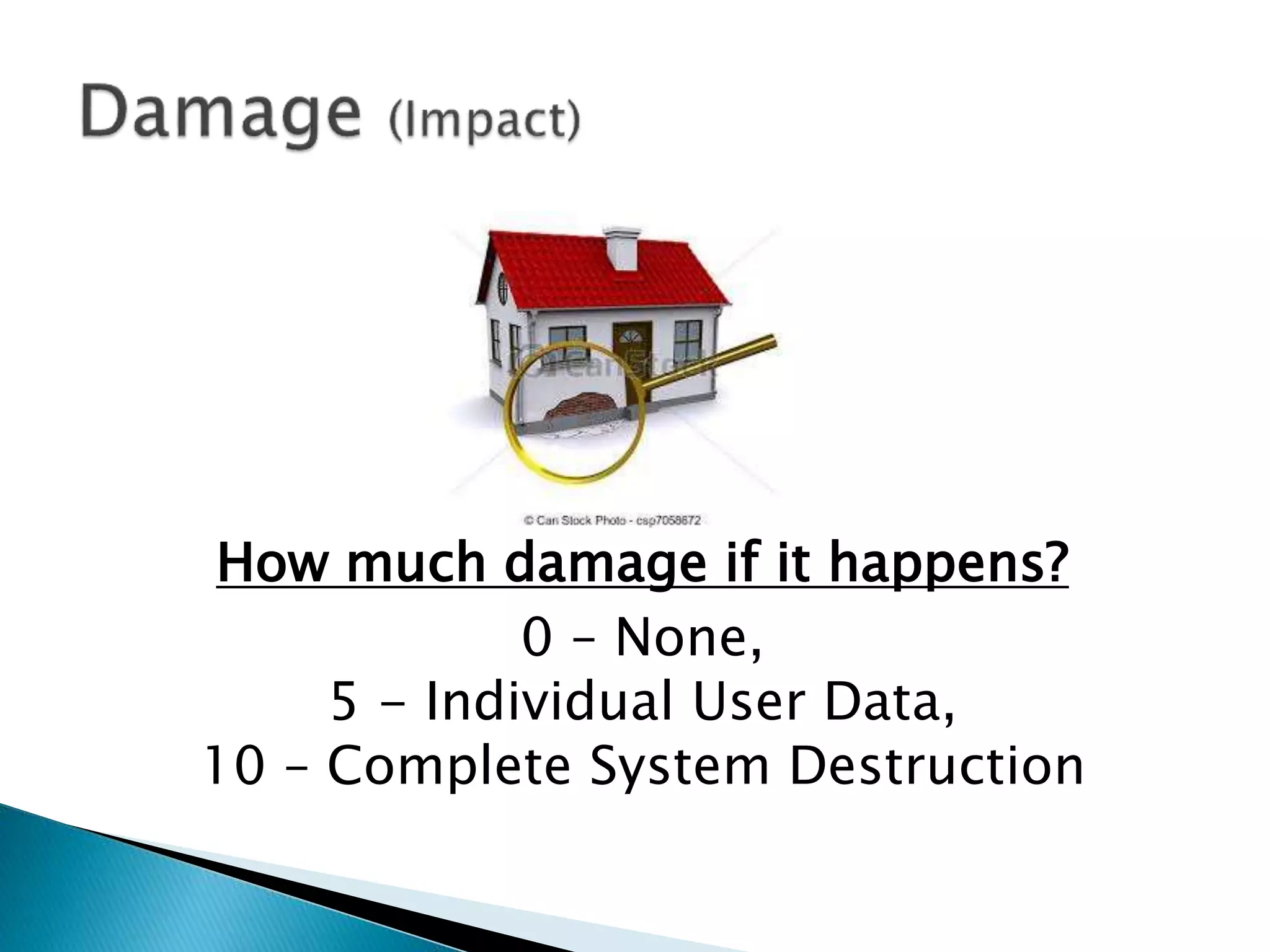
How much damage if it happens?
0 – None,
5 - Individual User Data,
10 – Complete System Destruction
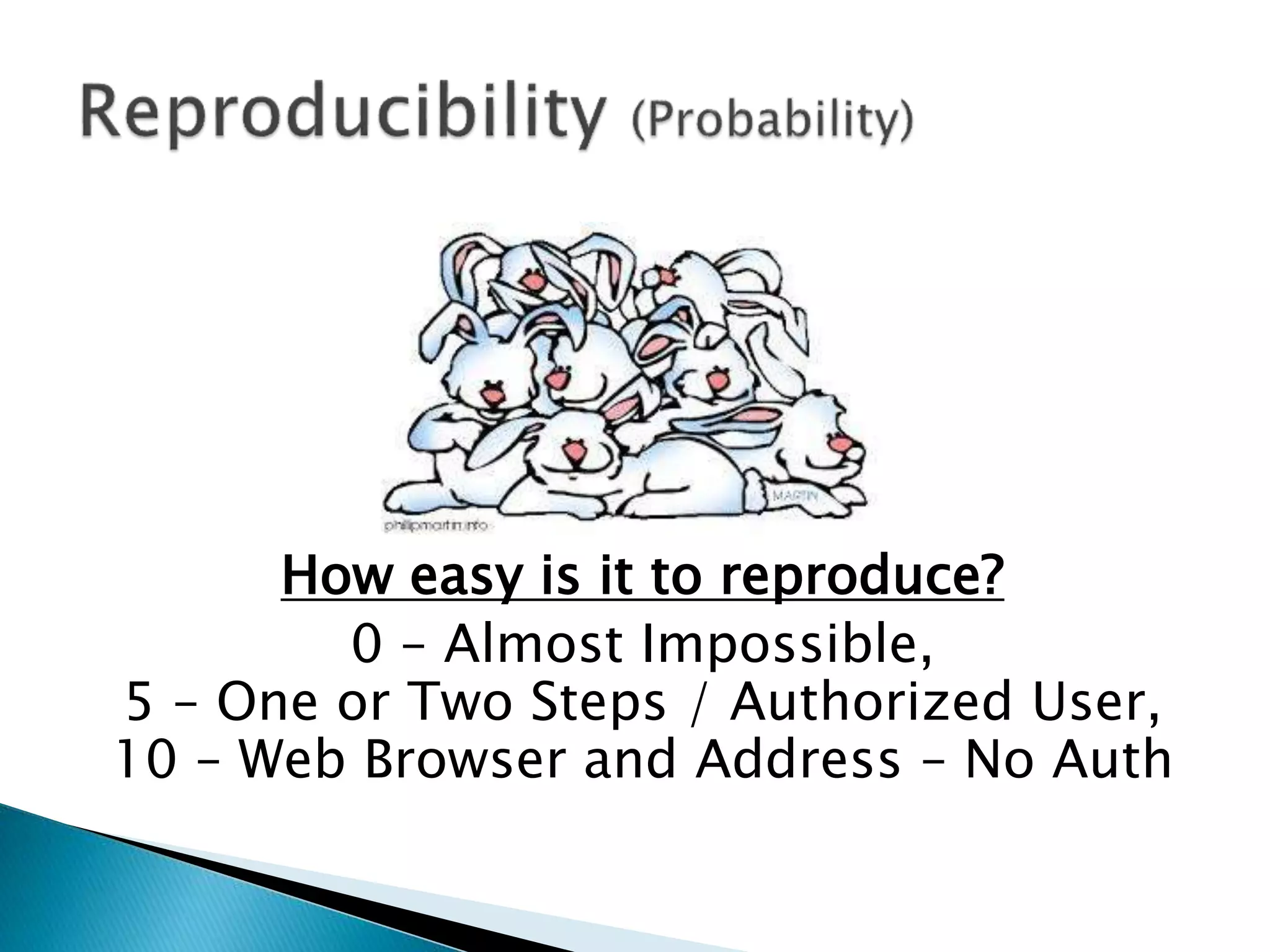
How easy is it to reproduce?
0 – Almost Impossible,
5 – One or Two Steps / Authorized User,
10 – Web Browser and Address – No Auth
What is need to exploit the threat?
0 – Advanced Knowledge and Skills,
5 – Malware Exists on Internet or Easy Exploit
10 – Only a Web Browser
How many users will be impacted?
0 – None,
5 – Some Users, But Not All
10 – All Users
How easy to discover?
0 – Advanced Knowledge and Skills,
5 – Easy to Guess or Find by Monitoring,
9 – Details of Fault Public
10 – Details in URL
 Be Involved
 Don’t Monopolize
 Work Together
 Pick values for the risks from the previous
sessions
NTXISSACSC2 - Threat Modeling Part 3 - DREAD by Brad Andrews

NTXISSACSC2 - Threat Modeling Part 3 - DREAD by Brad Andrews

  • 1.
    Brad Andrews, CISSP,CSSLP North Texas Cyber Security Conference 2015
  • 2.
     Long timein the tech field  Wide range of jobs – Defense, Online, Banking, Airlines, Doc-Com, Medical, etc.  20+ Years software development experience  10+ in Information Security  M.S. and B.S. in Computer Science from the University of Illinois  Active Certifications – CISSP, CSSLP, CISM
  • 3.
     Work forone of the largest providers of pharmacy software and services in the country  Serve as Lead Faculty-Area Chair and for Information Systems Security for the University of Phoenix Online Campus  Carry out independent reading and research for my own company, RBA Communications
  • 4.
    The views andopinions expressed in this session are mine and mine alone. They do not necessarily represent the opinions of my employers or anyone associated with anything!
  • 5.
     Part 1– Threat Modeling Overview  Part 2 – Applying STRIDE to a System  Part 3 – Applying DREAD to a System
  • 6.
     A wayto evaluate and rank risks  Evaluate each risk / threat for: Damage Reproducibility Exploitability Affected Users Discoverability Details from https://www.owasp.org/index.php/Threat_Risk_Modeling
  • 7.
    How much damageif it happens? 0 – None, 5 - Individual User Data, 10 – Complete System Destruction
  • 8.
    How easy isit to reproduce? 0 – Almost Impossible, 5 – One or Two Steps / Authorized User, 10 – Web Browser and Address – No Auth
  • 9.
    What is needto exploit the threat? 0 – Advanced Knowledge and Skills, 5 – Malware Exists on Internet or Easy Exploit 10 – Only a Web Browser
  • 10.
    How many userswill be impacted? 0 – None, 5 – Some Users, But Not All 10 – All Users
  • 11.
    How easy todiscover? 0 – Advanced Knowledge and Skills, 5 – Easy to Guess or Find by Monitoring, 9 – Details of Fault Public 10 – Details in URL
  • 12.
     Be Involved Don’t Monopolize  Work Together
  • 13.
     Pick valuesfor the risks from the previous sessions