What Do You Mean By Analytical 
Skills 
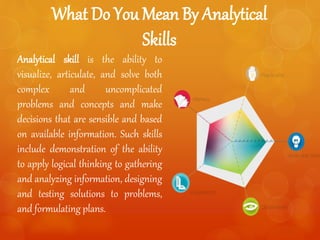
Analytical skill is the ability to 
visualize, articulate, and solve both 
complex and uncomplicated 
problems and concepts and make 
decisions that are sensible and based 
on available information. Such skills 
include demonstration of the ability 
to apply logical thinking to gathering 
and analyzing information, designing 
and testing solutions to problems, 
and formulating plans.
WHY ANALYZE INFORMATION ? 
 The economic decisions we make impact how we live and the future of 
companies and markets 
 The political decisions we make can change the course of legislation locally, 
regionally and globally 
 The business decisions we make can enhance the quality of our work and 
even open doors to new opportunities 
 The economic decisions we make impact how we live and the future of 
companies and markets
What Do You Really Do To Have 
Those Skills ? 
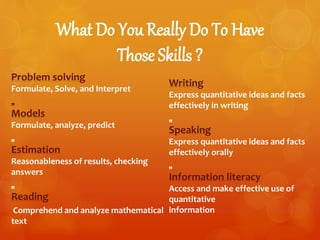
Problem solving 
Formulate, Solve, and Interpret 
„ 
Models 
Formulate, analyze, predict 
„ 
Estimation 
Reasonableness of results, checking 
answers 
„ 
Reading 
Comprehend and analyze mathematical 
text 
Writing 
Express quantitative ideas and facts 
effectively in writing 
„ 
Speaking 
Express quantitative ideas and facts 
effectively orally 
„ 
Information literacy 
Access and make effective use of 
quantitative 
information
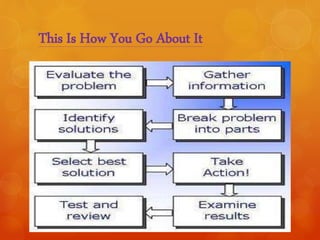
This Is How You Go About It
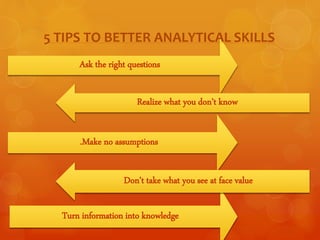
5 TIPS TO BETTER ANALYTICAL SKILLS 
Ask the right questions 
Realize what you don’t know 
.Make no assumptions 
Don’t take what you see at face value 
Turn information into knowledge
ASK THE RIGHT QUESTIONS 
What do we know already? 
What do we need to know? 
What are the expected results? 
How will we act on this once we 
have the data? 
How much time am I allotted on this 
research? 
When is the information needed?
REALIZE WHAT YOU DON’T KNOW 
Don’t be embarrassed to ask 
simple questions 
Start from the bottom to 
ensure you cover all the bases 
Allow your research to guide 
you into different directions
MAKE NO ASSUMPTIONS 
 Does the requestor really know what they want? 
 Are you sure that the information will be easily found? 
 Is it possible that someone may have gathered similar information? 
 Do you have enough time to complete the task? 
 If in doubt about the results or the format of the report…ask.
DON’T TAKE THINGS AT FACE VALUE 
Errors occur by both man and 
machine 
Cross-reference statistics and 
research when possible 
Look deeper to determine the 
real 
value in the information 
Validate sources to ensure their 
credibility, especially those online
Turn Information into Knowledge 
After collecting information, review and assemble it 
Create categories that help organize it 
Look for patterns of recurring data 
Add your perspective to what you’ve uncovered 
Summarize analysis to crystallize the findings 
Bring value to the information by keeping your requestor 
in mind
Thank you

Analytical skills

  • 2.
    What Do YouMean By Analytical Skills Analytical skill is the ability to visualize, articulate, and solve both complex and uncomplicated problems and concepts and make decisions that are sensible and based on available information. Such skills include demonstration of the ability to apply logical thinking to gathering and analyzing information, designing and testing solutions to problems, and formulating plans.
  • 3.
    WHY ANALYZE INFORMATION?  The economic decisions we make impact how we live and the future of companies and markets  The political decisions we make can change the course of legislation locally, regionally and globally  The business decisions we make can enhance the quality of our work and even open doors to new opportunities  The economic decisions we make impact how we live and the future of companies and markets
  • 4.
    What Do YouReally Do To Have Those Skills ? Problem solving Formulate, Solve, and Interpret „ Models Formulate, analyze, predict „ Estimation Reasonableness of results, checking answers „ Reading Comprehend and analyze mathematical text Writing Express quantitative ideas and facts effectively in writing „ Speaking Express quantitative ideas and facts effectively orally „ Information literacy Access and make effective use of quantitative information
  • 5.
    This Is HowYou Go About It
  • 6.
    5 TIPS TOBETTER ANALYTICAL SKILLS Ask the right questions Realize what you don’t know .Make no assumptions Don’t take what you see at face value Turn information into knowledge
  • 7.
    ASK THE RIGHTQUESTIONS What do we know already? What do we need to know? What are the expected results? How will we act on this once we have the data? How much time am I allotted on this research? When is the information needed?
  • 8.
    REALIZE WHAT YOUDON’T KNOW Don’t be embarrassed to ask simple questions Start from the bottom to ensure you cover all the bases Allow your research to guide you into different directions
  • 9.
    MAKE NO ASSUMPTIONS  Does the requestor really know what they want?  Are you sure that the information will be easily found?  Is it possible that someone may have gathered similar information?  Do you have enough time to complete the task?  If in doubt about the results or the format of the report…ask.
  • 10.
    DON’T TAKE THINGSAT FACE VALUE Errors occur by both man and machine Cross-reference statistics and research when possible Look deeper to determine the real value in the information Validate sources to ensure their credibility, especially those online
  • 11.
    Turn Information intoKnowledge After collecting information, review and assemble it Create categories that help organize it Look for patterns of recurring data Add your perspective to what you’ve uncovered Summarize analysis to crystallize the findings Bring value to the information by keeping your requestor in mind
  • 12.