Introduction to Research Methods


                  -By Ashay and Bhushan
Business Research Defined


  Business research is defined as the
  systematic and objective process of
  generating information for aid in
  making business decisions.
Business Research

• Research information is neither intuitive nor
  haphazardly gathered.
• Literally, research (re-search) -“search again”
• Business research must be objective oriented
• Detached and impersonal rather than biased
• It facilitates managerial decision process for
  all aspects of a business by providing
  information.
"The secret of success is to know something
 nobody else knows. "
                              Aristotle Onassis
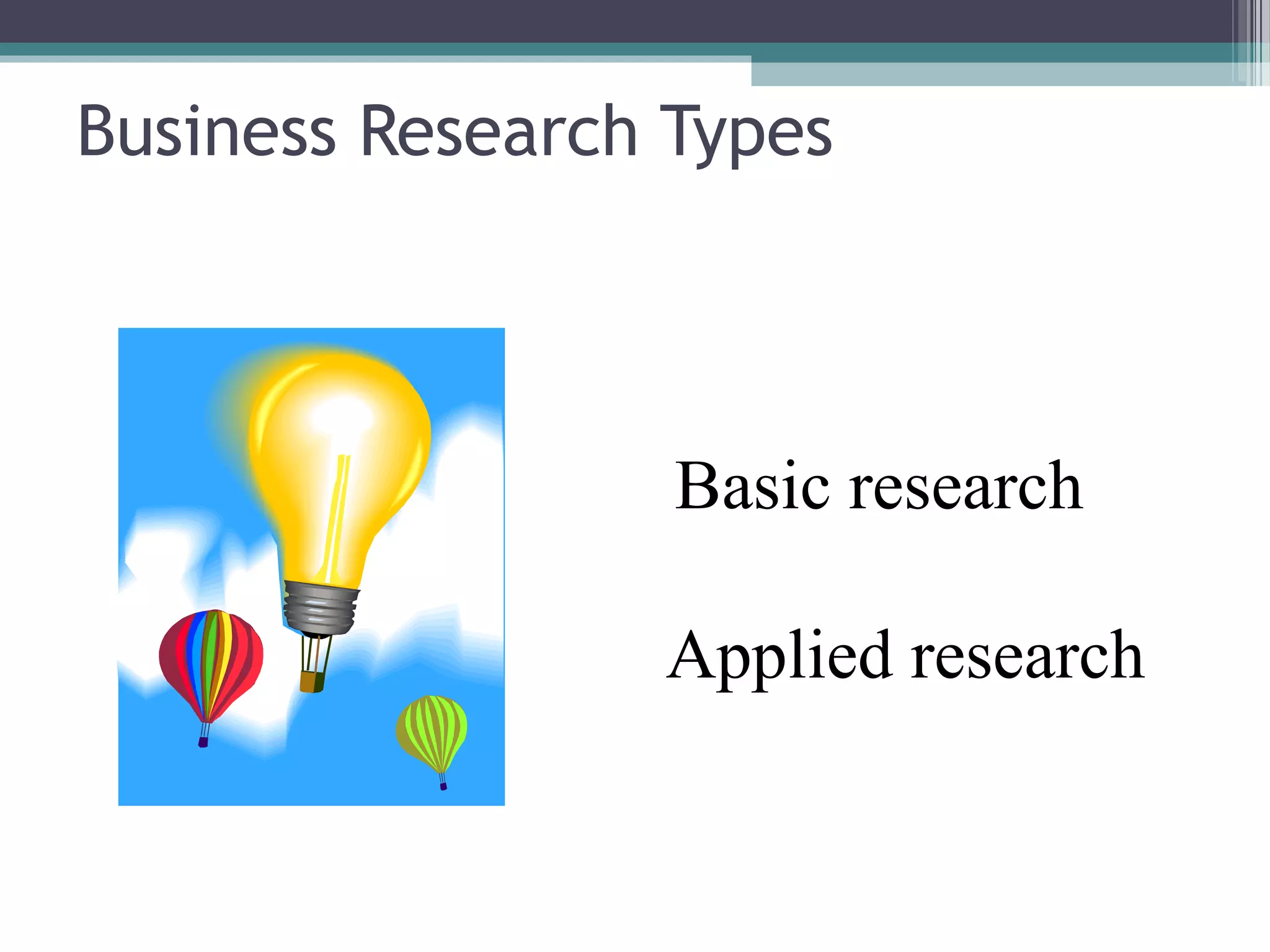
Business Research Types


                  Basic research

                 Applied research
Basic Research or Pure Research
 • Attempts to expand the limits/boundaries of
   knowledge.
 • Conducted to verify the acceptability of a given
   theory.
 • Not directly involved in the solution to a
   pragmatic problem.
 • Basic research findings generally cannot be
   immediately implemented.
Basic Research Examples

 • Are members of highly cohesive work groups
   more satisfied than members of less cohesive
   work groups?

 • How accepting are the people of a particular
   country toward a new product?
Applied Research

• Conducted when a decision must be made about
  a specific real-life problem.

• Research undertaken to answer questions about
  specific problems or to make decision about a
  particular course of action or policy.
Applied Research Examples

  An organization contemplating a paperless
  office and a networking system for the
  company’s personal computers may conduct
  research to learn the amount of time its
  employees spend at personal computers in an
  average week.
Applied Research Examples

• Should the ‘Mainland China Restaurant’ adds
  Italian pasta dinners to its menu?

• Applied research told ‘Mainland China’ it should
  not.
Scientific Method

* The procedures and techniques utilized by
basic and applied researchers do not differ
substantially.
* Both employ the scientific method to answer
the questions at hand.
Scientific Method

 The scientific method refers to techniques
 and procedures that help the researcher to
 know and understand business
 phenomena.
Scientific Method


 Scientific method is a systematic analysis and
 interpretation of empirical evidence (facts from
 observation or experimentation to confirm or
 disprove prior conceptions.)
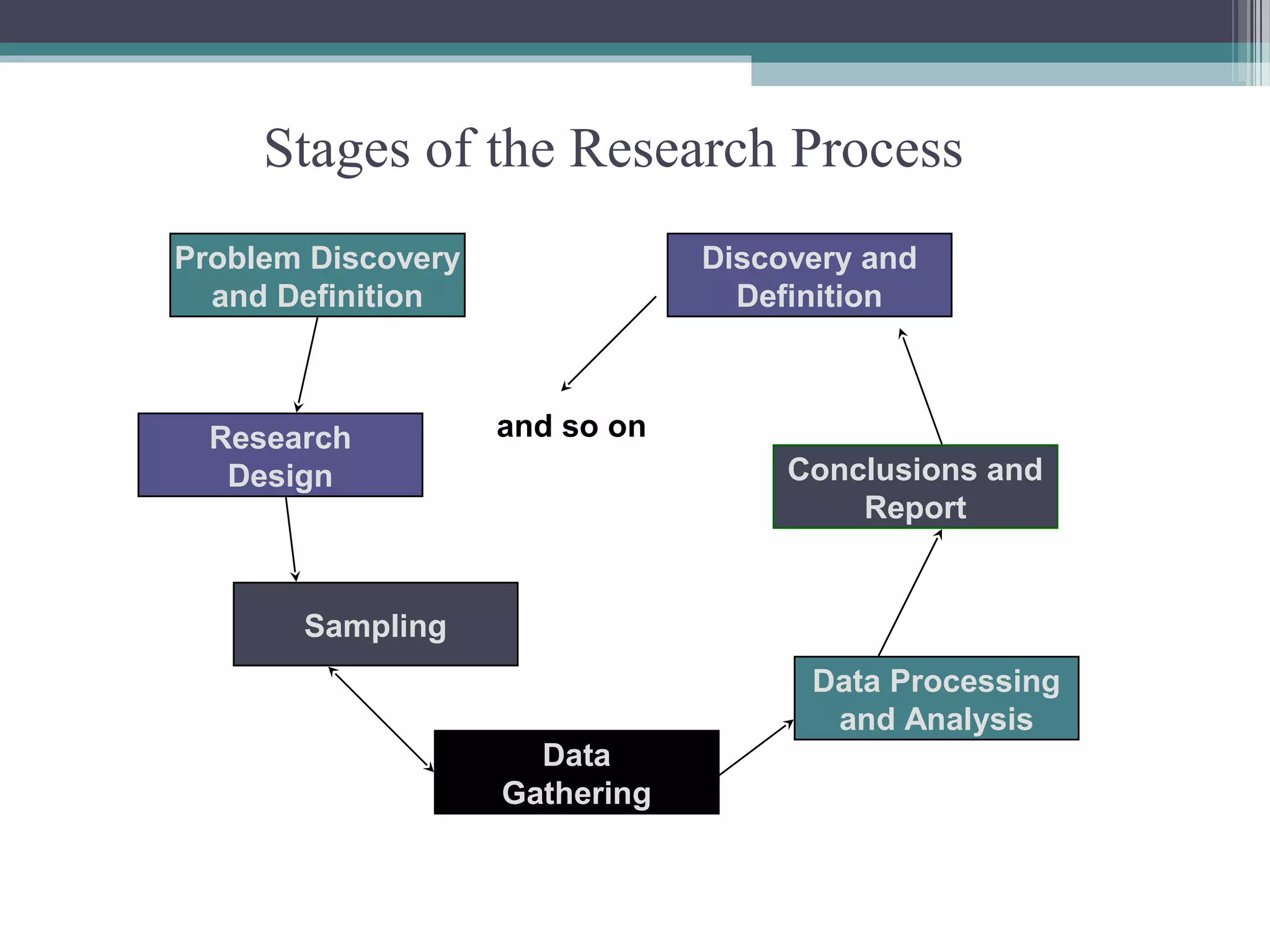
Stages of the Research Process
Problem Discovery               Discovery and
  and Definition                  Definition


  Research          and so on
   Design                            Conclusions and
                                         Report


       Sampling
                                      Data Processing
                                       and Analysis
                      Data
                    Gathering
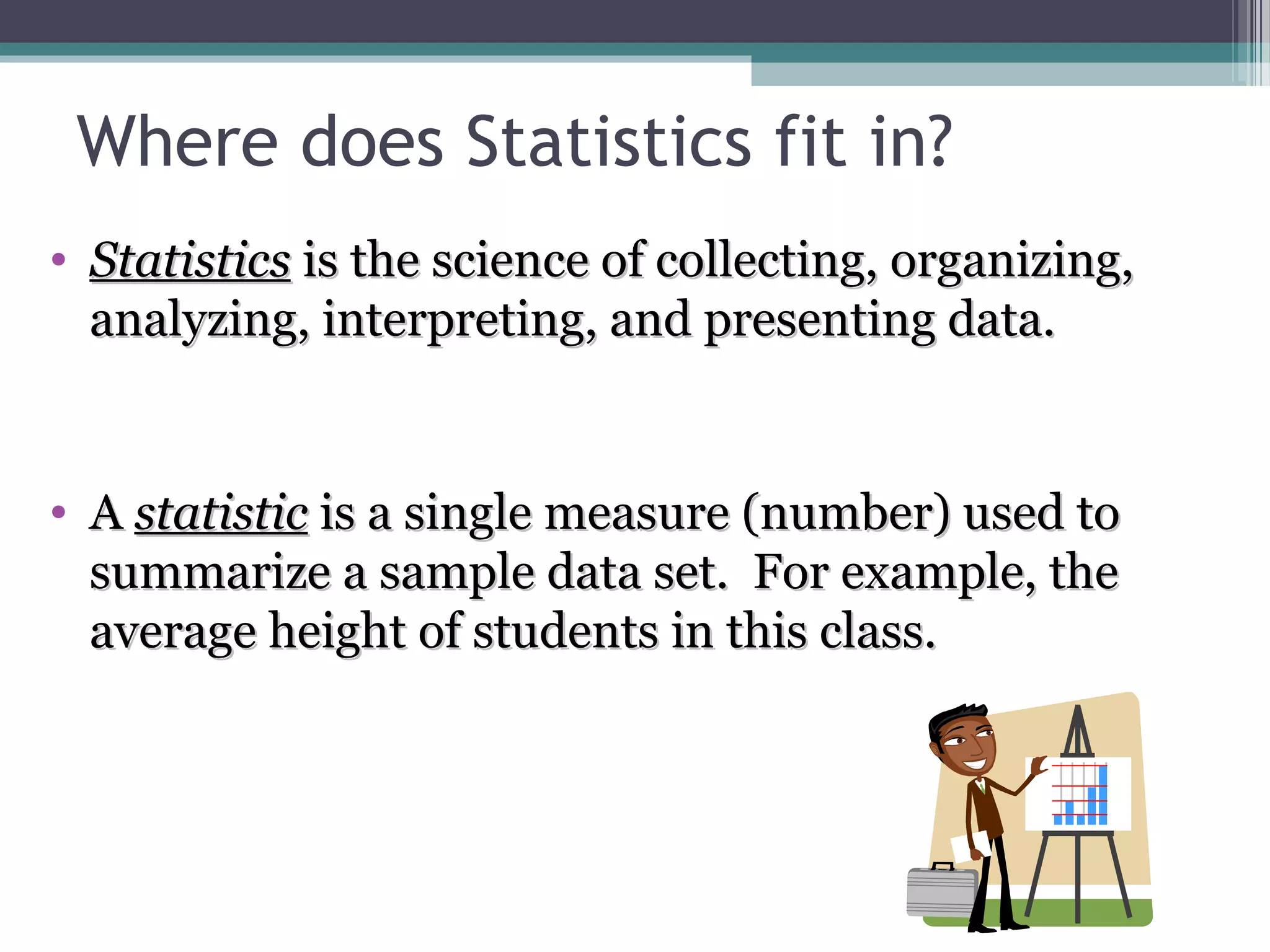
Where does Statistics fit in?
  • Statistics is the science of collecting, organizing,
    analyzing, interpreting, and presenting data.


  • A statistic is a single measure (number) used to
    summarize a sample data set. For example, the
    average height of students in this class.


McGraw-Hill/Irwin
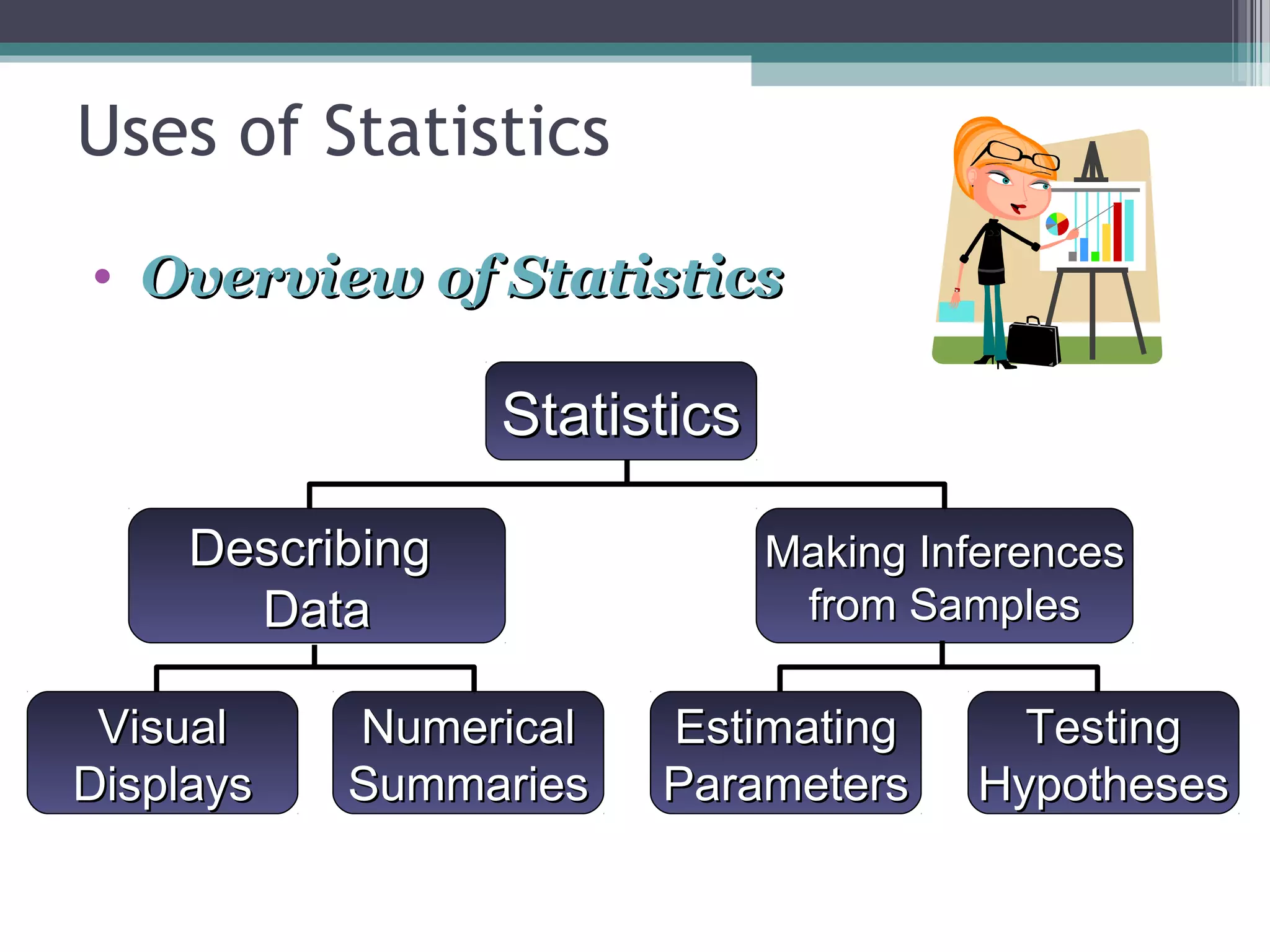
Uses of Statistics
• Overview of Statistics

                  Statistics

     Describing                Making Inferences
       Data                     from Samples

 Visual    Numerical    Estimating         Testing
Displays   Summaries    Parameters       Hypotheses
Research @ work
Four Stages of Decision-making Process

  •   Identifying problems and opportunities
  •   Diagnosis and assessment
  •   Selecting and implementing a course of action
  •   Evaluating the course of action
Research @ work
Evaluation Research
• Evaluation research is the formal, objective
  measurement and appraisal of the extent to
  which a given activity, project, or program has
  achieved its objectives.
Research @ work
Performance-Monitoring Research
 • Research that regularly provides feedback for
   evaluation and control of business activity
 • Indicates things are or are not going as planned
 • Research may be required to explain why
   something “went wrong”.
Determining When to Conduct
Business Research

 •   Time constraints
 •   Availability of data
 •   Nature of the decision
 •   Benefits versus costs
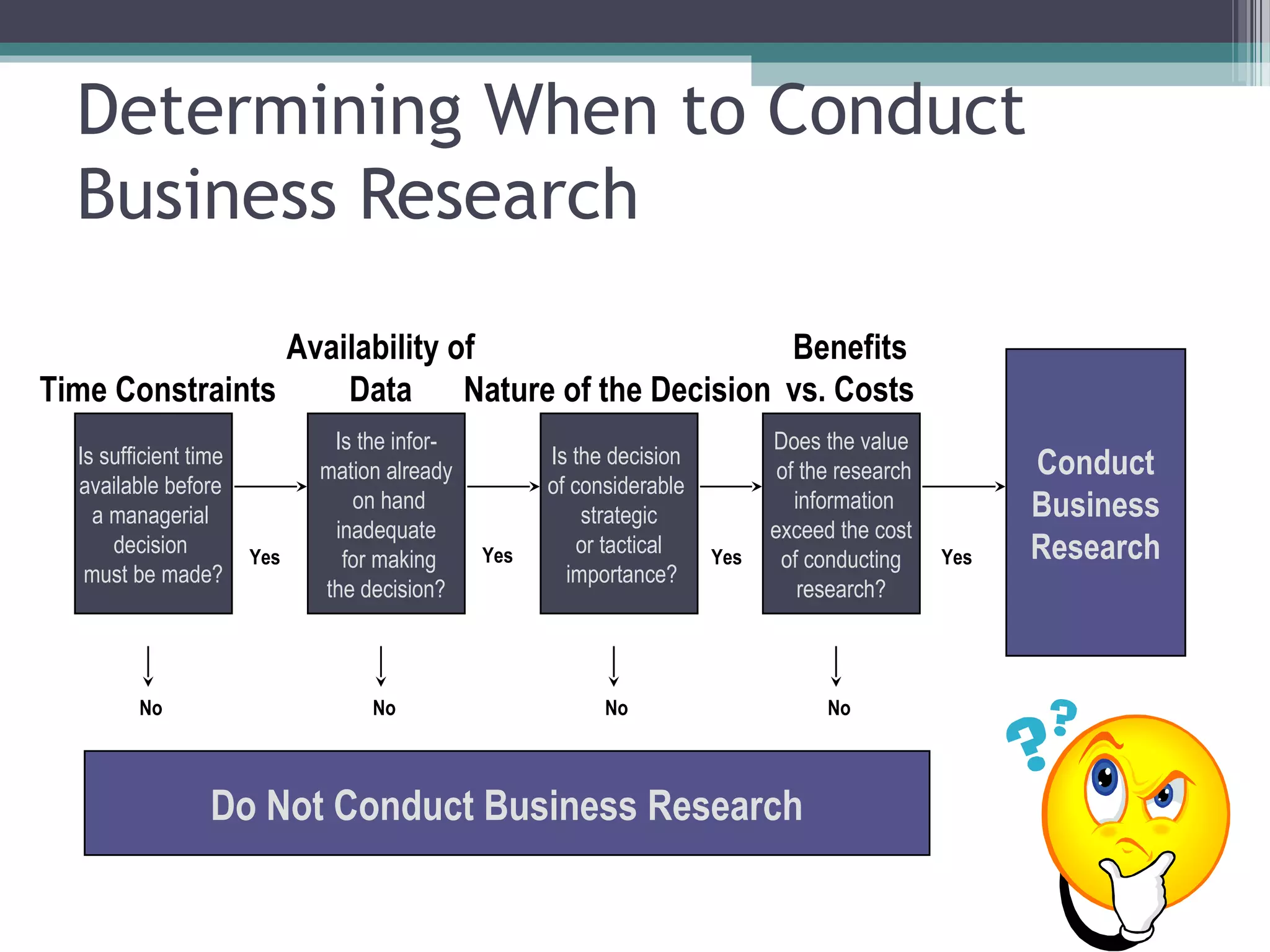
Determining When to Conduct
  Business Research
                 Availability of                 Benefits
Time Constraints     Data Nature of the Decision vs. Costs
                              Is the infor-                                 Does the value
  Is sufficient time
                             mation already
                                                    Is the decision
                                                                             of the research         Conduct
  available before                                  of considerable
    a managerial
                                on hand
                                                        strategic
                                                                               information           Business
                              inadequate                                    exceed the cost
      decision         Yes     for making     Yes       or tactical   Yes    of conducting     Yes   Research
   must be made?                                      importance?
                             the decision?                                      research?


         No                       No                      No                      No


                  Do Not Conduct Business Research
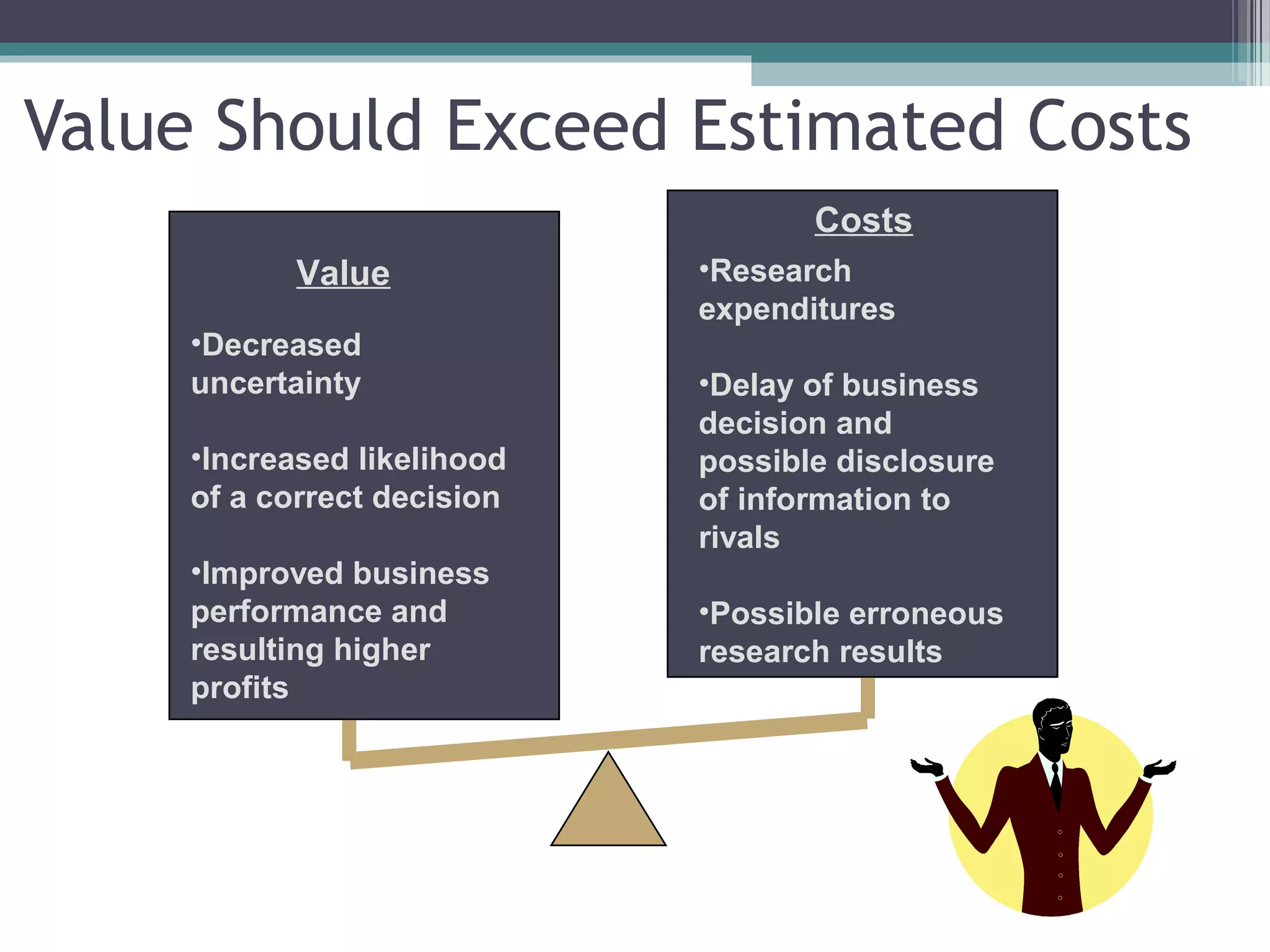
Value Should Exceed Estimated Costs
                                    Costs
            Value            •Research
                             expenditures
     •Decreased
     uncertainty             •Delay of business
                             decision and
     •Increased likelihood   possible disclosure
     of a correct decision   of information to
                             rivals
     •Improved business
     performance and         •Possible erroneous
     resulting higher        research results
     profits
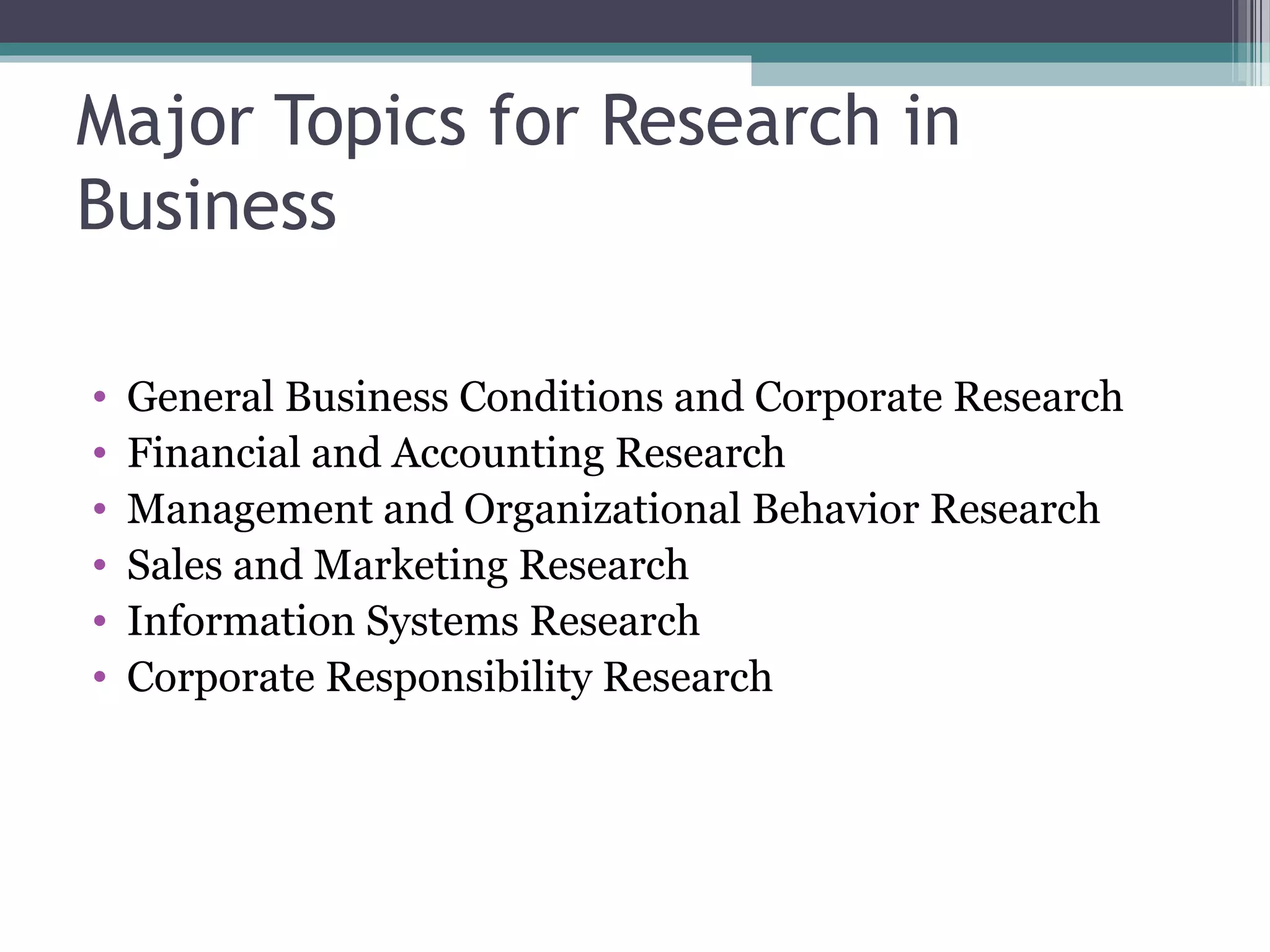
Major Topics for Research in
Business

•   General Business Conditions and Corporate Research
•   Financial and Accounting Research
•   Management and Organizational Behavior Research
•   Sales and Marketing Research
•   Information Systems Research
•   Corporate Responsibility Research
Business Research in the 21st
Century

 • Increased globalization
 • Growth of the Internet and other information
   technologies
Global Business Research


• General information about country - economic
  conditions and political climate
• Cultural and consumer factors
• Market and competitive conditions - demand
  estimation
Communicating Research Results:
 Presentation and Report Writing
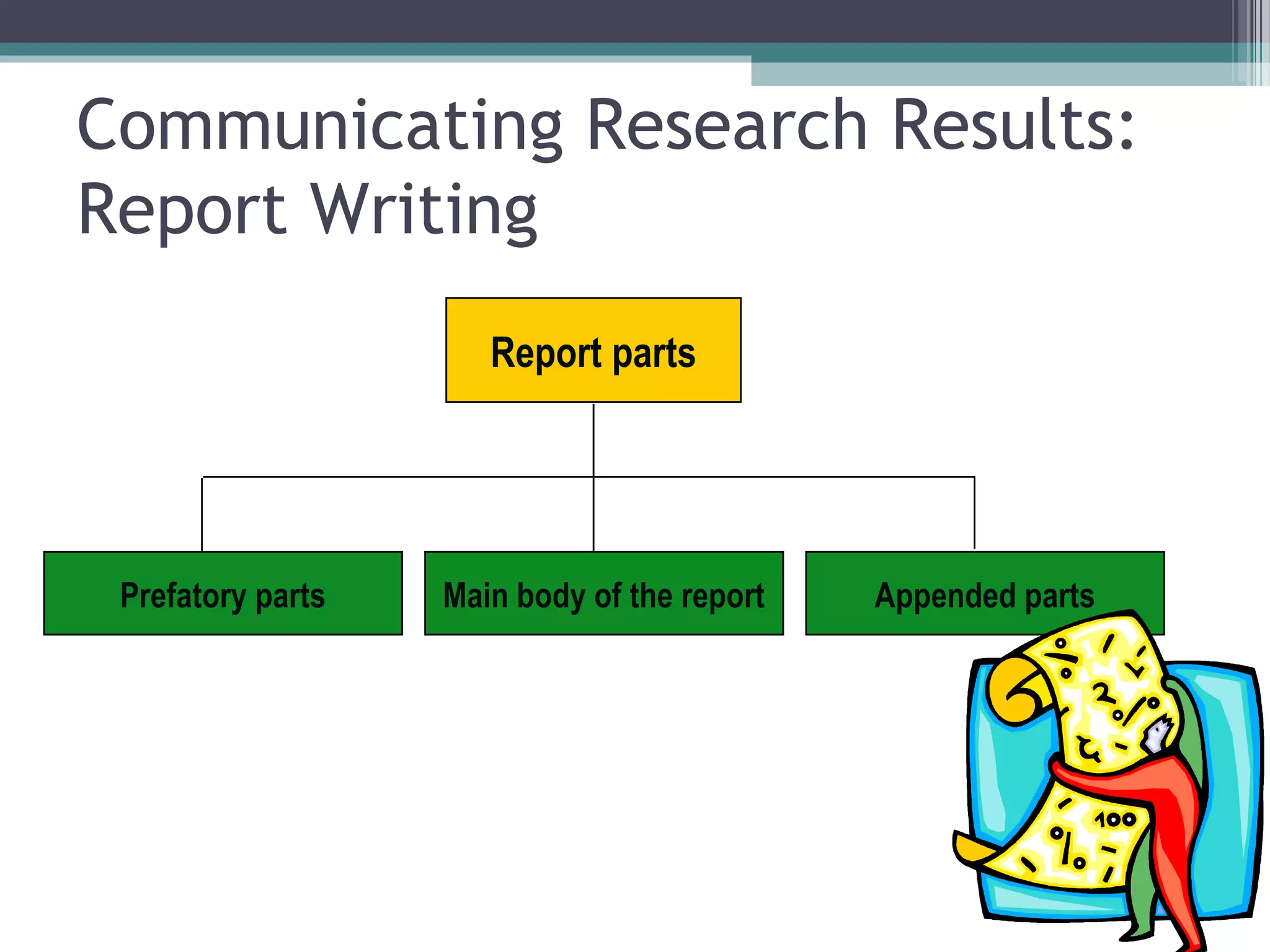
Communicating Research Results:
Report Writing
                      Report parts


 Prefatory parts   Main body of the report   Appended parts
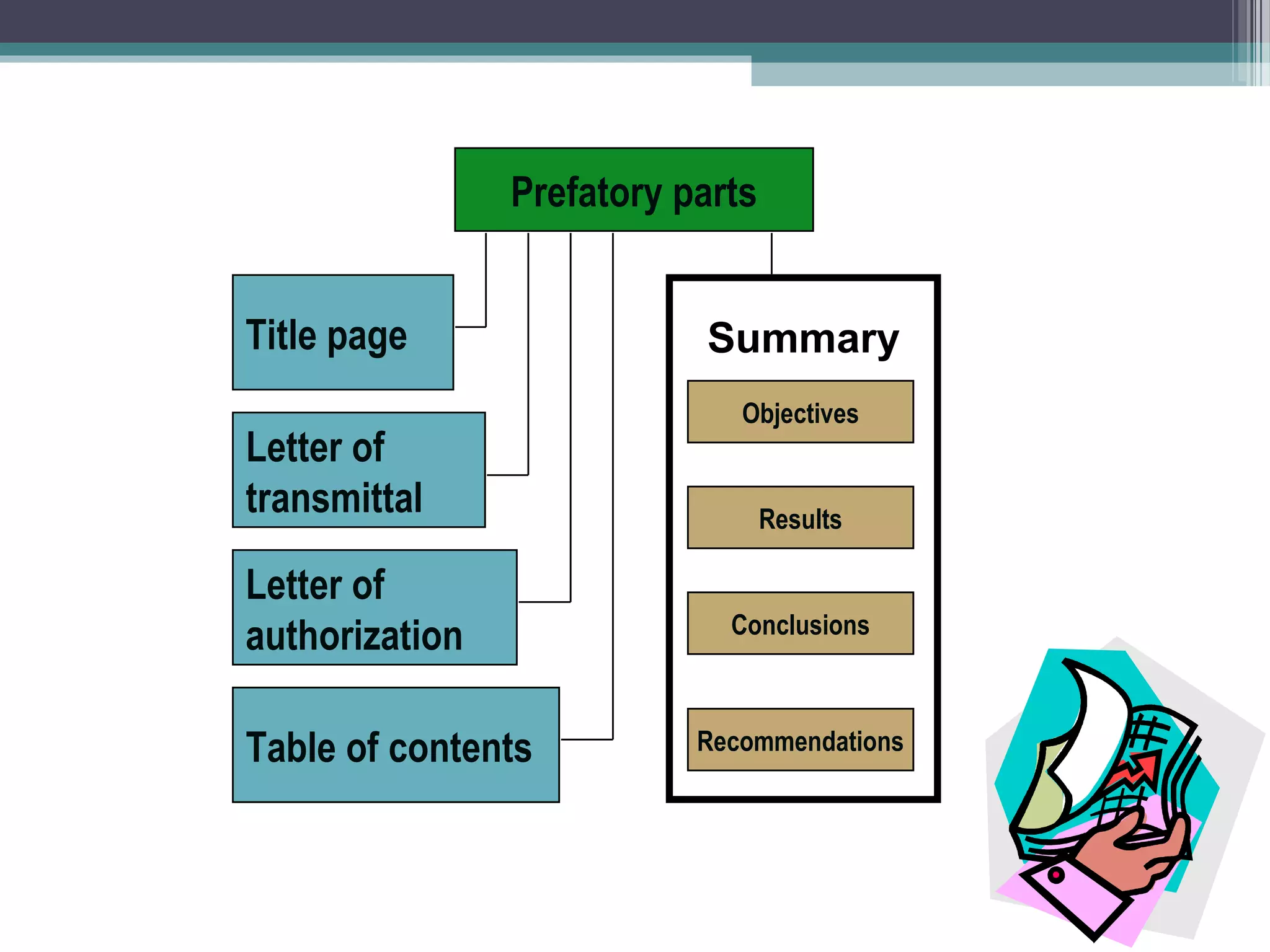
Prefatory parts


Title page                 Summary
                              Objectives
Letter of
transmittal                       Results

Letter of
                             Conclusions
authorization

Table of contents          Recommendations
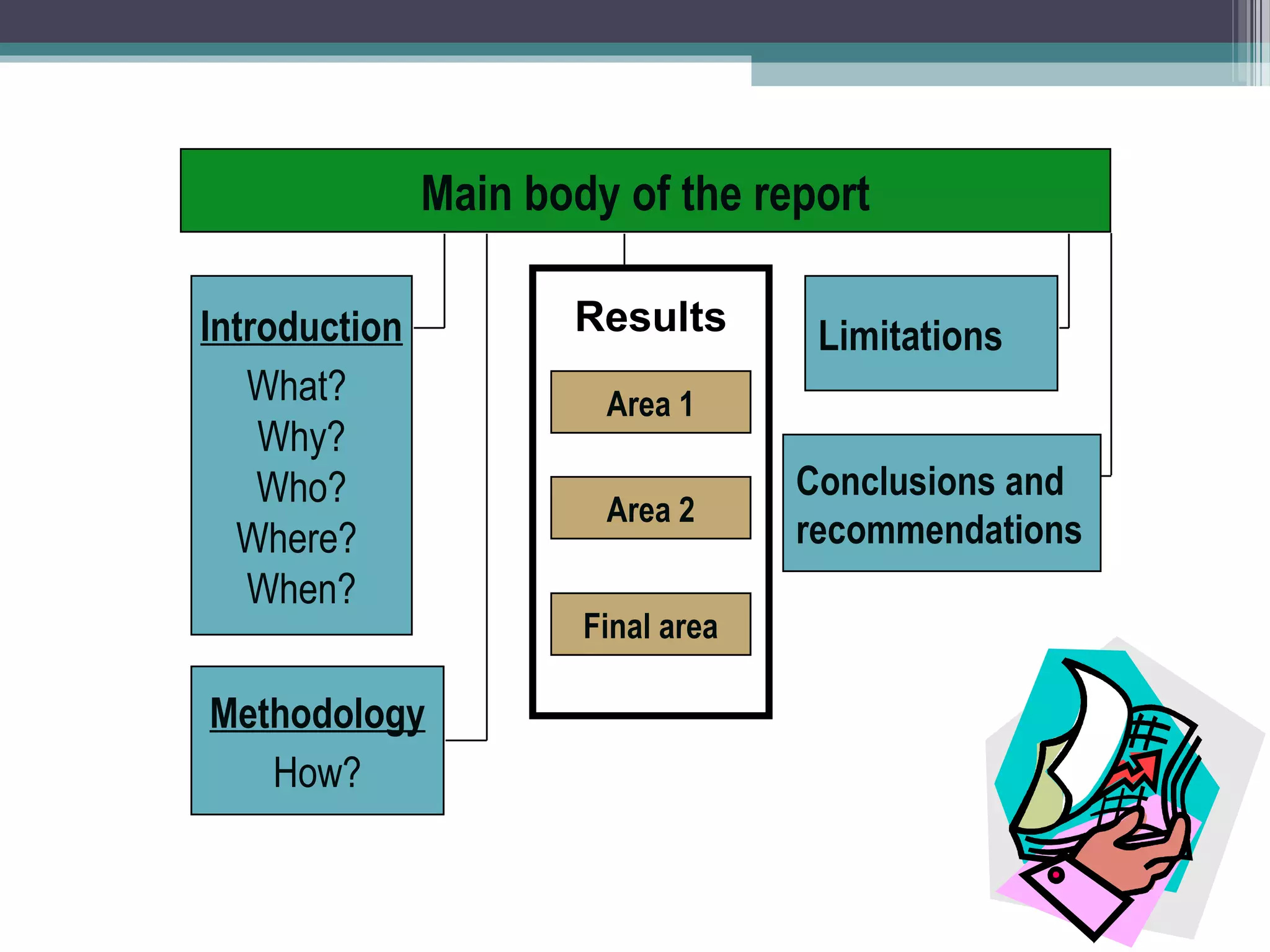
Main body of the report

Introduction          Results        Limitations
   What?                Area 1
    Why?
    Who?                            Conclusions and
                        Area 2
  Where?                            recommendations
   When?
                       Final area

Methodology
   How?
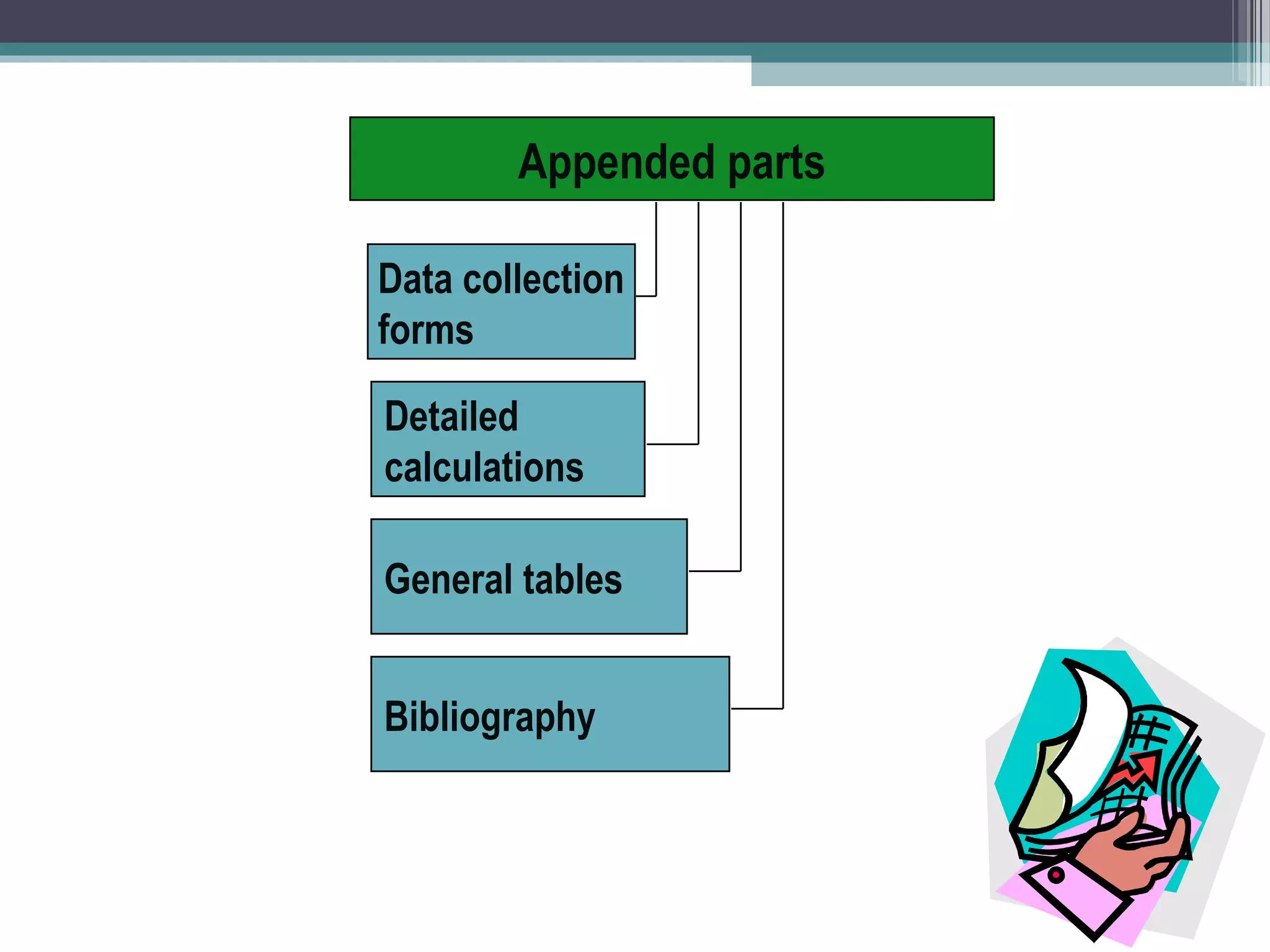
Appended parts

Data collection
forms

Detailed
calculations

General tables


Bibliography
Writing and Presenting Reports
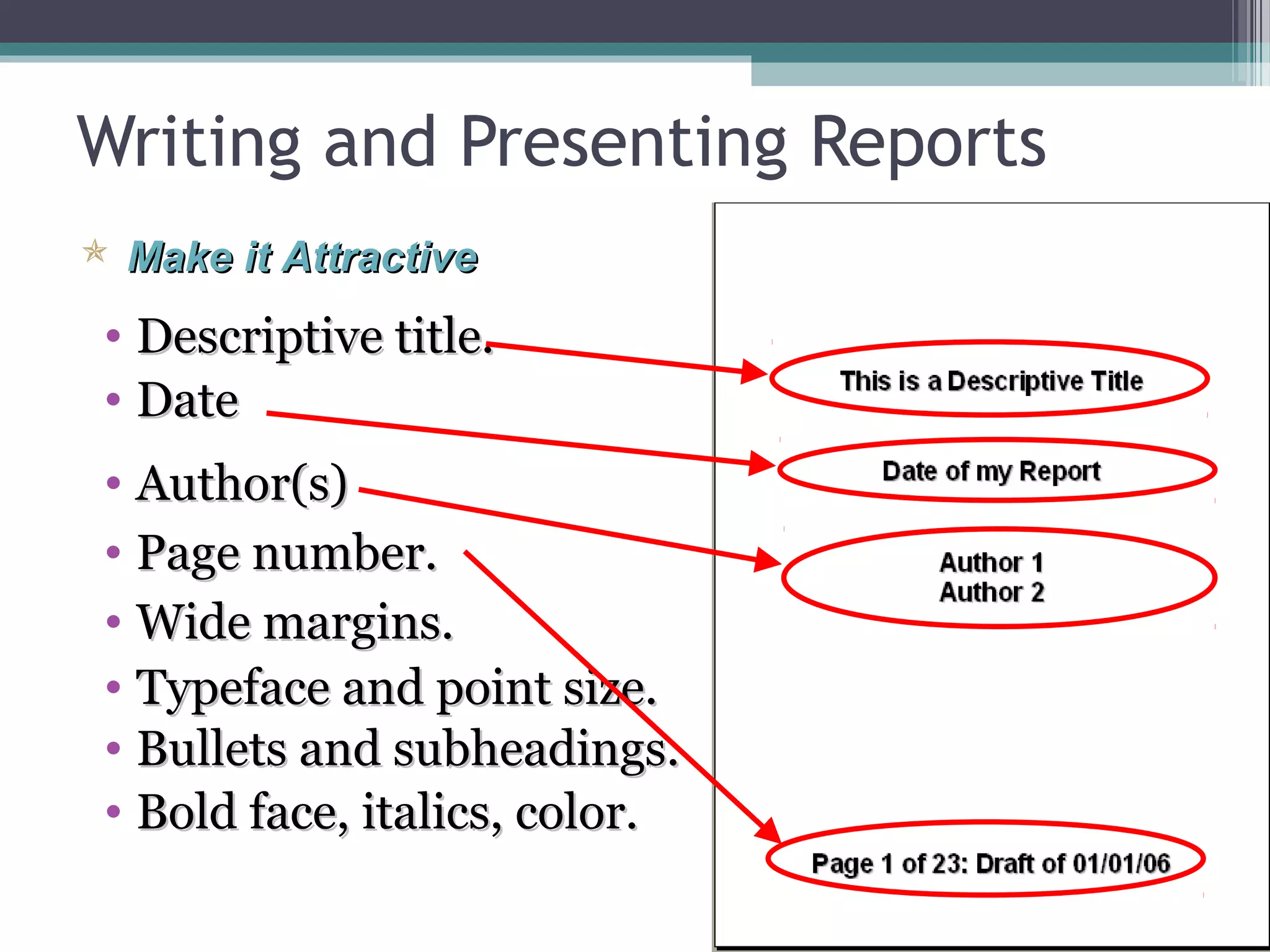
 Make it Attractive
 • Descriptive title.
 • Date
 • Author(s)
 • Page number.
 • Wide margins.
 • Typeface and point size.
 • Bullets and subheadings.
 • Bold face, italics, color.
Writing and Presenting Reports
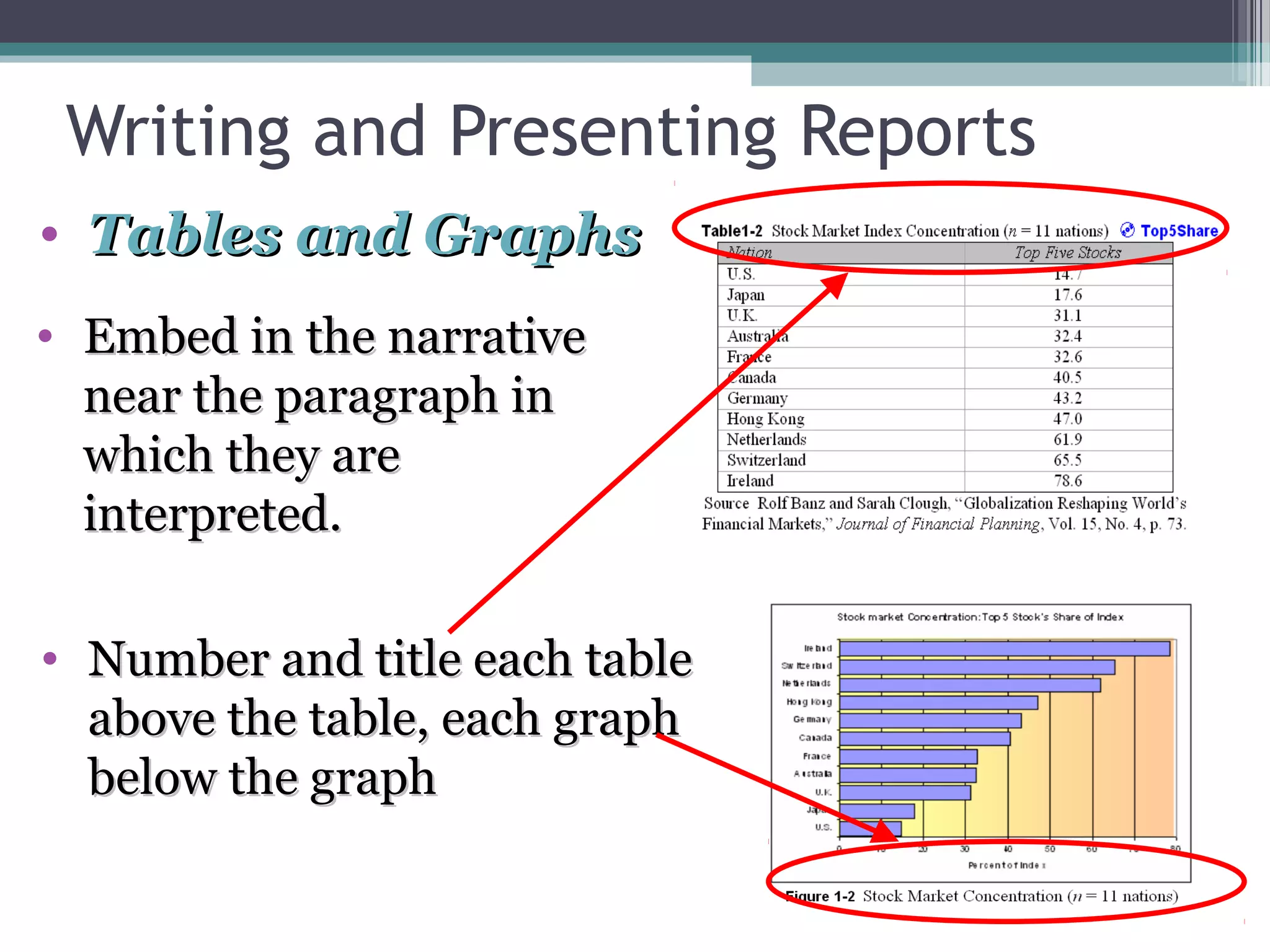
• Tables and Graphs
• Embed in the narrative
  near the paragraph in
  which they are
  interpreted.

• Number and title each table
  above the table, each graph
  below the graph
THANK YOU

Research methods

  • 1.
    Introduction to ResearchMethods -By Ashay and Bhushan
  • 2.
    Business Research Defined Business research is defined as the systematic and objective process of generating information for aid in making business decisions.
  • 3.
    Business Research • Researchinformation is neither intuitive nor haphazardly gathered. • Literally, research (re-search) -“search again” • Business research must be objective oriented • Detached and impersonal rather than biased • It facilitates managerial decision process for all aspects of a business by providing information.
  • 4.
    "The secret ofsuccess is to know something nobody else knows. " Aristotle Onassis
  • 5.
    Business Research Types Basic research Applied research
  • 6.
    Basic Research orPure Research • Attempts to expand the limits/boundaries of knowledge. • Conducted to verify the acceptability of a given theory. • Not directly involved in the solution to a pragmatic problem. • Basic research findings generally cannot be immediately implemented.
  • 7.
    Basic Research Examples • Are members of highly cohesive work groups more satisfied than members of less cohesive work groups? • How accepting are the people of a particular country toward a new product?
  • 8.
    Applied Research • Conductedwhen a decision must be made about a specific real-life problem. • Research undertaken to answer questions about specific problems or to make decision about a particular course of action or policy.
  • 9.
    Applied Research Examples An organization contemplating a paperless office and a networking system for the company’s personal computers may conduct research to learn the amount of time its employees spend at personal computers in an average week.
  • 10.
    Applied Research Examples •Should the ‘Mainland China Restaurant’ adds Italian pasta dinners to its menu? • Applied research told ‘Mainland China’ it should not.
  • 11.
    Scientific Method * Theprocedures and techniques utilized by basic and applied researchers do not differ substantially. * Both employ the scientific method to answer the questions at hand.
  • 12.
    Scientific Method Thescientific method refers to techniques and procedures that help the researcher to know and understand business phenomena.
  • 13.
    Scientific Method Scientificmethod is a systematic analysis and interpretation of empirical evidence (facts from observation or experimentation to confirm or disprove prior conceptions.)
  • 14.
    Stages of theResearch Process Problem Discovery Discovery and and Definition Definition Research and so on Design Conclusions and Report Sampling Data Processing and Analysis Data Gathering
  • 15.
    Where does Statisticsfit in? • Statistics is the science of collecting, organizing, analyzing, interpreting, and presenting data. • A statistic is a single measure (number) used to summarize a sample data set. For example, the average height of students in this class. McGraw-Hill/Irwin
  • 16.
    Uses of Statistics •Overview of Statistics Statistics Describing Making Inferences Data from Samples Visual Numerical Estimating Testing Displays Summaries Parameters Hypotheses
  • 17.
    Research @ work FourStages of Decision-making Process • Identifying problems and opportunities • Diagnosis and assessment • Selecting and implementing a course of action • Evaluating the course of action
  • 18.
    Research @ work EvaluationResearch • Evaluation research is the formal, objective measurement and appraisal of the extent to which a given activity, project, or program has achieved its objectives.
  • 19.
    Research @ work Performance-MonitoringResearch • Research that regularly provides feedback for evaluation and control of business activity • Indicates things are or are not going as planned • Research may be required to explain why something “went wrong”.
  • 20.
    Determining When toConduct Business Research • Time constraints • Availability of data • Nature of the decision • Benefits versus costs
  • 21.
    Determining When toConduct Business Research Availability of Benefits Time Constraints Data Nature of the Decision vs. Costs Is the infor- Does the value Is sufficient time mation already Is the decision of the research Conduct available before of considerable a managerial on hand strategic information Business inadequate exceed the cost decision Yes for making Yes or tactical Yes of conducting Yes Research must be made? importance? the decision? research? No No No No Do Not Conduct Business Research
  • 22.
    Value Should ExceedEstimated Costs Costs Value •Research expenditures •Decreased uncertainty •Delay of business decision and •Increased likelihood possible disclosure of a correct decision of information to rivals •Improved business performance and •Possible erroneous resulting higher research results profits
  • 23.
    Major Topics forResearch in Business • General Business Conditions and Corporate Research • Financial and Accounting Research • Management and Organizational Behavior Research • Sales and Marketing Research • Information Systems Research • Corporate Responsibility Research
  • 24.
    Business Research inthe 21st Century • Increased globalization • Growth of the Internet and other information technologies
  • 25.
    Global Business Research •General information about country - economic conditions and political climate • Cultural and consumer factors • Market and competitive conditions - demand estimation
  • 26.
    Communicating Research Results: Presentation and Report Writing
  • 27.
    Communicating Research Results: ReportWriting Report parts Prefatory parts Main body of the report Appended parts
  • 28.
    Prefatory parts Title page Summary Objectives Letter of transmittal Results Letter of Conclusions authorization Table of contents Recommendations
  • 29.
    Main body ofthe report Introduction Results Limitations What? Area 1 Why? Who? Conclusions and Area 2 Where? recommendations When? Final area Methodology How?
  • 30.
  • 31.
    Writing and PresentingReports  Make it Attractive • Descriptive title. • Date • Author(s) • Page number. • Wide margins. • Typeface and point size. • Bullets and subheadings. • Bold face, italics, color.
  • 32.
    Writing and PresentingReports • Tables and Graphs • Embed in the narrative near the paragraph in which they are interpreted. • Number and title each table above the table, each graph below the graph
  • 33.