ANALYSIS OF
CONDENSER
OPERATION
PRESENTED BY : SUMIT WADEWALE
: MECHANICAL ENGINEERING
: ROLL NO : 629
SUB: APPLIED THERMODYNAMICS -I
BAJAJ INSTITUTE OF TECHNOLOGY, WARDHA
VACUUM CREATION
 When steam condenses in a closed vessel, the
vapour phase of working substance (water)
changes to liquid phase, and thus its specific
volume reduces to more than one thousand
times. Due to change in specific volume, the
absolute pressure in the condenser falls below
the atmospheric pressure and high vacuum is
created.
This lower pressure in the condenser permits maximum
expansion of steam in the turbine, and more work is
developed. The minimum pressure that can be attained
depends on the temperature of condensate and air present
in the condenser.
The term vacuum means the pressures below the
atmospheric pressure. The vacuum in the condenser is
generally measured in mm of mercury (Hg). The vacuum is
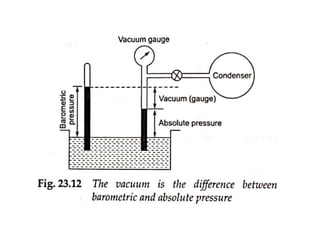
the negative gauge pressure and is equal to the differences
of barometric pressure and absolute pressure in the
condenser.
The absolute pressure in the condenser
= atmospheric pressure – vacuum gauge pressure
= barometer reading – vacuum gauge reading
The vacuum is usually referred to a standard atmospheric
pressure as 101.325 kPa or 760 mm of Hg, i.e.
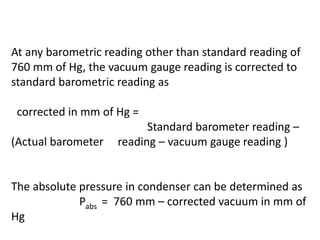
At any barometric reading other than standard reading of
760 mm of Hg, the vacuum gauge reading is corrected to
standard barometric reading as
corrected in mm of Hg =
Standard barometer reading –
(Actual barometer reading – vacuum gauge reading )
The absolute pressure in condenser can be determined as
Pabs = 760 mm – corrected vacuum in mm of
Hg
DALTONS LAW OF PARTIAL
PRESSURE
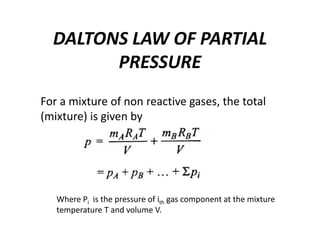
For a mixture of non reactive gases, the total
(mixture) is given by
Where Pi is the pressure of ith gas component at the mixture
temperature T and volume V.
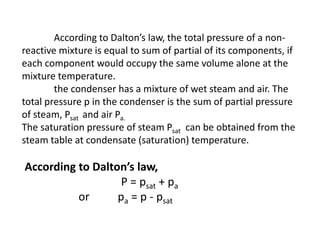
According to Dalton’s law, the total pressure of a non-
reactive mixture is equal to sum of partial of its components, if
each component would occupy the same volume alone at the
mixture temperature.
the condenser has a mixture of wet steam and air. The
total pressure p in the condenser is the sum of partial pressure
of steam, Psat and air Pa.
The saturation pressure of steam Psat can be obtained from the
steam table at condensate (saturation) temperature.
According to Dalton’s law,
P = psat + pa
or pa = p - psat
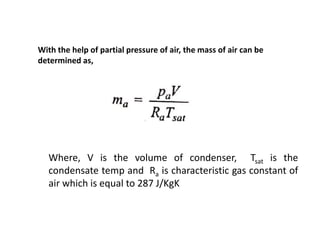
With the help of partial pressure of air, the mass of air can be
determined as,
Where, V is the volume of condenser, Tsat is the
condensate temp and Ra is characteristic gas constant of
air which is equal to 287 J/KgK
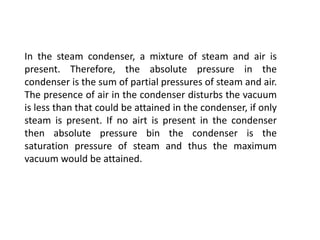
In the steam condenser, a mixture of steam and air is
present. Therefore, the absolute pressure in the
condenser is the sum of partial pressures of steam and air.
The presence of air in the condenser disturbs the vacuum
is less than that could be attained in the condenser, if only
steam is present. If no airt is present in the condenser
then absolute pressure bin the condenser is the
saturation pressure of steam and thus the maximum
vacuum would be attained.
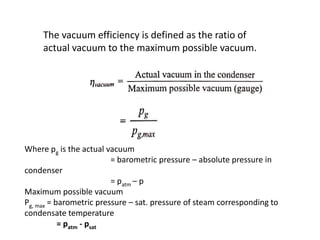
Where pg is the actual vacuum
= barometric pressure – absolute pressure in
condenser
= patm – p
Maximum possible vacuum
Pg, max = barometric pressure – sat. pressure of steam corresponding to
condensate temperature
= patm - psat
The vacuum efficiency is defined as the ratio of
actual vacuum to the maximum possible vacuum.
SOURCES OF AIR IN THE
CONDENSER
All types of condensers require air extraction pump to remove the air present in the
condenser. The main sources of air present in the condenser are the following:
 the ambient air leaks to the condenser chamber at the joints and glands
which are internally under pressure lower than that of ambient. It can be
reduced by taking utmost care while designing and making vacuum joints.
 another source of air is dissolved air with feed water. The dissolved air in
the feed water enters into the boiler and it travels with steam into the
condenser. Its quantity depends upon the quality of feed water.
 In case of jet condenser, some air comes in with the injected water in which
it is dissolved.
EFFECT OF AIR LEAKAGE INTO
CONDENSER
The presence of air in the condenser is a far serious concern. It affects
the performance of the condenser to a great extent, thereby, the
performance of steam power plant. The presence of air into the
condenser puts the following effects:
 the presence of air lowers the vacuum in the condenser.
Thus the back pressure of plant increases, and consequently,
the work output of the turbine reduces.
the presence of air also lowers the partial pressure of steam
and hence lower saturation temperature. The steam with lower
saturation temperature has higher latent heat. A large quantity
of cooling water is required to get the desired result in the
condenser.
 Air forms the film adjacent to the tube surface in the
condenser. Air has very poor thermal conductivity. Hence, the
rate of heat transfer from vapour to cooling medium is reduced.
The presence of air in the condenser corrodes to the metal
surfaces. Therefore, the life of condenser is reduced.
THANK YOU

ANALYSIS OF CONDENSER OPERATION

  • 1.
    ANALYSIS OF CONDENSER OPERATION PRESENTED BY: SUMIT WADEWALE : MECHANICAL ENGINEERING : ROLL NO : 629 SUB: APPLIED THERMODYNAMICS -I BAJAJ INSTITUTE OF TECHNOLOGY, WARDHA
  • 2.
    VACUUM CREATION  Whensteam condenses in a closed vessel, the vapour phase of working substance (water) changes to liquid phase, and thus its specific volume reduces to more than one thousand times. Due to change in specific volume, the absolute pressure in the condenser falls below the atmospheric pressure and high vacuum is created.
  • 3.
    This lower pressurein the condenser permits maximum expansion of steam in the turbine, and more work is developed. The minimum pressure that can be attained depends on the temperature of condensate and air present in the condenser. The term vacuum means the pressures below the atmospheric pressure. The vacuum in the condenser is generally measured in mm of mercury (Hg). The vacuum is the negative gauge pressure and is equal to the differences of barometric pressure and absolute pressure in the condenser.
  • 5.
    The absolute pressurein the condenser = atmospheric pressure – vacuum gauge pressure = barometer reading – vacuum gauge reading The vacuum is usually referred to a standard atmospheric pressure as 101.325 kPa or 760 mm of Hg, i.e.
  • 6.
    At any barometricreading other than standard reading of 760 mm of Hg, the vacuum gauge reading is corrected to standard barometric reading as corrected in mm of Hg = Standard barometer reading – (Actual barometer reading – vacuum gauge reading ) The absolute pressure in condenser can be determined as Pabs = 760 mm – corrected vacuum in mm of Hg
  • 7.
    DALTONS LAW OFPARTIAL PRESSURE For a mixture of non reactive gases, the total (mixture) is given by Where Pi is the pressure of ith gas component at the mixture temperature T and volume V.
  • 8.
    According to Dalton’slaw, the total pressure of a non- reactive mixture is equal to sum of partial of its components, if each component would occupy the same volume alone at the mixture temperature. the condenser has a mixture of wet steam and air. The total pressure p in the condenser is the sum of partial pressure of steam, Psat and air Pa. The saturation pressure of steam Psat can be obtained from the steam table at condensate (saturation) temperature. According to Dalton’s law, P = psat + pa or pa = p - psat
  • 9.
    With the helpof partial pressure of air, the mass of air can be determined as, Where, V is the volume of condenser, Tsat is the condensate temp and Ra is characteristic gas constant of air which is equal to 287 J/KgK
  • 10.
    In the steamcondenser, a mixture of steam and air is present. Therefore, the absolute pressure in the condenser is the sum of partial pressures of steam and air. The presence of air in the condenser disturbs the vacuum is less than that could be attained in the condenser, if only steam is present. If no airt is present in the condenser then absolute pressure bin the condenser is the saturation pressure of steam and thus the maximum vacuum would be attained.
  • 11.
    Where pg isthe actual vacuum = barometric pressure – absolute pressure in condenser = patm – p Maximum possible vacuum Pg, max = barometric pressure – sat. pressure of steam corresponding to condensate temperature = patm - psat The vacuum efficiency is defined as the ratio of actual vacuum to the maximum possible vacuum.
  • 12.
    SOURCES OF AIRIN THE CONDENSER All types of condensers require air extraction pump to remove the air present in the condenser. The main sources of air present in the condenser are the following:  the ambient air leaks to the condenser chamber at the joints and glands which are internally under pressure lower than that of ambient. It can be reduced by taking utmost care while designing and making vacuum joints.  another source of air is dissolved air with feed water. The dissolved air in the feed water enters into the boiler and it travels with steam into the condenser. Its quantity depends upon the quality of feed water.  In case of jet condenser, some air comes in with the injected water in which it is dissolved.
  • 13.
    EFFECT OF AIRLEAKAGE INTO CONDENSER The presence of air in the condenser is a far serious concern. It affects the performance of the condenser to a great extent, thereby, the performance of steam power plant. The presence of air into the condenser puts the following effects:  the presence of air lowers the vacuum in the condenser. Thus the back pressure of plant increases, and consequently, the work output of the turbine reduces.
  • 14.
    the presence ofair also lowers the partial pressure of steam and hence lower saturation temperature. The steam with lower saturation temperature has higher latent heat. A large quantity of cooling water is required to get the desired result in the condenser.  Air forms the film adjacent to the tube surface in the condenser. Air has very poor thermal conductivity. Hence, the rate of heat transfer from vapour to cooling medium is reduced. The presence of air in the condenser corrodes to the metal surfaces. Therefore, the life of condenser is reduced.
  • 15.