The Visual Image

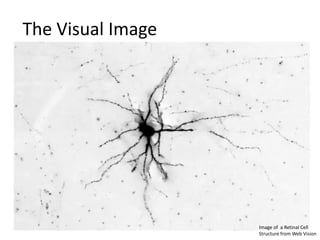
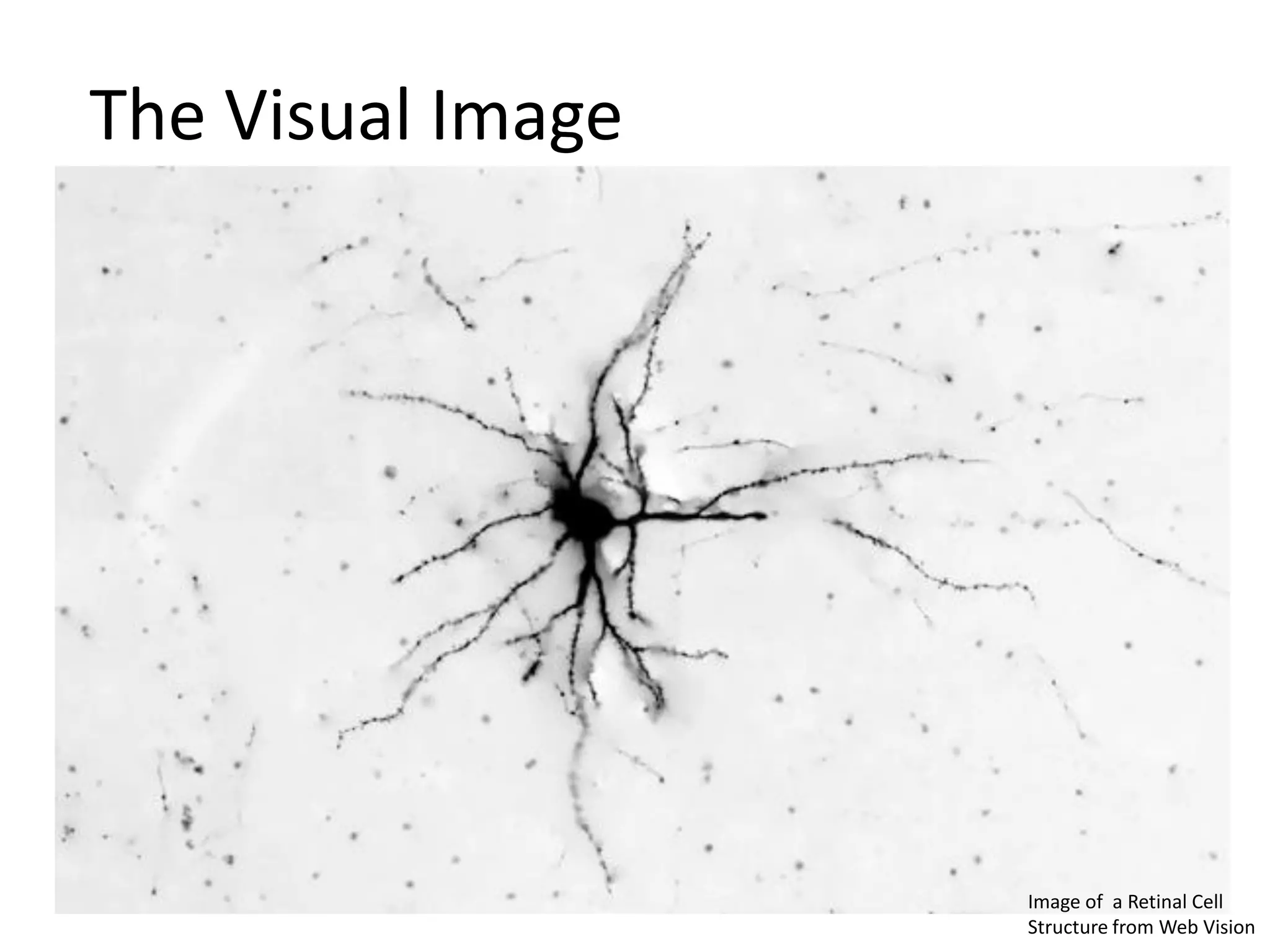
Image of a Retinal Cell
Structure from Web Vision
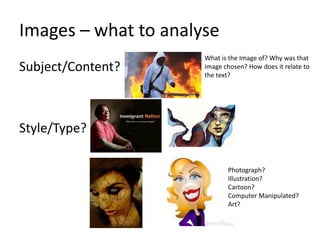
Images – what to analyse
Subject/Content?

What is the Image of? Why was that
image chosen? How does it relate to
the text?

Style/Type?
Photograph?
Illustration?
Cartoon?
Computer Manipulated?
Art?
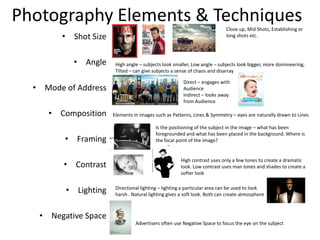
Photography Elements & Techniques
• Shot Size
• Angle
• Mode of Address

• Composition
• Framing

• Contrast
• Lighting

Close up, Mid Shots, Establishing or
long shots etc.

High angle – subjects look smaller, Low angle – subjects look bigger, more domineering,
Tilted – can give subjects a sense of chaos and disarray
Direct – engages with
Audience
Indirect – looks away
from Audience
Elements in images such as Patterns, Lines & Symmetry – eyes are naturally drawn to Lines
Is the positioning of the subject in the image – what has been
foregrounded and what has been placed in the background. Where is
the focal point of the image?

High contrast uses only a few tones to create a dramatic
look. Low contrast uses man tones and shades to create a
softer look
Directional lighting – lighting a particular area can be used to look
harsh . Natural lighting gives a soft look. Both can create atmosphere

• Negative Space
Advertisers often use Negative Space to focus the eye on the subject
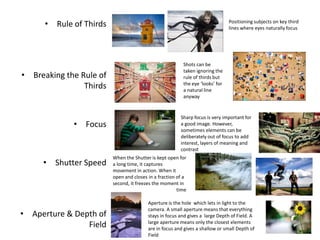
• Rule of Thirds

• Breaking the Rule of
Thirds

• Focus

• Shutter Speed

• Aperture & Depth of
Field

Positioning subjects on key third
lines where eyes naturally focus

Shots can be
taken ignoring the
rule of thirds but
the eye ‘looks’ for
a natural line
anyway

Sharp focus is very important for
a good image. However,
sometimes elements can be
deliberately out of focus to add
interest, layers of meaning and
contrast
When the Shutter is kept open for
a long time, it captures
movement in action. When it
open and closes in a fraction of a
second, it freezes the moment in
time
Aperture is the hole which lets in light to the
camera. A small aperture means that everything
stays in focus and gives a large Depth of Field. A
large aperture means only the closest elements
are in focus and gives a shallow or small Depth of
Field
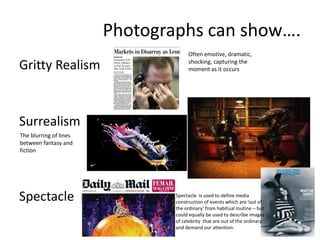
Photographs can show….
Gritty Realism

Often emotive, dramatic,
shocking, capturing the
moment as it occurs

Surrealism
The blurring of lines
between fantasy and
fiction

Spectacle

Spectacle is used to define media
construction of events which are ‘out of
the ordinary’ from habitual routine – but
could equally be used to describe images
of celebrity that are out of the ordinary
and demand our attention.
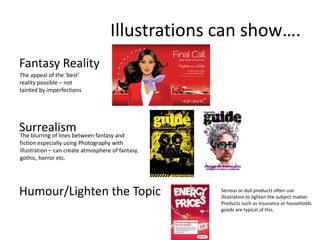
Illustrations can show….
Fantasy Reality
The appeal of the ‘best’
reality possible – not
tainted by imperfections

Surrealism fantasy and
The blurring of lines between
fiction especially using Photography with
Illustration – can create atmosphere of fantasy,
gothic, horror etc.

Humour/Lighten the Topic

Serious or dull products often use
illustration to lighten the subject matter.
Products such as insurance or households
goods are typical of this.
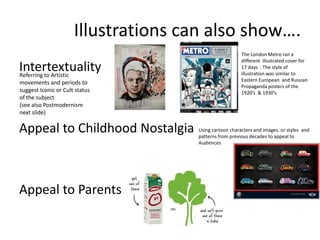
Illustrations can also show….
Intertextuality
Referring to Artistic
movements and periods to
suggest Iconic or Cult status
of the subject
(see also Postmodernism
next slide)

Appeal to Childhood Nostalgia

Appeal to Parents

The London Metro ran a
different illustrated cover for
17 days . The style of
illustration was similar to
Eastern European and Russian
Propaganda posters of the
1920’s & 1930’s

Using cartoon characters and images, or styles and
patterns from previous decades to appeal to
Audiences
Postmodernism in Visual Images
Visual images often rely heavily on
intertextuality, Parody, Pastiche & Bricolage – the
audiences ability to make connections between
older, well known cultural and media products
and the new image. This adds depths of meaning
to still images and communicates on multiple
levels to Audiences .

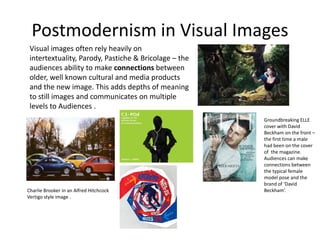
Charlie Brooker in an Alfred Hitchcock
Vertigo style image .

Groundbreaking ELLE
cover with David
Beckham on the front –
the first time a male
had been on the cover
of the magazine.
Audiences can make
connections between
the typical female
model pose and the
brand of ‘David
Beckham’.
Remember...
• Many examples here come from magazines and
Advertising.

However...
• The principles of Visual Images mentioned here
can be applied to visual images on any media
product including Newspapers, Websites,
Leaflets, Blogs etc.
WHAT IF....?
Aaarrrggghhhh ...Help!

There is no visual image.....
• Look at how space and colour are used
The image is made from text....
• Again, look at how space and colour are used.
See if it is trying to relate back to another iconic
image.
Analysing Visual Images in Media Texts

Analysing Visual Images in Media Texts

  • 1.
    The Visual Image Imageof a Retinal Cell Structure from Web Vision
  • 2.
    Images – whatto analyse Subject/Content? What is the Image of? Why was that image chosen? How does it relate to the text? Style/Type? Photograph? Illustration? Cartoon? Computer Manipulated? Art?
  • 3.
    Photography Elements &Techniques • Shot Size • Angle • Mode of Address • Composition • Framing • Contrast • Lighting Close up, Mid Shots, Establishing or long shots etc. High angle – subjects look smaller, Low angle – subjects look bigger, more domineering, Tilted – can give subjects a sense of chaos and disarray Direct – engages with Audience Indirect – looks away from Audience Elements in images such as Patterns, Lines & Symmetry – eyes are naturally drawn to Lines Is the positioning of the subject in the image – what has been foregrounded and what has been placed in the background. Where is the focal point of the image? High contrast uses only a few tones to create a dramatic look. Low contrast uses man tones and shades to create a softer look Directional lighting – lighting a particular area can be used to look harsh . Natural lighting gives a soft look. Both can create atmosphere • Negative Space Advertisers often use Negative Space to focus the eye on the subject
  • 4.
    • Rule ofThirds • Breaking the Rule of Thirds • Focus • Shutter Speed • Aperture & Depth of Field Positioning subjects on key third lines where eyes naturally focus Shots can be taken ignoring the rule of thirds but the eye ‘looks’ for a natural line anyway Sharp focus is very important for a good image. However, sometimes elements can be deliberately out of focus to add interest, layers of meaning and contrast When the Shutter is kept open for a long time, it captures movement in action. When it open and closes in a fraction of a second, it freezes the moment in time Aperture is the hole which lets in light to the camera. A small aperture means that everything stays in focus and gives a large Depth of Field. A large aperture means only the closest elements are in focus and gives a shallow or small Depth of Field
  • 5.
    Photographs can show…. GrittyRealism Often emotive, dramatic, shocking, capturing the moment as it occurs Surrealism The blurring of lines between fantasy and fiction Spectacle Spectacle is used to define media construction of events which are ‘out of the ordinary’ from habitual routine – but could equally be used to describe images of celebrity that are out of the ordinary and demand our attention.
  • 6.
    Illustrations can show…. FantasyReality The appeal of the ‘best’ reality possible – not tainted by imperfections Surrealism fantasy and The blurring of lines between fiction especially using Photography with Illustration – can create atmosphere of fantasy, gothic, horror etc. Humour/Lighten the Topic Serious or dull products often use illustration to lighten the subject matter. Products such as insurance or households goods are typical of this.
  • 7.
    Illustrations can alsoshow…. Intertextuality Referring to Artistic movements and periods to suggest Iconic or Cult status of the subject (see also Postmodernism next slide) Appeal to Childhood Nostalgia Appeal to Parents The London Metro ran a different illustrated cover for 17 days . The style of illustration was similar to Eastern European and Russian Propaganda posters of the 1920’s & 1930’s Using cartoon characters and images, or styles and patterns from previous decades to appeal to Audiences
  • 8.
    Postmodernism in VisualImages Visual images often rely heavily on intertextuality, Parody, Pastiche & Bricolage – the audiences ability to make connections between older, well known cultural and media products and the new image. This adds depths of meaning to still images and communicates on multiple levels to Audiences . Charlie Brooker in an Alfred Hitchcock Vertigo style image . Groundbreaking ELLE cover with David Beckham on the front – the first time a male had been on the cover of the magazine. Audiences can make connections between the typical female model pose and the brand of ‘David Beckham’.
  • 9.
    Remember... • Many exampleshere come from magazines and Advertising. However... • The principles of Visual Images mentioned here can be applied to visual images on any media product including Newspapers, Websites, Leaflets, Blogs etc. WHAT IF....?
  • 10.
    Aaarrrggghhhh ...Help! There isno visual image..... • Look at how space and colour are used The image is made from text.... • Again, look at how space and colour are used. See if it is trying to relate back to another iconic image.