Human Anatomy & Physiology-I
Anaemia
Presented By: Lovekesh Singh
Assistant Professor
ISF College of Pharmacy
Introduction
• In anaemia there is not enough haemoglobin available to carry
sufficient oxygen from the lungs to supply the needs of the
tissues.
• A person who looks pale is often refered to as anemic.
• It appears as the person lacks the required amount of red blood
cells which are responsible for giving bright red color to the
blood and general redness to the skin.
Iron deficiency anaemia
• This is the most common form of anaemia in many parts of the world.
• The normal daily requirement of iron intake in men is about 1 to 2 mg
derived from meat and highly coloured vegetables.
• The normal daily requirement in women is 3 mg.
• The increase is necessary to compensate for loss of blood during
menstruation and to meet the needs of the growing fetus during
pregnancy. Children, during their period of rapid growth, require more
than adults.
• The anaemia is regarded as severe when the haemoglobin level is below
9 g/dl blood.
• It is caused by deficiency of iron in the bone marrow and may be due to
dietary deficiency, excessively high requirement or malabsorption.
• Usually more than one factor is involved, e.g. loss of blood and
malabsorption.
Megaloblastic Anaemia (folic acid anaemia)
• The red blood cells have a life span of 120 days. Therefore, new
RBCs are continuously produced in the body.
• The newly RBCs need vitamin B12 and folic acid without which
they remain immature and non-functional. But this disorder is
due to the deficiency of folic acid.
• When deficiency of vitamin B12 and/or folic acid occurs, the rate
of DNA and RNA synthesis is reduced, delaying cell division. The
cells can therefore grow larger than normal between divisions.
• The cells are fragile and their life span is reduced to between 40
and 50 days. Depressed production and early lysis cause
anaemia.
Pernicious anaemia (vitamin B12 deficiency anaemia)
• Maturation of RBCs need both vitamin B12 and folic acid but the
disorder due to the deficiency of vitamin B12 is called pernicious
anaemia.
• It occurs more often in females than males, usually between 45
and 65 years of age.
• This could be due to Dietary deficiency of vitamin B12.
Hypolastic anaemis (Aplastic anaemia)
• The RBCs are produced by long bone marrow present in the
long bones such as arms and legs.
• Normal functioning of bone marrow is disturbed due to which
red blood corpuscles are not produced such agents include-
• drugs, e.g. cytotoxic drugs, some anti-inflammatory and
anticonvulsant drugs, some sulphonamides and antibiotics
• Ionizing radiations
• Some chemicals, e.g. benzene and its derivatives
• Chronic nephritis
• Viral disease, including hepatitis
• Invasion of bone marrow by, e.g., , malignant disease,
leukaemia or fibrosis.
Haemolytic anaemias
These occur when red cells are destroyed while in circulation or are
removed prematurely from the circulation because the cells are
abnormal or the spleen is overactive.
a) Congenital haemolytic anaemias
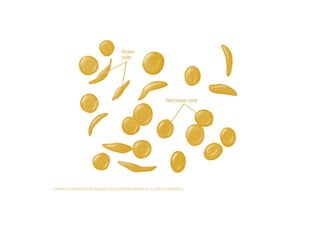
Sickle cell anaemia- The abnormal haemoglobin molecules become
misshapen when deoxygenated, making the erythrocytes sickle
shaped. A high proportion of abnormal molecules makes the sickling
permanent. The life span of cells is reduced by early haemolysis.
Thalassaemia- There is reduced globin synthesis with resultant
reduced haemoglobin production and increased friability of the cell
membrane, leading to early haemolysis. Severe cases may cause
death in infants or young children.
Conti….
b) Acquired haemolytic anaemias
Chemical agents-These substances cause early or excessive
haemolysis, e.g.:
• some drugs, especially when taken long term in large doses,
e.g. phenacetin, primaquine, sulphonamides
• chemicals encountered in the general or work environment,
e.g. lead, arsenic compounds
• toxins produced by microbes, e.g. Streptococcus pyogenes,
Clostridium welchii.
• Autoimmunity
• Blood transfusion reactions
Polycythaemia
• There are an abnormally large number of erythrocytes in the
blood.
• This increases blood viscosity, slows the rate of flow and
increases the risk of intravascular clotting, ischaemia and
infarction.
Leukopenia
• This is the name of the condition in which the total blood leukocyte count
is less than 4 x 10⁹/1 (4000/mm3).
• Granulocytopenia (neutropenia) is a general term used to indicate an
abnormal reduction in the numbers of circulating granulocytes (poly-
morphonuclear leukocytes), commonly called neutropenia because 40 to
75% of granulocytes are neutrophils.
Leukocytosis
• An increase in the number of circulating leukocytes occurs as a normal
protective reaction in a variety of pathological conditions, especially in
response to infections.
• When the infection subsides the leukocyte count returns to normal.
Pathological leukocytosis exists when a blood leukocyte count of more than
11000/mm3 and is not consistent with the normal protective function.
Leukaemia
• Leukaemia is a malignant proliferation of white blood cell
precursors by the bone marrow.
• It results in the uncontrolled increase in the production of
leukocytes and/or their precursors.
• As the tumour cells enter the blood the total leukocyte count is
usually raised but in
• some cases it may be normal or even low.
Causes of leukaemia
Genetics
Ionising radiation
Viral infection
chemicals
Thrombocytopenia
• This is defined as a blood platelet count below 150 x 10 /1
(150000/mm3) but spontaneous capillary bleeding does not
usually occur unless the count falls below 30 x 109 /1 (30
000/mm3).
• It may be due to a reduced rate of platelet production or increased
rate of destruction.
• A significant feature of this disease is the presence of purpura,
which are haemorrhages into the skin ranging in size from
pinpoints to large blotches.
• The severity of the disease varies from mild bleeding into the skin
to severe haemorrhage.
References
• Gerard J. Tortora (2003). Principles of Anatomy and Physiology.
Edition-10th.
• Anne Waugh and Alison Grant (2007) Anatomy and Physiology.
Edition-12th
THANKS

Anaemias.ppt

  • 1.
    Human Anatomy &Physiology-I Anaemia Presented By: Lovekesh Singh Assistant Professor ISF College of Pharmacy
  • 2.
    Introduction • In anaemiathere is not enough haemoglobin available to carry sufficient oxygen from the lungs to supply the needs of the tissues. • A person who looks pale is often refered to as anemic. • It appears as the person lacks the required amount of red blood cells which are responsible for giving bright red color to the blood and general redness to the skin.
  • 3.
    Iron deficiency anaemia •This is the most common form of anaemia in many parts of the world. • The normal daily requirement of iron intake in men is about 1 to 2 mg derived from meat and highly coloured vegetables. • The normal daily requirement in women is 3 mg. • The increase is necessary to compensate for loss of blood during menstruation and to meet the needs of the growing fetus during pregnancy. Children, during their period of rapid growth, require more than adults. • The anaemia is regarded as severe when the haemoglobin level is below 9 g/dl blood. • It is caused by deficiency of iron in the bone marrow and may be due to dietary deficiency, excessively high requirement or malabsorption. • Usually more than one factor is involved, e.g. loss of blood and malabsorption.
  • 4.
    Megaloblastic Anaemia (folicacid anaemia) • The red blood cells have a life span of 120 days. Therefore, new RBCs are continuously produced in the body. • The newly RBCs need vitamin B12 and folic acid without which they remain immature and non-functional. But this disorder is due to the deficiency of folic acid. • When deficiency of vitamin B12 and/or folic acid occurs, the rate of DNA and RNA synthesis is reduced, delaying cell division. The cells can therefore grow larger than normal between divisions. • The cells are fragile and their life span is reduced to between 40 and 50 days. Depressed production and early lysis cause anaemia.
  • 5.
    Pernicious anaemia (vitaminB12 deficiency anaemia) • Maturation of RBCs need both vitamin B12 and folic acid but the disorder due to the deficiency of vitamin B12 is called pernicious anaemia. • It occurs more often in females than males, usually between 45 and 65 years of age. • This could be due to Dietary deficiency of vitamin B12.
  • 6.
    Hypolastic anaemis (Aplasticanaemia) • The RBCs are produced by long bone marrow present in the long bones such as arms and legs. • Normal functioning of bone marrow is disturbed due to which red blood corpuscles are not produced such agents include- • drugs, e.g. cytotoxic drugs, some anti-inflammatory and anticonvulsant drugs, some sulphonamides and antibiotics • Ionizing radiations • Some chemicals, e.g. benzene and its derivatives • Chronic nephritis • Viral disease, including hepatitis • Invasion of bone marrow by, e.g., , malignant disease, leukaemia or fibrosis.
  • 7.
    Haemolytic anaemias These occurwhen red cells are destroyed while in circulation or are removed prematurely from the circulation because the cells are abnormal or the spleen is overactive. a) Congenital haemolytic anaemias Sickle cell anaemia- The abnormal haemoglobin molecules become misshapen when deoxygenated, making the erythrocytes sickle shaped. A high proportion of abnormal molecules makes the sickling permanent. The life span of cells is reduced by early haemolysis. Thalassaemia- There is reduced globin synthesis with resultant reduced haemoglobin production and increased friability of the cell membrane, leading to early haemolysis. Severe cases may cause death in infants or young children.
  • 9.
    Conti…. b) Acquired haemolyticanaemias Chemical agents-These substances cause early or excessive haemolysis, e.g.: • some drugs, especially when taken long term in large doses, e.g. phenacetin, primaquine, sulphonamides • chemicals encountered in the general or work environment, e.g. lead, arsenic compounds • toxins produced by microbes, e.g. Streptococcus pyogenes, Clostridium welchii. • Autoimmunity • Blood transfusion reactions
  • 10.
    Polycythaemia • There arean abnormally large number of erythrocytes in the blood. • This increases blood viscosity, slows the rate of flow and increases the risk of intravascular clotting, ischaemia and infarction.
  • 11.
    Leukopenia • This isthe name of the condition in which the total blood leukocyte count is less than 4 x 10⁹/1 (4000/mm3). • Granulocytopenia (neutropenia) is a general term used to indicate an abnormal reduction in the numbers of circulating granulocytes (poly- morphonuclear leukocytes), commonly called neutropenia because 40 to 75% of granulocytes are neutrophils. Leukocytosis • An increase in the number of circulating leukocytes occurs as a normal protective reaction in a variety of pathological conditions, especially in response to infections. • When the infection subsides the leukocyte count returns to normal. Pathological leukocytosis exists when a blood leukocyte count of more than 11000/mm3 and is not consistent with the normal protective function.
  • 12.
    Leukaemia • Leukaemia isa malignant proliferation of white blood cell precursors by the bone marrow. • It results in the uncontrolled increase in the production of leukocytes and/or their precursors. • As the tumour cells enter the blood the total leukocyte count is usually raised but in • some cases it may be normal or even low. Causes of leukaemia Genetics Ionising radiation Viral infection chemicals
  • 13.
    Thrombocytopenia • This isdefined as a blood platelet count below 150 x 10 /1 (150000/mm3) but spontaneous capillary bleeding does not usually occur unless the count falls below 30 x 109 /1 (30 000/mm3). • It may be due to a reduced rate of platelet production or increased rate of destruction. • A significant feature of this disease is the presence of purpura, which are haemorrhages into the skin ranging in size from pinpoints to large blotches. • The severity of the disease varies from mild bleeding into the skin to severe haemorrhage.
  • 14.
    References • Gerard J.Tortora (2003). Principles of Anatomy and Physiology. Edition-10th. • Anne Waugh and Alison Grant (2007) Anatomy and Physiology. Edition-12th
  • 15.