Hot composting


           Why and how to make it – my
                   experience
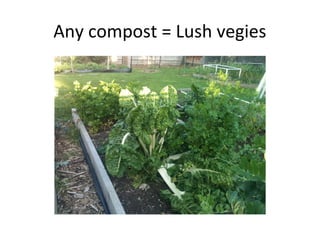
Any compost = Lush vegies
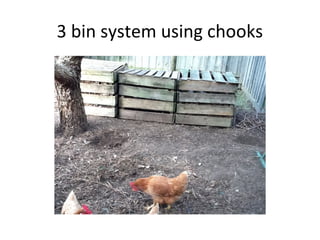
3 bin system using chooks
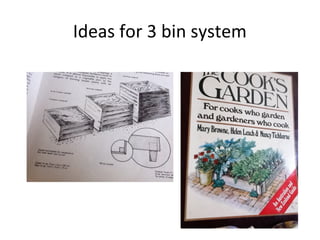
Ideas for 3 bin system
What is hot composting?
• A batch process: mix it all at once from
  material you have collected
• It is free
• Unlike other methods of composting it kills
  weed seeds and pathogens
• Can deal with meat, dairy, onion and citrus
  scraps
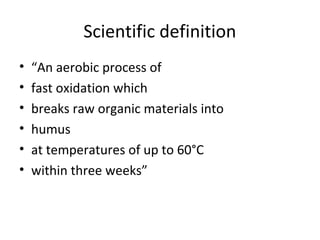
Scientific definition
•   “An aerobic process of
•   fast oxidation which
•   breaks raw organic materials into
•   humus
•   at temperatures of up to 60°C
•   within three weeks”
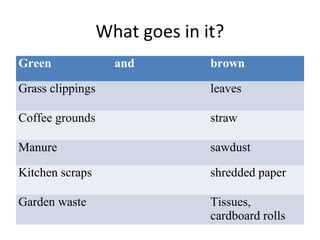
What goes in it?
Green               and         brown

Grass clippings                 leaves

Coffee grounds                  straw

Manure                          sawdust

Kitchen scraps                  shredded paper

Garden waste                    Tissues,
                                cardboard rolls
Why hot compost?
• Improves soil structure and adds nutrients
• It is quick. Finished compost in a few weeks
• Higher nutrient content due to less leaching of
  nutrients
• Greater volume than cold compost
• Fewer viable weeds and weed seeds (keep out
  couch and kikuyu)
Dealing with perennial weeds
• Weeds like couch and kikuyu can be either
   solarised or drowned.
Either
• put them into heavy black plastic bags and leave
   in the sun for several months.
Or
• put them in a bin and cover completely with
   water for several months.
The resulting contents can then be composted.
How to make hot compost
•   One third green
•   Two thirds brown
•   3 bin system
•   Layer the materials and water each layer well
•   Every so often add comfrey leaves or yarrow
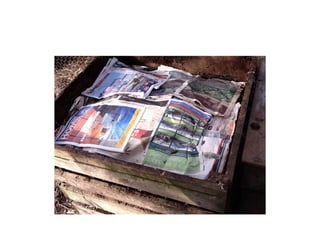
•   When finished cover the top with damp
    newspaper and cover with lid
• After 4 days turn into next bin
• After 2 weeks build another pile
• Then regularly turn each of the piles into the
  adjacent bins
• You will have a regular supply of compost
  depending on how long your materials last
  and how diligent you are at collecting
Tips and tricks
• Watch out for people giving away
  compostable materials e.g. horse manure,
  coffee grounds, chicken manure
• Collect leaves from the sides of roads
• Ask people for their lawn clippings
• Get shredded paper from the office if you can
• Dampen newspaper and tear into strips
• Ask juice bar owners if you can have the pulp
  from juicers if you are there at cleanup time
• Compost mates: collect food waste from local
  cafes and compost it in home or community
  spaces
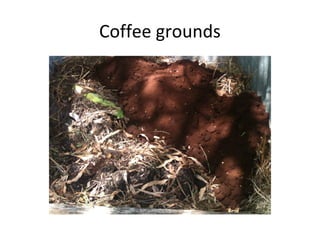
Coffee grounds
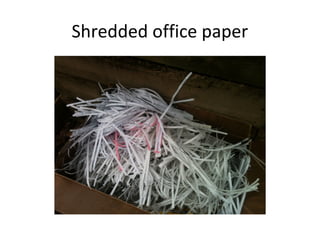
Shredded office paper
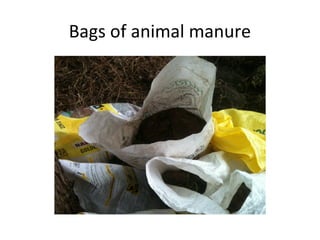
Bags of animal manure
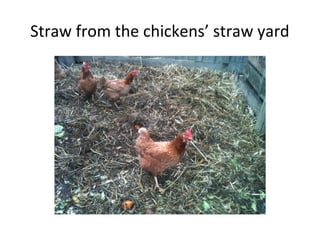
Straw from the chickens’ straw yard
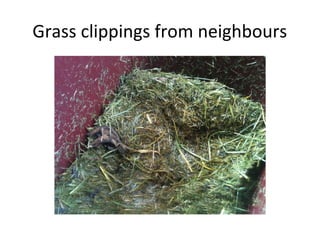
Grass clippings from neighbours
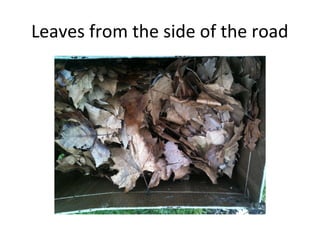
Leaves from the side of the road
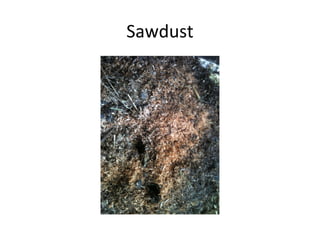
Sawdust
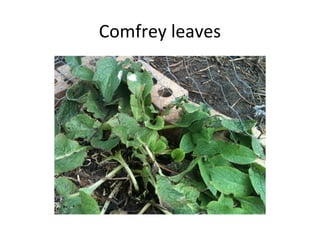
Comfrey leaves
Why comfrey is your best friend
• Comfrey is a dynamic accumulator - it sends
  down a series of deep taproots and extracts
  and accumulates large quantities of potassium
  (around 7%) and phosphorous (around 1%),
  calcium (around 3%), magnesium and other
  trace elements from the depths.
• These nutrients are stored in the leaves,
  which can then be used to feed other plants.
• Comfrey is in effect mining nutrients out of
  the soil, because of the deep taproots which
  reach deeper than normal roots can go
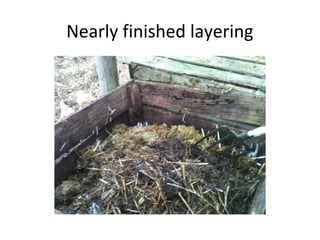
Nearly finished layering
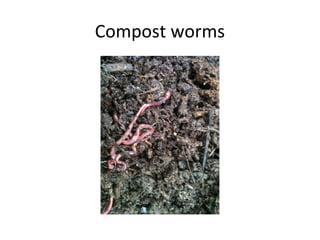
Compost worms
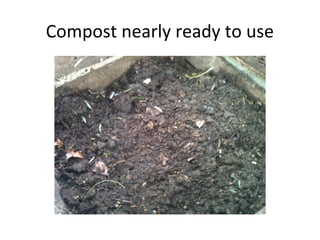
Compost nearly ready to use
Make it easy
• make do with whatever you have around
• optimal shape for a compost heap is
  approximately 1m wide and 1m high and at
  least 1m long
• Build the heap in thin layers of different
  materials approximately 5cm thick and water
  each layer before progressing to the next.
• When the heap finally starts to cool down
  (around 2 – 4 weeks) worms will come in
• Finished compost should be dark, fine and
  spongy with a pleasant earthy smell. You
  should not be able to recognise any of the
  original ingredients in it
2 main possible problems
• It stinks: turn and add brown material –
  carbon e.g. shredded newspaper

• Nothing’s happening: turn and water well.
  Maybe add some manure or grass clippings,
  blood and bone or comfrey.

The more effort you put in, the quicker you will
  get compost
How to use
Like any other compost

• Compost tea
• As a mulch
• Dug into top layer of soil
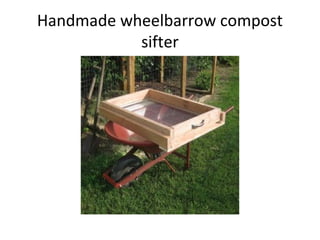
Handmade wheelbarrow compost
           sifter
Other types of hot composting
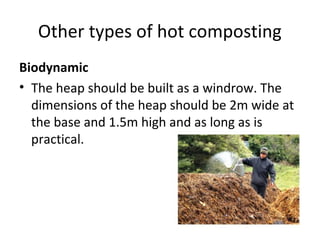
Biodynamic
• The heap should be built as a windrow. The
  dimensions of the heap should be 2m wide at
  the base and 1.5m high and as long as is
  practical.
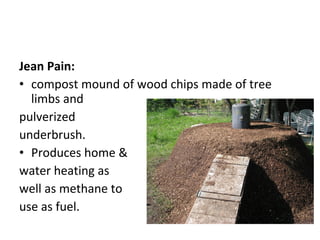
Jean Pain:
• compost mound of wood chips made of tree
  limbs and
pulverized
underbrush.
• Produces home &
water heating as
well as methane to
use as fuel.
Resources

•   Deep Green Permaculture
•   Permaculture Research Institute article
•   Biodynamic composting
•   Ground to ground
•   Compost mates
•   Compost sifter

Compost

  • 1.
    Hot composting Why and how to make it – my experience
  • 2.
    Any compost =Lush vegies
  • 3.
    3 bin systemusing chooks
  • 4.
    Ideas for 3bin system
  • 5.
    What is hotcomposting? • A batch process: mix it all at once from material you have collected • It is free • Unlike other methods of composting it kills weed seeds and pathogens • Can deal with meat, dairy, onion and citrus scraps
  • 6.
    Scientific definition • “An aerobic process of • fast oxidation which • breaks raw organic materials into • humus • at temperatures of up to 60°C • within three weeks”
  • 7.
    What goes init? Green and brown Grass clippings leaves Coffee grounds straw Manure sawdust Kitchen scraps shredded paper Garden waste Tissues, cardboard rolls
  • 8.
    Why hot compost? •Improves soil structure and adds nutrients • It is quick. Finished compost in a few weeks • Higher nutrient content due to less leaching of nutrients • Greater volume than cold compost • Fewer viable weeds and weed seeds (keep out couch and kikuyu)
  • 9.
    Dealing with perennialweeds • Weeds like couch and kikuyu can be either solarised or drowned. Either • put them into heavy black plastic bags and leave in the sun for several months. Or • put them in a bin and cover completely with water for several months. The resulting contents can then be composted.
  • 10.
    How to makehot compost • One third green • Two thirds brown • 3 bin system • Layer the materials and water each layer well • Every so often add comfrey leaves or yarrow • When finished cover the top with damp newspaper and cover with lid
  • 12.
    • After 4days turn into next bin • After 2 weeks build another pile • Then regularly turn each of the piles into the adjacent bins • You will have a regular supply of compost depending on how long your materials last and how diligent you are at collecting
  • 13.
    Tips and tricks •Watch out for people giving away compostable materials e.g. horse manure, coffee grounds, chicken manure • Collect leaves from the sides of roads • Ask people for their lawn clippings • Get shredded paper from the office if you can • Dampen newspaper and tear into strips
  • 14.
    • Ask juicebar owners if you can have the pulp from juicers if you are there at cleanup time • Compost mates: collect food waste from local cafes and compost it in home or community spaces
  • 15.
  • 16.
  • 17.
  • 18.
    Straw from thechickens’ straw yard
  • 19.
  • 20.
    Leaves from theside of the road
  • 21.
  • 22.
  • 23.
    Why comfrey isyour best friend • Comfrey is a dynamic accumulator - it sends down a series of deep taproots and extracts and accumulates large quantities of potassium (around 7%) and phosphorous (around 1%), calcium (around 3%), magnesium and other trace elements from the depths.
  • 24.
    • These nutrientsare stored in the leaves, which can then be used to feed other plants. • Comfrey is in effect mining nutrients out of the soil, because of the deep taproots which reach deeper than normal roots can go
  • 25.
  • 26.
  • 27.
  • 28.
    Make it easy •make do with whatever you have around • optimal shape for a compost heap is approximately 1m wide and 1m high and at least 1m long • Build the heap in thin layers of different materials approximately 5cm thick and water each layer before progressing to the next.
  • 29.
    • When theheap finally starts to cool down (around 2 – 4 weeks) worms will come in • Finished compost should be dark, fine and spongy with a pleasant earthy smell. You should not be able to recognise any of the original ingredients in it
  • 30.
    2 main possibleproblems • It stinks: turn and add brown material – carbon e.g. shredded newspaper • Nothing’s happening: turn and water well. Maybe add some manure or grass clippings, blood and bone or comfrey. The more effort you put in, the quicker you will get compost
  • 31.
    How to use Likeany other compost • Compost tea • As a mulch • Dug into top layer of soil
  • 32.
  • 33.
    Other types ofhot composting Biodynamic • The heap should be built as a windrow. The dimensions of the heap should be 2m wide at the base and 1.5m high and as long as is practical.
  • 34.
    Jean Pain: • compostmound of wood chips made of tree limbs and pulverized underbrush. • Produces home & water heating as well as methane to use as fuel.
  • 35.
    Resources • Deep Green Permaculture • Permaculture Research Institute article • Biodynamic composting • Ground to ground • Compost mates • Compost sifter

Editor's Notes

  • #17 In my case I was decomposing my previous life as a teacher