CANCER
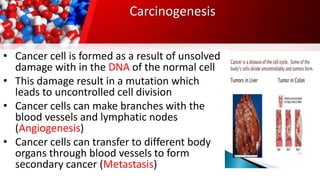
Carcinogenesis
• Cancer cell is formed as a result of unsolved
damage with in the DNA of the normal cell
• This damage result in a mutation which
leads to uncontrolled cell division
• Cancer cells can make branches with the
blood vessels and lymphatic nodes
(Angiogenesis)
• Cancer cells can transfer to different body
organs through blood vessels to form
secondary cancer (Metastasis)
Amygdalin
• naturally occurring chemical compound, famous
for cancer cure. It is found in many plants, but
most notably in the seeds
• (kernels) of apricot, bitter almonds, apple, peach,
and plum.
• Amygdalin is classified as a cyanogenic glycoside
because each molecule includes a nitrile group,
which can be released as the toxic cyanide anion
by the action of a beta-glucosidase
• Eating amygdalin will cause it to release cyanide
in the human body, and may lead to cyanide
poisoning
Amygdalin Structure
• [(6-O-β-D-Glucopyranosyl-β-Dglucopyranosyl) oxy]
(phenyl)acetonitrile
• Amygdalin is a cyanogenic glycoside derived from the aromatic
amino acid phenylalanine
• Amygdalin is hydrolyzed by intestinal β-glucosidase and
amygdalase to give gentiobiose and L-mandelonitrile. Gentiobiose
is further hydrolyzed to give glucose, whereas mandelonitrile gives
(thecyanohydrin of benzaldehyde) decomposes to give
benzaldehyde and hydrogen cyanide. Hydrogen cyanide in
sufficient quantities (allowabledaily intake: ~0.6 mg) causes
cyanide poisoning (fatal oral dose: 0.6)
Laetrile
• Laetrile is synthesized from amygdalin by hydrolysis.
• The usual preferredcommercial source is from
apricot kernels. The nameis derived from the
separate words "laevarotatory" and
"mandelonitrile".
• Laevarotatory describes the stereochemistry of the
molecule, while
• mandelonitrile refers to its chemical identity
• A 500 mg laetrile tablet may contain between 5–51
mg of hydrogen cyanide per gram.
Laetrile role in killing cancer cells
• The first hypothesis proposed that cancerous cells
contained copious betaglucosidases, which release HCN
from laetrile via hydrolysis.
• Normal cells were reportedly unaffected, because they
contained low concentrations of beta-glucosidases and
high concentrations of rhodanese, which converts HCN to
the less toxic thiocyanate.
• Later, however, it was shown that bothcancerous and
normal cells contain only trace amounts of
betaglucosidases and similar amounts of rhodanese.
The second and third hypothesis
• The second proposed that, after ingestion, amygdalin was
hydrolyzed to mandelonitrile, transported intact to the liver and
converted to a betaglucuronide complex, which was then
carried to the cancerous cells hydrolyzed by beta-glucuronidases
to release mandelonitrile and then HCN .
• Finally, the third asserted that laetrile is the discovered vitamin
B-17, and further suggests that cancer is a result of "B-17
deficiency".
• It postulated that regular dietary administration of this form of
laetrile would, therefore, actually prevent all incidence of
cancer. The term "vitamin B-17" is not recognized by Committee
on Nomenclature of the American Institute of Nutrition
Vitamins

Amygdalin

  • 1.
  • 2.
    Carcinogenesis • Cancer cellis formed as a result of unsolved damage with in the DNA of the normal cell • This damage result in a mutation which leads to uncontrolled cell division • Cancer cells can make branches with the blood vessels and lymphatic nodes (Angiogenesis) • Cancer cells can transfer to different body organs through blood vessels to form secondary cancer (Metastasis)
  • 3.
    Amygdalin • naturally occurringchemical compound, famous for cancer cure. It is found in many plants, but most notably in the seeds • (kernels) of apricot, bitter almonds, apple, peach, and plum. • Amygdalin is classified as a cyanogenic glycoside because each molecule includes a nitrile group, which can be released as the toxic cyanide anion by the action of a beta-glucosidase • Eating amygdalin will cause it to release cyanide in the human body, and may lead to cyanide poisoning
  • 4.
    Amygdalin Structure • [(6-O-β-D-Glucopyranosyl-β-Dglucopyranosyl)oxy] (phenyl)acetonitrile • Amygdalin is a cyanogenic glycoside derived from the aromatic amino acid phenylalanine • Amygdalin is hydrolyzed by intestinal β-glucosidase and amygdalase to give gentiobiose and L-mandelonitrile. Gentiobiose is further hydrolyzed to give glucose, whereas mandelonitrile gives (thecyanohydrin of benzaldehyde) decomposes to give benzaldehyde and hydrogen cyanide. Hydrogen cyanide in sufficient quantities (allowabledaily intake: ~0.6 mg) causes cyanide poisoning (fatal oral dose: 0.6)
  • 5.
    Laetrile • Laetrile issynthesized from amygdalin by hydrolysis. • The usual preferredcommercial source is from apricot kernels. The nameis derived from the separate words "laevarotatory" and "mandelonitrile". • Laevarotatory describes the stereochemistry of the molecule, while • mandelonitrile refers to its chemical identity • A 500 mg laetrile tablet may contain between 5–51 mg of hydrogen cyanide per gram.
  • 6.
    Laetrile role inkilling cancer cells • The first hypothesis proposed that cancerous cells contained copious betaglucosidases, which release HCN from laetrile via hydrolysis. • Normal cells were reportedly unaffected, because they contained low concentrations of beta-glucosidases and high concentrations of rhodanese, which converts HCN to the less toxic thiocyanate. • Later, however, it was shown that bothcancerous and normal cells contain only trace amounts of betaglucosidases and similar amounts of rhodanese.
  • 7.
    The second andthird hypothesis • The second proposed that, after ingestion, amygdalin was hydrolyzed to mandelonitrile, transported intact to the liver and converted to a betaglucuronide complex, which was then carried to the cancerous cells hydrolyzed by beta-glucuronidases to release mandelonitrile and then HCN . • Finally, the third asserted that laetrile is the discovered vitamin B-17, and further suggests that cancer is a result of "B-17 deficiency". • It postulated that regular dietary administration of this form of laetrile would, therefore, actually prevent all incidence of cancer. The term "vitamin B-17" is not recognized by Committee on Nomenclature of the American Institute of Nutrition Vitamins