AMPUTATIONS
DRKAPAMBWECHRISPINED
2/2/2024 ZERA INTERNATIONAL COLLEGE OF HEALTH SCIENCES 1
2/2/2024 ZERA INTERNATIONAL COLLEGE OF HEALTH SCIENCES 2
DEFINATION
 Amputation is the surgical removal of a limb or part of the
limb through the bone or joint
Amputations are done urgently and electively to reduce pain,
provide independence, and restore function
2/2/2024 ZERA INTERNATIONAL COLLEGE OF HEALTH SCIENCES 3
THE GOALS OF AMPUTATION
preserve functional length
preservation of useful sensibility
prevention of symptomatic neuromas
prevention of adjacent joint contractures
early prosthetic fitting
early return of patient to work and recreation
2/2/2024 ZERA INTERNATIONAL COLLEGE OF HEALTH SCIENCES 4
RISK FACTORS
 80% of amputations are performed for vascular insufficiency
TWO MAJOR TYPES OF AMPUTATIONS
Open (Guillotine) Amputation
Closed Amputation
2/2/2024 ZERA INTERNATIONAL COLLEGE OF HEALTH SCIENCES 5
INDICATIONS
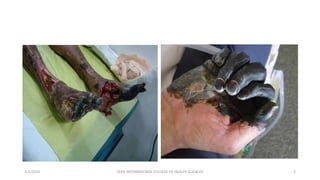
1. Vitality of the part is destroyed by injury or disease dead limb
2. Life of patient is threatened by spread of a local condition deadly
dangerous limb . Examples: Gas gangrene, extensive melanoma
3. Patient may be better served by an artificial limb because of damn
nuisance,
deformity or paralysis-deformed limb. In such cases better to
amputate and fit in an artificial limb.
4. Dying limb -acutely ischaemic limb, late presentation.
2/2/2024 ZERA INTERNATIONAL COLLEGE OF HEALTH SCIENCES 6
ASSIGNMENT
List at least five ( diseases)
associated with each ‘D’
2/2/2024 ZERA INTERNATIONAL COLLEGE OF HEALTH SCIENCES 7
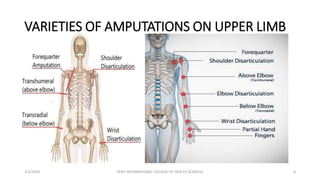
VARIETIES OF AMPUTATIONS ON UPPER LIMB
2/2/2024 ZERA INTERNATIONAL COLLEGE OF HEALTH SCIENCES 8
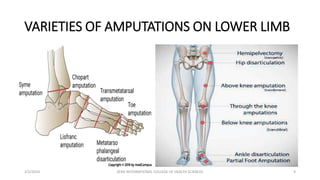
VARIETIES OF AMPUTATIONS ON LOWER LIMB
2/2/2024 ZERA INTERNATIONAL COLLEGE OF HEALTH SCIENCES 9
TREATMENT
Pain management.
Wound care.
Antibiotics to prevent infection
Stump revision or Normalisation
2/2/2024 ZERA INTERNATIONAL COLLEGE OF HEALTH SCIENCES 10
EARLY COMPLICATIONS.
Associated with spinal anaesthesia ,hypotension, failure to breathe
because the phrenic nerve is affected.
Compression of the nerve causing paralysis.
Reactionary haemorrhage , heamatoma.
2/2/2024 ZERA INTERNATIONAL COLLEGE OF HEALTH SCIENCES 11
INTERMEDIATE COMPLICATIONS
Wound infection
Abscess formation.
Wound dehiscence.
Gangrene.
DVT.
Pulmonary embolism.
Depression.
2/2/2024 ZERA INTERNATIONAL COLLEGE OF HEALTH SCIENCES 12
COMPLICATIONS FOLLOWING AMPUTATION
• 1. Wound infection (OSTEOMYELITIS): Especially it is common in
amputations done for
diabetic gangrene cases. Stitches may have to be opened to
release pus followed by secondary suturing at a later date.
• 2. Flap necrosis: It is a common complication because of several
reasons important one being decreased blood supply to the limb
either due to arterial occlusive disease or due to diabetes
• 3. Stump ulcers are common in the initial stages of wearing artificial
limbs.
• 4. Contracture: If the artificial limb is not fitted, the stump will
develop flexion contracture.
2/2/2024 ZERA INTERNATIONAL COLLEGE OF HEALTH SCIENCES 13
• 5. Amputation neuroma: This is an end neuroma. The cut end of the
nerve is entrapped in the scar tissue and gives rise to pain.
• 6. Phantom limb: A phantom limb is the sensation that a missing limb
is attached to the body.
• 7. Bone spur.
2/2/2024 ZERA INTERNATIONAL COLLEGE OF HEALTH SCIENCES 14
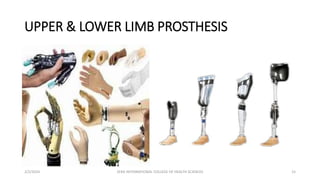
UPPER & LOWER LIMB PROSTHESIS
2/2/2024 ZERA INTERNATIONAL COLLEGE OF HEALTH SCIENCES 15

Amputations.pptx and it's manage all the time

  • 1.
  • 2.
    2/2/2024 ZERA INTERNATIONALCOLLEGE OF HEALTH SCIENCES 2
  • 3.
    DEFINATION  Amputation isthe surgical removal of a limb or part of the limb through the bone or joint Amputations are done urgently and electively to reduce pain, provide independence, and restore function 2/2/2024 ZERA INTERNATIONAL COLLEGE OF HEALTH SCIENCES 3
  • 4.
    THE GOALS OFAMPUTATION preserve functional length preservation of useful sensibility prevention of symptomatic neuromas prevention of adjacent joint contractures early prosthetic fitting early return of patient to work and recreation 2/2/2024 ZERA INTERNATIONAL COLLEGE OF HEALTH SCIENCES 4
  • 5.
    RISK FACTORS  80%of amputations are performed for vascular insufficiency TWO MAJOR TYPES OF AMPUTATIONS Open (Guillotine) Amputation Closed Amputation 2/2/2024 ZERA INTERNATIONAL COLLEGE OF HEALTH SCIENCES 5
  • 6.
    INDICATIONS 1. Vitality ofthe part is destroyed by injury or disease dead limb 2. Life of patient is threatened by spread of a local condition deadly dangerous limb . Examples: Gas gangrene, extensive melanoma 3. Patient may be better served by an artificial limb because of damn nuisance, deformity or paralysis-deformed limb. In such cases better to amputate and fit in an artificial limb. 4. Dying limb -acutely ischaemic limb, late presentation. 2/2/2024 ZERA INTERNATIONAL COLLEGE OF HEALTH SCIENCES 6
  • 7.
    ASSIGNMENT List at leastfive ( diseases) associated with each ‘D’ 2/2/2024 ZERA INTERNATIONAL COLLEGE OF HEALTH SCIENCES 7
  • 8.
    VARIETIES OF AMPUTATIONSON UPPER LIMB 2/2/2024 ZERA INTERNATIONAL COLLEGE OF HEALTH SCIENCES 8
  • 9.
    VARIETIES OF AMPUTATIONSON LOWER LIMB 2/2/2024 ZERA INTERNATIONAL COLLEGE OF HEALTH SCIENCES 9
  • 10.
    TREATMENT Pain management. Wound care. Antibioticsto prevent infection Stump revision or Normalisation 2/2/2024 ZERA INTERNATIONAL COLLEGE OF HEALTH SCIENCES 10
  • 11.
    EARLY COMPLICATIONS. Associated withspinal anaesthesia ,hypotension, failure to breathe because the phrenic nerve is affected. Compression of the nerve causing paralysis. Reactionary haemorrhage , heamatoma. 2/2/2024 ZERA INTERNATIONAL COLLEGE OF HEALTH SCIENCES 11
  • 12.
    INTERMEDIATE COMPLICATIONS Wound infection Abscessformation. Wound dehiscence. Gangrene. DVT. Pulmonary embolism. Depression. 2/2/2024 ZERA INTERNATIONAL COLLEGE OF HEALTH SCIENCES 12
  • 13.
    COMPLICATIONS FOLLOWING AMPUTATION •1. Wound infection (OSTEOMYELITIS): Especially it is common in amputations done for diabetic gangrene cases. Stitches may have to be opened to release pus followed by secondary suturing at a later date. • 2. Flap necrosis: It is a common complication because of several reasons important one being decreased blood supply to the limb either due to arterial occlusive disease or due to diabetes • 3. Stump ulcers are common in the initial stages of wearing artificial limbs. • 4. Contracture: If the artificial limb is not fitted, the stump will develop flexion contracture. 2/2/2024 ZERA INTERNATIONAL COLLEGE OF HEALTH SCIENCES 13
  • 14.
    • 5. Amputationneuroma: This is an end neuroma. The cut end of the nerve is entrapped in the scar tissue and gives rise to pain. • 6. Phantom limb: A phantom limb is the sensation that a missing limb is attached to the body. • 7. Bone spur. 2/2/2024 ZERA INTERNATIONAL COLLEGE OF HEALTH SCIENCES 14
  • 15.
    UPPER & LOWERLIMB PROSTHESIS 2/2/2024 ZERA INTERNATIONAL COLLEGE OF HEALTH SCIENCES 15