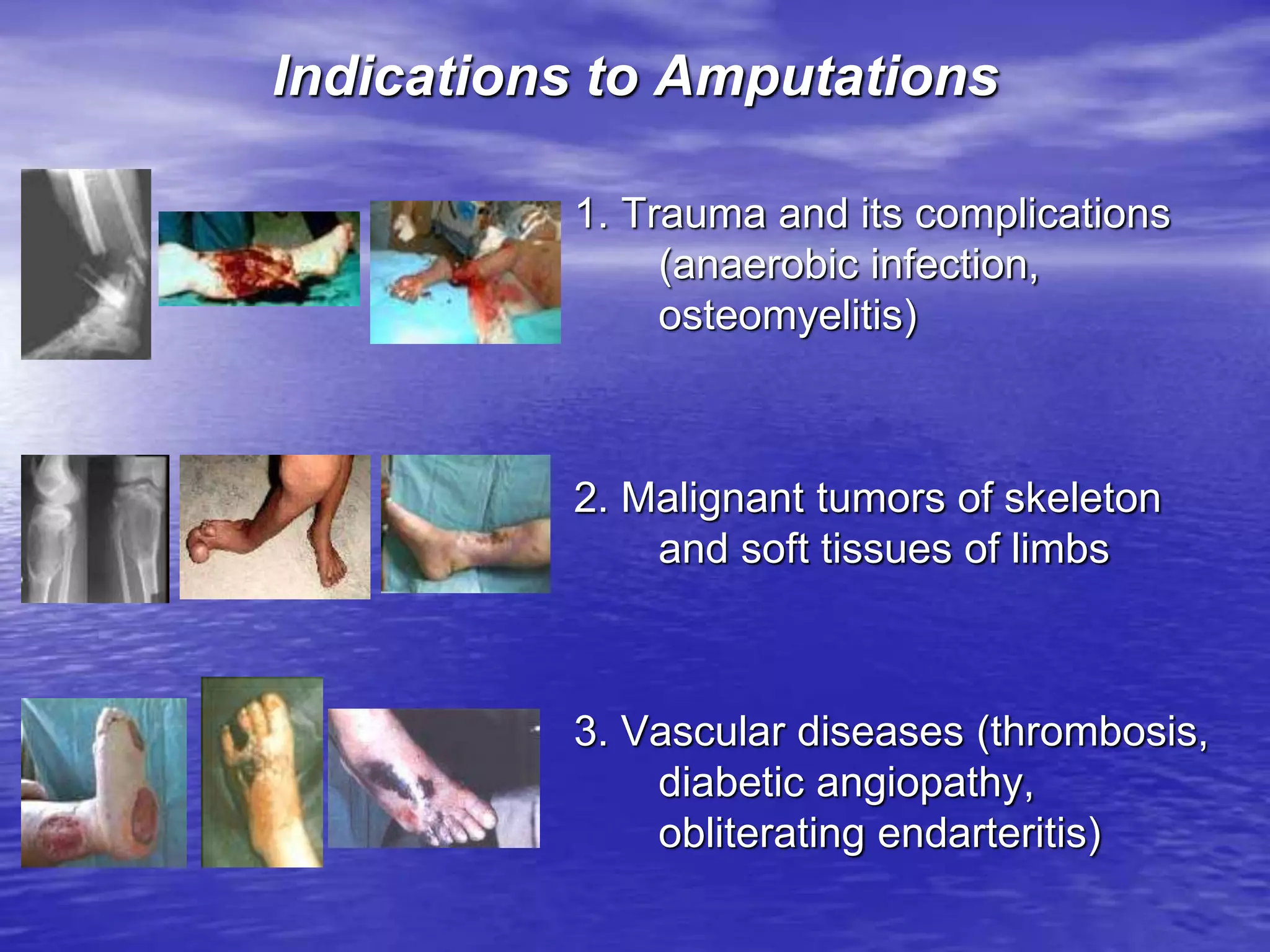
Indications to Amputations
1. Trauma and its complications
(anaerobic infection,
osteomyelitis)
2. Malignant tumors of skeleton
and soft tissues of limbs
3. Vascular diseases (thrombosis,
diabetic angiopathy,
obliterating endarteritis)
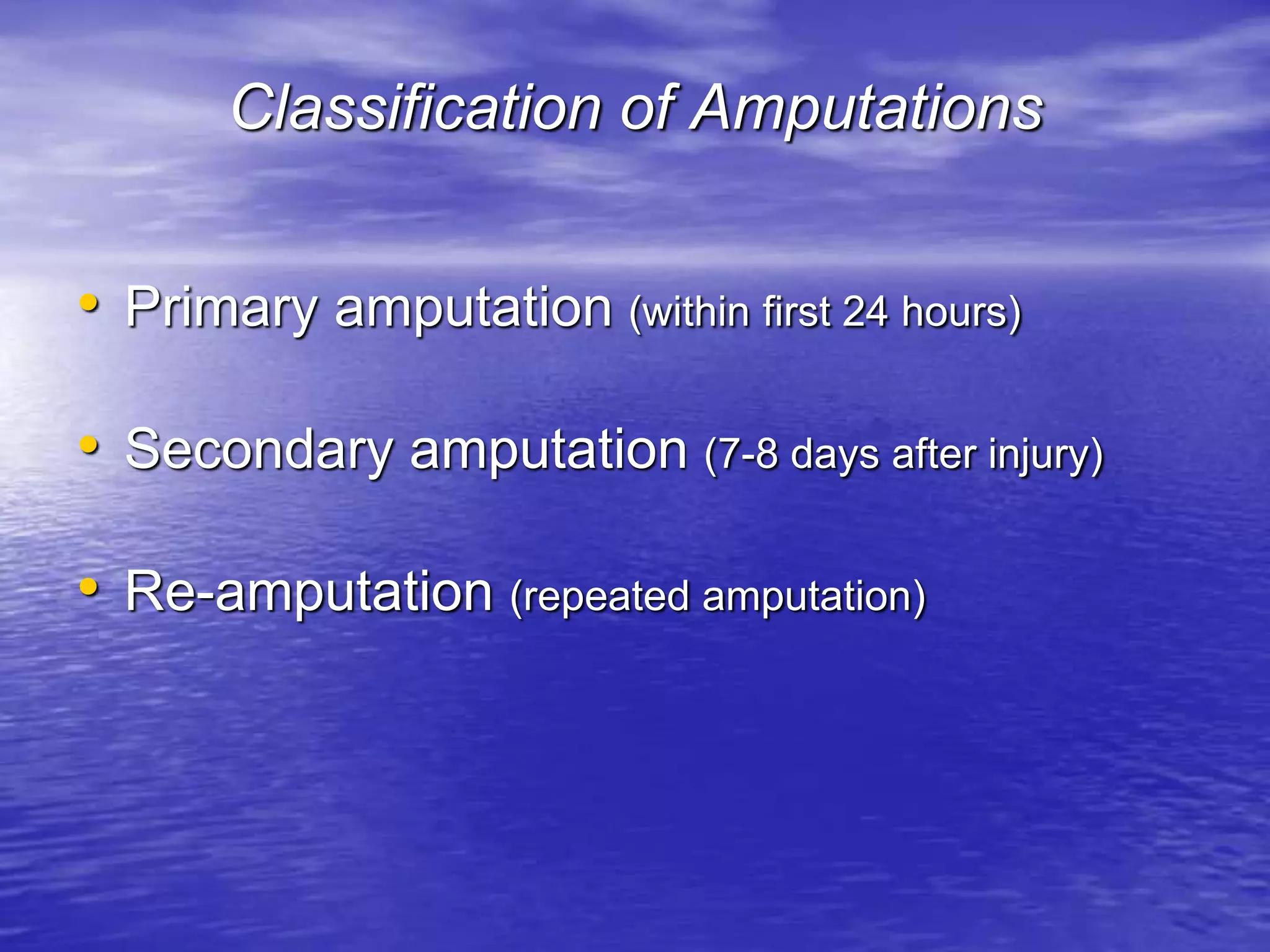
Classification of Amputations
• Primary amputation (within first 24 hours)
• Secondary amputation (7-8 days after injury)
• Re-amputation (repeated amputation)
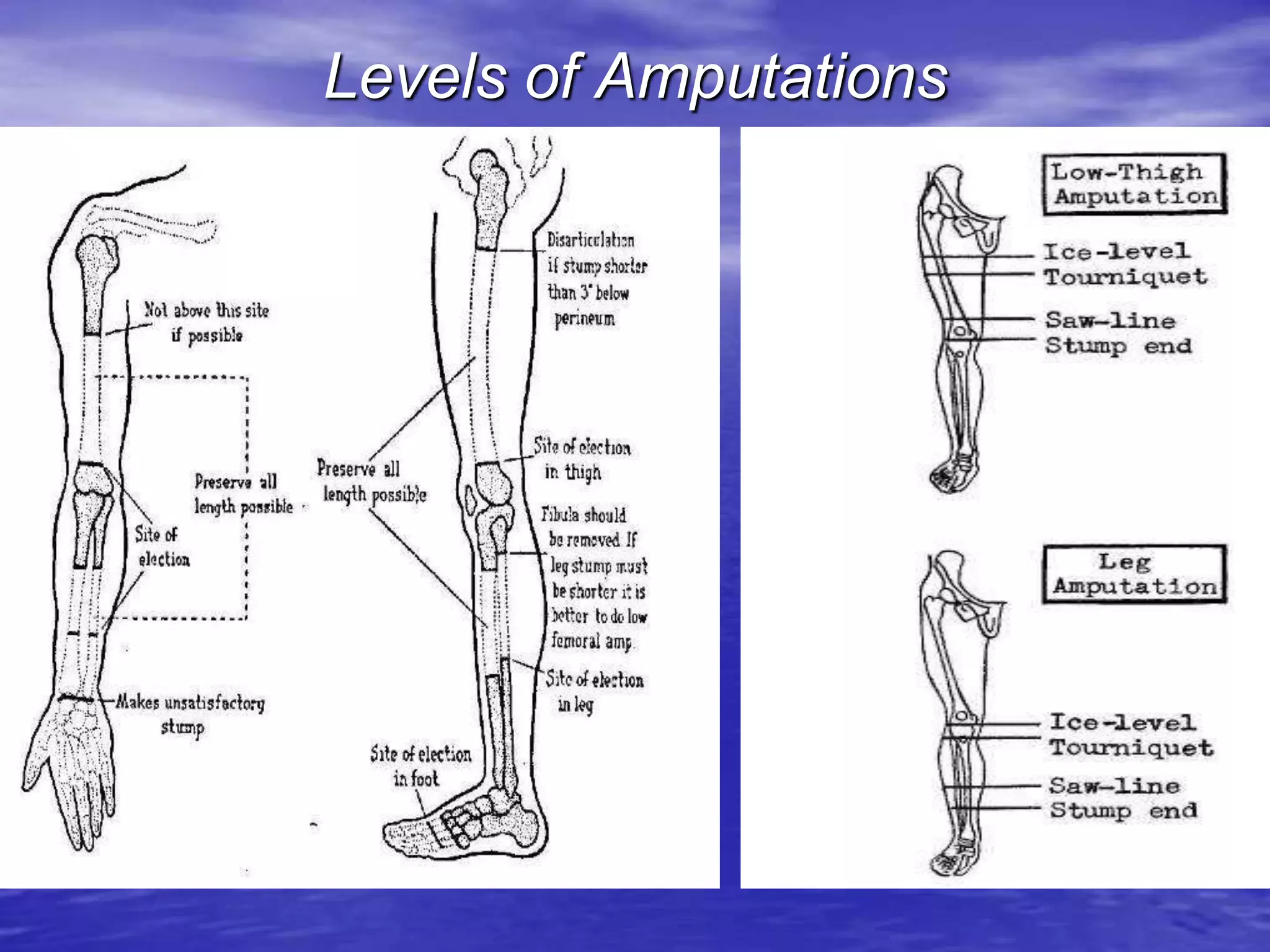
Levels of Amputations
Steps of Amputation
I. Cutting of soft tissue
II. Treatment of periosteum and cutting of
bone
III. Stump treatment
Types of Amputations
(according to soft tissues cutting)
1. Flap amputations:
- single-flap amputation
- double-flap amputation
2. Circular amputations:
- one-step (guillotine) amputation
- two-step amputation (variety – “cuff”
method of forearm amputation)
- three-step (conical-circular)
amputation
Standard Above-knee Amputation
(AKA)
Stages of Transfemoral Amputation
Transfemoral amputation – Above-knee
Amputation: marking-out of skin flaps
Creating of Flaps and Cutting of Soft
Tissues
Methods of Periosteum Treatment
1. Periosteal
2. Aperiosteal
3. Subperiosteal
Treatment of Periosteum and Cutting of
Bone
Exposure and Ligation of Main Vessels
Arrest of Bleeding from Small Vessels by
Electro coagulation after Removing of
Tourniquet
Exposure and Cutting of Nervous Trunks
Stitching of Soft Tissues above Bone Stump
and Draining of Wound
Aseptic Bandage and Immobilization of the
Limb Stump
The most common complications of
amputation are:
• massive haemorrhage that occurs when a
suture becomes loose
• infection
• rash, blisters, and skin breakdown caused by
immobility, pressure, and other sources of
irritation
• pneumonia, blood clots, and breathing problems
associated with immobility
• formation of nerve cell tumors (neuromas) at
severed nerve endings
Complications of Amputation
• Mistakes of I step of amputation:
1. conical stump
2. mace-shaped stump
• Mistakes of II step of amputation:
3. terminal necrosis of bone
4. forming of large osteophytes
• Mistakes of III step of amputation:
5. forming of trophic ulcers
6. phantom pain
• 7. Chronic osteomyelitis caused by secondary infection
inside a wound
Osteo-plastic Amputations
(Gritti-Stokes and Sabanajeff amputations)
Pirogoff Amputation
Callander Amputation
(this gives an excellent end-bearing stump)
Below-knee Amputation
Amputation in Middle Third of Leg
Schemes of Foot Amputations
Syme Amputation
Sites of Election for Amputations of Upper
Extremity
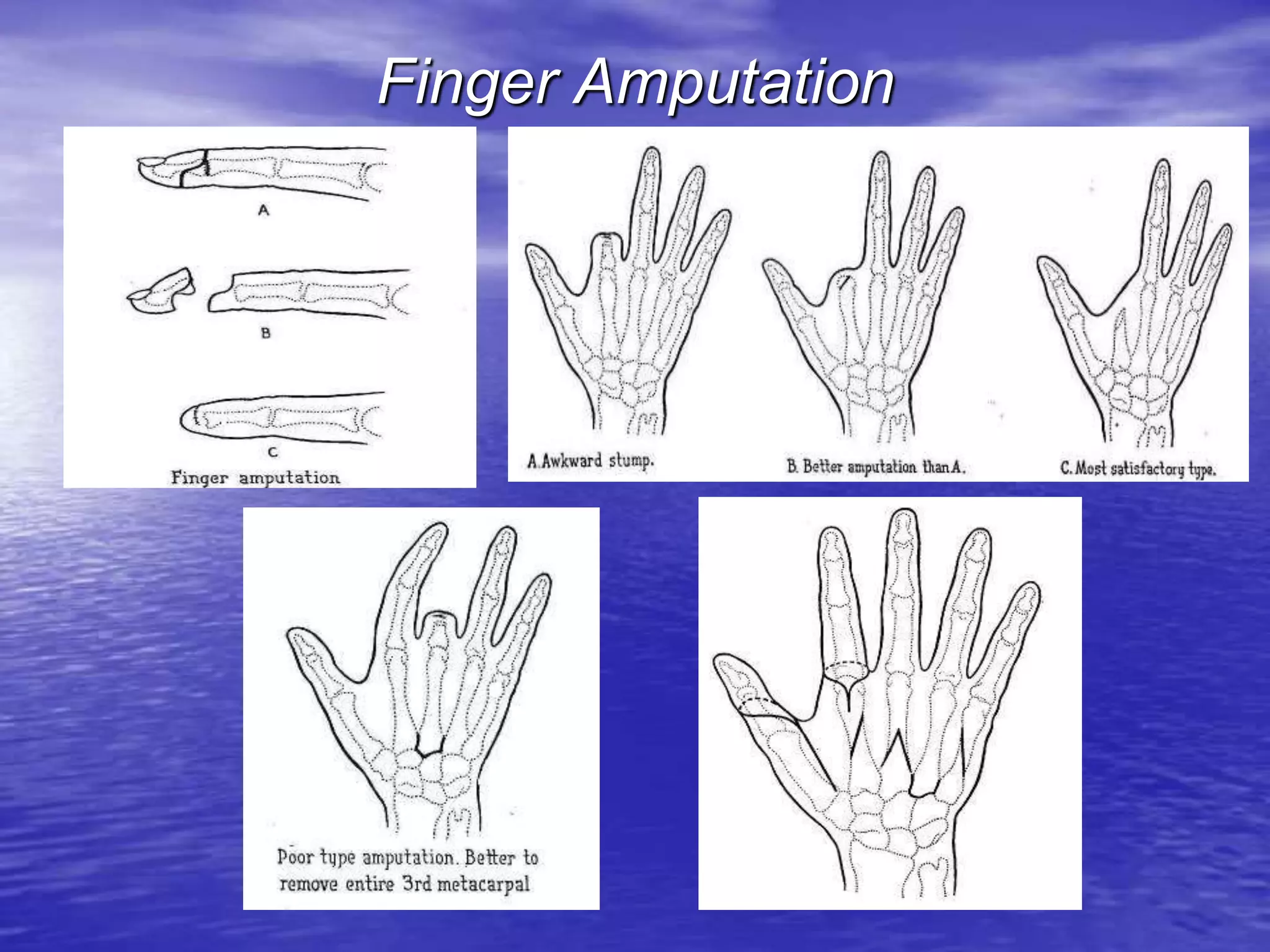
Finger Amputation

Amputations and disarticulations in limbs.ppt