AMÉLIE LAMONTAMÉLIE LAMONTAMÉLIE LAMONT
product designer badass
AMÉLIE LAMONTAMÉLIE LAMONTAMÉLIE LAMONT
product designer ninja
AMÉLIE LAMONTAMÉLIE LAMONTAMÉLIE LAMONT
product designer rockstar
AMÉLIE LAMONTAMÉLIE LAMONTAMÉLIE LAMONT
product designer prophet
AMÉLIE LAMONTAMÉLIE LAMONTAMÉLIE LAMONT
product designer evangelist
AMÉLIE LAMONTAMÉLIE LAMONTAMÉLIE LAMONT
product designer sherpa
AMÉLIE LAMONTAMÉLIE LAMONTAMÉLIE LAMONT
product designer guru
AMÉLIE LAMONTAMÉLIE LAMONTAMÉLIE LAMONT
product designer dynamo
AMÉLIE LAMONTAMÉLIE LAMONTAMÉLIE LAMONT
product designer overlord
AMÉLIE LAMONTAMÉLIE LAMONTAMÉLIE LAMONT
product designer @ the new york times
@amelielamont on twitter
BRAND THINKING
AND OTHER
NOBLE PURSUITS
by Debbie Millman
DORI
TUNSTALL
design anthropologist *
WTFWTFWTF
*
“…trying to figure out how to
understand people and how to
design products, communications,
and experiences in ways that
resonate with people.”
(practical definition.)
“…trying to understand how the
processes and artifacts of design
help define what it means to be
human.”
(theoretical definition.)
YASSSYASSSYASSS
WELCOME T0
DESIGN
ANTHRO
DESIGN
ANTHROPOLOGY
SOCIAL INNOVATION
(roots of design anthropology)
DETAILS
but seriously, what is this?
DESIGN
Collaboration of planning, knowledge and
execution to solve for complex problems.
Uniquely human.
ANTHROPOLOGY
Gunn, Wendy. Design Anthropology: Theory and Practice (p. 2).
Bloomsbury Publishing. Kindle Edition.
“the comparative study of societies and cultures, based on
detailed empirical research in concrete social contexts.”
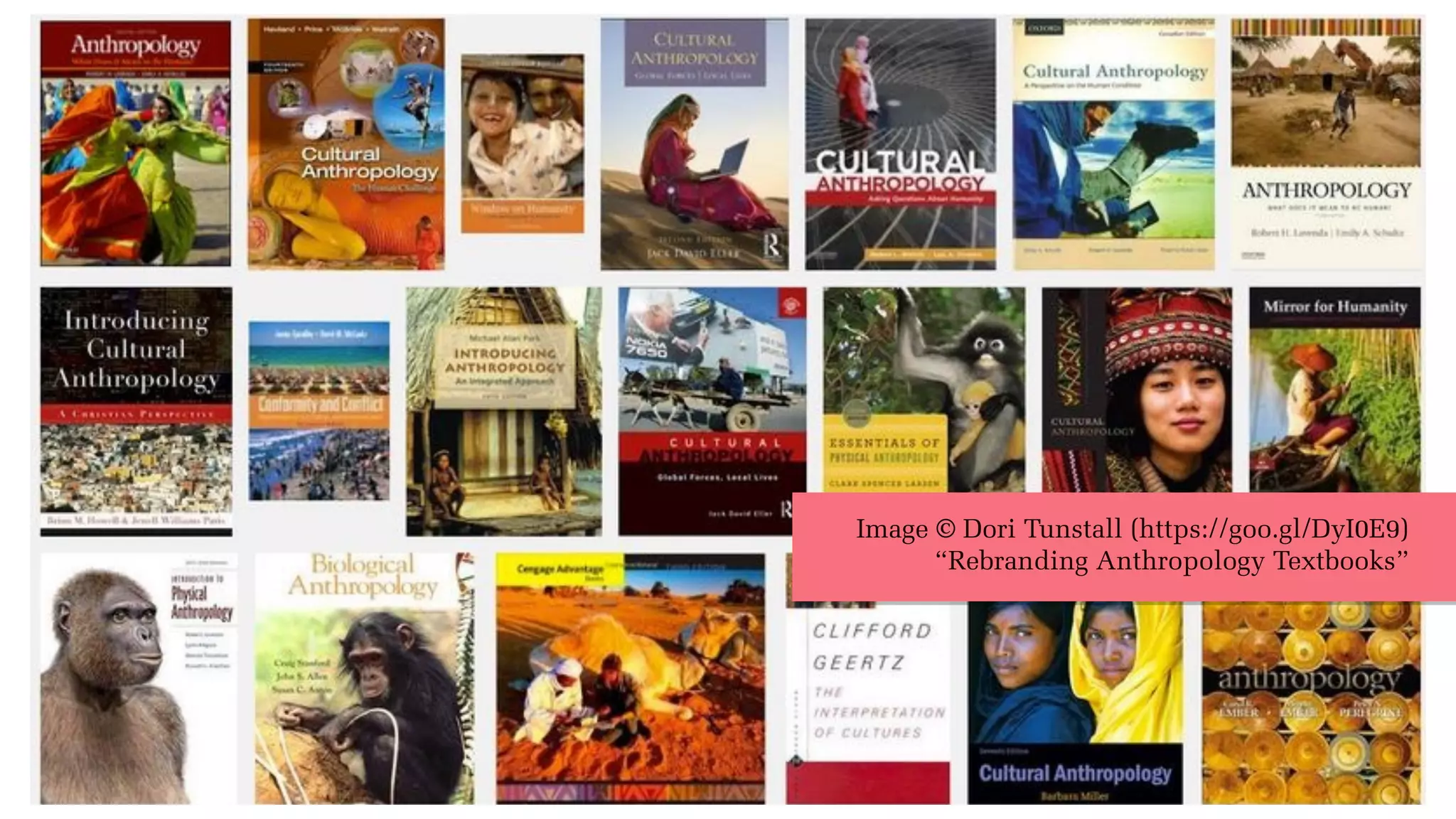
Image © Dori Tunstall (https://goo.gl/DyI0E9)
“Rebranding Anthropology Textbooks”
~EXOTIC~~EXOTIC~~EXOTIC~
ROLE
what do these people do all day?
“The design process must integrate field-specific
knowledge with a larger understanding of the
human beings for whom design is made, the social
circumstances in which the act of design takes
place, and the human context in which designed
artifacts are used.”
Gunn, Wendy. Design Anthropology: Theory and Practice (p. 3).
Bloomsbury Publishing. Kindle Edition.
“The design process must integrate field-specific
knowledge with a larger understanding of the
human beings for whom design is made, the social
circumstances in which the act of design takes
place, and the human context in which designed
artifacts are used.”
Gunn, Wendy. Design Anthropology: Theory and Practice (p. 3).
Bloomsbury Publishing. Kindle Edition.
“The design process must integrate field-specific
knowledge with a larger understanding of the
human beings for whom design is made, the social
circumstances in which the act of design takes
place, and the human context in which designed
artifacts are used.”
Gunn, Wendy. Design Anthropology: Theory and Practice (p. 3).
Bloomsbury Publishing. Kindle Edition.
“The design process must integrate field-specific
knowledge with a larger understanding of the
human beings for whom design is made, the social
circumstances in which the act of design takes
place, and the human context in which designed
artifacts are used.”
Gunn, Wendy. Design Anthropology: Theory and Practice (p. 3).
Bloomsbury Publishing. Kindle Edition.
understanding of
present practices in
order to design for
future ones.
start end
VACUUMVACUUMVACUUM
don’t do this. ever. no, seriously. don’t.
(no, for real. stop thinking about doing this.)
HISTORY
how did this come to be?
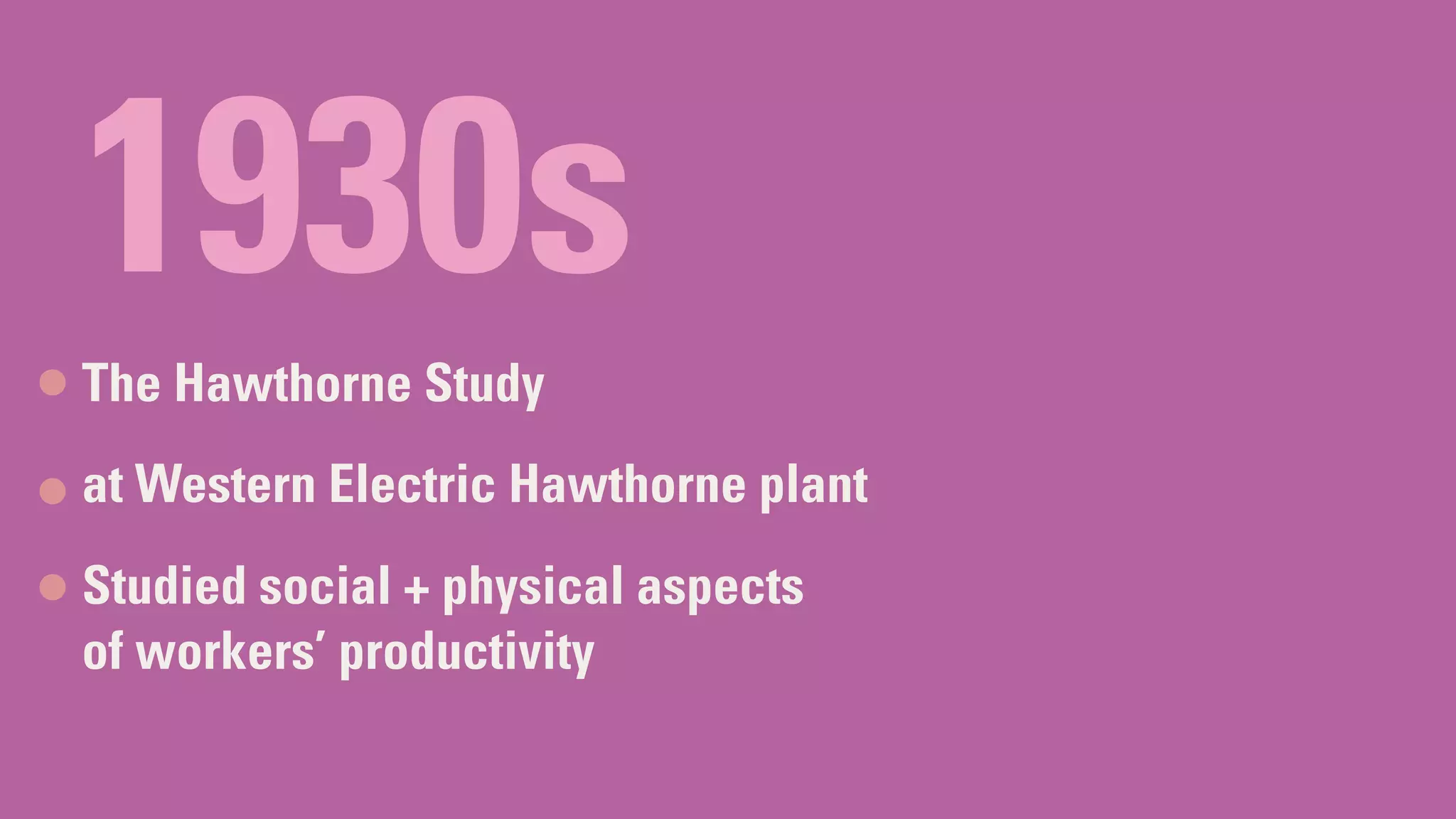
1930s
The Hawthorne Study
at Western Electric Hawthorne plant
Studied social + physical aspects
of workers’ productivity
THE
HAWTHORNE
EFFECT 👀
“Ack! I’m being watched!”
*changes behavior*
THERE MIGHT BE
SOMETHING
HERE… 🔍
(companies be like)
1940s + ‘50s
Industrial anthropologists at large companies
Behavioral + psychological factors of workers
FAST FORWARDFAST FORWARDFAST FORWARD
1980s
Xerox PARC
Foundations for HCI as we know them today
Ethnographic research + software!
1980s, cont.
Lucy Suchman (there’s a legend about this…)
LEGEND DEBUNKING TIME!LEGEND DEBUNKING TIME!LEGEND DEBUNKING TIME!
Hand by Rudy Jaspers (https://goo.gl/n9va7m)
LEGEND DEBUNKING TIME!LEGEND DEBUNKING TIME!LEGEND DEBUNKING TIME!
1980s, cont.
Lucy Suchman (legend debunked)
1980s, cont.
Lucy Suchman (legend debunked)
Video AND observation/interviews
WHAT ARE
PEOPLE REALLY
DOING? 🔍
1990s
Include users, participatory design
Add frameworks + tools
Focus on experiences
IDEO, Sonic Rim, E-lab
HOW IS
EXPERIENCE
AFFECTED?
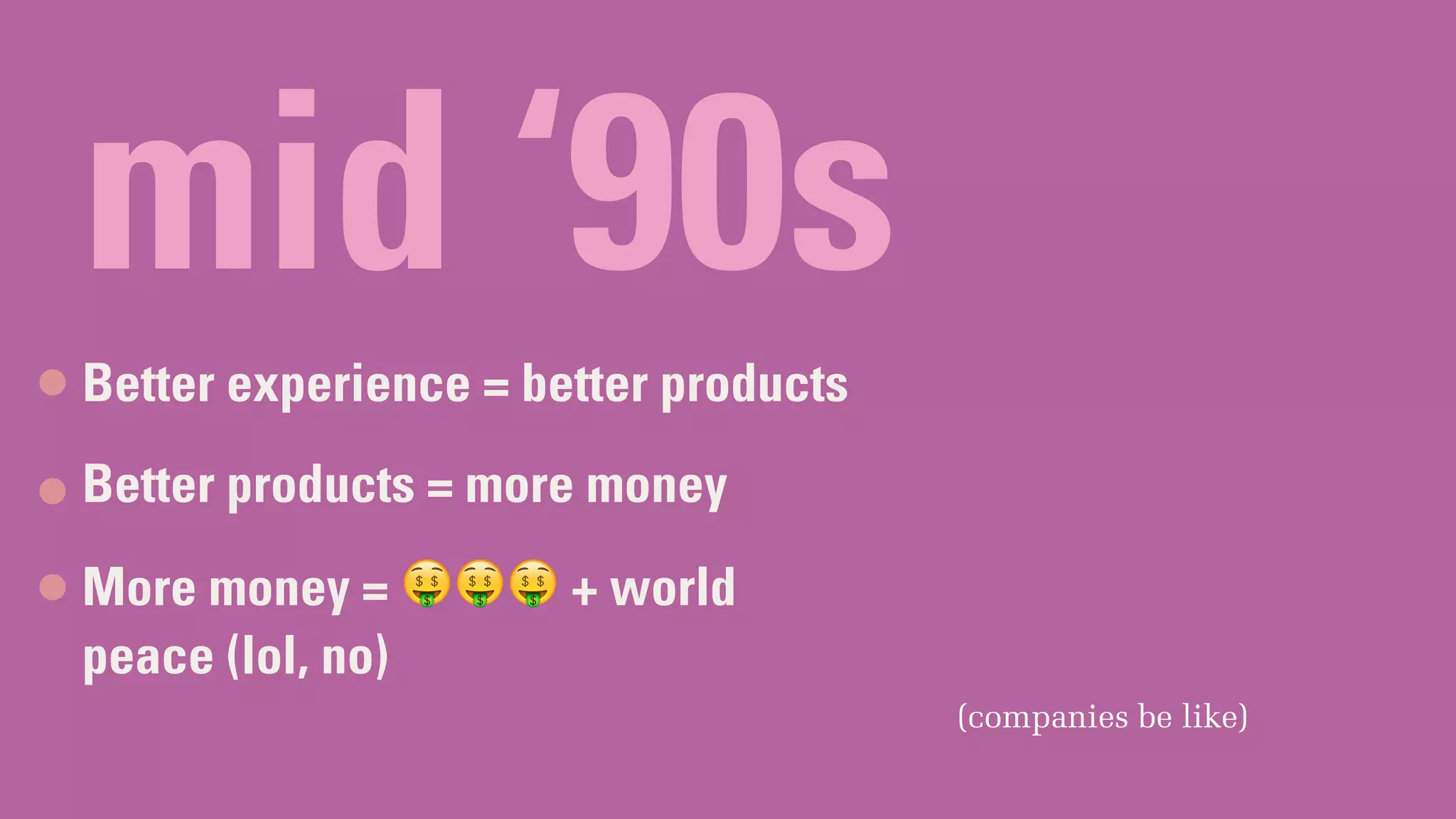
mid ‘90s
Better experience = better products
Better products = more money
More money = 🤑🤑🤑 + world
peace (lol, no)
(companies be like)
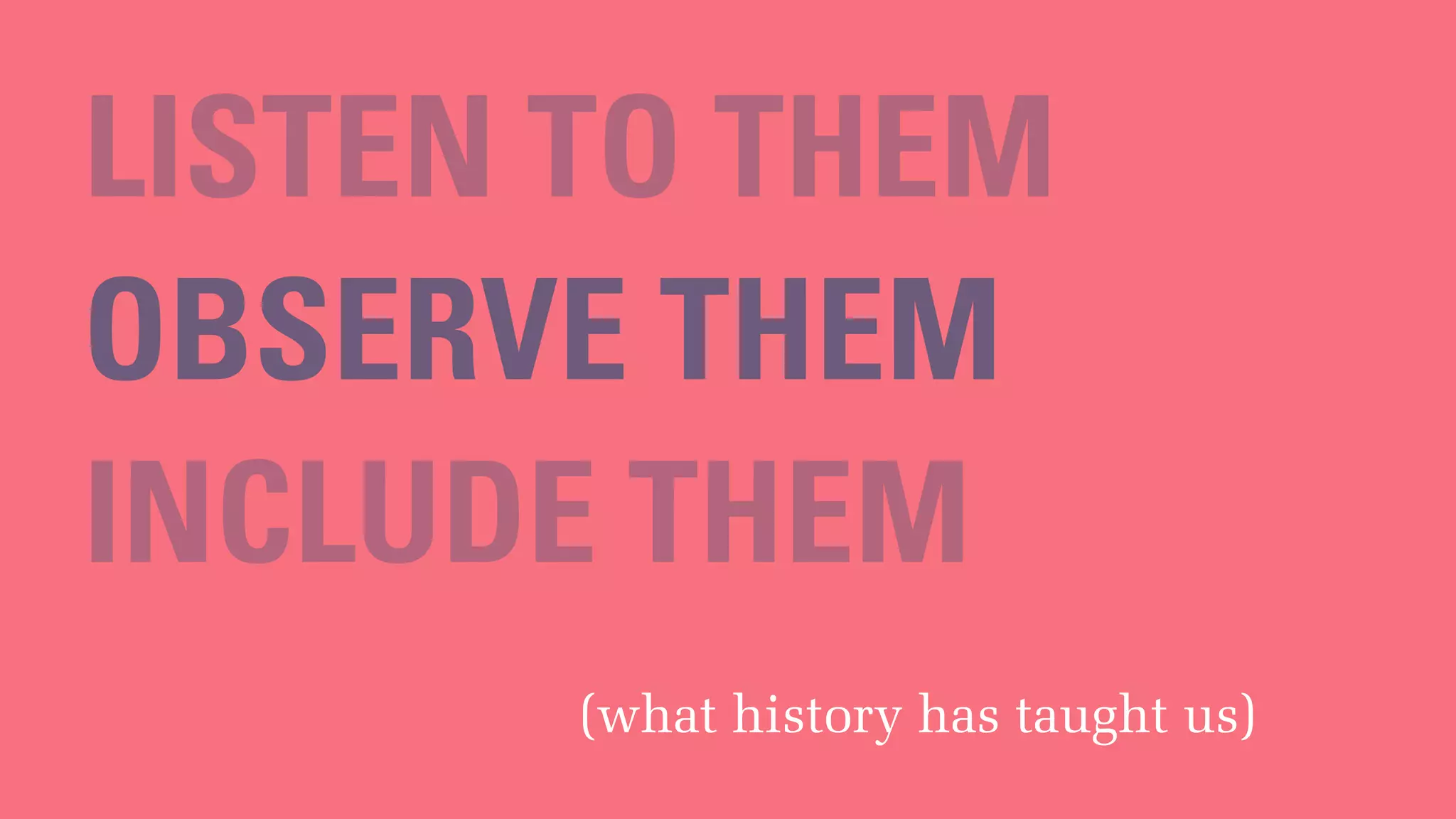
LISTEN TO THEM
(what history has taught us)
OBSERVE THEM
INCLUDE THEM
LISTEN TO THEM
(what history has taught us)
OBSERVE THEM
INCLUDE THEM
LISTEN TO THEM
(what history has taught us)
OBSERVE THEM
INCLUDE THEM
NO 5#!7, SHERLOCK.NO 5#!7, SHERLOCK.NO 5#!7, SHERLOCK.
INNOVATION IS
BORN FROM THE
ORDINARY.
WE DESIGN QUITE
WELL FOR “US.”
DESIGN
ANTHROPOLOGY
SOCIAL INNOVATION
(roots of design anthropology)
“US”= PEOPLE WHO
WANT FOR NOTHING.
WE’RE THE NORM.
FUTURE
how will this impact the future of design?
“…trying to understand how the
processes and artifacts of design
help define what it means to be
human.”
(theoretical definition.)
HUMANITYWhat are we missing?
Who are we forgetting?
How can we learn from others?
Designers as collaborators
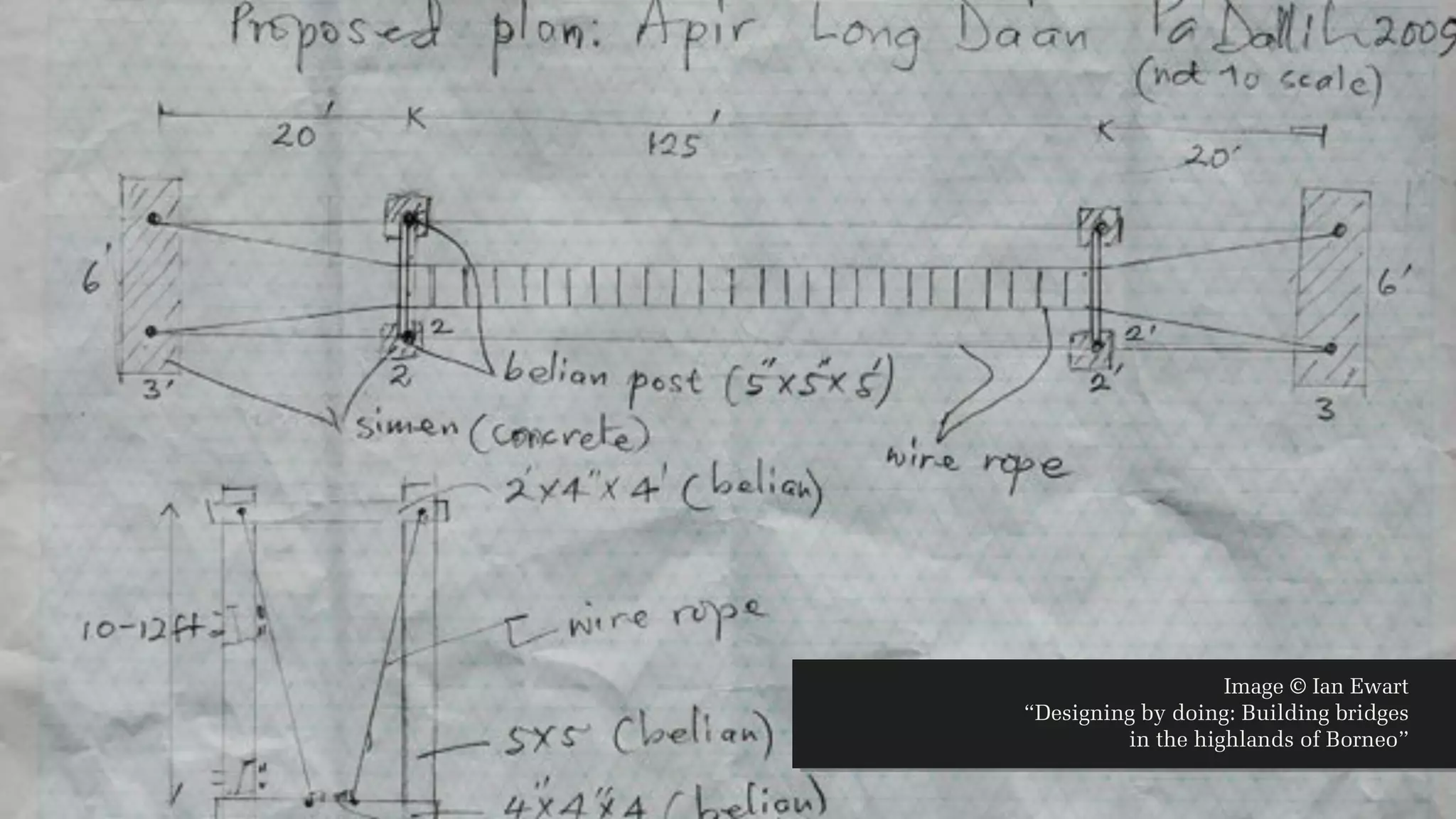
IAN J.
EWART
engineer + anthropologist
Image © Ian Ewart
“Designing by doing: Building bridges
in the highlands of Borneo”
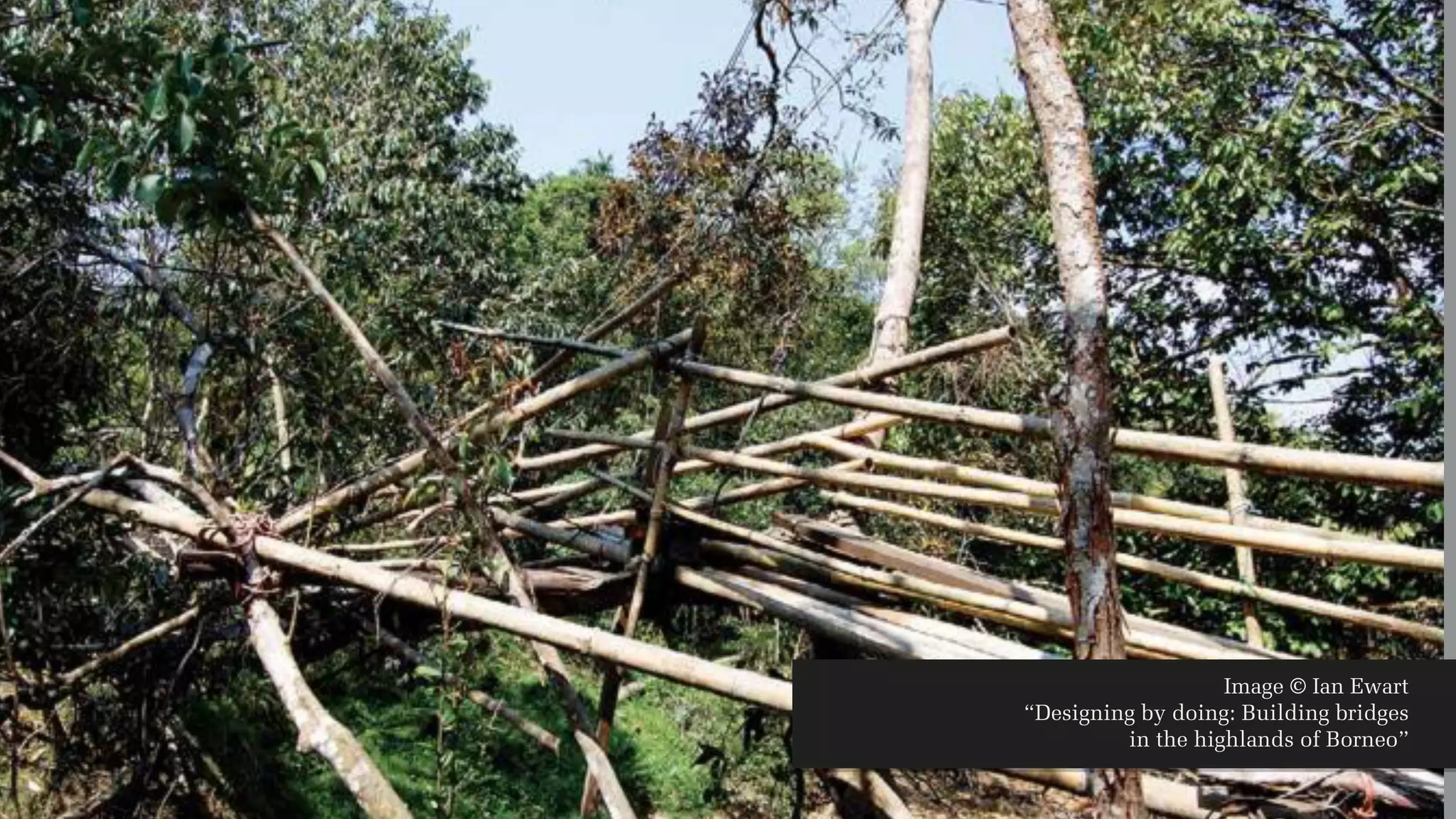
Image © Ian Ewart
“Designing by doing: Building bridges
in the highlands of Borneo”
Image © Ian Ewart
“Designing by doing: Building bridges
in the highlands of Borneo”
Image © Ian Ewart
“Designing by doing: Building bridges
in the highlands of Borneo”
REDEFINE
THE HUMAN
EXPERIENCE
NO ONE NEEDS
TO BE SAVED.
(oh word?)
NO ONE IS
BROKEN.
(“for real?” yes, for real.)
WE HAVE BROKEN
SYSTEMS WE’VE
BEEN IGNORING.
LISTEN TO THEM
(what history has taught us)
OBSERVE THEM
INCLUDE THEM
LISTEN TO THEM
(what history has taught us)
OBSERVE THEM
INCLUDE THEM
LISTEN TO THEM
(what history has taught us)
OBSERVE THEM
INCLUDE THEM
IMPROVE LIVES.
PUSH HUMANITY
FORWARD.
THANK YOU.THANK YOU.THANK YOU.
@amelielamont
www.amelielamont.com
amelie@amelielamont.com

Amélie Lamont, "Design Anthropology 101"