Amines
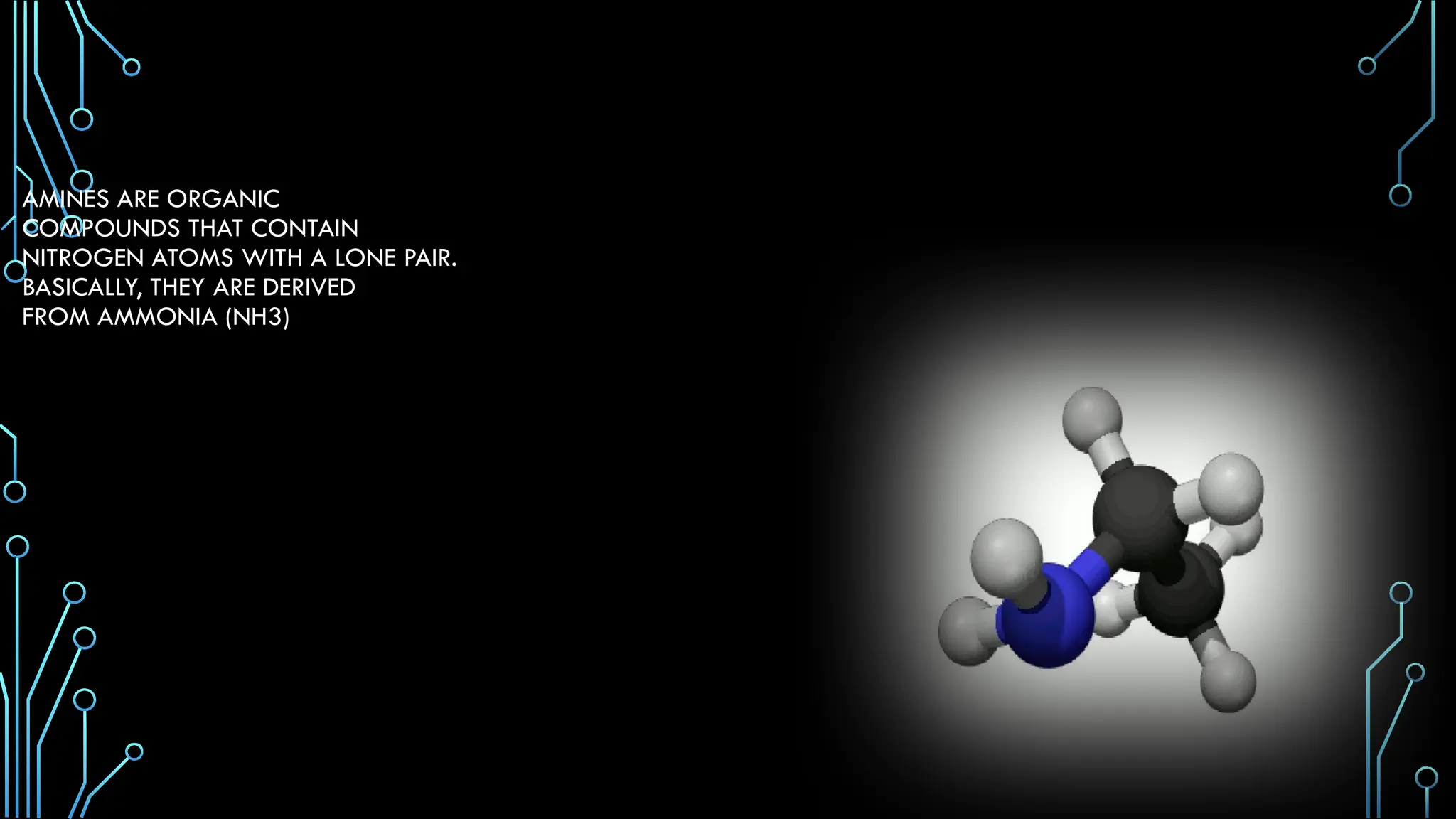
AMINES ARE ORGANIC
COMPOUNDS THAT CONTAIN
NITROGEN ATOMS WITH A LONE PAIR.
BASICALLY, THEY ARE DERIVED
FROM AMMONIA (NH3)
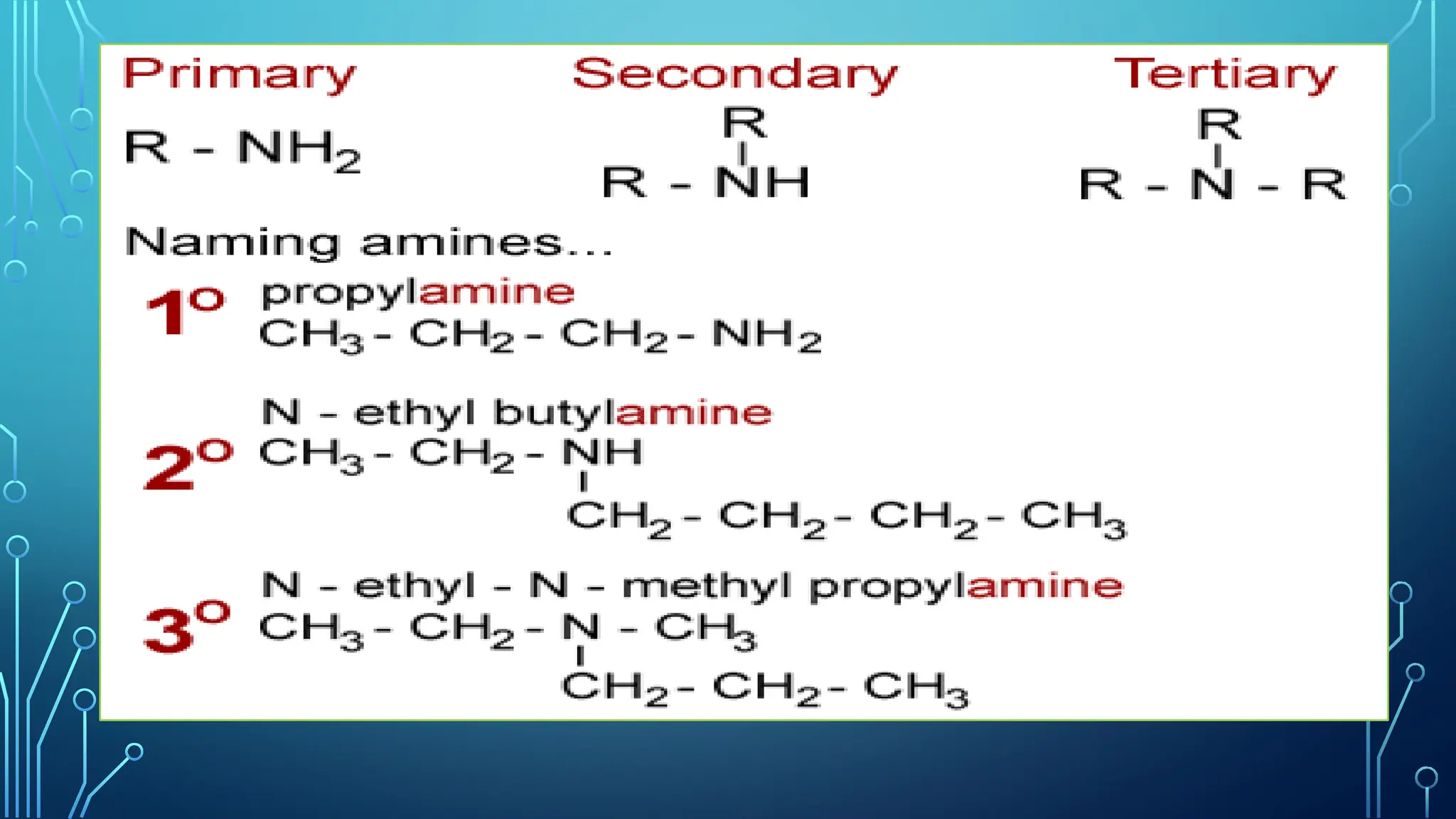
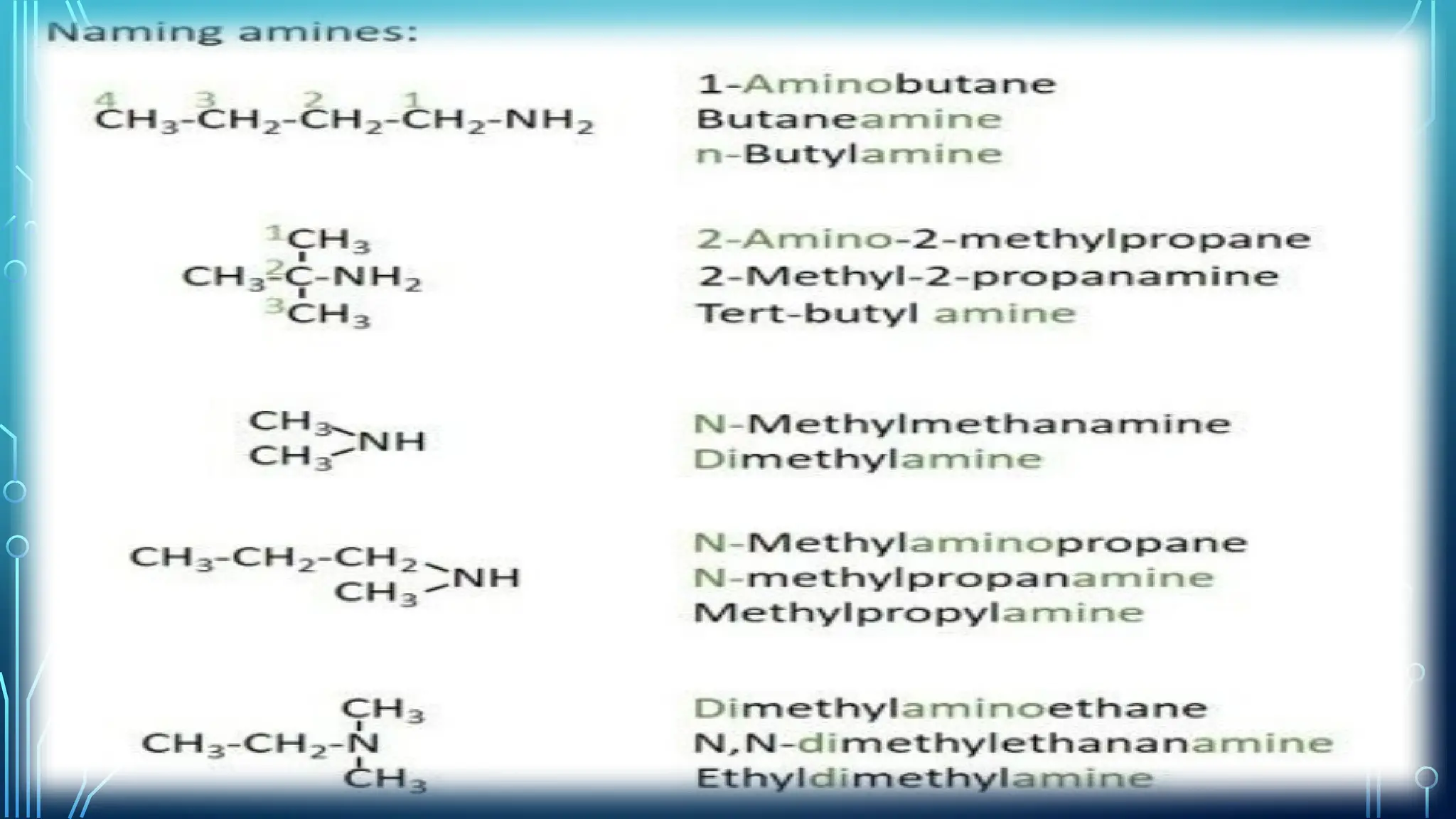
AMINES: COMMON (TRIVIAL)
NAMES ARE OBTAINED BY
ALPHABETICALLY ARRANGING THE
NAMES OF THE ALKYL
SUBSTITUENTS ON THE NITROGEN
AND ADDING THE SUFFIX -
AMINE (E.G., ETHYLMETHYLAMINE).
•Naming Primary Amines
•Identify the longest carbon chain bonded to
the amine nitrogen.
•Identify the substituents.
•Number the parent locant.
Rules in naming
Amine
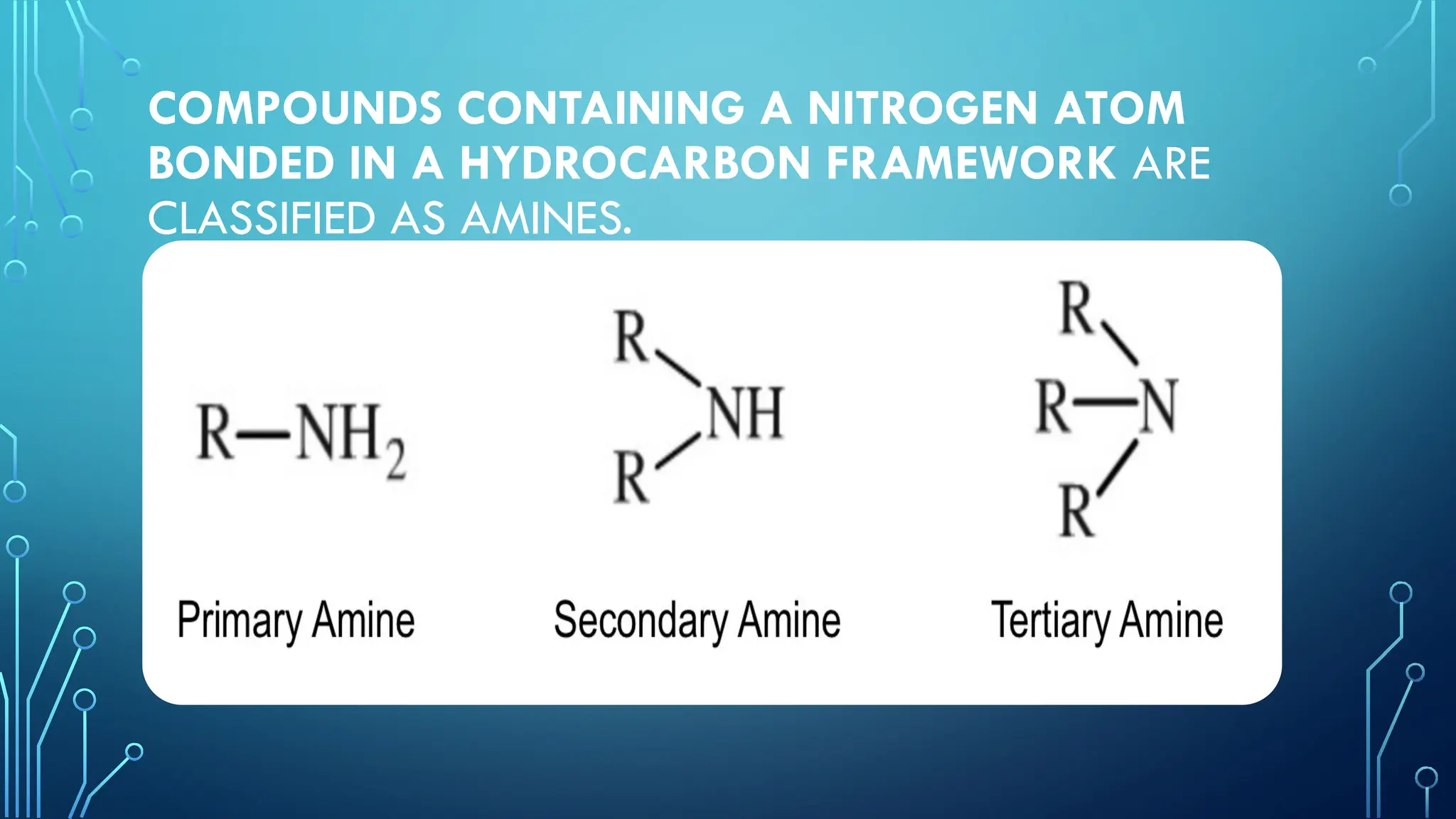
COMPOUNDS CONTAINING A NITROGEN ATOM
BONDED IN A HYDROCARBON FRAMEWORK ARE
CLASSIFIED AS AMINES.
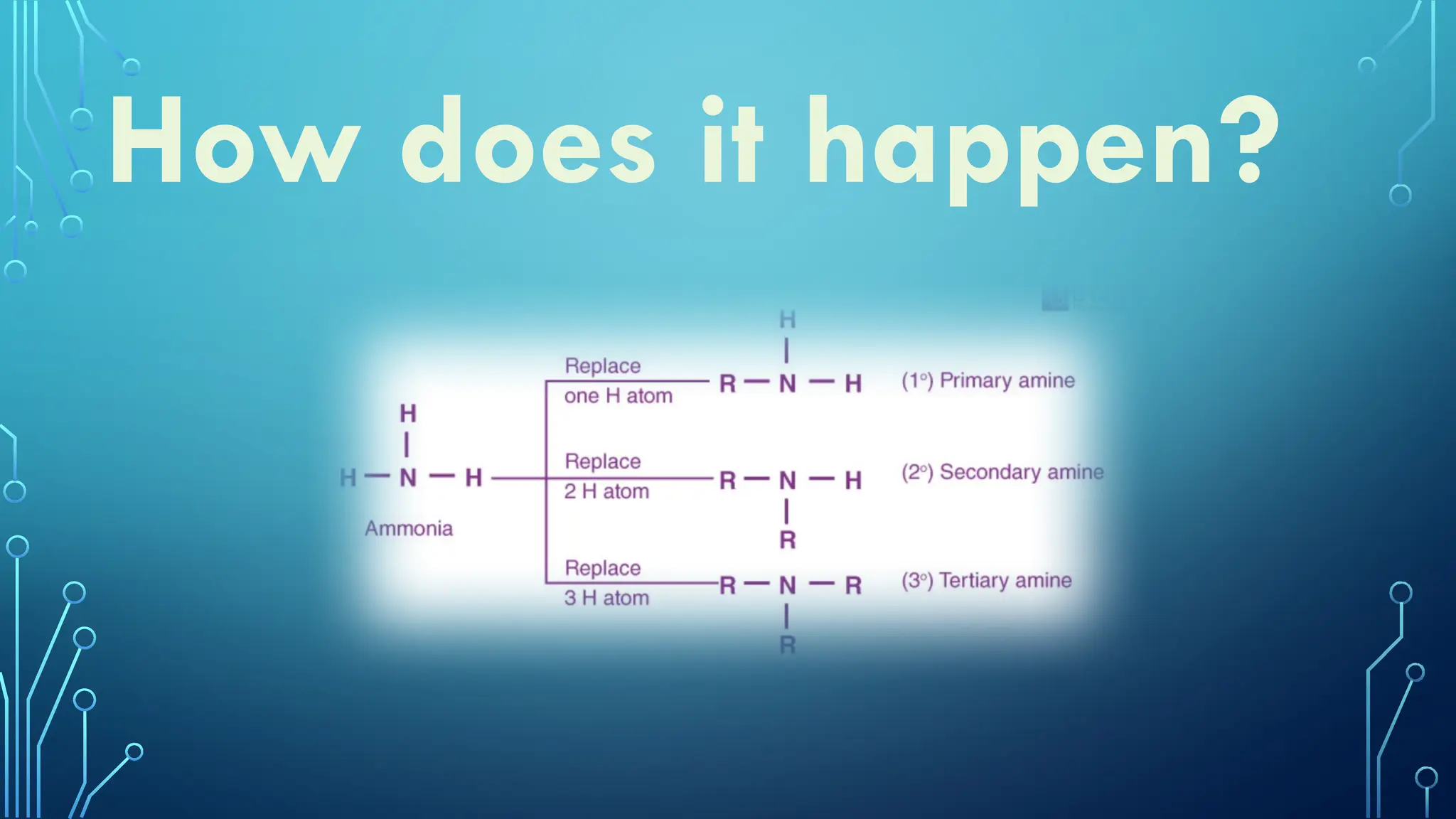
How does it happen?
Structure of Amines
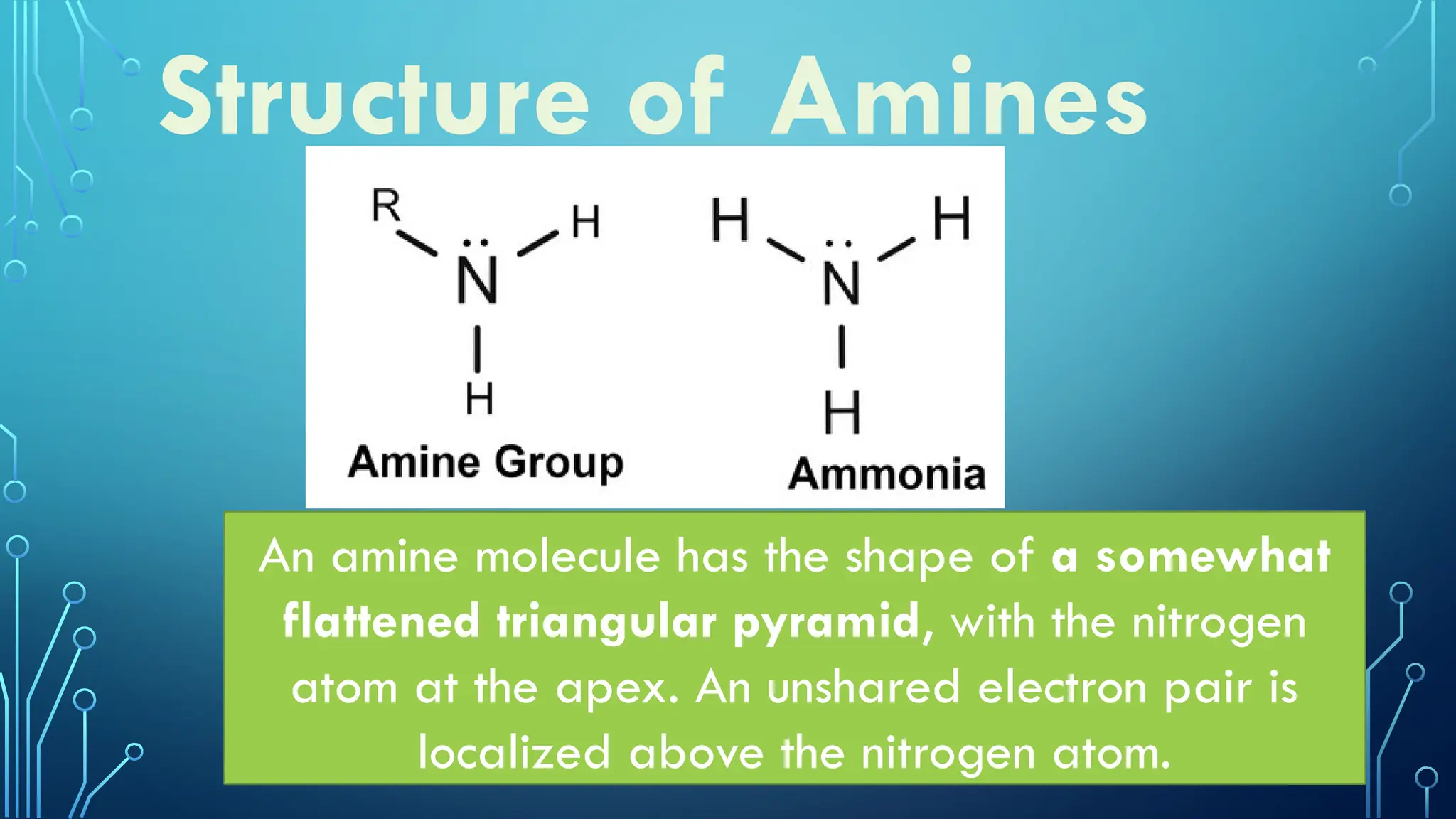
An amine molecule has the shape of a somewhat
flattened triangular pyramid, with the nitrogen
atom at the apex. An unshared electron pair is
localized above the nitrogen atom.
Nomenclature
Cyclic Amine
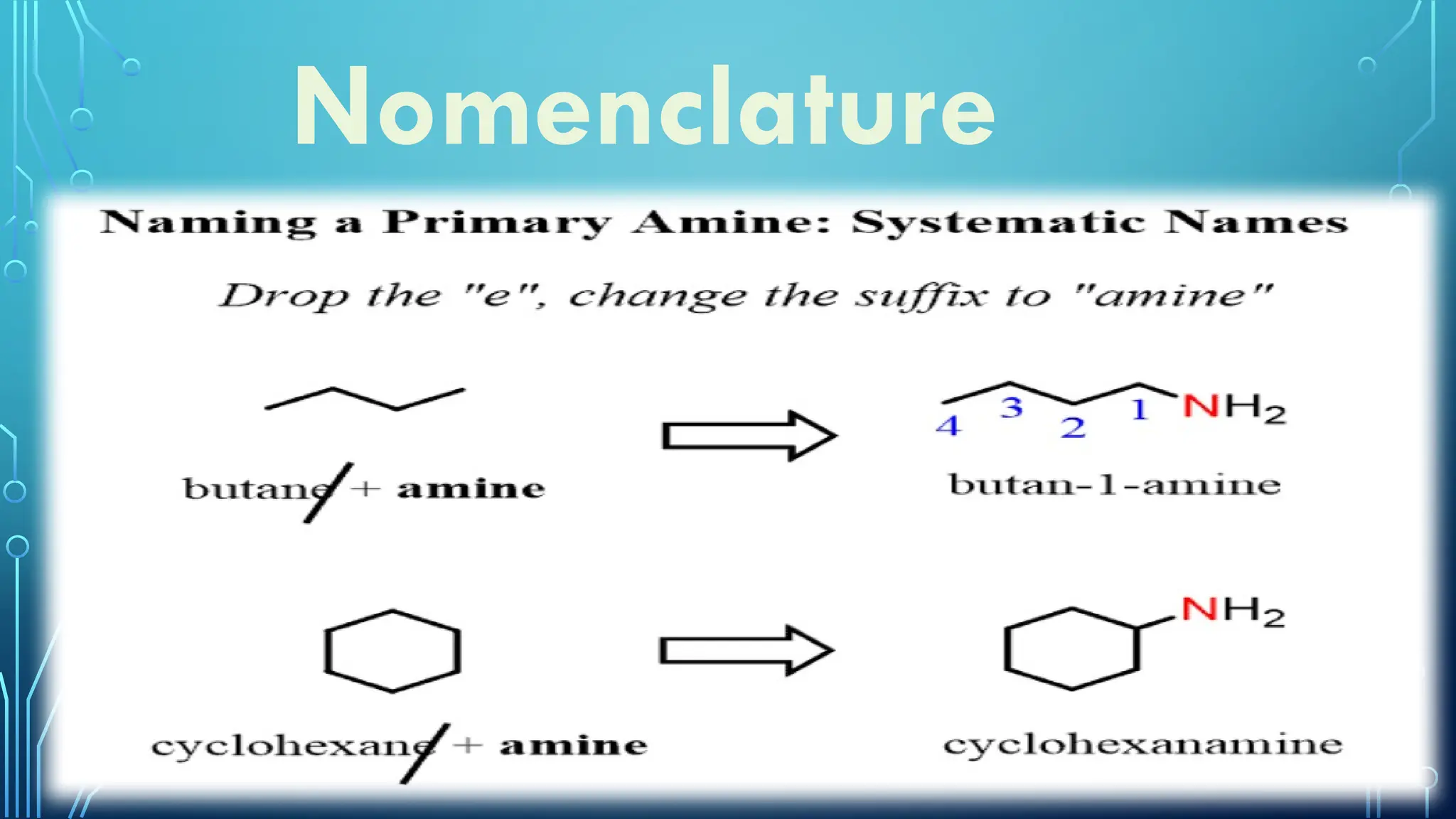
In terms of naming they adopt the prefix
“cyclo” prior to “propane”, “butane” and
so on. Examples can be found in the table
below. If a hydrogen atom is replaced by an
amino group, -NH2 then the name changes to
reflect this by the use of the suffix “amine”.
NH2
cyclohexylamine
Amine as Substituent
•Amines constitute an important class of organic
compounds derived by replacing one or more
hydrogen atoms of ammonia molecule by alkyl/aryl
group(s). In nature, they occur among proteins,
vitamins, alkaloids and hormones. Synthetic
examples include polymers, dye stuffs and drugs.
Synthetic example of Amines
EXAMPLES ARE
ANILINE, ETHANOLAMINE
dyes
rubber
fibres

AMINES IUPAC and Functional Groupss.pptx.pptx