SULFIDE
JONEL E. ASDILLO, LPT
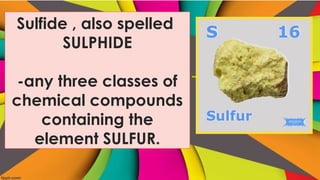
Sulfide , also spelled
SULPHIDE
-any three classes of
chemical compounds
containing the
element SULFUR.
It is an inorganic anion of sulfur with the
chemical formula S2-
or a compound
containing one or more S2-
ions.
There are three classes of Sulfides:
1. Inorganic sulfides
2. Organic sulfides( sometimes called thioethers)
3. Phosphine sulfides
INORGANIC SULFIDES
- are ionic compounds containing the
negatively charged sulfide ion, S2−
; these
compounds may be regarded as salts of
the very weak acid hydrogen sulfide.
PHOSPHINE SULFIDES
-are formed from the reaction of organic
phosphines with sulfur, in which the sulfur
atom is linked to the phosphorus by a bond
that has both covalent and ionic properties.
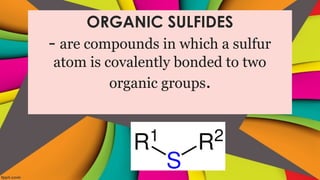
ORGANIC SULFIDES
- are compounds in which a sulfur
atom is covalently bonded to two
organic groups.
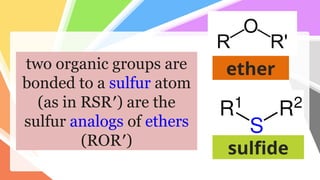
two organic groups are
bonded to a sulfur atom
(as in RSR′) are the
sulfur analogs of ethers
(ROR′)
ether
sulfide
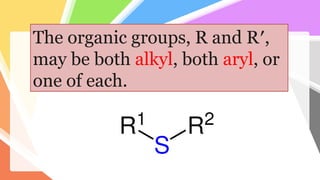
The organic groups, R and R′,
may be both alkyl, both aryl, or
one of each.
Sulfide Nomenclature
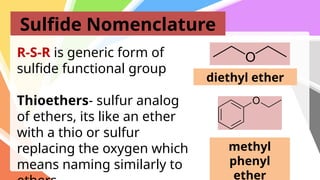
R-S-R is generic form of
sulfide functional group
Thioethers- sulfur analog
of ethers, its like an ether
with a thio or sulfur
replacing the oxygen which
means naming similarly to
diethyl ether
methyl
phenyl
ether
Sulfide Nomenclature
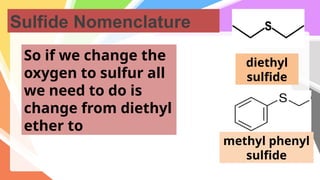
So if we change the
oxygen to sulfur all
we need to do is
change from diethyl
ether to
diethyl
sulfide
methyl phenyl
sulfide
IUPAC SYSTEM
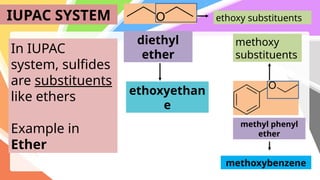
In IUPAC
system, sulfides
are substituents
like ethers
Example in
Ether
diethyl
ether
ethoxyethan
e
methyl phenyl
ether
methoxybenzene
ethoxy substituents
methoxy
substituents
IUPAC SYSTEM
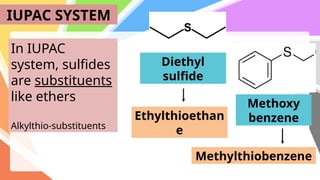
In IUPAC
system, sulfides
are substituents
like ethers
Alkylthio-substituents
Diethyl
sulfide
Ethylthioethan
e
Methoxy
benzene
Methylthiobenzene
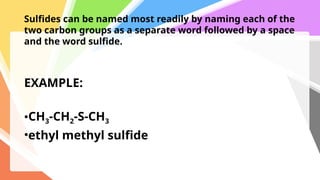
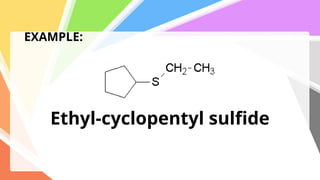
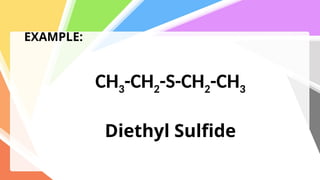
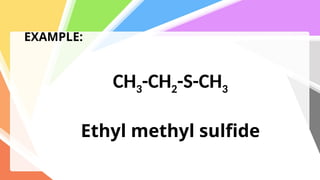
Sulfides can be named most readily by naming each of the
two carbon groups as a separate word followed by a space
and the word sulfide.
EXAMPLE:
•CH3-CH2-S-CH3
•ethyl methyl sulfide
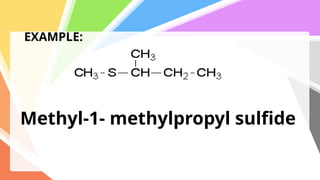
EXAMPLE:
Methyl-1- methylpropyl sulfide
EXAMPLE:
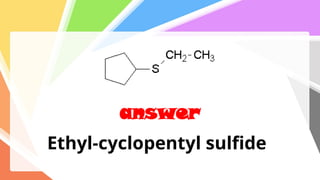
Ethyl-cyclopentyl sulfide
EXAMPLE:
CH3-CH2-S-CH2-CH3
Diethyl Sulfide
EXAMPLE:
CH3-CH2-S-CH3
Ethyl methyl sulfide
-Sulfides of many important metallic elements are naturally
occurring minerals. For example, pyrite, which is also
called fool’s gold owing to its brassy yellow colour,
is a sulfide of iron with the formula FeS2.
-Pyrite is a major source of iron and is one of the most
abundant of the sulfur minerals. Zinc, cadmium, mercury,
copper, silver, and many other elements occur in nature as
sulfides.
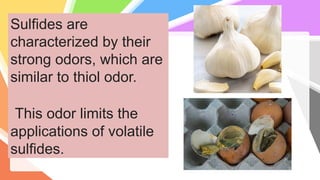
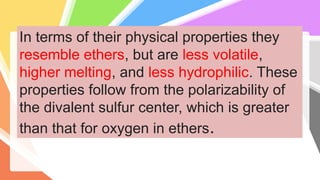
Sulfides are
characterized by their
strong odors, which are
similar to thiol odor.
This odor limits the
applications of volatile
sulfides.
In terms of their physical properties they
resemble ethers, but are less volatile,
higher melting, and less hydrophilic. These
properties follow from the polarizability of
the divalent sulfur center, which is greater
than that for oxygen in ethers.
HAZARDS and BENEFITS
Some metal sulfides when exposed to a
strong mineral acid, will release which
rotting biomass releases also
toxic hydrogen sulfide.
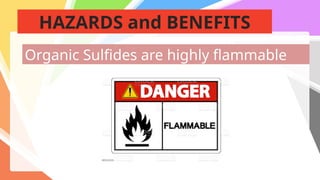
HAZARDS and BENEFITS
Organic Sulfides are highly flammable
HAZARDS and BENEFITS
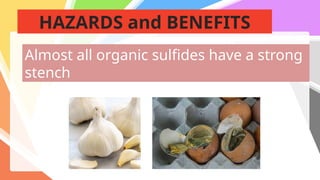
Almost all organic sulfides have a strong
stench
The active substance in onions, garlic,
and other members of the allium
families are allyl sulfides have many
health benefits including, protection
against cancer, lower cholesterol, reduce
the risk of blood clots and heart disease.
Hydrogen Sulfides is used primarily to
produce Sulfuric acid and Sulfur. It is also
used to create a variety of inorganic
sulfides used to create pesticides,
leathers, dyes and Pharmaceuticals.
Hydrogen sulfide is used to produce
heavy water for Nuclear Power Plants
Hydrogen Sulfides is found naturally in
crude petroleum and natural gas . It also
produced through the bacterial
breakdown of organic matter. Hydrogen
sulfide can be produced by decomposing
human and animal waste and is found in
sewage treatment plants and livestock
areas.
ACTIVITY TIME:
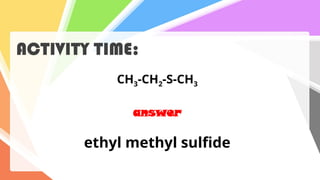
CH3-CH2-S-CH3
answer
ethyl methyl sulfide
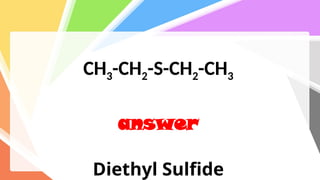
CH3-CH2-S-CH2-CH3
answer
Diethyl Sulfide
Ethyl-cyclopentyl sulfide
answer
Thank you!

SULFIDE and Its functional groups and naming.pptx

  • 1.
  • 2.
    Sulfide , alsospelled SULPHIDE -any three classes of chemical compounds containing the element SULFUR.
  • 3.
    It is aninorganic anion of sulfur with the chemical formula S2- or a compound containing one or more S2- ions.
  • 4.
    There are threeclasses of Sulfides: 1. Inorganic sulfides 2. Organic sulfides( sometimes called thioethers) 3. Phosphine sulfides
  • 5.
    INORGANIC SULFIDES - areionic compounds containing the negatively charged sulfide ion, S2− ; these compounds may be regarded as salts of the very weak acid hydrogen sulfide.
  • 6.
    PHOSPHINE SULFIDES -are formedfrom the reaction of organic phosphines with sulfur, in which the sulfur atom is linked to the phosphorus by a bond that has both covalent and ionic properties.
  • 7.
    ORGANIC SULFIDES - arecompounds in which a sulfur atom is covalently bonded to two organic groups.
  • 8.
    two organic groupsare bonded to a sulfur atom (as in RSR′) are the sulfur analogs of ethers (ROR′) ether sulfide
  • 9.
    The organic groups,R and R′, may be both alkyl, both aryl, or one of each.
  • 10.
    Sulfide Nomenclature R-S-R isgeneric form of sulfide functional group Thioethers- sulfur analog of ethers, its like an ether with a thio or sulfur replacing the oxygen which means naming similarly to diethyl ether methyl phenyl ether
  • 11.
    Sulfide Nomenclature So ifwe change the oxygen to sulfur all we need to do is change from diethyl ether to diethyl sulfide methyl phenyl sulfide
  • 12.
    IUPAC SYSTEM In IUPAC system,sulfides are substituents like ethers Example in Ether diethyl ether ethoxyethan e methyl phenyl ether methoxybenzene ethoxy substituents methoxy substituents
  • 13.
    IUPAC SYSTEM In IUPAC system,sulfides are substituents like ethers Alkylthio-substituents Diethyl sulfide Ethylthioethan e Methoxy benzene Methylthiobenzene
  • 16.
    Sulfides can benamed most readily by naming each of the two carbon groups as a separate word followed by a space and the word sulfide. EXAMPLE: •CH3-CH2-S-CH3 •ethyl methyl sulfide
  • 17.
  • 18.
  • 19.
  • 20.
  • 21.
    -Sulfides of manyimportant metallic elements are naturally occurring minerals. For example, pyrite, which is also called fool’s gold owing to its brassy yellow colour, is a sulfide of iron with the formula FeS2. -Pyrite is a major source of iron and is one of the most abundant of the sulfur minerals. Zinc, cadmium, mercury, copper, silver, and many other elements occur in nature as sulfides.
  • 22.
    Sulfides are characterized bytheir strong odors, which are similar to thiol odor. This odor limits the applications of volatile sulfides.
  • 23.
    In terms oftheir physical properties they resemble ethers, but are less volatile, higher melting, and less hydrophilic. These properties follow from the polarizability of the divalent sulfur center, which is greater than that for oxygen in ethers.
  • 24.
    HAZARDS and BENEFITS Somemetal sulfides when exposed to a strong mineral acid, will release which rotting biomass releases also toxic hydrogen sulfide.
  • 25.
    HAZARDS and BENEFITS OrganicSulfides are highly flammable
  • 26.
    HAZARDS and BENEFITS Almostall organic sulfides have a strong stench
  • 27.
    The active substancein onions, garlic, and other members of the allium families are allyl sulfides have many health benefits including, protection against cancer, lower cholesterol, reduce the risk of blood clots and heart disease.
  • 28.
    Hydrogen Sulfides isused primarily to produce Sulfuric acid and Sulfur. It is also used to create a variety of inorganic sulfides used to create pesticides, leathers, dyes and Pharmaceuticals. Hydrogen sulfide is used to produce heavy water for Nuclear Power Plants
  • 29.
    Hydrogen Sulfides isfound naturally in crude petroleum and natural gas . It also produced through the bacterial breakdown of organic matter. Hydrogen sulfide can be produced by decomposing human and animal waste and is found in sewage treatment plants and livestock areas.
  • 30.
  • 31.
  • 32.
  • 33.