The Reluctant
    Customer
“Change your brain to change
        the game.”

Allied Public Relations Executives
          New York City
           April 4, 2013
Why are we here?
• Want our customers to have a positive
  marketing resource experience
• Doing good work makes us feel good
• We like to be known for providing a
  consistent positive image of our
  association
• We want to be seen as “adding value”
Why are We Really Here?
• Efficiency – Smooth, fast delivery
• Effectiveness – Want to be the “go-to” resource
• Productivity – Known for giving a bigger bang for
  their buck
• Retention – Greater likelihood of job stability
• Repeat Business – Happy association customers
  come back – and tell others about their experience
• Risk Management – Happy customers don’t throw
  me or our association under the bus!
• Success – Successful service = successful
  organization = high sustainability and brand affinity
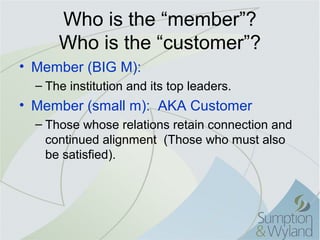
Who is the “member”?
      Who is the “customer”?
• Member (BIG M):
  – The institution and its top leaders.
• Member (small m): AKA Customer
  – Those whose relations retain connection and
    continued alignment (Those who must also
    be satisfied).
Disclaimer
 This information may be
hazardous to your career.
  Proceed with caution!
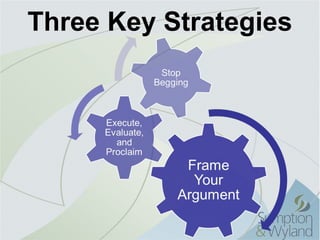
Three Key Strategies
One Example for Consideration
 

http://www.pbs.org/newshour/rundown/
 
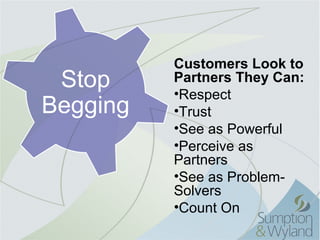
Customers Look to
 Stop     Partners They Can:
          •Respect
Begging   •Trust
          •See as Powerful
          •Perceive as 
          Partners
          •See as Problem-
          Solvers
          •Count On
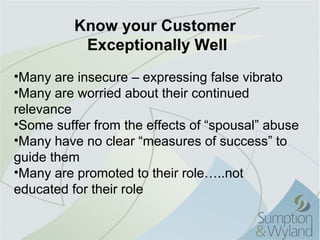
Know your Customer
           Exceptionally Well
•Many are insecure – expressing false vibrato
•Many are worried about their continued 
relevance
•Some suffer from the effects of “spousal” abuse
•Many have no clear “measures of success” to 
guide them
•Many are promoted to their role…..not 
educated for their role
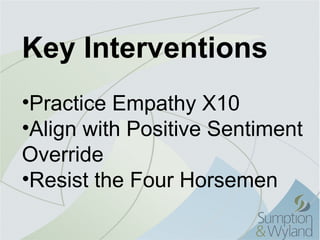
Key Interventions
•Practice Empathy X10
•Align with Positive Sentiment 
Override
•Resist the Four Horsemen
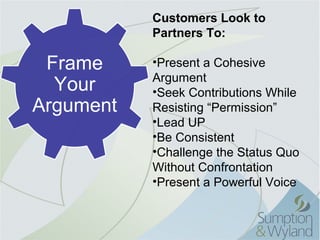
Customers Look to
           Partners To:

 Frame     •Present a Cohesive 
           Argument
  Your     •Seek Contributions While 
Argument   Resisting “Permission”
           •Lead UP
           •Be Consistent
           •Challenge the Status Quo 
           Without Confrontation
           •Present a Powerful Voice
Key Interventions
•Practice Creative Conflict 
Communication
•Use a six-step problem-
solving process
•Use high empathy 
questioning
Conflict –
The Necessary Ingredient for
Successful Outcomes

Scenario:
      •Take two people
              Each has a sum-total of experiences
              Each has a set of responsibilities
      •Add a complex issue
      •What you get – A “stew” of divergent information on ....
              What is important
              What is true

Creative Conflict Management is about harvesting that 
divergent information to make better decisions.
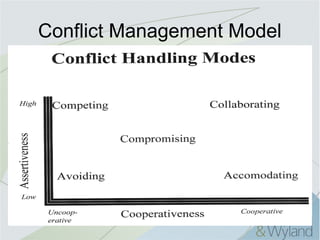
Conflict Management Model
Collaborate when you can on important issues:

  Seek ways to satisfy both your own and the
  other person’s concerns.
Definition:
  Concern: What you care about in a conflict;
  the thing that’s threatened that you would like to
  protect.
  Position: The action you propose to settle the
  conflict; what you think should be done.

(Framing things in terms of position limits you to
win/lose outcomes)
It Begins With the
 Right Question –
We Ask Ourselves
# 1 – Begin with “what/how”
• Always begin any question with “what” or
  “how” – not “why”, “when”, or “who”

The spirit of the customer experience is
 about personal accountability – no victim
 thinking, procrastinating, or blaming.
#2 – It contains an “I”

• Questions do not use “they”, “them”, “we”,
  or “you”.

The customer experience is their experience
 … not your perception of who is at “fault”.

An assertion of blame is NOT comfort.
#3 – Be active
• Questions always focus on action


The customer experience must be about
 motion toward an attainable goal – not an
 explanation about why a goal cannot be
 reached.
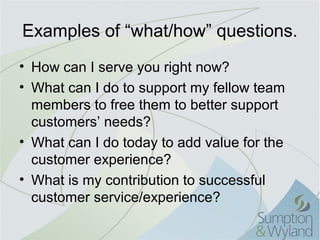
Examples of “what/how” questions.
• How can I serve you right now?
• What can I do to support my fellow team
  members to free them to better support
  customers’ needs?
• What can I do today to add value for the
  customer experience?
• What is my contribution to successful
  customer service/experience?
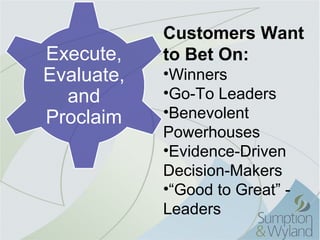
Customers Want
Execute,    to Bet On:
Evaluate,   •Winners
  and       •Go-To Leaders
Proclaim    •Benevolent
            Powerhouses
            •Evidence-Driven
            Decision-Makers
            •“Good to Great” -
            Leaders
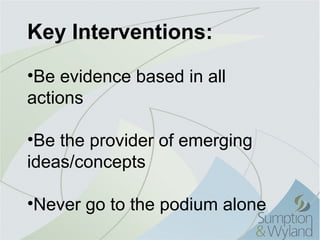
Key Interventions:
•Be evidence based in all
actions

•Be the provider of emerging
ideas/concepts

•Never go to the podium alone
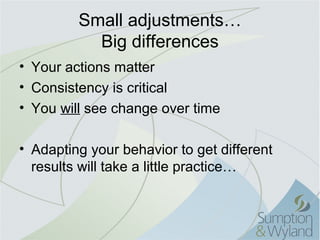
Small adjustments…
           Big differences
• Your actions matter
• Consistency is critical
• You will see change over time

• Adapting your behavior to get different
  results will take a little practice…
“Wisdom is what you
 learn after you know
         it all”
       John G. Miller
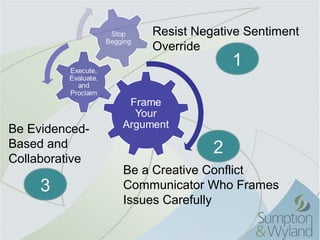
Resist Negative Sentiment
                    Override
                                  1


Be Evidenced-
Based and                     2
Collaborative
                Be a Creative Conflict
     3          Communicator Who Frames
                Issues Carefully
Thank You!


      818 S. Hawthorne Avenue
Sioux Falls, South Dakota 57104-4537
(605) 336-0244 or (888) 4-SUMPTION
    www.sumptionandwyland.com

American Hospital Assn. PR Execs

  • 1.
    The Reluctant Customer “Change your brain to change the game.” Allied Public Relations Executives New York City April 4, 2013
  • 2.
    Why are wehere? • Want our customers to have a positive marketing resource experience • Doing good work makes us feel good • We like to be known for providing a consistent positive image of our association • We want to be seen as “adding value”
  • 3.
    Why are WeReally Here? • Efficiency – Smooth, fast delivery • Effectiveness – Want to be the “go-to” resource • Productivity – Known for giving a bigger bang for their buck • Retention – Greater likelihood of job stability • Repeat Business – Happy association customers come back – and tell others about their experience • Risk Management – Happy customers don’t throw me or our association under the bus! • Success – Successful service = successful organization = high sustainability and brand affinity
  • 5.
    Who is the“member”? Who is the “customer”? • Member (BIG M): – The institution and its top leaders. • Member (small m): AKA Customer – Those whose relations retain connection and continued alignment (Those who must also be satisfied).
  • 6.
    Disclaimer This informationmay be hazardous to your career. Proceed with caution!
  • 7.
  • 8.
  • 9.
    Customers Look to Stop  Partners They Can: •Respect Begging •Trust •See as Powerful •Perceive as  Partners •See as Problem- Solvers •Count On
  • 10.
    Know your Customer Exceptionally Well •Many are insecure – expressing false vibrato •Many are worried about their continued  relevance •Some suffer from the effects of “spousal” abuse •Many have no clear “measures of success” to  guide them •Many are promoted to their role…..not  educated for their role
  • 11.
  • 12.
    Customers Look to Partners To: Frame  •Present a Cohesive  Argument Your  •Seek Contributions While  Argument Resisting “Permission” •Lead UP •Be Consistent •Challenge the Status Quo  Without Confrontation •Present a Powerful Voice
  • 13.
  • 14.
    Conflict – The NecessaryIngredient for Successful Outcomes Scenario: •Take two people  Each has a sum-total of experiences  Each has a set of responsibilities •Add a complex issue •What you get – A “stew” of divergent information on ....  What is important  What is true Creative Conflict Management is about harvesting that  divergent information to make better decisions.
  • 15.
  • 16.
    Collaborate when youcan on important issues: Seek ways to satisfy both your own and the other person’s concerns. Definition: Concern: What you care about in a conflict; the thing that’s threatened that you would like to protect. Position: The action you propose to settle the conflict; what you think should be done. (Framing things in terms of position limits you to win/lose outcomes)
  • 17.
    It Begins Withthe Right Question – We Ask Ourselves
  • 18.
    # 1 –Begin with “what/how” • Always begin any question with “what” or “how” – not “why”, “when”, or “who” The spirit of the customer experience is about personal accountability – no victim thinking, procrastinating, or blaming.
  • 19.
    #2 – Itcontains an “I” • Questions do not use “they”, “them”, “we”, or “you”. The customer experience is their experience … not your perception of who is at “fault”. An assertion of blame is NOT comfort.
  • 20.
    #3 – Beactive • Questions always focus on action The customer experience must be about motion toward an attainable goal – not an explanation about why a goal cannot be reached.
  • 21.
    Examples of “what/how”questions. • How can I serve you right now? • What can I do to support my fellow team members to free them to better support customers’ needs? • What can I do today to add value for the customer experience? • What is my contribution to successful customer service/experience?
  • 22.
    Customers Want Execute, to Bet On: Evaluate, •Winners and •Go-To Leaders Proclaim •Benevolent Powerhouses •Evidence-Driven Decision-Makers •“Good to Great” - Leaders
  • 23.
    Key Interventions: •Be evidencebased in all actions •Be the provider of emerging ideas/concepts •Never go to the podium alone
  • 24.
    Small adjustments… Big differences • Your actions matter • Consistency is critical • You will see change over time • Adapting your behavior to get different results will take a little practice…
  • 25.
    “Wisdom is whatyou learn after you know it all” John G. Miller
  • 26.
    Resist Negative Sentiment Override 1 Be Evidenced- Based and 2 Collaborative Be a Creative Conflict 3 Communicator Who Frames Issues Carefully
  • 27.
    Thank You! 818 S. Hawthorne Avenue Sioux Falls, South Dakota 57104-4537 (605) 336-0244 or (888) 4-SUMPTION www.sumptionandwyland.com

Editor's Notes

  • #2 First, it is important to set expectations for our time together. What is the issue as you see it Tonight we are going to : Explore the issue of workplace effectiveness, and the behaviors that stand in the way I will give you a strategy – and connect the work you do as a physician I will work to connect the desired changes to the work that you do every day. It is important to remember: There may not be immediate results Success will be measured by the “absence of pain ,…. Not the feeling of pleasure. Our goal here is to make alterations in YOUR behavior … in order to change the behavior of the workers who support your efforts.
  • #3 Ask Judy to give a couple of examples that illustrate: Loss of efficiency Lack of productivity Bad behavior Increased risk $$$$ lost.
  • #5 You may see this as not passing the BFO or the duh test. It may seem simple. You may wish to absolve yourself of responsibility for it – and say that it is the responsibility of others The good news is --- you have the power to change the climate – with very simple modification of your behavior delivered in a consistent manner.
  • #10 When things go wrong – they can really go wrong.
  • #19 First we need to describe the problem
  • #20 The only time most of us realize there is a problem is when it isn’t getting done…. If everything is going smoothly, we are oblivious to it……
  • #25 You are first and foremost – surgeons --- It may take a little work to feel comfortable
  • #26 We want clear consistent boundaries and norms of behavior to have a well functioning workplace. The evidence is clear that norms of behavior, clear boundaries, and consistency are the three most critical characteristics of an effective workplace. You must deliver every day --- in order for staff to follow your lead.