“AMAVATA” IS FIBROMYALGIA
AND POORLY BE CORELATED
WITH RHEUMATISM
BY
Dr Jayagovinda Ukkinadka
UKKINADKAS AYURVEDA
Introduction
• Amavata is a conditon explained in Laghu
thrayees, but not in Brihat Thrayees.
• First explained in Madhava Nidana, by
Madhavakara who lived between 600-700AD,
that is one century after Vagbhata
• Later books like Yoga Ratnakara, Bhaishajya
Ratnavali etc quoted the slokas of Madhava
Nidana to explain the disease Amavata
without much change.
Introduction
• There is lot of difference of opinion among the
Ayurvedic scholars while co-relating the
diseases like Amavata, Vatashonita with the
contemporary diseases explained in modern
science.
• Most of the scholars co-relate Vatashonita
with Gout and Amavata with Rheumatism
Introduction
• But if we go through the symptoms it seems
that Amavata can poorly be co-related with
Rheumatoid Arthritis and other rheumatisms.
• It is very important to identify or co-relate the
Ancient diseases with the diseases explained
in modern science to have correct idea of
treatment principles.
What is Amavata then?
• Considering symptoms etc Amavata has many
resemblence with Fibromyalgia explained in
modern science or in other words we can co-
related Amavata with Fibromyalgia better than
that of Rheumatism.
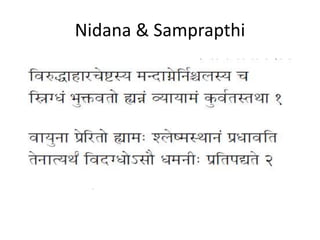
Nidana & Samprapthi
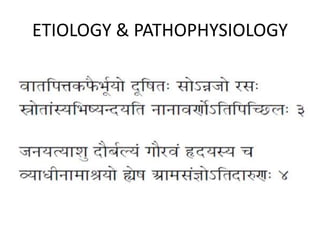
ETIOLOGY & PATHOPHYSIOLOGY
– Viruddahara means unwholesome foods or
combination of foods which effects adversely.
– Poor digestion power, defective metabolism
– Sedentary life style and also too much exercise
– So affected defective metabolism with the
influence of nervous system also affects the
normal functioning, and the products of this
reaches Dhamanis (blood vessels) and circulates
all over the body and produces symptoms.
ETIOLOGY & PATHOPHYSIOLOGY
signs
signs
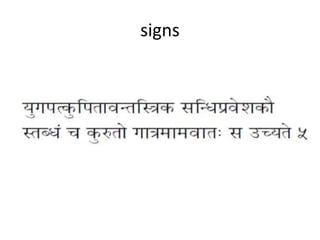
• These defective metabolic products with the
influence of Nervous system produces
symtoms in neck, lower back and all over the
body and produces stiffness.
Samanya Lakshana
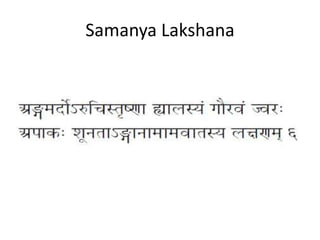
Main features
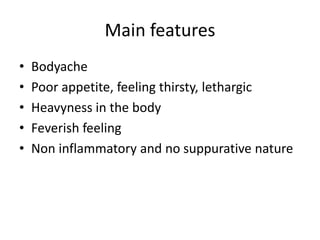
• Bodyache
• Poor appetite, feeling thirsty, lethargic
• Heavyness in the body
• Feverish feeling
• Non inflammatory and no suppurative nature
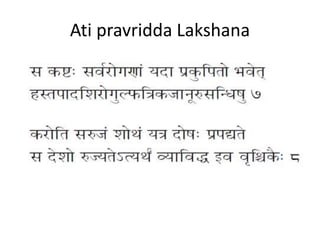
Ati pravridda Lakshana
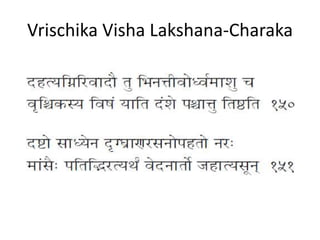
Vrischika Visha Lakshana-Charaka
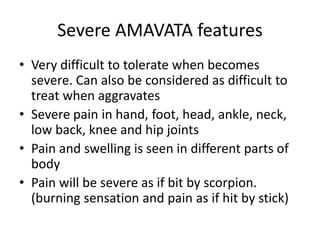
Severe AMAVATA features
• Very difficult to tolerate when becomes
severe. Can also be considered as difficult to
treat when aggravates
• Severe pain in hand, foot, head, ankle, neck,
low back, knee and hip joints
• Pain and swelling is seen in different parts of
body
• Pain will be severe as if bit by scorpion.
(burning sensation and pain as if hit by stick)
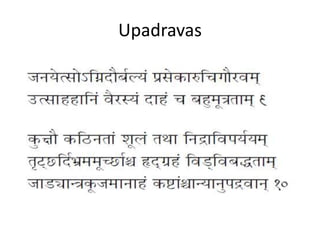
Upadravas
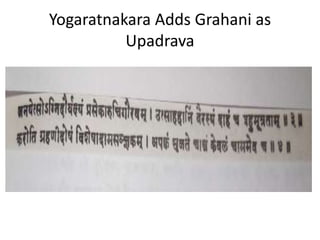
Yogaratnakara Adds Grahani as
Upadrava
Complications
• Poor appetite, Poor digestion, excessive
salivation, lethargy
• Burning urination and increased frequency of
urination
• Disturbed sleep
• Giddyness and syncope
• Grahani- Abdominal pain, constipation, poor
apetite etc.
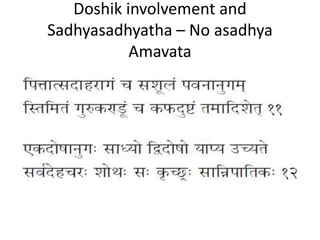
Doshik involvement and
Sadhyasadhyatha – No asadhya
Amavata
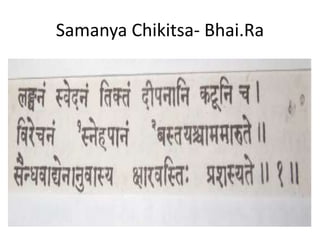
Samanya Chikitsa- Bhai.Ra
Yogaratnakara suggests Sneha
vivarjana
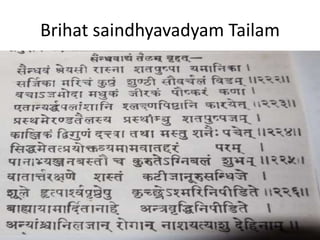
Saindhavadyam Tailam Brihat and
Laghu in Bratnavali for Abhyanga
Brihat saindhyavadyam Tailam
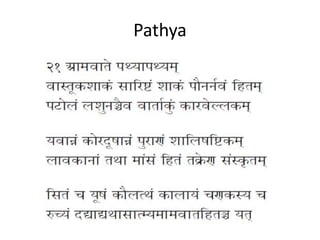
Pathya
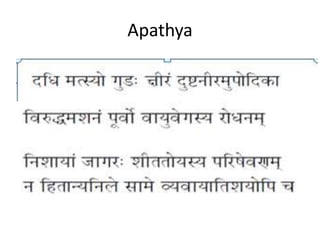
Apathya
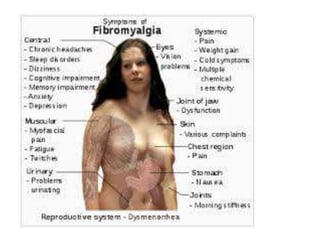
Fibromyalgia- Cardinal signs
• Persistent widespread pain
• Stiffness
• Fatigue
• Disrupted Unrefreshing sleep
• Cognitive difficulties
• Often accompanied by multiple other unexplained
symptoms
• Anxiety and/or depression
• Functional impairment of activities of daily living
• Typically presents in young or middle-aged women.
Pathophysiology- AMA
• Although the pathogenesis of fibromyalgia is
not completely understood, research shows
biochemical, metabolic, and
immunoregulatory abnormalities. These
substantiate the proposal that fibromyalgia
can no longer be considered a subjective pain
condition.
• Metabolic and Sensitivity related with Pitta
and vata, deffective metabolism with AMA.
Body Pain- Angamarda - Apakaha
• Central process- Dopaminergic activity, Excess
excitatory neurotransmitter
• Low Serotonin and elevated substance p-
neurotransmitters
• Dysfunction of the hypothalamic-pituitary-
adrenal axis
• Growth hormone
• Elevated Nerve growth factor in CSF which
produces Substance P
• Pain is non inflammatory - Apakaha
Jvara Aruchi Trishna Alasya Gourava
• In some patients with fibromyalgia, negative
emotional, motivational, and cognitive
stressors may dominate the clinical picture,
potentially leading to a self-sustaining
neuroendocrine cascade that contributes to
flulike symptoms, depressed mood, fatigue,
myalgias, cognitive difficulties, and poor sleep.
Sleep Desruption Nidra viparyaya and
Anidratha
• NREM 4th stage deranged which further
worsens the metabolic function
• Lack of sleep is one of the main feature of
Fibromyalgia
Other features- Bahumuthratha,
Murcha, Shwasa etc
• Weight fluctuations
• Allergic symptoms (eg, nasal congestion) and
hypersensitivity to environmental stimuli (eg,
odors, bright lights, loud noises) and medications
• Syncope or dizziness
• Shortness of breath
• Urinary frequency and urgency (female urethral
syndrome, interstitial cystitis)
These features are frequently seen in Fibromyalgia
Grahani vidvibaddatam
jadyantrakujam anaham
• Approximately 40% of patients with
fibromyalgia describe having alternating bouts
of diarrhea and constipation and also
experience bloating, cramping, and an
increased urge to defecate
Shotha
• Approximately 50% of patients with
fibromyalgia present with complaints of
tissues feeling swollen and of numbness and
tingling in the extremities. These symptoms
generally are more common in the upper
extremities than in the lower ones.
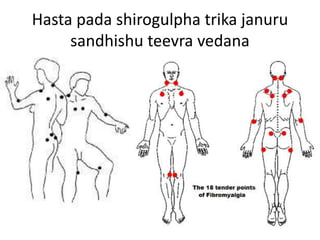
Hasta pada shirogulpha trika januru
sandhishu teevra vedana
Amavatha
Amavatha

Amavatha

  • 1.
    “AMAVATA” IS FIBROMYALGIA ANDPOORLY BE CORELATED WITH RHEUMATISM BY Dr Jayagovinda Ukkinadka UKKINADKAS AYURVEDA
  • 2.
    Introduction • Amavata isa conditon explained in Laghu thrayees, but not in Brihat Thrayees. • First explained in Madhava Nidana, by Madhavakara who lived between 600-700AD, that is one century after Vagbhata • Later books like Yoga Ratnakara, Bhaishajya Ratnavali etc quoted the slokas of Madhava Nidana to explain the disease Amavata without much change.
  • 3.
    Introduction • There islot of difference of opinion among the Ayurvedic scholars while co-relating the diseases like Amavata, Vatashonita with the contemporary diseases explained in modern science. • Most of the scholars co-relate Vatashonita with Gout and Amavata with Rheumatism
  • 4.
    Introduction • But ifwe go through the symptoms it seems that Amavata can poorly be co-related with Rheumatoid Arthritis and other rheumatisms. • It is very important to identify or co-relate the Ancient diseases with the diseases explained in modern science to have correct idea of treatment principles.
  • 5.
    What is Amavatathen? • Considering symptoms etc Amavata has many resemblence with Fibromyalgia explained in modern science or in other words we can co- related Amavata with Fibromyalgia better than that of Rheumatism.
  • 6.
  • 7.
    ETIOLOGY & PATHOPHYSIOLOGY –Viruddahara means unwholesome foods or combination of foods which effects adversely. – Poor digestion power, defective metabolism – Sedentary life style and also too much exercise – So affected defective metabolism with the influence of nervous system also affects the normal functioning, and the products of this reaches Dhamanis (blood vessels) and circulates all over the body and produces symptoms.
  • 8.
  • 9.
  • 10.
    signs • These defectivemetabolic products with the influence of Nervous system produces symtoms in neck, lower back and all over the body and produces stiffness.
  • 11.
  • 12.
    Main features • Bodyache •Poor appetite, feeling thirsty, lethargic • Heavyness in the body • Feverish feeling • Non inflammatory and no suppurative nature
  • 13.
  • 14.
  • 15.
    Severe AMAVATA features •Very difficult to tolerate when becomes severe. Can also be considered as difficult to treat when aggravates • Severe pain in hand, foot, head, ankle, neck, low back, knee and hip joints • Pain and swelling is seen in different parts of body • Pain will be severe as if bit by scorpion. (burning sensation and pain as if hit by stick)
  • 16.
  • 17.
  • 18.
    Complications • Poor appetite,Poor digestion, excessive salivation, lethargy • Burning urination and increased frequency of urination • Disturbed sleep • Giddyness and syncope • Grahani- Abdominal pain, constipation, poor apetite etc.
  • 19.
  • 20.
  • 21.
  • 22.
    Saindhavadyam Tailam Brihatand Laghu in Bratnavali for Abhyanga
  • 23.
  • 24.
  • 25.
  • 26.
    Fibromyalgia- Cardinal signs •Persistent widespread pain • Stiffness • Fatigue • Disrupted Unrefreshing sleep • Cognitive difficulties • Often accompanied by multiple other unexplained symptoms • Anxiety and/or depression • Functional impairment of activities of daily living • Typically presents in young or middle-aged women.
  • 27.
    Pathophysiology- AMA • Althoughthe pathogenesis of fibromyalgia is not completely understood, research shows biochemical, metabolic, and immunoregulatory abnormalities. These substantiate the proposal that fibromyalgia can no longer be considered a subjective pain condition. • Metabolic and Sensitivity related with Pitta and vata, deffective metabolism with AMA.
  • 28.
    Body Pain- Angamarda- Apakaha • Central process- Dopaminergic activity, Excess excitatory neurotransmitter • Low Serotonin and elevated substance p- neurotransmitters • Dysfunction of the hypothalamic-pituitary- adrenal axis • Growth hormone • Elevated Nerve growth factor in CSF which produces Substance P • Pain is non inflammatory - Apakaha
  • 29.
    Jvara Aruchi TrishnaAlasya Gourava • In some patients with fibromyalgia, negative emotional, motivational, and cognitive stressors may dominate the clinical picture, potentially leading to a self-sustaining neuroendocrine cascade that contributes to flulike symptoms, depressed mood, fatigue, myalgias, cognitive difficulties, and poor sleep.
  • 30.
    Sleep Desruption Nidraviparyaya and Anidratha • NREM 4th stage deranged which further worsens the metabolic function • Lack of sleep is one of the main feature of Fibromyalgia
  • 31.
    Other features- Bahumuthratha, Murcha,Shwasa etc • Weight fluctuations • Allergic symptoms (eg, nasal congestion) and hypersensitivity to environmental stimuli (eg, odors, bright lights, loud noises) and medications • Syncope or dizziness • Shortness of breath • Urinary frequency and urgency (female urethral syndrome, interstitial cystitis) These features are frequently seen in Fibromyalgia
  • 32.
    Grahani vidvibaddatam jadyantrakujam anaham •Approximately 40% of patients with fibromyalgia describe having alternating bouts of diarrhea and constipation and also experience bloating, cramping, and an increased urge to defecate
  • 33.
    Shotha • Approximately 50%of patients with fibromyalgia present with complaints of tissues feeling swollen and of numbness and tingling in the extremities. These symptoms generally are more common in the upper extremities than in the lower ones.
  • 34.
    Hasta pada shirogulphatrika januru sandhishu teevra vedana