Altitude training and
     periodisation
      Specialised Training
Learning Goals
• To understand process, benefits and
  drawbacks of altitude training (was on paper
  last year as a 14 mark question)

* To understand the process of periodisation,
  and recognise the importance of tapering to
  peak for competition.
Altitude training
• Means to improve endurance performance


• Significant success of athletes who live at
  altitude


• Aerobic performance increased due to
  increase in red blood cell concentration
Physiology
• Over 8,000 feet above sea level pO2 is
  reduced


• Body adapts by increasing red blood cells
  and Hb. Therefore, what happens?

In addition hormone EPO increases
Altitude training
• On return to sea level, what happens to
  performance?


• What else may happen that delays fatigue?


• Several weeks required to get these effects.
  How does this impact on an athlete's life?
Phases of altitude
         training
• Acclimatisation


• Primary training


• Recovery
Phases of altitude
         training
• On return to sea level, there is:

• A positive phase


• Progressive return to sea-level training


• A fitness peak
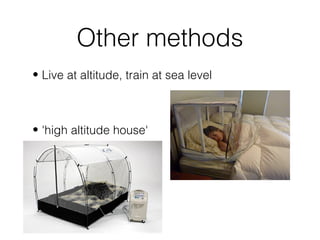
Other methods
• Live at altitude, train at sea level


• 'high altitude house'
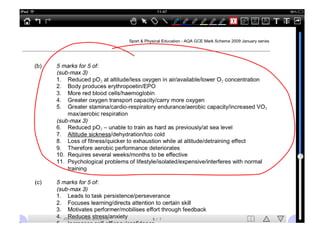
Problems?
• What are some of the problems with altitude
  training?

•1

•2

•3

•4
• Optimises performance
           Periodisation
• No point in training at the same level all of the
  time - no fitness gains!


• What would an endurance performer need to
  improve?


• What would a sprinter need to improve?
Periodisation
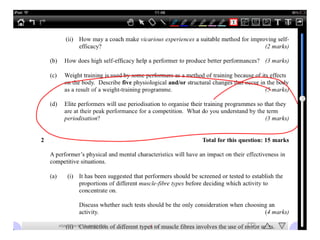
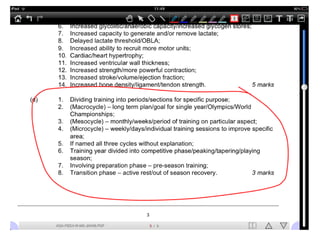
• What do you think periodisation is?


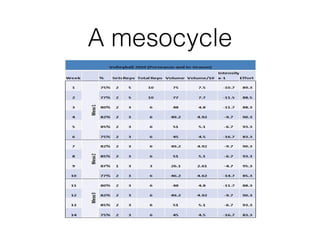
• Split into macrocycles, mesocycles and
  microcycles
A microcycle
A mesocycle
A macrocycle
Tapering and peaking
• Reducing daily training loads prior to event to
  allow supercompensation
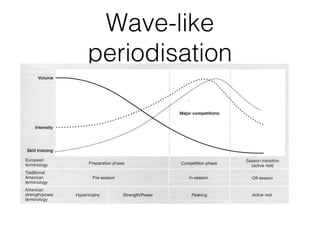
Wave-like
periodisation
Exam questions
Altitude training and periodisation

Altitude training and periodisation

  • 1.
    Altitude training and periodisation Specialised Training
  • 2.
    Learning Goals • Tounderstand process, benefits and drawbacks of altitude training (was on paper last year as a 14 mark question) * To understand the process of periodisation, and recognise the importance of tapering to peak for competition.
  • 3.
    Altitude training • Meansto improve endurance performance • Significant success of athletes who live at altitude • Aerobic performance increased due to increase in red blood cell concentration
  • 4.
    Physiology • Over 8,000feet above sea level pO2 is reduced • Body adapts by increasing red blood cells and Hb. Therefore, what happens? In addition hormone EPO increases
  • 5.
    Altitude training • Onreturn to sea level, what happens to performance? • What else may happen that delays fatigue? • Several weeks required to get these effects. How does this impact on an athlete's life?
  • 6.
    Phases of altitude training • Acclimatisation • Primary training • Recovery
  • 7.
    Phases of altitude training • On return to sea level, there is: • A positive phase • Progressive return to sea-level training • A fitness peak
  • 8.
    Other methods • Liveat altitude, train at sea level • 'high altitude house'
  • 9.
    Problems? • What aresome of the problems with altitude training? •1 •2 •3 •4
  • 10.
    • Optimises performance Periodisation • No point in training at the same level all of the time - no fitness gains! • What would an endurance performer need to improve? • What would a sprinter need to improve?
  • 11.
    Periodisation • What doyou think periodisation is? • Split into macrocycles, mesocycles and microcycles
  • 12.
  • 13.
  • 14.
  • 15.
    Tapering and peaking •Reducing daily training loads prior to event to allow supercompensation
  • 16.
  • 17.