Lessons from places 
at the threshold
Adaptive Management of Working 
Agricultural Landscapes for Ecosystem 
Services
Craig Allen, Christo Fabricius 
and the Resilience Alliance Working Group on Agricultural Resilience
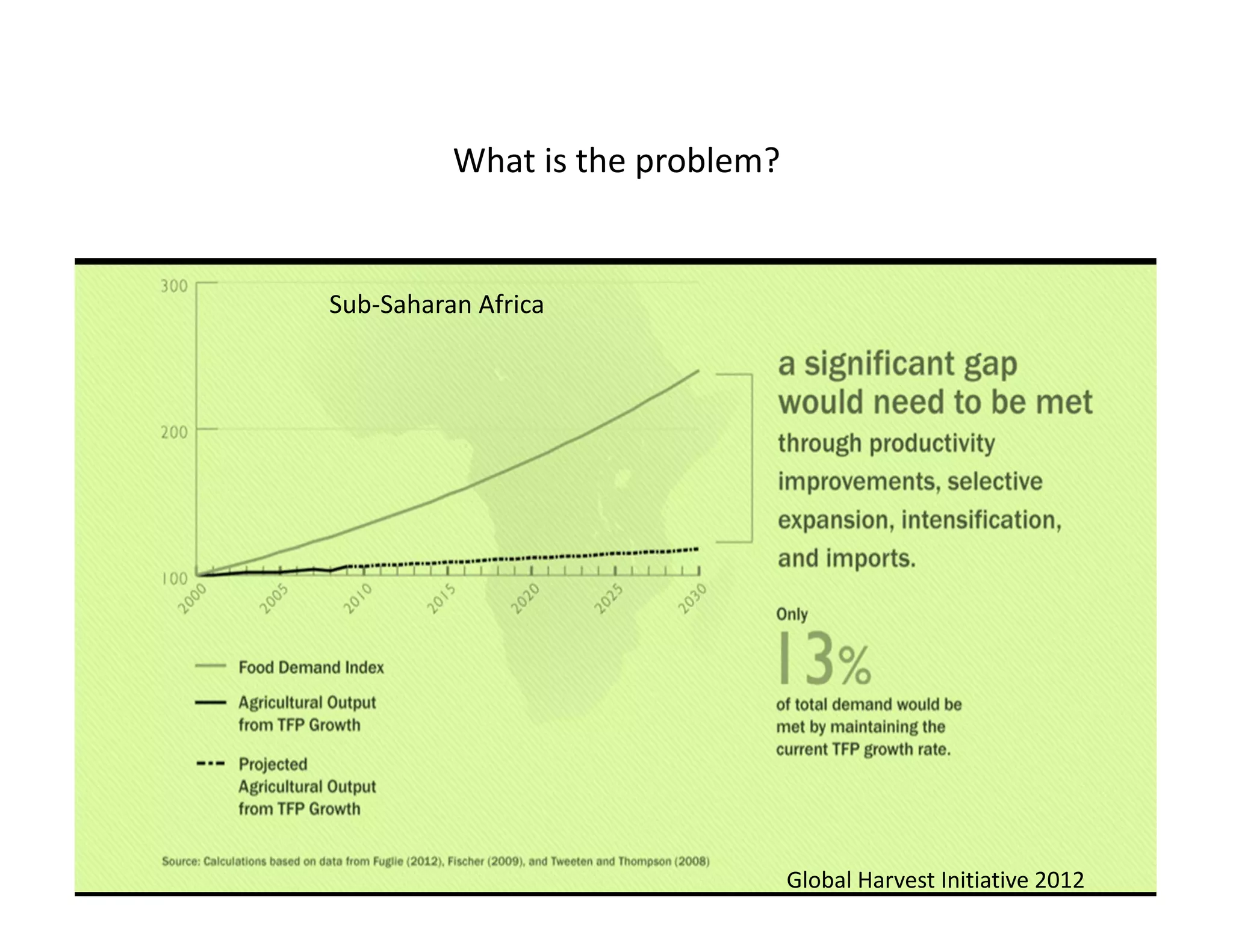
What is the problem?
Sub‐Saharan Africa
Global Harvest Initiative 2012
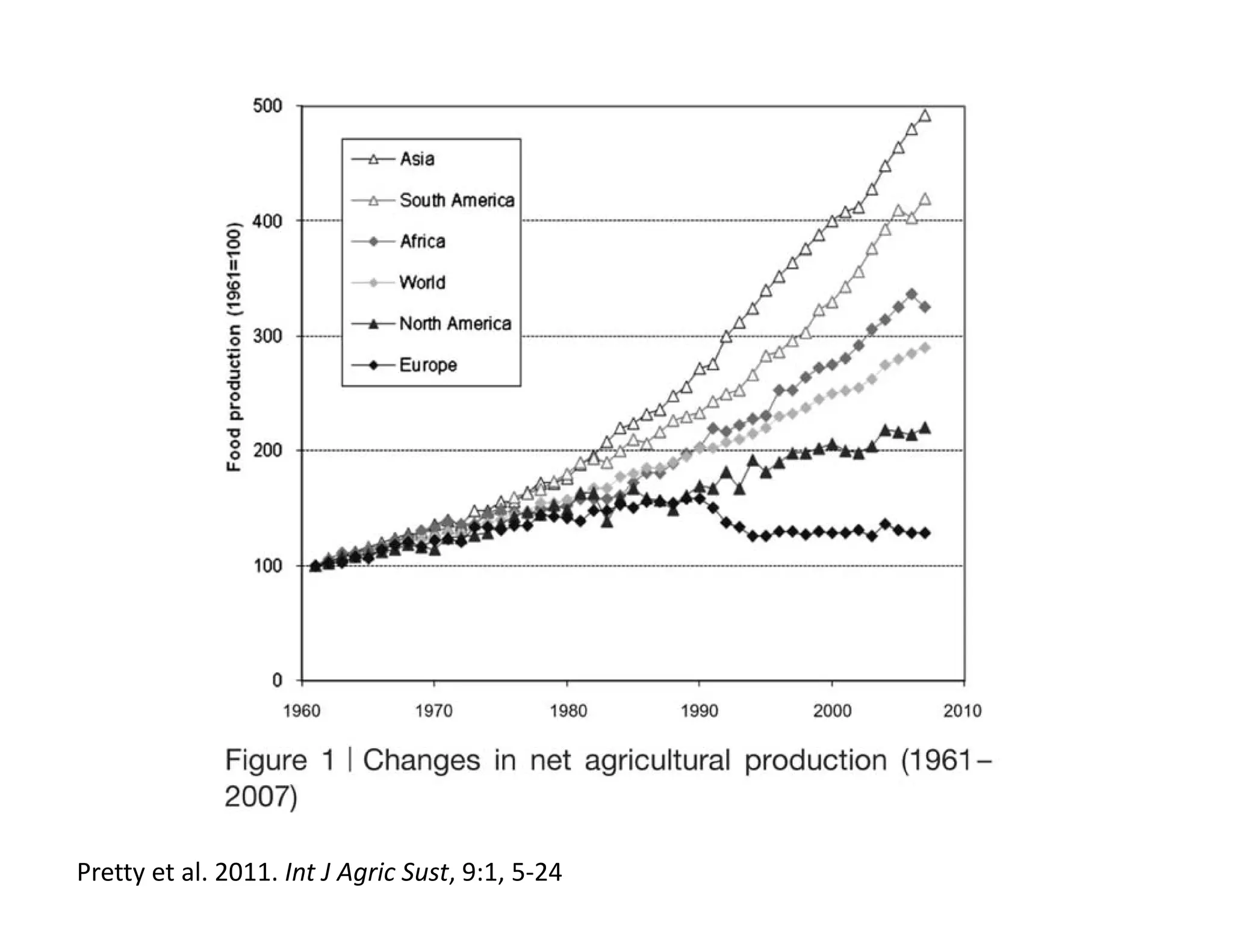
Pretty et al. 2011. Int J Agric Sust, 9:1, 5‐24
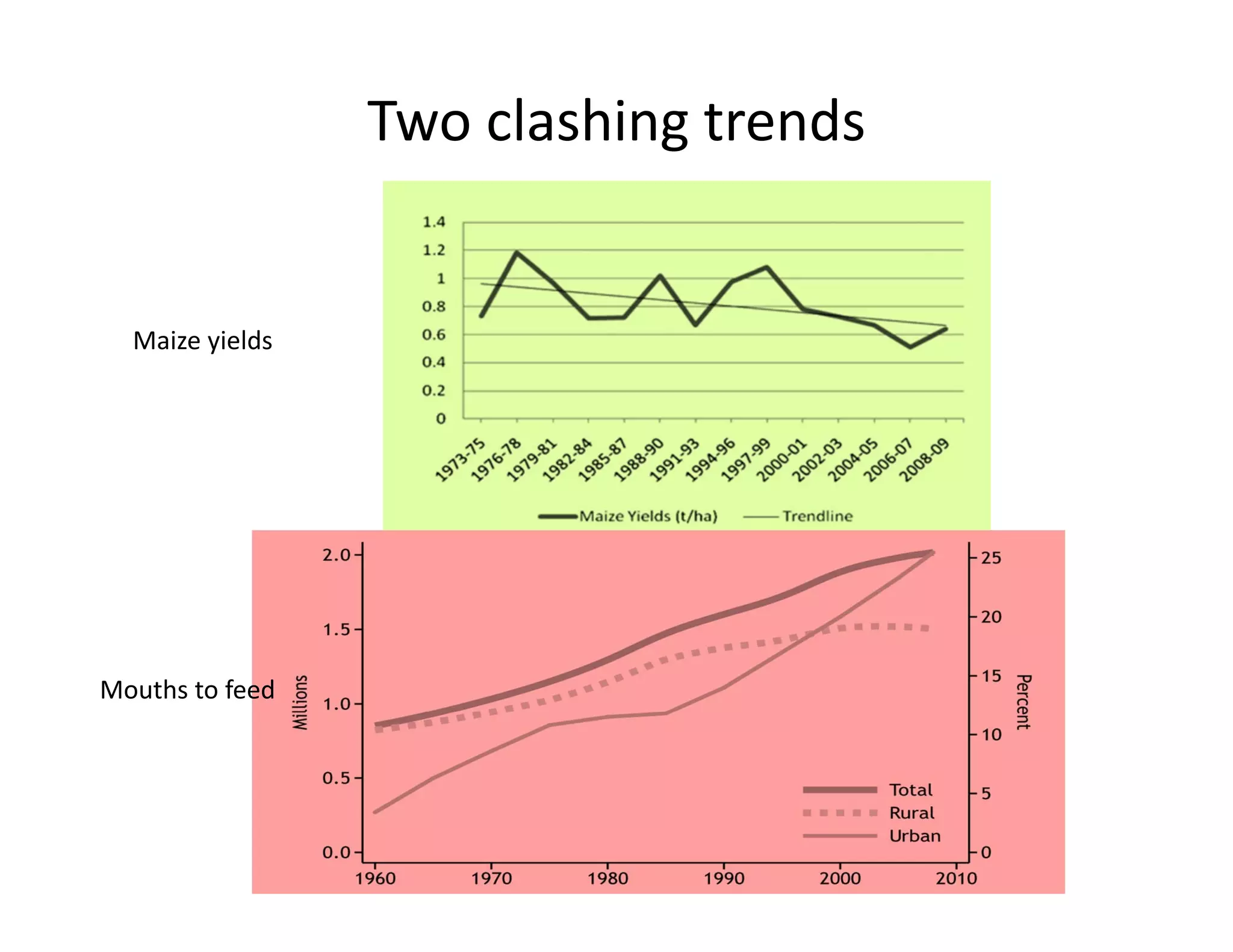
Two clashing trends
Maize yields
Mouths to feed
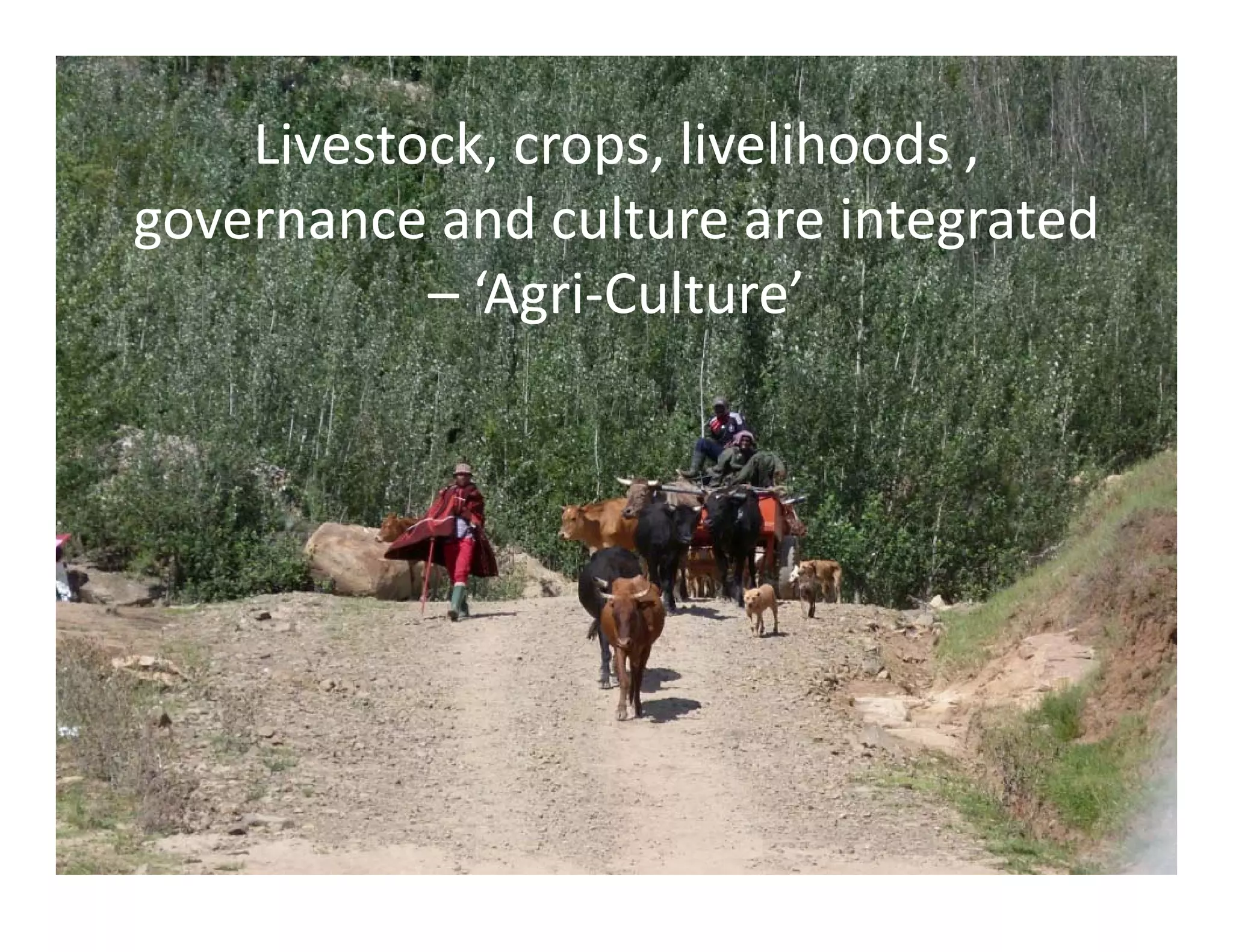
Livestock, crops, livelihoods , 
governance and culture are integrated 
– ‘Agri‐Culture’
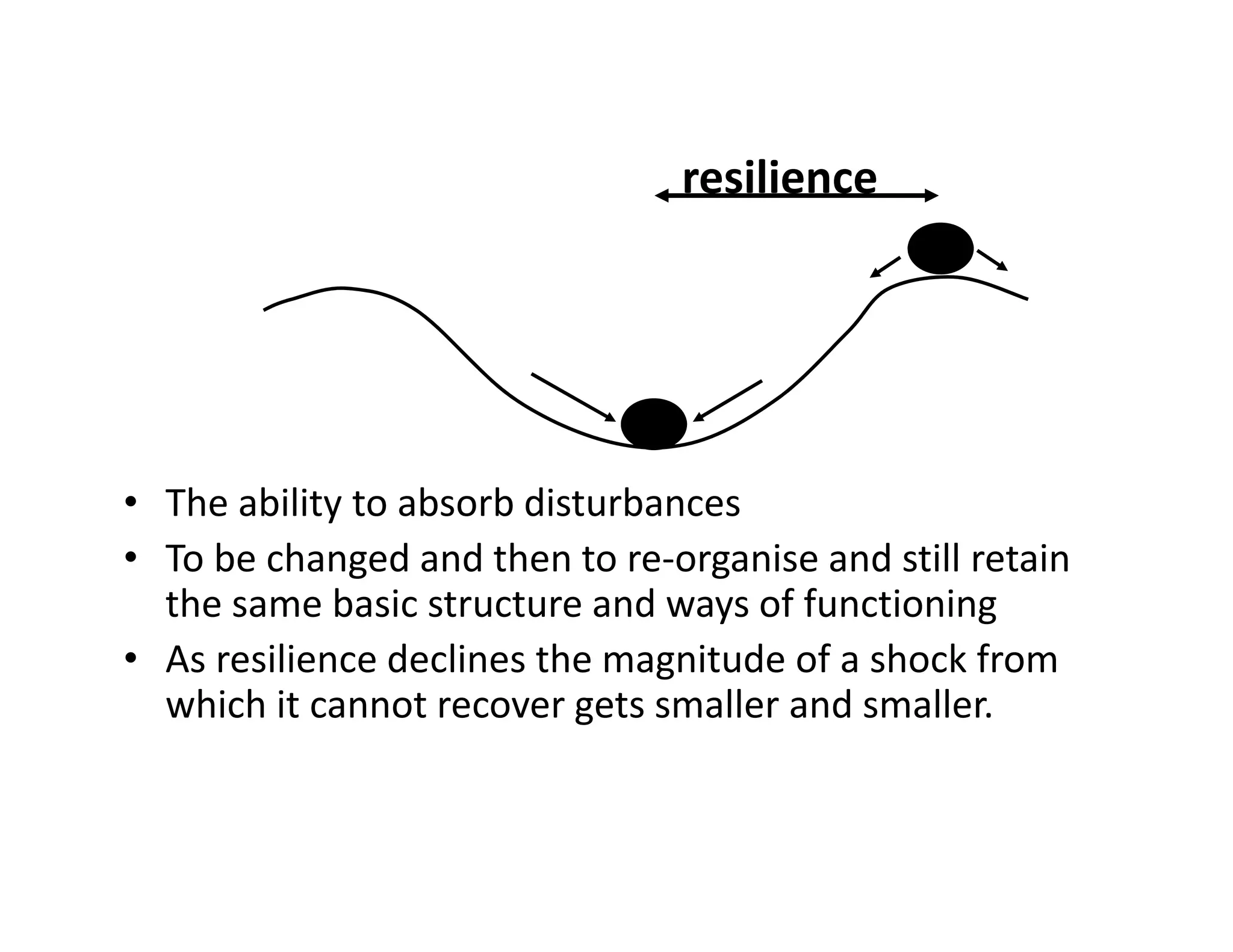
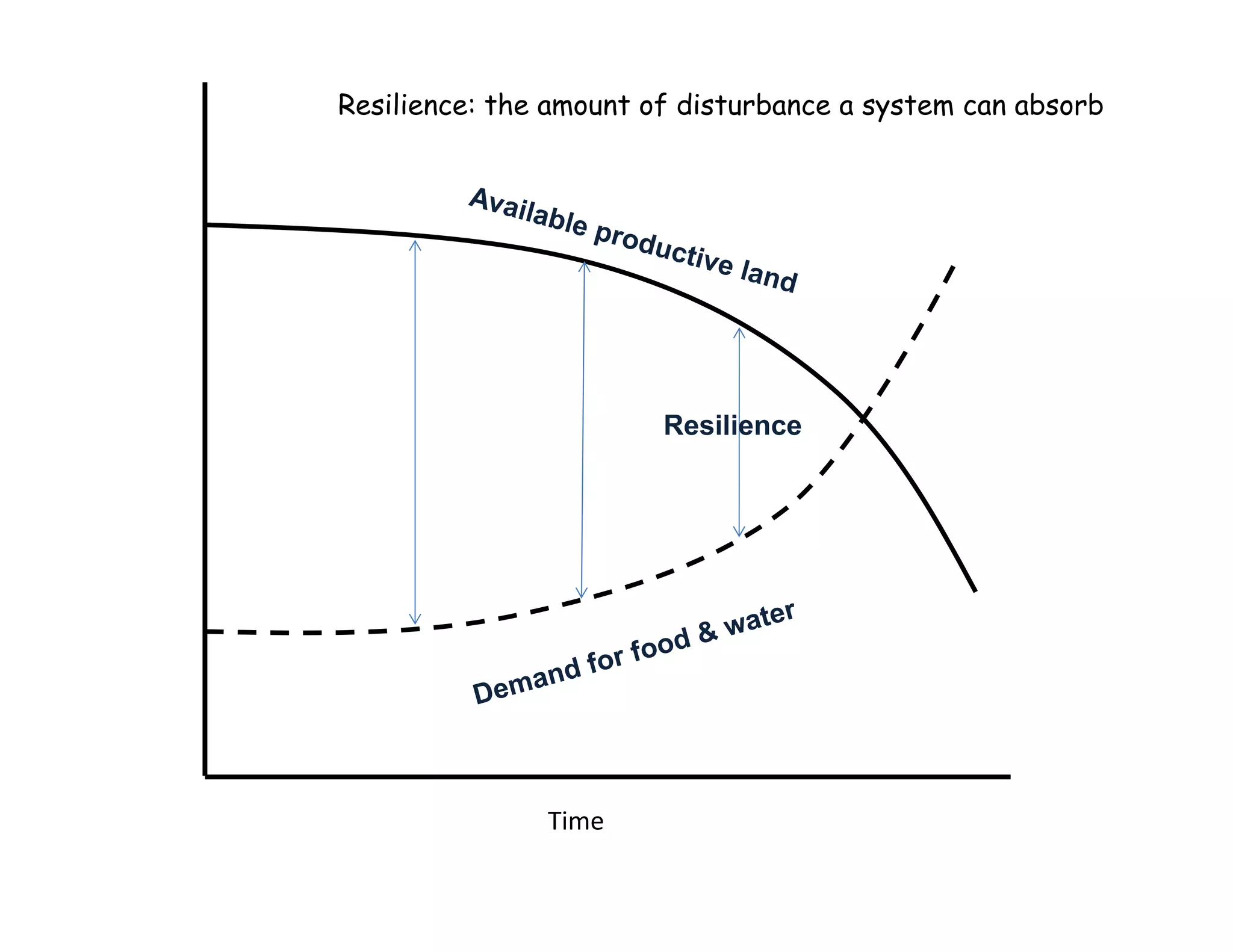
• The ability to absorb disturbances
• To be changed and then to re‐organise and still retain 
the same basic structure and ways of functioning 
• As resilience declines the magnitude of a shock from 
which it cannot recover gets smaller and smaller.
resilience
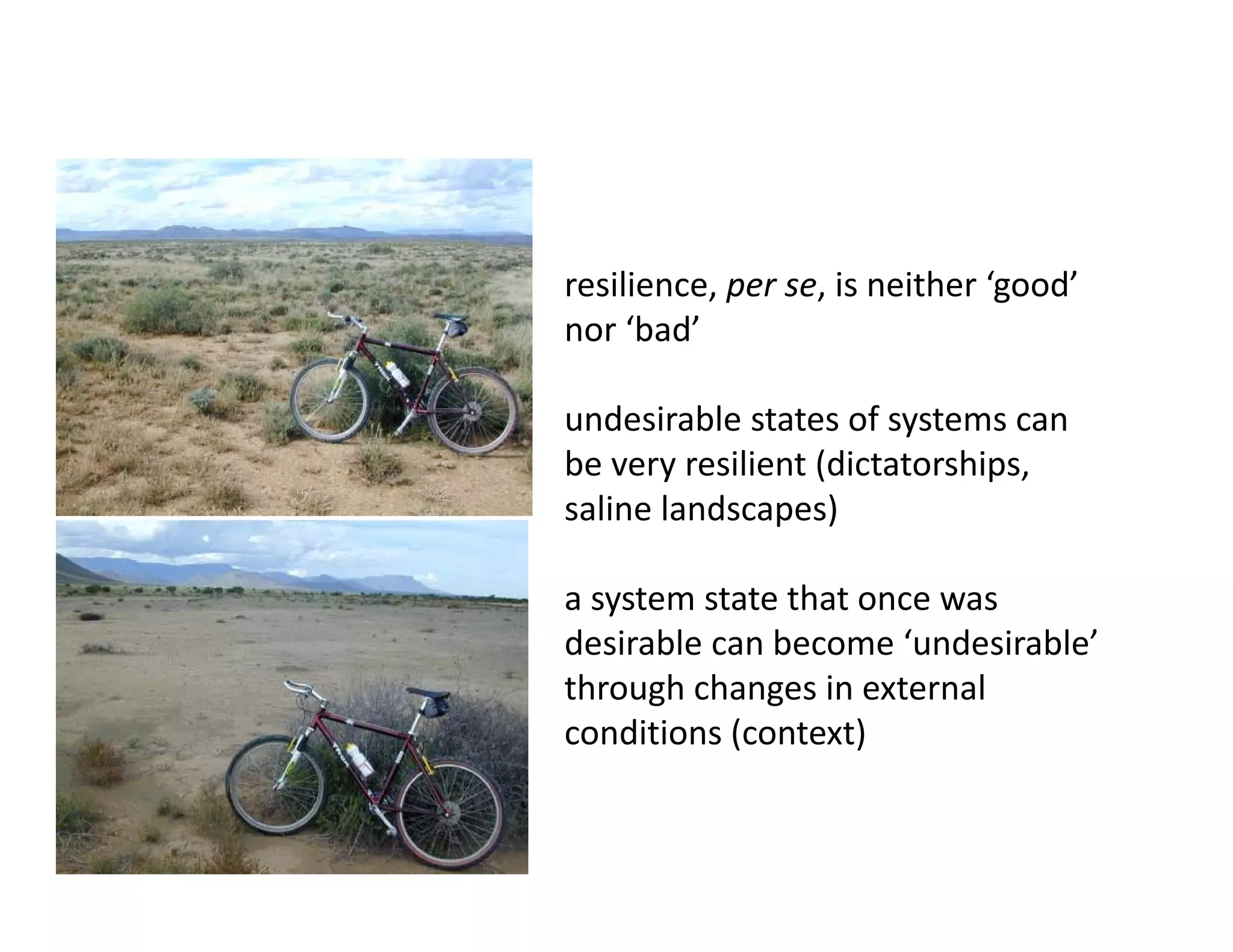
resilience, per se, is neither ‘good’ 
nor ‘bad’
undesirable states of systems can 
be very resilient (dictatorships, 
saline landscapes)
a system state that once was 
desirable can become ‘undesirable’ 
through changes in external 
conditions (context)
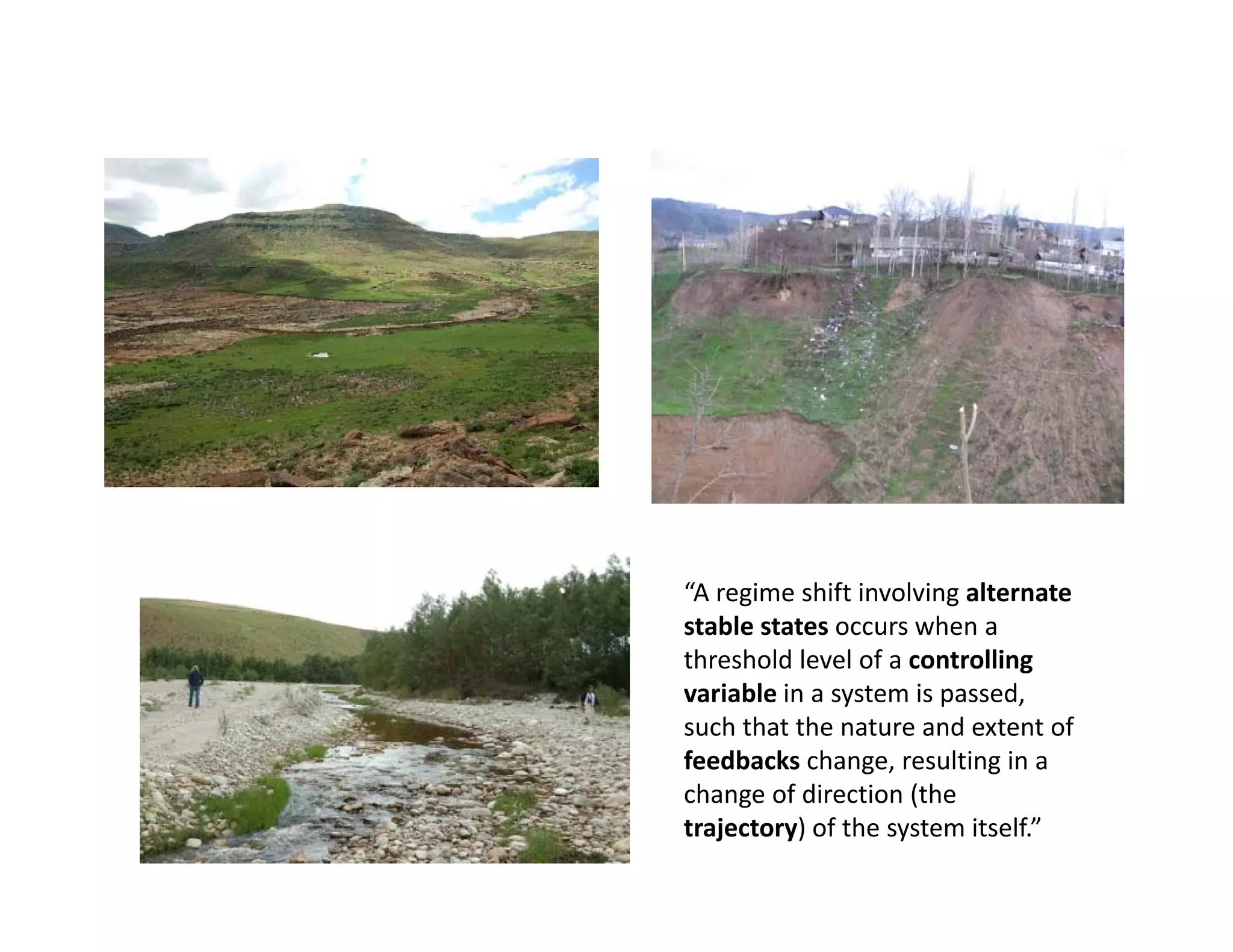
“A regime shift involving alternate 
stable states occurs when a 
threshold level of a controlling 
variable in a system is passed, 
such that the nature and extent of 
feedbacks change, resulting in a 
change of direction (the 
trajectory) of the system itself.”
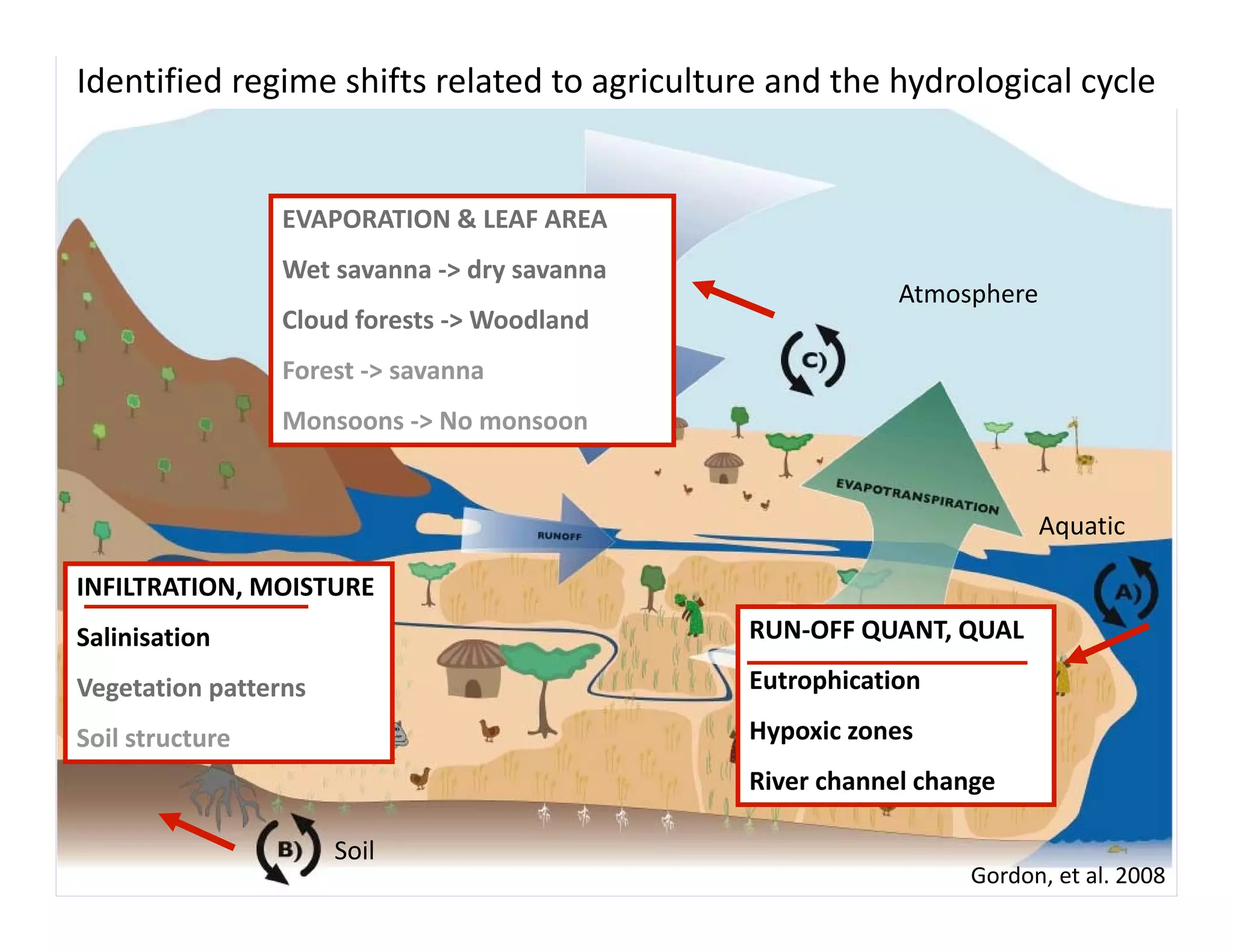
Identified regime shifts related to agriculture and the hydrological cycle
EVAPORATION & LEAF AREA
Wet savanna ‐> dry savanna
Cloud forests ‐> Woodland
Forest ‐> savanna
Monsoons ‐> No monsoon
Gordon, et al. 2008
RUN‐OFF QUANT, QUAL
Eutrophication
Hypoxic zones
River channel change
INFILTRATION, MOISTURE
Salinisation
Vegetation patterns
Soil structure
Atmosphere
Aquatic 
Soil
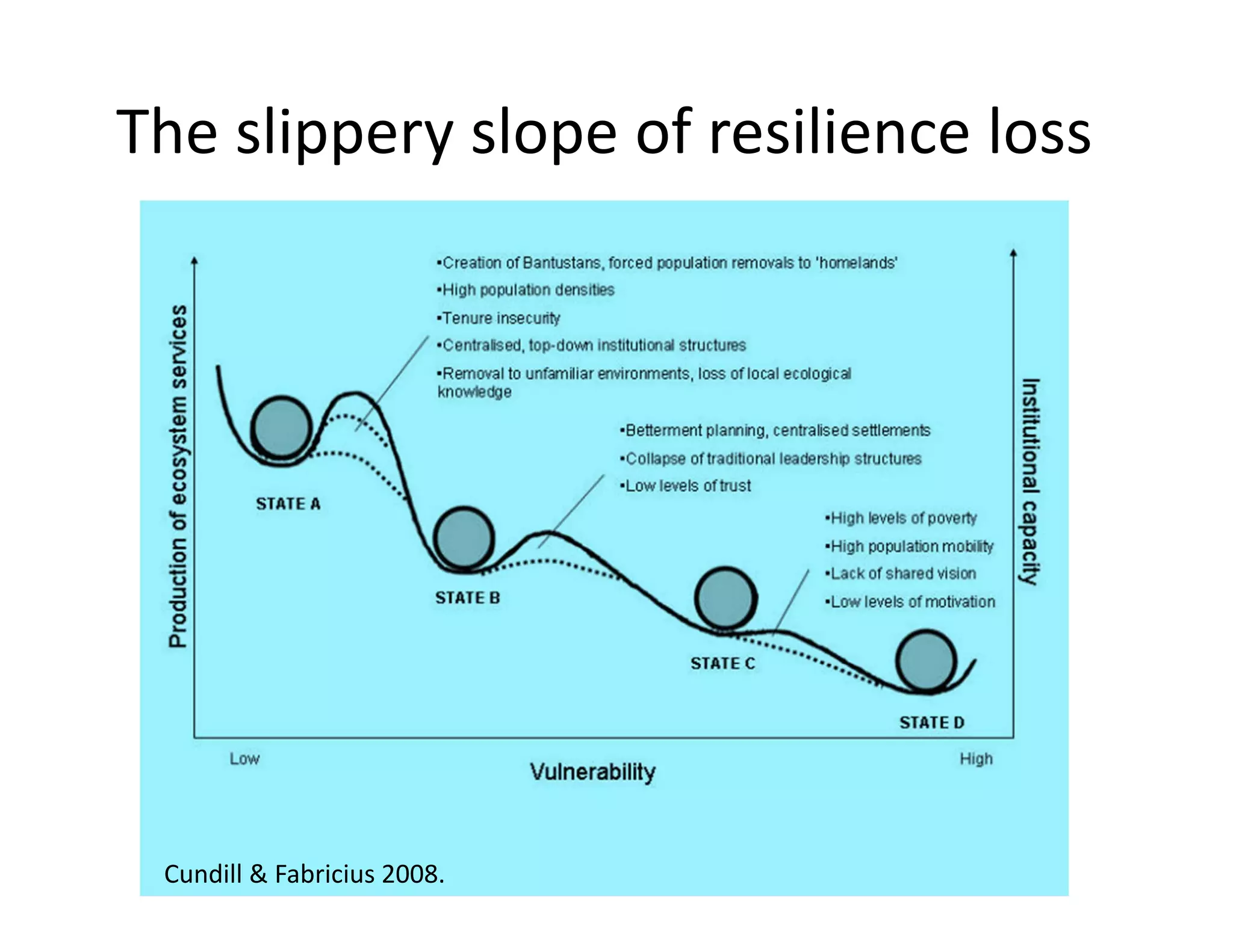
Cundill & Fabricius 2008.
The slippery slope of resilience loss
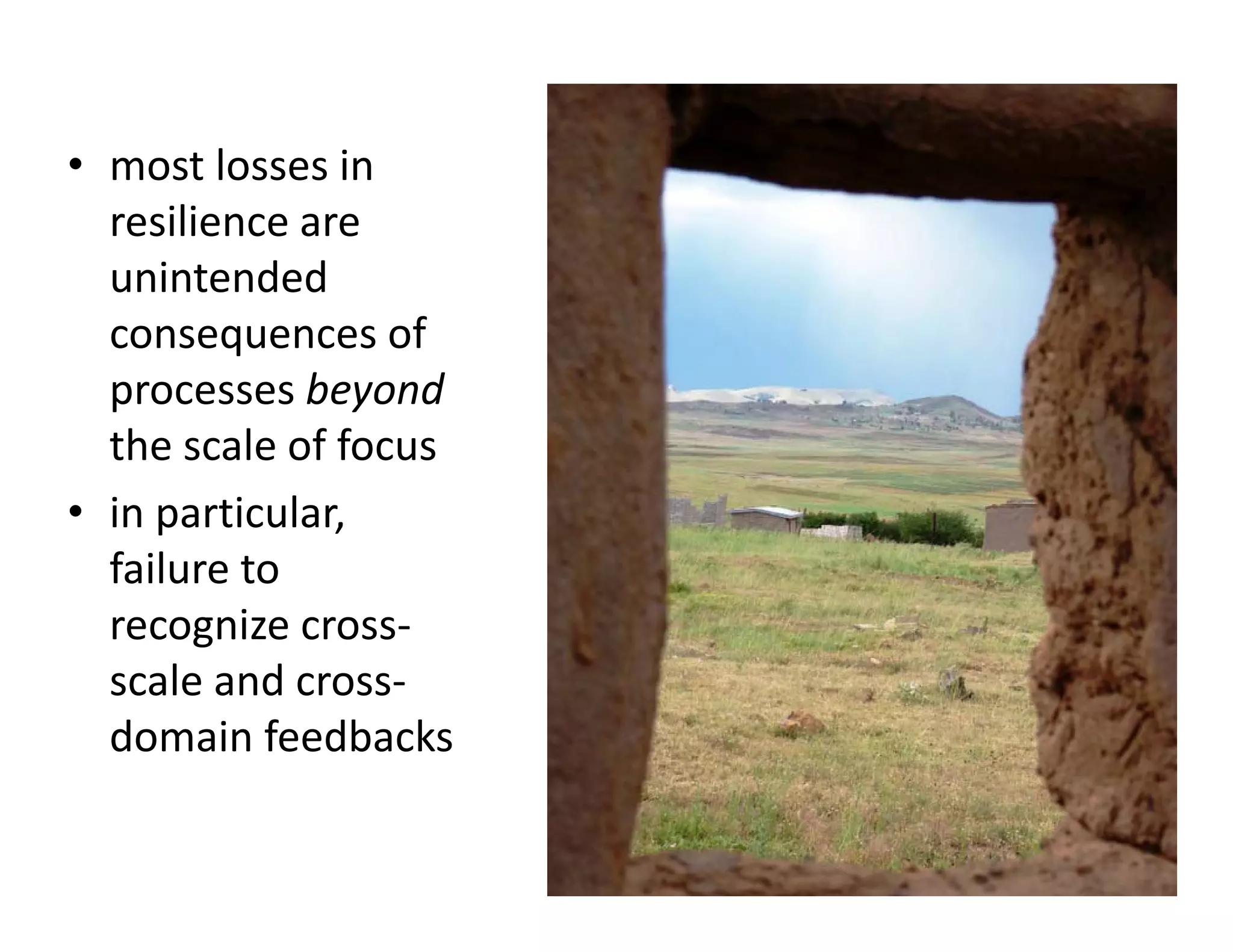
• most losses in 
resilience are 
unintended 
consequences of 
processes beyond
the scale of focus
• in particular, 
failure to 
recognize cross‐
scale and cross‐
domain feedbacks
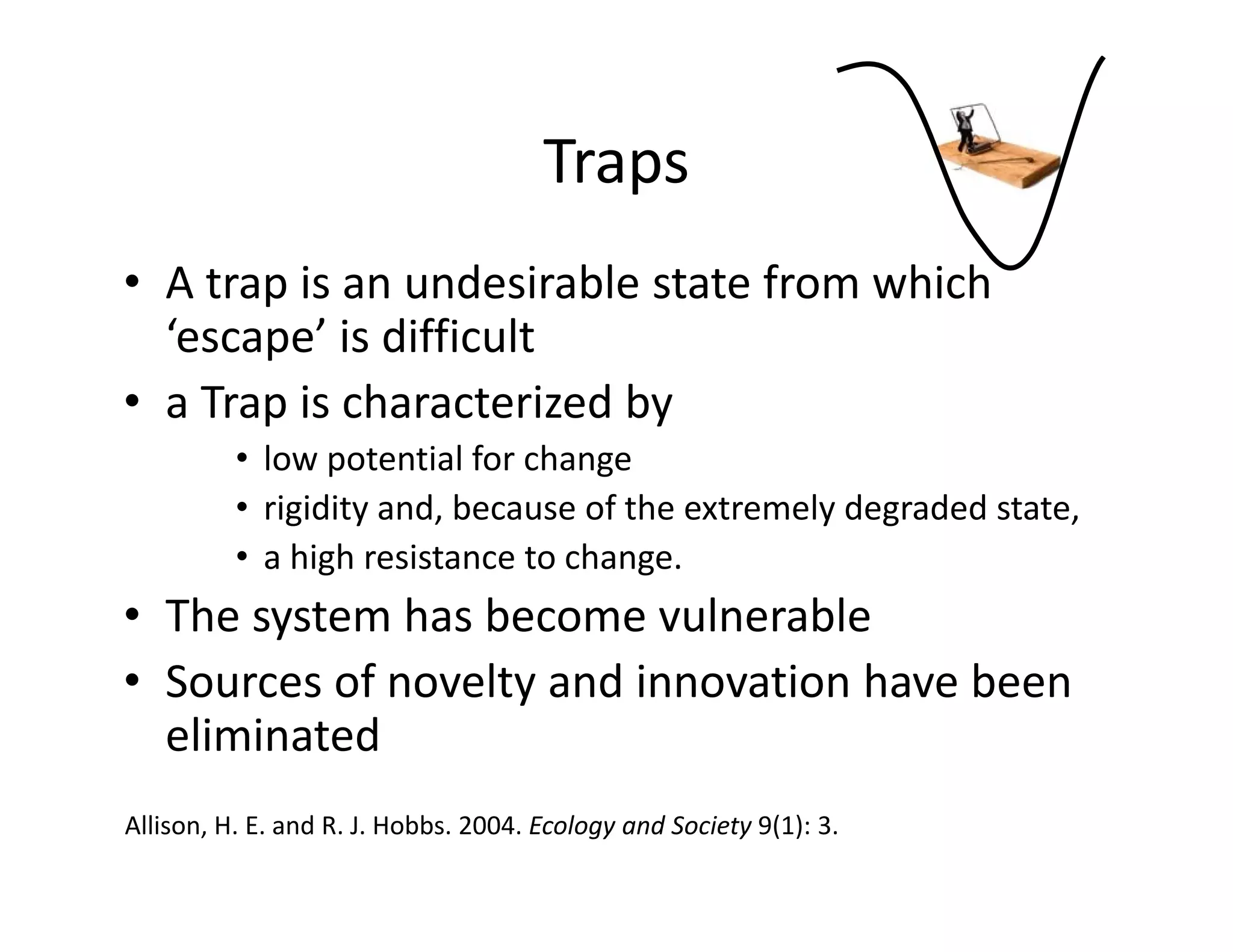
Traps
• A trap is an undesirable state from which 
‘escape’ is difficult
• a Trap is characterized by 
• low potential for change
• rigidity and, because of the extremely degraded state, 
• a high resistance to change. 
• The system has become vulnerable
• Sources of novelty and innovation have been 
eliminated
Allison, H. E. and R. J. Hobbs. 2004. Ecology and Society 9(1): 3. 
Time
Resilience
Resilience: the amount of disturbance a system can absorb
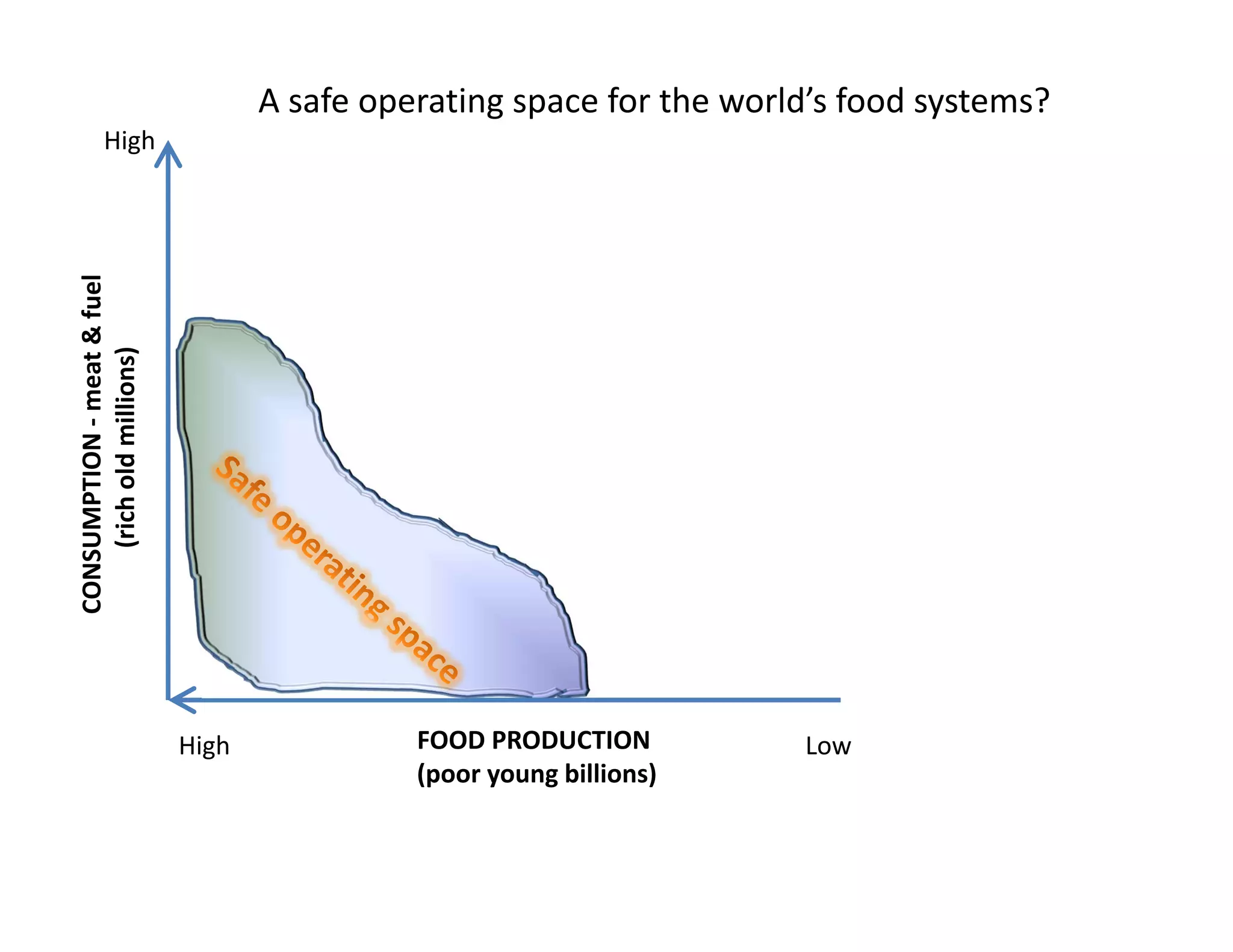
CONSUMPTION ‐meat & fuel
(rich old millions)
FOOD PRODUCTION 
(poor young billions)
High
High
Low
A safe operating space for the world’s food systems?
Rockström, J. et al. 2009. Planetary boundaries: exploring the safe operating space for humanity. 
Ecology and Society 14(2): 32. [online] URL: http://www.ecologyandsociety.org/vol14/iss2/art32/
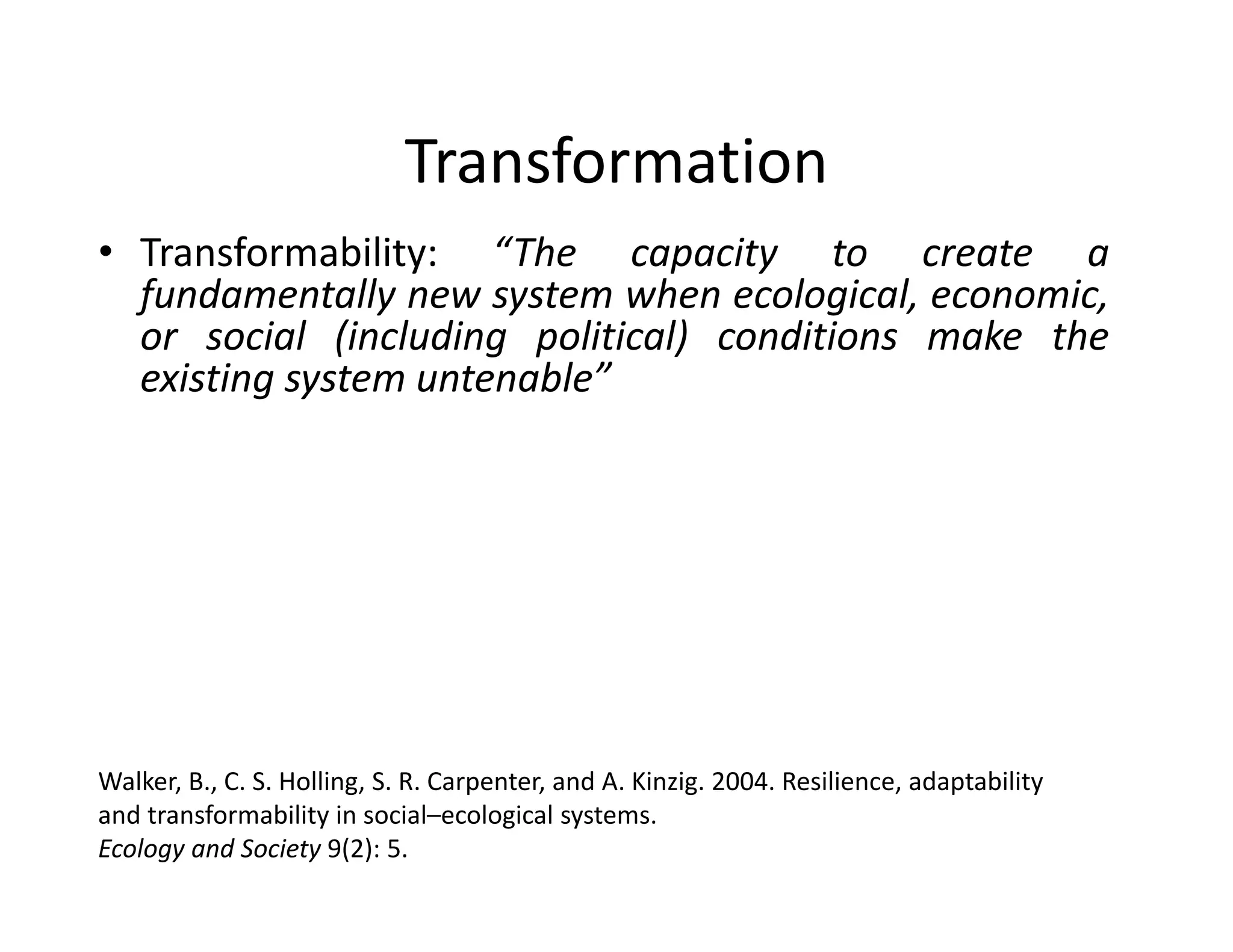
Transformation
• Transformability: “The capacity to create a
fundamentally new system when ecological, economic,
or social (including political) conditions make the
existing system untenable”
www.resalliance.org
Walker, B., C. S. Holling, S. R. Carpenter, and A. Kinzig. 2004. Resilience, adaptability 
and transformability in social–ecological systems. 
Ecology and Society 9(2): 5.
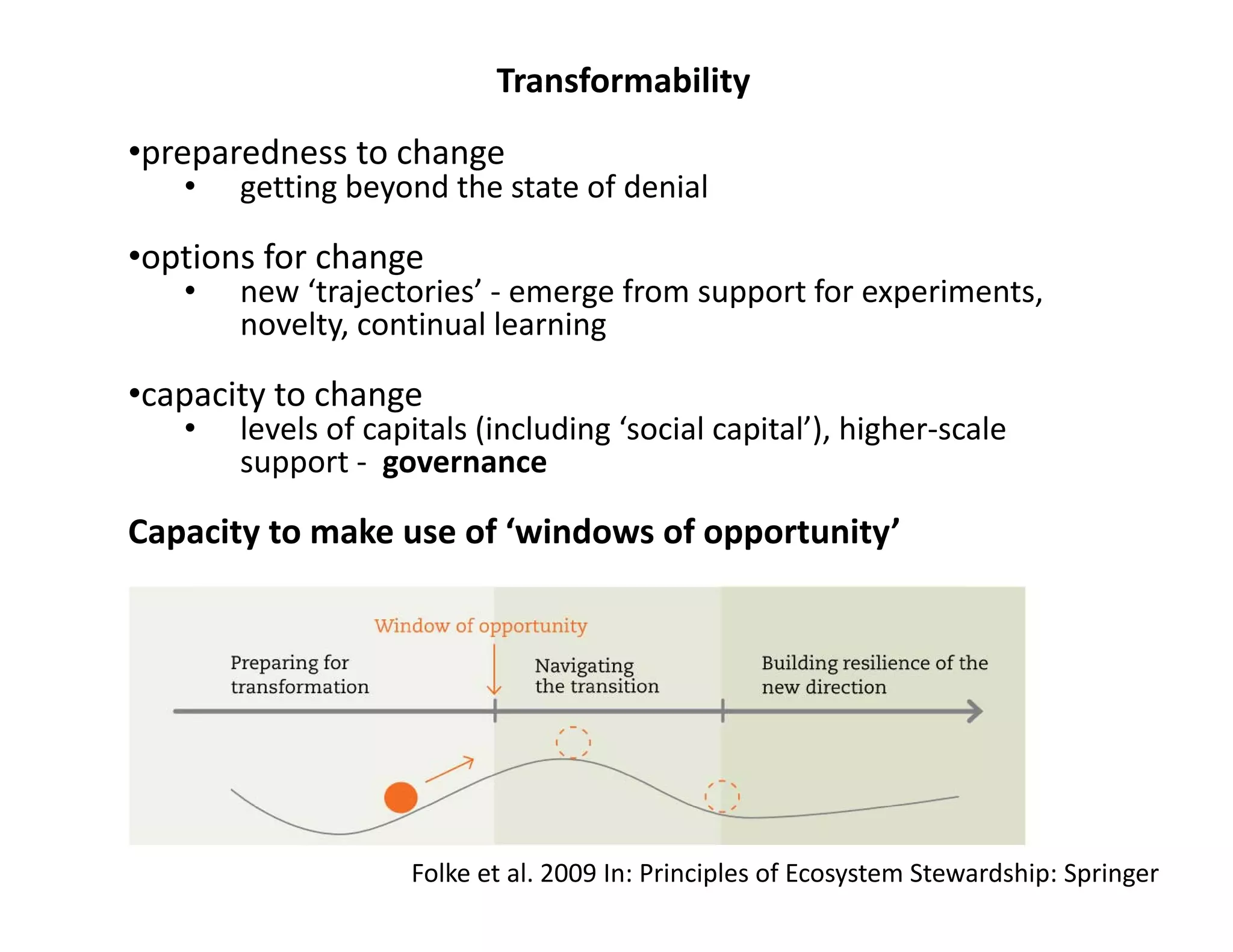
Transformability
•preparedness to change
• getting beyond the state of denial
•options for change
• new ‘trajectories’ ‐ emerge from support for experiments, 
novelty, continual learning
•capacity to change
• levels of capitals (including ‘social capital’), higher‐scale 
support ‐ governance
Capacity to make use of ‘windows of opportunity’
Folke et al. 2009 In: Principles of Ecosystem Stewardship: Springer
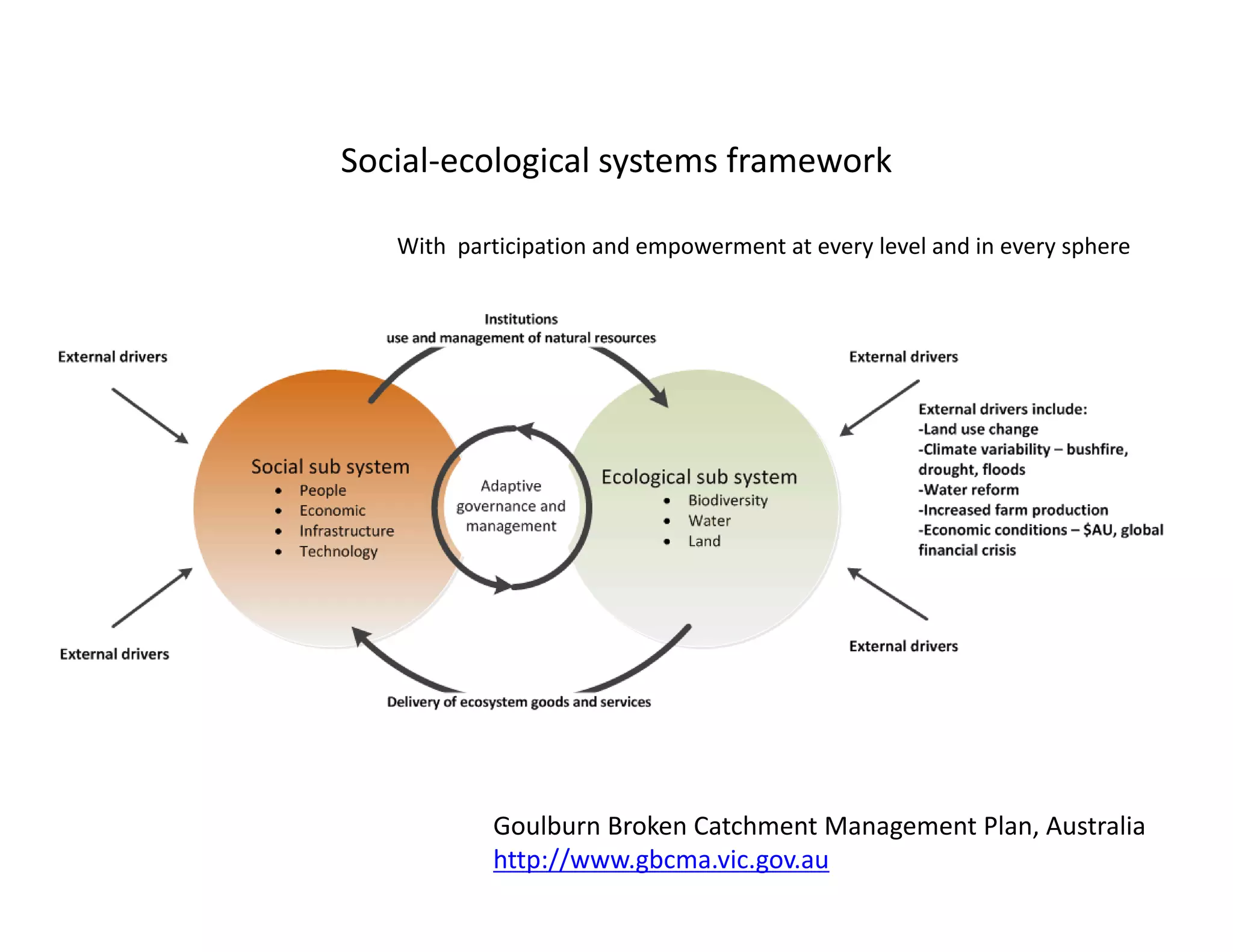
Social‐ecological systems framework
Goulburn Broken Catchment Management Plan, Australia
http://www.gbcma.vic.gov.au
With  participation and empowerment at every level and in every sphere
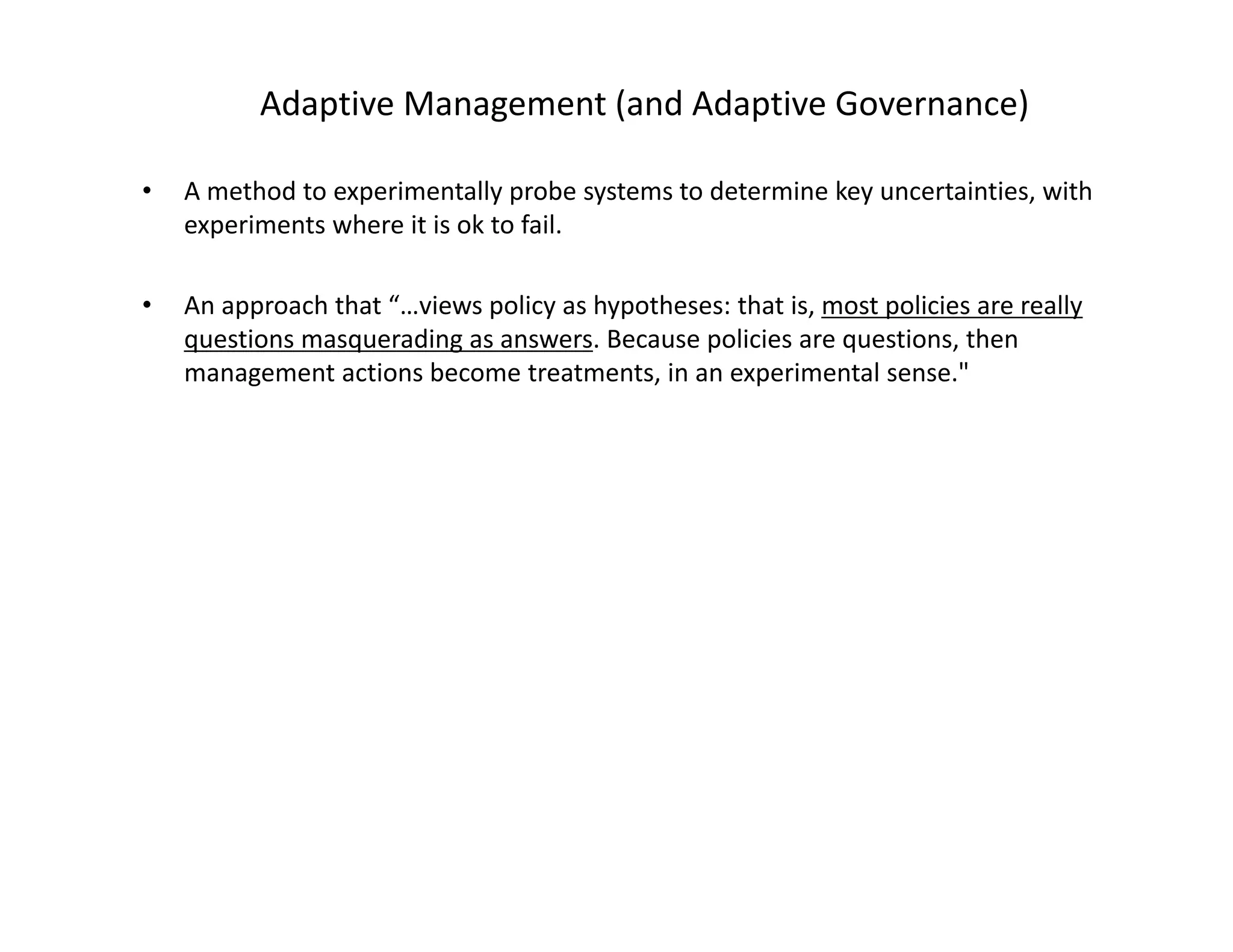
Adaptive Management (and Adaptive Governance)
• A method to experimentally probe systems to determine key uncertainties, with 
experiments where it is ok to fail.
• An approach that “…views policy as hypotheses: that is, most policies are really 
questions masquerading as answers. Because policies are questions, then 
management actions become treatments, in an experimental sense." 
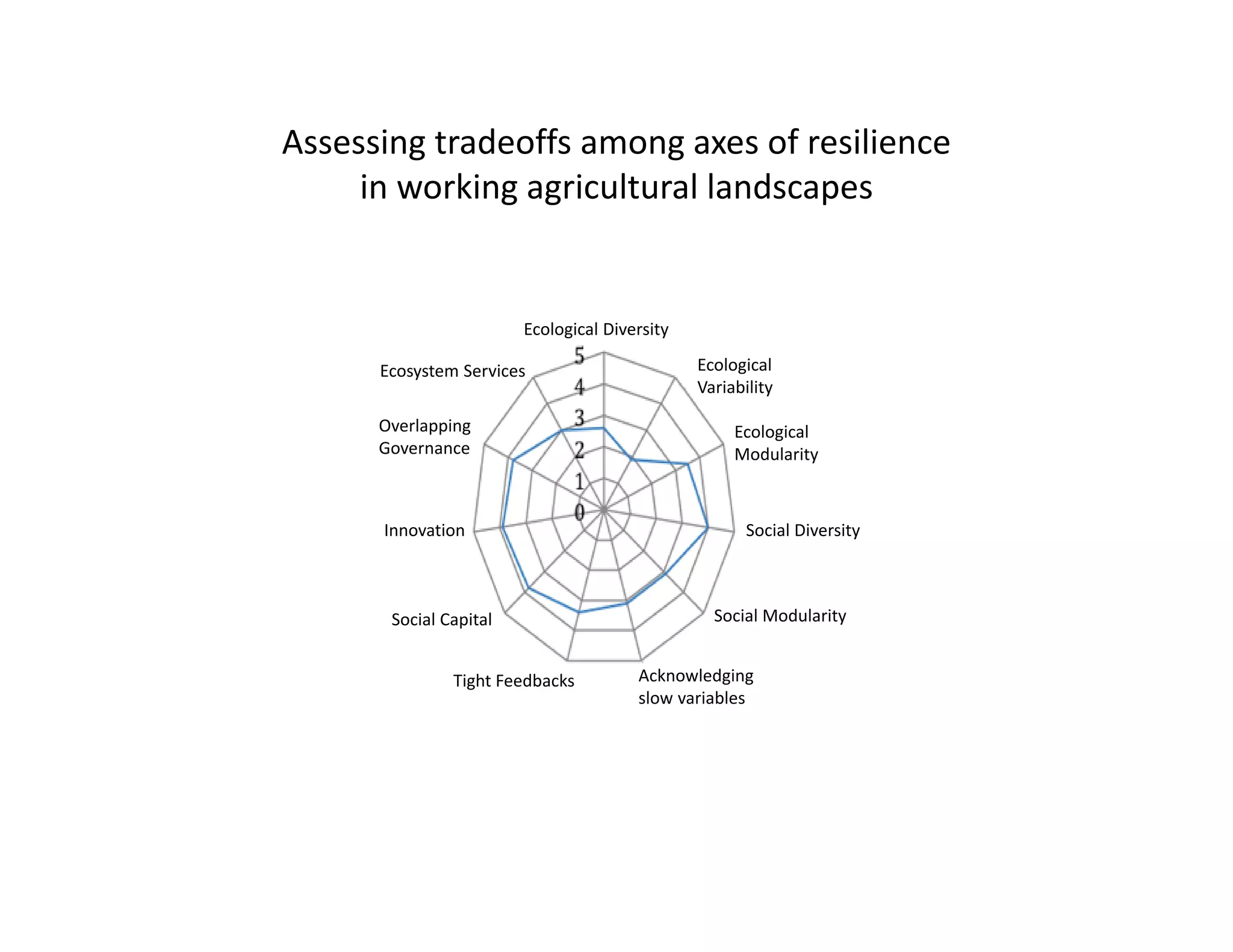
Ecological Diversity
Ecological 
Variability
Ecological 
Modularity
Social Diversity
Social Modularity
Acknowledging 
slow variables
Tight Feedbacks
Social Capital
Innovation
Overlapping 
Governance
Ecosystem Services
Assessing tradeoffs among axes of resilience
in working agricultural landscapes
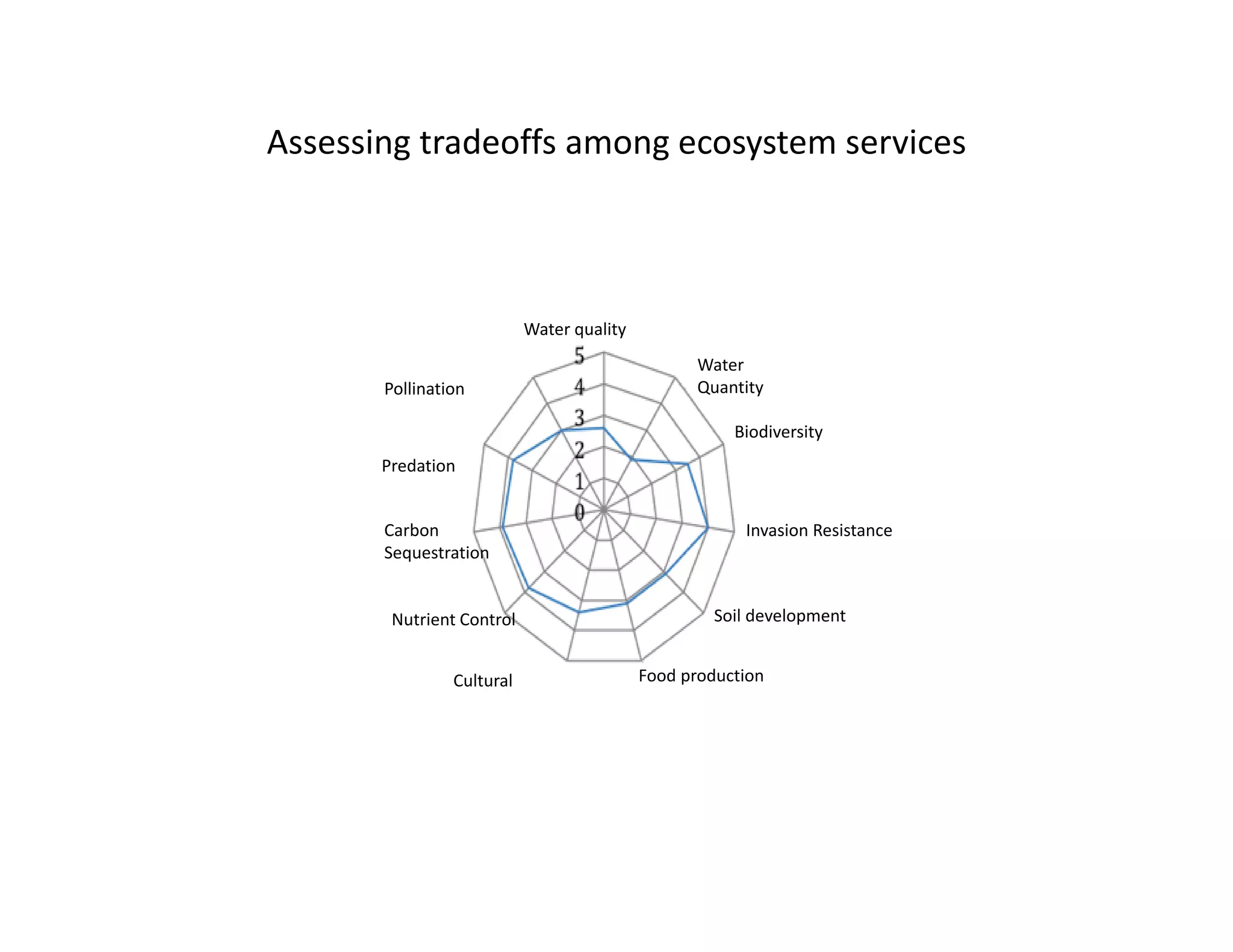
Water quality
Water 
Quantity
Biodiversity
Invasion Resistance
Soil development
Food productionCultural
Nutrient Control
Carbon
Sequestration
Predation
Pollination
Assessing tradeoffs among ecosystem services
Resilience resources:
‐www.resalliance.org
‐information and news
‐ workbooks (free, downloadable)
‐Ecology and Society
‐www.ecologyandsociety.org
‐Twitter: 
@christofab
@resilienceSci

Allen adaptive management for ecosystems