What is Resilience?
The ability to [not just] return to a
previous state [but] adapt and learn to live
with changes and uncertainty (Béné 2013)
The ability of systems to absorb changes of
state variables, driving variables, and
parameters, and still persist (Holling 1973)
The ability of people, households,
communities, countries, and systems to
mitigate, adapt to, and recover from
shocks and stresses in a manner that
reduces chronic vulnerability and
facilitates inclusive growth (USAID 2012)
The ability of a joint social and
ecological system to
withstand shocks [as well as]
learn from them and evolve in
response to changing
conditions (Oxfam 2009)
The capacity of a system to
absorb disturbance and
reorganize [and still retain]
the same function, structure,
identity, and feedbacks
(Resilience Alliance 2002)
What is Resilience?
Building resilience means helping
people, communities, countries, and
global institutions prevent, anticipate,
prepare for, cope with, and recover
from shocks and not only bounce back
to where they were before the shocks
occurred, but become even better-off.
IFPRI 2020 Consultation definition
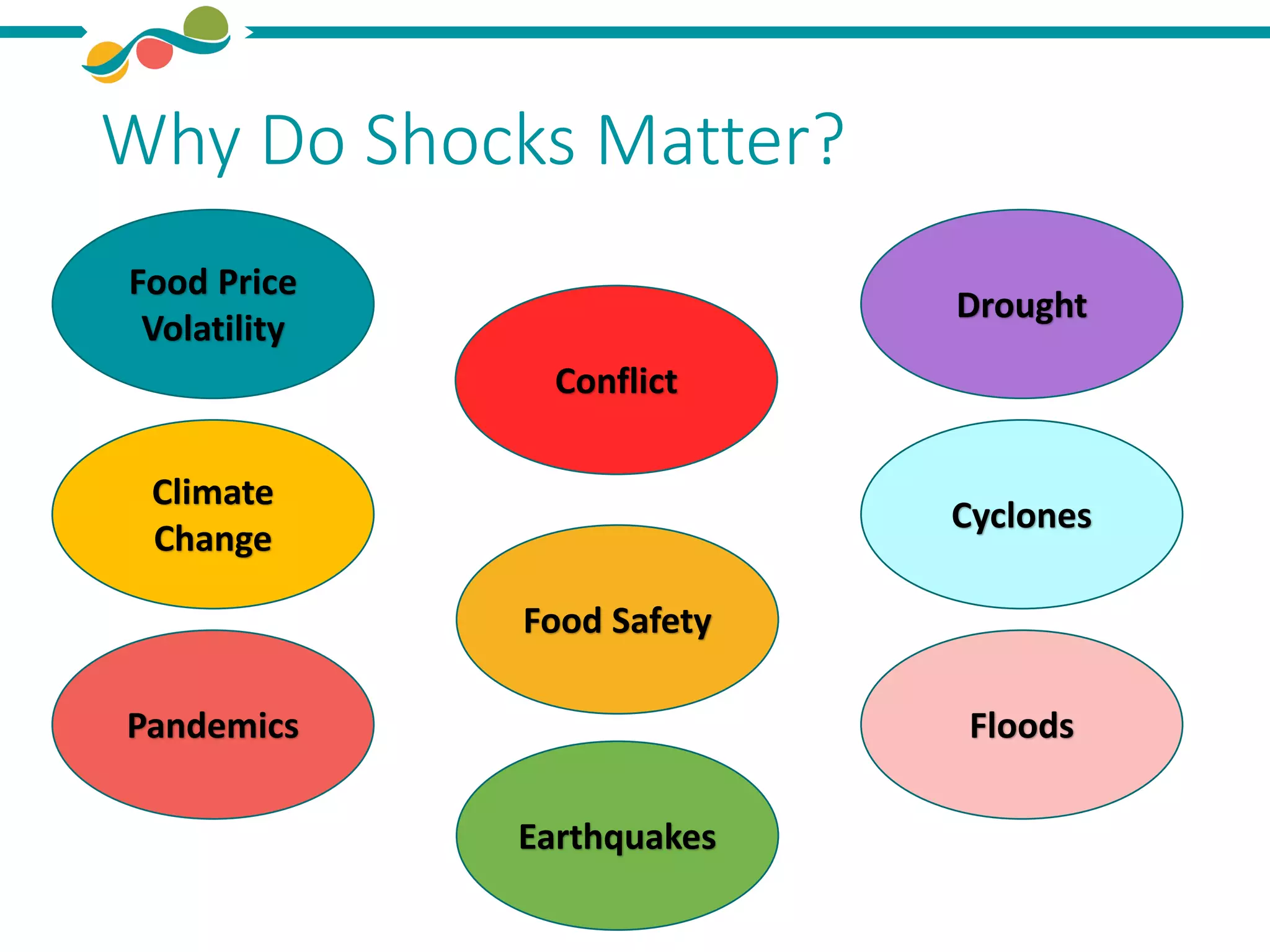
Why Do Shocks Matter?
Food Price
Volatility
Earthquakes
Climate
Change
Cyclones
Floods
Food Safety
Conflict
Pandemics
Drought
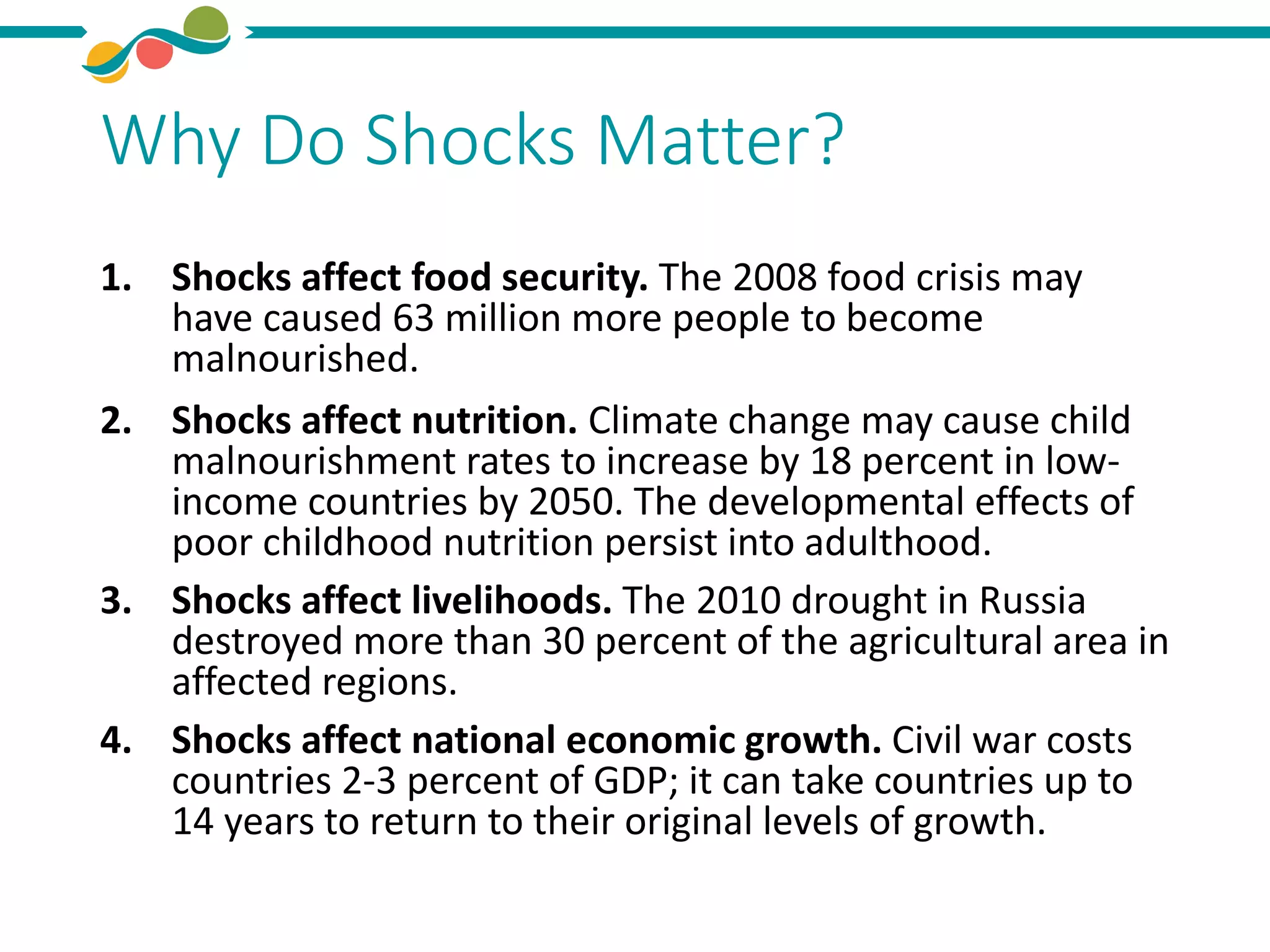
Why Do Shocks Matter?
1. Shocks affect food security. The 2008 food crisis may
have caused 63 million more people to become
malnourished.
2. Shocks affect nutrition. Climate change may cause child
malnourishment rates to increase by 18 percent in low-
income countries by 2050. The developmental effects of
poor childhood nutrition persist into adulthood.
3. Shocks affect livelihoods. The 2010 drought in Russia
destroyed more than 30 percent of the agricultural area in
affected regions.
4. Shocks affect national economic growth. Civil war costs
countries 2-3 percent of GDP; it can take countries up to
14 years to return to their original levels of growth.

Understanding resilience and coping with a world of shocks

  • 1.
    What is Resilience? Theability to [not just] return to a previous state [but] adapt and learn to live with changes and uncertainty (Béné 2013) The ability of systems to absorb changes of state variables, driving variables, and parameters, and still persist (Holling 1973) The ability of people, households, communities, countries, and systems to mitigate, adapt to, and recover from shocks and stresses in a manner that reduces chronic vulnerability and facilitates inclusive growth (USAID 2012) The ability of a joint social and ecological system to withstand shocks [as well as] learn from them and evolve in response to changing conditions (Oxfam 2009) The capacity of a system to absorb disturbance and reorganize [and still retain] the same function, structure, identity, and feedbacks (Resilience Alliance 2002)
  • 2.
    What is Resilience? Buildingresilience means helping people, communities, countries, and global institutions prevent, anticipate, prepare for, cope with, and recover from shocks and not only bounce back to where they were before the shocks occurred, but become even better-off. IFPRI 2020 Consultation definition
  • 3.
    Why Do ShocksMatter? Food Price Volatility Earthquakes Climate Change Cyclones Floods Food Safety Conflict Pandemics Drought
  • 4.
    Why Do ShocksMatter? 1. Shocks affect food security. The 2008 food crisis may have caused 63 million more people to become malnourished. 2. Shocks affect nutrition. Climate change may cause child malnourishment rates to increase by 18 percent in low- income countries by 2050. The developmental effects of poor childhood nutrition persist into adulthood. 3. Shocks affect livelihoods. The 2010 drought in Russia destroyed more than 30 percent of the agricultural area in affected regions. 4. Shocks affect national economic growth. Civil war costs countries 2-3 percent of GDP; it can take countries up to 14 years to return to their original levels of growth.