How “Open” Changes 
Products 
All Things Open 
October, 2014
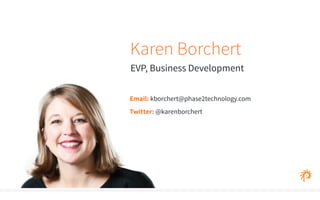
Karen Borchert 
EVP, Business Development 
Email: kborchert@phase2technology.com 
Twitter: @karenborchert
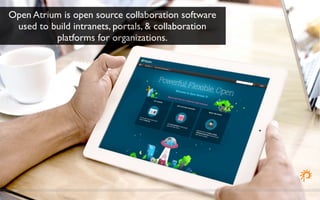
Open Atrium is open source collaboration software 
used to build intranets, portals, & collaboration 
platforms for organizations.
the open product 
conundrum.
what is a product? 
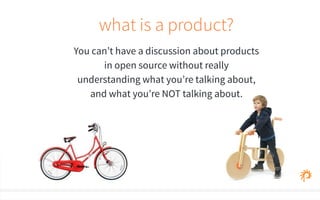
You can’t have a discussion about products 
in open source without really 
understanding what you’re talking about, 
and what you’re NOT talking about.
what is a product? 
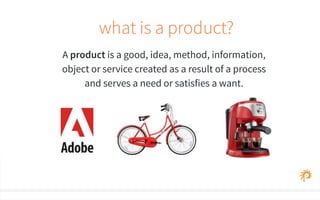
A product is a good, idea, method, information, 
object or service created as a result of a process 
and serves a need or satisfies a want.
what is an open source product? 
But in open source, things work a little bit differently. 
In open source, we generally build tools and tool kits, 
not traditional “products.” 
Why? Because tools and tool kits are more conducive 
to contribution, extension, and open source 
goodness.
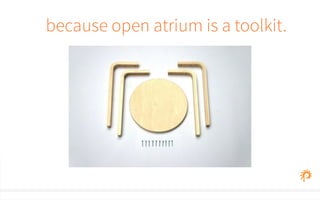
with open, products work more like ikea 
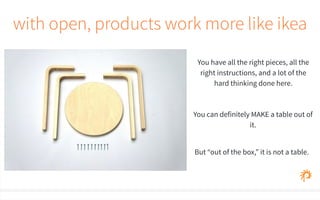
You have all the right pieces, all the 
right instructions, and a lot of the 
hard thinking done here. 
You can definitely MAKE a table out of 
it. 
But “out of the box,” it is not a table.
when we’re talking 
about software, most 
buyers are thinking 
about what they get 
“out of the box.” And 
in their minds… 
tool kits ≠ products
is Open Atrium a product? 
“It’s an intranet in a box!” 
“It’s a community portal 
but it’s totally open 
source!” 
“You can use it instead of 
SharePoint!”
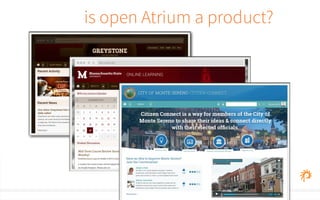
is open Atrium a product?
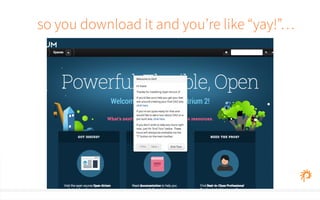
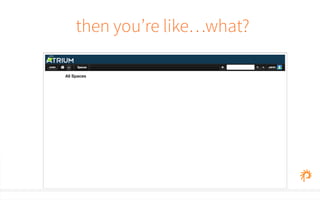
so you download it and you’re like “yay!”…
then you’re like…what?
because open atrium is a toolkit.
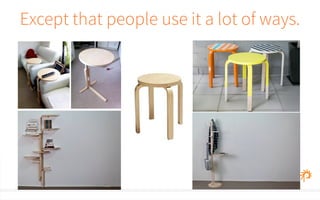
Except that people use it a lot of ways.
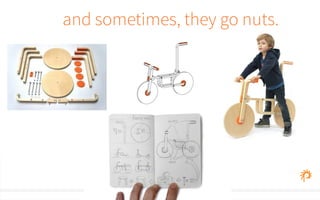
and sometimes, they go nuts.
and that’s what’s awesome 
about open source.
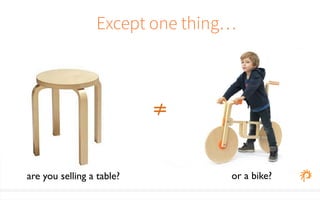
Except one thing… 
≠ 
are you selling a table? or a bike?
here’s that conundrum part. 
The very thing that makes open source 
awesome is what makes our products 
difficult to define, deliver, and sell.
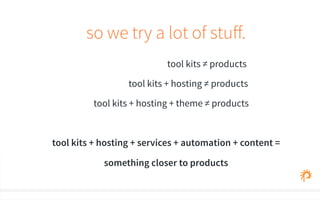
so we try a lot of stuff. 
tool kits ≠ products 
tool kits + hosting ≠ products 
tool kits + hosting + theme ≠ products 
tool kits + hosting + services + automation + content = 
something closer to products
In short: table or bike? 
Making an open source product is 
about doing what’s needed to start 
solving a customer problem on Day 1.
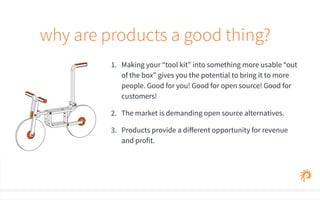
why are products a good thing? 
1. Making your “tool kit” into something more usable “out 
of the box” gives you the potential to bring it to more 
people. Good for you! Good for open source! Good for 
customers! 
2. The market is demanding open source alternatives. 
3. Products provide a different opportunity for revenue 
and profit.
It’s about 3 things: 
1. Understanding the value you add. 
2. Understanding your market. 
3. Understanding your business model (and 
what you’re really selling)
going to market.
What does that mean in open? 
1. Understanding the value you add. 
2. Understanding your market. 
3. Understanding your business model (and 
what you’re really selling)
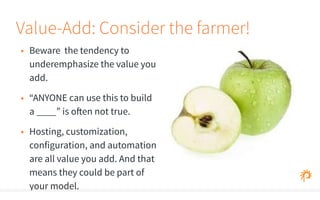
Value-Add: Consider the farmer! 
• Beware the tendency to 
underemphasize the value you 
add. 
• “ANYONE can use this to build 
a ____” is often not true. 
• Hosting, customization, 
configuration, and automation 
are all value you add. And that 
means they could be part of 
your model.
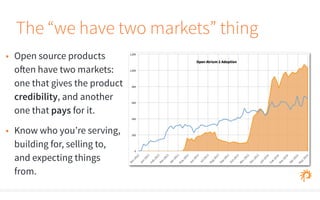
The “we have two markets” thing 
• Open source products 
often have two markets: 
one that gives the product 
credibility, and another 
one that pays for it. 
• Know who you’re serving, 
building for, selling to, 
and expecting things 
from.
Community Market 
• Wants tool kits and flexibility 
• Needs documentation & a 
well-maintained product 
• Is not planning to give you 
money 
• Are possible contributors, 
champions, and salespeople 
Paying Market 
• Wants an experience out of the 
box, usually 
• Needs a way to explain this to 
their boss 
• Sometimes checks in with the 
community to see if you suck at 
maintaining it
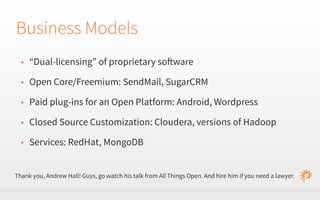
Business Models 
• “Dual-licensing” of proprietary software 
• Open Core/Freemium: SendMail, SugarCRM 
• Paid plug-ins for an Open Platform: Android, Wordpress 
• Closed Source Customization: Cloudera, versions of Hadoop 
• Services: RedHat, MongoDB 
Thank you, Andrew Hall! Guys, go watch his talk from All Things Open. And hire him if you need a lawyer.
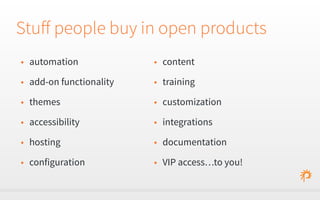
Stuff people buy in open products 
• automation 
• add-on functionality 
• themes 
• accessibility 
• hosting 
• configuration 
• content 
• training 
• customization 
• integrations 
• documentation 
• VIP access…to you!
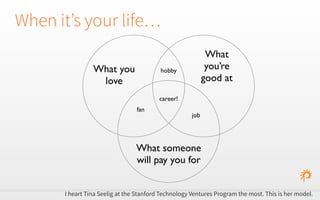
When it’s your life… 
What 
you’re 
good at 
What someone 
will pay you for 
What you 
love 
hobby 
job 
fan 
career! 
I heart Tina Seelig at the Stanford Technology Ventures Program the most. This is her model.
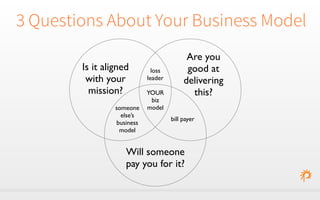
3 Questions About Your Business Model 
Are you 
good at 
delivering 
this? 
Is it aligned 
with your 
mission? 
loss 
leader 
bill payer 
someone 
else’s 
business 
model 
YOUR 
biz 
model 
Will someone 
pay you for it?
What about services? 
• Services can be a really important part of any business 
model for a product, open source or not. 
• Defining, automating, and packaging those services can 
help you “productize” a bit. 
• It’s not “less of a product” because it has services as a key 
business model. (see also: guys with the big red building)
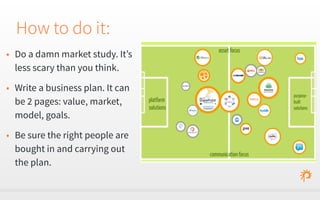
How to do it: 
• Do a damn market study. It’s 
less scary than you think. 
• Write a business plan. It can 
be 2 pages: value, market, 
model, goals. 
• Be sure the right people are 
bought in and carrying out 
the plan.
questions people ask
“Is this going to be expensive?” 
• Not necessarily. But it’s not going to be free. 
• Poor planning and budgeting for taking a product to 
market is the equivalent of throwing good money after 
bad. 
• Invest properly or don’t invest at all.
Am I going to make money on my 
product this year? 
• Maybe. But you shouldn’t count on that, unless your go-to-market 
spend is focused on a very fast ROI. 
• Don’t bet the farm on your product business until you’ve 
tested it in the market.
Everyone seems to just charge $10/month for this 
kind of thing so I’m just going to charge that. Cool? 
• Nope. You need to charge what the product is worth AND what 
people will pay for it AND what you can afford to sell it for. Doing 
so requires some market analysis. 
• Think: “how much I gain from selling this” minus “how much it 
cost for me to do this” divided by “how much it cost for me to do 
this.” That’s your ROI. Should be positive.) 
• If you find that you cannot sustain a product at the prices the 
market demands, you need to change something (the price, the 
model, or the market).
“I’m not sure we want to be a “products company.” 
• It is very hard to be successful in a products effort without 
organizational buy-in. 
• Consider a pilot program, a timeboxed trial, or a set budget with 
clear success measures. Nobody wants these things to become a 
“money pit” but you also have to give them the chance to 
succeed. 
• Write a business plan. For real. You’ll be super happy you did, 
even if it’s for one module. Even if only you ever read it.
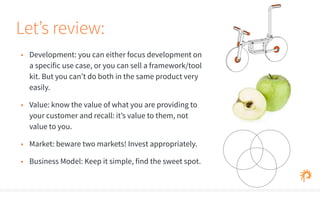
Let’s review: 
• Development: you can either focus development on 
a specific use case, or you can sell a framework/tool 
kit. But you can’t do both in the same product very 
easily. 
• Value: know the value of what you are providing to 
your customer and recall: it’s value to them, not 
value to you. 
• Market: beware two markets! Invest appropriately. 
• Business Model: Keep it simple, find the sweet spot.
Karen Borchert 
EVP, Business Development 
Email: kborchert@phase2technology.com 
Twitter: @karenborchert

How 'Open' Changes Product Development

  • 1.
    How “Open” Changes Products All Things Open October, 2014
  • 2.
    Karen Borchert EVP,Business Development Email: kborchert@phase2technology.com Twitter: @karenborchert
  • 3.
    Open Atrium isopen source collaboration software used to build intranets, portals, & collaboration platforms for organizations.
  • 4.
    the open product conundrum.
  • 5.
    what is aproduct? You can’t have a discussion about products in open source without really understanding what you’re talking about, and what you’re NOT talking about.
  • 6.
    what is aproduct? A product is a good, idea, method, information, object or service created as a result of a process and serves a need or satisfies a want.
  • 7.
    what is anopen source product? But in open source, things work a little bit differently. In open source, we generally build tools and tool kits, not traditional “products.” Why? Because tools and tool kits are more conducive to contribution, extension, and open source goodness.
  • 8.
    with open, productswork more like ikea You have all the right pieces, all the right instructions, and a lot of the hard thinking done here. You can definitely MAKE a table out of it. But “out of the box,” it is not a table.
  • 9.
    when we’re talking about software, most buyers are thinking about what they get “out of the box.” And in their minds… tool kits ≠ products
  • 10.
    is Open Atriuma product? “It’s an intranet in a box!” “It’s a community portal but it’s totally open source!” “You can use it instead of SharePoint!”
  • 11.
    is open Atriuma product?
  • 12.
    so you downloadit and you’re like “yay!”…
  • 13.
  • 14.
    because open atriumis a toolkit.
  • 15.
    Except that peopleuse it a lot of ways.
  • 16.
  • 17.
    and that’s what’sawesome about open source.
  • 18.
    Except one thing… ≠ are you selling a table? or a bike?
  • 19.
    here’s that conundrumpart. The very thing that makes open source awesome is what makes our products difficult to define, deliver, and sell.
  • 20.
    so we trya lot of stuff. tool kits ≠ products tool kits + hosting ≠ products tool kits + hosting + theme ≠ products tool kits + hosting + services + automation + content = something closer to products
  • 21.
    In short: tableor bike? Making an open source product is about doing what’s needed to start solving a customer problem on Day 1.
  • 22.
    why are productsa good thing? 1. Making your “tool kit” into something more usable “out of the box” gives you the potential to bring it to more people. Good for you! Good for open source! Good for customers! 2. The market is demanding open source alternatives. 3. Products provide a different opportunity for revenue and profit.
  • 23.
    It’s about 3things: 1. Understanding the value you add. 2. Understanding your market. 3. Understanding your business model (and what you’re really selling)
  • 24.
  • 25.
    What does thatmean in open? 1. Understanding the value you add. 2. Understanding your market. 3. Understanding your business model (and what you’re really selling)
  • 26.
    Value-Add: Consider thefarmer! • Beware the tendency to underemphasize the value you add. • “ANYONE can use this to build a ____” is often not true. • Hosting, customization, configuration, and automation are all value you add. And that means they could be part of your model.
  • 27.
    The “we havetwo markets” thing • Open source products often have two markets: one that gives the product credibility, and another one that pays for it. • Know who you’re serving, building for, selling to, and expecting things from.
  • 28.
    Community Market •Wants tool kits and flexibility • Needs documentation & a well-maintained product • Is not planning to give you money • Are possible contributors, champions, and salespeople Paying Market • Wants an experience out of the box, usually • Needs a way to explain this to their boss • Sometimes checks in with the community to see if you suck at maintaining it
  • 29.
    Business Models •“Dual-licensing” of proprietary software • Open Core/Freemium: SendMail, SugarCRM • Paid plug-ins for an Open Platform: Android, Wordpress • Closed Source Customization: Cloudera, versions of Hadoop • Services: RedHat, MongoDB Thank you, Andrew Hall! Guys, go watch his talk from All Things Open. And hire him if you need a lawyer.
  • 30.
    Stuff people buyin open products • automation • add-on functionality • themes • accessibility • hosting • configuration • content • training • customization • integrations • documentation • VIP access…to you!
  • 31.
    When it’s yourlife… What you’re good at What someone will pay you for What you love hobby job fan career! I heart Tina Seelig at the Stanford Technology Ventures Program the most. This is her model.
  • 32.
    3 Questions AboutYour Business Model Are you good at delivering this? Is it aligned with your mission? loss leader bill payer someone else’s business model YOUR biz model Will someone pay you for it?
  • 33.
    What about services? • Services can be a really important part of any business model for a product, open source or not. • Defining, automating, and packaging those services can help you “productize” a bit. • It’s not “less of a product” because it has services as a key business model. (see also: guys with the big red building)
  • 34.
    How to doit: • Do a damn market study. It’s less scary than you think. • Write a business plan. It can be 2 pages: value, market, model, goals. • Be sure the right people are bought in and carrying out the plan.
  • 35.
  • 36.
    “Is this goingto be expensive?” • Not necessarily. But it’s not going to be free. • Poor planning and budgeting for taking a product to market is the equivalent of throwing good money after bad. • Invest properly or don’t invest at all.
  • 37.
    Am I goingto make money on my product this year? • Maybe. But you shouldn’t count on that, unless your go-to-market spend is focused on a very fast ROI. • Don’t bet the farm on your product business until you’ve tested it in the market.
  • 38.
    Everyone seems tojust charge $10/month for this kind of thing so I’m just going to charge that. Cool? • Nope. You need to charge what the product is worth AND what people will pay for it AND what you can afford to sell it for. Doing so requires some market analysis. • Think: “how much I gain from selling this” minus “how much it cost for me to do this” divided by “how much it cost for me to do this.” That’s your ROI. Should be positive.) • If you find that you cannot sustain a product at the prices the market demands, you need to change something (the price, the model, or the market).
  • 39.
    “I’m not surewe want to be a “products company.” • It is very hard to be successful in a products effort without organizational buy-in. • Consider a pilot program, a timeboxed trial, or a set budget with clear success measures. Nobody wants these things to become a “money pit” but you also have to give them the chance to succeed. • Write a business plan. For real. You’ll be super happy you did, even if it’s for one module. Even if only you ever read it.
  • 40.
    Let’s review: •Development: you can either focus development on a specific use case, or you can sell a framework/tool kit. But you can’t do both in the same product very easily. • Value: know the value of what you are providing to your customer and recall: it’s value to them, not value to you. • Market: beware two markets! Invest appropriately. • Business Model: Keep it simple, find the sweet spot.
  • 41.
    Karen Borchert EVP,Business Development Email: kborchert@phase2technology.com Twitter: @karenborchert