What is Cholesterol? HDL, LDL, and Other Sterols 
Cholesterol is a lipid. Molecules referred to as lipids include, among other things, triglycerides, 
phospholipids, and sterols. These three things differ in chemical structure:Triglycerides are fat 
molecules commonly found in food. They are composed of three fatty acids and a 
glycerol.Phospholipids are structurally similar to triglycerides but one of the fatty acids is replaced 
by a phosphorus-containing acid.Sterols are alcohols: "large, complicated molecules consisting of 
interconnected rings of carbon atoms with side chains of carbon, hydrogen, and oxygen attached." 
(Hamilton et al, 128)Sterols are produced by both plant and animals cells, but cholesterol is 
produced only by animal cells (Davis and Barnard). People consume cholesterol in meat, poultry, 
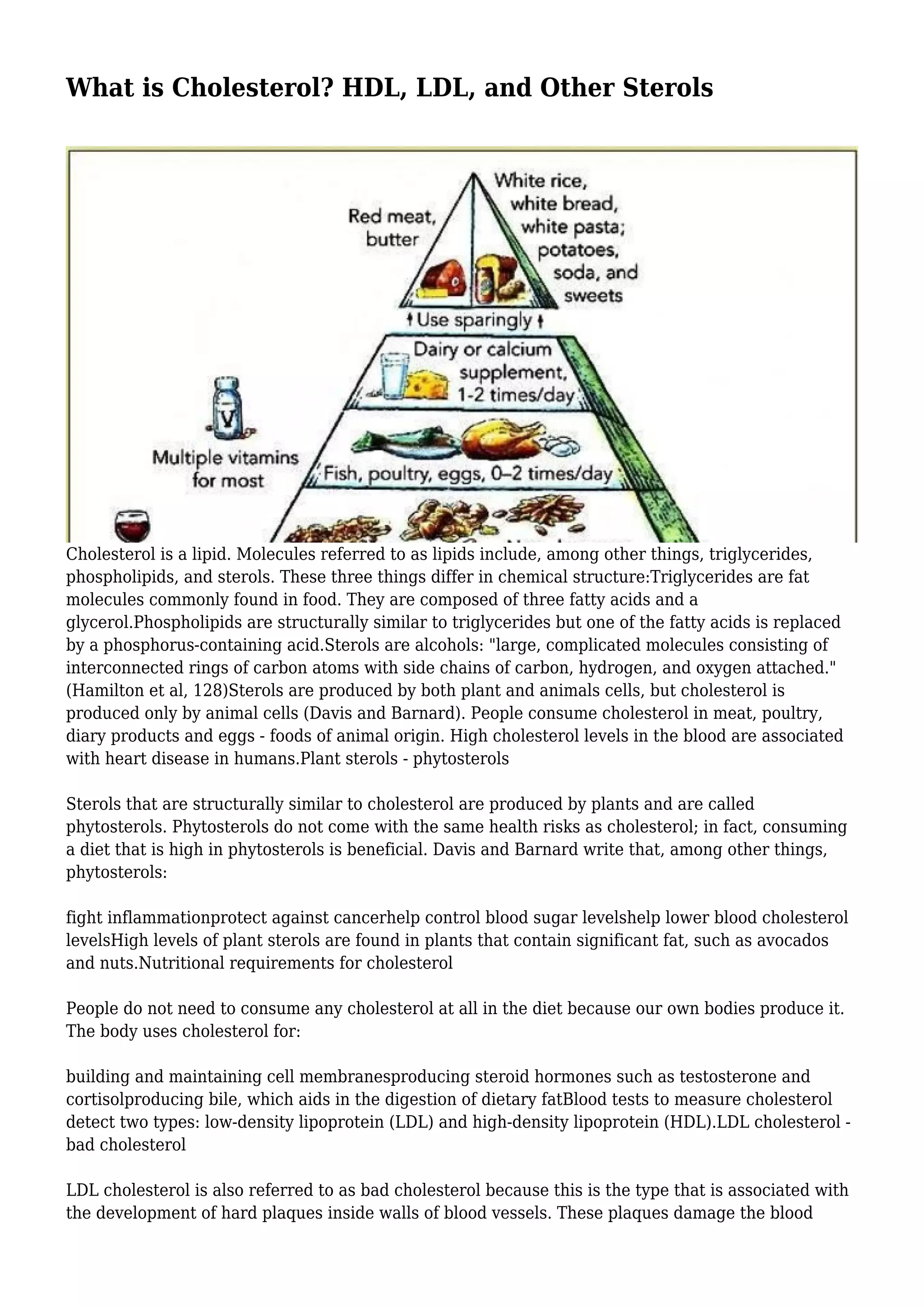
diary products and eggs - foods of animal origin. High cholesterol levels in the blood are associated 
with heart disease in humans.Plant sterols - phytosterols 
Sterols that are structurally similar to cholesterol are produced by plants and are called 
phytosterols. Phytosterols do not come with the same health risks as cholesterol; in fact, consuming 
a diet that is high in phytosterols is beneficial. Davis and Barnard write that, among other things, 
phytosterols: 
fight inflammationprotect against cancerhelp control blood sugar levelshelp lower blood cholesterol 
levelsHigh levels of plant sterols are found in plants that contain significant fat, such as avocados 
and nuts.Nutritional requirements for cholesterol 
People do not need to consume any cholesterol at all in the diet because our own bodies produce it. 
The body uses cholesterol for: 
building and maintaining cell membranesproducing steroid hormones such as testosterone and 
cortisolproducing bile, which aids in the digestion of dietary fatBlood tests to measure cholesterol 
detect two types: low-density lipoprotein (LDL) and high-density lipoprotein (HDL).LDL cholesterol - 
bad cholesterol 
LDL cholesterol is also referred to as bad cholesterol because this is the type that is associated with 
the development of hard plaques inside walls of blood vessels. These plaques damage the blood
vessels, making them less flexible and blocking blood flow. LDL cholesterol should only be present in 
the blood in low levels. 
HDL cholesterol - good cholesterol 
HDL cholesterol, also known as good cholesterol, is thought to actually protect against heart 
disease, and maintaining high blood levels is better that having low levels. HDL cholesterol may play 
a role in carrying cholesterol away from blood vessel walls and may even remove it from plaques. 
The secret to maintaining healthy levels of LDL and HDL cholesterol in the blood and protecting the 
heart is not necessarily to avoid cholesterol in the diet, but rather to eat a low fat diet in general, 
and avoid saturated fats and hydrogenated fats in particular. 
Sources: 
American Heart Association. "LDL and HDL Cholesterol: What's Bad and What's Good?" 
americanheart.org Accessed Dec 2010. 
Davis, Brenda and Tom Barnard. Defeating Diabetes. Summertown: Healthy Living Publications, 
2003. 
Hamilton, Eva May Nunnelley, Eleanor Noss Whitney, and Frances Sienkiewicz Sizer. Nutrition
Concepts and Controversies: Annotated Instructor's Edition, 5th ed. St. Paul: West Publishing 
Company, 1991.

What is Cholesterol? HDL, LDL, and Other Sterols

  • 1.
    What is Cholesterol?HDL, LDL, and Other Sterols Cholesterol is a lipid. Molecules referred to as lipids include, among other things, triglycerides, phospholipids, and sterols. These three things differ in chemical structure:Triglycerides are fat molecules commonly found in food. They are composed of three fatty acids and a glycerol.Phospholipids are structurally similar to triglycerides but one of the fatty acids is replaced by a phosphorus-containing acid.Sterols are alcohols: "large, complicated molecules consisting of interconnected rings of carbon atoms with side chains of carbon, hydrogen, and oxygen attached." (Hamilton et al, 128)Sterols are produced by both plant and animals cells, but cholesterol is produced only by animal cells (Davis and Barnard). People consume cholesterol in meat, poultry, diary products and eggs - foods of animal origin. High cholesterol levels in the blood are associated with heart disease in humans.Plant sterols - phytosterols Sterols that are structurally similar to cholesterol are produced by plants and are called phytosterols. Phytosterols do not come with the same health risks as cholesterol; in fact, consuming a diet that is high in phytosterols is beneficial. Davis and Barnard write that, among other things, phytosterols: fight inflammationprotect against cancerhelp control blood sugar levelshelp lower blood cholesterol levelsHigh levels of plant sterols are found in plants that contain significant fat, such as avocados and nuts.Nutritional requirements for cholesterol People do not need to consume any cholesterol at all in the diet because our own bodies produce it. The body uses cholesterol for: building and maintaining cell membranesproducing steroid hormones such as testosterone and cortisolproducing bile, which aids in the digestion of dietary fatBlood tests to measure cholesterol detect two types: low-density lipoprotein (LDL) and high-density lipoprotein (HDL).LDL cholesterol - bad cholesterol LDL cholesterol is also referred to as bad cholesterol because this is the type that is associated with the development of hard plaques inside walls of blood vessels. These plaques damage the blood
  • 2.
    vessels, making themless flexible and blocking blood flow. LDL cholesterol should only be present in the blood in low levels. HDL cholesterol - good cholesterol HDL cholesterol, also known as good cholesterol, is thought to actually protect against heart disease, and maintaining high blood levels is better that having low levels. HDL cholesterol may play a role in carrying cholesterol away from blood vessel walls and may even remove it from plaques. The secret to maintaining healthy levels of LDL and HDL cholesterol in the blood and protecting the heart is not necessarily to avoid cholesterol in the diet, but rather to eat a low fat diet in general, and avoid saturated fats and hydrogenated fats in particular. Sources: American Heart Association. "LDL and HDL Cholesterol: What's Bad and What's Good?" americanheart.org Accessed Dec 2010. Davis, Brenda and Tom Barnard. Defeating Diabetes. Summertown: Healthy Living Publications, 2003. Hamilton, Eva May Nunnelley, Eleanor Noss Whitney, and Frances Sienkiewicz Sizer. Nutrition
  • 3.
    Concepts and Controversies:Annotated Instructor's Edition, 5th ed. St. Paul: West Publishing Company, 1991.