Cognitive Remediation 2012

            Alice Medalia, PhD
     Professor of Psychology (in Psychiatry),
       College of Physicians and Surgeons
      Director of Psychiatric Rehabilitation,
      Columbia University Medical Center
               New York, New York
Disclosure: Alice Medalia, PhD

  Type                     Company
  Grant/Research Support   Eli Lilly and Company; SunovionPharmaceuticals Inc.


• This presentation will not include discussion of
  off-label, experimental, and/or investigational
  uses of drugs or devices
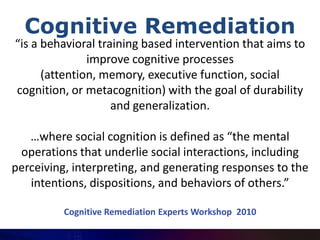
Cognitive Remediation
“is a behavioral training based intervention that aims to
               improve cognitive processes
      (attention, memory, executive function, social
cognition, or metacognition) with the goal of durability
                    and generalization.

   …where social cognition is defined as “the mental
 operations that underlie social interactions, including
perceiving, interpreting, and generating responses to the
   intentions, dispositions, and behaviors of others.”

          Cognitive Remediation Experts Workshop 2010
Cognitive Remediation
                   Is a Learning Activity
• Learning relies on neuroplasticity
       Neurons in the brain adjust their activity
       and organization in response to new situations
       or to changes in the environment

• Schizophrenia and neuroplasticity
       Patients receiving CR demonstrated a decelerated
       loss of and, in some cases,
       increase in gray matter volume
Eack SM, et al. Arch Gen Psychiatry. 2010;67(7):674-682.
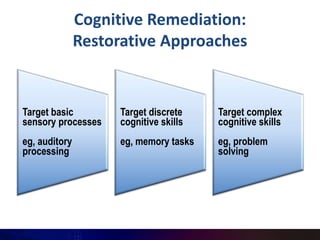
Cognitive Remediation:
               Restorative Approaches


Target basic         Target discrete    Target complex
sensory processes    cognitive skills   cognitive skills
eg, auditory         eg, memory tasks   eg, problem
processing                              solving
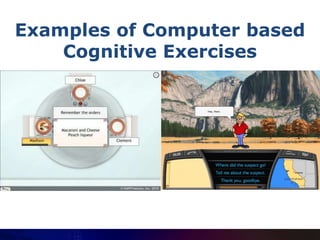
Examples of Computer based
    Cognitive Exercises
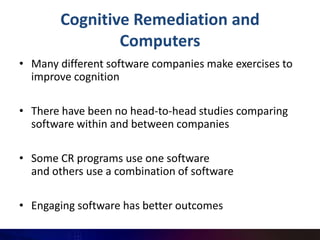
Cognitive Remediation and
                Computers
• Many different software companies make exercises to
  improve cognition

• There have been no head-to-head studies comparing
  software within and between companies

• Some CR programs use one software
  and others use a combination of software

• Engaging software has better outcomes
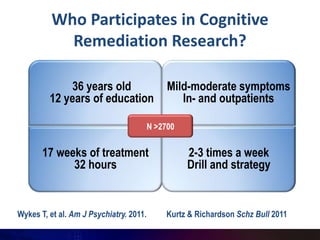
Who Participates in Cognitive
            Remediation Research?

             36 years old                     Mild-moderate symptoms
         12 years of education                   In- and outpatients

                                         N >2700


       17 weeks of treatment                       2-3 times a week
             32 hours                              Drill and strategy


Wykes T, et al. Am J Psychiatry. 2011.       Kurtz & Richardson Schz Bull 2011
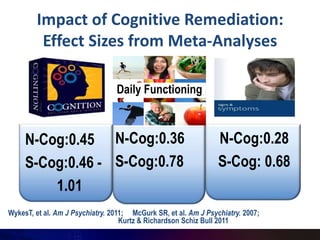
Impact of Cognitive Remediation:
         Effect Sizes from Meta-Analyses

                                 Daily Functioning


     N-Cog:0.45 N-Cog:0.36                                       N-Cog:0.28
     S-Cog:0.46 - S-Cog:0.78                                     S-Cog: 0.68
         1.01
WykesT, et al. Am J Psychiatry. 2011; McGurk SR, et al. Am J Psychiatry. 2007;
                                   Kurtz & Richardson Schiz Bull 2011
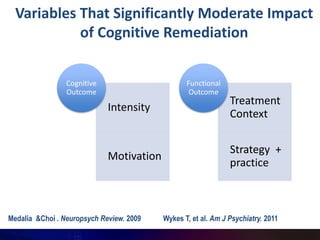
Variables That Significantly Moderate Impact
            of Cognitive Remediation


                 Cognitive                       Functional
                 Outcome                          Outcome
                                                               Treatment
                             Intensity
                                                               Context

                                                               Strategy +
                             Motivation
                                                               practice


Medalia &Choi . Neuropsych Review. 2009   Wykes T, et al. Am J Psychiatry. 2011
Impact of Treatment Intensity on
   Cognitive Enhancement in
         Schizophrenia


                 Medalia & Richardson Schiz Bull 2005
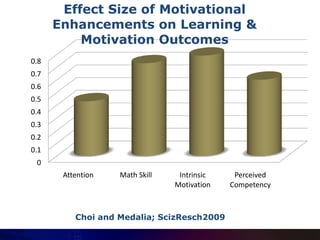
Effect Size of Motivational
      Enhancements on Learning &
          Motivation Outcomes
0.8
0.7
0.6
0.5
0.4
0.3
0.2
0.1
 0
       Attention   Math Skill    Intrinsic    Perceived
                                Motivation   Competency


          Choi and Medalia; ScizResch2009
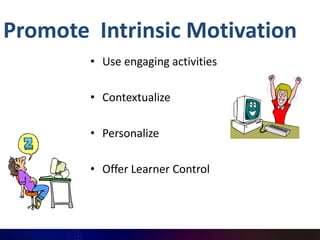
Promote Intrinsic Motivation
        • Use engaging activities

        • Contextualize

        • Personalize

        • Offer Learner Control
Personalizing Treatment
• Link cognitive remediation to personally relevant
  goals

• Different training exercises for different people

• Find the sweet spot of challenge

• Combine with therapies that are relevant to
  recovery goals
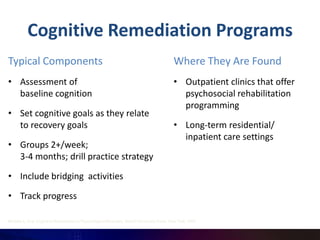
Cognitive Remediation Programs
Typical Components                                                                            Where They Are Found
• Assessment of                                                                               • Outpatient clinics that offer
  baseline cognition                                                                            psychosocial rehabilitation
                                                                                                programming
• Set cognitive goals as they relate
  to recovery goals                                                                           • Long-term residential/
                                                                                                inpatient care settings
• Groups 2+/week;
  3-4 months; drill practice strategy

• Include bridging activities

• Track progress

Medalia A, et al. Cognitive Remediation in Psychological Disorders. Oxford University Press: New York; 2009.
Alice Medalia, PhD
 E-mail: amedalia@aol.com
www.cognitive-remediation.org

Alice Medalia SRF Webinar

  • 1.
    Cognitive Remediation 2012 Alice Medalia, PhD Professor of Psychology (in Psychiatry), College of Physicians and Surgeons Director of Psychiatric Rehabilitation, Columbia University Medical Center New York, New York
  • 2.
    Disclosure: Alice Medalia,PhD Type Company Grant/Research Support Eli Lilly and Company; SunovionPharmaceuticals Inc. • This presentation will not include discussion of off-label, experimental, and/or investigational uses of drugs or devices
  • 3.
    Cognitive Remediation “is abehavioral training based intervention that aims to improve cognitive processes (attention, memory, executive function, social cognition, or metacognition) with the goal of durability and generalization. …where social cognition is defined as “the mental operations that underlie social interactions, including perceiving, interpreting, and generating responses to the intentions, dispositions, and behaviors of others.” Cognitive Remediation Experts Workshop 2010
  • 4.
    Cognitive Remediation Is a Learning Activity • Learning relies on neuroplasticity Neurons in the brain adjust their activity and organization in response to new situations or to changes in the environment • Schizophrenia and neuroplasticity Patients receiving CR demonstrated a decelerated loss of and, in some cases, increase in gray matter volume Eack SM, et al. Arch Gen Psychiatry. 2010;67(7):674-682.
  • 5.
    Cognitive Remediation: Restorative Approaches Target basic Target discrete Target complex sensory processes cognitive skills cognitive skills eg, auditory eg, memory tasks eg, problem processing solving
  • 6.
    Examples of Computerbased Cognitive Exercises
  • 7.
    Cognitive Remediation and Computers • Many different software companies make exercises to improve cognition • There have been no head-to-head studies comparing software within and between companies • Some CR programs use one software and others use a combination of software • Engaging software has better outcomes
  • 8.
    Who Participates inCognitive Remediation Research? 36 years old Mild-moderate symptoms 12 years of education In- and outpatients N >2700 17 weeks of treatment 2-3 times a week 32 hours Drill and strategy Wykes T, et al. Am J Psychiatry. 2011. Kurtz & Richardson Schz Bull 2011
  • 9.
    Impact of CognitiveRemediation: Effect Sizes from Meta-Analyses Daily Functioning N-Cog:0.45 N-Cog:0.36 N-Cog:0.28 S-Cog:0.46 - S-Cog:0.78 S-Cog: 0.68 1.01 WykesT, et al. Am J Psychiatry. 2011; McGurk SR, et al. Am J Psychiatry. 2007; Kurtz & Richardson Schiz Bull 2011
  • 10.
    Variables That SignificantlyModerate Impact of Cognitive Remediation Cognitive Functional Outcome Outcome Treatment Intensity Context Strategy + Motivation practice Medalia &Choi . Neuropsych Review. 2009 Wykes T, et al. Am J Psychiatry. 2011
  • 11.
    Impact of TreatmentIntensity on Cognitive Enhancement in Schizophrenia Medalia & Richardson Schiz Bull 2005
  • 12.
    Effect Size ofMotivational Enhancements on Learning & Motivation Outcomes 0.8 0.7 0.6 0.5 0.4 0.3 0.2 0.1 0 Attention Math Skill Intrinsic Perceived Motivation Competency Choi and Medalia; ScizResch2009
  • 13.
    Promote Intrinsic Motivation • Use engaging activities • Contextualize • Personalize • Offer Learner Control
  • 14.
    Personalizing Treatment • Linkcognitive remediation to personally relevant goals • Different training exercises for different people • Find the sweet spot of challenge • Combine with therapies that are relevant to recovery goals
  • 15.
    Cognitive Remediation Programs TypicalComponents Where They Are Found • Assessment of • Outpatient clinics that offer baseline cognition psychosocial rehabilitation programming • Set cognitive goals as they relate to recovery goals • Long-term residential/ inpatient care settings • Groups 2+/week; 3-4 months; drill practice strategy • Include bridging activities • Track progress Medalia A, et al. Cognitive Remediation in Psychological Disorders. Oxford University Press: New York; 2009.
  • 16.
    Alice Medalia, PhD E-mail: amedalia@aol.com www.cognitive-remediation.org