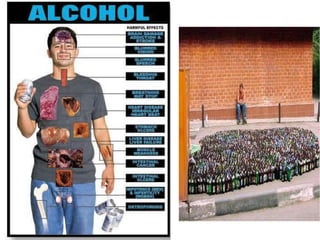
ALCOHOL
ADVERSE EFFECTS OF  ALCOHOL & ROLE OF DISULFIRAM MARIA RUPINI J ROLL NO:46
True or False? Alcohol Slows Down Your Body and Mind.
TRUE!!! Depressant. Leaves you unable to think, react, and make decisions as you normally would.
True or False? You Feel Alcohol’s Effects Right Away.
TRUE!!! Absorbed into bloodstream very quickly (within 5-10 minutes). Passes from stomach directly into bloodstream. Affects every organ, including brain.
 
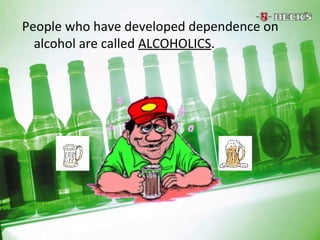
People who have developed dependence on alcohol are called  ALCOHOLICS .
Alcoholism Disease in which a person has physical or psychological dependence on drinks that contain alcohol. Characterized as an impaired ability to study, work, or socialize normally.
Alcohol Dependence Characterized by the following: Craving: A strong need, or compulsion, to drink.  Loss of control: The inability to limit one’s drinking on any given occasion.
Physical dependence: Withdrawal symptoms, such as nausea, sweating, shakiness, and anxiety, occur when alcohol use is stopped after a period of heavy drinking. Tolerance: The need to drink greater amounts of alcohol in order to “get high.”
Blood Alcohol Concentration Amount of alcohol in a person’s  bloodstream legal limit acc to IL is .08%  for people 21 years and older  & is zero for people under 21
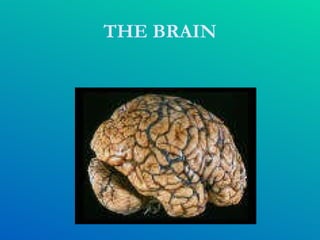
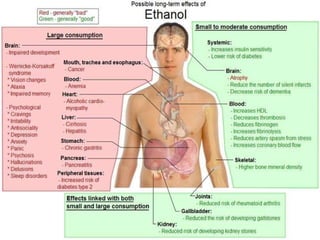
THE BRAIN
Neuronal depressant. Small doses – euphoria , relief of anxiety, loss of social inhibitions & moods and feelings are altered. Moderate dose – impair muscular co-ordination & visual acuity -driving dangerous. Higher dose – mental clouding, impaired judgment, drowsiness & loss of self control.
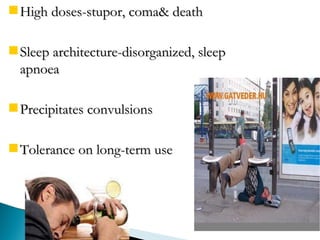
High doses-stupor, coma& death Sleep architecture-disorganized, sleep apnoea Precipitates convulsions Tolerance on long-term use
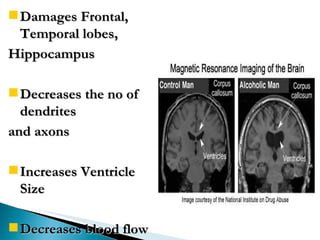
Damages Frontal, Temporal lobes, Hippocampus Decreases the no of dendrites and axons Increases Ventricle Size Decreases blood flow
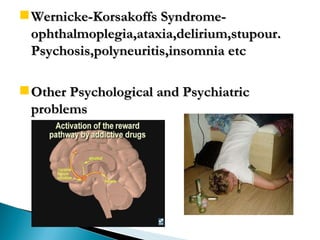
Wernicke-Korsakoffs Syndrome- ophthalmoplegia,ataxia,delirium,stupour. Psychosis,polyneuritis,insomnia etc Other Psychological and Psychiatric problems
 
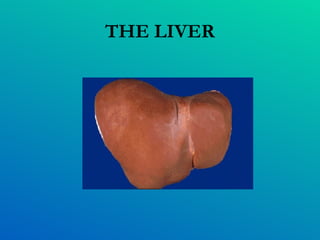
THE LIVER
Liver suffers more than any other organ. Liver is responsible for filtering alcohol. Excess calories are stored in liver as fat.
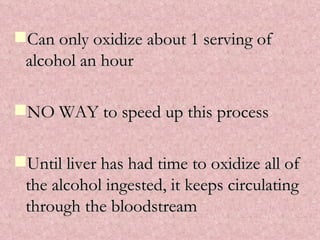
Can only oxidize about 1 serving of alcohol an hour NO WAY to speed up this process Until liver has had time to oxidize all of the alcohol ingested, it keeps circulating through the bloodstream
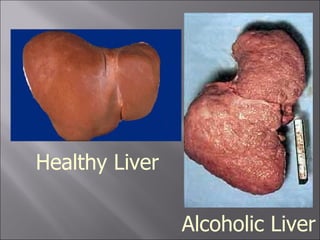
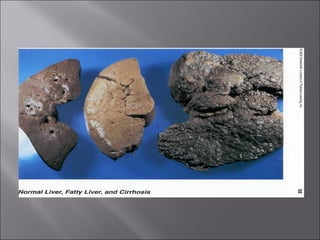
Healthy Liver Alcoholic Liver
Chronic consumption  accumulation of fat-fatty degeneration & cirrhosis. CIRRHOSIS scarring of liver no blood flow in scarred area
liver cannot function symptoms: high blood pressure, abdominal swelling, jaundice IRREVERSIBLE
 
 
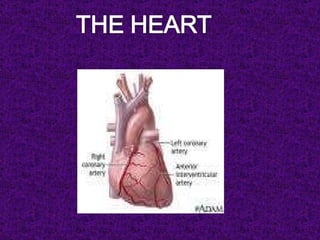
Heart/Blood Vessels Small doses-Perspiration  vasodilation-skin becomes  flushed, feeling of warmth. Moderate doses-tachycardia, mild rise in BP-  muscular activity & sympathetic stimulation.
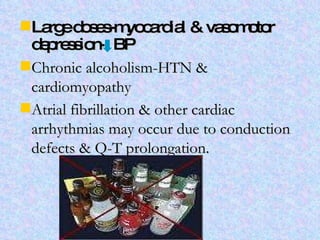
Large doses-myocardial & vasomotor depression-  BP Chronic alcoholism-HTN & cardiomyopathy Atrial fibrillation & other cardiac arrhythmias may occur due to conduction defects & Q-T prolongation.
THE STOMACH
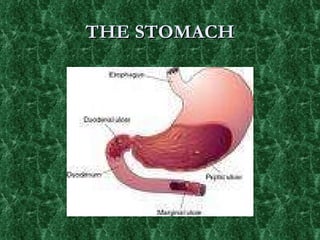
Stomach 15-20% absorbed here  Short Term- Stomach acids increase, - nausea, vomiting, mucosal congestion & gastritis Long Term- Chronic gastritis, ulcers & risk of stomach cancer
 
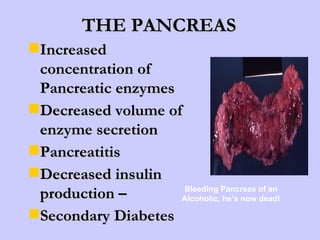
THE PANCREAS Increased concentration of Pancreatic enzymes Decreased volume of enzyme secretion Pancreatitis Decreased insulin production – Secondary Diabetes Bleeding Pancreas of an Alcoholic, he’s now dead!
Pyloric  Valve- Spasms in the presence of large amounts of ethanol Small Intestine- Majority of Ethanol absorbed here Damages Mucosal Cells, Villi, and Microvilli Decreases absorption of nutrients and vitamins Increases Triglyceral and Cholesterol production
Gall Bladder Decreased amounts of Bile Secretion  Large Intestine Decreased water and vitamin absorption -Diarrhoea
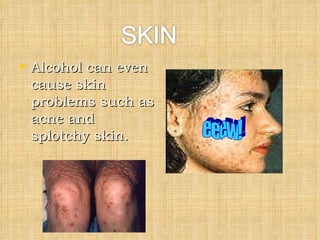
Alcohol can even cause skin problems such as acne and splotchy skin. eeew!
BLOOD CHANGES RBC Decreased Production-Anemia WBC Decreased production Decreased response time more infections Increased risk for STD’s/HIV
Platelets Decreased production Decreased clotting time More bumps and bruises Endocrine Effects Inhibits Vasopressin release Decreases thyroid hormones, progesterone, testosterone, Luteinizing hormone, and others
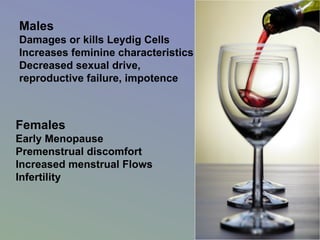
Males Damages or kills Leydig Cells Increases feminine characteristics Decreased sexual drive,  reproductive failure, impotence Females Early Menopause Premenstrual discomfort Increased menstrual Flows Infertility
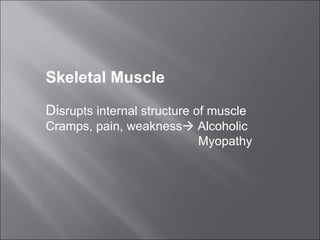
Skeletal Muscle Di srupts internal structure of muscle Cramps, pain, weakness   Alcoholic  Myopathy
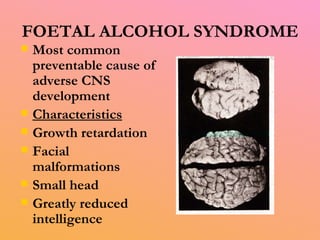
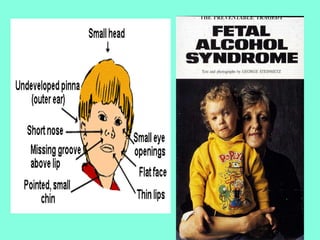
FOETAL ALCOHOL SYNDROME Most common preventable cause of adverse CNS development Characteristics Growth retardation Facial malformations Small head Greatly reduced intelligence
 
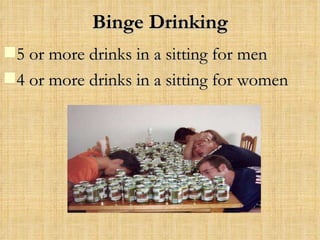
Binge Drinking 5 or more drinks in a sitting for men 4 or more drinks in a sitting for women
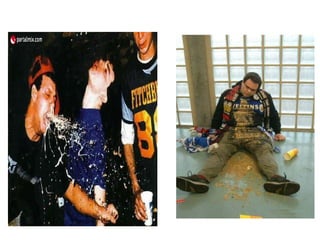
Dangers of Binge Drinking Unintentional injuries (e.g. car crash, falls, burns, drowning).  Intentional injuries (e.g. firearm injuries, sexual assault, domestic violence).  Alcohol poisoning.  STD’s and/or Unintended pregnancy.  High blood pressure, stroke, and other cardiovascular diseases.  Liver Disease
ALCOHOL TOXICITY A.MODERATE DRINKING Nausea, vomiting Flushing Hangover Traffic accidents
B. Acute alcoholic intoxication Hypotension, gastritis, hypoglycemia, collapse, respiratory depression, coma & death TREATMENT: Patent airway  Tracheal intubation & positive pressure respiration Fluid & electrolyte balance Glucose infusion
Thiamine(100mg in 500ml glucose soln infused i.v. slowly) Haemodialysis Insulin + fructose drip Gastric lavage C. Chronic alcoholism Tolerance & dependance develops & All systems affected.
WITHDRAWAL SYNDROME Anxiety, sweating,impairment of sleep, confusion, hallucinations, delirium, tremors,irritability,HTN, convulsions & collapse Treatment CNS depressants: barbiturates, phenothiazines, chloral hydrate BENZODIAZEPINES & NALTREXONE
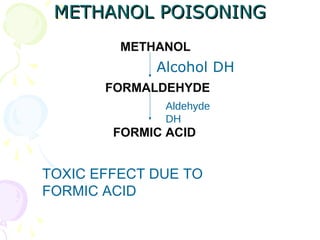
METHANOL POISONING   Alcohol DH  METHANOL FORMALDEHYDE FORMIC ACID Aldehyde DH TOXIC EFFECT DUE TO FORMIC ACID
MANIFESTATIONS OF TOXICITY Headache,vertigo,severe abdominal pain,vomiting,hypotension,delirium, acidosis & coma Affinity for optic n  retinal damage   blindness(15ml) Death(respiratory failure)
TREATMENT Correction of acidosis-IV sodium bicarbonate Dark room Gastric lavage Maintain BP & ventilation Ethyl alcohol Antidote-FOMEPIZOLE Haemodialysis
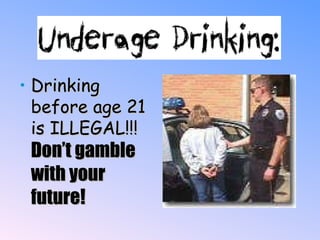
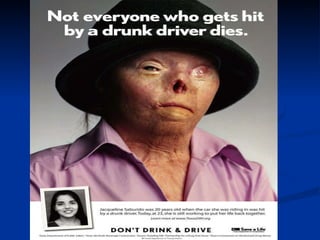
Drinking before age 21 is ILLEGAL!!!  Don’t gamble with your future!
It Kills and Badly Injures
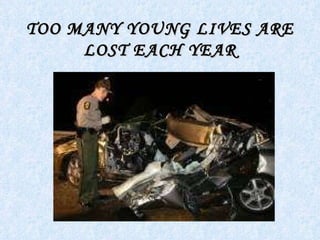
TOO MANY YOUNG LIVES ARE LOST EACH YEAR


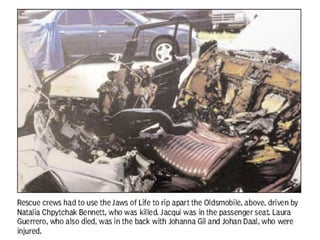
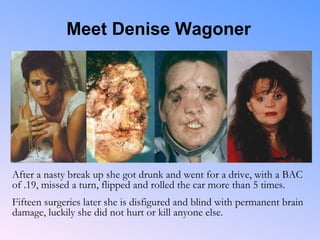
After a nasty break up she got drunk and went for a drive, with a BAC of .19, missed a turn, flipped and rolled the car more than 5 times.  Fifteen surgeries later she is disfigured and blind with permanent brain damage, luckily she did not hurt or kill anyone else.  Meet Denise Wagoner
 
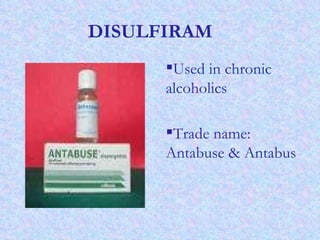
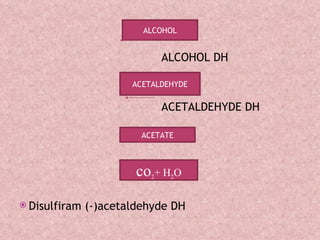
DISULFIRAM  Used in chronic alcoholics Trade name: Antabuse & Antabus
ALCOHOL DH ACETALDEHYDE DH Disulfiram (-)acetaldehyde DH ALCOHOL ACETALDEHYDE ACETATE co 2 + H 2 O
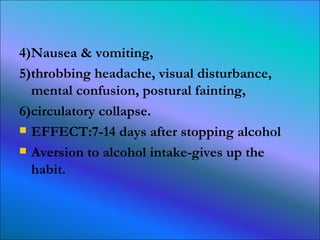
4)Nausea & vomiting, 5)throbbing headache, visual disturbance, mental confusion, postural fainting, 6)circulatory collapse. EFFECT:7-14 days after stopping alcohol Aversion to alcohol intake-gives up the habit.
 
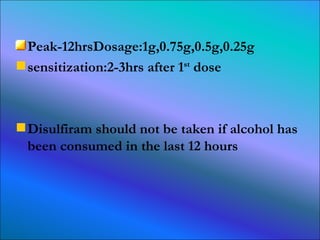
Peak-12hrsDosage:1g,0.75g,0.5g,0.25g sensitization:2-3hrs after 1 st  dose Disulfiram should not be taken if alcohol has been consumed in the last 12 hours
N o tolerance to disulfiram: longer it is taken, the stronger its effects. As disulfiram is absorbed slowly through digestive tract and eliminated slowly by body, effects may last for up to 2 weeks after initial intake.
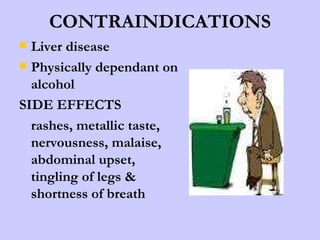
CONTRAINDICATIONS Liver disease Physically dependant on alcohol SIDE EFFECTS  rashes, metallic taste, nervousness, malaise, abdominal upset, tingling of legs & shortness of breath
DRUGS THAT PPT DISULFIRAM LIKE REACTIONS Metronidazole Sulfonylureas Griseofulvin Some cephalosporins Phenylbutazone Nitrofurantoin
Don’t Live Dangerously
Too Smart To Start
SAFEST AMOUNT OF DRINKS  = 0!!! This is at any age!!!!
THANK YOU

Alcohol

  • 1.
  • 2.
    ADVERSE EFFECTS OF ALCOHOL & ROLE OF DISULFIRAM MARIA RUPINI J ROLL NO:46
  • 3.
    True or False?Alcohol Slows Down Your Body and Mind.
  • 4.
    TRUE!!! Depressant. Leavesyou unable to think, react, and make decisions as you normally would.
  • 5.
    True or False?You Feel Alcohol’s Effects Right Away.
  • 6.
    TRUE!!! Absorbed intobloodstream very quickly (within 5-10 minutes). Passes from stomach directly into bloodstream. Affects every organ, including brain.
  • 7.
  • 8.
    People who havedeveloped dependence on alcohol are called ALCOHOLICS .
  • 9.
    Alcoholism Disease inwhich a person has physical or psychological dependence on drinks that contain alcohol. Characterized as an impaired ability to study, work, or socialize normally.
  • 10.
    Alcohol Dependence Characterizedby the following: Craving: A strong need, or compulsion, to drink. Loss of control: The inability to limit one’s drinking on any given occasion.
  • 11.
    Physical dependence: Withdrawalsymptoms, such as nausea, sweating, shakiness, and anxiety, occur when alcohol use is stopped after a period of heavy drinking. Tolerance: The need to drink greater amounts of alcohol in order to “get high.”
  • 12.
    Blood Alcohol ConcentrationAmount of alcohol in a person’s bloodstream legal limit acc to IL is .08% for people 21 years and older & is zero for people under 21
  • 13.
  • 14.
    Neuronal depressant. Smalldoses – euphoria , relief of anxiety, loss of social inhibitions & moods and feelings are altered. Moderate dose – impair muscular co-ordination & visual acuity -driving dangerous. Higher dose – mental clouding, impaired judgment, drowsiness & loss of self control.
  • 15.
    High doses-stupor, coma&death Sleep architecture-disorganized, sleep apnoea Precipitates convulsions Tolerance on long-term use
  • 16.
    Damages Frontal, Temporallobes, Hippocampus Decreases the no of dendrites and axons Increases Ventricle Size Decreases blood flow
  • 17.
    Wernicke-Korsakoffs Syndrome- ophthalmoplegia,ataxia,delirium,stupour.Psychosis,polyneuritis,insomnia etc Other Psychological and Psychiatric problems
  • 18.
  • 19.
  • 20.
    Liver suffers morethan any other organ. Liver is responsible for filtering alcohol. Excess calories are stored in liver as fat.
  • 21.
    Can only oxidizeabout 1 serving of alcohol an hour NO WAY to speed up this process Until liver has had time to oxidize all of the alcohol ingested, it keeps circulating through the bloodstream
  • 22.
  • 23.
    Chronic consumption accumulation of fat-fatty degeneration & cirrhosis. CIRRHOSIS scarring of liver no blood flow in scarred area
  • 24.
    liver cannot functionsymptoms: high blood pressure, abdominal swelling, jaundice IRREVERSIBLE
  • 25.
  • 26.
  • 27.
    Heart/Blood Vessels Smalldoses-Perspiration vasodilation-skin becomes flushed, feeling of warmth. Moderate doses-tachycardia, mild rise in BP- muscular activity & sympathetic stimulation.
  • 28.
    Large doses-myocardial &vasomotor depression- BP Chronic alcoholism-HTN & cardiomyopathy Atrial fibrillation & other cardiac arrhythmias may occur due to conduction defects & Q-T prolongation.
  • 29.
  • 30.
    Stomach 15-20% absorbedhere Short Term- Stomach acids increase, - nausea, vomiting, mucosal congestion & gastritis Long Term- Chronic gastritis, ulcers & risk of stomach cancer
  • 31.
  • 32.
    THE PANCREAS Increasedconcentration of Pancreatic enzymes Decreased volume of enzyme secretion Pancreatitis Decreased insulin production – Secondary Diabetes Bleeding Pancreas of an Alcoholic, he’s now dead!
  • 33.
    Pyloric Valve-Spasms in the presence of large amounts of ethanol Small Intestine- Majority of Ethanol absorbed here Damages Mucosal Cells, Villi, and Microvilli Decreases absorption of nutrients and vitamins Increases Triglyceral and Cholesterol production
  • 34.
    Gall Bladder Decreasedamounts of Bile Secretion Large Intestine Decreased water and vitamin absorption -Diarrhoea
  • 35.
    Alcohol can evencause skin problems such as acne and splotchy skin. eeew!
  • 36.
    BLOOD CHANGES RBCDecreased Production-Anemia WBC Decreased production Decreased response time more infections Increased risk for STD’s/HIV
  • 37.
    Platelets Decreased productionDecreased clotting time More bumps and bruises Endocrine Effects Inhibits Vasopressin release Decreases thyroid hormones, progesterone, testosterone, Luteinizing hormone, and others
  • 38.
    Males Damages orkills Leydig Cells Increases feminine characteristics Decreased sexual drive, reproductive failure, impotence Females Early Menopause Premenstrual discomfort Increased menstrual Flows Infertility
  • 39.
    Skeletal Muscle Disrupts internal structure of muscle Cramps, pain, weakness  Alcoholic Myopathy
  • 40.
    FOETAL ALCOHOL SYNDROMEMost common preventable cause of adverse CNS development Characteristics Growth retardation Facial malformations Small head Greatly reduced intelligence
  • 41.
  • 42.
    Binge Drinking 5or more drinks in a sitting for men 4 or more drinks in a sitting for women
  • 43.
    Dangers of BingeDrinking Unintentional injuries (e.g. car crash, falls, burns, drowning). Intentional injuries (e.g. firearm injuries, sexual assault, domestic violence). Alcohol poisoning. STD’s and/or Unintended pregnancy. High blood pressure, stroke, and other cardiovascular diseases. Liver Disease
  • 44.
    ALCOHOL TOXICITY A.MODERATEDRINKING Nausea, vomiting Flushing Hangover Traffic accidents
  • 45.
    B. Acute alcoholicintoxication Hypotension, gastritis, hypoglycemia, collapse, respiratory depression, coma & death TREATMENT: Patent airway Tracheal intubation & positive pressure respiration Fluid & electrolyte balance Glucose infusion
  • 46.
    Thiamine(100mg in 500mlglucose soln infused i.v. slowly) Haemodialysis Insulin + fructose drip Gastric lavage C. Chronic alcoholism Tolerance & dependance develops & All systems affected.
  • 47.
    WITHDRAWAL SYNDROME Anxiety,sweating,impairment of sleep, confusion, hallucinations, delirium, tremors,irritability,HTN, convulsions & collapse Treatment CNS depressants: barbiturates, phenothiazines, chloral hydrate BENZODIAZEPINES & NALTREXONE
  • 48.
    METHANOL POISONING Alcohol DH METHANOL FORMALDEHYDE FORMIC ACID Aldehyde DH TOXIC EFFECT DUE TO FORMIC ACID
  • 49.
    MANIFESTATIONS OF TOXICITYHeadache,vertigo,severe abdominal pain,vomiting,hypotension,delirium, acidosis & coma Affinity for optic n  retinal damage  blindness(15ml) Death(respiratory failure)
  • 50.
    TREATMENT Correction ofacidosis-IV sodium bicarbonate Dark room Gastric lavage Maintain BP & ventilation Ethyl alcohol Antidote-FOMEPIZOLE Haemodialysis
  • 51.
    Drinking before age21 is ILLEGAL!!! Don’t gamble with your future!
  • 52.
    It Kills andBadly Injures
  • 53.
    TOO MANY YOUNGLIVES ARE LOST EACH YEAR
  • 54.
  • 55.
  • 56.
  • 57.
  • 58.
    After a nastybreak up she got drunk and went for a drive, with a BAC of .19, missed a turn, flipped and rolled the car more than 5 times. Fifteen surgeries later she is disfigured and blind with permanent brain damage, luckily she did not hurt or kill anyone else. Meet Denise Wagoner
  • 59.
  • 60.
    DISULFIRAM Usedin chronic alcoholics Trade name: Antabuse & Antabus
  • 61.
    ALCOHOL DH ACETALDEHYDEDH Disulfiram (-)acetaldehyde DH ALCOHOL ACETALDEHYDE ACETATE co 2 + H 2 O
  • 62.
    4)Nausea & vomiting,5)throbbing headache, visual disturbance, mental confusion, postural fainting, 6)circulatory collapse. EFFECT:7-14 days after stopping alcohol Aversion to alcohol intake-gives up the habit.
  • 63.
  • 64.
    Peak-12hrsDosage:1g,0.75g,0.5g,0.25g sensitization:2-3hrs after1 st dose Disulfiram should not be taken if alcohol has been consumed in the last 12 hours
  • 65.
    N o toleranceto disulfiram: longer it is taken, the stronger its effects. As disulfiram is absorbed slowly through digestive tract and eliminated slowly by body, effects may last for up to 2 weeks after initial intake.
  • 66.
    CONTRAINDICATIONS Liver diseasePhysically dependant on alcohol SIDE EFFECTS rashes, metallic taste, nervousness, malaise, abdominal upset, tingling of legs & shortness of breath
  • 67.
    DRUGS THAT PPTDISULFIRAM LIKE REACTIONS Metronidazole Sulfonylureas Griseofulvin Some cephalosporins Phenylbutazone Nitrofurantoin
  • 68.
  • 69.
  • 70.
    SAFEST AMOUNT OFDRINKS = 0!!! This is at any age!!!!
  • 71.

Editor's Notes

  • #59 Denise's life changed Feb. 19, 1995. Upset about a dissolving relationship in her life, she had visited her family. She still was upset when she started home and, en route, stopped at a tavern. Each time she emptied her glass, the bartender refilled it. To make matters worse, he seemed to be making advances. His actions only upset her more, so she left. Police said Denise, with a BAC of .19, was going about 40 mph (in a 55-mph zone) when she missed a 90-degree turn in an S-curve and hit a culvert. Her car, a 1989 Ford Escort, went end-over-end three times and barrel-rolled twice before throwing her 70 feet. She landed on her head. A woman at the scene of the accident described Denise's face as "five pounds of hamburger, and the blood bubbling from her mouth was the only evidence she still was alive. She had no nose or upper lip, and her eyes were dangling from their sockets." The 13 trauma doctors who worked on Denise that first night would learn that every bone in her face was broken, except for her bottom jaw. Other injuries included multiple skull fractures, a broken back (in five places), two crushed vertebrae (in her neck), crushed ribs, and a swollen brain. She also had broken shoulder blades, a broken collarbone, a broken left arm (in three places), and a broken right knee. Later, a respirator in the hospital blew out one of her lungs, and the doctors found that her skull was separated from her spine. They didn't think she would live through the next 24 hours, but if she did, they had to find out why she slowly was bleeding to death. She literally had "died" twice from loss of blood. They finally learned she suffered from DIC, a disease that prevents blood from clotting. To repair Denise's lung and some of her other fractures, the doctors had to put her in a medically induced coma for five and a half weeks. They then put seven plates and 22 screws in her head and face, a process that took nearly 18 hours.