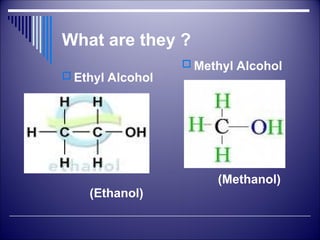
What are they?
Ethyl Alcohol
(Ethanol)
Methyl Alcohol
(Methanol)
3.
Alcoholic Beverages
MaltedLiquors: Fermentation of germinating cereals (malts) – mostly Barley –
Beers (3-6%)
Wines: fermentation of Natural Sugars – grapes, apples and other fruits
No distillation, <15%
Fortified (port) – up to 22%
Champagne – 12-16% (effervescent wine)
Spirits – Rum, Whisky, Brandy and Gin
40 - 55% v/v
Standard 42.8% v/v or 37% w/w
Sources:
Whiskey - distilled grain
Rum - distilled molasses
Gin – any sugar source
Brandy – Distilled wine (Grapes)
Vodka – fermentation of any of grain, rye, wheat, potatoes, grapes, sugar beet or mollases
4.
Pharmacological actions of
alcohol- Local
1. Rubefacient and counterirritant to skin
2. Irritant – soft skin and mucus membrane
3. Pain, inflammation and necrosis – injection
4. Astringent: Antiseptic (20 – 90%)
100% is dehydrating
5. No action on spores
5.
Effects of alcoholconsumption -
Acute
CNS:
depressant – dose dependent manner
Plasma concentration Expected effects
30 – 100 mg/dl Anxiolytic, euphoria and excitation
Hesitation, restraint, caution are lost
Impaired coordination – mood and feelings are
altered
100 -150 mg/dl Mental clouding, ataxia, disorganization of thought
and impairment of memory and drowsiness
150 – 200 mg/dl Sloppy, ataxia and drunkenness
- Slurring of speech, loss of judgment and inhibition
200 – 300 mg/dl Stupor and unconsciousness
6.
Effects of alcoholconsumption
Impaired performance, slowing of reflexes and fine
discrimination impaired
Induces sleep – but not ideal hypnotic
Analgesic – but no ideal analgesic
Anticonvulsant action – but not ideal anticonvulsant
Mechanism:
GABAA receptor mediated synaptic inhibition by chloride
channel opening
Inhibition of NMDA excitatory amino acid receptor
Stimulates 5-HT3 receptors
7.
Effects of alcoholconsumption
(acute) - contd.
CVS:
Small doses – cutaneous vasodilatation, flushing
Medium dose – tachycardia and mild rise in BP
Large dose - Vasodilatation due to direct vascular smooth muscle
dilatation and vasomotor centre depression (clinical implication)
Respiration:
Stimulation of Respiration – by irritation of pharyngeal and buccal
mucosa
Central action – depression
Blood:
Moderate drinking increases HDL-cholesterol level
Decrease in LDL oxidation
8.
Effects of alcoholconsumption
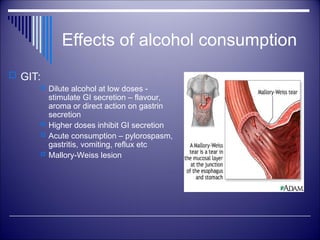
GIT:
Dilute alcohol at low doses -
stimulate GI secretion – flavour,
aroma or direct action on gastrin
secretion
Higher doses inhibit GI secretion
Acute consumption – pylorospasm,
gastritis, vomiting, reflux etc
Mallory-Weiss lesion
9.
Effects of alcoholconsumption .
Kidney: Diuresis – increased water ingestion and
inhibition of ADH
Uterus: Relaxation of uterine muscles
Endocrine:
Low dose – Adrenaline release and hyperglycemia
High dose – Hypoglycemia
Sex - Aphrodisiac
10.
Rapidly absorbedfrom small intestine, and
colon but slowly from stomach
First pass metabolism in stomach and liver
Maximal blood concentration within 30 to 90
minutes
Can be absorbed through the lungs
Can be absorbed through skin
Absorption
11.
Uniformly distributedthroughout tissues and body
fluids
Readily crosses placenta, to exposure fetus
Crosses BBB readily
Distribution
Elimination
Urinary Excretion
Exhalation
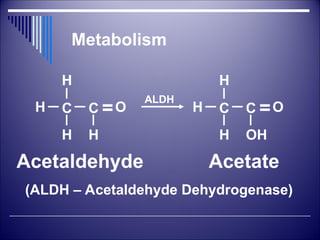
Metabolism
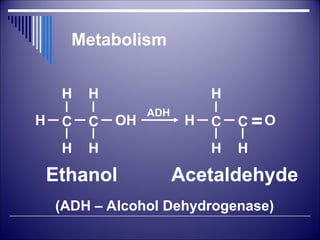
Metabolism
80-90% Metabolized
Also metabolized in small amounts by hepatic
microsomal enzyme
Rate is constant (not increased by concentrations in
the blood) – zero order (8-12 ml/H of absolute alcohol)
About 30 ml (1 oz) in 3 hours
Concentration in exhaled air is 0.05% of blood
concentration – used in medico legal purposes
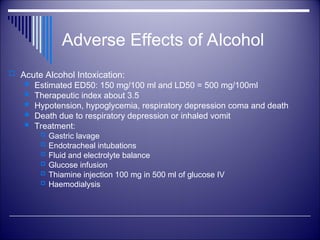
Adverse Effects ofAlcohol
Acute Alcohol Intoxication:
Estimated ED50: 150 mg/100 ml and LD50 = 500 mg/100ml
Therapeutic index about 3.5
Hypotension, hypoglycemia, respiratory depression coma and death
Death due to respiratory depression or inhaled vomit
Treatment:
Gastric lavage
Endotracheal intubations
Fluid and electrolyte balance
Glucose infusion
Thiamine injection 100 mg in 500 ml of glucose IV
Haemodialysis
17.
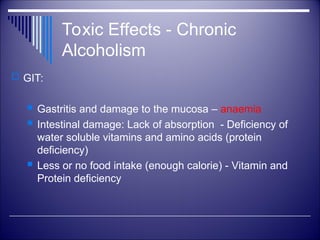
Toxic Effects -Chronic
Alcoholism
GIT:
Gastritis and damage to the mucosa – anaemia
Intestinal damage: Lack of absorption - Deficiency of
water soluble vitamins and amino acids (protein
deficiency)
Less or no food intake (enough calorie) - Vitamin and
Protein deficiency
18.
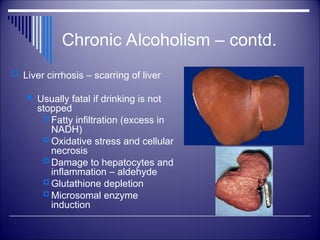
Chronic Alcoholism –contd.
Liver cirrhosis – scarring of liver
Usually fatal if drinking is not
stopped
Fatty infiltration (excess in
NADH)
Oxidative stress and cellular
necrosis
Damage to hepatocytes and
inflammation – aldehyde
Glutathione depletion
Microsomal enzyme
induction
19.
Chronic Alcoholism
Neurological:Polyneuritis, pellagra, tremors,
seizures, loss of brain mass, Korsakoff`s psychosis
and Wernicke`s encephalopathy
CVS: Hypertension, cardiomyopathy, CHF
arrhythmias and stroke
Hormonal: Impotence, gynaecomastia and
infertility
Acute pancreatitis
20.
Chronic Alcoholism
Reproduction
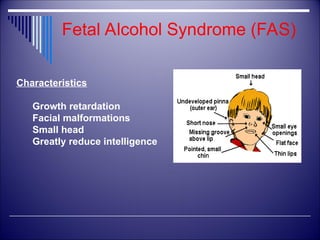
Alcohol is a teratogen, it causes birth defects.
Fetal Alcohol Syndrome (FAS) or Fetal Alcohol Effects
(FAE), or Alcohol-Related Birth Defects (ARBD)
Symptoms include retardation, poor coordination, loss
of muscle tone, low birth weight, slow growth,
malformation of internal organs and peculiar facial
characteristics
21.
Fetal Alcohol Syndrome(FAS)
Characteristics
Growth retardation
Facial malformations
Small head
Greatly reduce intelligence
22.
• Craving: Astrong need, or compulsion, to drink
• Loss of control: The inability to limit one’s drinking on any given
occasion
• Tolerance: The need to drink greater amounts of alcohol in order to
“get high” – pharmacokinetic or cellular tolerance
• Physical dependence: Withdrawal symptoms, such as nausea,
sweating, shakiness, sleep impairment, hallucinations, delirium
tremens and anxiety, occur when alcohol use is stopped after a
period of heavy drinking
• Withdrawal syndromes: long acting BZDs like chlordizepoxide
and diazepam
• Naltrexone (50 mg)
Chronic Alcoholism - Features
23.
Ethanol – Usefulness:
1.Local:
antiseptic, rubefacient and counterirritant in sprains and to
prevent bedsores
antiperspirant and aftershave
Alcohol sponges – to reduce body temperature
2. Appetite stimulant and carminative: 30 – 60 ml of 7-10%
3. Neuralgias: severe cancer pain – injection round the nerve
4. Protection from cold
5. Alcohol may have a protective effect from heart attack and
stroke - frugivores
6. Methanol Poisoning
24.
Disulfiram (Antabuse)
Internationallymarketed as antabuse
ALDH enzyme inhibitor
Alcohol + disulfiram rise in concentration of aldehyde in blood and
tissue distressing aldehyde syndrome
Symptoms: flushing, burning sensation, throbbing headache,
perspiration, dizziness, vomiting, visual disturbance, mental
confusion, fainting and circulatory collapse
Uses: aversion technique in chronic alcoholics:
Technique: abstain alcohol overnight and start with 1 gm on day 1
followed by 0.75 gm next day and 0.50 gm next day and so on.
Effects start within few hrs of 1st
dose and lasts for 2 weeks
Mechanism: irreversible inhibition of ALDH and synthesis of new
enzyme takes time and thus person resolves not to drink for
distressing symptoms
Available as 250 mg tablets
25.
Ethanol as Antidote
Methanol, Ethylene glycol, Diethylene glycol
Methanol poisoning – toxicological importance – unscrupulous mixing with
alcoholic beverages
Formic acid is toxic: above 50 mg/dl, lethal dose 75 – 100 ml, even 15 ml
can cause blindness
Methanol poisoning: vomiting, epigastric pain dyspnoea, bradycardia,
acidosis – permanent retinal damage and Death
Mechanism: Ethanol saturates alcohol dehydrogenase enzyme - no
metabolism of Methanol to form Formic acid
Methanol formaldehyde Formic acid
ADH ALDH
26.
Methanol Poisoning
treatment
Patientin dark room, Ventilation and BP supportive measures
Gastric lavage with sodium bicarb if brought immediately
IV sodium bicarb to combat acidosis – large quantity may be
required
Ethanol 10% in water – nasogastric tube with loading dose of 0.7
ml/kg followed by 15 ml/kg/hr by infusion – continue treatment for
several days (methanol is oxidized slowly)
Potassium chloride if hypokalemia occurs
Folinic acid or Calcium leucovorin injection 50 mg IV every 6 Hrly
– to enhance oxidation of formic acid
4-methylpyrazole – specific inhibitor of ALD – 15 mg/kg IV and 10
mg/kg 12 Hrly. till methanol level is <20 mg/dl
Haemodialysis
27.
Summary
Alcohol isa neuronal depressant
Long term exposure to alcohol brings about adaptive
changes in the neuronal system
Chronic alcoholism causes toxic effects on all the organs
especially liver
Withdrawal syndrome in alcoholics are treated by BZDs
and Naltrexone
Antbuse/disulfiram is the drug is use as aversion technique
in chronic alcoholics
Ethanol is used as antidote in Methanol Poisoning
#14 The drunkometer collected a motorist's breath sample directly into a balloon inside the machine. The breath sample was then pumped through an acidified potassium permanganate solution. If there was alcohol in the breath sample, the solution changed colour. The greater the colour change, the more alcohol there was present in the breath.











![DRUG REPURPOSING A COMPELLING CANCER STRATEGY [Auto-saved].pptx](https://cdn.slidesharecdn.com/ss_thumbnails/drugrepurposingacompellingcancerstrategyauto-saved-240802052806-b2c386ae-thumbnail.jpg?width=640&height=640&fit=bounds)


