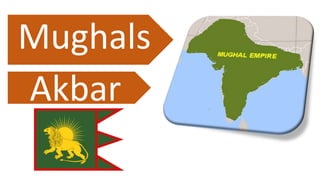
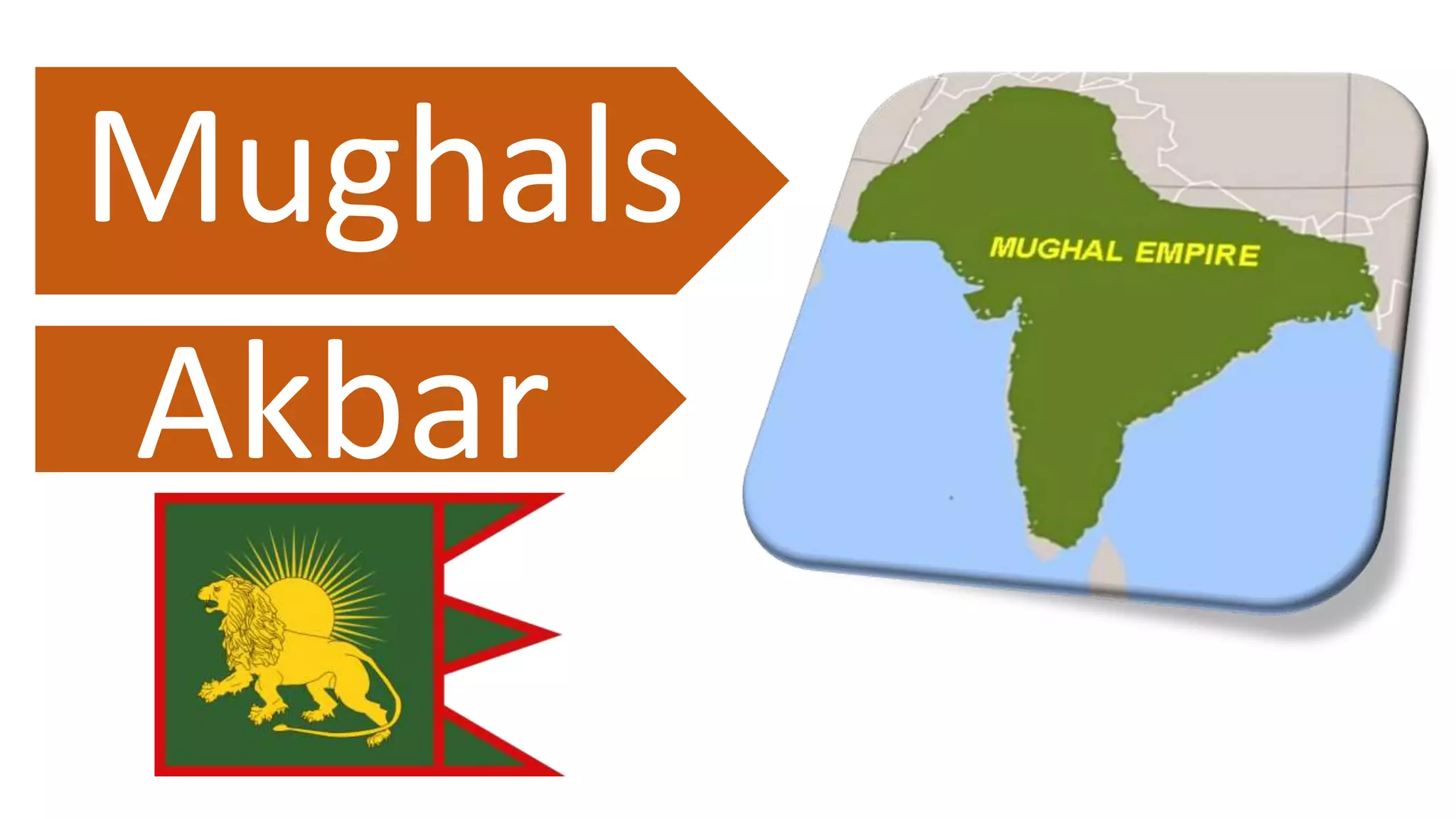
Mughals
Akbar
Akbar
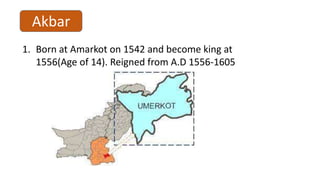
1. Born at Amarkot on 1542 and become king at
1556(Age of 14). Reigned from A.D 1556-1605
Akbar
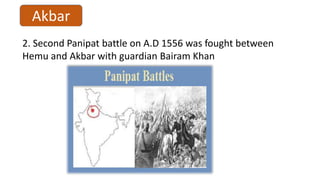
2. Second Panipat battle on A.D 1556 was fought between
Hemu and Akbar with guardian Bairam Khan
Akbar
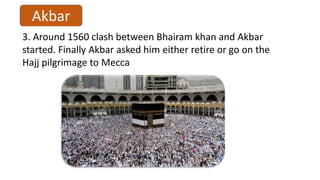
3. Around 1560 clash between Bhairam khan and Akbar
started. Finally Akbar asked him either retire or go on the
Hajj pilgrimage to Mecca
Akbar
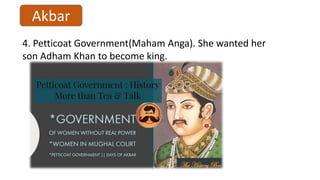
4. Petticoat Government(Maham Anga). She wanted her
son Adham Khan to become king.
Akbar
• Rajput Policy
• Religious Policy
• Military Action Policy
• Revenue Administration Policy
Akbar – Rajput Policy
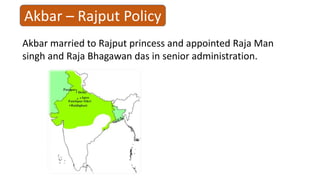
Akbar married to Rajput princess and appointed Raja Man
singh and Raja Bhagawan das in senior administration.
Akbar – Religious Policy
• Abolition of Pilgrim tax and Jizya tax
• Allowed hindu wives to build temples
• Built Ibadat Khana
• Din ilahi (New Religion)
Akbar – Revenue Policy
• Todar Mal (Head)
• Zabti System and Bandobast System and Dahsala System
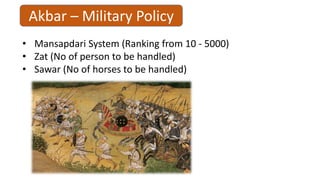
Akbar – Military Policy
• Mansapdari System (Ranking from 10 - 5000)
• Zat (No of person to be handled)
• Sawar (No of horses to be handled)

Akbar Mughal empire

  • 1.
  • 2.
    Akbar 1. Born atAmarkot on 1542 and become king at 1556(Age of 14). Reigned from A.D 1556-1605
  • 3.
    Akbar 2. Second Panipatbattle on A.D 1556 was fought between Hemu and Akbar with guardian Bairam Khan
  • 4.
    Akbar 3. Around 1560clash between Bhairam khan and Akbar started. Finally Akbar asked him either retire or go on the Hajj pilgrimage to Mecca
  • 5.
    Akbar 4. Petticoat Government(MahamAnga). She wanted her son Adham Khan to become king.
  • 6.
    Akbar • Rajput Policy •Religious Policy • Military Action Policy • Revenue Administration Policy
  • 7.
    Akbar – RajputPolicy Akbar married to Rajput princess and appointed Raja Man singh and Raja Bhagawan das in senior administration.
  • 8.
    Akbar – ReligiousPolicy • Abolition of Pilgrim tax and Jizya tax • Allowed hindu wives to build temples • Built Ibadat Khana • Din ilahi (New Religion)
  • 9.
    Akbar – RevenuePolicy • Todar Mal (Head) • Zabti System and Bandobast System and Dahsala System
  • 10.
    Akbar – MilitaryPolicy • Mansapdari System (Ranking from 10 - 5000) • Zat (No of person to be handled) • Sawar (No of horses to be handled)