AIR POLLUTION
By,
Tatya Dave
Roll no:28, Bsc tech.
Definition:
• It is a broad term applied to all the physical, chemical,
and biological agents that may modify the natural
characteristics of the atmosphere and the environment.
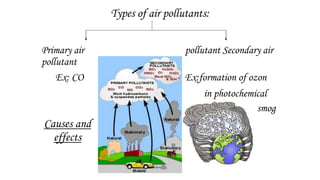
Types of air pollutants:
Primary air pollutant Secondary air
pollutant
Ex: CO Ex:formation of ozon
in photochemical
smog
Causes and
effects
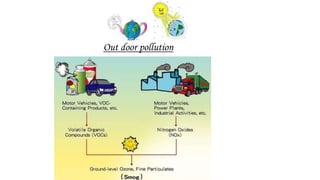
Out door pollution
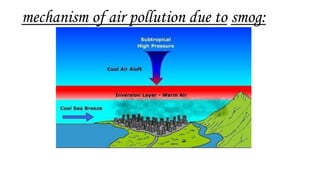
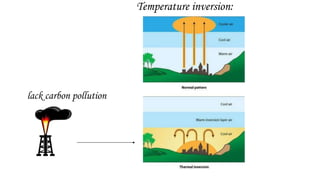
mechanism of air pollution due to smog:
Indoor air pollution sources:
• Anthropogenic sources
• Other anthropogenic sources
• Natural sources
• Contaminants
Anthropological sources:
• combustion-fired powered plants
• Vehicles with internal combustion engine
• Devices powered by two-stroke cycle engines
• Stoves and incinerators especially coal ones.
• Wood fires burning inefficiently.
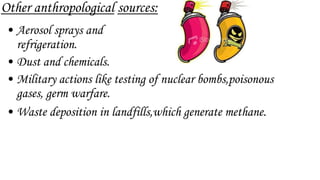
Other anthropological sources:
• Aerosol sprays and
refrigeration.
• Dust and chemicals.
• Military actions like testing of nuclear bombs,poisonous
gases, germ warfare.
• Waste deposition in landfills,which generate methane.
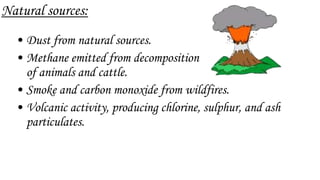
Natural sources:
• Dust from natural sources.
• Methane emitted from decomposition
of animals and cattle.
• Smoke and carbon monoxide from wildfires.
• Volcanic activity, producing chlorine, sulphur, and ash
particulates.
Contaminants:
• Carbon monoxide.
• Chlorofluorocarbons.
• Hydrocarbons.
• Lead and heavy metals.
• Nitrogen oxides. • Sulphur dioxide.
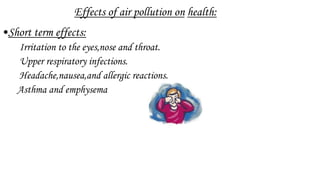
Effects of air pollution on health:
•Short term effects:
Irritation to the eyes,nose and throat.
Upper respiratory infections.
Headache,nausea,and allergic reactions.
Asthma and emphysema
•Long term effects:
Chronic respiratory diseases.
Lung cancer.
Heart diseases.
Damage to the brain,nerves,liver or kidneys.
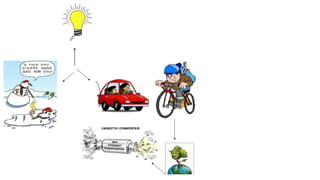
Prevention of damaging effects of air pollution:
• Assessments
• Pollution emission for transportation vehicles and
industry
• Restricting smoking
• Adequate ventilation
THANK YOU

air pollution presentation ppt, popwer point

  • 1.
  • 2.
    Definition: • It isa broad term applied to all the physical, chemical, and biological agents that may modify the natural characteristics of the atmosphere and the environment.
  • 3.
    Types of airpollutants: Primary air pollutant Secondary air pollutant Ex: CO Ex:formation of ozon in photochemical smog Causes and effects
  • 4.
  • 5.
    mechanism of airpollution due to smog:
  • 8.
    Indoor air pollutionsources: • Anthropogenic sources • Other anthropogenic sources • Natural sources • Contaminants Anthropological sources: • combustion-fired powered plants • Vehicles with internal combustion engine • Devices powered by two-stroke cycle engines • Stoves and incinerators especially coal ones. • Wood fires burning inefficiently.
  • 9.
    Other anthropological sources: •Aerosol sprays and refrigeration. • Dust and chemicals. • Military actions like testing of nuclear bombs,poisonous gases, germ warfare. • Waste deposition in landfills,which generate methane.
  • 10.
    Natural sources: • Dustfrom natural sources. • Methane emitted from decomposition of animals and cattle. • Smoke and carbon monoxide from wildfires. • Volcanic activity, producing chlorine, sulphur, and ash particulates.
  • 11.
    Contaminants: • Carbon monoxide. •Chlorofluorocarbons. • Hydrocarbons. • Lead and heavy metals. • Nitrogen oxides. • Sulphur dioxide.
  • 12.
    Effects of airpollution on health: •Short term effects: Irritation to the eyes,nose and throat. Upper respiratory infections. Headache,nausea,and allergic reactions. Asthma and emphysema
  • 13.
    •Long term effects: Chronicrespiratory diseases. Lung cancer. Heart diseases. Damage to the brain,nerves,liver or kidneys. Prevention of damaging effects of air pollution: • Assessments • Pollution emission for transportation vehicles and industry • Restricting smoking • Adequate ventilation
  • 16.