1
Index:-
Sr no. Title Page no.
1 What is Database 4
2 Database Management 5
3 Importance of DBMS 5
4 Airline Management System Introduction 6
5 Benefits 6
6 Implement of DBMS 7
7 Requirement 8
8 ER Diagram 10
9 SQL 11
10 Security 15
11 References 16
aniket handore
2
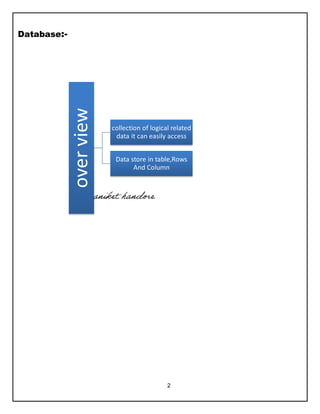
Database:-
overview
collection of logical related
data it can easily access
Data store in table,Rows
And Column
aniket handore
3
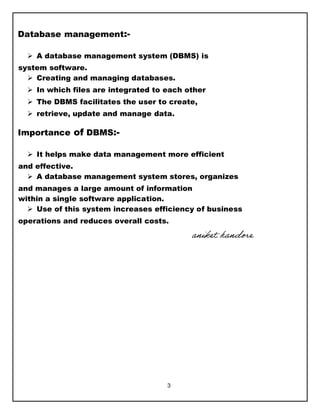
Database management:-
 A database management system (DBMS) is
system software.
 Creating and managing databases.
 In which files are integrated to each other
 The DBMS facilitates the user to create,
 retrieve, update and manage data.
Importance of DBMS:-
 It helps make data management more efficient
and effective.
 A database management system stores, organizes
and manages a large amount of information
within a single software application.
 Use of this system increases efficiency of business
operations and reduces overall costs.
aniket handore
4
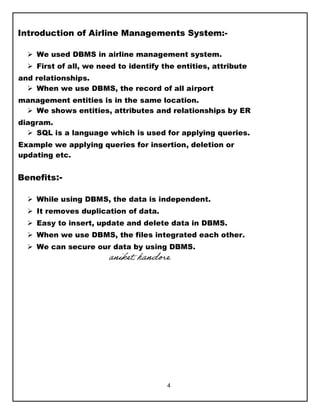
Introduction of Airline Managements System:-
 We used DBMS in airline management system.
 First of all, we need to identify the entities, attribute
and relationships.
 When we use DBMS, the record of all airport
management entities is in the same location.
 We shows entities, attributes and relationships by ER
diagram.
 SQL is a language which is used for applying queries.
Example we applying queries for insertion, deletion or
updating etc.
Benefits:-
 While using DBMS, the data is independent.
 It removes duplication of data.
 Easy to insert, update and delete data in DBMS.
 When we use DBMS, the files integrated each other.
 We can secure our data by using DBMS.
aniket handore
5
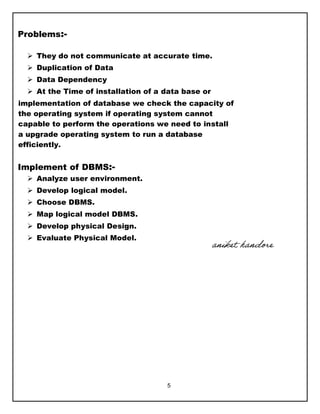
Problems:-
 They do not communicate at accurate time.
 Duplication of Data
 Data Dependency
 At the Time of installation of a data base or
implementation of database we check the capacity of
the operating system if operating system cannot
capable to perform the operations we need to install
a upgrade operating system to run a database
efficiently.
Implement of DBMS:-
 Analyze user environment.
 Develop logical model.
 Choose DBMS.
 Map logical model DBMS.
 Develop physical Design.
 Evaluate Physical Model.
aniket handore
6
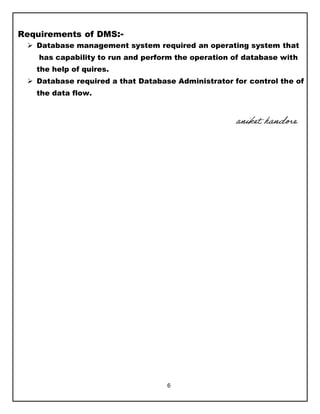
Requirements of DMS:-
 Database management system required an operating system that
has capability to run and perform the operation of database with
the help of quires.
 Database required a that Database Administrator for control the of
the data flow.
aniket handore
Aniket
Handore
Digitally signed by Aniket
Handore
DN: cn=Aniket Handore,
o=TechRoid Aniket, ou=1,
email=anikethandore1@gmail.co
m, c=IN
Date: 2019.02.03 14:35:27 +05'30'
7
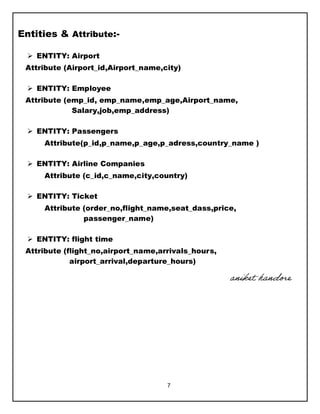
Entities & Attribute:-
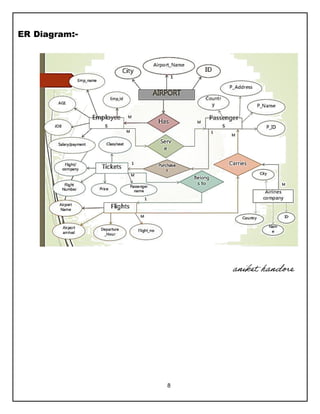
 ENTITY: Airport
Attribute (Airport_id,Airport_name,city)
 ENTITY: Employee
Attribute (emp_id, emp_name,emp_age,Airport_name,
Salary,job,emp_address)
 ENTITY: Passengers
Attribute(p_id,p_name,p_age,p_adress,country_name )
 ENTITY: Airline Companies
Attribute (c_id,c_name,city,country)
 ENTITY: Ticket
Attribute (order_no,flight_name,seat_dass,price,
passenger_name)
 ENTITY: flight time
Attribute (flight_no,airport_name,arrivals_hours,
airport_arrival,departure_hours)
aniket handore
8
ER Diagram:-
aniket handore
9
Description:-
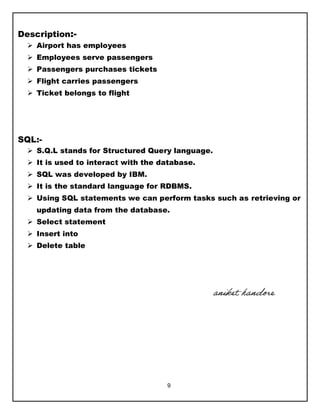
 Airport has employees
 Employees serve passengers
 Passengers purchases tickets
 Flight carries passengers
 Ticket belongs to flight
SQL:-
 S.Q.L stands for Structured Query language.
 It is used to interact with the database.
 SQL was developed by IBM.
 It is the standard language for RDBMS.
 Using SQL statements we can perform tasks such as retrieving or
updating data from the database.
 Select statement
 Insert into
 Delete table
aniket handore
10
Basic statements:-
 Data definition language
 Select statement
 Create statement
 Alter statement
 Adding a column
 Renaming a column
 Drop statement
Select statement:-
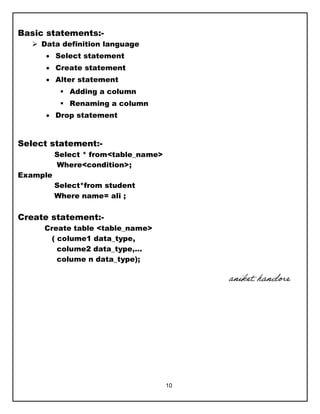
Select * from<table_name>
Where<condition>;
Example
Select*from student
Where name= ali ;
Create statement:-
Create table <table_name>
( colume1 data_type,
colume2 data_type,…
colume n data_type);
aniket handore
11
Example
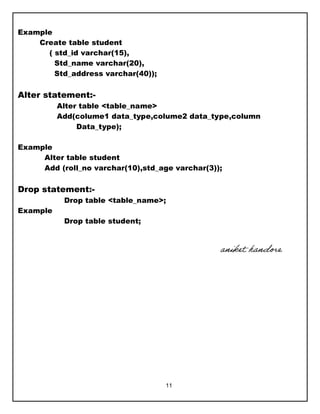
Create table student
( std_id varchar(15),
Std_name varchar(20),
Std_address varchar(40));
Alter statement:-
Alter table <table_name>
Add(colume1 data_type,colume2 data_type,column
Data_type);
Example
Alter table student
Add (roll_no varchar(10),std_age varchar(3));
Drop statement:-
Drop table <table_name>;
Example
Drop table student;
aniket handore
12
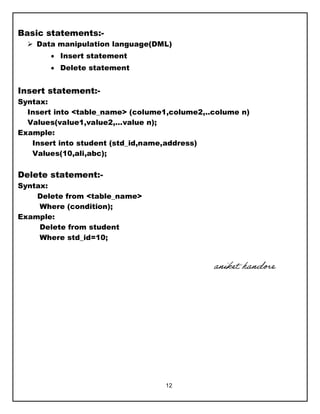
Basic statements:-
 Data manipulation language(DML)
 Insert statement
 Delete statement
Insert statement:-
Syntax:
Insert into <table_name> (colume1,colume2,..colume n)
Values(value1,value2,…value n);
Example:
Insert into student (std_id,name,address)
Values(10,ali,abc);
Delete statement:-
Syntax:
Delete from <table_name>
Where (condition);
Example:
Delete from student
Where std_id=10;
aniket handore
13
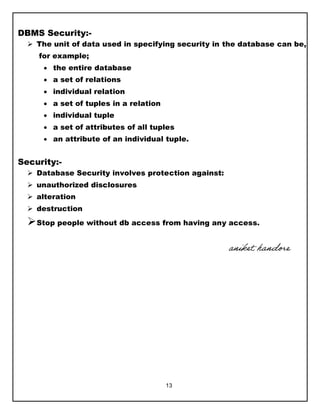
DBMS Security:-
 The unit of data used in specifying security in the database can be,
for example;
 the entire database
 a set of relations
 individual relation
 a set of tuples in a relation
 individual tuple
 a set of attributes of all tuples
 an attribute of an individual tuple.
Security:-
 Database Security involves protection against:
 unauthorized disclosures
 alteration
 destruction
Stop people without db access from having any access.
aniket handore
14
Reference:-
 https://en.wikipedia.org/wiki/Database
 https://www.slideshare.net/FahadChishti/database-project-airport-
management-system
 https://google.com aniket handore

Air Line Management System | DBMS project

  • 1.
    1 Index:- Sr no. TitlePage no. 1 What is Database 4 2 Database Management 5 3 Importance of DBMS 5 4 Airline Management System Introduction 6 5 Benefits 6 6 Implement of DBMS 7 7 Requirement 8 8 ER Diagram 10 9 SQL 11 10 Security 15 11 References 16 aniket handore
  • 2.
    2 Database:- overview collection of logicalrelated data it can easily access Data store in table,Rows And Column aniket handore
  • 3.
    3 Database management:-  Adatabase management system (DBMS) is system software.  Creating and managing databases.  In which files are integrated to each other  The DBMS facilitates the user to create,  retrieve, update and manage data. Importance of DBMS:-  It helps make data management more efficient and effective.  A database management system stores, organizes and manages a large amount of information within a single software application.  Use of this system increases efficiency of business operations and reduces overall costs. aniket handore
  • 4.
    4 Introduction of AirlineManagements System:-  We used DBMS in airline management system.  First of all, we need to identify the entities, attribute and relationships.  When we use DBMS, the record of all airport management entities is in the same location.  We shows entities, attributes and relationships by ER diagram.  SQL is a language which is used for applying queries. Example we applying queries for insertion, deletion or updating etc. Benefits:-  While using DBMS, the data is independent.  It removes duplication of data.  Easy to insert, update and delete data in DBMS.  When we use DBMS, the files integrated each other.  We can secure our data by using DBMS. aniket handore
  • 5.
    5 Problems:-  They donot communicate at accurate time.  Duplication of Data  Data Dependency  At the Time of installation of a data base or implementation of database we check the capacity of the operating system if operating system cannot capable to perform the operations we need to install a upgrade operating system to run a database efficiently. Implement of DBMS:-  Analyze user environment.  Develop logical model.  Choose DBMS.  Map logical model DBMS.  Develop physical Design.  Evaluate Physical Model. aniket handore
  • 6.
    6 Requirements of DMS:- Database management system required an operating system that has capability to run and perform the operation of database with the help of quires.  Database required a that Database Administrator for control the of the data flow. aniket handore Aniket Handore Digitally signed by Aniket Handore DN: cn=Aniket Handore, o=TechRoid Aniket, ou=1, email=anikethandore1@gmail.co m, c=IN Date: 2019.02.03 14:35:27 +05'30'
  • 7.
    7 Entities & Attribute:- ENTITY: Airport Attribute (Airport_id,Airport_name,city)  ENTITY: Employee Attribute (emp_id, emp_name,emp_age,Airport_name, Salary,job,emp_address)  ENTITY: Passengers Attribute(p_id,p_name,p_age,p_adress,country_name )  ENTITY: Airline Companies Attribute (c_id,c_name,city,country)  ENTITY: Ticket Attribute (order_no,flight_name,seat_dass,price, passenger_name)  ENTITY: flight time Attribute (flight_no,airport_name,arrivals_hours, airport_arrival,departure_hours) aniket handore
  • 8.
  • 9.
    9 Description:-  Airport hasemployees  Employees serve passengers  Passengers purchases tickets  Flight carries passengers  Ticket belongs to flight SQL:-  S.Q.L stands for Structured Query language.  It is used to interact with the database.  SQL was developed by IBM.  It is the standard language for RDBMS.  Using SQL statements we can perform tasks such as retrieving or updating data from the database.  Select statement  Insert into  Delete table aniket handore
  • 10.
    10 Basic statements:-  Datadefinition language  Select statement  Create statement  Alter statement  Adding a column  Renaming a column  Drop statement Select statement:- Select * from<table_name> Where<condition>; Example Select*from student Where name= ali ; Create statement:- Create table <table_name> ( colume1 data_type, colume2 data_type,… colume n data_type); aniket handore
  • 11.
    11 Example Create table student (std_id varchar(15), Std_name varchar(20), Std_address varchar(40)); Alter statement:- Alter table <table_name> Add(colume1 data_type,colume2 data_type,column Data_type); Example Alter table student Add (roll_no varchar(10),std_age varchar(3)); Drop statement:- Drop table <table_name>; Example Drop table student; aniket handore
  • 12.
    12 Basic statements:-  Datamanipulation language(DML)  Insert statement  Delete statement Insert statement:- Syntax: Insert into <table_name> (colume1,colume2,..colume n) Values(value1,value2,…value n); Example: Insert into student (std_id,name,address) Values(10,ali,abc); Delete statement:- Syntax: Delete from <table_name> Where (condition); Example: Delete from student Where std_id=10; aniket handore
  • 13.
    13 DBMS Security:-  Theunit of data used in specifying security in the database can be, for example;  the entire database  a set of relations  individual relation  a set of tuples in a relation  individual tuple  a set of attributes of all tuples  an attribute of an individual tuple. Security:-  Database Security involves protection against:  unauthorized disclosures  alteration  destruction Stop people without db access from having any access. aniket handore
  • 14.