
Agile Project
Management
Part 1 - Understanding Agile Project
Management
Agenda
• suitable Agile Projects
• Characteristics of Agila Projects
• Other Items Required
• Stages
• Agile Life Cycle
– Envision
– Speculate
– Explore
– Adapt & Close
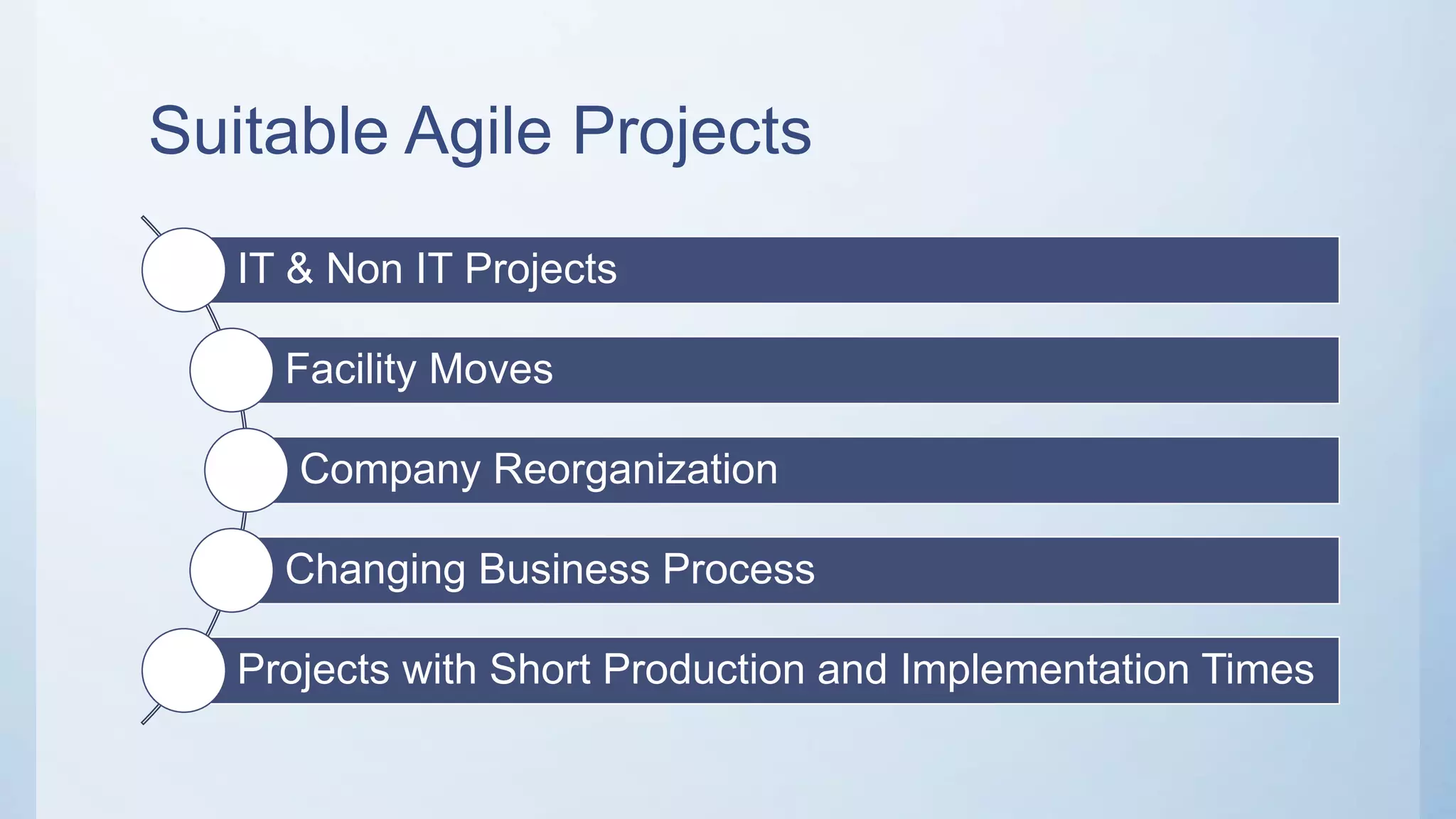
Suitable Agile Projects
IT & Non IT Projects
Facility Moves
Company Reorganization
Changing Business Process
Projects with Short Production and Implementation Times
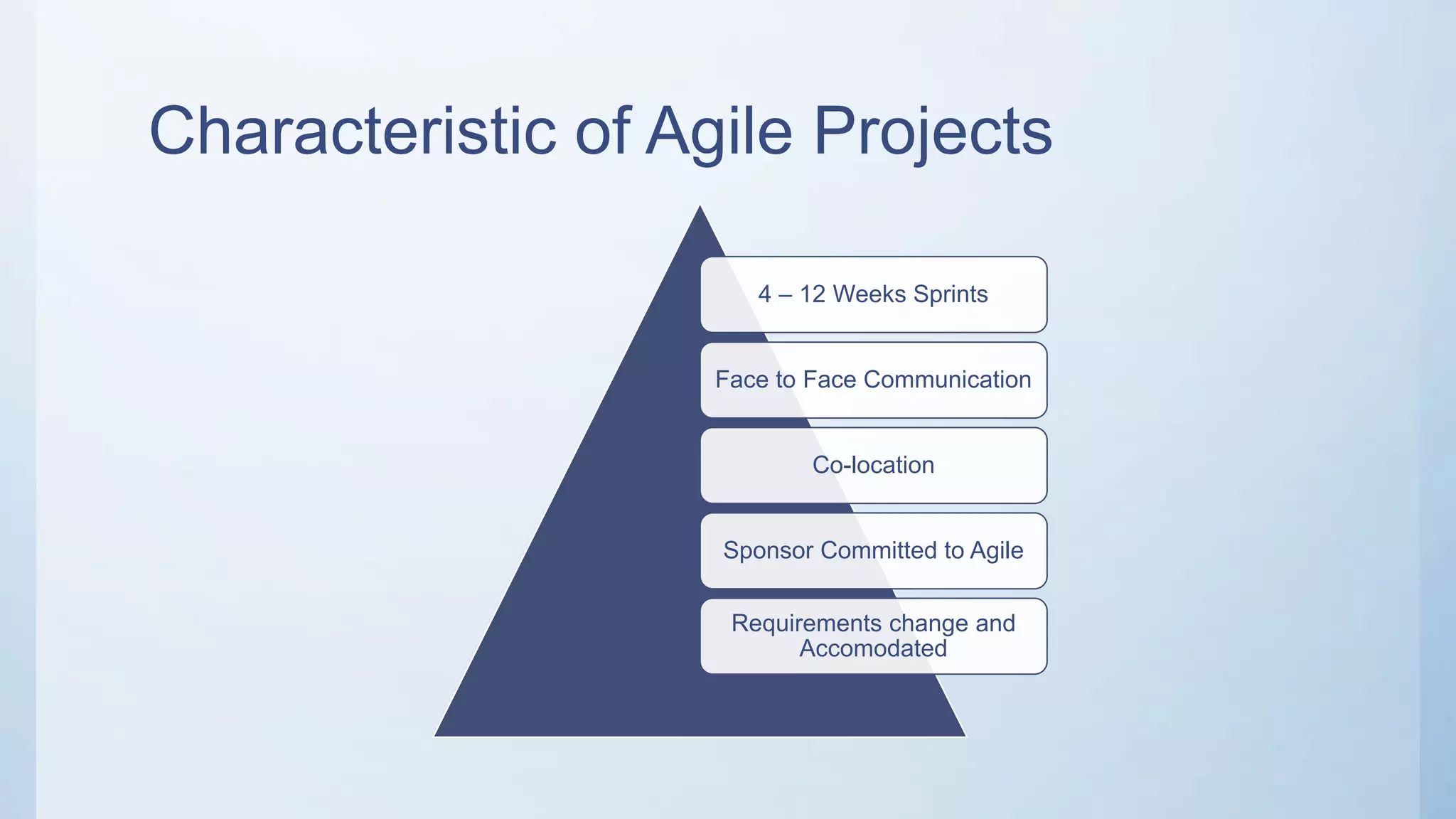
Characteristic of Agile Projects
4 – 12 Weeks Sprints
Face to Face Communication
Co-location
Sponsor Committed to Agile
Requirements change and
Accomodated
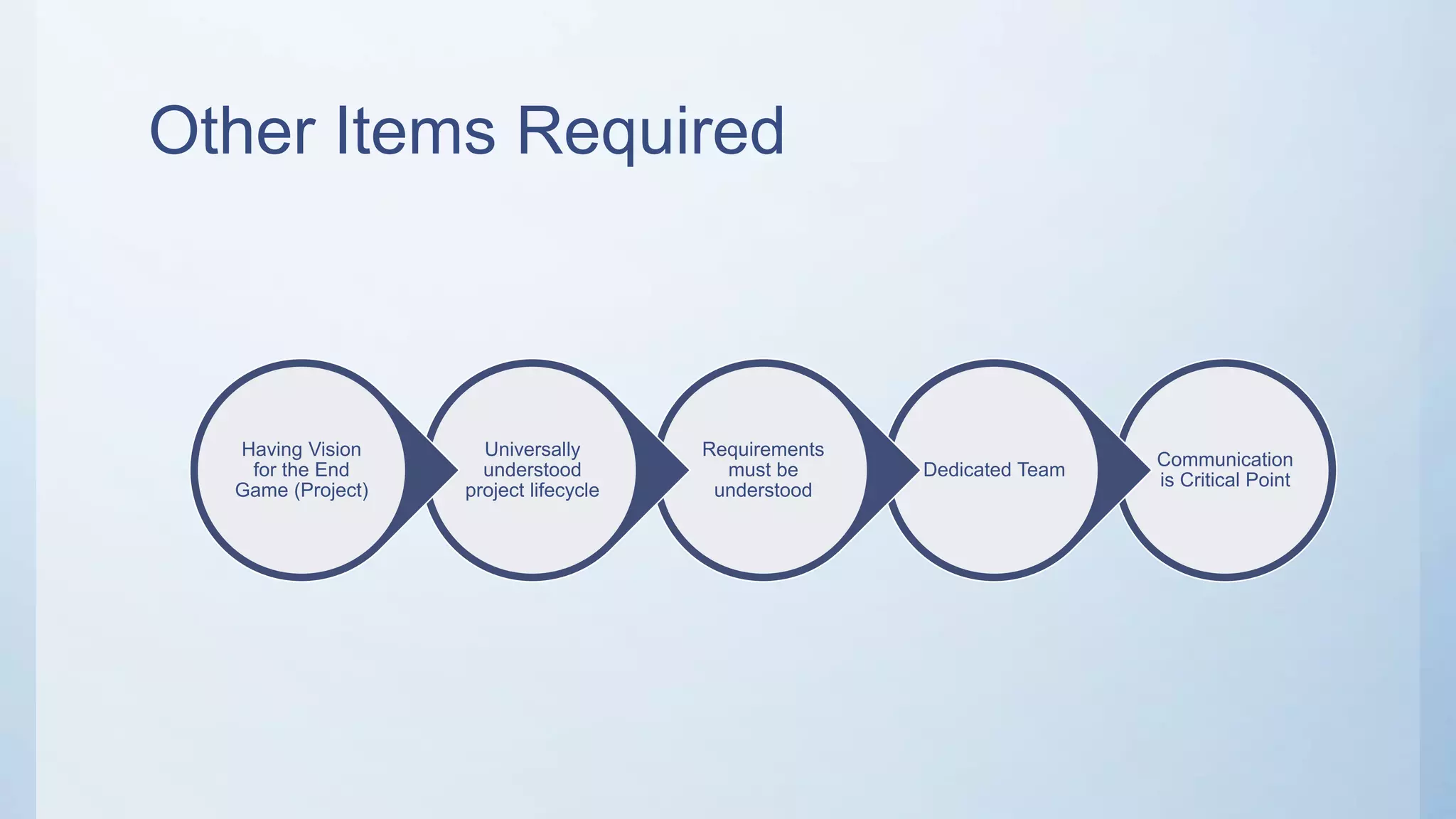
Other Items Required
Communication
is Critical Point
Dedicated Team
Requirements
must be
understood
Universally
understood
project lifecycle
Having Vision
for the End
Game (Project)
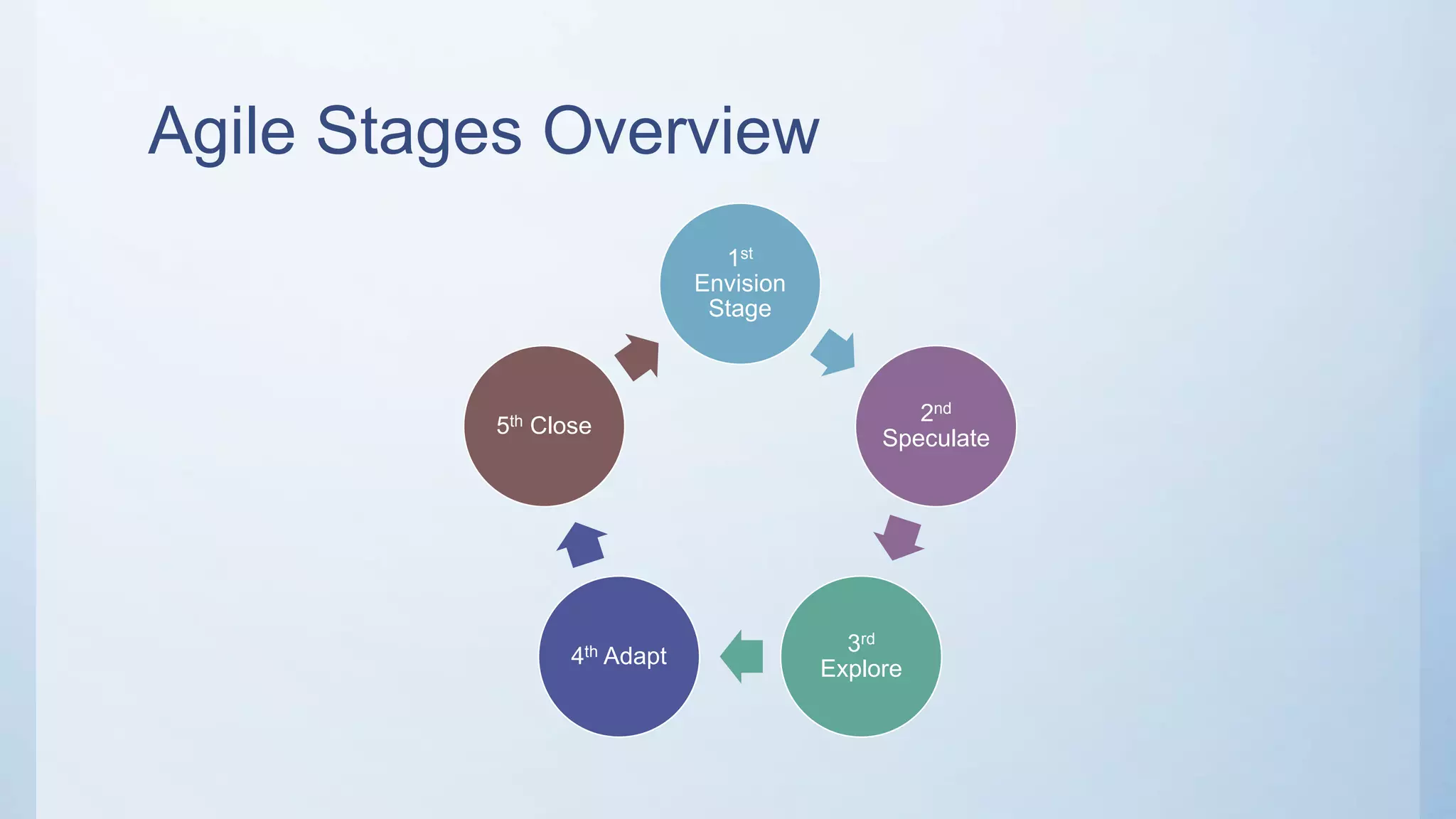
Agile Stages Overview
1st
Envision
Stage
2nd
Speculate
3rd
Explore
4th Adapt
5th Close
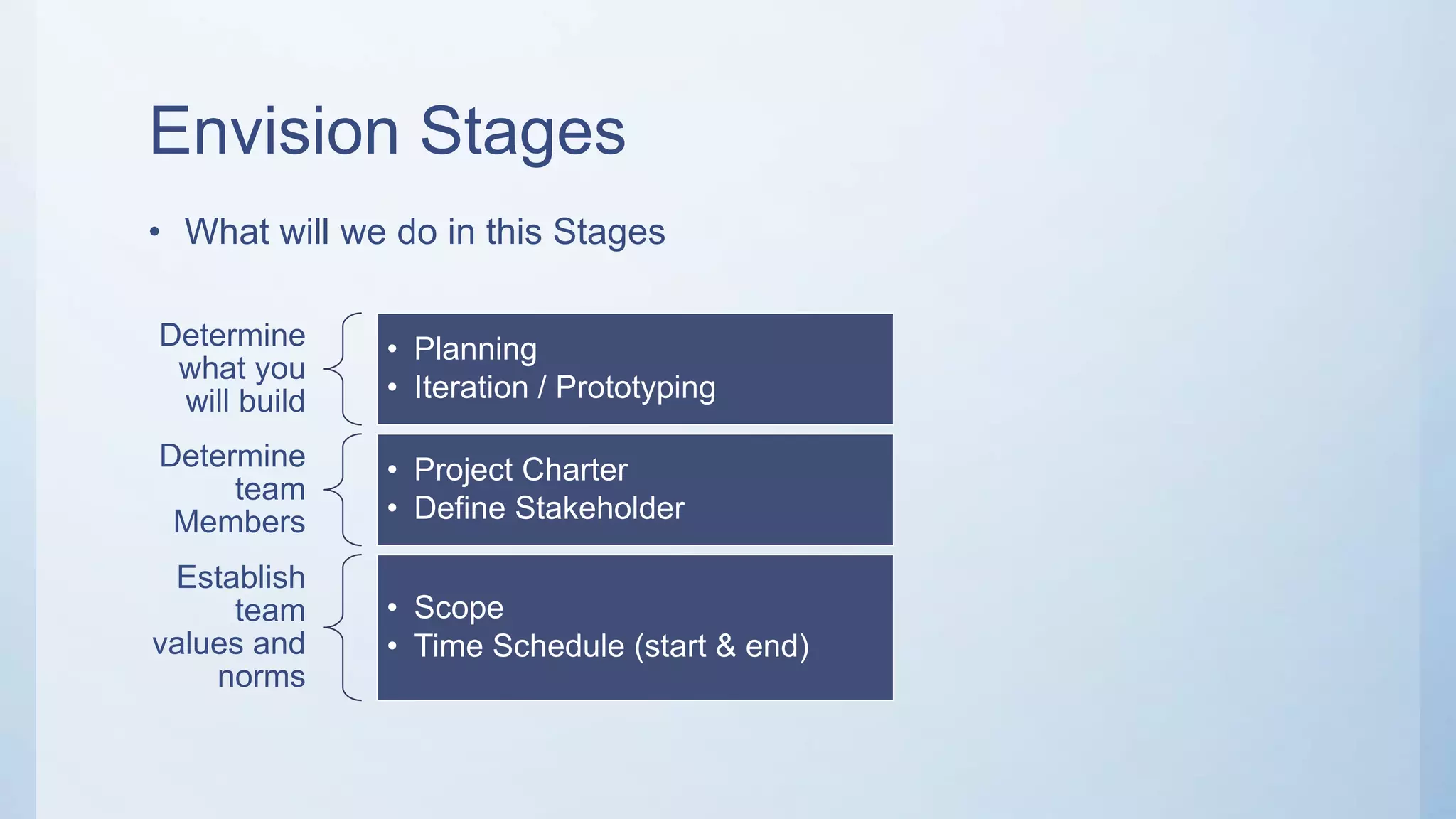
Envision Stages
• What will we do in this Stages
Determine
what you
will build
• Planning
• Iteration / Prototyping
Determine
team
Members
• Project Charter
• Define Stakeholder
Establish
team
values and
norms
• Scope
• Time Schedule (start & end)
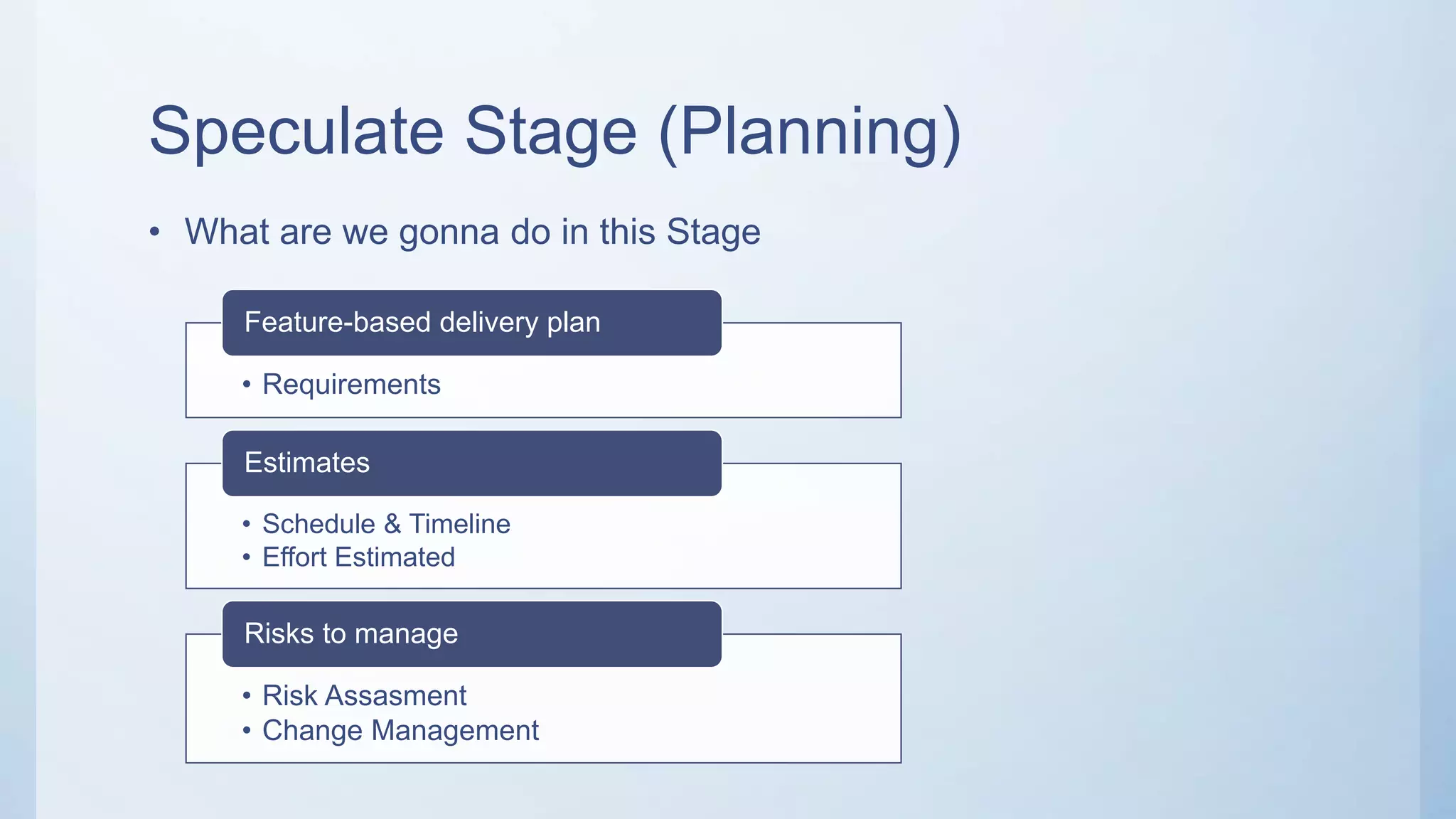
Speculate Stage (Planning)
• What are we gonna do in this Stage
• Requirements
Feature-based delivery plan
• Schedule & Timeline
• Effort Estimated
Estimates
• Risk Assasment
• Change Management
Risks to manage
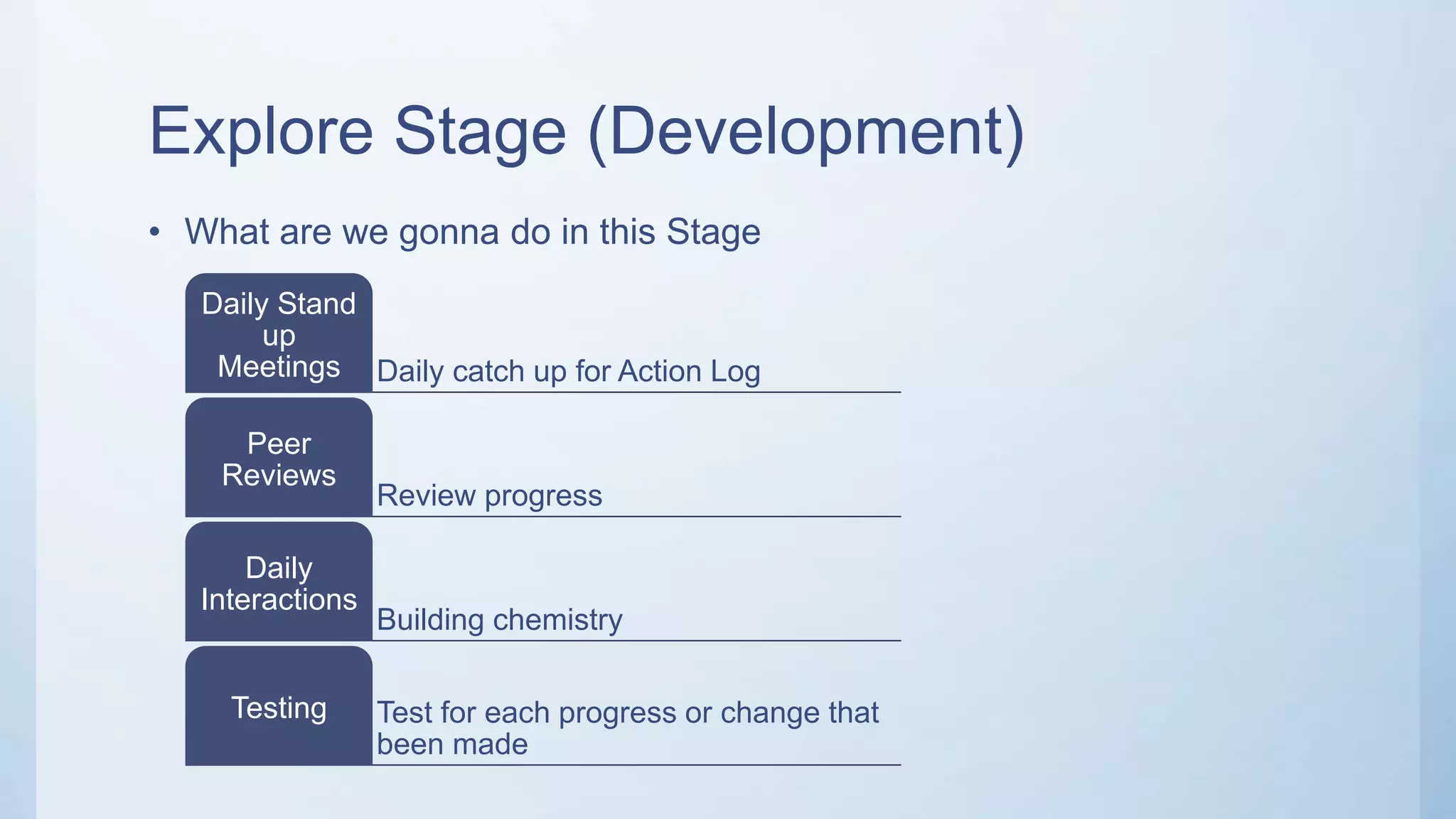
Explore Stage (Development)
• What are we gonna do in this Stage
Daily catch up for Action Log
Daily Stand
up
Meetings
Review progress
Peer
Reviews
Building chemistry
Daily
Interactions
Test for each progress or change that
been made
Testing
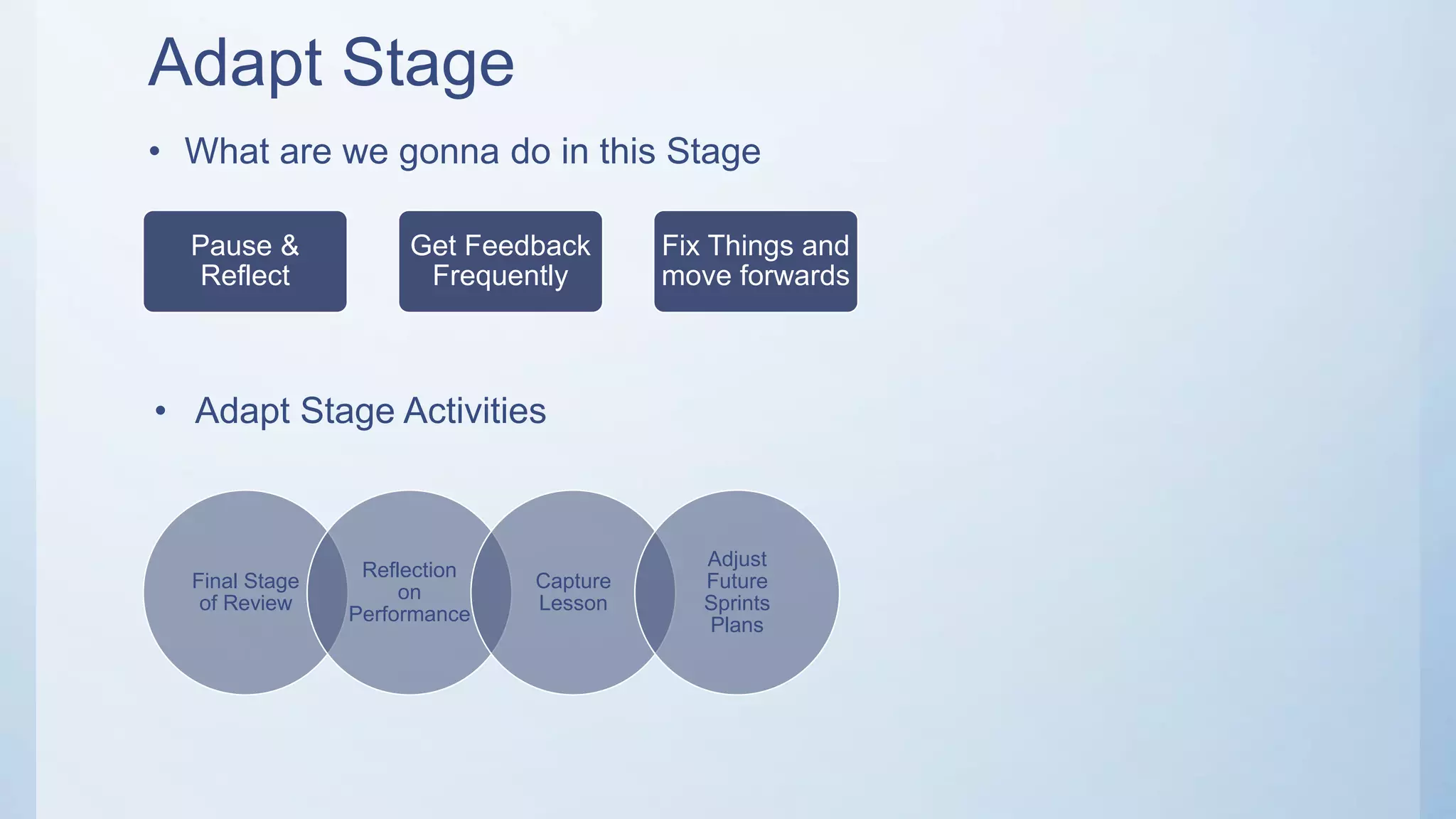
Adapt Stage
• What are we gonna do in this Stage
Pause &
Reflect
Get Feedback
Frequently
Fix Things and
move forwards
• Adapt Stage Activities
Final Stage
of Review
Reflection
on
Performance
Capture
Lesson
Adjust
Future
Sprints
Plans
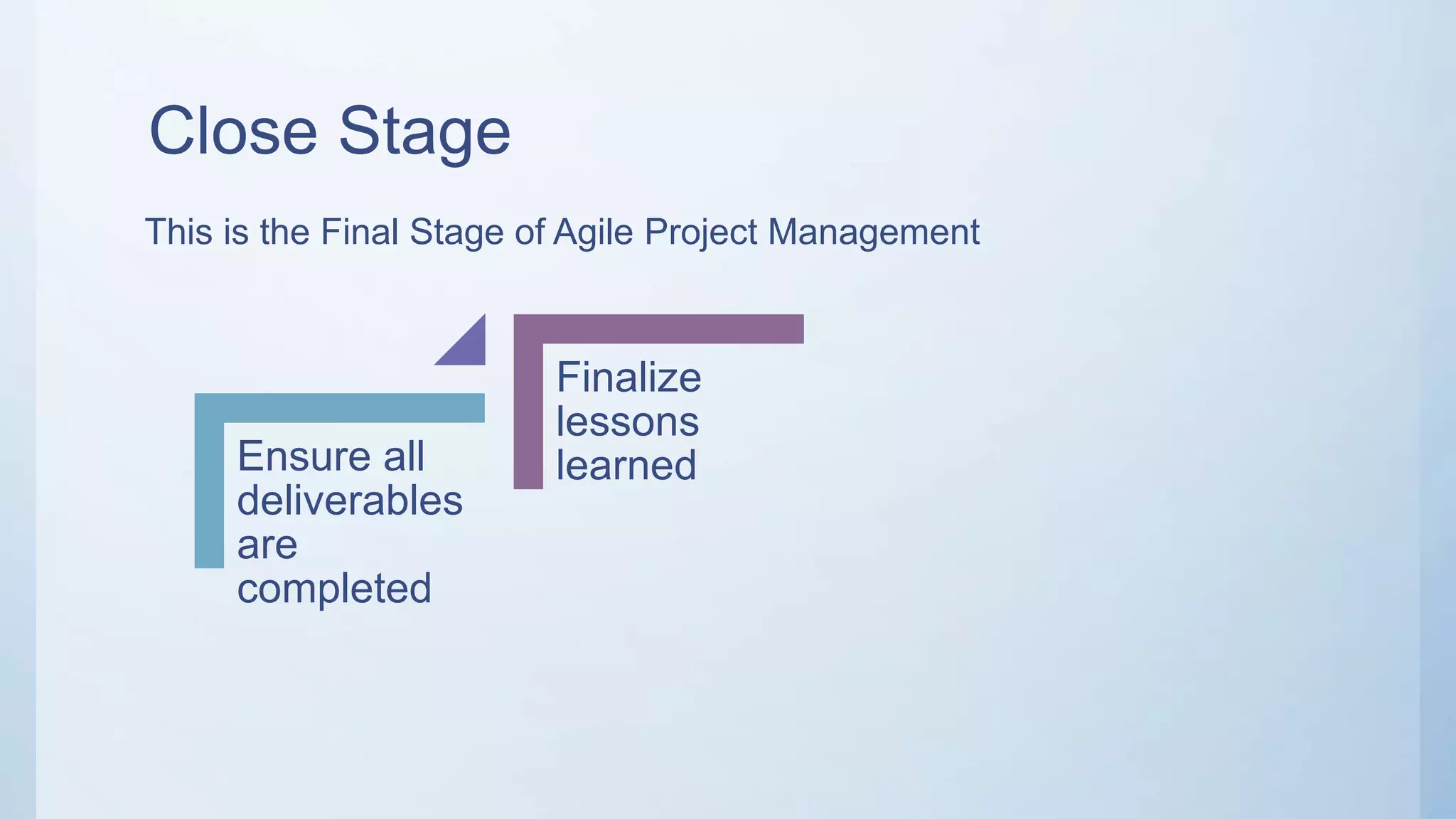
Close Stage
Ensure all
deliverables
are
completed
Finalize
lessons
learned
This is the Final Stage of Agile Project Management
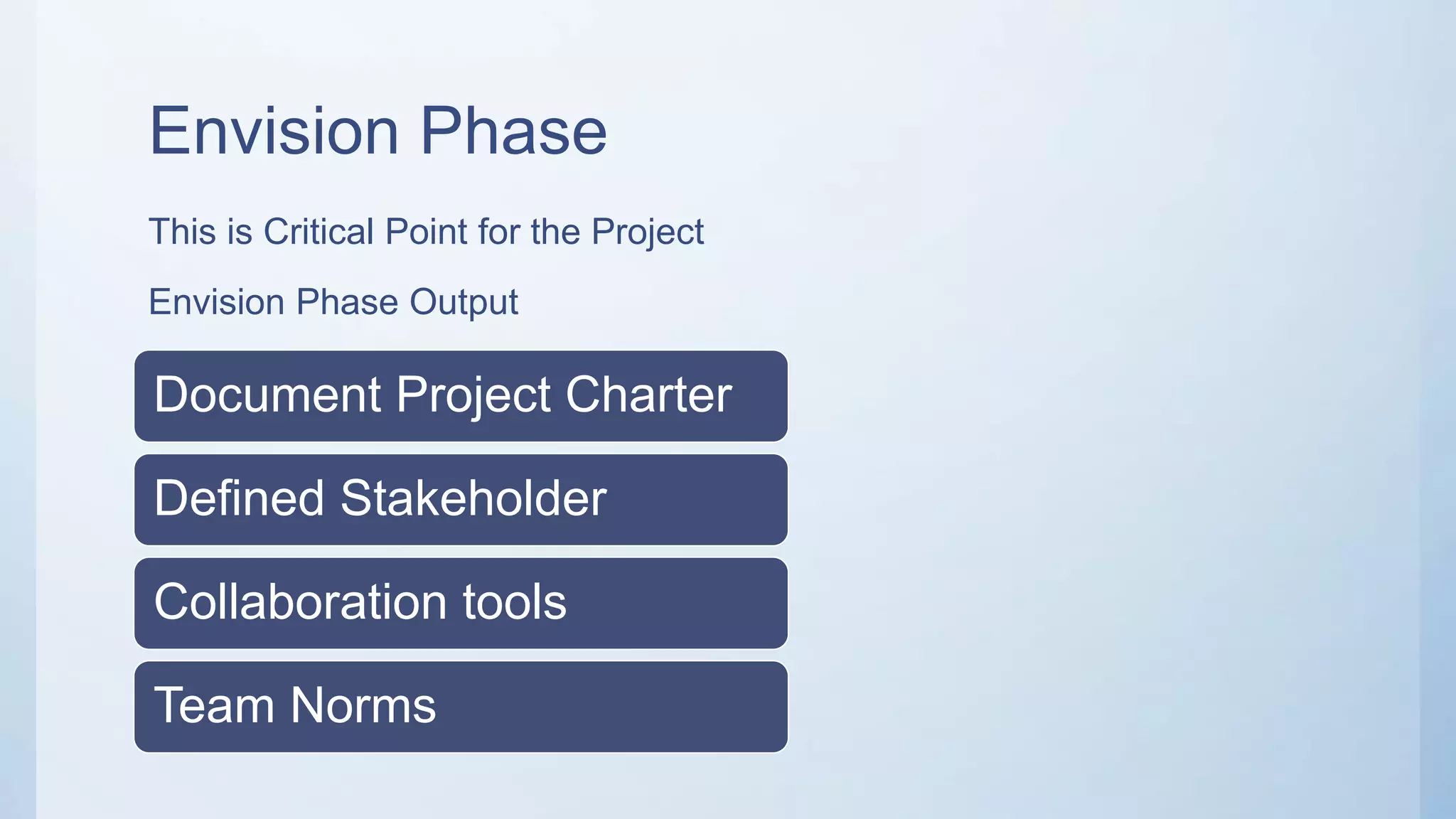
Envision Phase
This is Critical Point for the Project
Envision Phase Output
Document Project Charter
Defined Stakeholder
Collaboration tools
Team Norms
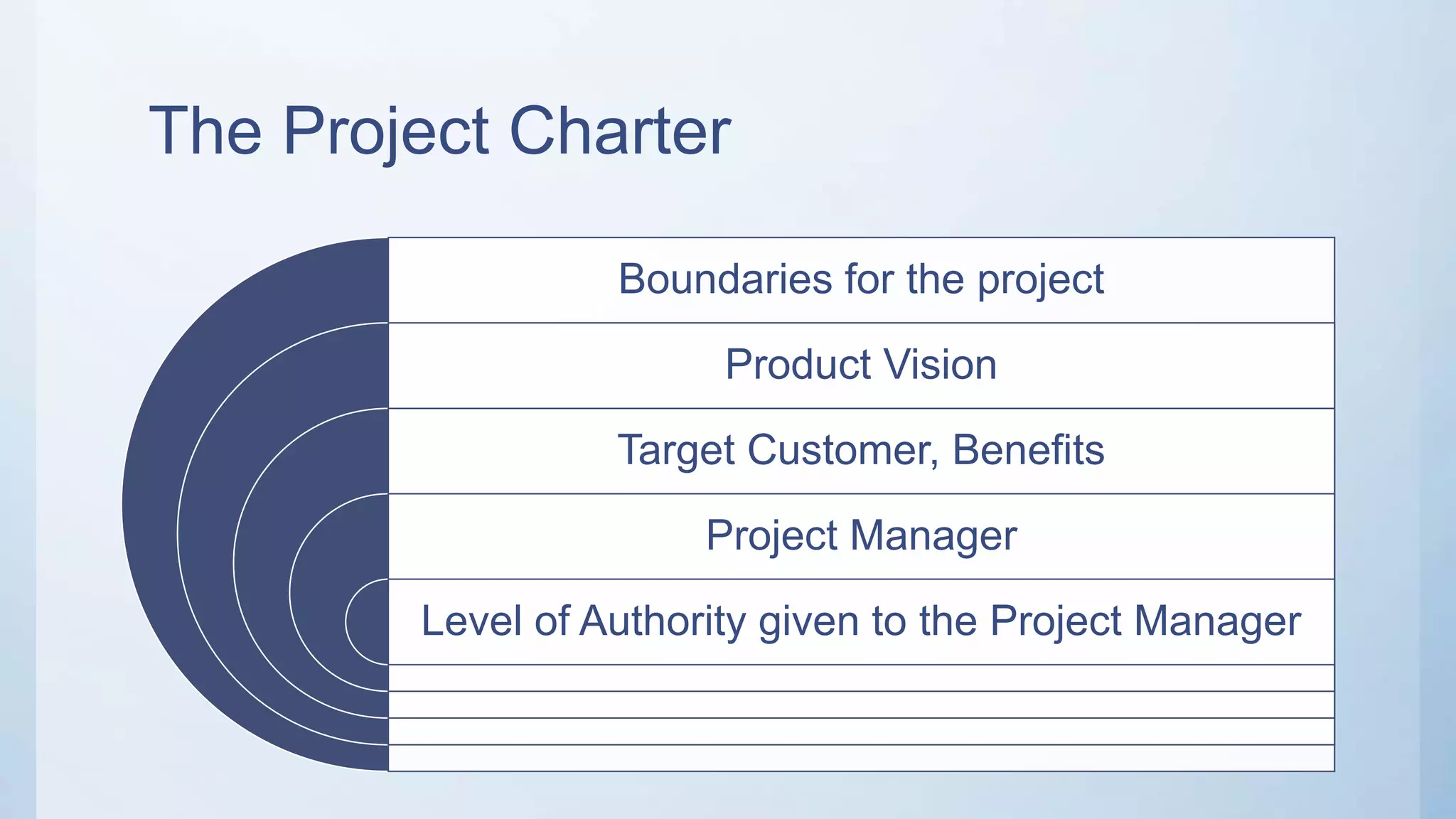
The Project Charter
Boundaries for the project
Product Vision
Target Customer, Benefits
Project Manager
Level of Authority given to the Project Manager
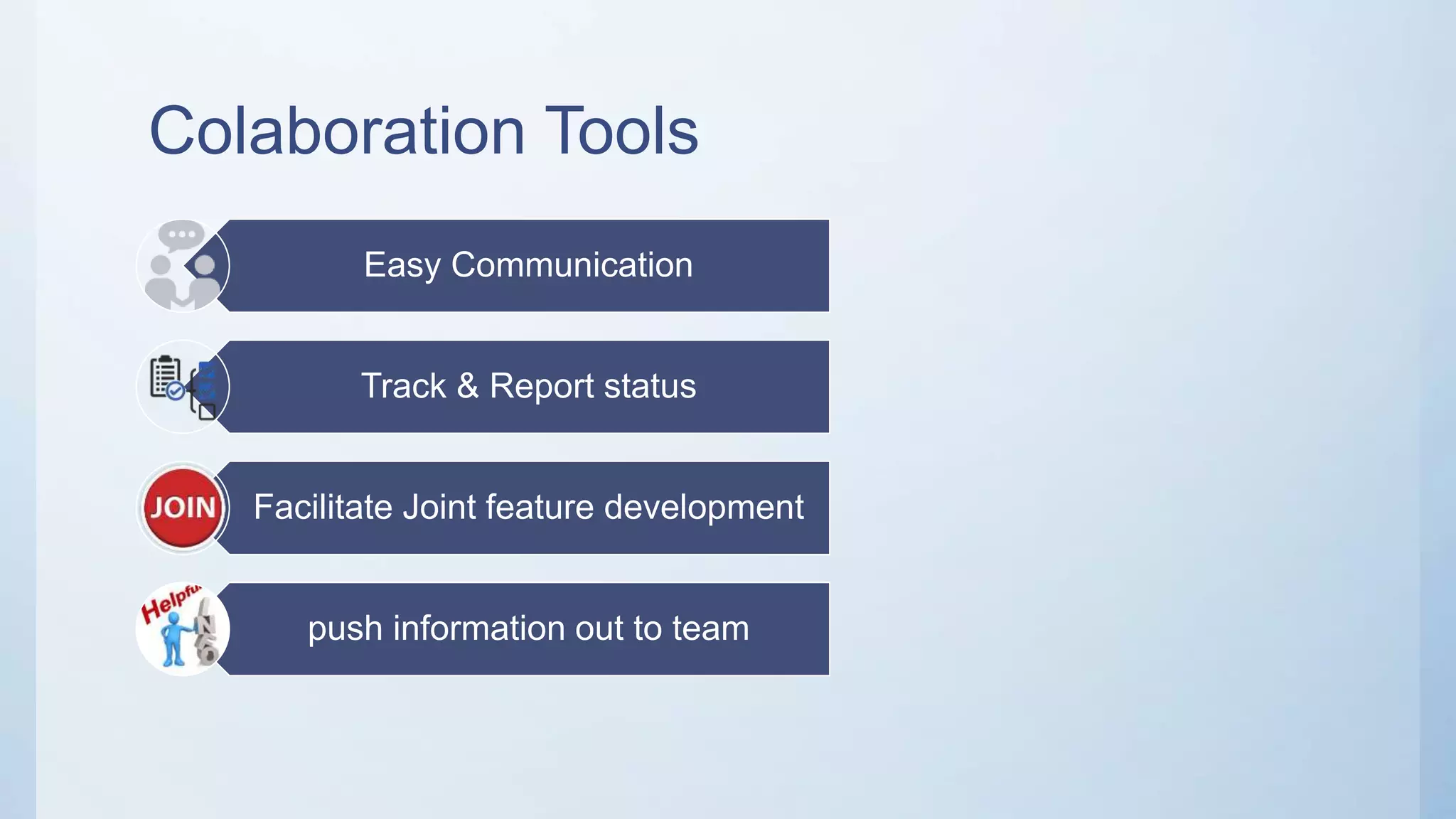
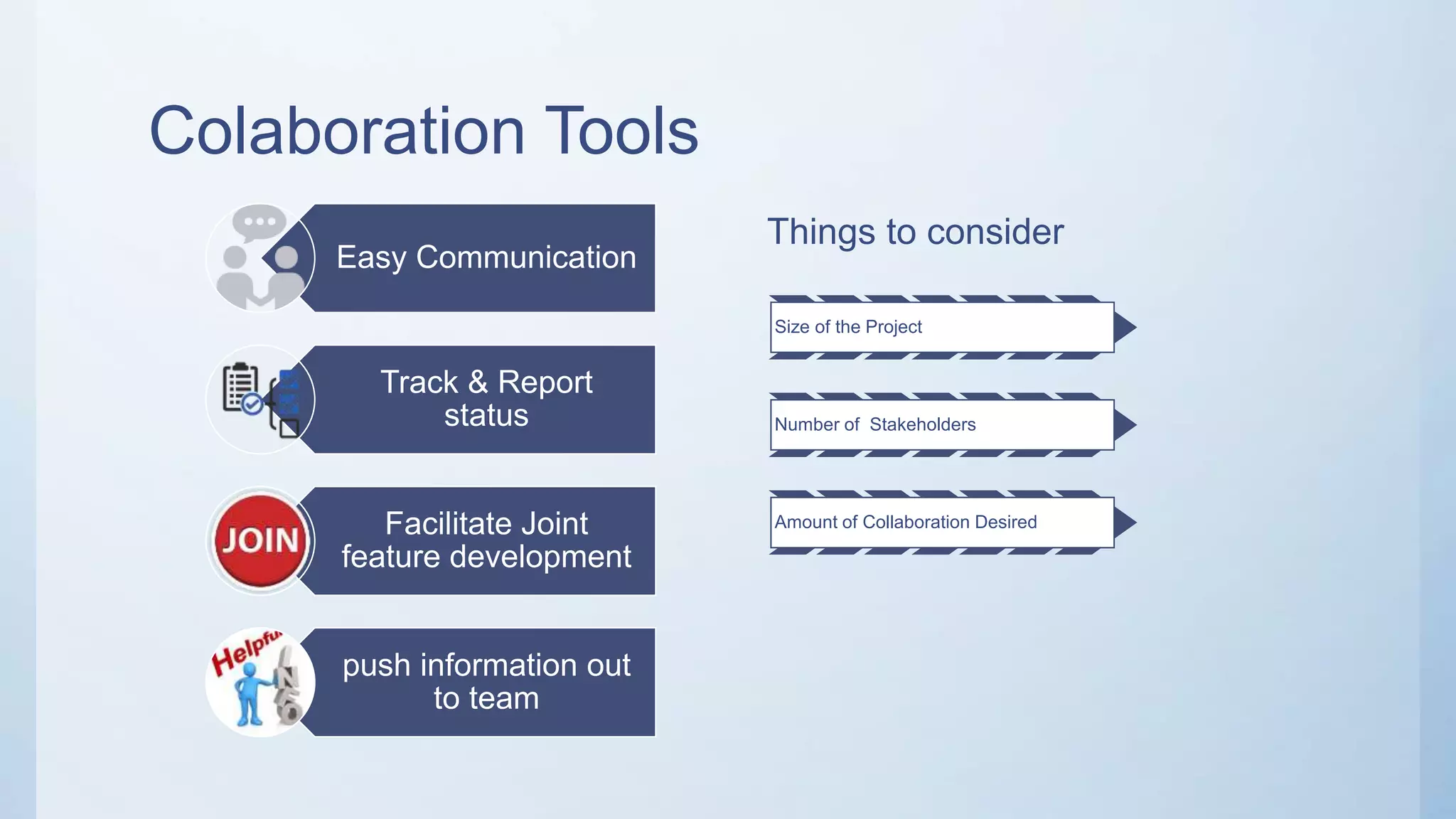
Colaboration Tools
Easy Communication
Track & Report status
Facilitate Joint feature development
push information out to team
Colaboration Tools
Things to consider
Easy Communication
Track & Report
status
Facilitate Joint
feature development
push information out
to team
Size of the Project
Number of Stakeholders
Amount of Collaboration Desired
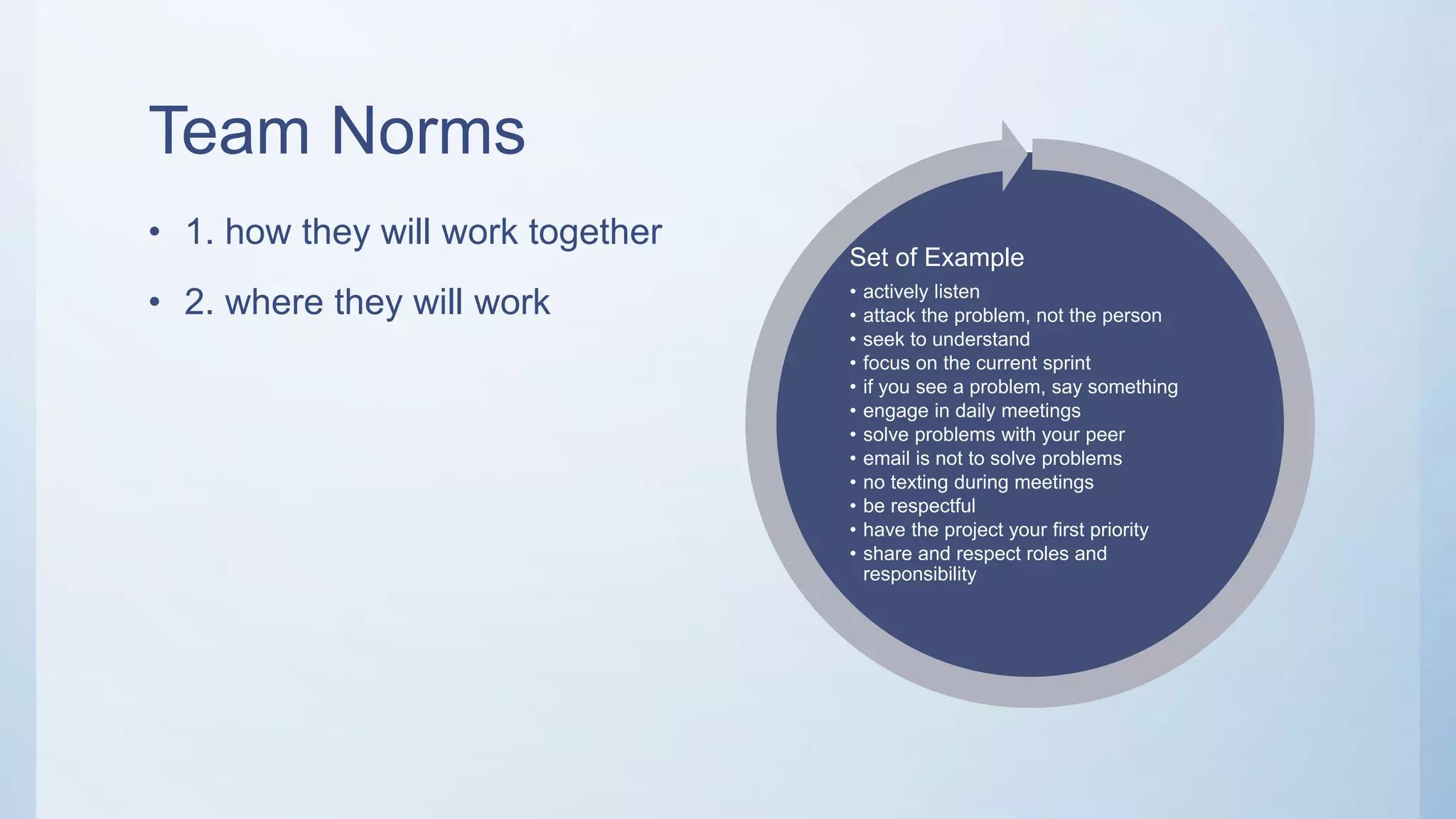
Team Norms
• 1. how they will work together
• 2. where they will work
Set of Example
• actively listen
• attack the problem, not the person
• seek to understand
• focus on the current sprint
• if you see a problem, say something
• engage in daily meetings
• solve problems with your peer
• email is not to solve problems
• no texting during meetings
• be respectful
• have the project your first priority
• share and respect roles and
responsibility
Risks with Agile
Larger Teams
too ambitious a schedule
not having decision makers on the team
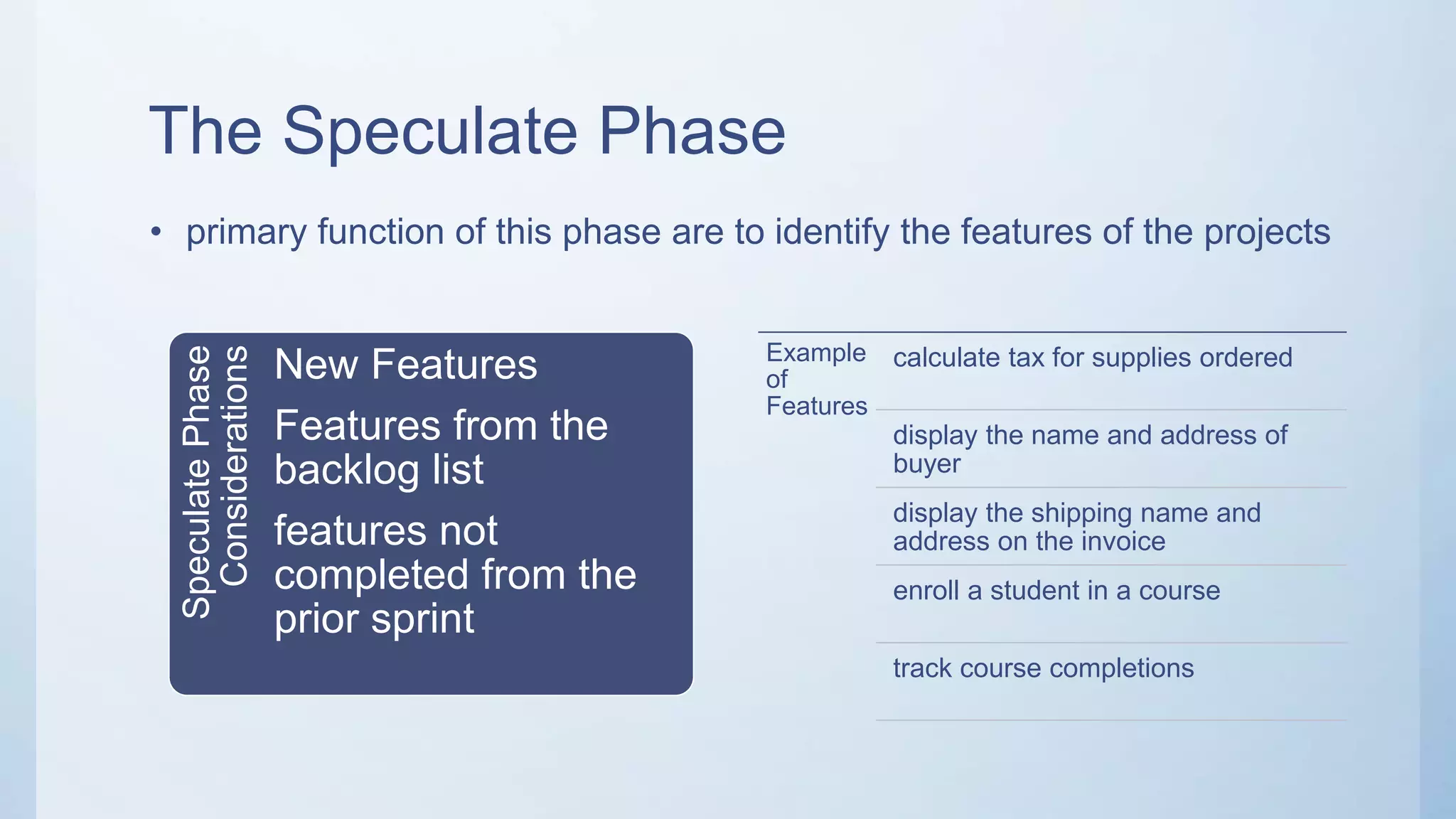
The Speculate Phase
• primary function of this phase are to identify the features of the projects
SpeculatePhase
Considerations
New Features
Features from the
backlog list
features not
completed from the
prior sprint
Example
of
Features
calculate tax for supplies ordered
display the name and address of
buyer
display the shipping name and
address on the invoice
enroll a student in a course
track course completions
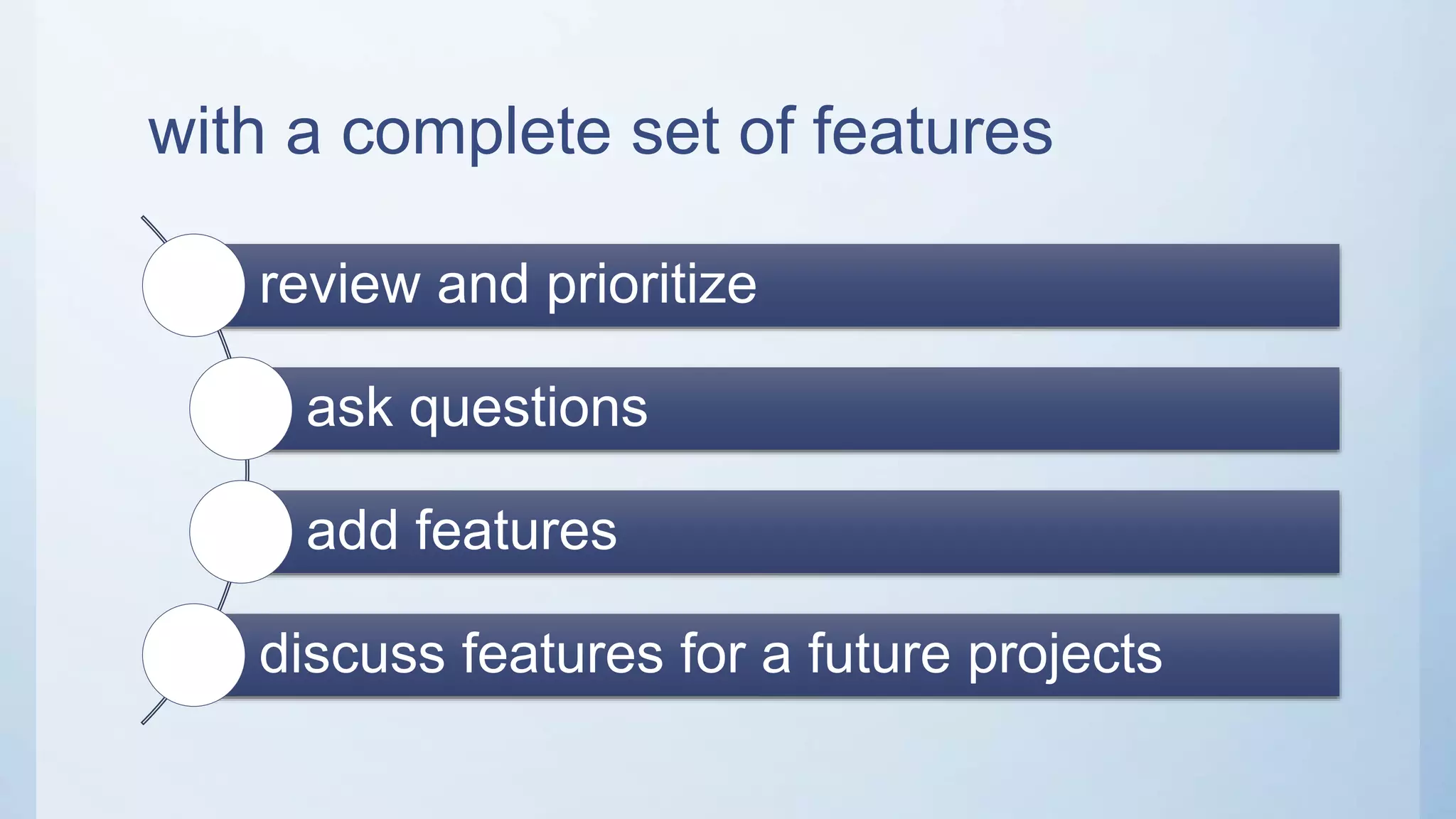
with a complete set of features
review and prioritize
ask questions
add features
discuss features for a future projects
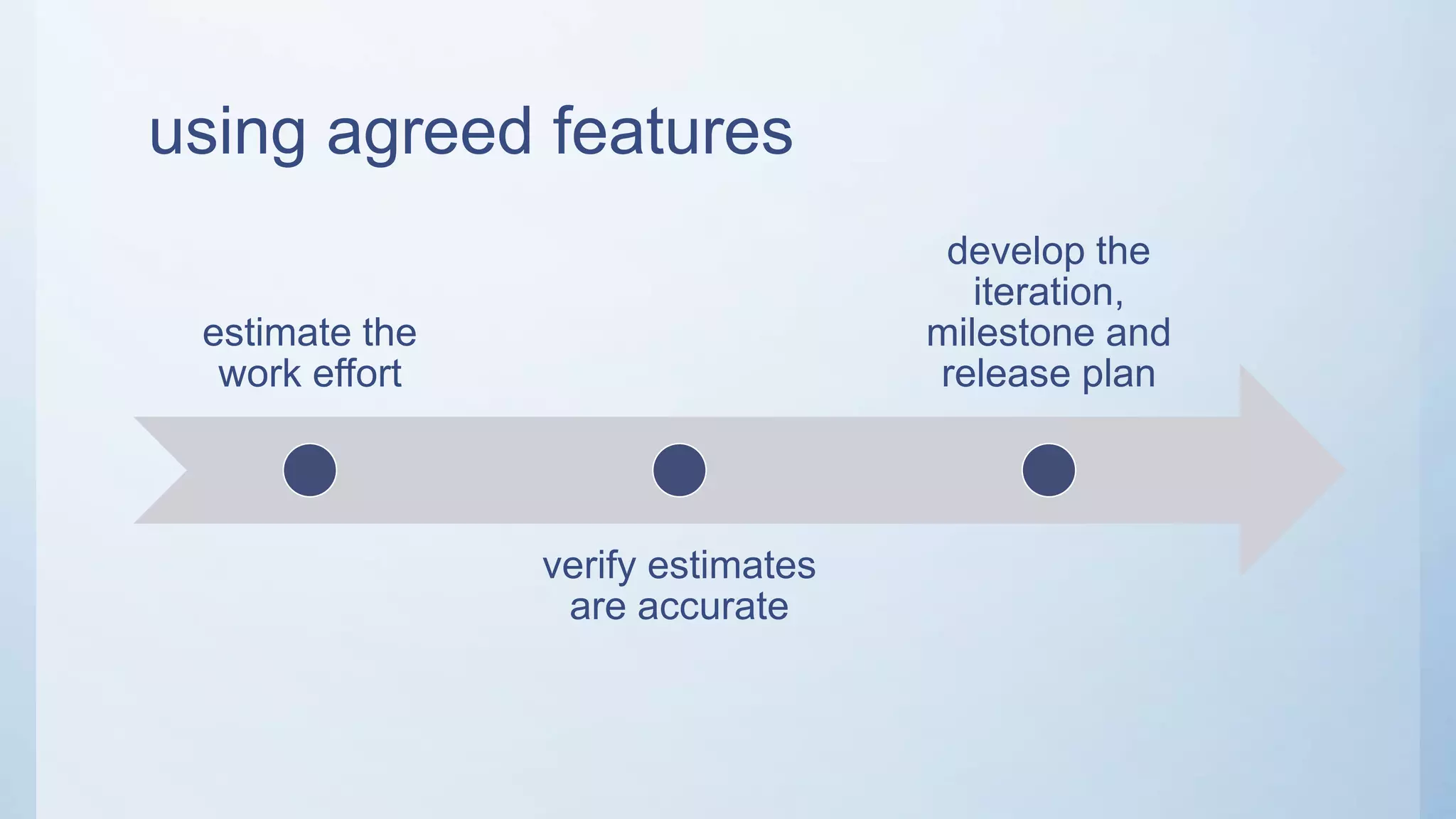
using agreed features
estimate the
work effort
verify estimates
are accurate
develop the
iteration,
milestone and
release plan
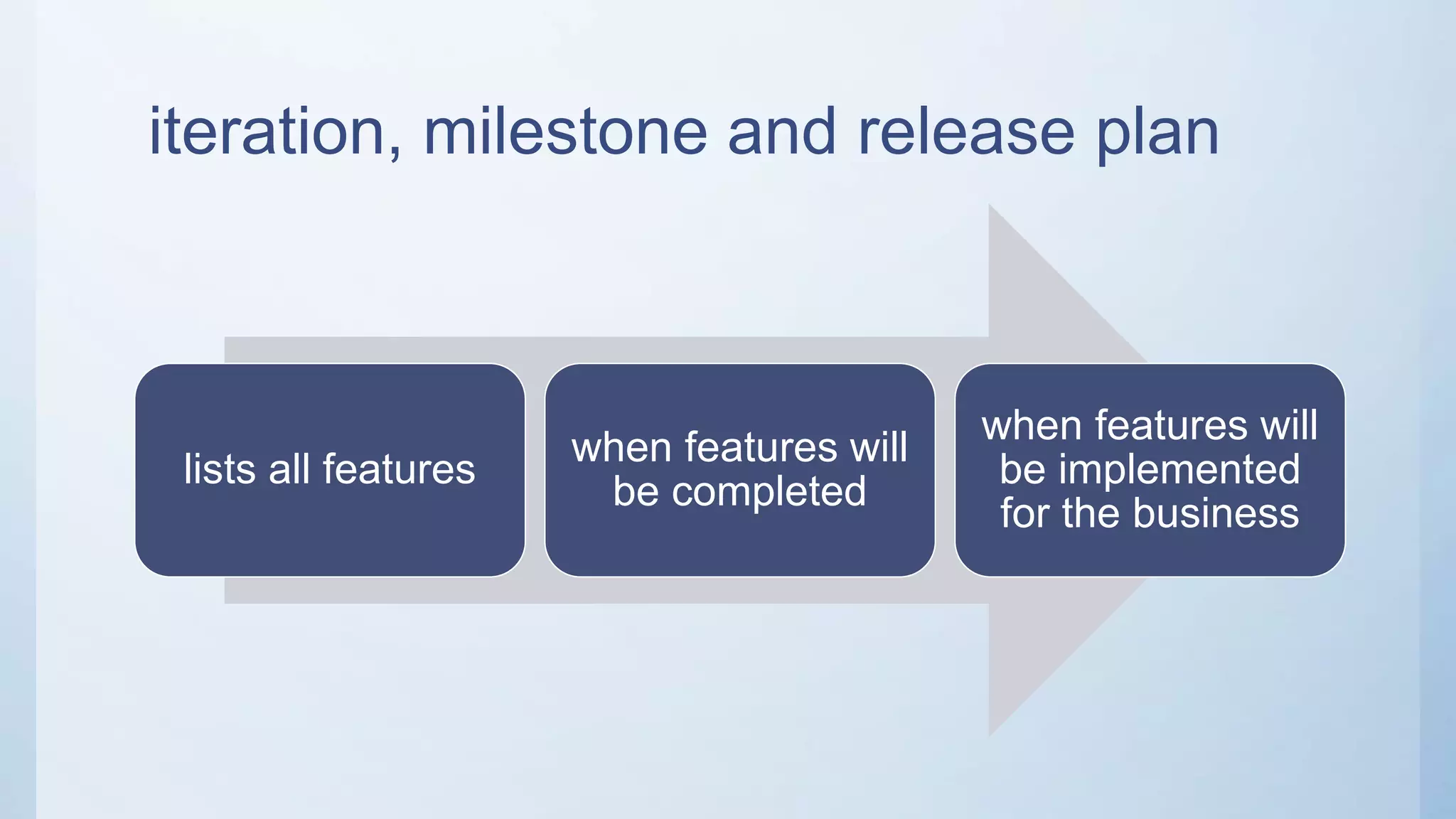
iteration, milestone and release plan
lists all features
when features will
be completed
when features will
be implemented
for the business
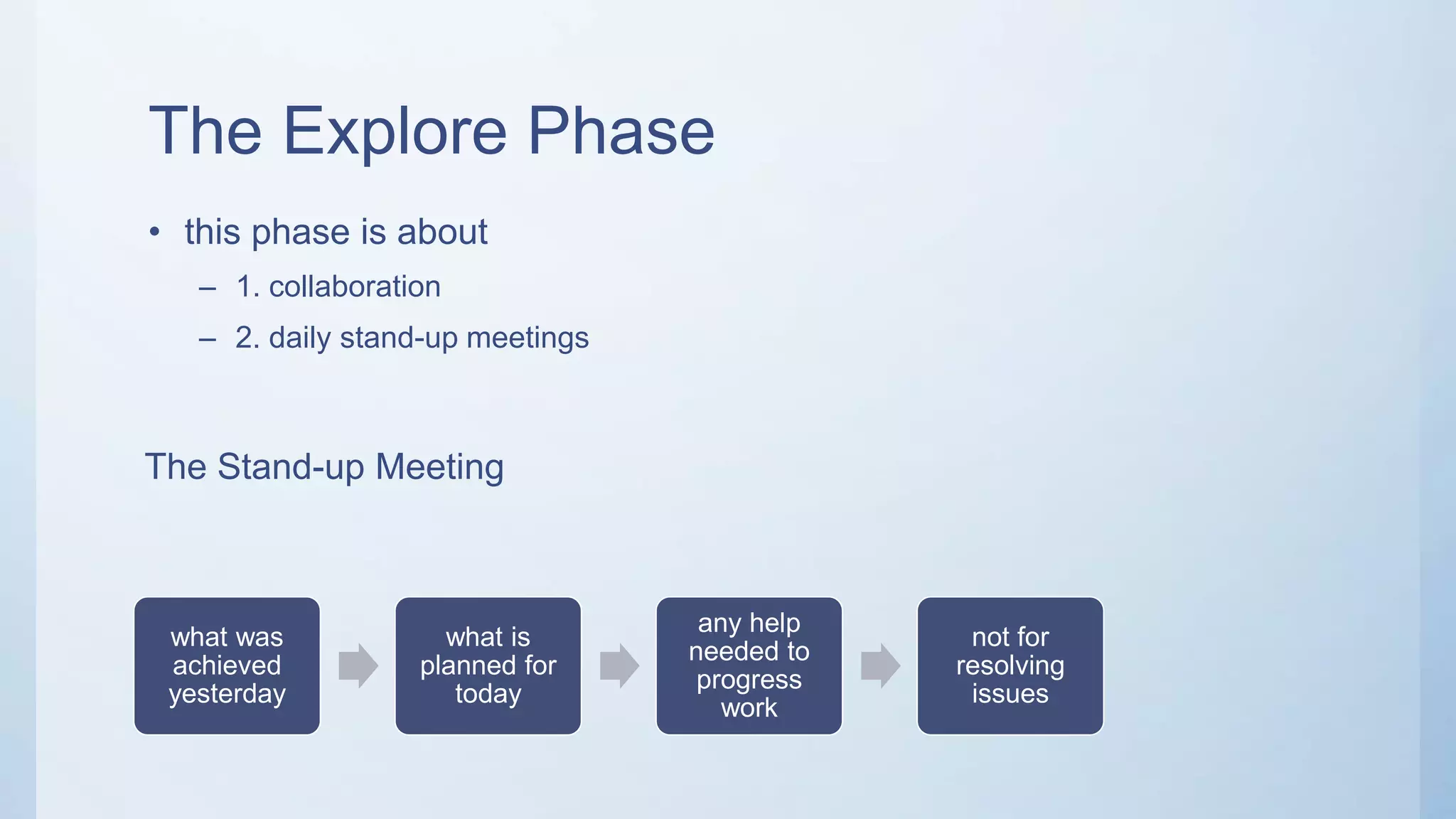
The Explore Phase
• this phase is about
– 1. collaboration
– 2. daily stand-up meetings
The Stand-up Meeting
what was
achieved
yesterday
what is
planned for
today
any help
needed to
progress
work
not for
resolving
issues
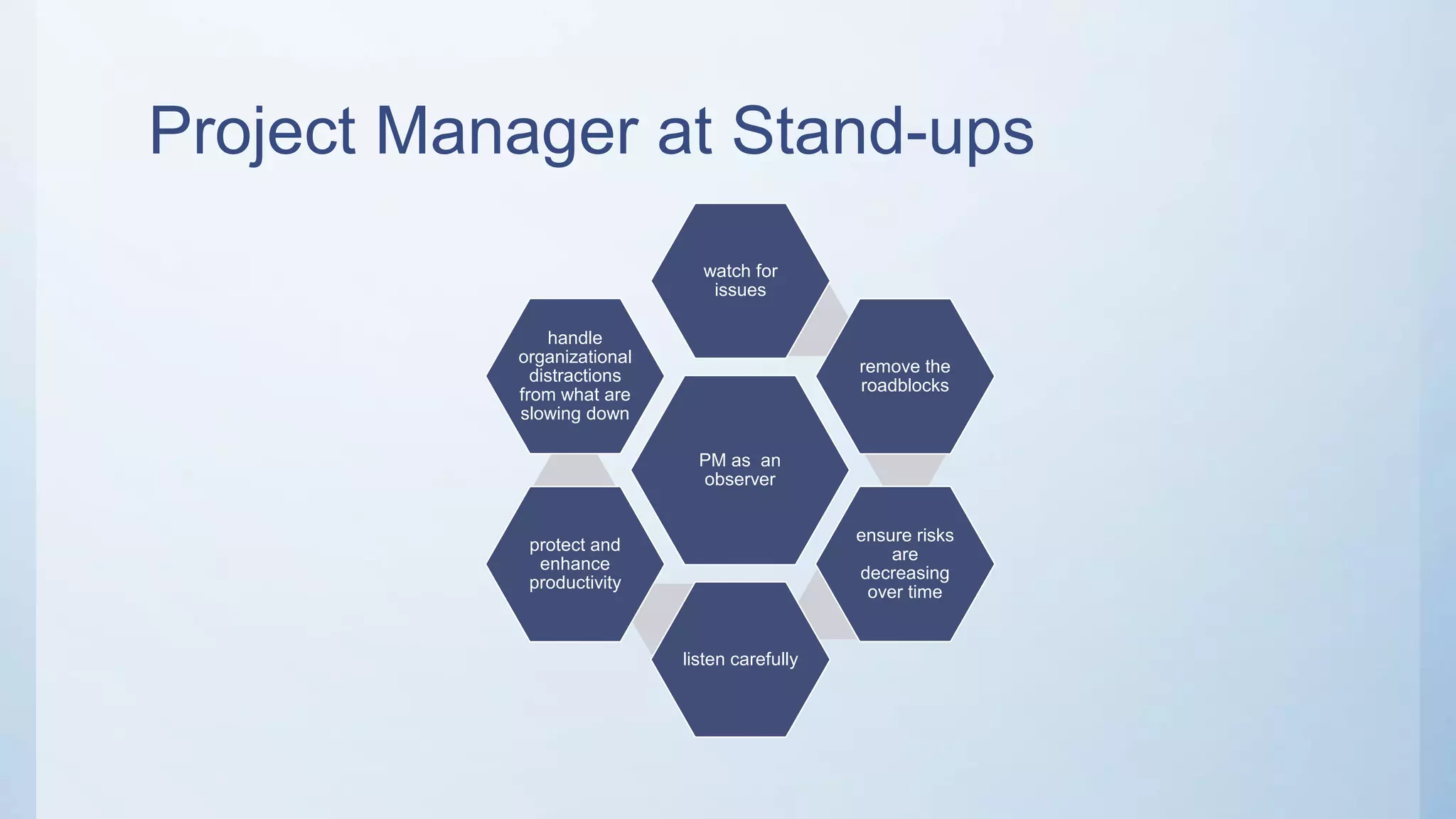
Project Manager at Stand-ups
PM as an
observer
watch for
issues
remove the
roadblocks
ensure risks
are
decreasing
over time
listen carefully
protect and
enhance
productivity
handle
organizational
distractions
from what are
slowing down
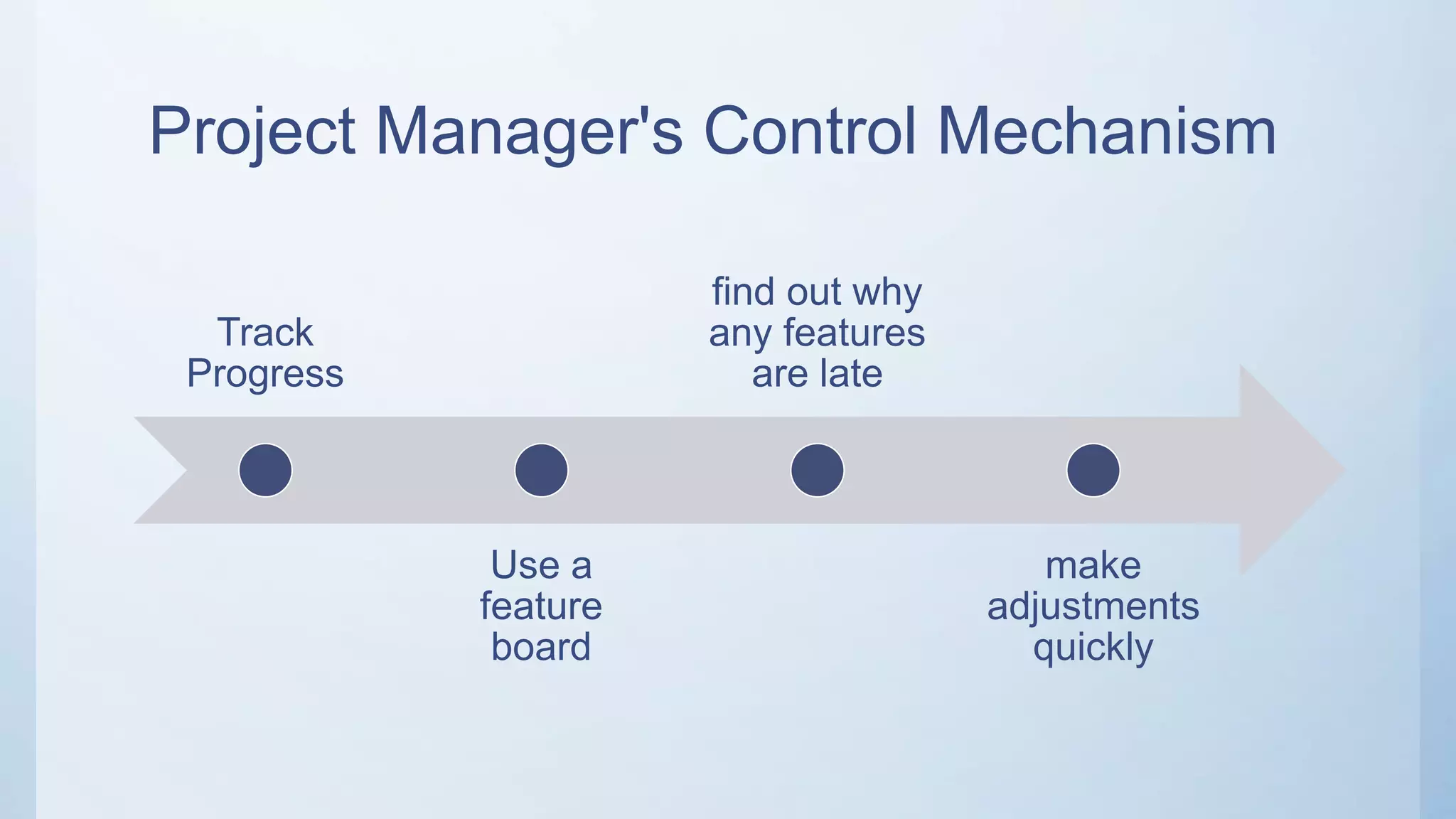
Project Manager's Control Mechanism
Track
Progress
Use a
feature
board
find out why
any features
are late
make
adjustments
quickly
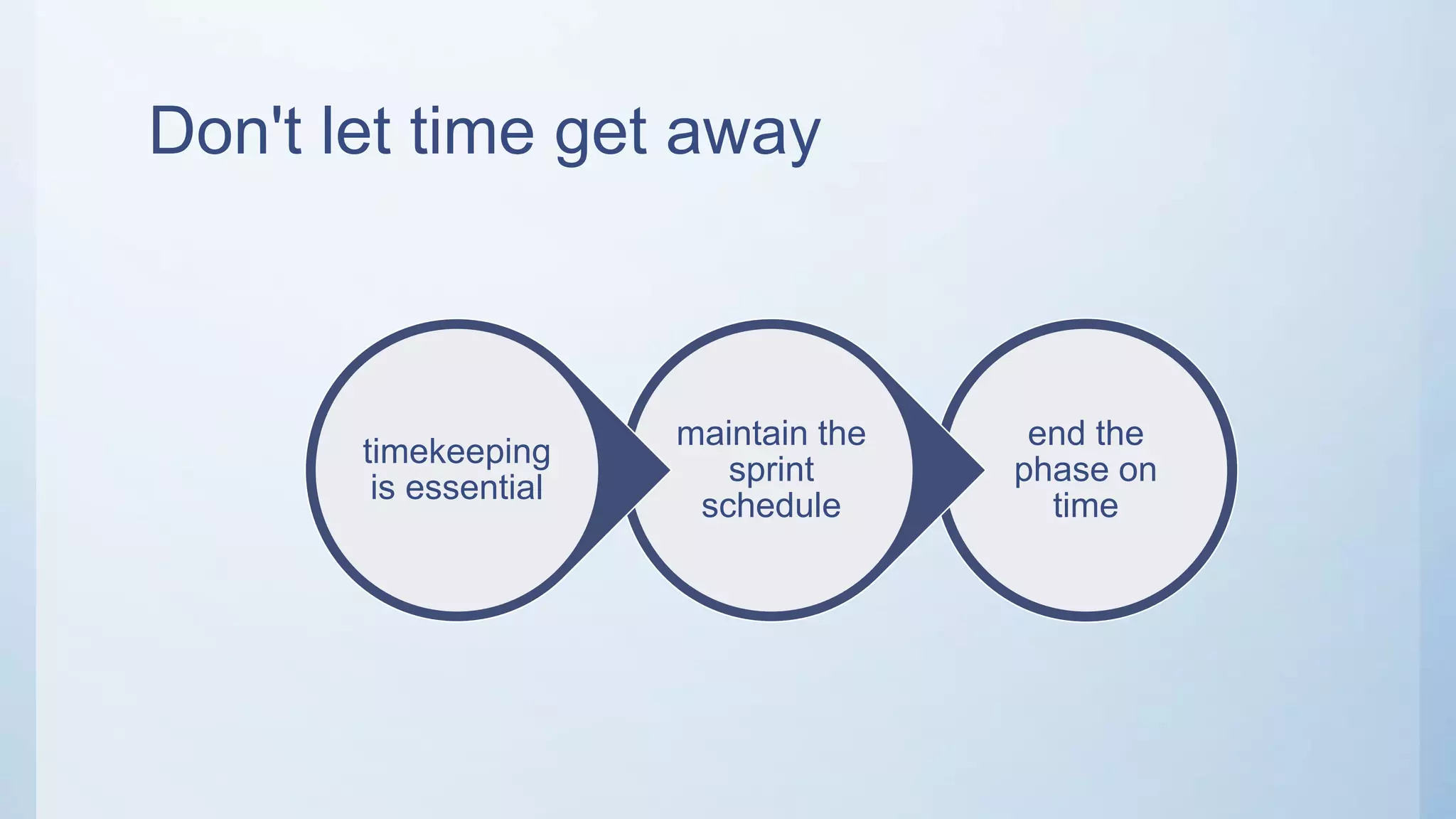
Don't let time get away
end the
phase on
time
maintain the
sprint
schedule
timekeeping
is essential
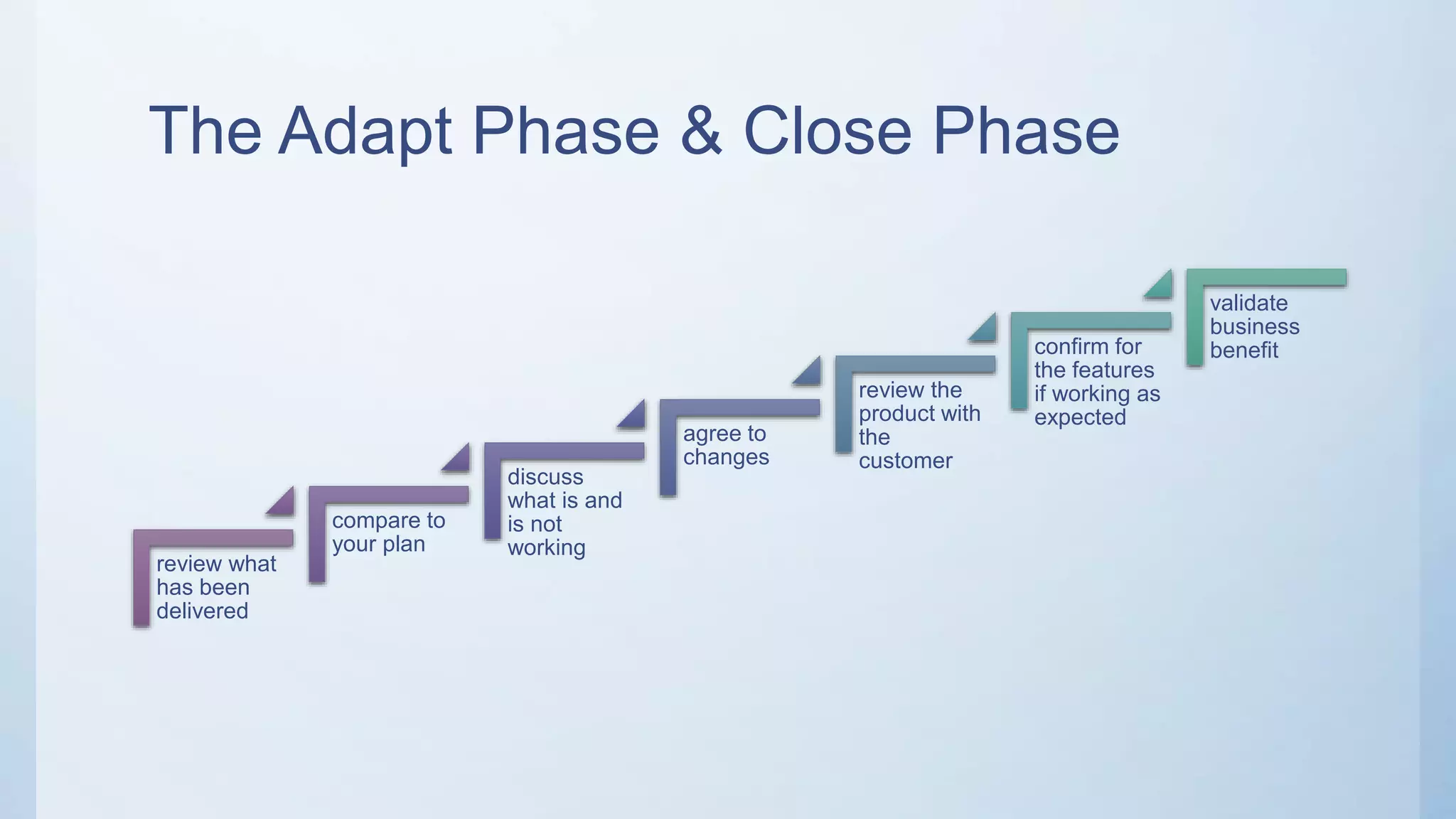
The Adapt Phase & Close Phase
review what
has been
delivered
compare to
your plan
discuss
what is and
is not
working
agree to
changes
review the
product with
the
customer
confirm for
the features
if working as
expected
validate
business
benefit
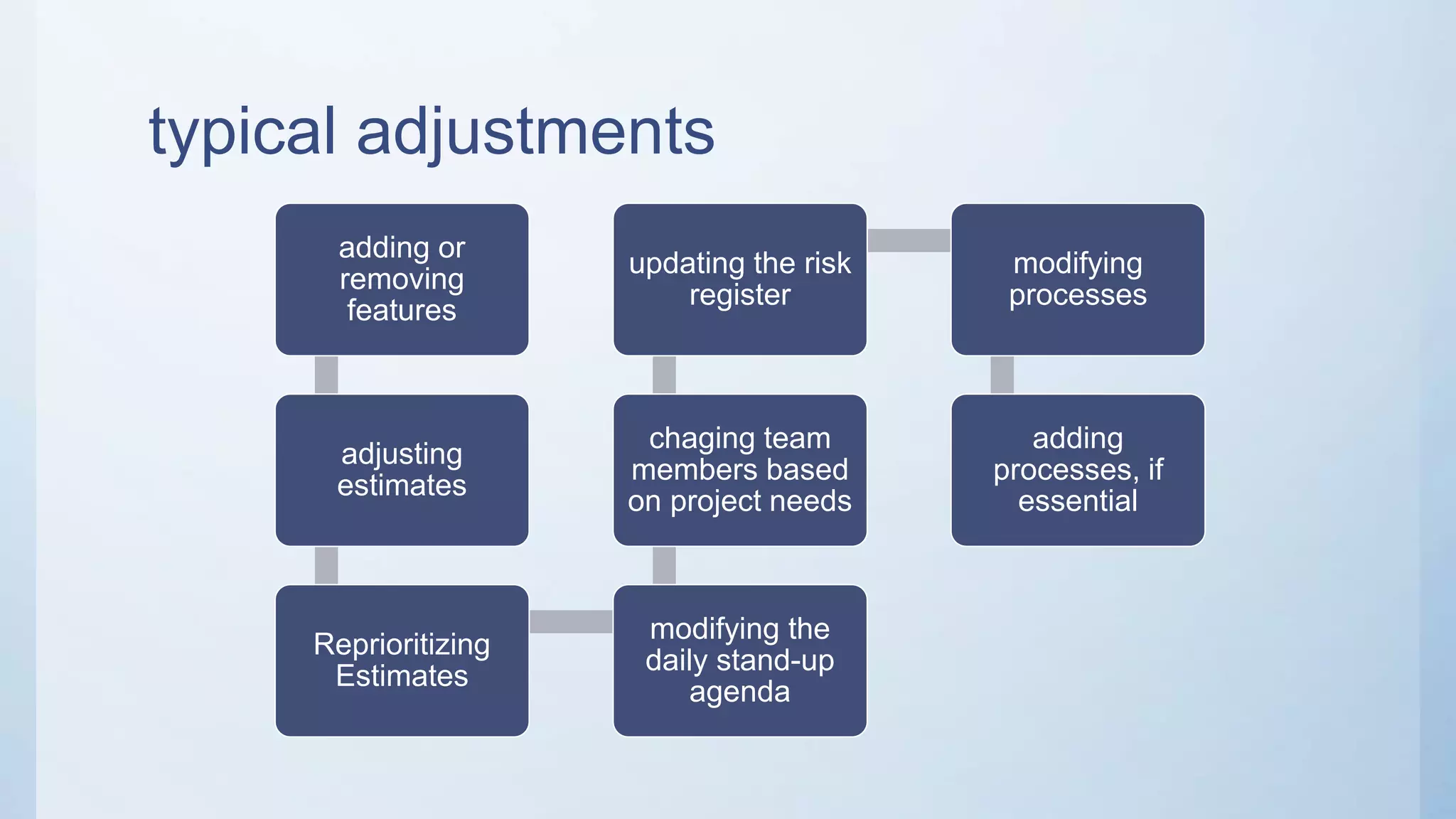
typical adjustments
adding or
removing
features
adjusting
estimates
Reprioritizing
Estimates
modifying the
daily stand-up
agenda
chaging team
members based
on project needs
updating the risk
register
modifying
processes
adding
processes, if
essential
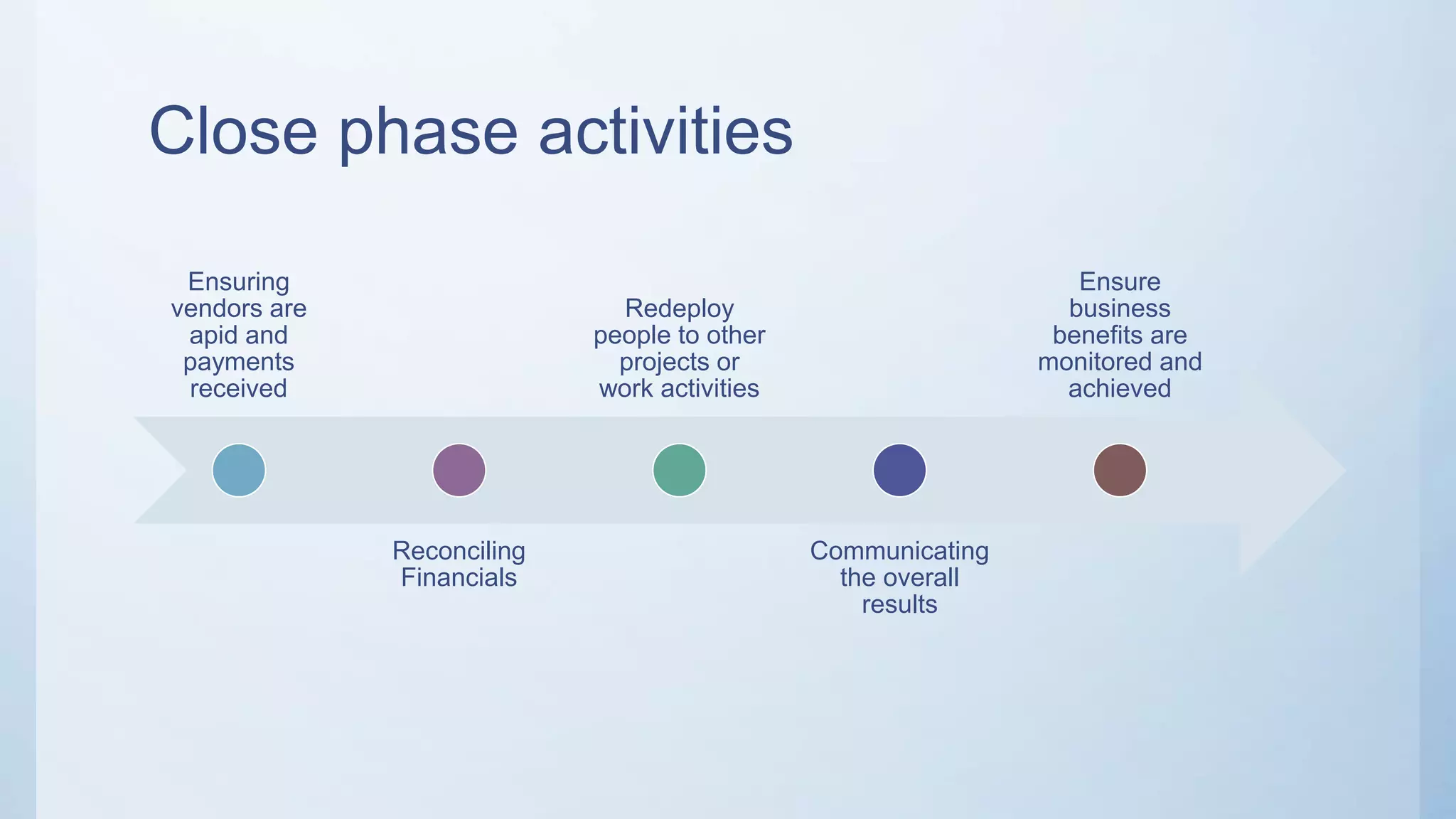
Close phase activities
Ensuring
vendors are
apid and
payments
received
Reconciling
Financials
Redeploy
people to other
projects or
work activities
Communicating
the overall
results
Ensure
business
benefits are
monitored and
achieved
If you like the channel please subscribe &
support the Content Creator
Thanks for Watching

Agile project management - Overview

  • 1.
    Agile Project Management Part 1- Understanding Agile Project Management
  • 2.
    Agenda • suitable AgileProjects • Characteristics of Agila Projects • Other Items Required • Stages • Agile Life Cycle – Envision – Speculate – Explore – Adapt & Close
  • 3.
    Suitable Agile Projects IT& Non IT Projects Facility Moves Company Reorganization Changing Business Process Projects with Short Production and Implementation Times
  • 4.
    Characteristic of AgileProjects 4 – 12 Weeks Sprints Face to Face Communication Co-location Sponsor Committed to Agile Requirements change and Accomodated
  • 5.
    Other Items Required Communication isCritical Point Dedicated Team Requirements must be understood Universally understood project lifecycle Having Vision for the End Game (Project)
  • 6.
  • 8.
    Envision Stages • Whatwill we do in this Stages Determine what you will build • Planning • Iteration / Prototyping Determine team Members • Project Charter • Define Stakeholder Establish team values and norms • Scope • Time Schedule (start & end)
  • 9.
    Speculate Stage (Planning) •What are we gonna do in this Stage • Requirements Feature-based delivery plan • Schedule & Timeline • Effort Estimated Estimates • Risk Assasment • Change Management Risks to manage
  • 10.
    Explore Stage (Development) •What are we gonna do in this Stage Daily catch up for Action Log Daily Stand up Meetings Review progress Peer Reviews Building chemistry Daily Interactions Test for each progress or change that been made Testing
  • 11.
    Adapt Stage • Whatare we gonna do in this Stage Pause & Reflect Get Feedback Frequently Fix Things and move forwards • Adapt Stage Activities Final Stage of Review Reflection on Performance Capture Lesson Adjust Future Sprints Plans
  • 12.
  • 14.
    Envision Phase This isCritical Point for the Project Envision Phase Output Document Project Charter Defined Stakeholder Collaboration tools Team Norms
  • 15.
    The Project Charter Boundariesfor the project Product Vision Target Customer, Benefits Project Manager Level of Authority given to the Project Manager
  • 16.
    Colaboration Tools Easy Communication Track& Report status Facilitate Joint feature development push information out to team
  • 17.
    Colaboration Tools Things toconsider Easy Communication Track & Report status Facilitate Joint feature development push information out to team Size of the Project Number of Stakeholders Amount of Collaboration Desired
  • 18.
    Team Norms • 1.how they will work together • 2. where they will work Set of Example • actively listen • attack the problem, not the person • seek to understand • focus on the current sprint • if you see a problem, say something • engage in daily meetings • solve problems with your peer • email is not to solve problems • no texting during meetings • be respectful • have the project your first priority • share and respect roles and responsibility
  • 19.
    Risks with Agile LargerTeams too ambitious a schedule not having decision makers on the team
  • 21.
    The Speculate Phase •primary function of this phase are to identify the features of the projects SpeculatePhase Considerations New Features Features from the backlog list features not completed from the prior sprint Example of Features calculate tax for supplies ordered display the name and address of buyer display the shipping name and address on the invoice enroll a student in a course track course completions
  • 22.
    with a completeset of features review and prioritize ask questions add features discuss features for a future projects
  • 23.
    using agreed features estimatethe work effort verify estimates are accurate develop the iteration, milestone and release plan
  • 24.
    iteration, milestone andrelease plan lists all features when features will be completed when features will be implemented for the business
  • 26.
    The Explore Phase •this phase is about – 1. collaboration – 2. daily stand-up meetings The Stand-up Meeting what was achieved yesterday what is planned for today any help needed to progress work not for resolving issues
  • 27.
    Project Manager atStand-ups PM as an observer watch for issues remove the roadblocks ensure risks are decreasing over time listen carefully protect and enhance productivity handle organizational distractions from what are slowing down
  • 28.
    Project Manager's ControlMechanism Track Progress Use a feature board find out why any features are late make adjustments quickly
  • 29.
    Don't let timeget away end the phase on time maintain the sprint schedule timekeeping is essential
  • 31.
    The Adapt Phase& Close Phase review what has been delivered compare to your plan discuss what is and is not working agree to changes review the product with the customer confirm for the features if working as expected validate business benefit
  • 32.
    typical adjustments adding or removing features adjusting estimates Reprioritizing Estimates modifyingthe daily stand-up agenda chaging team members based on project needs updating the risk register modifying processes adding processes, if essential
  • 33.
    Close phase activities Ensuring vendorsare apid and payments received Reconciling Financials Redeploy people to other projects or work activities Communicating the overall results Ensure business benefits are monitored and achieved
  • 34.
    If you likethe channel please subscribe & support the Content Creator Thanks for Watching