1
2
Agile Product Management
Using SCRUM
Bimlesh Gundurao
CEO Aguai Solutions
Critical 5 to
Succeed
3
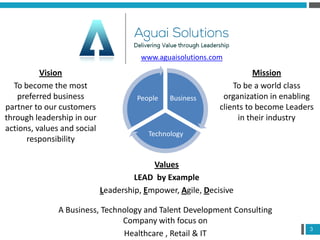
A Business, Technology and Talent Development Consulting
Company with focus on
Healthcare , Retail & IT
Business
Technology
People
Vision
To become the most
preferred business
partner to our customers
through leadership in our
actions, values and social
responsibility
Mission
To be a world class
organization in enabling
clients to become Leaders
in their industry
Values
LEAD by Example
Leadership, Empower, Agile, Decisive
www.aguaisolutions.com
4
Critical 5
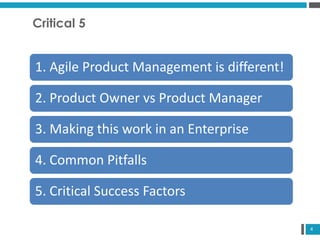
1. Agile Product Management is different!
2. Product Owner vs Product Manager
3. Making this work in an Enterprise
4. Common Pitfalls
5. Critical Success Factors
5
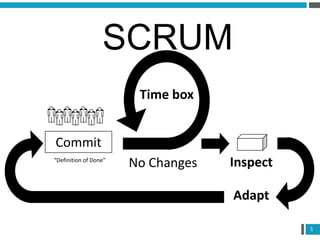
SCRUM
Time box
InspectNo Changes
Adapt
Commit
“Definition of Done”
6
Goal of Product Management
To deliver measurable
business results through
product solutions that meet
both market needs and
company objectives
Don Vendetti – http://wp.me/pXBON-WE
7
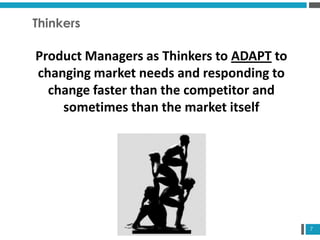
Thinkers
Product Managers as Thinkers to ADAPT to
changing market needs and responding to
change faster than the competitor and
sometimes than the market itself
8
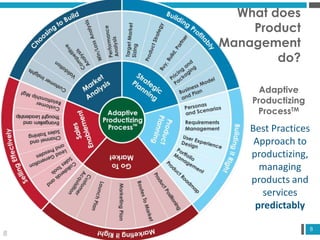
Adaptive
Productizing
ProcessTM
8
Best Practices
Approach to
productizing,
managing
products and
services
predictably
What does
Product
Management
do?
9
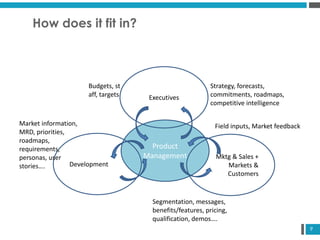
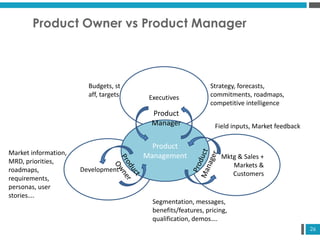
How does it fit in?
Product
Management
Executives
Budgets, st
aff, targets
Strategy, forecasts,
commitments, roadmaps,
competitive intelligence
Development
Market information,
MRD, priorities,
roadmaps,
requirements,
personas, user
stories….
Mktg & Sales +
Markets &
Customers
Segmentation, messages,
benefits/features, pricing,
qualification, demos….
Field inputs, Market feedback
10
The KEY Question
11
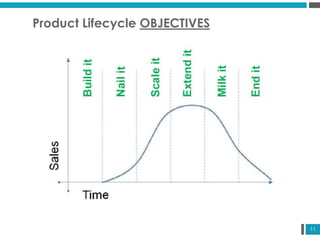
Product Lifecycle OBJECTIVES
12
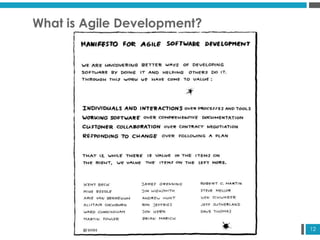
What is Agile Development?
13
14
Agile Product Management is Different!
Different in 5ways
15
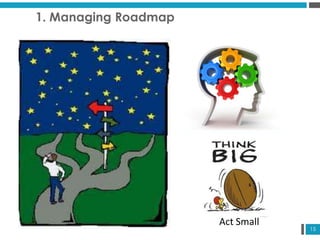
1. Managing Roadmap
Act Small
16
2. Collaboration
17
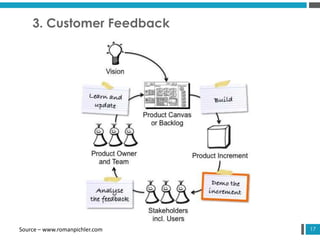
3. Customer Feedback
Source – www.romanpichler.com
18
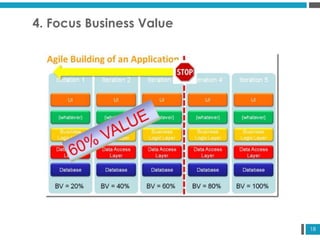
4. Focus Business Value
19
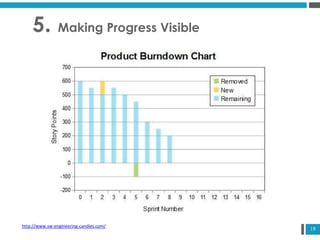
5. Making Progress Visible
http://www.sw-engineering-candies.com/
20
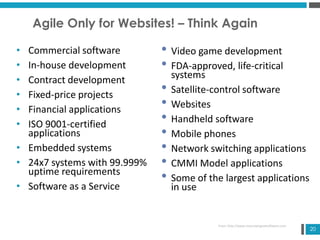
Agile Only for Websites! – Think Again
• Commercial software
• In-house development
• Contract development
• Fixed-price projects
• Financial applications
• ISO 9001-certified
applications
• Embedded systems
• 24x7 systems with 99.999%
uptime requirements
• Software as a Service
• Video game development
• FDA-approved, life-critical
systems
• Satellite-control software
• Websites
• Handheld software
• Mobile phones
• Network switching applications
• CMMI Model applications
• Some of the largest applications
in use
From: http://www.mountaingoatsoftware.com
21
Companies adopting Agile
And many more
22
Critical 5
1. Agile Product Management is different!
2. Product Owner vs Product Manager
3. Making this work in an Enterprise
4. Common Pitfalls
5. Critical Success Factors
23
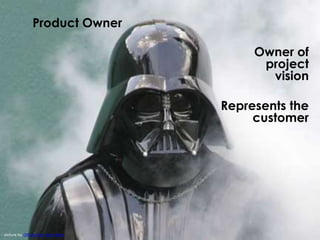
Product Owner
Owner of
project
vision
Represents the
customer
picture by Official Star Wars Blog
24
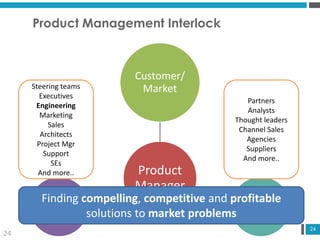
Product
Manager
Customer/
Market
ExternalInternal
Product Management Interlock
24
Steering teams
Executives
Engineering
Marketing
Sales
Architects
Project Mgr
Support
SEs
And more..
Partners
Analysts
Thought leaders
Channel Sales
Agencies
Suppliers
And more..
Finding compelling, competitive and profitable
solutions to market problems
25
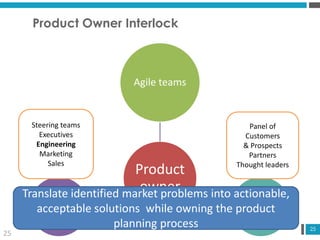
Product
owner
Agile teams
External
Product
Manager
Product Owner Interlock
25
Steering teams
Executives
Engineering
Marketing
Sales
Panel of
Customers
& Prospects
Partners
Thought leaders
Translate identified market problems into actionable,
acceptable solutions while owning the product
planning process
26
Product Owner vs Product Manager
Executives
Development
Mktg & Sales +
Markets &
Customers
Product
Management
Budgets, st
aff, targets
Strategy, forecasts,
commitments, roadmaps,
competitive intelligence
Market information,
MRD, priorities,
roadmaps,
requirements,
personas, user
stories….
Segmentation, messages,
benefits/features, pricing,
qualification, demos….
Field inputs, Market feedback
Product
Manager
27
Scrum ROLES Summary
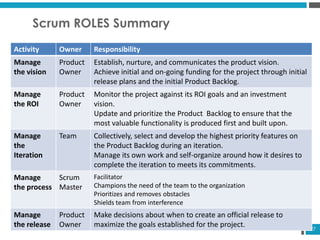
Activity Owner Responsibility
Manage
the vision
Product
Owner
Establish, nurture, and communicates the product vision.
Achieve initial and on-going funding for the project through initial
release plans and the initial Product Backlog.
Manage
the ROI
Product
Owner
Monitor the project against its ROI goals and an investment
vision.
Update and prioritize the Product Backlog to ensure that the
most valuable functionality is produced first and built upon.
Manage
the
Iteration
Team Collectively, select and develop the highest priority features on
the Product Backlog during an iteration.
Manage its own work and self-organize around how it desires to
complete the iteration to meets its commitments.
Manage
the process
Scrum
Master
Facilitator
Champions the need of the team to the organization
Prioritizes and removes obstacles
Shields team from interference
Manage
the release
Product
Owner
Make decisions about when to create an official release to
maximize the goals established for the project.
28
Balancing Roadmap
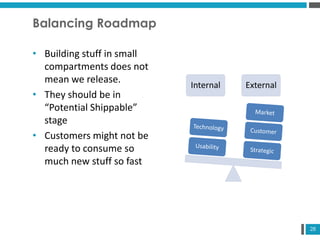
• Building stuff in small
compartments does not
mean we release.
• They should be in
“Potential Shippable”
stage
• Customers might not be
ready to consume so
much new stuff so fast
Internal External
29
Prioritization
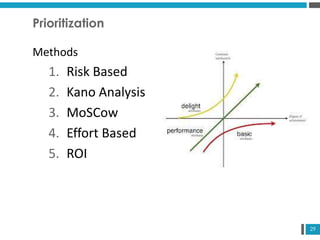
Methods
1. Risk Based
2. Kano Analysis
3. MoSCow
4. Effort Based
5. ROI
30
Scope & Sizing
Be deliberate about scope
& keep it small
1. It’s easy to try to do
too much
2. Strategy = deciding
what you’re NOT
doing
3. Break features down
into smaller chunks
4. Smaller scope
→faster iterations
→better
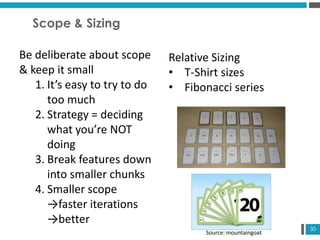
Relative Sizing
• T-Shirt sizes
• Fibonacci series
Source: mountaingoat
31
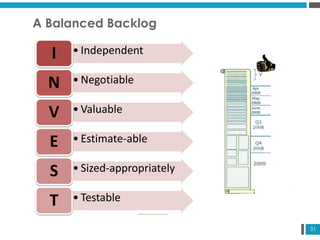
A Balanced Backlog
• IndependentI
• NegotiableN
• ValuableV
• Estimate-ableE
• Sized-appropriatelyS
• TestableT
32
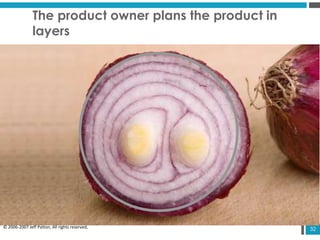
The product owner plans the product in
layers
© 2006-2007 Jeff Patton, All rights reserved,
33
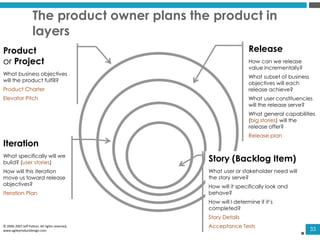
The product owner plans the product in
layers
© 2006-2007Jeff Patton, All rights reserved,
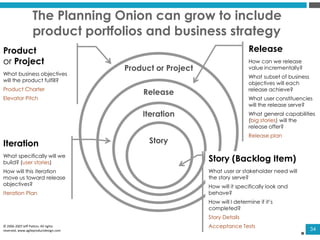
www.agileproductdesign.com
Product
or Project
What business objectives
will the product fulfill?
Product Charter
Elevator Pitch
Release
How can we release
value incrementally?
What subset of business
objectives will each
release achieve?
What user constituencies
will the release serve?
What general capabilities
(big stories) will the
release offer?
Release plan
Iteration
What specifically will we
build? (user stories)
How will this iteration
move us toward release
objectives?
Iteration Plan
Story (Backlog Item)
What user or stakeholder need will
the story serve?
How will it specifically look and
behave?
How will I determine if it’s
completed?
Story Details
Acceptance Tests
34
The Planning Onion can grow to include
product portfolios and business strategy
© 2006-2007Jeff Patton, All rights
reserved, www.agileproductdesign.com
Product
or Project
What business objectives
will the product fulfill?
Product Charter
Elevator Pitch
Release
How can we release
value incrementally?
What subset of business
objectives will each
release achieve?
What user constituencies
will the release serve?
What general capabilities
(big stories) will the
release offer?
Release plan
Iteration
What specifically will we
build? (user stories)
How will this iteration
move us toward release
objectives?
Iteration Plan
Story (Backlog Item)
What user or stakeholder need will
the story serve?
How will it specifically look and
behave?
How will I determine if it’s
completed?
Story Details
Acceptance Tests
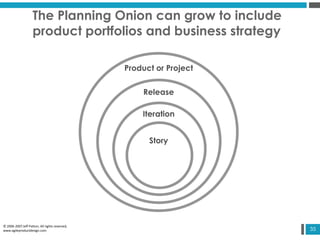
Product or Project
Release
Iteration
Story
35
The Planning Onion can grow to include
product portfolios and business strategy
© 2006-2007Jeff Patton, All rights reserved,
www.agileproductdesign.com
Product or Project
Release
Iteration
Story
36
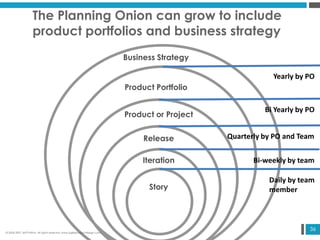
The Planning Onion can grow to include
product portfolios and business strategy
Product or Project
Release
Iteration
Story
Product Portfolio
Business Strategy
© 2006-2007 Jeff Patton, All rights reserved, www.agileproductdesign.com
Daily by team
member
Bi-weekly by team
Quarterly by PO and Team
Bi Yearly by PO
Yearly by PO
37
Critical 5
1. Agile Product Management is different!
2. Product Owner vs Product Manager
3. Making this work in an Enterprise
4. Common Pitfalls
5. Critical Success Factors
38
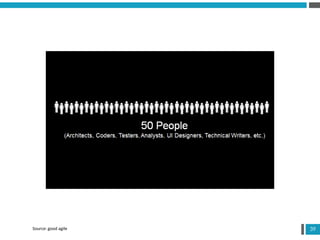
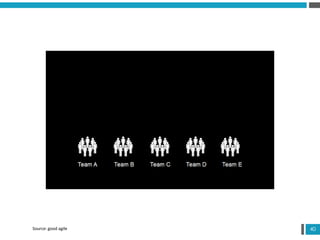
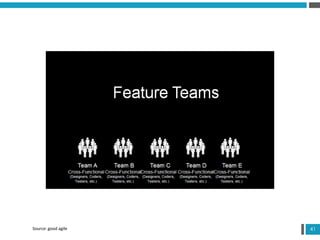
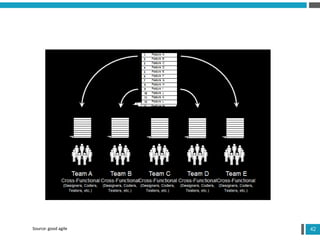
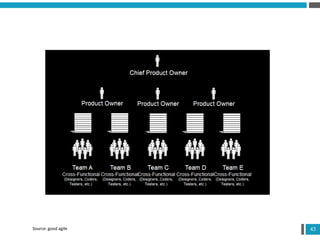
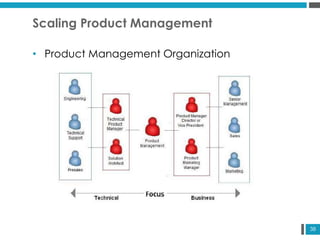
Scaling Product Management
• Product Management Organization
GM – VP PM – VP Engg/CTO
Product
Management
Organization
Product Owners
More market-focused More technical
39Source: good agile
40Source: good agile
41Source: good agile
42Source: good agile
43Source: good agile
44
Critical 5
1. Agile Product Management is different!
2. Product Owner vs Product Manager
3. Making this work in an Enterprise
4. Common Pitfalls
5. Critical Success Factors
45
Common Pitfalls – PO + Agile Team
5pitfalls
1. Part time, not fully engaged with the
team
2. Lack of detail on stories, acceptance
tests
3. Stale items in backlog
4. Unable to get the best of the team
5. Multiple Backlogs maintained
46
47
Critical 5
1. Agile Product Management is different!
2. Product Owner vs Product Manager
3. Making this work in an Enterprise
4. Common Pitfalls
5. Critical Success Factors
48
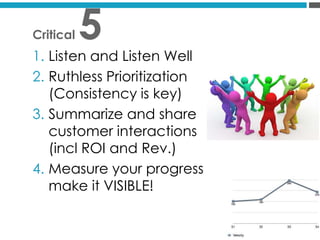
Critical 5
1. Listen and Listen Well
2. Ruthless Prioritization
(Consistency is key)
3. Summarize and share
customer interactions
(incl ROI and Rev.)
4. Measure your progress
make it VISIBLE!
49
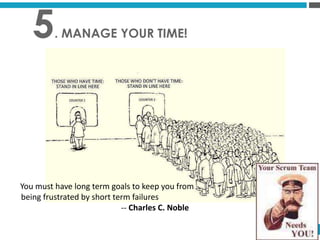
5. MANAGE YOUR TIME!
You must have long term goals to keep you from
being frustrated by short term failures
-- Charles C. Noble
50
Q &A
51

Agile Product Management with Scrum

  • 1.
  • 2.
    2 Agile Product Management UsingSCRUM Bimlesh Gundurao CEO Aguai Solutions Critical 5 to Succeed
  • 3.
    3 A Business, Technologyand Talent Development Consulting Company with focus on Healthcare , Retail & IT Business Technology People Vision To become the most preferred business partner to our customers through leadership in our actions, values and social responsibility Mission To be a world class organization in enabling clients to become Leaders in their industry Values LEAD by Example Leadership, Empower, Agile, Decisive www.aguaisolutions.com
  • 4.
    4 Critical 5 1. AgileProduct Management is different! 2. Product Owner vs Product Manager 3. Making this work in an Enterprise 4. Common Pitfalls 5. Critical Success Factors
  • 5.
  • 6.
    6 Goal of ProductManagement To deliver measurable business results through product solutions that meet both market needs and company objectives Don Vendetti – http://wp.me/pXBON-WE
  • 7.
    7 Thinkers Product Managers asThinkers to ADAPT to changing market needs and responding to change faster than the competitor and sometimes than the market itself
  • 8.
  • 9.
    9 How does itfit in? Product Management Executives Budgets, st aff, targets Strategy, forecasts, commitments, roadmaps, competitive intelligence Development Market information, MRD, priorities, roadmaps, requirements, personas, user stories…. Mktg & Sales + Markets & Customers Segmentation, messages, benefits/features, pricing, qualification, demos…. Field inputs, Market feedback
  • 10.
  • 11.
  • 12.
    12 What is AgileDevelopment?
  • 13.
  • 14.
    14 Agile Product Managementis Different! Different in 5ways
  • 15.
  • 16.
  • 17.
    17 3. Customer Feedback Source– www.romanpichler.com
  • 18.
  • 19.
    19 5. Making ProgressVisible http://www.sw-engineering-candies.com/
  • 20.
    20 Agile Only forWebsites! – Think Again • Commercial software • In-house development • Contract development • Fixed-price projects • Financial applications • ISO 9001-certified applications • Embedded systems • 24x7 systems with 99.999% uptime requirements • Software as a Service • Video game development • FDA-approved, life-critical systems • Satellite-control software • Websites • Handheld software • Mobile phones • Network switching applications • CMMI Model applications • Some of the largest applications in use From: http://www.mountaingoatsoftware.com
  • 21.
  • 22.
    22 Critical 5 1. AgileProduct Management is different! 2. Product Owner vs Product Manager 3. Making this work in an Enterprise 4. Common Pitfalls 5. Critical Success Factors
  • 23.
    23 Product Owner Owner of project vision Representsthe customer picture by Official Star Wars Blog
  • 24.
    24 Product Manager Customer/ Market ExternalInternal Product Management Interlock 24 Steeringteams Executives Engineering Marketing Sales Architects Project Mgr Support SEs And more.. Partners Analysts Thought leaders Channel Sales Agencies Suppliers And more.. Finding compelling, competitive and profitable solutions to market problems
  • 25.
    25 Product owner Agile teams External Product Manager Product OwnerInterlock 25 Steering teams Executives Engineering Marketing Sales Panel of Customers & Prospects Partners Thought leaders Translate identified market problems into actionable, acceptable solutions while owning the product planning process
  • 26.
    26 Product Owner vsProduct Manager Executives Development Mktg & Sales + Markets & Customers Product Management Budgets, st aff, targets Strategy, forecasts, commitments, roadmaps, competitive intelligence Market information, MRD, priorities, roadmaps, requirements, personas, user stories…. Segmentation, messages, benefits/features, pricing, qualification, demos…. Field inputs, Market feedback Product Manager
  • 27.
    27 Scrum ROLES Summary ActivityOwner Responsibility Manage the vision Product Owner Establish, nurture, and communicates the product vision. Achieve initial and on-going funding for the project through initial release plans and the initial Product Backlog. Manage the ROI Product Owner Monitor the project against its ROI goals and an investment vision. Update and prioritize the Product Backlog to ensure that the most valuable functionality is produced first and built upon. Manage the Iteration Team Collectively, select and develop the highest priority features on the Product Backlog during an iteration. Manage its own work and self-organize around how it desires to complete the iteration to meets its commitments. Manage the process Scrum Master Facilitator Champions the need of the team to the organization Prioritizes and removes obstacles Shields team from interference Manage the release Product Owner Make decisions about when to create an official release to maximize the goals established for the project.
  • 28.
    28 Balancing Roadmap • Buildingstuff in small compartments does not mean we release. • They should be in “Potential Shippable” stage • Customers might not be ready to consume so much new stuff so fast Internal External
  • 29.
    29 Prioritization Methods 1. Risk Based 2.Kano Analysis 3. MoSCow 4. Effort Based 5. ROI
  • 30.
    30 Scope & Sizing Bedeliberate about scope & keep it small 1. It’s easy to try to do too much 2. Strategy = deciding what you’re NOT doing 3. Break features down into smaller chunks 4. Smaller scope →faster iterations →better Relative Sizing • T-Shirt sizes • Fibonacci series Source: mountaingoat
  • 31.
    31 A Balanced Backlog •IndependentI • NegotiableN • ValuableV • Estimate-ableE • Sized-appropriatelyS • TestableT
  • 32.
    32 The product ownerplans the product in layers © 2006-2007 Jeff Patton, All rights reserved,
  • 33.
    33 The product ownerplans the product in layers © 2006-2007Jeff Patton, All rights reserved, www.agileproductdesign.com Product or Project What business objectives will the product fulfill? Product Charter Elevator Pitch Release How can we release value incrementally? What subset of business objectives will each release achieve? What user constituencies will the release serve? What general capabilities (big stories) will the release offer? Release plan Iteration What specifically will we build? (user stories) How will this iteration move us toward release objectives? Iteration Plan Story (Backlog Item) What user or stakeholder need will the story serve? How will it specifically look and behave? How will I determine if it’s completed? Story Details Acceptance Tests
  • 34.
    34 The Planning Onioncan grow to include product portfolios and business strategy © 2006-2007Jeff Patton, All rights reserved, www.agileproductdesign.com Product or Project What business objectives will the product fulfill? Product Charter Elevator Pitch Release How can we release value incrementally? What subset of business objectives will each release achieve? What user constituencies will the release serve? What general capabilities (big stories) will the release offer? Release plan Iteration What specifically will we build? (user stories) How will this iteration move us toward release objectives? Iteration Plan Story (Backlog Item) What user or stakeholder need will the story serve? How will it specifically look and behave? How will I determine if it’s completed? Story Details Acceptance Tests Product or Project Release Iteration Story
  • 35.
    35 The Planning Onioncan grow to include product portfolios and business strategy © 2006-2007Jeff Patton, All rights reserved, www.agileproductdesign.com Product or Project Release Iteration Story
  • 36.
    36 The Planning Onioncan grow to include product portfolios and business strategy Product or Project Release Iteration Story Product Portfolio Business Strategy © 2006-2007 Jeff Patton, All rights reserved, www.agileproductdesign.com Daily by team member Bi-weekly by team Quarterly by PO and Team Bi Yearly by PO Yearly by PO
  • 37.
    37 Critical 5 1. AgileProduct Management is different! 2. Product Owner vs Product Manager 3. Making this work in an Enterprise 4. Common Pitfalls 5. Critical Success Factors
  • 38.
    38 Scaling Product Management •Product Management Organization GM – VP PM – VP Engg/CTO Product Management Organization Product Owners More market-focused More technical
  • 39.
  • 40.
  • 41.
  • 42.
  • 43.
  • 44.
    44 Critical 5 1. AgileProduct Management is different! 2. Product Owner vs Product Manager 3. Making this work in an Enterprise 4. Common Pitfalls 5. Critical Success Factors
  • 45.
    45 Common Pitfalls –PO + Agile Team 5pitfalls 1. Part time, not fully engaged with the team 2. Lack of detail on stories, acceptance tests 3. Stale items in backlog 4. Unable to get the best of the team 5. Multiple Backlogs maintained
  • 46.
  • 47.
    47 Critical 5 1. AgileProduct Management is different! 2. Product Owner vs Product Manager 3. Making this work in an Enterprise 4. Common Pitfalls 5. Critical Success Factors
  • 48.
    48 Critical 5 1. Listenand Listen Well 2. Ruthless Prioritization (Consistency is key) 3. Summarize and share customer interactions (incl ROI and Rev.) 4. Measure your progress make it VISIBLE!
  • 49.
    49 5. MANAGE YOURTIME! You must have long term goals to keep you from being frustrated by short term failures -- Charles C. Noble
  • 50.
  • 51.

Editor's Notes

  • #12 Build it – Build the first version of the product for specific use cases for a target marketNail it – identify and address barriers to wider adoption within your target market and prepare the company for product growth – more than just product/market fitScale it – Scale the business (marketing/sales etc) and focus on expansion and new customer acquisitionExtend it – move into new markets, market segments, use cases. Growth in new customers and sales into existing baseMilk it – reduce investment but continue to market/sell with an eye on maximizing profits from customer baseEnd it – remove all investment, stop actively marketing and eventually remove from market