Agile Procurement
Foundation for Agile Delivery
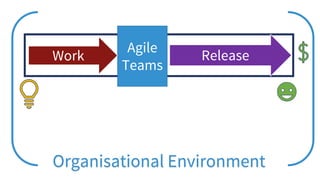
Agile
Teams
Release
Work
Organisational Environment
What is Procurement?
•Procurement is the activities to identify,
select and obtain the goods and services
an organisation needs to support its
operations.
Thesis
•Agile Procurement is roughly where
adaptive delivery (aka Agile) was around
2000.
•There is a desire to be more effective
•There is a significant amount of risk in
procurement
Have you ever been challenged
with?
•Misunderstood the selection criteria
•Silos
•Delays
•Change Management
•Disconnect between change request and bug
•Misalignment on outcomes
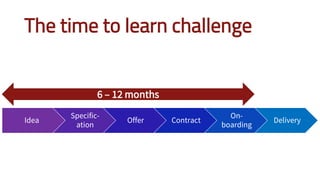
The time to learn challenge
6 – 12 months
Idea
Specific-
ation
Offer Contract
On-
boarding
Delivery
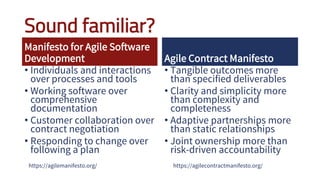
Sound familiar?
Manifesto for Agile Software
Development
• Individuals and interactions
over processes and tools
• Working software over
comprehensive
documentation
• Customer collaboration over
contract negotiation
• Responding to change over
following a plan
Agile Contract Manifesto
• Tangible outcomes more
than specified deliverables
• Clarity and simplicity more
than complexity and
completeness
• Adaptive partnerships more
than static relationships
• Joint ownership more than
risk-driven accountability
https://agilemanifesto.org/ https://agilecontractmanifesto.org/
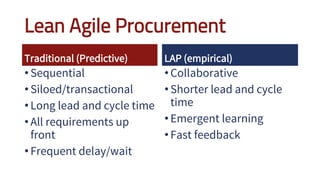
Lean Agile Procurement
Traditional (Predictive)
•Sequential
•Siloed/transactional
•Long lead and cycle time
•All requirements up
front
•Frequent delay/wait
LAP (empirical)
•Collaborative
•Shorter lead and cycle
time
•Emergent learning
•Fast feedback
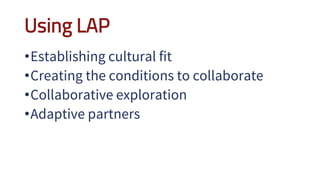
Using LAP
•Establishing cultural fit
•Creating the conditions to collaborate
•Collaborative exploration
•Adaptive partners
Preparing for the Big Room
Evaluation
•Clear purpose
•Education – how this is different
•Key players in the room
•Non Disclosure Agreement (NDA) in place
•Clear Request for Information (RFI)
So ….
Risks
•Fear of change
•Fear of Loss of IP
•Uncertainty around
process
Benefits
•Fast time to learn
•Short Feedback loops
•Establish cultural fit
•Shorter cycle time
•Less cost of delay
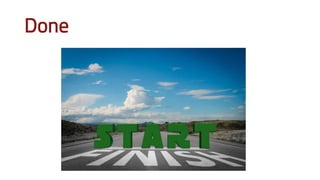
Done
Simon Reindl

Agile Procurement ABE22.pptx

  • 1.
  • 3.
  • 4.
    What is Procurement? •Procurementis the activities to identify, select and obtain the goods and services an organisation needs to support its operations.
  • 7.
    Thesis •Agile Procurement isroughly where adaptive delivery (aka Agile) was around 2000. •There is a desire to be more effective •There is a significant amount of risk in procurement
  • 8.
    Have you everbeen challenged with? •Misunderstood the selection criteria •Silos •Delays •Change Management •Disconnect between change request and bug •Misalignment on outcomes
  • 9.
    The time tolearn challenge 6 – 12 months Idea Specific- ation Offer Contract On- boarding Delivery
  • 11.
    Sound familiar? Manifesto forAgile Software Development • Individuals and interactions over processes and tools • Working software over comprehensive documentation • Customer collaboration over contract negotiation • Responding to change over following a plan Agile Contract Manifesto • Tangible outcomes more than specified deliverables • Clarity and simplicity more than complexity and completeness • Adaptive partnerships more than static relationships • Joint ownership more than risk-driven accountability https://agilemanifesto.org/ https://agilecontractmanifesto.org/
  • 12.
    Lean Agile Procurement Traditional(Predictive) •Sequential •Siloed/transactional •Long lead and cycle time •All requirements up front •Frequent delay/wait LAP (empirical) •Collaborative •Shorter lead and cycle time •Emergent learning •Fast feedback
  • 13.
    Using LAP •Establishing culturalfit •Creating the conditions to collaborate •Collaborative exploration •Adaptive partners
  • 15.
    Preparing for theBig Room Evaluation •Clear purpose •Education – how this is different •Key players in the room •Non Disclosure Agreement (NDA) in place •Clear Request for Information (RFI)
  • 17.
    So …. Risks •Fear ofchange •Fear of Loss of IP •Uncertainty around process Benefits •Fast time to learn •Short Feedback loops •Establish cultural fit •Shorter cycle time •Less cost of delay
  • 19.
  • 20.