Building your Social Network Christine Beddia Director of Marketing & Communications
Just tell me what to do. You already know!!
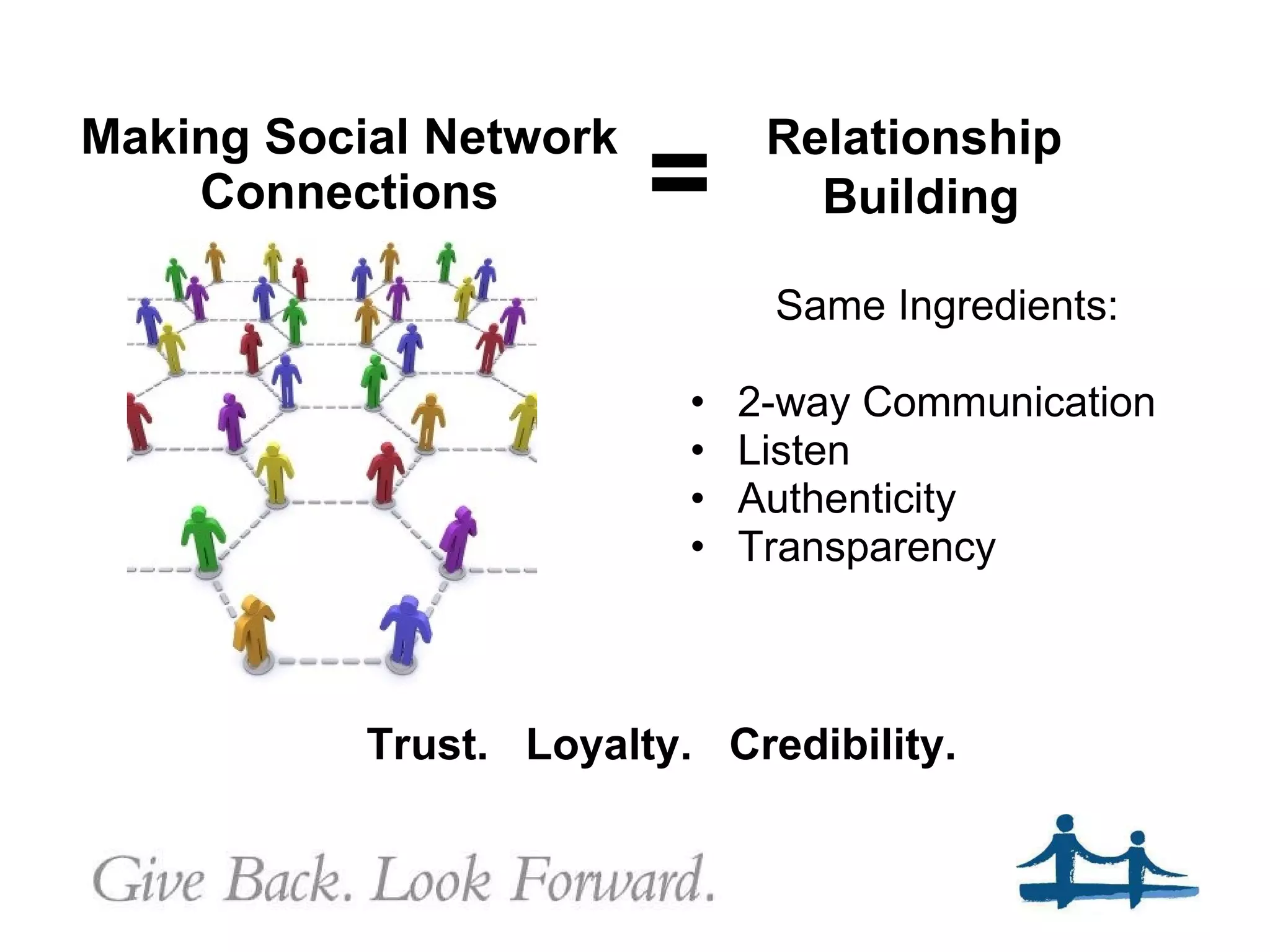
Making Social Network Connections Same Ingredients: 2-way Communication Listen Authenticity Transparency Relationship  Building = Trust.  Loyalty.  Credibility.
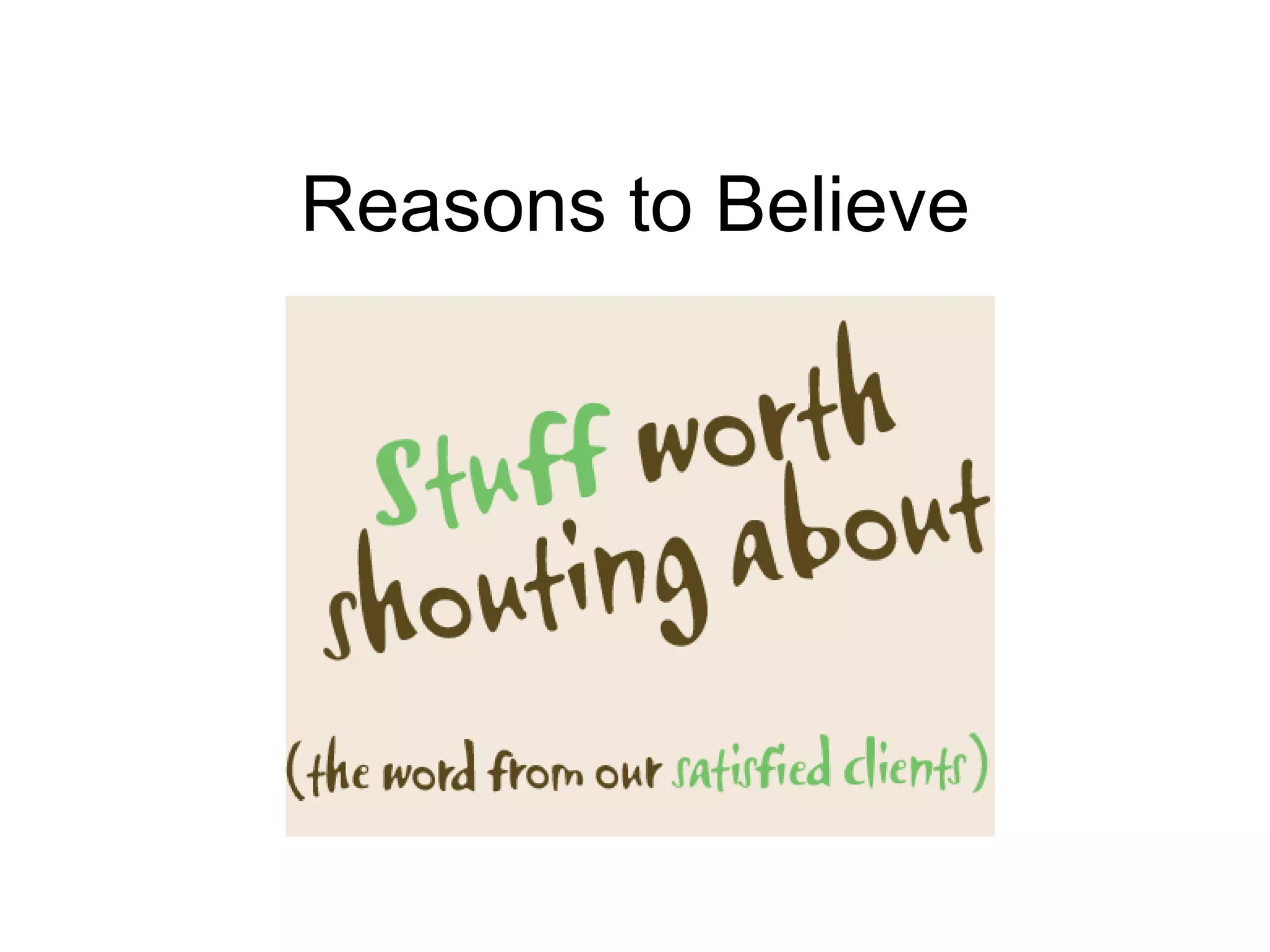
Start here Brand/ Identity Personality Differentiation Reasons to believe
BRANDING Communication Collateral Stories Staff Logo Not just marketing and advertising, it’s  E-V-E-R-Y-T-H-I-N-G!
Who are you? m  i  s  s  i  o  n  c  r  e  e  p
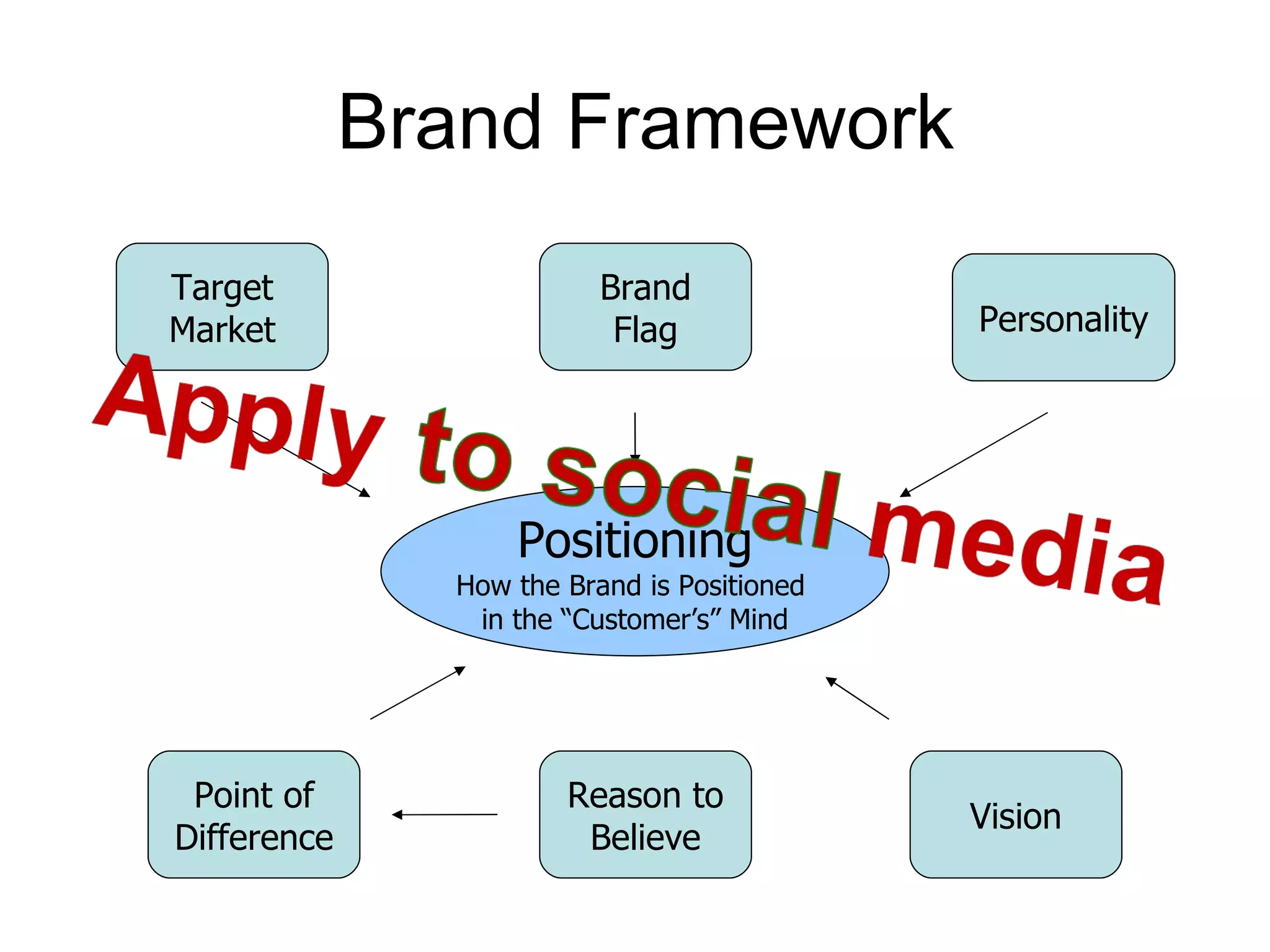
Brand Framework Personality Target Market Brand Flag Vision Point of Difference Positioning How the Brand is Positioned  in the “Customer’s” Mind Reason to Believe
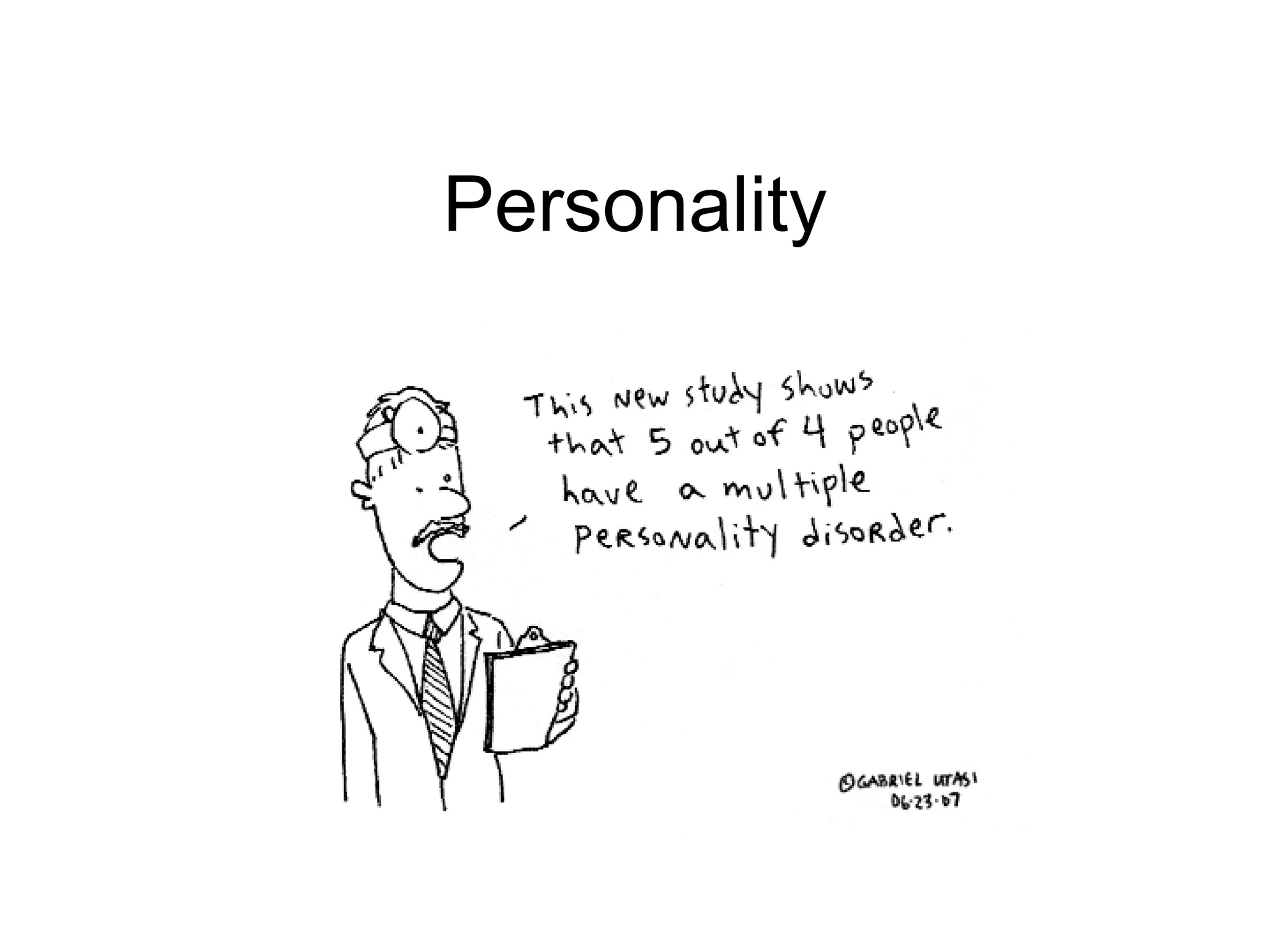
Personality
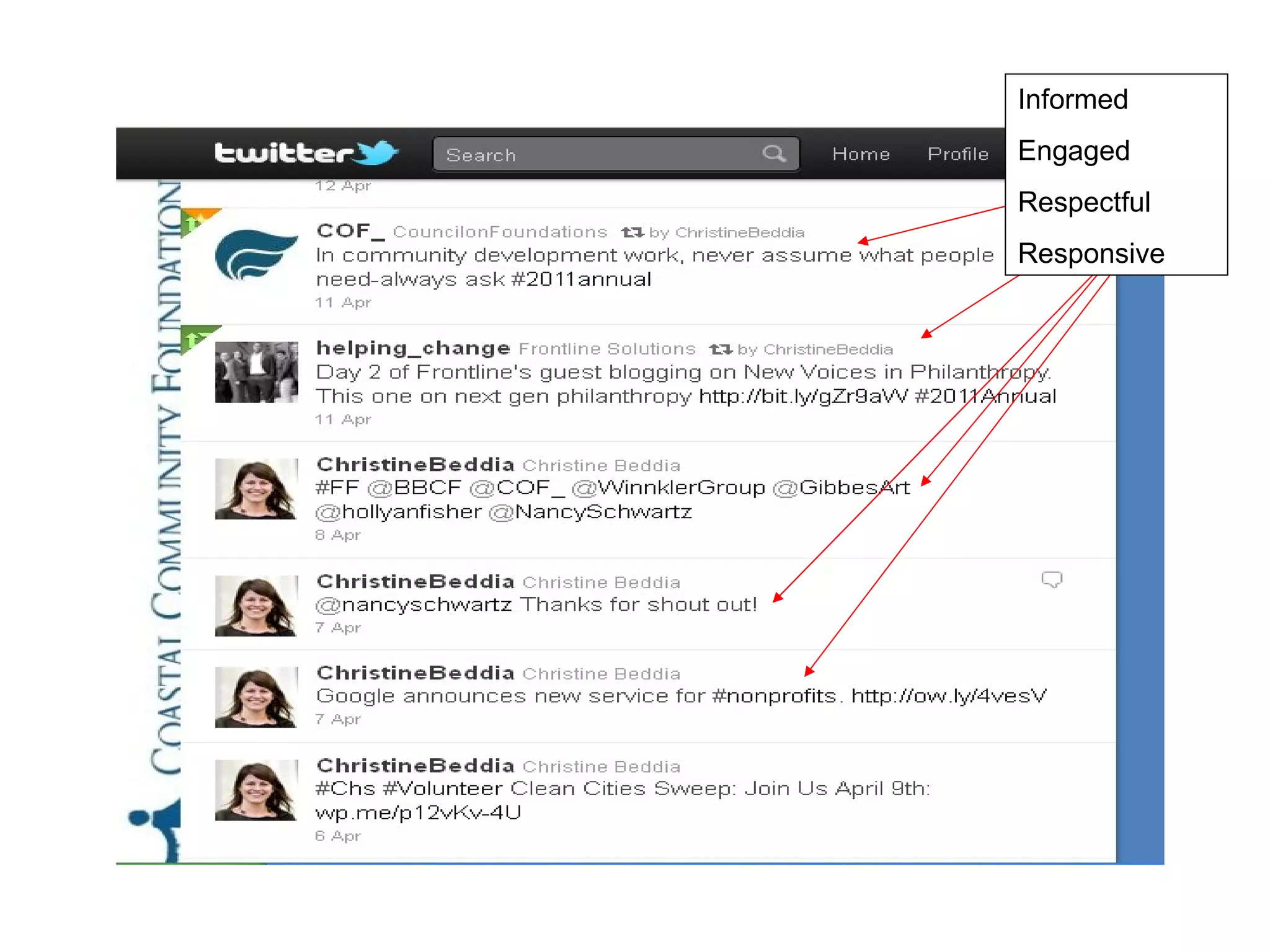
Informed    Engaged  Responsive    Respectful
Informed Engaged Respectful Responsive
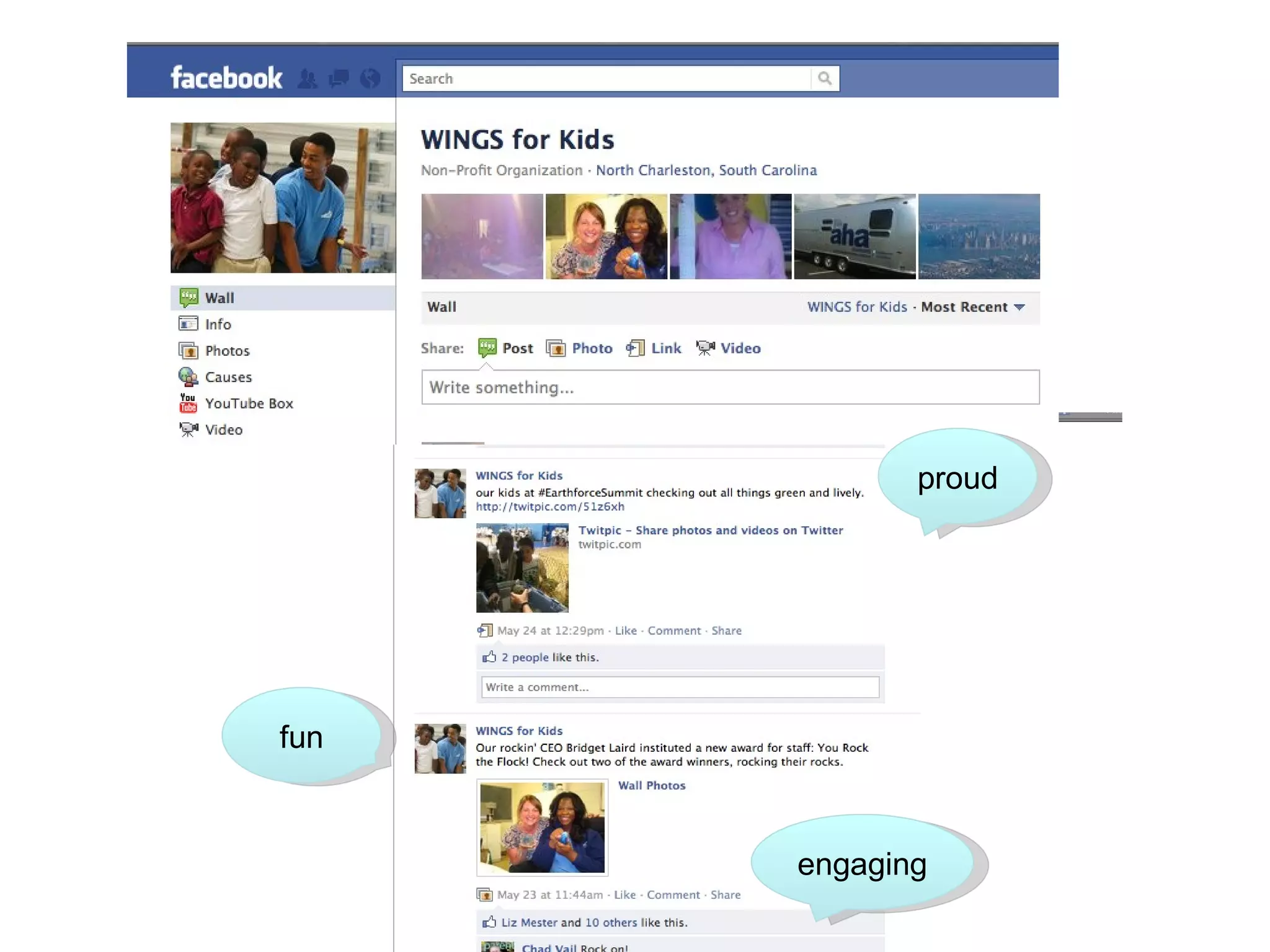
fun proud engaging
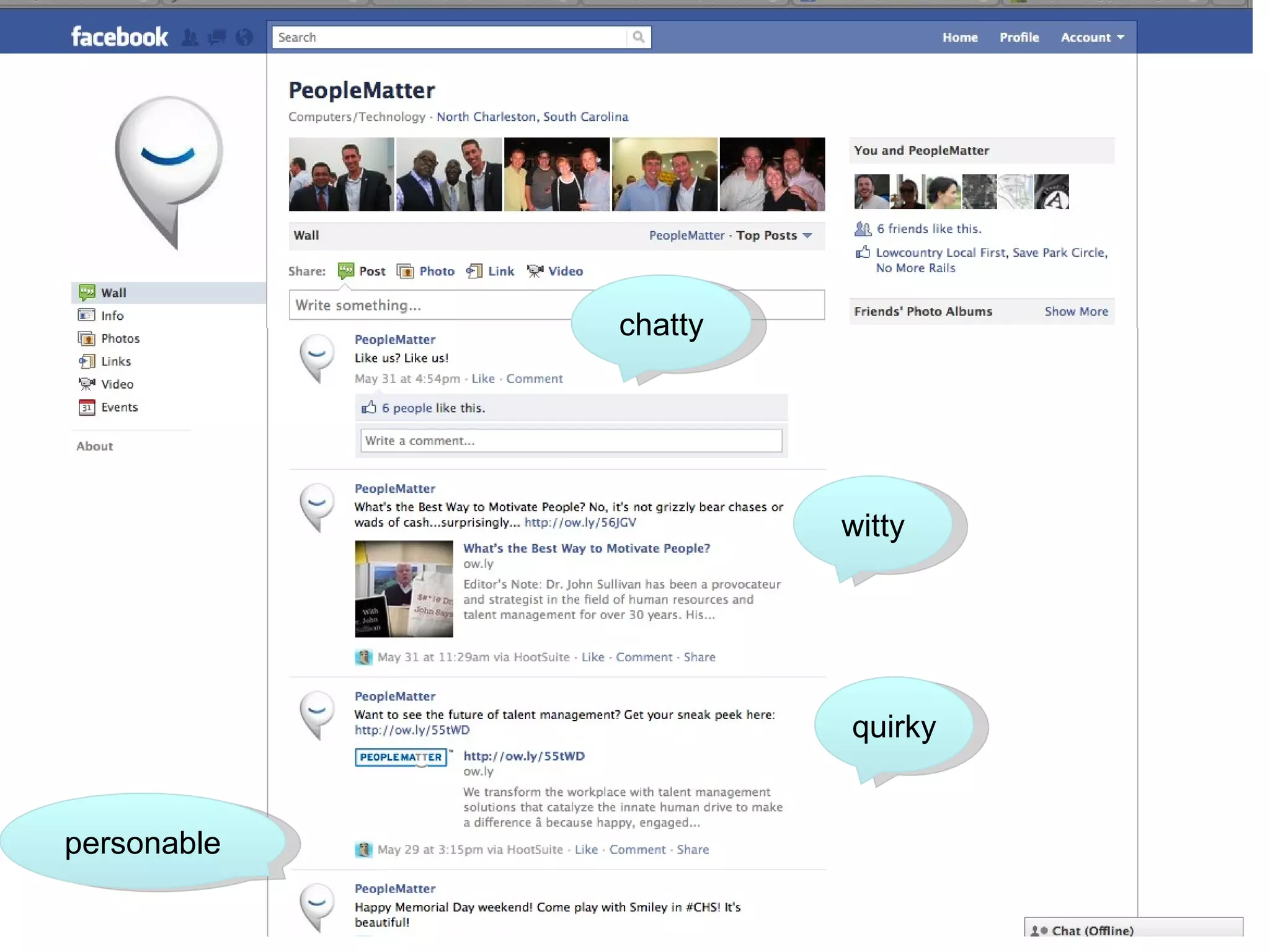
witty personable chatty quirky
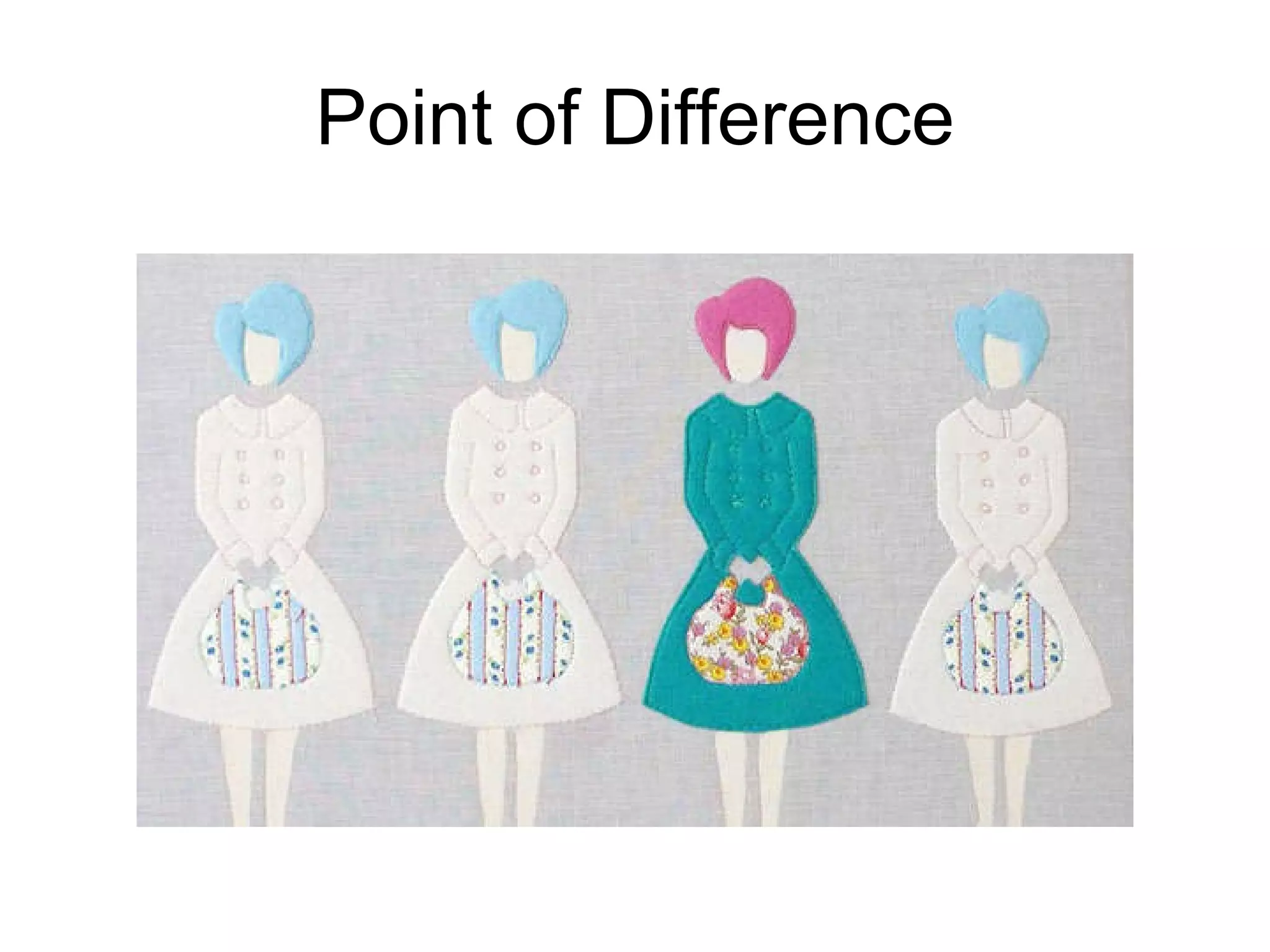
Point of Difference
Point of Difference Stand out among  1.5 million  nonprofit organizations in U.S. Inspiring mission Clear goals Your People Say “thank you”
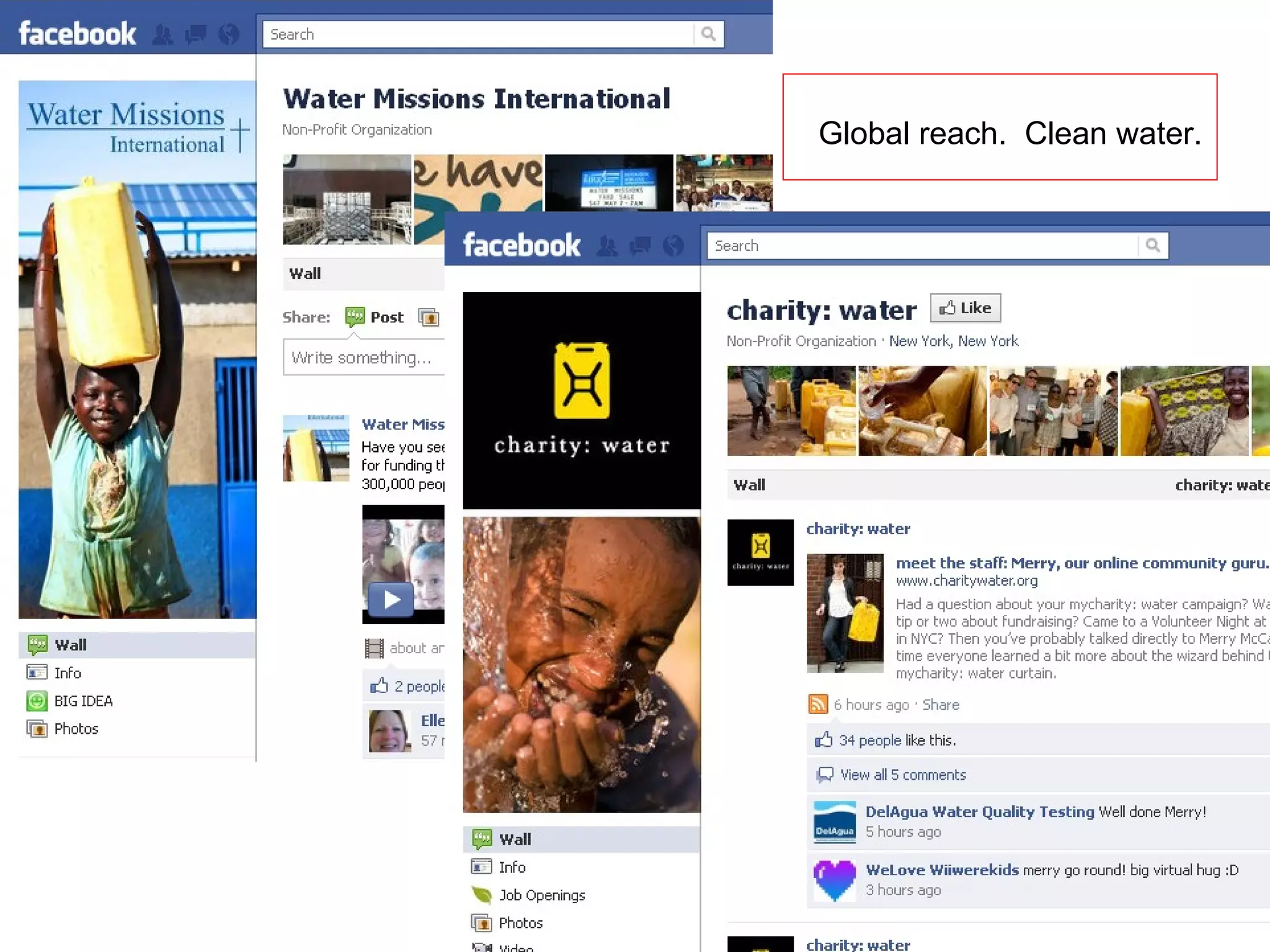
Global reach.  Clean water.
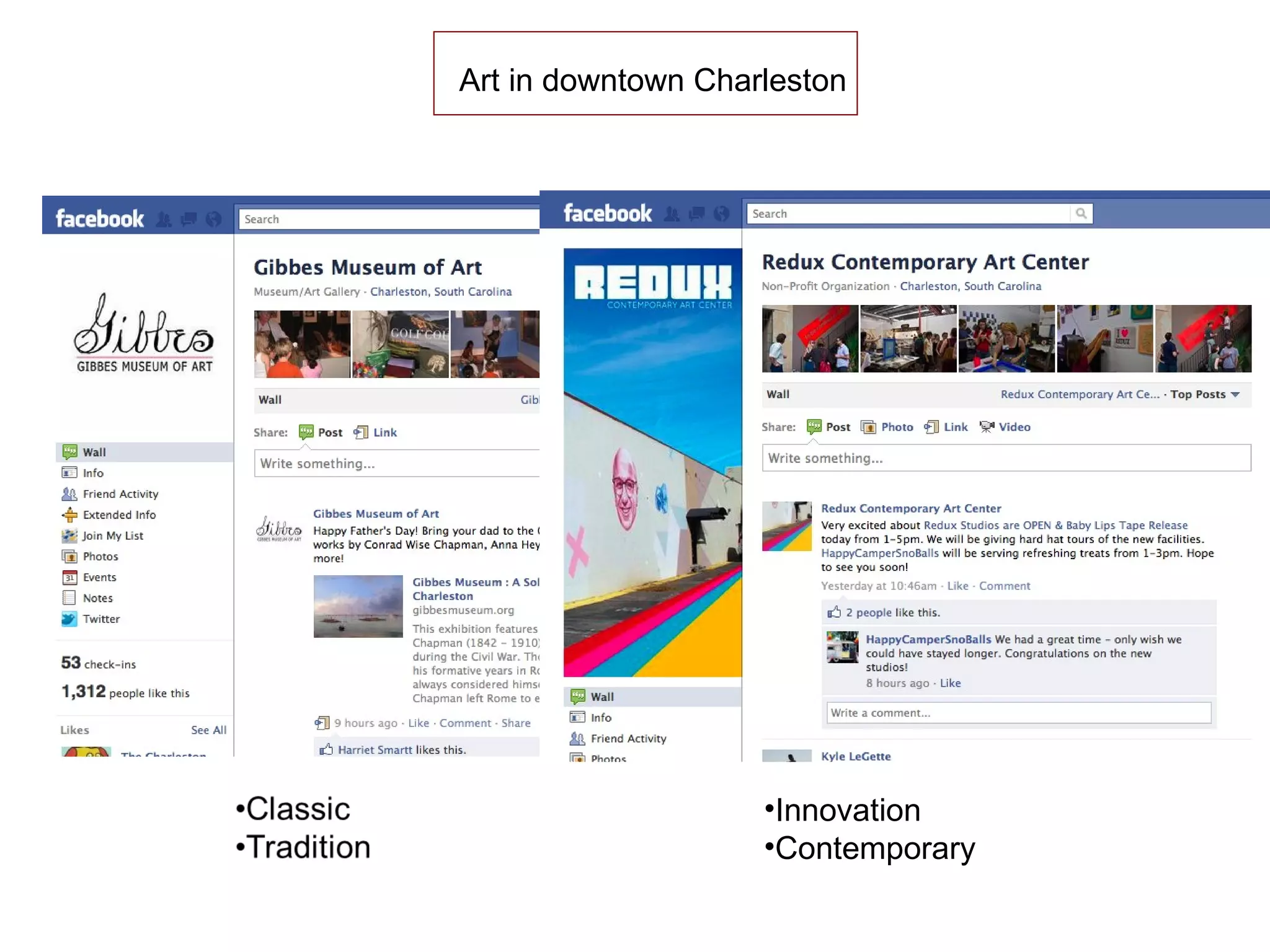
Art in downtown Charleston Innovation Contemporary
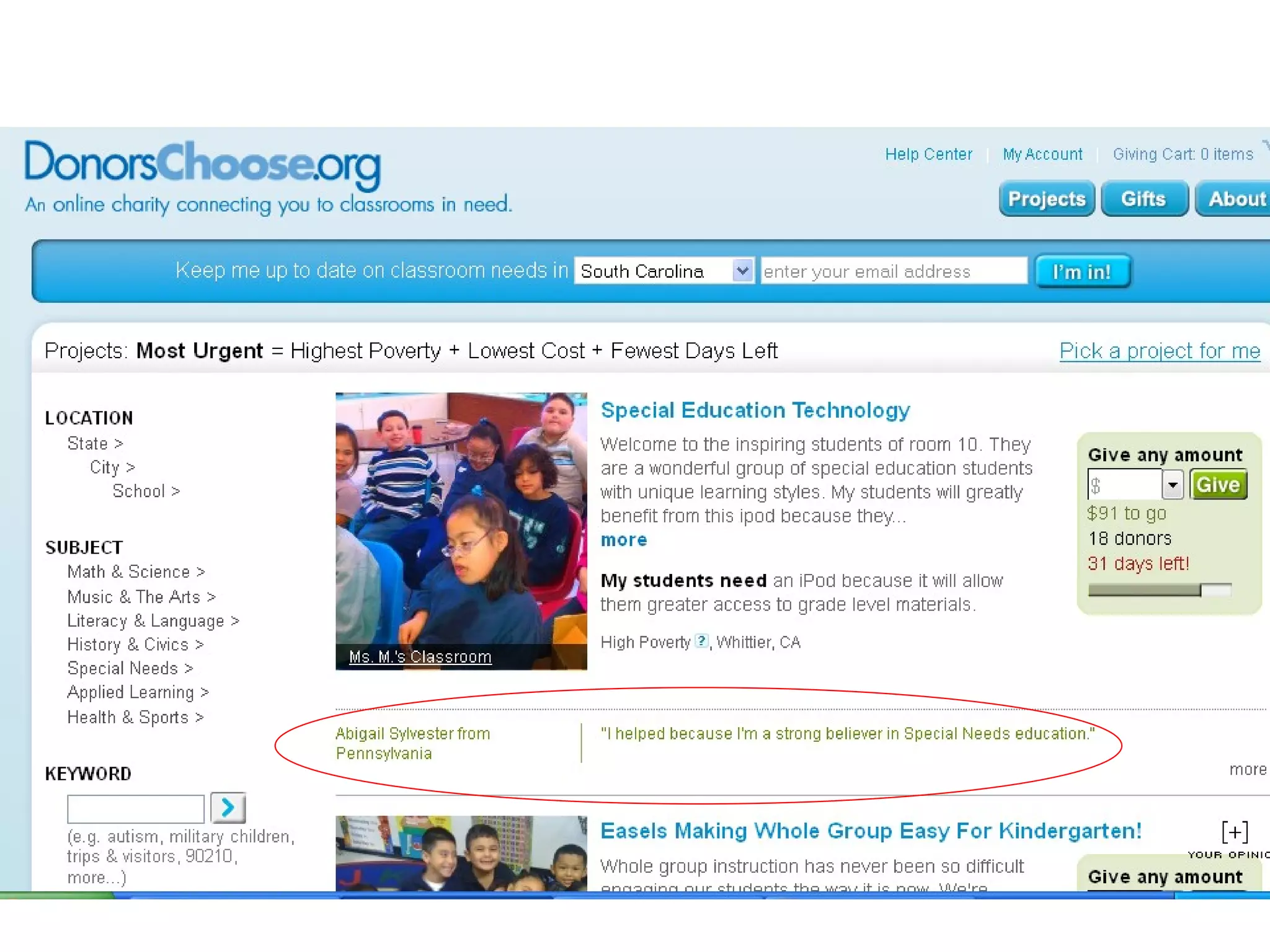
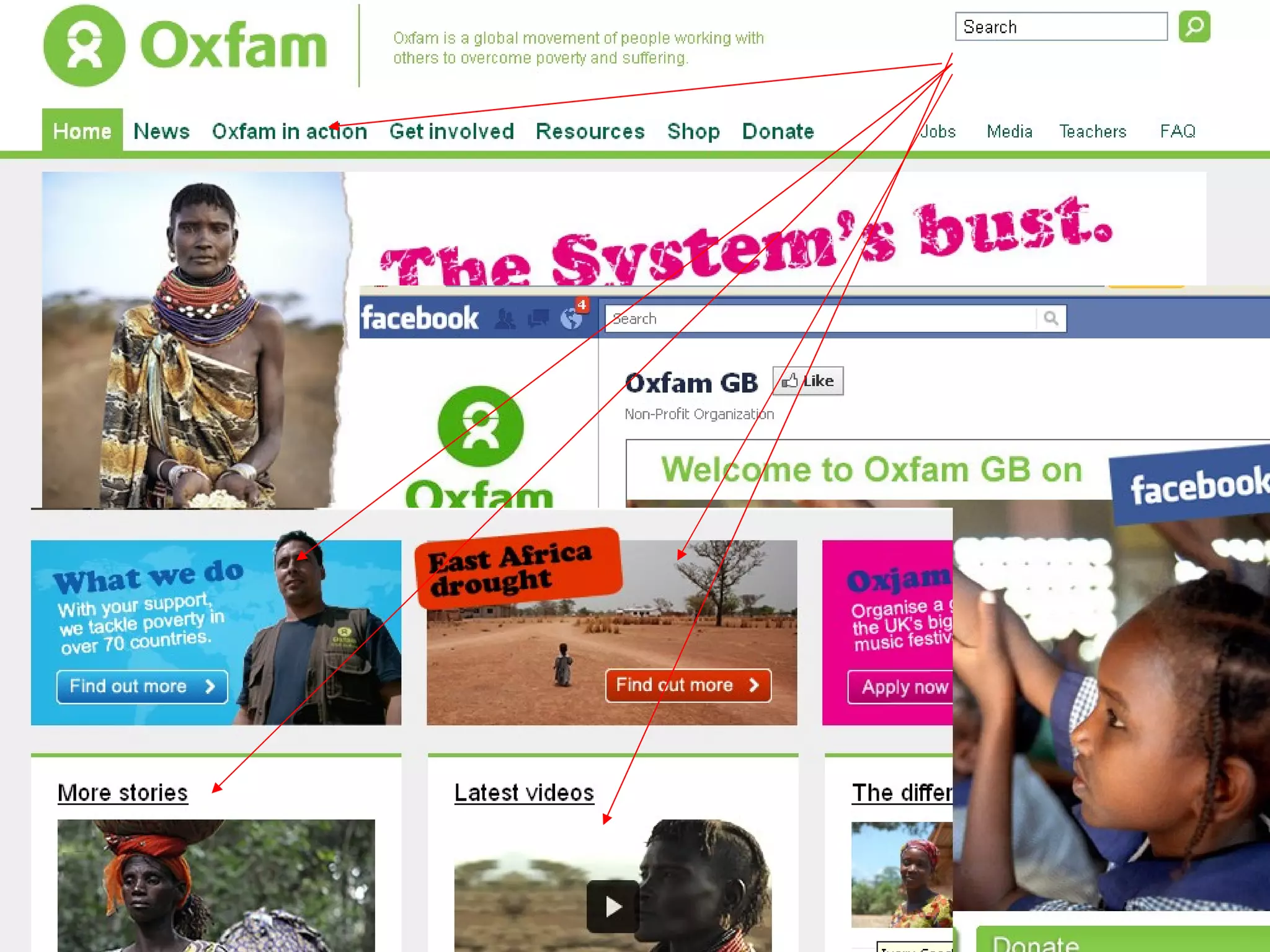
Reasons to Believe


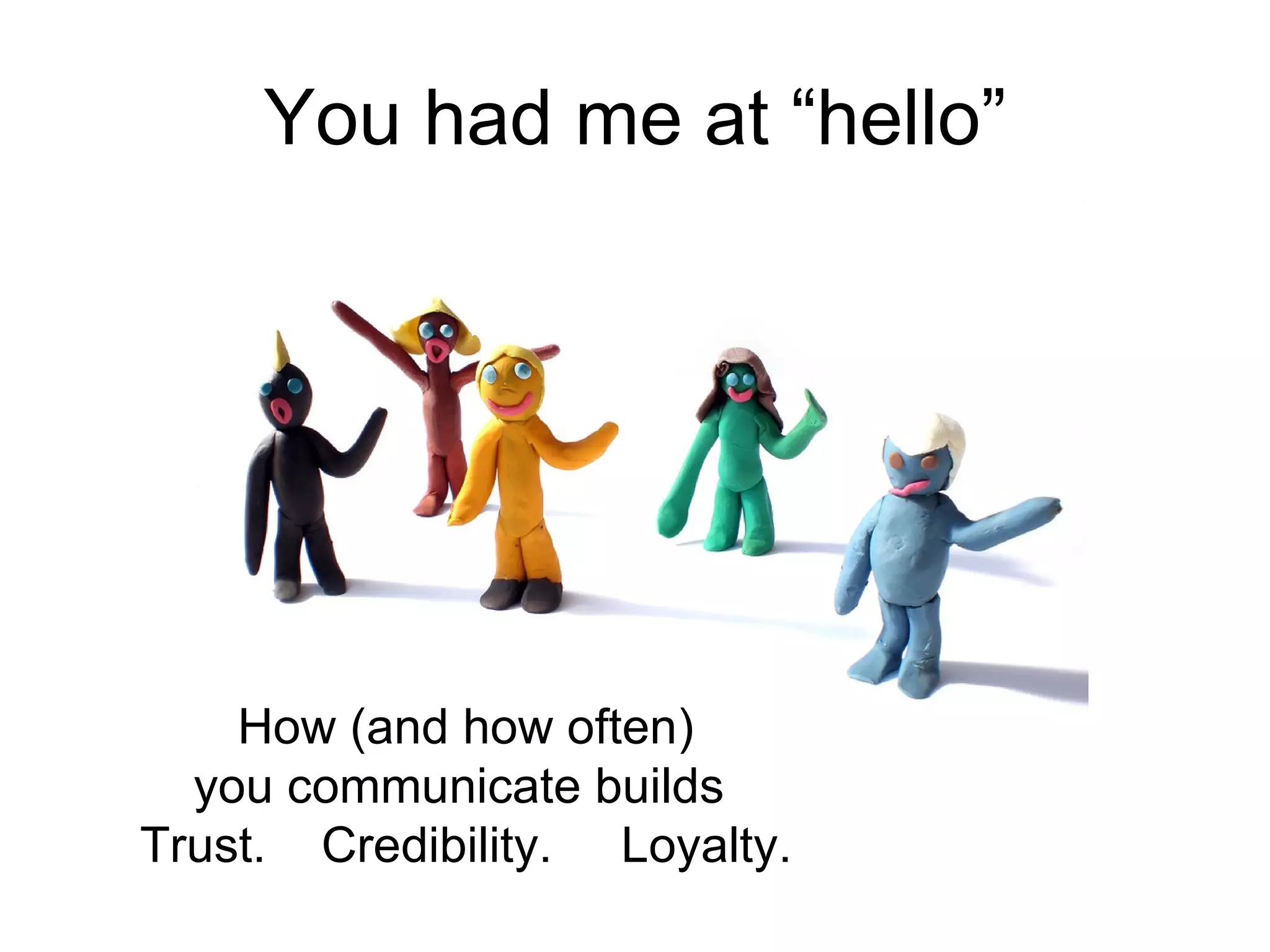
You had me at “hello” How (and how often) you communicate builds  Trust.  Credibility.  Loyalty.
Tools to build your social network
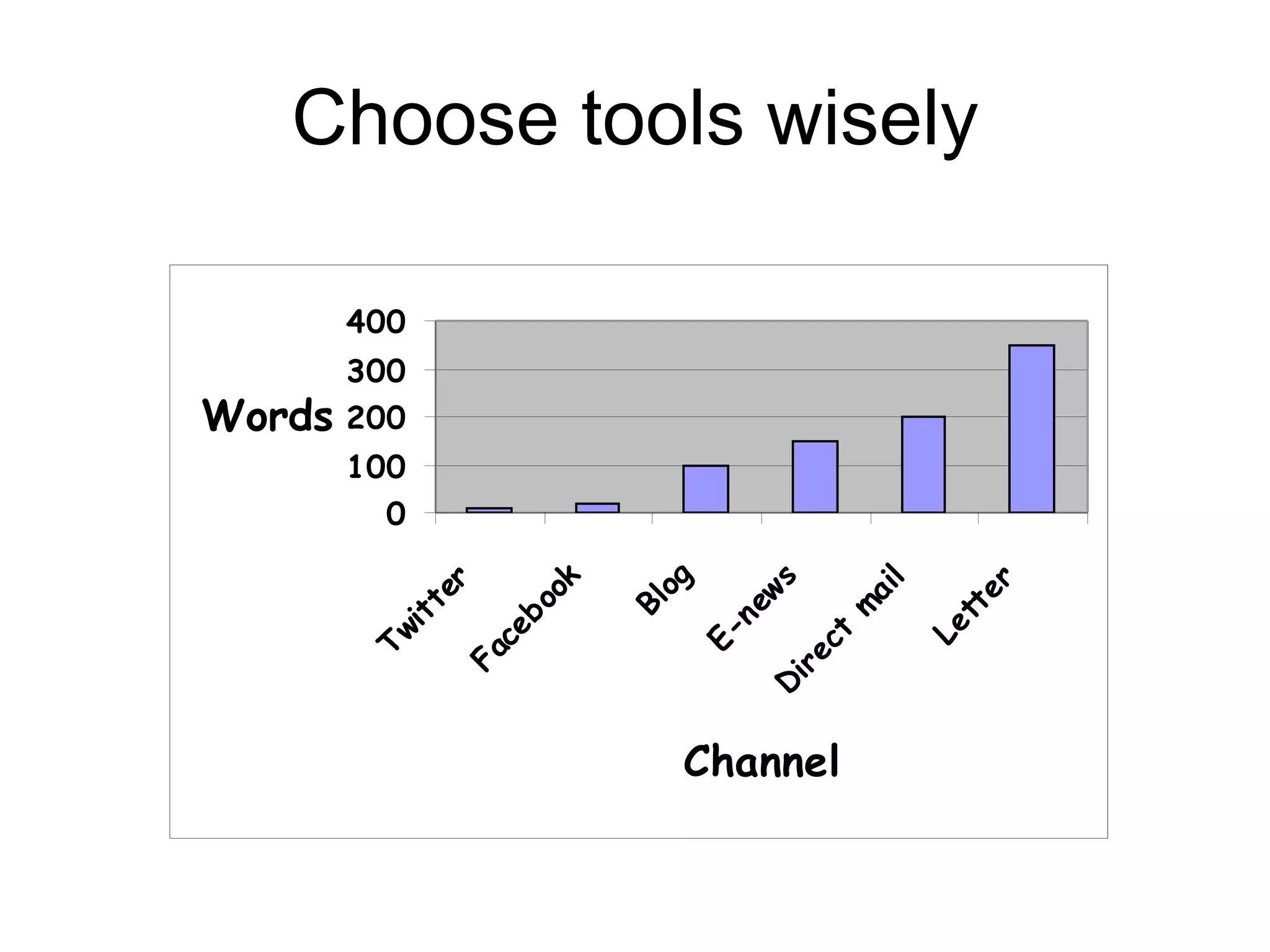
Choose tools wisely
storytelling Personal examples give your brand life Excite your donor base Instill confidence in others that your organization  is  what it claims to be Helps to build and nurture relationships Organize your story (introduction, body, conclusion) Keep it short, concise
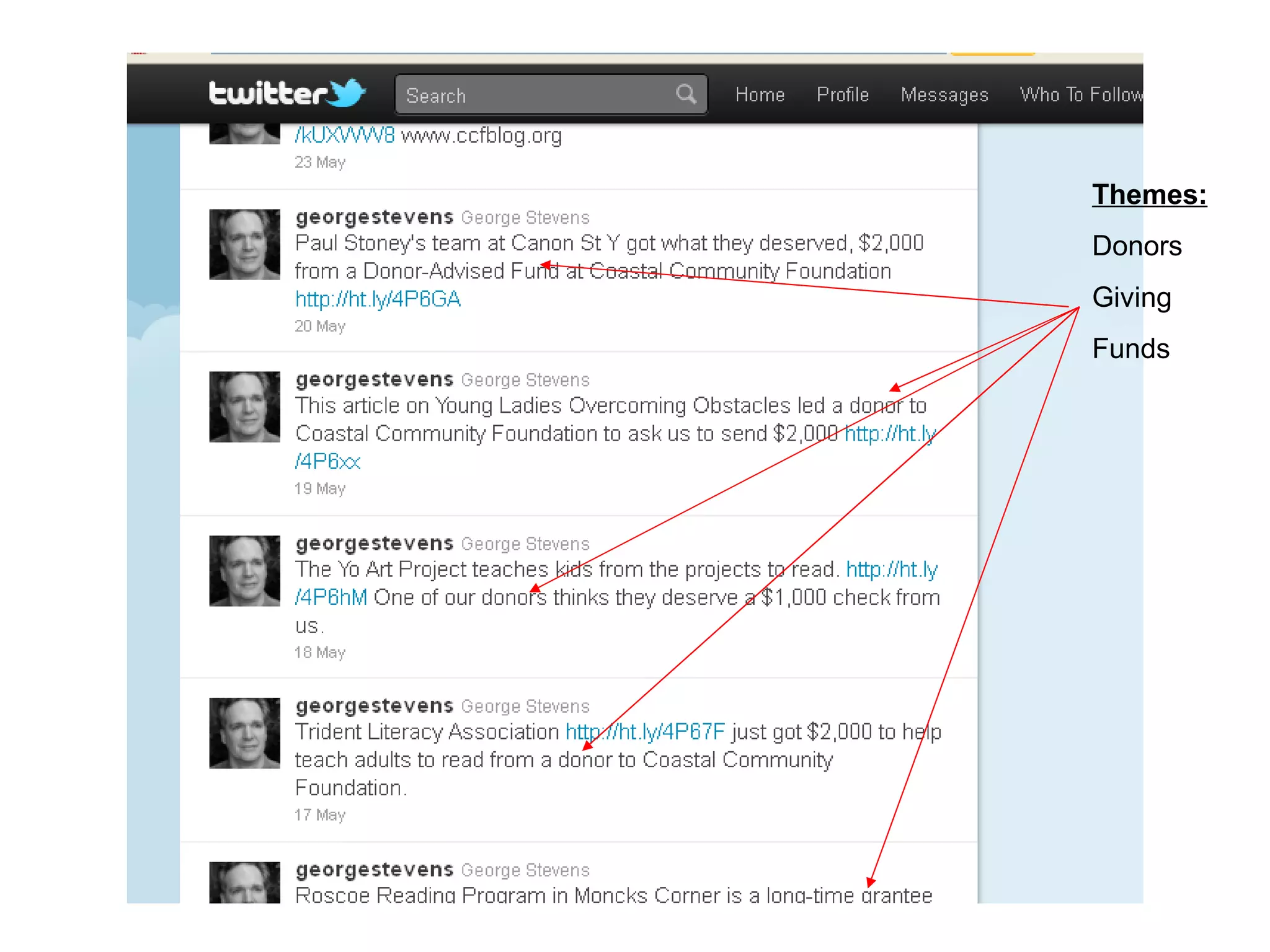
Themes: Donors Giving Funds
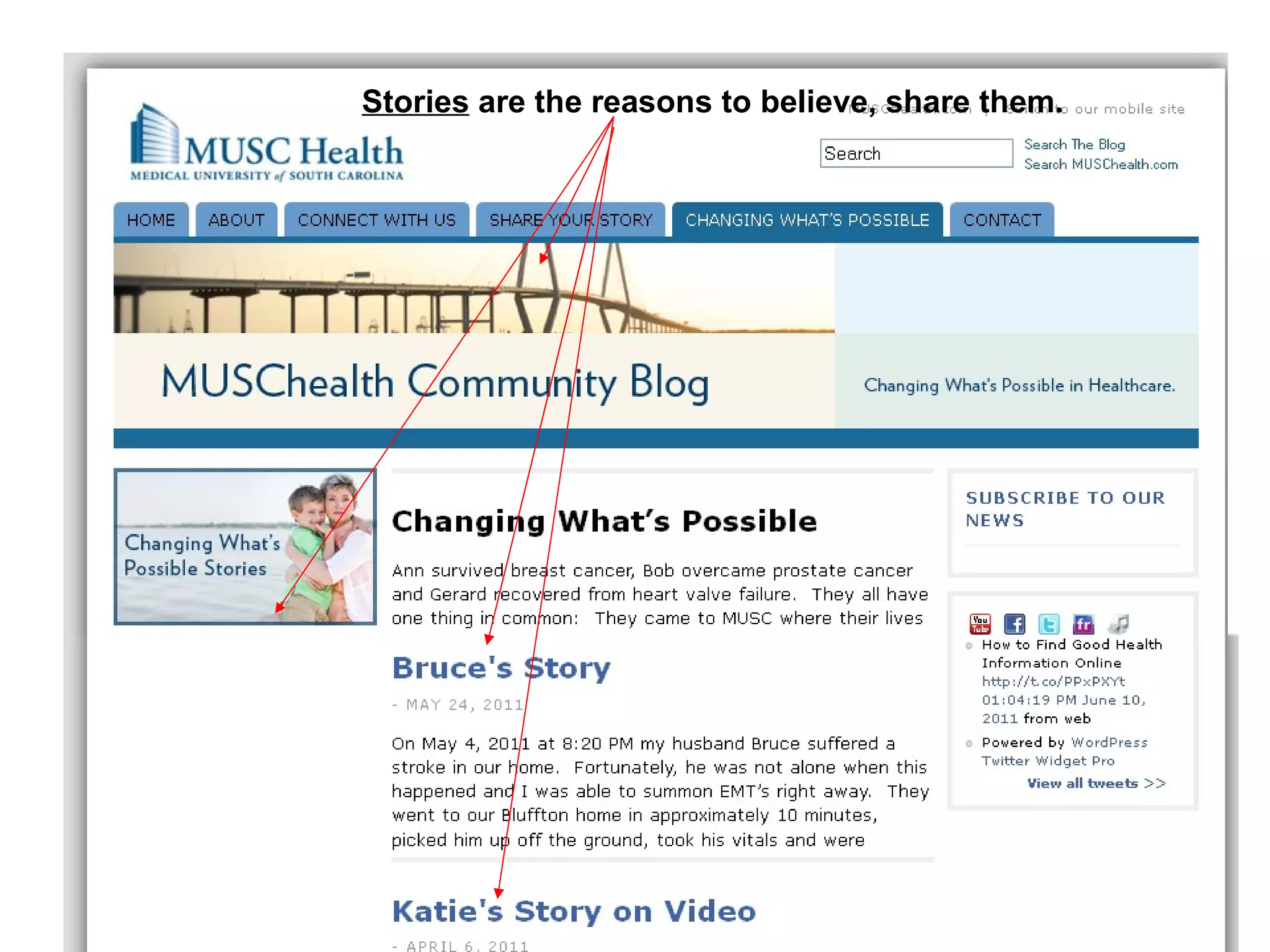
Stories  are the reasons to believe, share them.
Strengthen your network Connect with “like” organizations Their donors will probably like you, if they don’t already Share or retweet what others say if it is consistent with your brand identity Invite and allow others to engage Identify and work with ambassadors Listen
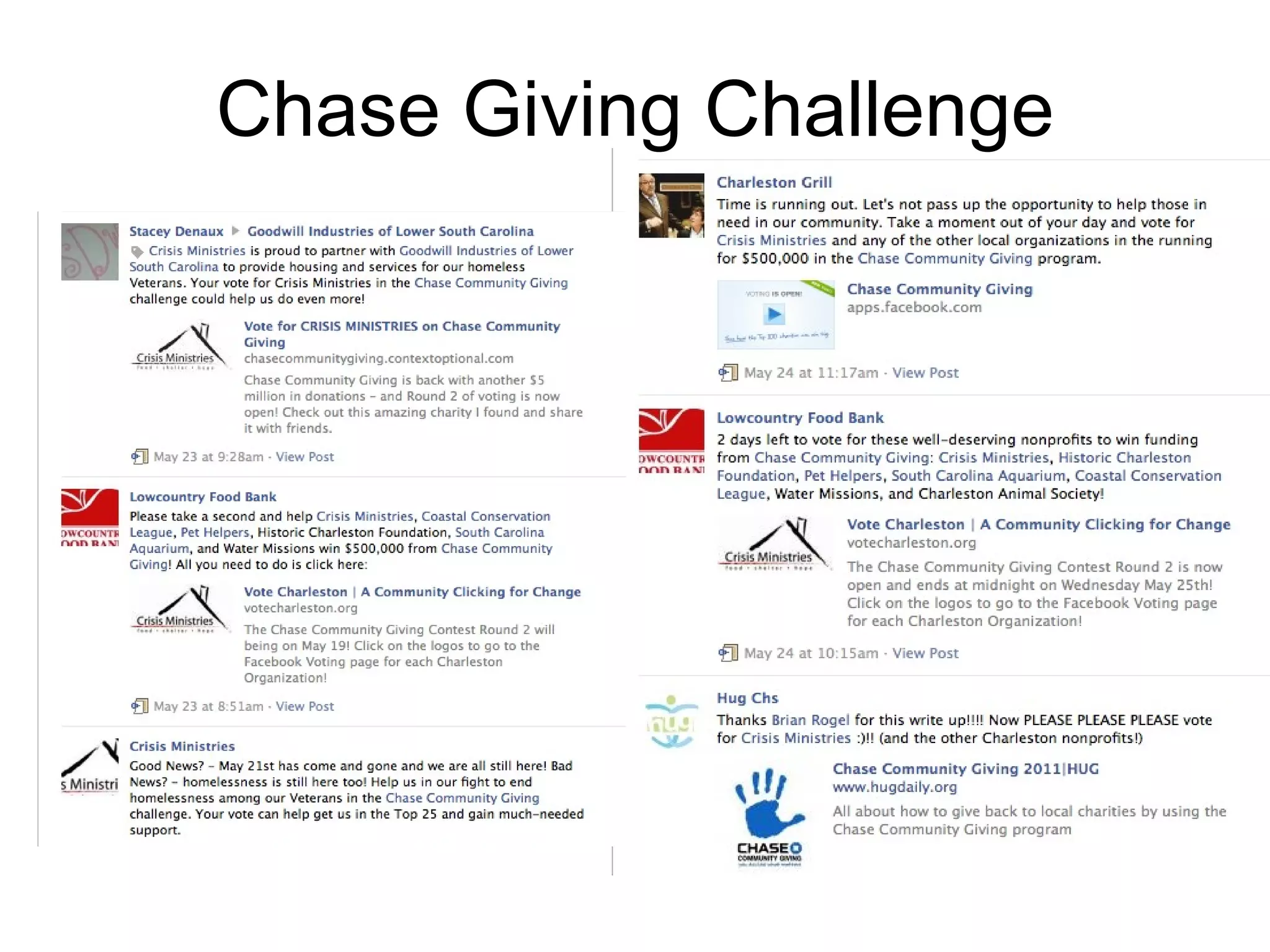
Chase Giving Challenge
Integrating Social Media into  Marketing /Fundraising Strategy Same  Objectives: Raise brand awareness Cultivate and nurture relationships Build trust and credibility Engage donors Same  Strategies: Apply relevant tools to traditional communications Plug into multiple channels depending on the message Invite dialogue, ask for input, then listen Be consistent and manage frequency Provide clear and easy calls to action New  communication tools.
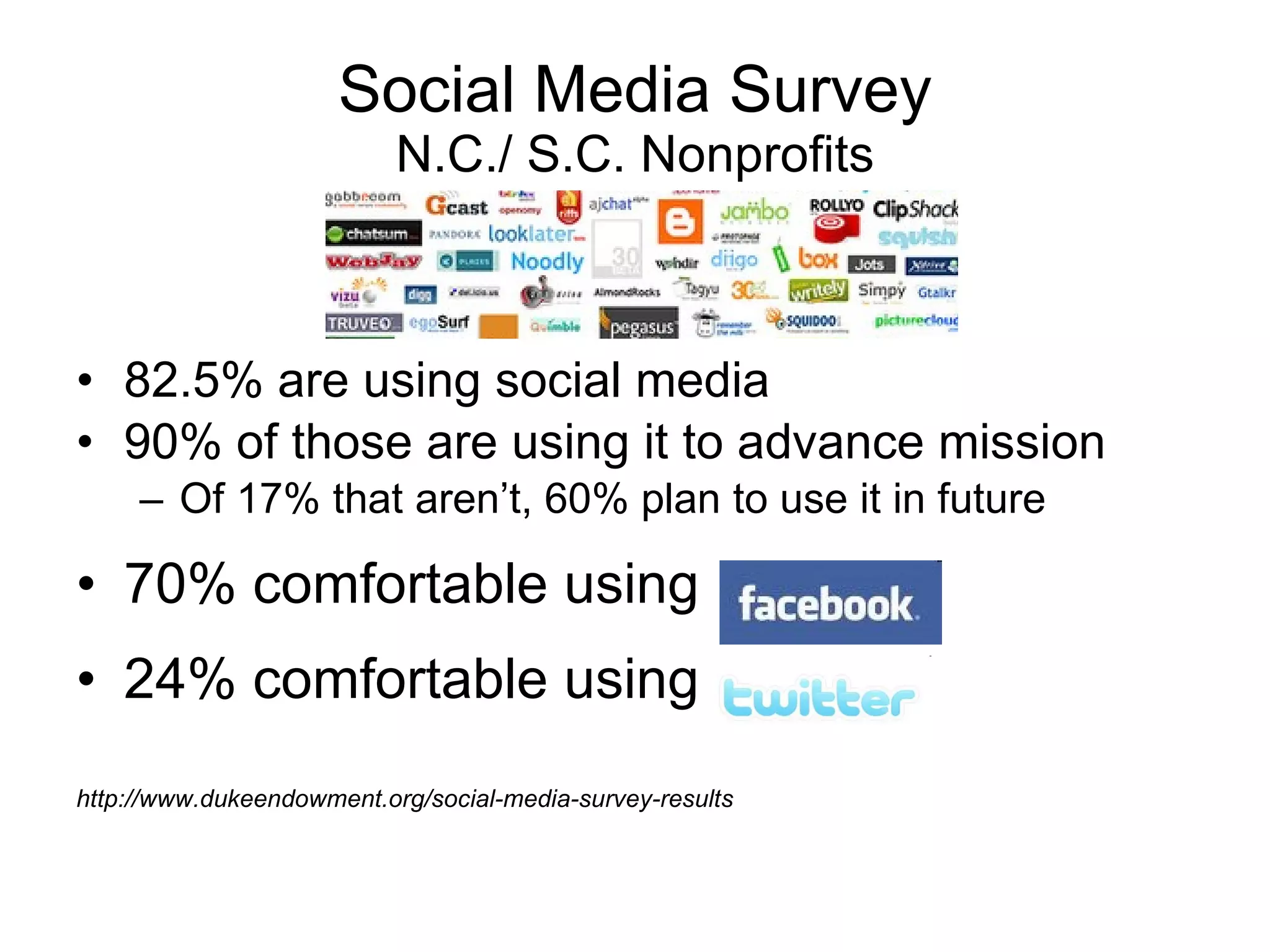
Social Media Survey N.C./ S.C. Nonprofits 82.5% are using social media 90% of those are using it to advance mission Of 17% that aren’t, 60% plan to use it in future 70% comfortable using 24% comfortable using http://www.dukeendowment.org/social-media-survey-results
 
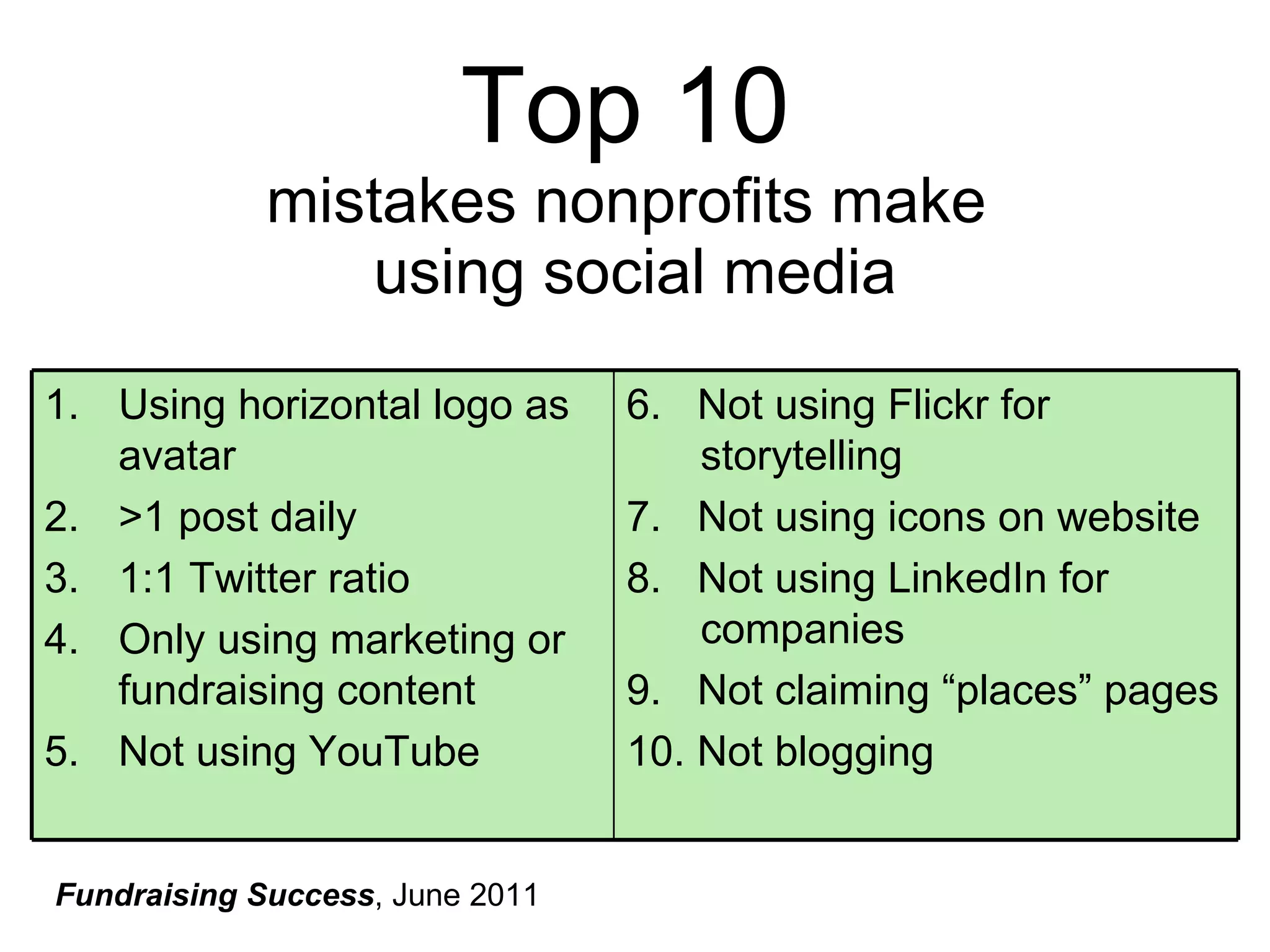
Top 10   mistakes nonprofits make  using social media Fundraising Success , June 2011 Using horizontal logo as avatar >1 post daily 1:1 Twitter ratio Only using marketing or fundraising content  Not using YouTube 6.  Not using Flickr for storytelling 7.  Not using icons on website 8.  Not using LinkedIn for companies 9.  Not claiming “places” pages 10. Not blogging
Be Prepared Squatters Misinformation Fundraising using your name/logo Avoid social media identify theft: Secure organization name  http://namechk.com/ Develop safeguards and policies
The Basics Identify who you are and stick to it Consistency counts! Stand out from the crowd Be authentic Invite dialogue, no monologues Provide reasons to believe, the evidence Communicate regularly, but not too frequently Connect to strengthen your network
Resources http://www.philanthropy.com  or @philanthropy http://www.marketingpower.com The Networked Nonprofit,  Beth Kanter and Allison H. Fines http://www.bethkanter.org http://www.tacticalphilanthropy.com/ http://www.gettingattention.org NTEN: The Nonprofit Technology Network http://www.nten.org/ SC Palmetto Technology Hub-  www.scpath.org
Questions, comments, stories? Thank YOU!
Email:  [email_address] Blog:  www.CCFblog.org Twitter: @ChristineBeddia Twitter: @CoastalCommFdn Blog:  www.oldenorth.wordpress.com LinkedIn: Christine Beddia, MPA Skype: christine.beddia Connect…
 

AFP Summer Institute- Social Network

  • 1.
    Building your SocialNetwork Christine Beddia Director of Marketing & Communications
  • 2.
    Just tell mewhat to do. You already know!!
  • 3.
    Making Social NetworkConnections Same Ingredients: 2-way Communication Listen Authenticity Transparency Relationship Building = Trust. Loyalty. Credibility.
  • 4.
    Start here Brand/Identity Personality Differentiation Reasons to believe
  • 5.
    BRANDING Communication CollateralStories Staff Logo Not just marketing and advertising, it’s E-V-E-R-Y-T-H-I-N-G!
  • 6.
    Who are you?m i s s i o n c r e e p
  • 7.
    Brand Framework PersonalityTarget Market Brand Flag Vision Point of Difference Positioning How the Brand is Positioned in the “Customer’s” Mind Reason to Believe
  • 8.
  • 9.
    Informed Engaged Responsive Respectful
  • 10.
  • 11.
  • 12.
  • 13.
  • 14.
    Point of DifferenceStand out among 1.5 million nonprofit organizations in U.S. Inspiring mission Clear goals Your People Say “thank you”
  • 15.
    Global reach. Clean water.
  • 16.
    Art in downtownCharleston Innovation Contemporary
  • 17.
  • 18.
  • 19.
  • 20.
  • 21.
    You had meat “hello” How (and how often) you communicate builds Trust. Credibility. Loyalty.
  • 22.
    Tools to buildyour social network
  • 23.
  • 24.
    storytelling Personal examplesgive your brand life Excite your donor base Instill confidence in others that your organization is what it claims to be Helps to build and nurture relationships Organize your story (introduction, body, conclusion) Keep it short, concise
  • 25.
  • 26.
    Stories arethe reasons to believe, share them.
  • 27.
    Strengthen your networkConnect with “like” organizations Their donors will probably like you, if they don’t already Share or retweet what others say if it is consistent with your brand identity Invite and allow others to engage Identify and work with ambassadors Listen
  • 28.
  • 29.
    Integrating Social Mediainto Marketing /Fundraising Strategy Same Objectives: Raise brand awareness Cultivate and nurture relationships Build trust and credibility Engage donors Same Strategies: Apply relevant tools to traditional communications Plug into multiple channels depending on the message Invite dialogue, ask for input, then listen Be consistent and manage frequency Provide clear and easy calls to action New communication tools.
  • 30.
    Social Media SurveyN.C./ S.C. Nonprofits 82.5% are using social media 90% of those are using it to advance mission Of 17% that aren’t, 60% plan to use it in future 70% comfortable using 24% comfortable using http://www.dukeendowment.org/social-media-survey-results
  • 31.
  • 32.
    Top 10 mistakes nonprofits make using social media Fundraising Success , June 2011 Using horizontal logo as avatar >1 post daily 1:1 Twitter ratio Only using marketing or fundraising content Not using YouTube 6. Not using Flickr for storytelling 7. Not using icons on website 8. Not using LinkedIn for companies 9. Not claiming “places” pages 10. Not blogging
  • 33.
    Be Prepared SquattersMisinformation Fundraising using your name/logo Avoid social media identify theft: Secure organization name http://namechk.com/ Develop safeguards and policies
  • 34.
    The Basics Identifywho you are and stick to it Consistency counts! Stand out from the crowd Be authentic Invite dialogue, no monologues Provide reasons to believe, the evidence Communicate regularly, but not too frequently Connect to strengthen your network
  • 35.
    Resources http://www.philanthropy.com or @philanthropy http://www.marketingpower.com The Networked Nonprofit, Beth Kanter and Allison H. Fines http://www.bethkanter.org http://www.tacticalphilanthropy.com/ http://www.gettingattention.org NTEN: The Nonprofit Technology Network http://www.nten.org/ SC Palmetto Technology Hub- www.scpath.org
  • 36.
  • 37.
    Email: [email_address]Blog: www.CCFblog.org Twitter: @ChristineBeddia Twitter: @CoastalCommFdn Blog: www.oldenorth.wordpress.com LinkedIn: Christine Beddia, MPA Skype: christine.beddia Connect…
  • 38.

Editor's Notes

  • #3 Your business is raising money for your nonprofit organization. You do this by building and nurturing relationships with donors. Building your social network online is done in the same fashion as offline, more or less. We will explore some basic concepts and how they can enhance what you are doing online
  • #4 Social Media platforms help us make social network connections to old classmates, new friends, and with our organizations’ donors and if we’re lucky, future prospects. Think of it as Relationship-Building. Focus on traditional tactics like two-way dialogue, listening, authenticity, and things you would do to build and nurture a relationship.
  • #8 Exercise unique to your organization Detailed process. See me after.
  • #9 Few components that are obvious and observable online. The first is your organization’s personality.
  • #10 CCF’s personality revealed. Conducted surveys, did in-person interviews with donors, staff, and board members. Organization personality, not individual personalities
  • #11 Highlighted examples demonstrating responsiveness, sharing relevant information, engaging with others online through twitter.
  • #15 900 million users on Facebook Average user has 130 friends and is connected to 80 community pages
  • #23 Know what the tool is intended for and how you can get the most out of it and how it fits into your overall marketing and fundraising strategies. Those traditional communication tools are critical to building your network , your social network. Social media tools can help you continue building that network, just online. Even though the tools can be very different in their application , the goal is still the same- to cultivate a loyal and engaged donor base.
  • #24 Frequency: Tweets- 2 a day Facebook updates- once a day Blog posts- one a week E-news- monthly Direct mail- quarterly Letters- when needed Would you ever call a donor two times a day? 3 reasons people unsubscribe to your communications: communication is too frequent, content is boring users feel the general need to manage the amount of communication showing up in their mail or newsfeed
  • #25 CCF Connections: what are the connections that we make every day? Identify and share them in the channels. Invest positively in your relationship with fans using engaging, lively and varied content. 
  • #28 non-fan will view your Page Fan view your Page, “likes” a story comment on a story, publish a comment upload a photos and video Paying attention to what people are saying is beneficial so you can be relevant.
  • #29 Over 1/2/ a dozen local nonprofits leveraged their online audiences to facilitate joint marketing 7 were able to move to 2 nd round and secure $175K for the Charleston community.
  • #30 Integrating social media into your organization’s marketing strategy can help you fundraise more effectively. These new tools can augment where and how people perceive your brand, learn about your mission, engage with you. Finding the right tools to support those strategies takes planning. The goal remains the same. For most of us in the room, it’s to cultivate a loyal and generous donor base.
  • #31 The Duke Endowment a social media survey 5,700 grantees, nonprofit leaders, peers and policymakers > 1,100 people answered the dozen questions North Carolina and South Carolina nonprofits
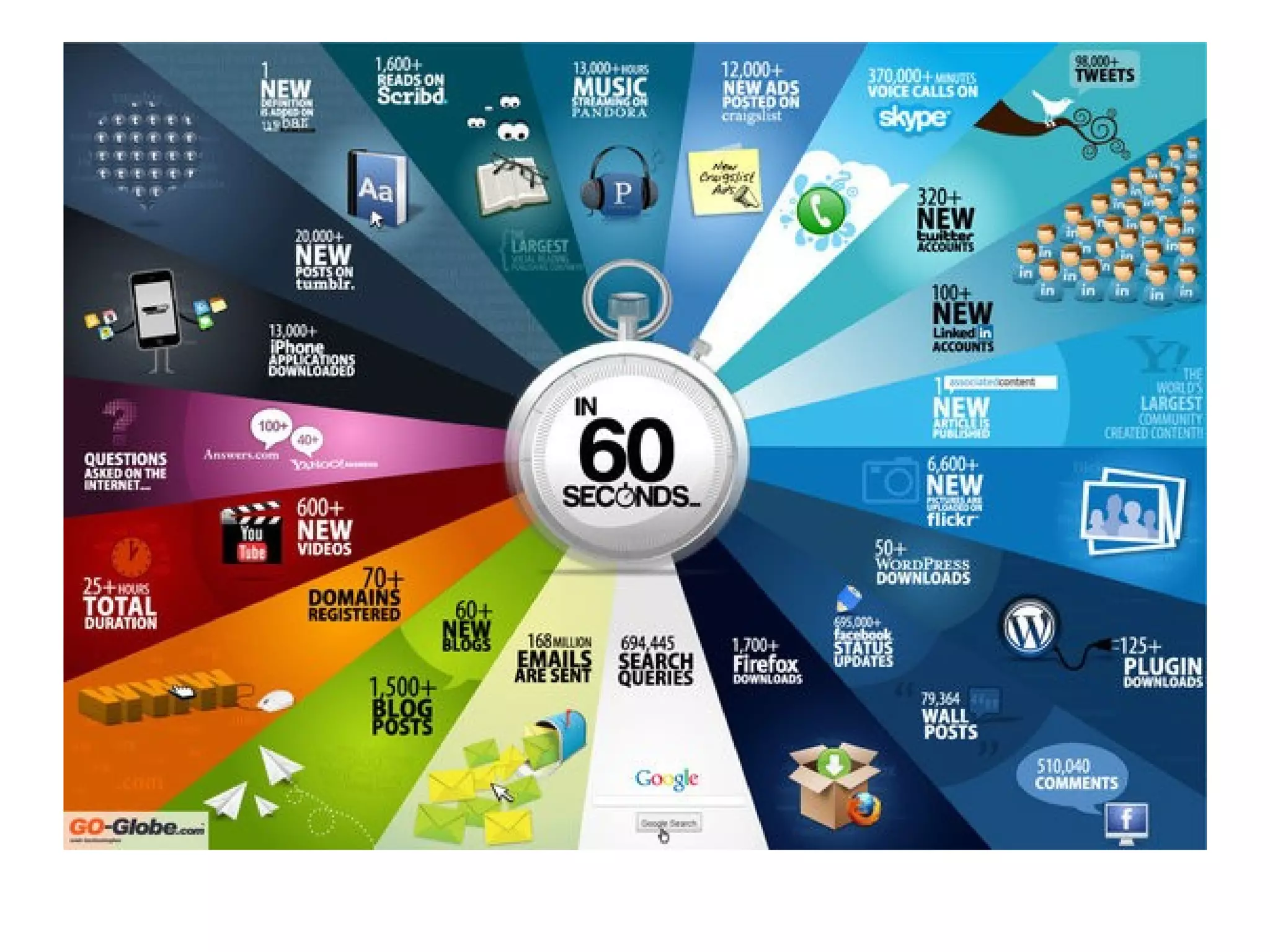
  • #32 90,000 Tweets, 700,000 Facebook status updates, 1500 new blog posts over 6,000 images are uploaded to Flickr
  • #33 Using a horizontal logo for avatar Posting more than one status update a day on facebook 3. Not following on a 1:1 ratio on Twitter; DM function won’t work Not applying for YouTubes’ Nonprofit program Not creating Flickr slideshows to tell your nonprofit's story Not adding social-networking icons to your website Ignoring LinkedIn’s company pages Not claiming your “places” pages on Facebook, foursquare, Gowalla, Yelp Posting only (boring) marketing and fundraising content: Come to our event Please like us Donate now Follow us on Twitter Not blogging, telling your story
  • #34 Register your organization’s domain name, the Facebook page name that best suits, and secure your Twitter ID so that you secure and protect your brand even if you are not quite ready to launch a social media communications platform. Avoid social media identify theft. Cybersquatters register domain names in the hope that companies will buy them back. The misinformation that cybersquatters can distribute will cause confusion in the market place and might cost you money down the road especially if they are using your name and logo to raise funds. Large companies like Kellogg’s, GE and General Motors are all victims of social media identify theft. None of them own their Twitter ID. So they now have to spend even more time (and money) to manage their brands from other platforms. Developing safeguards around account information and how it is shared. Create policies that protect how employees use these tools and how your organization manages activity, including online negative comments.
  • #36 Center for Women- Women in Business Series: New Marketing Methods - Social Media as Marketing Tool Tuesday from 6pm-8pm