10 – DAY RULE
PRESENTED BY:-
YOGITA JANGHU
M.Sc . RIT {2ND SEM}
220513005
CONTENTS
• INTRODUCTION
• 10 DAY RULE
• 14 DAY RULE
• 28 DAY RULE
• TYPE OF EXPOSURE
• RADIATION PROTECTION {PRINCIPLE}.
• RISK TO FETUS
• CONCLUSION
• MCQ’S
• REFRENCES.
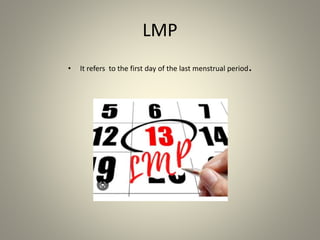
LMP
• It refers to the first day of the last menstrual period.
AT WHAT AGE SHOULD WE ASK LMP
• Women of reproductive age are asked for their last menstrual period date as the
likelihood of pregnancy is higher.
• Reproductive age ranges from 12 to 50 years old.
WHY WE SHOULD ASK FOR THE
PATIENT’S LMP ?
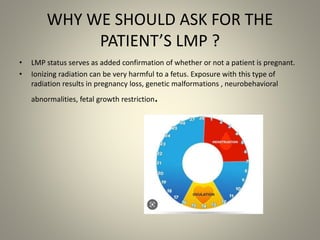
• LMP status serves as added confirmation of whether or not a patient is pregnant.
• Ionizing radiation can be very harmful to a fetus. Exposure with this type of
radiation results in pregnancy loss, genetic malformations , neurobehavioral
abnormalities, fetal growth restriction.
10 – DAY RULE
• Concept was established by ICRP {in 1970} to minimize the
potential for performing x-ray exams on pregnant women.
• It states that “whenever possible, one should confine the
radiological examination of the lower abdomen and pelvis to
the 10- day interval following the onset of menstruation.”
• Due to increased risk of harmful effects of radiation within the
first trimester, it’s better to be safe than sorry.
14 – DAY RULE
• In women of childbearing age, non – urgent x-ray
examinations of pelvis, irradiation should be restricted to the
first 14 days of the menstrual cycle and the practice is known
as 14 – DAY RULE.
• The original proposal was for 14 days, but this was reduced to
10 days to account due to the variability of the human
menstrual cycle.
28 – DAY RULE
• In 1984, ICRP recommended which means that radiological examination, if so
justified, can be carried throughout the cycle until a period is missed.
• Now, focus shifted to the missed period and the possibility of pregnancy.
• If there is a missed period, a female should be considered pregnant unless proved
otherwise. In such a situation, every care should be taken to explore other
methods of getting needed information by using non- radiological examinations.
• The main risk is of abortion if radiation exposure results in death of the fetus.
TYPES OF EXPOSURE
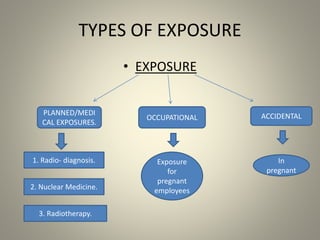
• EXPOSURE
PLANNED/MEDI
CAL EXPOSURES.
OCCUPATIONAL ACCIDENTAL
Exposure
for
pregnant
employees
In
pregnant
1. Radio- diagnosis.
2. Nuclear Medicine.
3. Radiotherapy.
PROTECTION FOR PREGNANT WOMEN
• Appropriate additional monitor to be worn at the waist level – to ensure that the
monthly equivalent dose does not exceed 0.5 mSv.
• Maternity aprons – extra 1mm lead equivalent protective panel that runs
transversely across the width of apron.
• In the case of pregnant workers, the fetus is considered as a member of public.
• Pregnant radiation workers are monitored by a dosimeter worn on the abdomen
under the lead apron.
• A measured dose of 2 mSv to the surface of the abdomen is normally considered
equivalent to 1 mSv to the fetus.
GENERAL PRINCIPLE OF RADIATION
PROTECTION
• RADIATION PROTECTION RELIES ON THE PRINCIPLE OF ICRP.
DOSE LIMIT
OPTIMIZ
-ATION
JUSTIFICA
-TION
SHOULD PREGNANCY BE TERMINATED
AFTER RADIATION EXPOSURE?
• Acc. To ICRP 84, the termination of pregnancy at fetal doses of less than 100mGy is
not justified based upon radiation risk.
• At fetal doses between 100 and 500 mGy, the decision should be based upon the
individual circumstances.
RISKS TO FETUS AFTER EXPOSURE
RADIATION AND FETAL RISK
CONCLUSION
• The most important goals of regulation of radiation is to assure the safety of
patients , workers , and the public to ensure that the benefits of regulating ionizing
radiation will outweigh the risks.
• The patient and the medical staff concern about the potential harm to the fetus
from radiation exposure. However, the risks to the developing fetus are quite
small. The accepted cumulative dose of ionizing radiation during pregnancy of 5
rad , and no single diagnostic study exceeds this maximum.
MCQ’S
1. stages of developmental period in utero ?
a. pre- implantation
b. Organogenesis
c. Fetal period
d. All of the above.
2. Occupational worker fetus dose limit?
a. 2 mSv / year.
b. 1 mSv / year.
c. 20 mSv / year
d. 15 mSv / year.
3. When was ICRP 10 Day rule proposed?
a. 1970
b. 1984
c. 1994
d. 1978.
4. Risks caused by the radiation exposure to
fetus?
a. Teratogen
b. Carcinogen
c. Lethal effects
d. All of the above.
REFRENCES.
• www. Iaea.org
• Pub med
• www. Asktheradtech.com
• Blog.ucbmsh.org
• K thayalan
• Slide share.
advncement ppt..pptx

advncement ppt..pptx

  • 1.
    10 – DAYRULE PRESENTED BY:- YOGITA JANGHU M.Sc . RIT {2ND SEM} 220513005
  • 2.
    CONTENTS • INTRODUCTION • 10DAY RULE • 14 DAY RULE • 28 DAY RULE • TYPE OF EXPOSURE • RADIATION PROTECTION {PRINCIPLE}. • RISK TO FETUS • CONCLUSION • MCQ’S • REFRENCES.
  • 3.
    LMP • It refersto the first day of the last menstrual period.
  • 4.
    AT WHAT AGESHOULD WE ASK LMP • Women of reproductive age are asked for their last menstrual period date as the likelihood of pregnancy is higher. • Reproductive age ranges from 12 to 50 years old.
  • 5.
    WHY WE SHOULDASK FOR THE PATIENT’S LMP ? • LMP status serves as added confirmation of whether or not a patient is pregnant. • Ionizing radiation can be very harmful to a fetus. Exposure with this type of radiation results in pregnancy loss, genetic malformations , neurobehavioral abnormalities, fetal growth restriction.
  • 6.
    10 – DAYRULE • Concept was established by ICRP {in 1970} to minimize the potential for performing x-ray exams on pregnant women. • It states that “whenever possible, one should confine the radiological examination of the lower abdomen and pelvis to the 10- day interval following the onset of menstruation.” • Due to increased risk of harmful effects of radiation within the first trimester, it’s better to be safe than sorry.
  • 7.
    14 – DAYRULE • In women of childbearing age, non – urgent x-ray examinations of pelvis, irradiation should be restricted to the first 14 days of the menstrual cycle and the practice is known as 14 – DAY RULE. • The original proposal was for 14 days, but this was reduced to 10 days to account due to the variability of the human menstrual cycle.
  • 8.
    28 – DAYRULE • In 1984, ICRP recommended which means that radiological examination, if so justified, can be carried throughout the cycle until a period is missed. • Now, focus shifted to the missed period and the possibility of pregnancy. • If there is a missed period, a female should be considered pregnant unless proved otherwise. In such a situation, every care should be taken to explore other methods of getting needed information by using non- radiological examinations. • The main risk is of abortion if radiation exposure results in death of the fetus.
  • 9.
    TYPES OF EXPOSURE •EXPOSURE PLANNED/MEDI CAL EXPOSURES. OCCUPATIONAL ACCIDENTAL Exposure for pregnant employees In pregnant 1. Radio- diagnosis. 2. Nuclear Medicine. 3. Radiotherapy.
  • 10.
    PROTECTION FOR PREGNANTWOMEN • Appropriate additional monitor to be worn at the waist level – to ensure that the monthly equivalent dose does not exceed 0.5 mSv. • Maternity aprons – extra 1mm lead equivalent protective panel that runs transversely across the width of apron.
  • 11.
    • In thecase of pregnant workers, the fetus is considered as a member of public. • Pregnant radiation workers are monitored by a dosimeter worn on the abdomen under the lead apron. • A measured dose of 2 mSv to the surface of the abdomen is normally considered equivalent to 1 mSv to the fetus.
  • 12.
    GENERAL PRINCIPLE OFRADIATION PROTECTION • RADIATION PROTECTION RELIES ON THE PRINCIPLE OF ICRP. DOSE LIMIT OPTIMIZ -ATION JUSTIFICA -TION
  • 13.
    SHOULD PREGNANCY BETERMINATED AFTER RADIATION EXPOSURE? • Acc. To ICRP 84, the termination of pregnancy at fetal doses of less than 100mGy is not justified based upon radiation risk. • At fetal doses between 100 and 500 mGy, the decision should be based upon the individual circumstances.
  • 14.
    RISKS TO FETUSAFTER EXPOSURE
  • 15.
  • 16.
    CONCLUSION • The mostimportant goals of regulation of radiation is to assure the safety of patients , workers , and the public to ensure that the benefits of regulating ionizing radiation will outweigh the risks. • The patient and the medical staff concern about the potential harm to the fetus from radiation exposure. However, the risks to the developing fetus are quite small. The accepted cumulative dose of ionizing radiation during pregnancy of 5 rad , and no single diagnostic study exceeds this maximum.
  • 17.
    MCQ’S 1. stages ofdevelopmental period in utero ? a. pre- implantation b. Organogenesis c. Fetal period d. All of the above. 2. Occupational worker fetus dose limit? a. 2 mSv / year. b. 1 mSv / year. c. 20 mSv / year d. 15 mSv / year. 3. When was ICRP 10 Day rule proposed? a. 1970 b. 1984 c. 1994 d. 1978. 4. Risks caused by the radiation exposure to fetus? a. Teratogen b. Carcinogen c. Lethal effects d. All of the above.
  • 18.
    REFRENCES. • www. Iaea.org •Pub med • www. Asktheradtech.com • Blog.ucbmsh.org • K thayalan • Slide share.