Nature and Scope of
Advertising
four features of advertisements
• A verbal and visual message
• A sponsor who is identified
• Delivery through one or more media
• Payment by the sponsor to the media carrying the message
Types of Advertising
 According to the target audience , advertising may be classified as
 Consumer advertising
 Business to Business advertising
 According to what is being advertisement , advertising may be
 Product (or Service)
 Institutional (or Corporate)
 Product advertising focuses on a particular product or brand. It is subdivided into
 Direct-action advertising
 Indirect-action advertising
 According to the objective sought, advertising may be
 Primary-demand advertising
 Selective-demand advertising
 Before designing an advertising campaign , management must undertake the
following :
 Identify the target audience
 Establish over-all promotional objectives
 Determine an over-all promotional theme
 Defining objectives
 Establishing a budget
 Creating a message
 Selecting media
 Evaluating effectiveness
Developing an advertising campaign
Steps in developing an advertising
campaign
Defining objectives
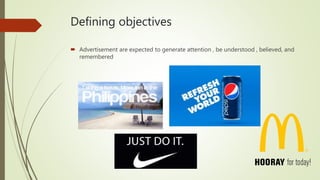
 Advertisement are expected to generate attention , be understood , believed, and
remembered
Establishing a Budget
Once a marketing communications budget has been
established, it is allocated among the various activities
making up the overall marketing communications
program.
Creating a message
 Individual advertisements accomplish two things :
 Get and hold the attention of the intended audience
 Influence that audience in the desired way
 Two elements of message
 Appeal
 Execution
Types of major advertising formats
1. A story line format gives a history of or tells a story about the product
2. Product uses and problem and solutions discuss a product’s uses , attributes,
benefits , or availability
3. Slice of life dramatizes a typical setting in which people use the product being
advertised.
4. A demonstration illustrates product features or proves some advertised claim
5. Testimonials show a person, usually , a prominent show business or sports figure,
endorsing the product advertised.
6. Lifestyle combines scenes or sequences of situations intended to reflect a particular
target market’s lifestyle
7. Still life portrays the product in visually attractive settings.
8. Association concentrates on an analogy or other relationships to convey a message
9. Montage blends a number of situations, demonstrations, and other visual effects
into one commercial
10. Jingle are musical verses with “memory value”
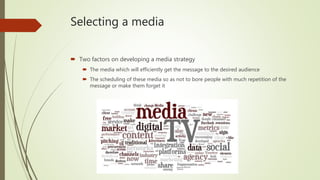
Selecting a media
 Two factors on developing a media strategy
 The media which will efficiently get the message to the desired audience
 The scheduling of these media so as not to bore people with much repetition of the
message or make them forget it
Media
 General factors that influence media choice
 Objectives of the advertisement
 Audience coverage
 Requirements of the message
 Time and location of the buying decision
 Media cost
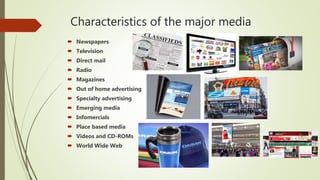
Characteristics of the major media
 Newspapers
 Television
 Direct mail
 Radio
 Magazines
 Out of home advertising
 Specialty advertising
 Emerging media
 Infomercials
 Place based media
 Videos and CD-ROMs
 World Wide Web
Scheduling

Nature-and-Scope-of-Advertising.pptx

  • 1.
    Nature and Scopeof Advertising four features of advertisements • A verbal and visual message • A sponsor who is identified • Delivery through one or more media • Payment by the sponsor to the media carrying the message
  • 2.
    Types of Advertising According to the target audience , advertising may be classified as  Consumer advertising  Business to Business advertising  According to what is being advertisement , advertising may be  Product (or Service)  Institutional (or Corporate)  Product advertising focuses on a particular product or brand. It is subdivided into  Direct-action advertising  Indirect-action advertising  According to the objective sought, advertising may be  Primary-demand advertising  Selective-demand advertising
  • 3.
     Before designingan advertising campaign , management must undertake the following :  Identify the target audience  Establish over-all promotional objectives  Determine an over-all promotional theme  Defining objectives  Establishing a budget  Creating a message  Selecting media  Evaluating effectiveness Developing an advertising campaign Steps in developing an advertising campaign
  • 4.
    Defining objectives  Advertisementare expected to generate attention , be understood , believed, and remembered
  • 5.
    Establishing a Budget Oncea marketing communications budget has been established, it is allocated among the various activities making up the overall marketing communications program.
  • 6.
    Creating a message Individual advertisements accomplish two things :  Get and hold the attention of the intended audience  Influence that audience in the desired way  Two elements of message  Appeal  Execution
  • 7.
    Types of majoradvertising formats 1. A story line format gives a history of or tells a story about the product 2. Product uses and problem and solutions discuss a product’s uses , attributes, benefits , or availability 3. Slice of life dramatizes a typical setting in which people use the product being advertised. 4. A demonstration illustrates product features or proves some advertised claim 5. Testimonials show a person, usually , a prominent show business or sports figure, endorsing the product advertised. 6. Lifestyle combines scenes or sequences of situations intended to reflect a particular target market’s lifestyle
  • 8.
    7. Still lifeportrays the product in visually attractive settings. 8. Association concentrates on an analogy or other relationships to convey a message 9. Montage blends a number of situations, demonstrations, and other visual effects into one commercial 10. Jingle are musical verses with “memory value”
  • 9.
    Selecting a media Two factors on developing a media strategy  The media which will efficiently get the message to the desired audience  The scheduling of these media so as not to bore people with much repetition of the message or make them forget it
  • 10.
    Media  General factorsthat influence media choice  Objectives of the advertisement  Audience coverage  Requirements of the message  Time and location of the buying decision  Media cost
  • 11.
    Characteristics of themajor media  Newspapers  Television  Direct mail  Radio  Magazines  Out of home advertising  Specialty advertising  Emerging media  Infomercials  Place based media  Videos and CD-ROMs  World Wide Web
  • 12.