Presented by – Dr Himanshu Jangid
Adrenals and
Anaesthesia
Contents
 Anatomy, embryology and physiology of the
adrenal glands.
 Pathological disorders of the adrenal glands
and their anaesthetic management:
 Glucocorticoid excess
 Mineralocorticoid excess
 Adrenal insufficiency
 Phaeochromocytoma
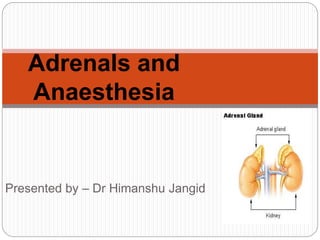
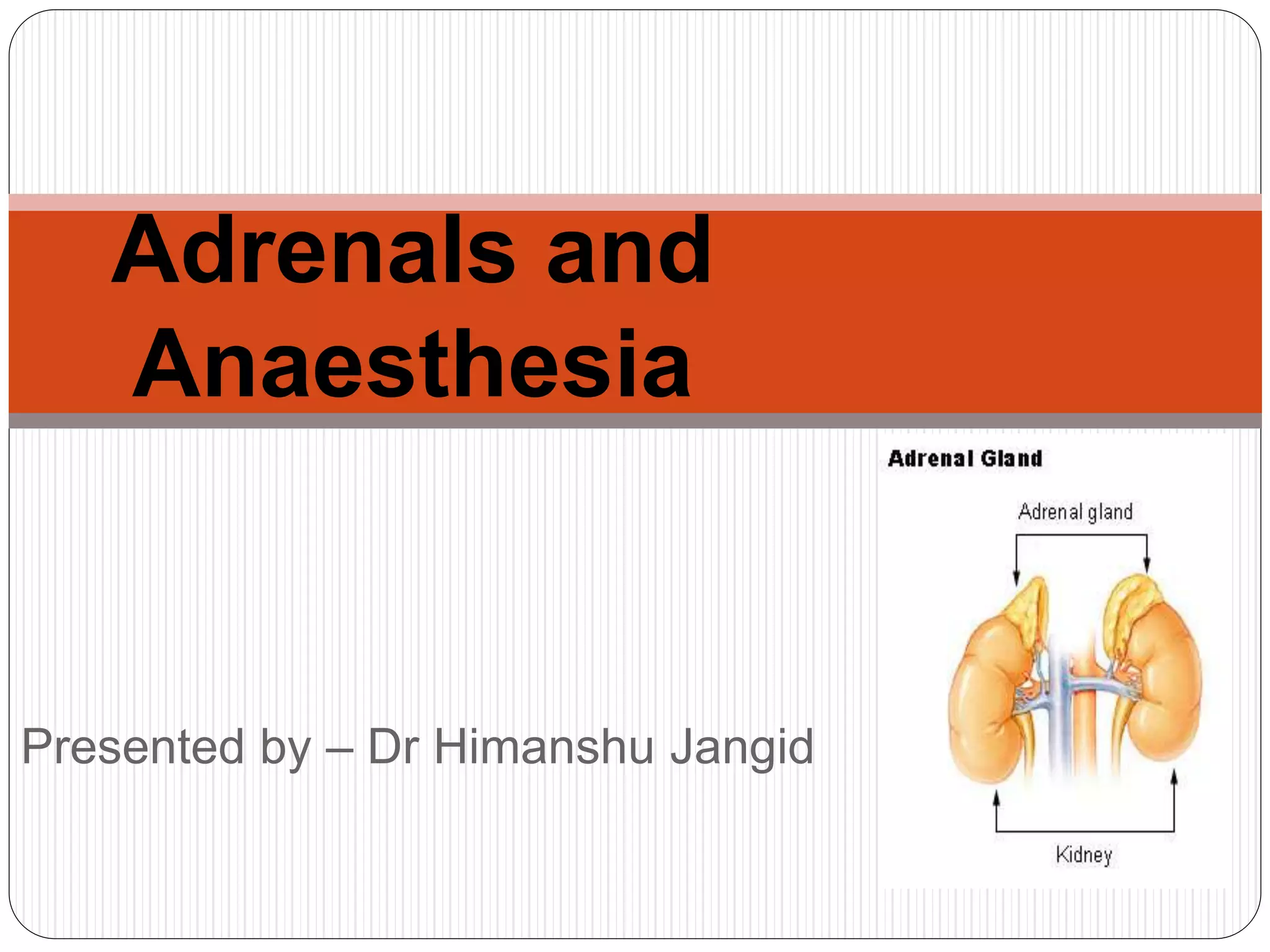
THE ADRENAL GLANDS
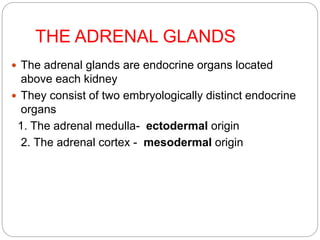
 The adrenal glands are endocrine organs located
above each kidney
 They consist of two embryologically distinct endocrine
organs
1. The adrenal medulla- ectodermal origin
2. The adrenal cortex - mesodermal origin
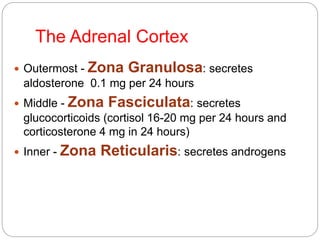
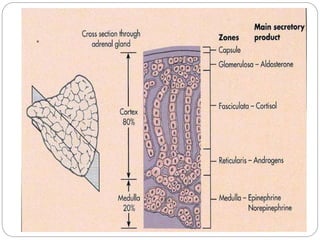
The Adrenal Cortex
 Outermost - Zona Granulosa: secretes
aldosterone 0.1 mg per 24 hours
 Middle - Zona Fasciculata: secretes
glucocorticoids (cortisol 16-20 mg per 24 hours and
corticosterone 4 mg in 24 hours)
 Inner - Zona Reticularis: secretes androgens
.
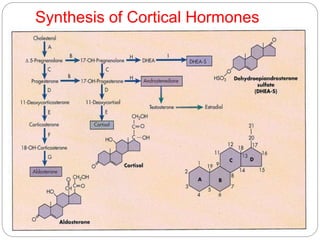
Synthesis of Cortical Hormones
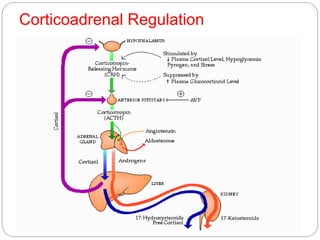
Corticoadrenal Regulation
Glucocorticoids
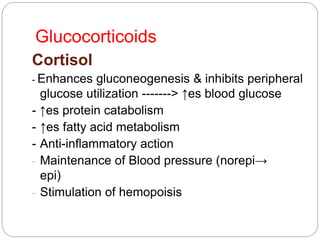
Cortisol
- Enhances gluconeogenesis & inhibits peripheral
glucose utilization -------> ↑es blood glucose
- ↑es protein catabolism
- ↑es fatty acid metabolism
- Anti-inflammatory action
- Maintenance of Blood pressure (norepi→
epi)
- Stimulation of hemopoisis
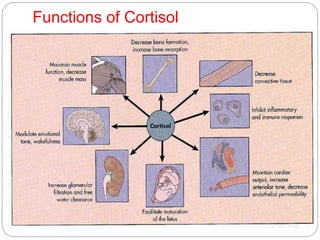
Functions of Cortisol
Mineralocorticoids
Aldosterone
 Regulates concentration of Na+ and K+
 Kidney conserves Na+ & excretes K+
 Responds to changes in composition of plasma
 Linked to renin - angiotensin system
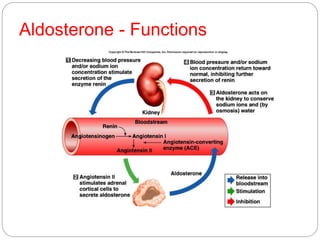
Aldosterone - Functions
Androgens
 Androstenedione and Dehydroepiandrosterone
 Small quantity of androgen produced.
 Some is converted to estrogen by liver, adipose tissue
Pathological Disorders of the Adrenal
Glands
 Adrenal Cortex
 Underproduction: primary adrenal failure
(Addison's disease)
 Overproduction:
Glucocorticoids: Cushing’s syndrome
(primary - due to adrenal adenoma, secondary -
to pituitary tumour or, more commonly, to
exogenous steroids).
Mineralocorticoids: Conn's syndrome
(primary aldosteronism) - aldosterone secreting
adenoma.
 Adrenal medulla - Phaeochromocytoma
Cushing's Syndrome
Classification
 ACTH dependent
- Pituitary adenoma secreting ACTH (Cushing’s
disease)
- Ectopic ACTH syndrome – bronchial carcinoids,
small cell lung ca
 Non ACTH dependent
- Adrenal adenoma
- Adrenal carcinoma
- Iatrogenic
Presentation
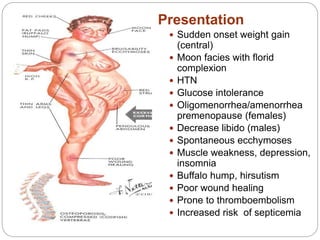
 Sudden onset weight gain
(central)
 Moon facies with florid
complexion
 HTN
 Glucose intolerance
 Oligomenorrhea/amenorrhea
premenopause (females)
 Decrease libido (males)
 Spontaneous ecchymoses
 Muscle weakness, depression,
insomnia
 Buffalo hump, hirsutism
 Poor wound healing
 Prone to thromboembolism
 Increased risk of septicemia
Diagnosis of Cushing's Syndrome
 Cortisol Levels - Midnight and 9 am: loss of
diurnal variation.
 Plasma and urinary cortisol levels
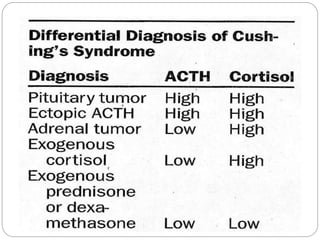
 ACTH Assay; very high in ectopic ACTH,
high in pituitary adenoma, very low in adrenal
adenoma.
 Dexamethasone Suppression Test:
- pituitary adenomas – feedback present
- adrenal tumors - no feedback
 CT of the adrenals
Treatment
 Transphenoidal excision of pituitary gland
tumor
 Adrenalectomy for adrenal cortex tumor
 Pituitary irradiation with bilateral adrenalectomy
Anesthetic Implications
 These patients have a multitude of problems.
- Obesity
- Diabetes
- Coronary heart disease
- Hypertension
Anesthetic Implications (contd..)
 Osteoporosis- caution during positioning
 Skin prone to bruising, easy damage =need
for special handling
 Will be prone to water overload and
hyponatremia
 Moon Facies - difficult intubation
Increased Anaesthetic Risk
Pre-op Management
 General considerations-
1. Treatment & control of hypertension
2. Treatment & control of diabetes
3. Normalizing intravascular fluid volume and
electrolytes - Spironolactone
4. Preparation for difficult airway
Anaesthetic Considerations
 Choice of sedatives, induction agents not influenced by
elevated cortisol levels
 Etomidate may be preferred as it inhibits steroid
biosynthesis
 Careful use of relaxants in face of skeletal muscle
weakness/ hypokalemia → consider NM - monitoring
 Regional acceptable - remember possibility of
osteoporosis and effects on vertebral bodies
 Plasma cortisol levels decrease promptly after gland
excision needs replacement
 Consider steroid infusion - cortisol 100mg/day
 Fludrocortisone 0.05-0.1 mg/day
Hyperaldosteronism
CONN SYNDROME
 Primary
- increased secretion aldosterone due to functional tumor
- independent of physiological stimulus
- more often in female
- associated with pheochromocytoma, primary
hyperparathyroidism or acromegaly
-
 Secondary
 increased plasma levels of renin
 associated with reno-vascular HTN
Conn syndrome
 Signs & symptoms may be nonspecific
 If systemic HTN - headache
 Systemic HTN may be due to ↑ ECF (aldosterone
induced Na retention) = resistant to Rx
 If hypokalemia - nocturia, polyuria without ability to
concentrate urine, skeletal muscle cramps,
skeletal muscle weakness
 Abnormal glucose tolerance
Treatment
 K+ supplementation
 Spirinolactone (competitive aldosterone antagonist)
 Antihypertensive drugs
 K+ sparing diuretics (triamterene)
 Definitive treatment is adrenalectomy, bilateral if multiple
tumors are present
Anaesthetic Considerations
 Do not hyperventilate = will ↓ K+
 May have exaggerated hypotensive response to
anesthetic agents, positioning, PPV, sudden blood loss
 PA Catheter to monitor volume
 Monitor ABGs
 Monitor electrolytes
 May require steroids if bilateral adrenalectomy
Hypoaldosteronism
 Congenital deficiency of aldosterone synthetase
 Hyporeninemia due to defect in juxtaglomerular
apparatus or due to treatment with ACE inhibitors
which leads to loss of angiotensin stimulation
 Co morbidities= CRD, diabetes
Hypoaldosteronism
 Presentation
 Hyperkalemia without renal insufficiency
 Heart block due to inc K+
 Postural hypotension
 Metabolic acidosis
 Treatment
 Liberal intake Na
 Daily fludrocortisone
Hypoadrinocorticism
 PRIMARY (ADDISON’S DISEASE)
 Primary adrenal insufficiency - absence of cortisol and
aldosterone due to cortex destruction
 SECONDARY
 Panhypopituitarism including ACTH deficiency - no
cortisol, normal aldosterone secretion
 Prolonged exogenous administration steroids →
suppresses pituitary-adrenal axis
 Deficiency of ACTH
Hypoadrinocorticism
ADDISON”S DISEASE
Decreased cortisol because of
 Destruction of adrenal cortex
- hemorrhage
- cancer
- autoimmune diseases
90% cortical destruction before s/s of
insufficency seen
Addison’s Disease
Presentation
 Muscle weakness, fatigue
 Weight loss/ anorexia/ nausea/ vomiting/diarrhoea
 Hypotension
 Abdominal/back pain
 Hyperpigmentation over palmar surfaces and pressure
points
Diagnosis
 Levels of corticosteroids - plasma/urine
concentrations of corticosteroids
 ACTH stimulation test - plasma cortisol should
double within 1 hour after ACTH is administered (
normal test levels >25 mcg/dl)
 Plasma ACTH levels - elevated with primary
adrenal insufficiency, reduced with dysfunction of
ant pituitary/inhibition of pituitary-adrenal axis
Addison’s Disease
 Presentation during stress (surgery, trauma)-
ADDISONIAN”S CRISIS
 Fever, nausea, vomiting
 Circulatory collapse
 Hyponatremia
 hyperkalemia
 hypoglycemia
 hemoconcentration
Treatment
Addisonian crisis-
 - IV Cortisol (100 mg) bolus, then infusion 10
mg/hr
- IV fluids should include dextrose, NS,
colloids, blood (if reqd)
Chronic replacement therapy
- cortisone (20-30 mg/day)
- fludrocortisone ( 0.05-0.1 mg/day
- monitor wt gain, HTN, hypokalemia
Anaesthetic Considerations
 Monitor blood sugar, electrolytes
 Avoid Etomidate
 Avoid drug-induced myocardial depression
 Invasive monitoring (Arterial line, PA catheter)
 NM monitoring
 Reduced doses of muscle relaxant
 RA acceptable - careful of back pain
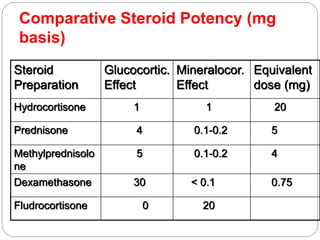
Comparative Steroid Potency (mg
basis)
Steroid
Preparation
Glucocortic.
Effect
Mineralocor.
Effect
Equivalent
dose (mg)
Hydrocortisone 1 1 20
Prednisone 4 0.1-0.2 5
Methylprednisolo
ne
5 0.1-0.2 4
Dexamethasone 30 < 0.1 0.75
Fludrocortisone 0 20
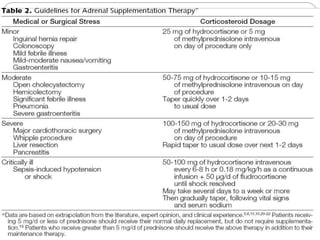
Perioperative Glucocorticoid
Replacement
1. Perioperative stress is related to the degree of
trauma and the depth of anesthesia
2. Acute adrenal insufficiency occurs only rarely
but can be life-threatening
3. There is little risk in giving these patients
steroid coverage equivalent to 100 mg of
hydrocortisone perioperatively.
How can one determine when adrenal
responsiveness has returned to
normal?
1. The morning plasma cortisol level – not reliable
2. Induced hypoglycemia with insulin - risky
3. Plasma cortisol concentration is measured during
acute stress, a value of greater than 25 µg/dL
indicates normal pituitary-adrenal responsiveness
4. The ACTH Stimulation test - baseline plasma
cortisol level determined→ 250 µg of synthetic ACTH
(cosyntropin) given, →plasma cortisol is measured 30
to 60 minutes later. An increase in plasma cortisol of 6
to 20 µg/dL or more is normal.
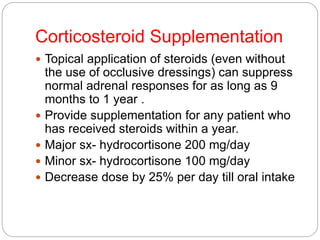
Corticosteroid Supplementation
 Topical application of steroids (even without
the use of occlusive dressings) can suppress
normal adrenal responses for as long as 9
months to 1 year .
 Provide supplementation for any patient who
has received steroids within a year.
 Major sx- hydrocortisone 200 mg/day
 Minor sx- hydrocortisone 100 mg/day
 Decrease dose by 25% per day till oral intake
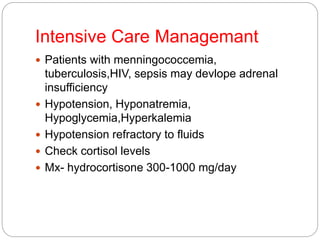
Intensive Care Managemant
 Patients with menningococcemia,
tuberculosis,HIV, sepsis may devlope adrenal
insufficiency
 Hypotension, Hyponatremia,
Hypoglycemia,Hyperkalemia
 Hypotension refractory to fluids
 Check cortisol levels
 Mx- hydrocortisone 300-1000 mg/day

Adrenals and anaesthesia

  • 1.
    Presented by –Dr Himanshu Jangid Adrenals and Anaesthesia
  • 2.
    Contents  Anatomy, embryologyand physiology of the adrenal glands.  Pathological disorders of the adrenal glands and their anaesthetic management:  Glucocorticoid excess  Mineralocorticoid excess  Adrenal insufficiency  Phaeochromocytoma
  • 3.
    THE ADRENAL GLANDS The adrenal glands are endocrine organs located above each kidney  They consist of two embryologically distinct endocrine organs 1. The adrenal medulla- ectodermal origin 2. The adrenal cortex - mesodermal origin
  • 4.
    The Adrenal Cortex Outermost - Zona Granulosa: secretes aldosterone 0.1 mg per 24 hours  Middle - Zona Fasciculata: secretes glucocorticoids (cortisol 16-20 mg per 24 hours and corticosterone 4 mg in 24 hours)  Inner - Zona Reticularis: secretes androgens
  • 5.
  • 6.
  • 7.
  • 8.
    Glucocorticoids Cortisol - Enhances gluconeogenesis& inhibits peripheral glucose utilization -------> ↑es blood glucose - ↑es protein catabolism - ↑es fatty acid metabolism - Anti-inflammatory action - Maintenance of Blood pressure (norepi→ epi) - Stimulation of hemopoisis
  • 9.
  • 10.
    Mineralocorticoids Aldosterone  Regulates concentrationof Na+ and K+  Kidney conserves Na+ & excretes K+  Responds to changes in composition of plasma  Linked to renin - angiotensin system
  • 11.
  • 12.
    Androgens  Androstenedione andDehydroepiandrosterone  Small quantity of androgen produced.  Some is converted to estrogen by liver, adipose tissue
  • 13.
    Pathological Disorders ofthe Adrenal Glands  Adrenal Cortex  Underproduction: primary adrenal failure (Addison's disease)  Overproduction: Glucocorticoids: Cushing’s syndrome (primary - due to adrenal adenoma, secondary - to pituitary tumour or, more commonly, to exogenous steroids). Mineralocorticoids: Conn's syndrome (primary aldosteronism) - aldosterone secreting adenoma.  Adrenal medulla - Phaeochromocytoma
  • 14.
    Cushing's Syndrome Classification  ACTHdependent - Pituitary adenoma secreting ACTH (Cushing’s disease) - Ectopic ACTH syndrome – bronchial carcinoids, small cell lung ca  Non ACTH dependent - Adrenal adenoma - Adrenal carcinoma - Iatrogenic
  • 16.
    Presentation  Sudden onsetweight gain (central)  Moon facies with florid complexion  HTN  Glucose intolerance  Oligomenorrhea/amenorrhea premenopause (females)  Decrease libido (males)  Spontaneous ecchymoses  Muscle weakness, depression, insomnia  Buffalo hump, hirsutism  Poor wound healing  Prone to thromboembolism  Increased risk of septicemia
  • 17.
    Diagnosis of Cushing'sSyndrome  Cortisol Levels - Midnight and 9 am: loss of diurnal variation.  Plasma and urinary cortisol levels  ACTH Assay; very high in ectopic ACTH, high in pituitary adenoma, very low in adrenal adenoma.  Dexamethasone Suppression Test: - pituitary adenomas – feedback present - adrenal tumors - no feedback  CT of the adrenals
  • 18.
    Treatment  Transphenoidal excisionof pituitary gland tumor  Adrenalectomy for adrenal cortex tumor  Pituitary irradiation with bilateral adrenalectomy
  • 19.
    Anesthetic Implications  Thesepatients have a multitude of problems. - Obesity - Diabetes - Coronary heart disease - Hypertension
  • 20.
    Anesthetic Implications (contd..) Osteoporosis- caution during positioning  Skin prone to bruising, easy damage =need for special handling  Will be prone to water overload and hyponatremia  Moon Facies - difficult intubation Increased Anaesthetic Risk
  • 21.
    Pre-op Management  Generalconsiderations- 1. Treatment & control of hypertension 2. Treatment & control of diabetes 3. Normalizing intravascular fluid volume and electrolytes - Spironolactone 4. Preparation for difficult airway
  • 22.
    Anaesthetic Considerations  Choiceof sedatives, induction agents not influenced by elevated cortisol levels  Etomidate may be preferred as it inhibits steroid biosynthesis  Careful use of relaxants in face of skeletal muscle weakness/ hypokalemia → consider NM - monitoring  Regional acceptable - remember possibility of osteoporosis and effects on vertebral bodies  Plasma cortisol levels decrease promptly after gland excision needs replacement  Consider steroid infusion - cortisol 100mg/day  Fludrocortisone 0.05-0.1 mg/day
  • 23.
    Hyperaldosteronism CONN SYNDROME  Primary -increased secretion aldosterone due to functional tumor - independent of physiological stimulus - more often in female - associated with pheochromocytoma, primary hyperparathyroidism or acromegaly -  Secondary  increased plasma levels of renin  associated with reno-vascular HTN
  • 24.
    Conn syndrome  Signs& symptoms may be nonspecific  If systemic HTN - headache  Systemic HTN may be due to ↑ ECF (aldosterone induced Na retention) = resistant to Rx  If hypokalemia - nocturia, polyuria without ability to concentrate urine, skeletal muscle cramps, skeletal muscle weakness  Abnormal glucose tolerance
  • 25.
    Treatment  K+ supplementation Spirinolactone (competitive aldosterone antagonist)  Antihypertensive drugs  K+ sparing diuretics (triamterene)  Definitive treatment is adrenalectomy, bilateral if multiple tumors are present
  • 26.
    Anaesthetic Considerations  Donot hyperventilate = will ↓ K+  May have exaggerated hypotensive response to anesthetic agents, positioning, PPV, sudden blood loss  PA Catheter to monitor volume  Monitor ABGs  Monitor electrolytes  May require steroids if bilateral adrenalectomy
  • 27.
    Hypoaldosteronism  Congenital deficiencyof aldosterone synthetase  Hyporeninemia due to defect in juxtaglomerular apparatus or due to treatment with ACE inhibitors which leads to loss of angiotensin stimulation  Co morbidities= CRD, diabetes
  • 28.
    Hypoaldosteronism  Presentation  Hyperkalemiawithout renal insufficiency  Heart block due to inc K+  Postural hypotension  Metabolic acidosis  Treatment  Liberal intake Na  Daily fludrocortisone
  • 29.
    Hypoadrinocorticism  PRIMARY (ADDISON’SDISEASE)  Primary adrenal insufficiency - absence of cortisol and aldosterone due to cortex destruction  SECONDARY  Panhypopituitarism including ACTH deficiency - no cortisol, normal aldosterone secretion  Prolonged exogenous administration steroids → suppresses pituitary-adrenal axis  Deficiency of ACTH
  • 30.
    Hypoadrinocorticism ADDISON”S DISEASE Decreased cortisolbecause of  Destruction of adrenal cortex - hemorrhage - cancer - autoimmune diseases 90% cortical destruction before s/s of insufficency seen
  • 31.
    Addison’s Disease Presentation  Muscleweakness, fatigue  Weight loss/ anorexia/ nausea/ vomiting/diarrhoea  Hypotension  Abdominal/back pain  Hyperpigmentation over palmar surfaces and pressure points
  • 32.
    Diagnosis  Levels ofcorticosteroids - plasma/urine concentrations of corticosteroids  ACTH stimulation test - plasma cortisol should double within 1 hour after ACTH is administered ( normal test levels >25 mcg/dl)  Plasma ACTH levels - elevated with primary adrenal insufficiency, reduced with dysfunction of ant pituitary/inhibition of pituitary-adrenal axis
  • 33.
    Addison’s Disease  Presentationduring stress (surgery, trauma)- ADDISONIAN”S CRISIS  Fever, nausea, vomiting  Circulatory collapse  Hyponatremia  hyperkalemia  hypoglycemia  hemoconcentration
  • 34.
    Treatment Addisonian crisis-  -IV Cortisol (100 mg) bolus, then infusion 10 mg/hr - IV fluids should include dextrose, NS, colloids, blood (if reqd) Chronic replacement therapy - cortisone (20-30 mg/day) - fludrocortisone ( 0.05-0.1 mg/day - monitor wt gain, HTN, hypokalemia
  • 35.
    Anaesthetic Considerations  Monitorblood sugar, electrolytes  Avoid Etomidate  Avoid drug-induced myocardial depression  Invasive monitoring (Arterial line, PA catheter)  NM monitoring  Reduced doses of muscle relaxant  RA acceptable - careful of back pain
  • 36.
    Comparative Steroid Potency(mg basis) Steroid Preparation Glucocortic. Effect Mineralocor. Effect Equivalent dose (mg) Hydrocortisone 1 1 20 Prednisone 4 0.1-0.2 5 Methylprednisolo ne 5 0.1-0.2 4 Dexamethasone 30 < 0.1 0.75 Fludrocortisone 0 20
  • 37.
    Perioperative Glucocorticoid Replacement 1. Perioperativestress is related to the degree of trauma and the depth of anesthesia 2. Acute adrenal insufficiency occurs only rarely but can be life-threatening 3. There is little risk in giving these patients steroid coverage equivalent to 100 mg of hydrocortisone perioperatively.
  • 38.
    How can onedetermine when adrenal responsiveness has returned to normal? 1. The morning plasma cortisol level – not reliable 2. Induced hypoglycemia with insulin - risky 3. Plasma cortisol concentration is measured during acute stress, a value of greater than 25 µg/dL indicates normal pituitary-adrenal responsiveness 4. The ACTH Stimulation test - baseline plasma cortisol level determined→ 250 µg of synthetic ACTH (cosyntropin) given, →plasma cortisol is measured 30 to 60 minutes later. An increase in plasma cortisol of 6 to 20 µg/dL or more is normal.
  • 40.
    Corticosteroid Supplementation  Topicalapplication of steroids (even without the use of occlusive dressings) can suppress normal adrenal responses for as long as 9 months to 1 year .  Provide supplementation for any patient who has received steroids within a year.  Major sx- hydrocortisone 200 mg/day  Minor sx- hydrocortisone 100 mg/day  Decrease dose by 25% per day till oral intake
  • 41.
    Intensive Care Managemant Patients with menningococcemia, tuberculosis,HIV, sepsis may devlope adrenal insufficiency  Hypotension, Hyponatremia, Hypoglycemia,Hyperkalemia  Hypotension refractory to fluids  Check cortisol levels  Mx- hydrocortisone 300-1000 mg/day