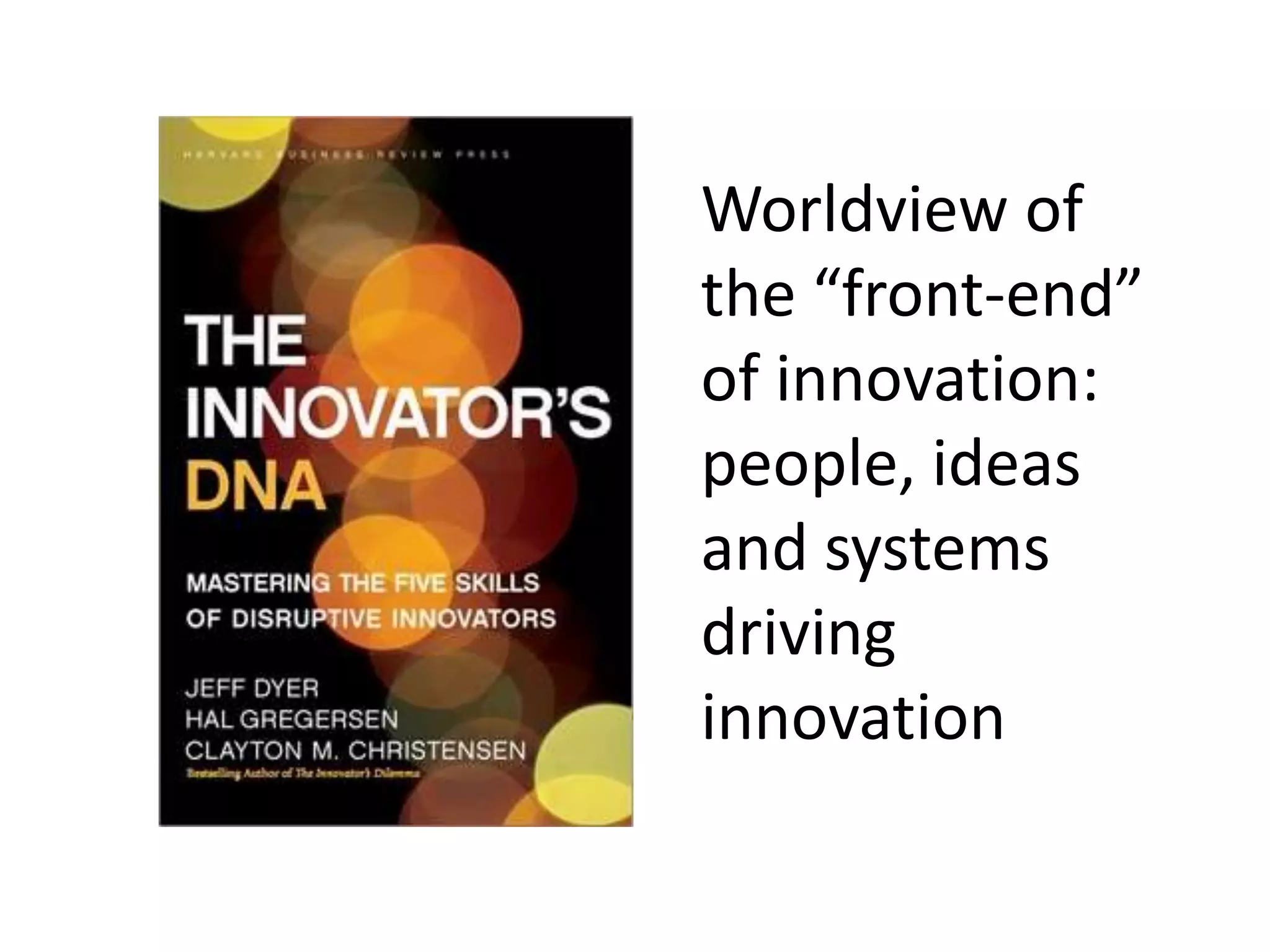
Worldview of
the “front-end”
of innovation:
people, ideas
and systems
driving
innovation
About the Study


Primary purpose was to uncover the origins of innovative – and often
disruptive – business ideas.

8-year collaborative study of disruptive innovators

Hundreds of Inventors, Founders and CEOs of innovative companies

Innovative companies defined as those having an “innovation premium”
where a company’s market value cannot be accounted from cash flows of its
current products or businesses in its current markets.

Study focused on individual creativity as opposed to company strategy

Pattern of behaviors emerged/Discovery Quotient
What is this study important?


Innovator skills are portable. They matter as much for
management, intrapreneurship and entrepreneurship : 90 – 8 – 2
“rule”

It will stimulate your creativity and inquisitiveness

It will assist you to generate better ideas

It will give you a competitive advantage
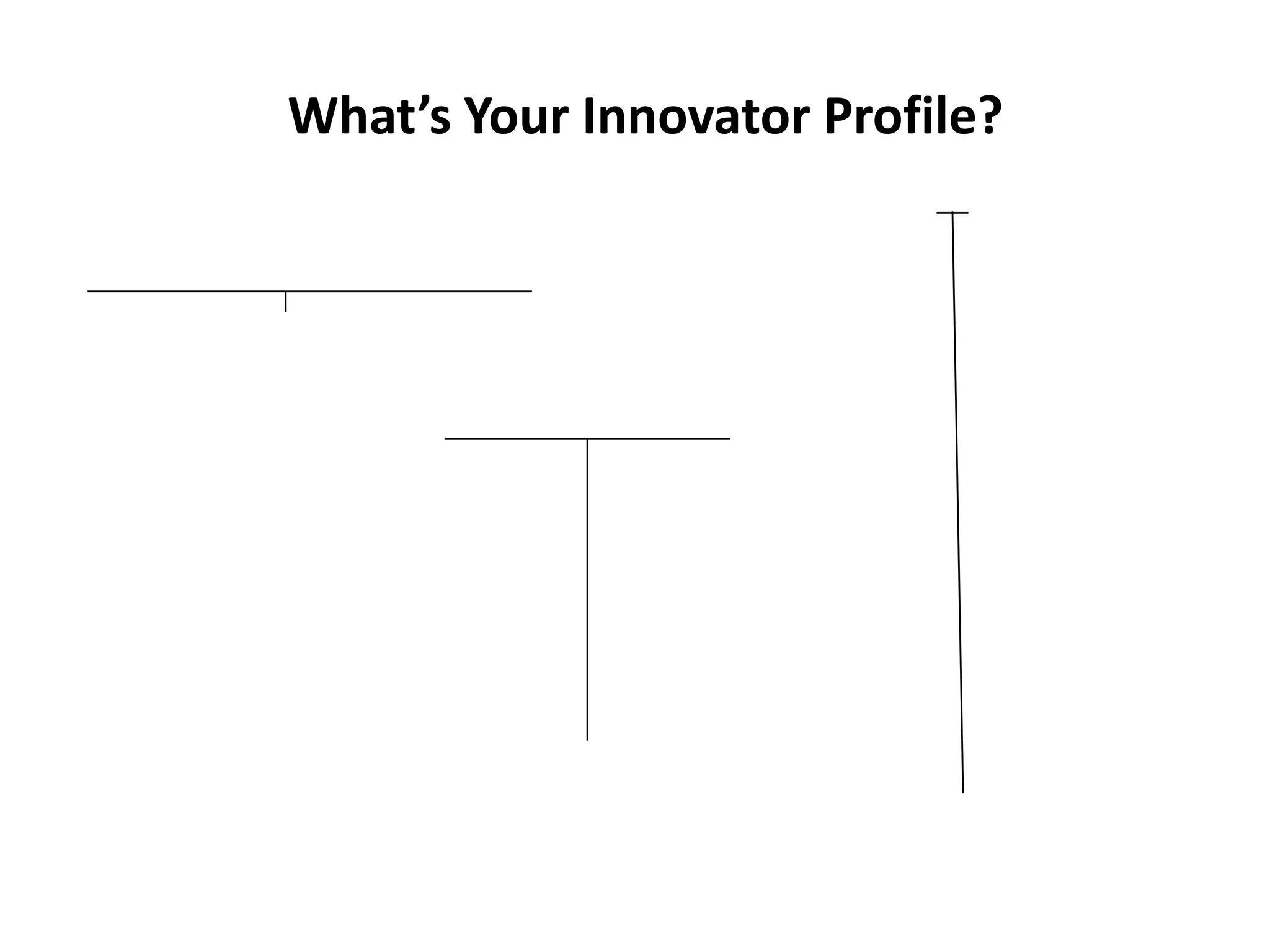
What’s Your Innovator Profile?
The ability to generate
innovative ideas is not
merely a function of the
mind, but also a function of
the exercise of
behavioral skills.
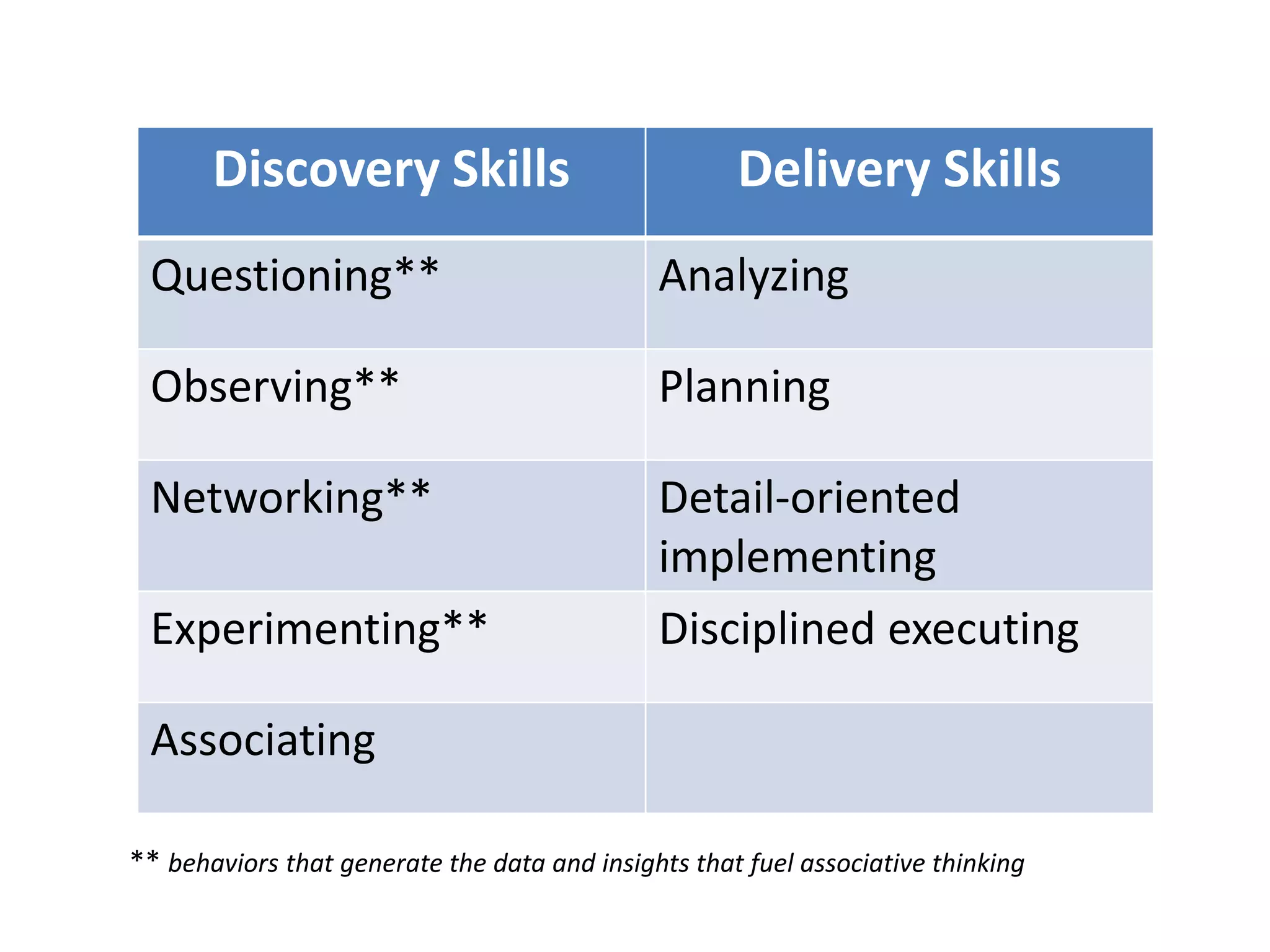
Discovery Skills                              Delivery Skills
 Questioning**                                Analyzing

 Observing**                                  Planning

 Networking**                                 Detail-oriented
                                              implementing
 Experimenting**                              Disciplined executing

 Associating

** behaviors that generate the data and insights that fuel associative thinking
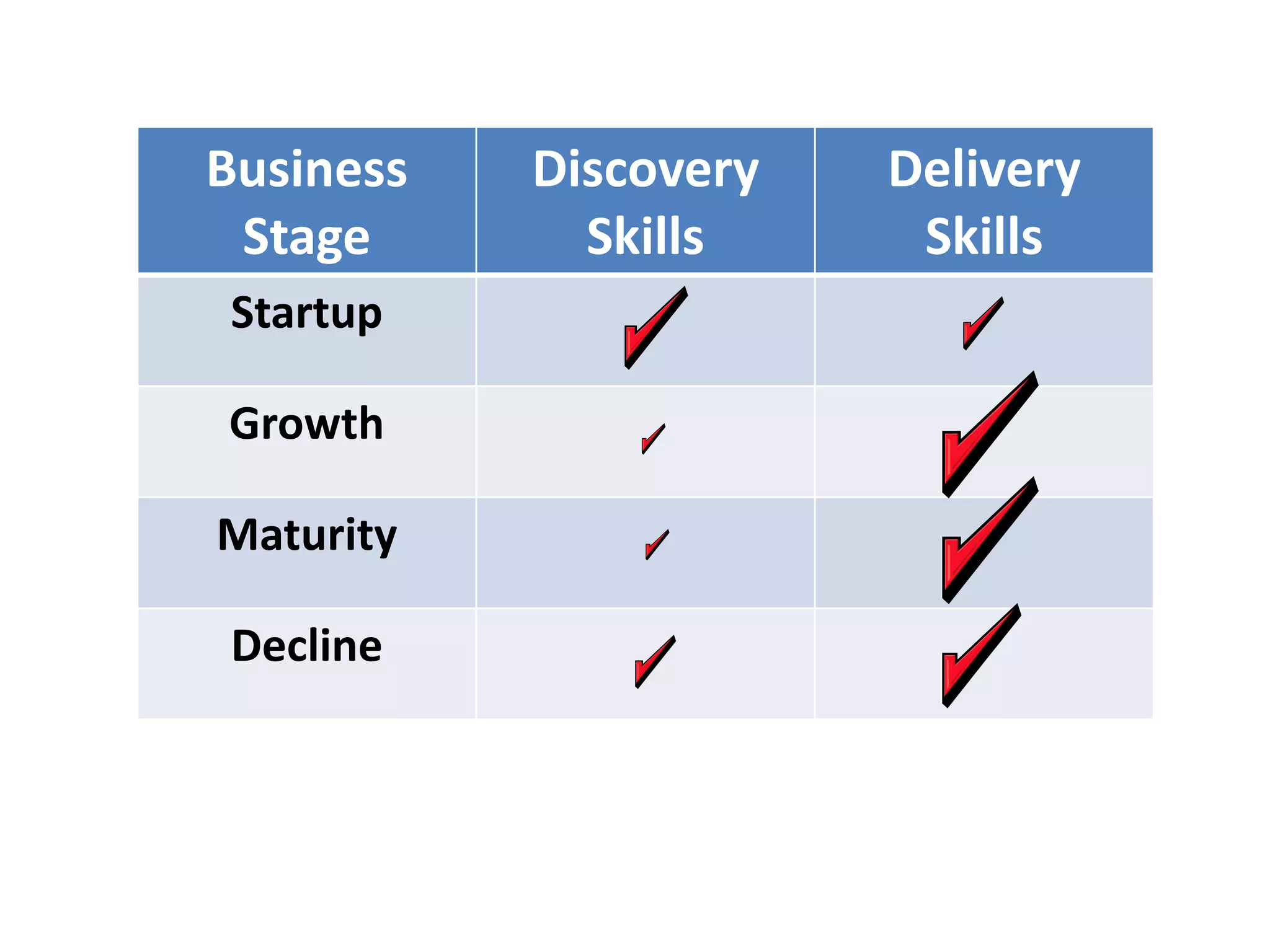
Business   Discovery   Delivery
 Stage       Skills     Skills
Startup

Growth

Maturity

Decline
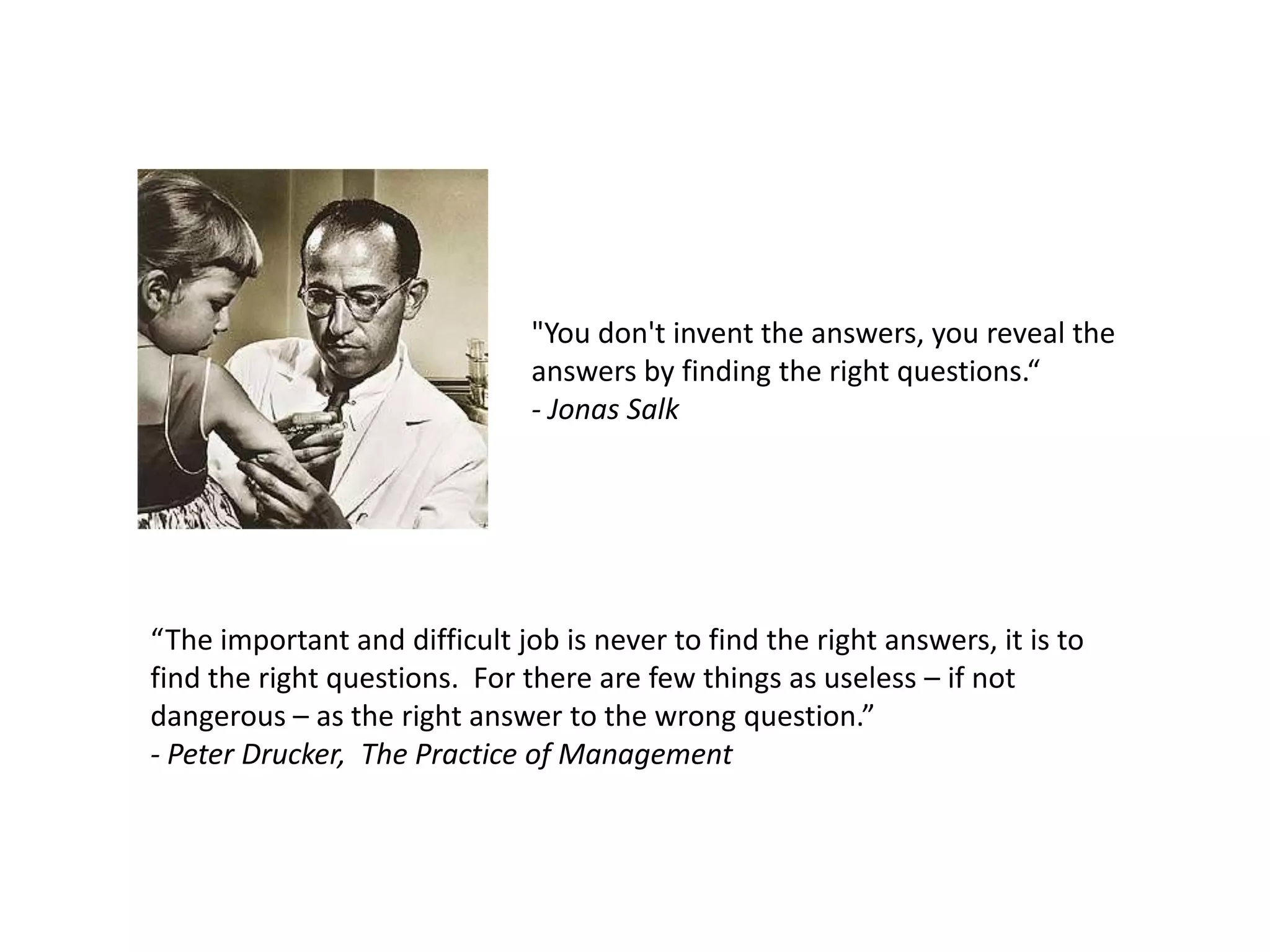
"You don't invent the answers, you reveal the
                               answers by finding the right questions.“
                               - Jonas Salk


“The important and difficult job is never to find the right answers, it is to
find the right questions. For there are few things as useless – if not
dangerous – as the right answer to the wrong question.”
- Peter Drucker, The Practice of Management
Questioning
Innovators ask 1) more questions and 2) more provocative questions
than non-innovators

Questions that describe the territory explore what currently is/what
caused.

Questions that disrupt the territory use “why?”, “why not?” and
most importantly “what if?”

“What if?” questions are especially important. By
Imposing/Removing constraints forces out-of-the-box thinking
because it ignites new associations.

Questions alone do not produce innovations
Questioning
Combine questioning with other discovery skill behaviours (observing,
networking and experimenting).


 Tips:
         •   Engage in QuestionStorming
         •   Cultivate question thinking
         •   Track your Q/A ratio
         •   Keep a question-centered notebook
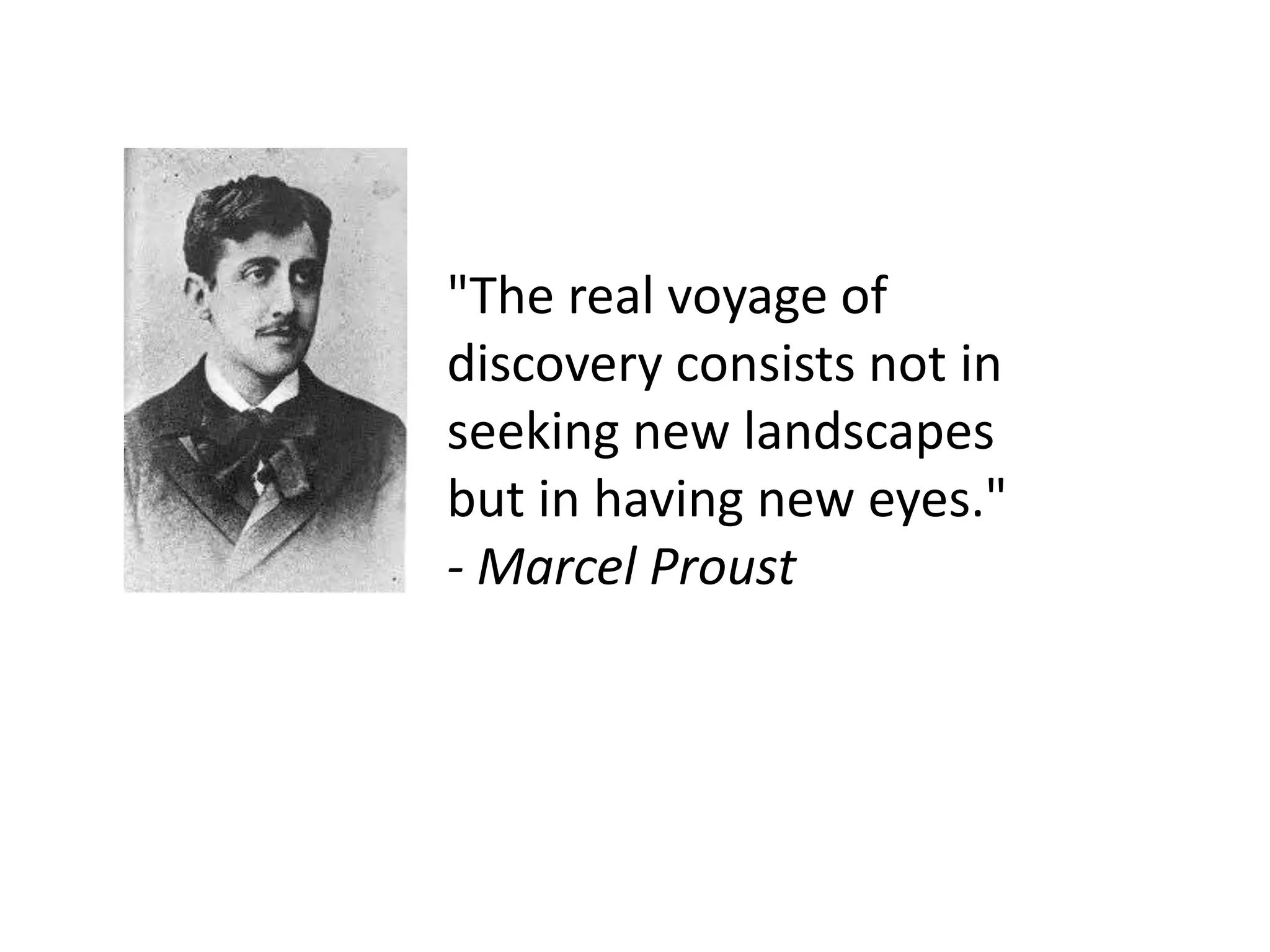
"The real voyage of
discovery consists not in
seeking new landscapes
but in having new eyes."
- Marcel Proust
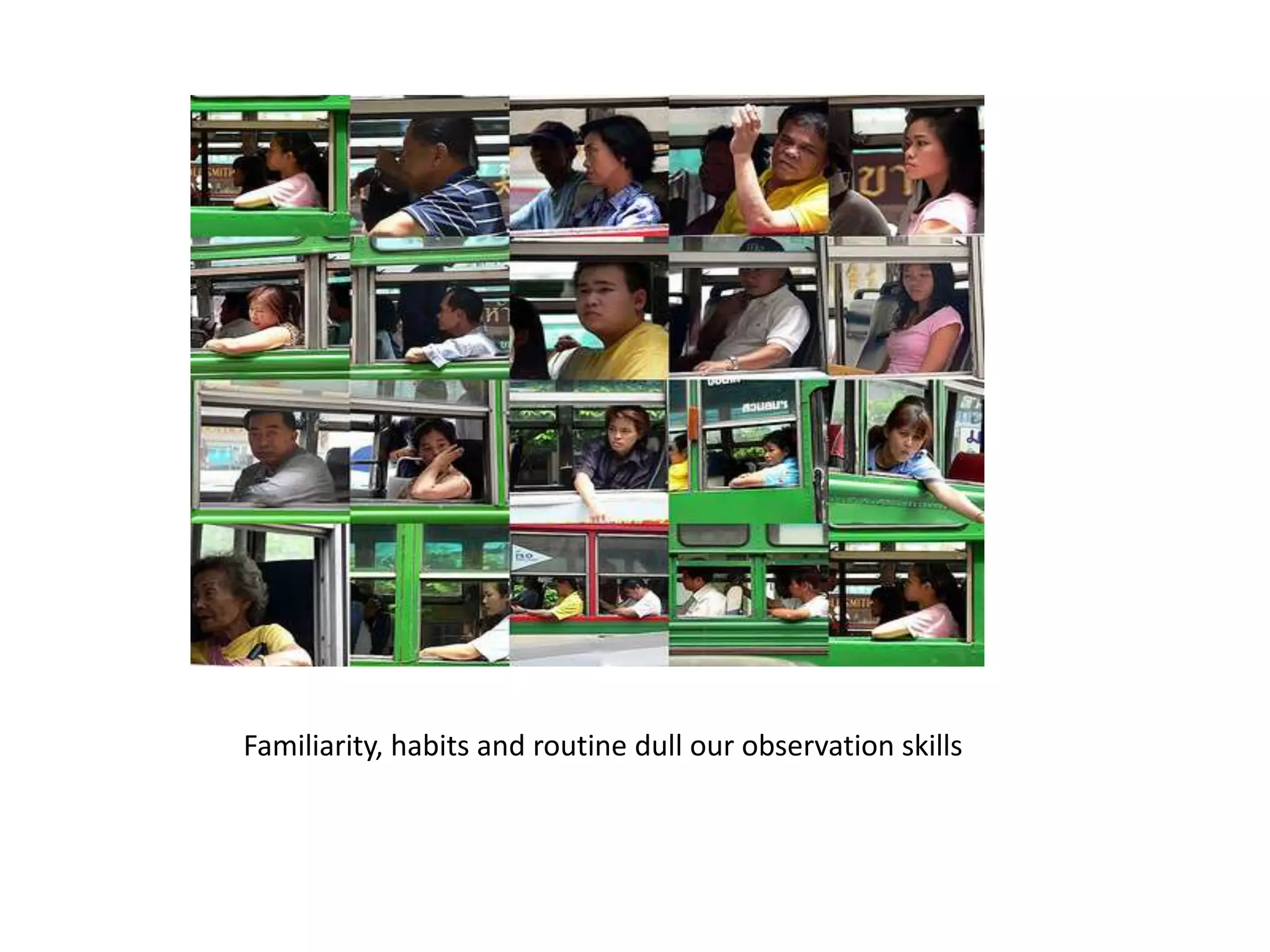
Familiarity, habits and routine dull our observation skills
Observing


Vuja de – a sense of seeing something for the first time even though
you have seen it many times before.
IDEO – “Pretend to be an anthropologist”

Pay attention to “workarounds” as a source of innovation
opportunity/Look for surprises

Understand all dimensions of “getting the job done” – functional, social
and emotional

Change your environment/Be open and patient/Engage your senses
Networking

Innovators go out of their way to meet people with different perspectives.


Innovators are idea networkers whereas non-innovators (delivery) are
resource networkers


2/3 of jobs are known through private channels/some of the most
valuable insights are locked-in these channels

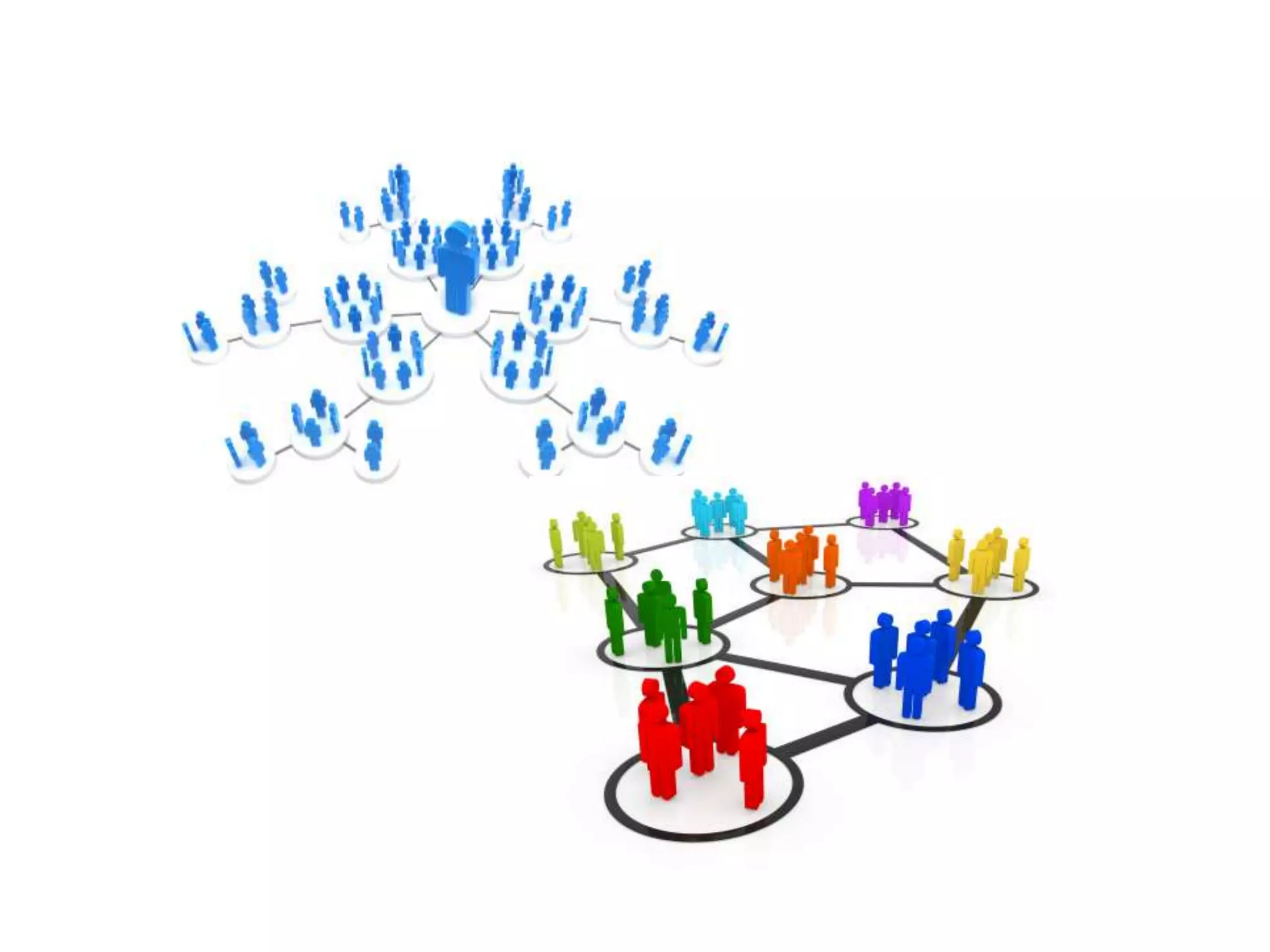
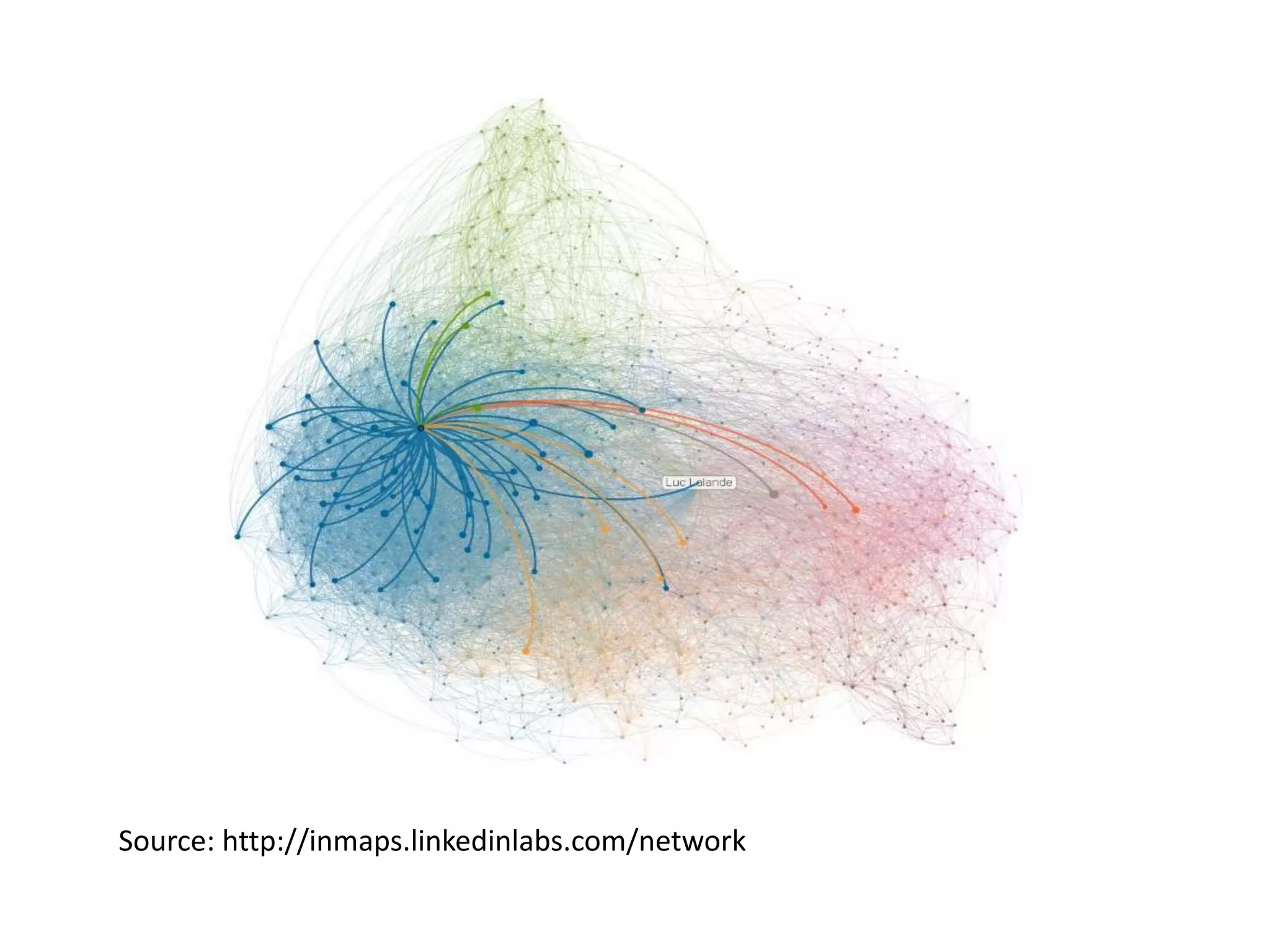
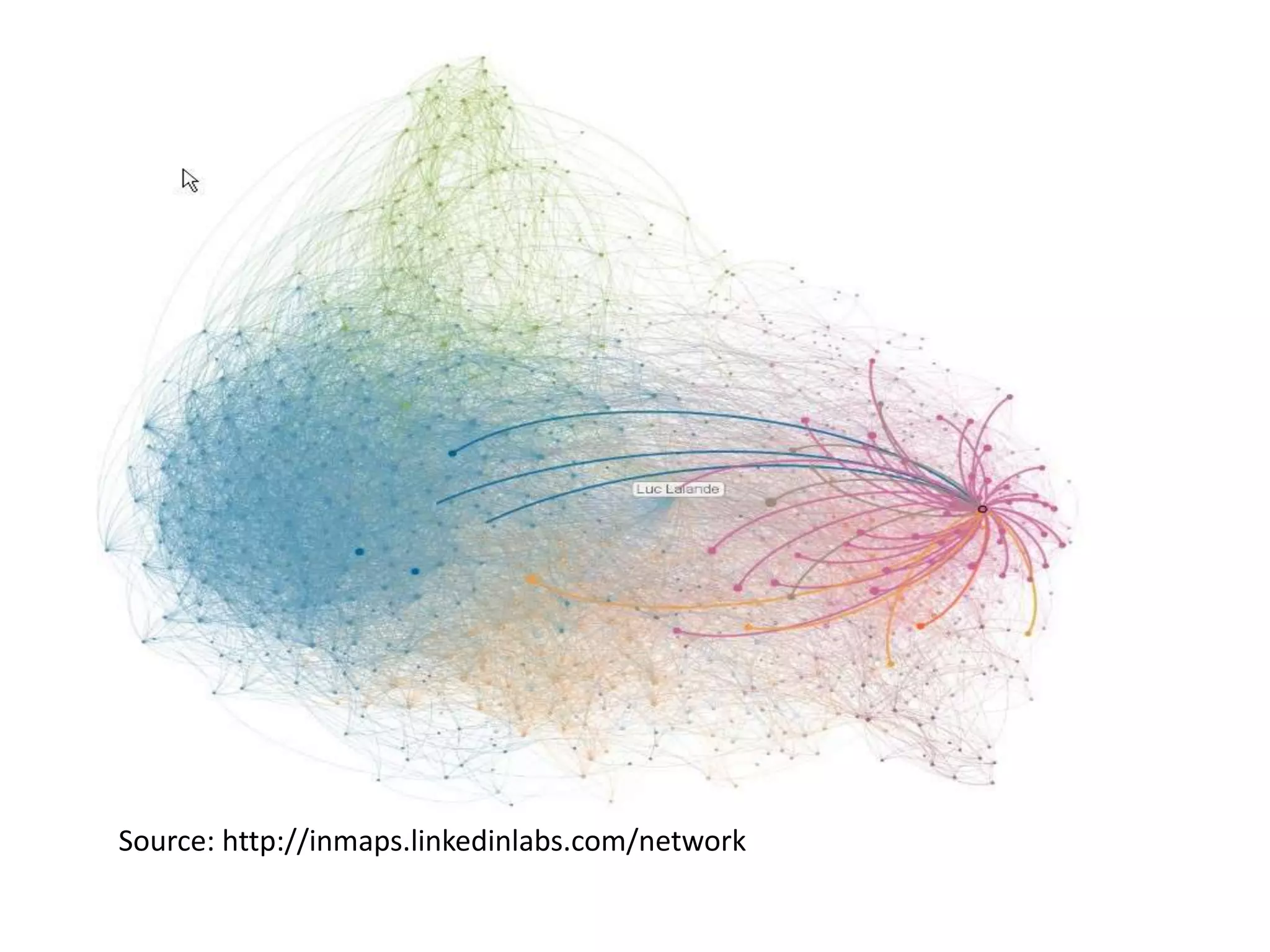
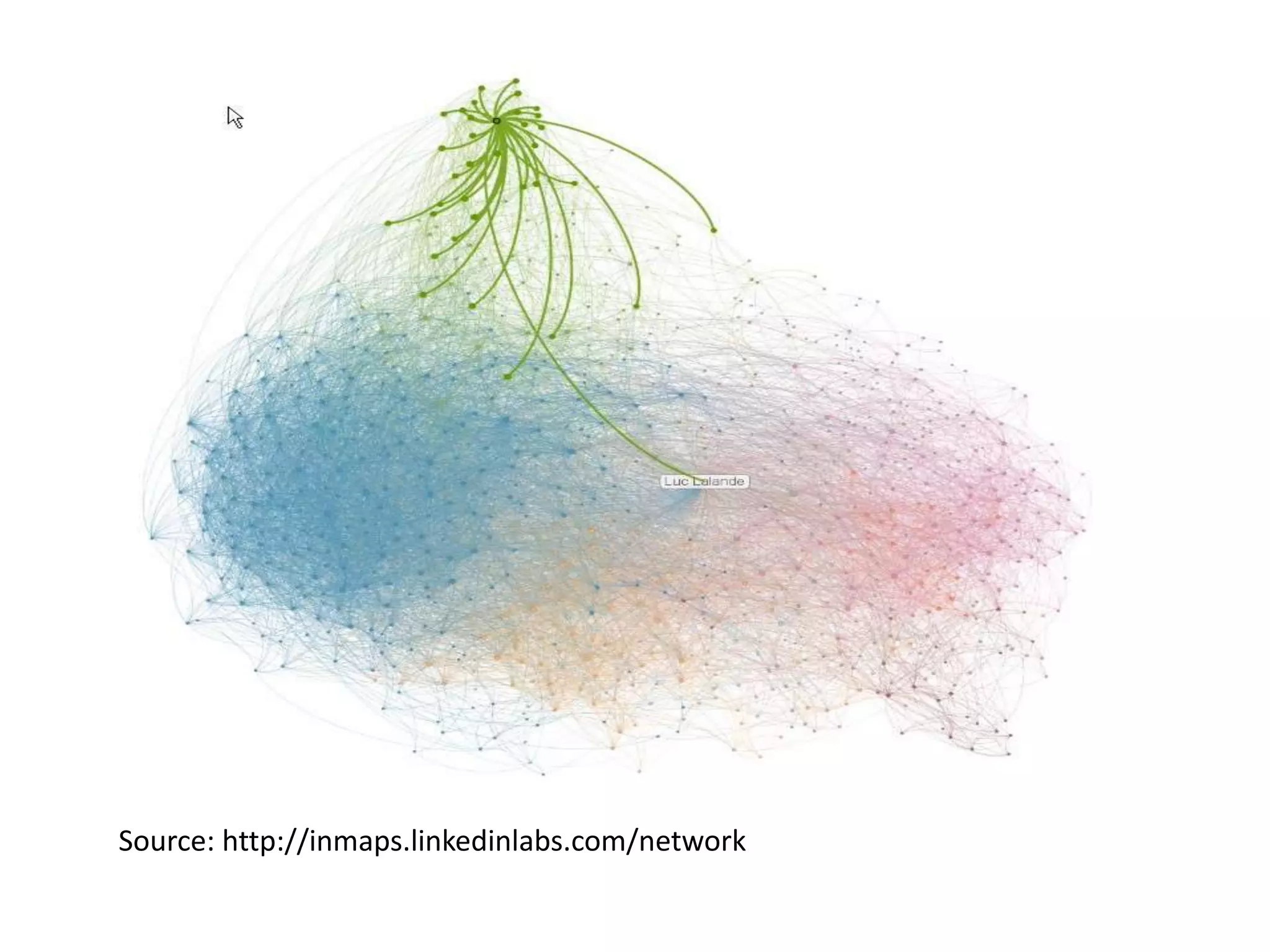
Understand network topology /hubs and links


Know the most people; know the right people; know the most people
who know the right people
Networking


Understand value networking versus utility networking

Attitude matters: What can this person do for me? (utility) vs How
can I help this person in some way? (value)


Networking is not “working a room”


Prepare for networking/social media tools such as Twitter and
Linkedin can be very useful
Source: http://inmaps.linkedinlabs.com/network
“The core skill of an innovator is error
recovery, not failure avoidance.”
- Randy Nelson, Dean of Pixar
University
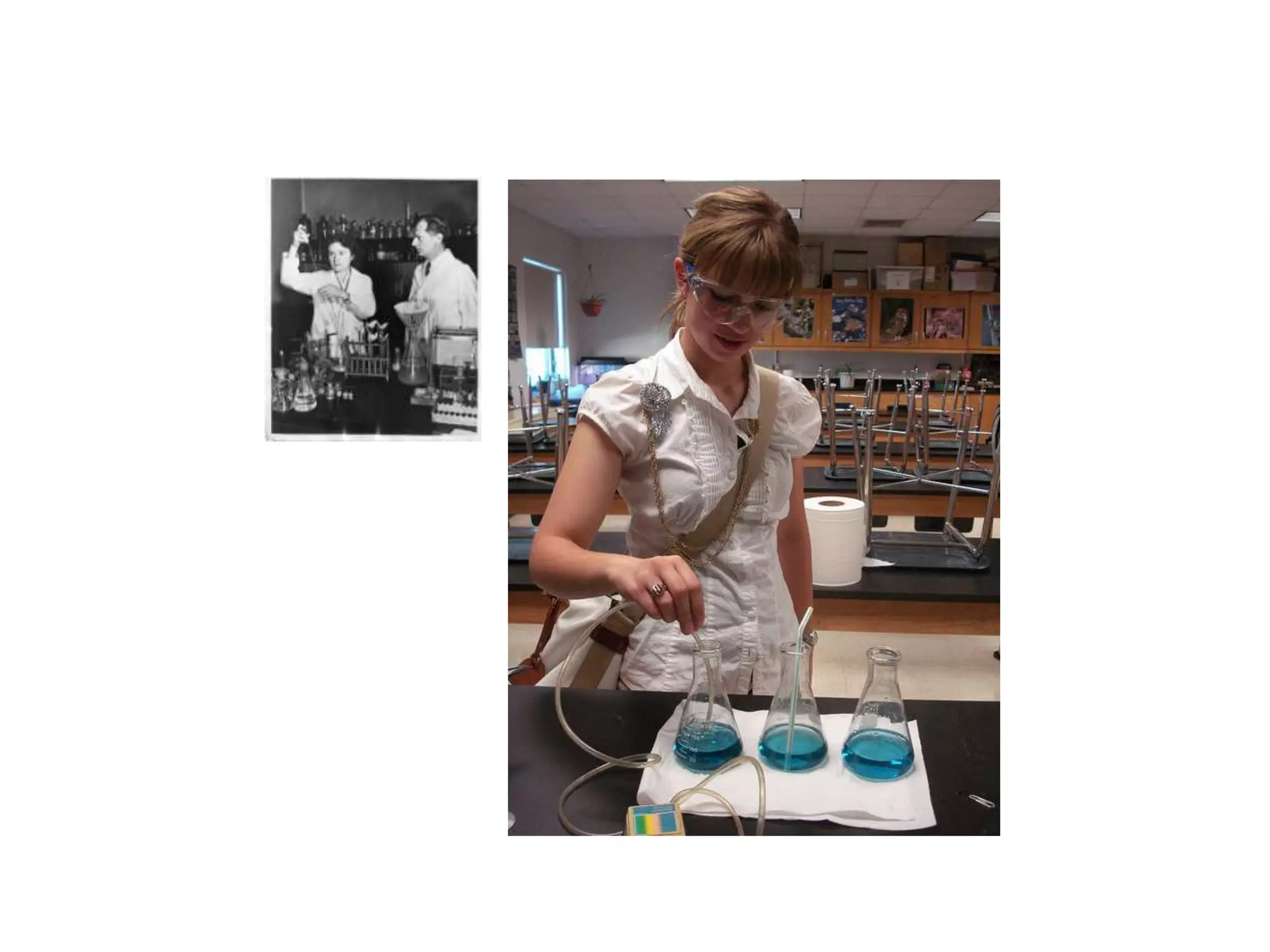
Experimenting


Other discovery skills yield information about the past/present but
experimenting tells you something about the future.

Experimenting is seen as the best differentiator between an innovator
and a non-innovator

Experiments rarely turn out as expected/significant learning
opportunity

Virtually every disruptive business evolved through a series of
experiments (Google)
Experimenting


Experiments can be costly investments of time/money; maximize your
other discovery skills to reduce # of/raise quality of experiments

Practical tips for experimenting:
     • Take things apart (physically/figuratively)
     • Try new experiences/develop new skills
     • Test new ideas or prototypes


Well-designed experiments should validate/invalidate closely-held
assumptions about the way things work
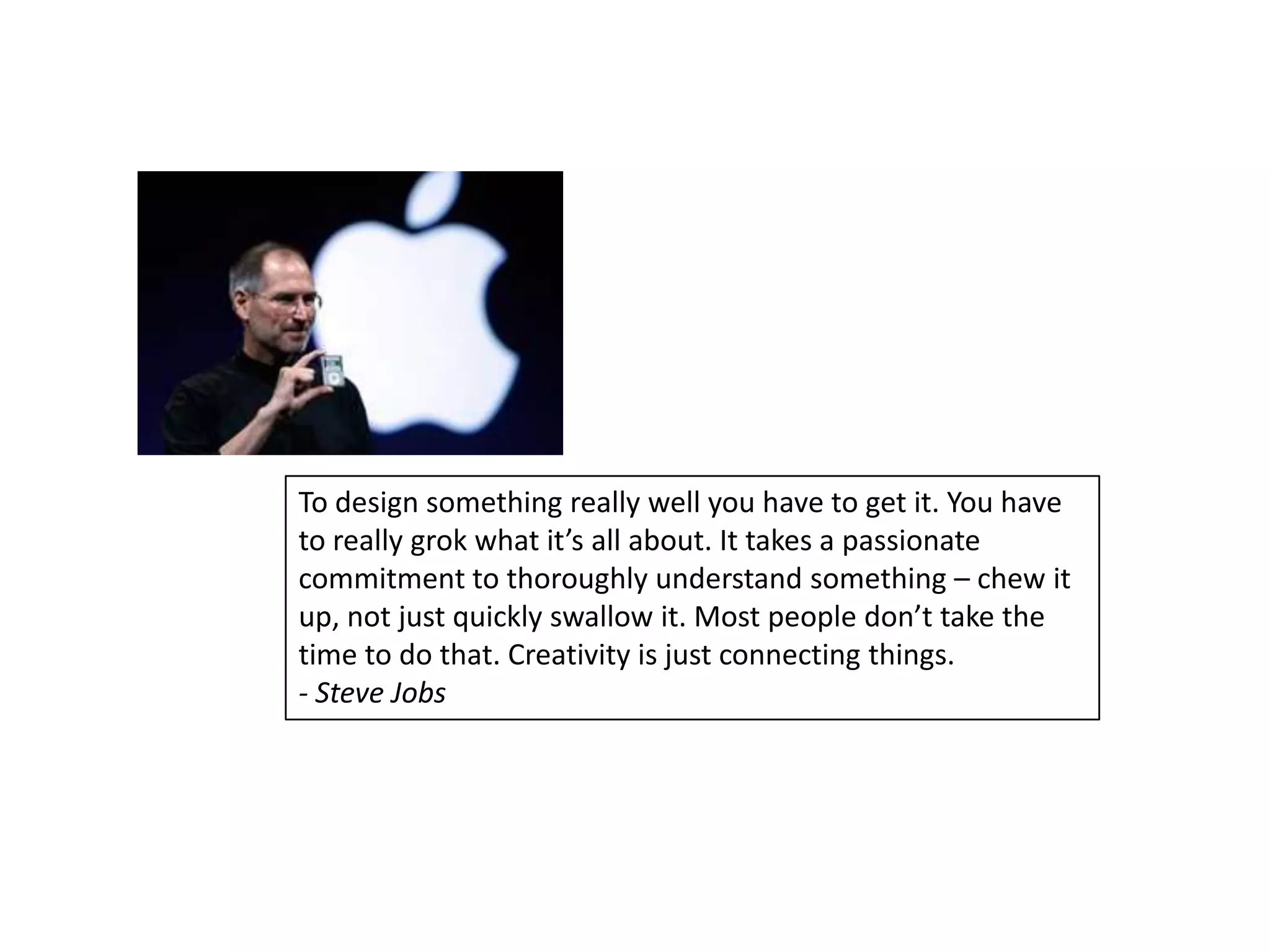
To design something really well you have to get it. You have
to really grok what it’s all about. It takes a passionate
commitment to thoroughly understand something – chew it
up, not just quickly swallow it. Most people don’t take the
time to do that. Creativity is just connecting things.
- Steve Jobs
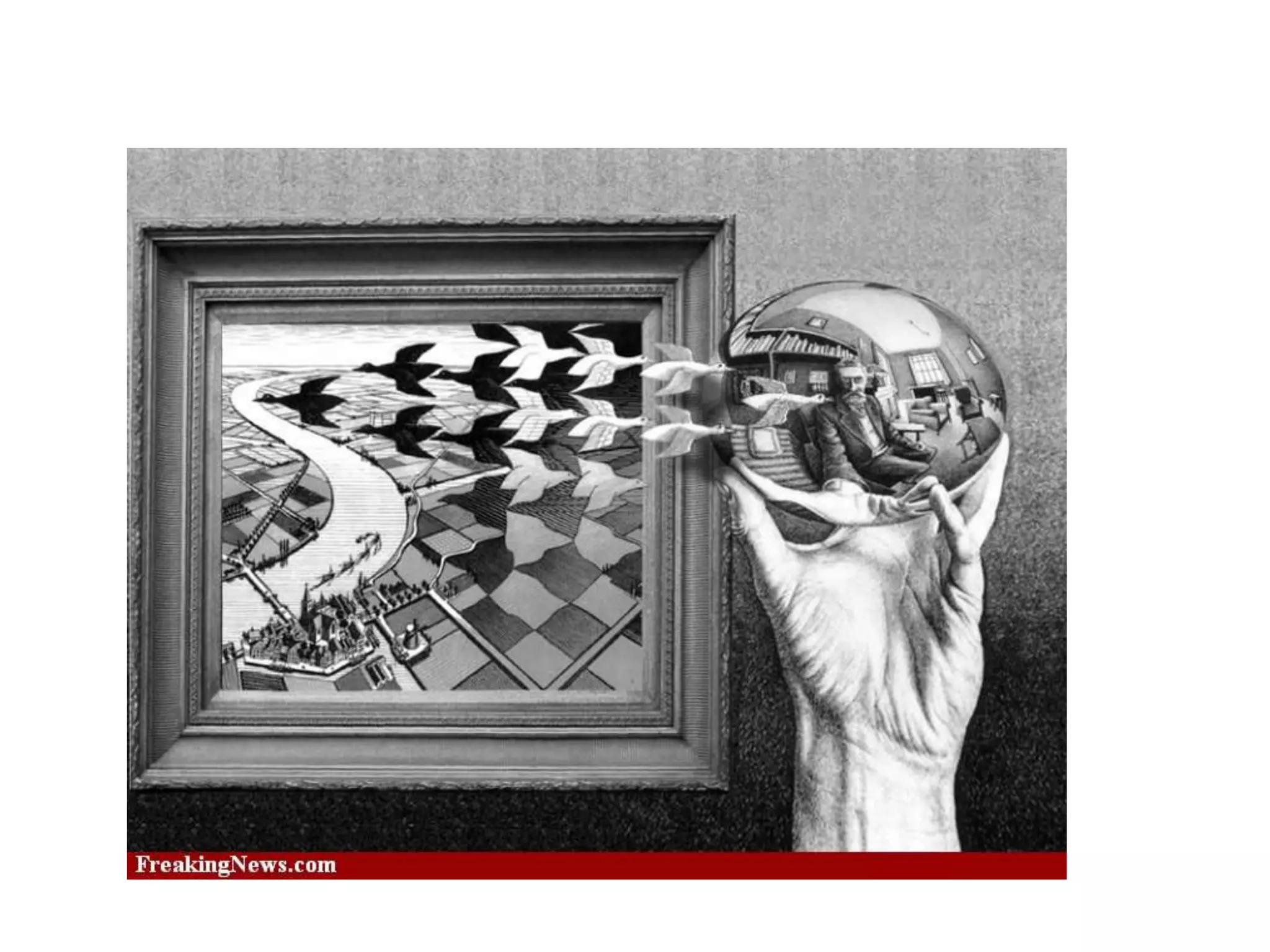
Associating


Associational thinking is not the same thing as pattern recognition


Unlike the other four discovery skills, associating is a cognitive not a
behavioural skill


The best predictor of associating skills was how often people
engaged in the other four discovery skills


 Output of other four discovery skills feed the potential for creative
 associations
Associating


Tips for developing your associating skills:
      • Zooming in and zooming out (from pixel to big picture)
      • Lego thinking (think of ideas as building blocks that can be
         recombined in novel configurations)
      • Force new associations
      • Take on the persona of a different company
      • Generate metaphors
      • Build your own curiosity box (IDEO); Notebooks
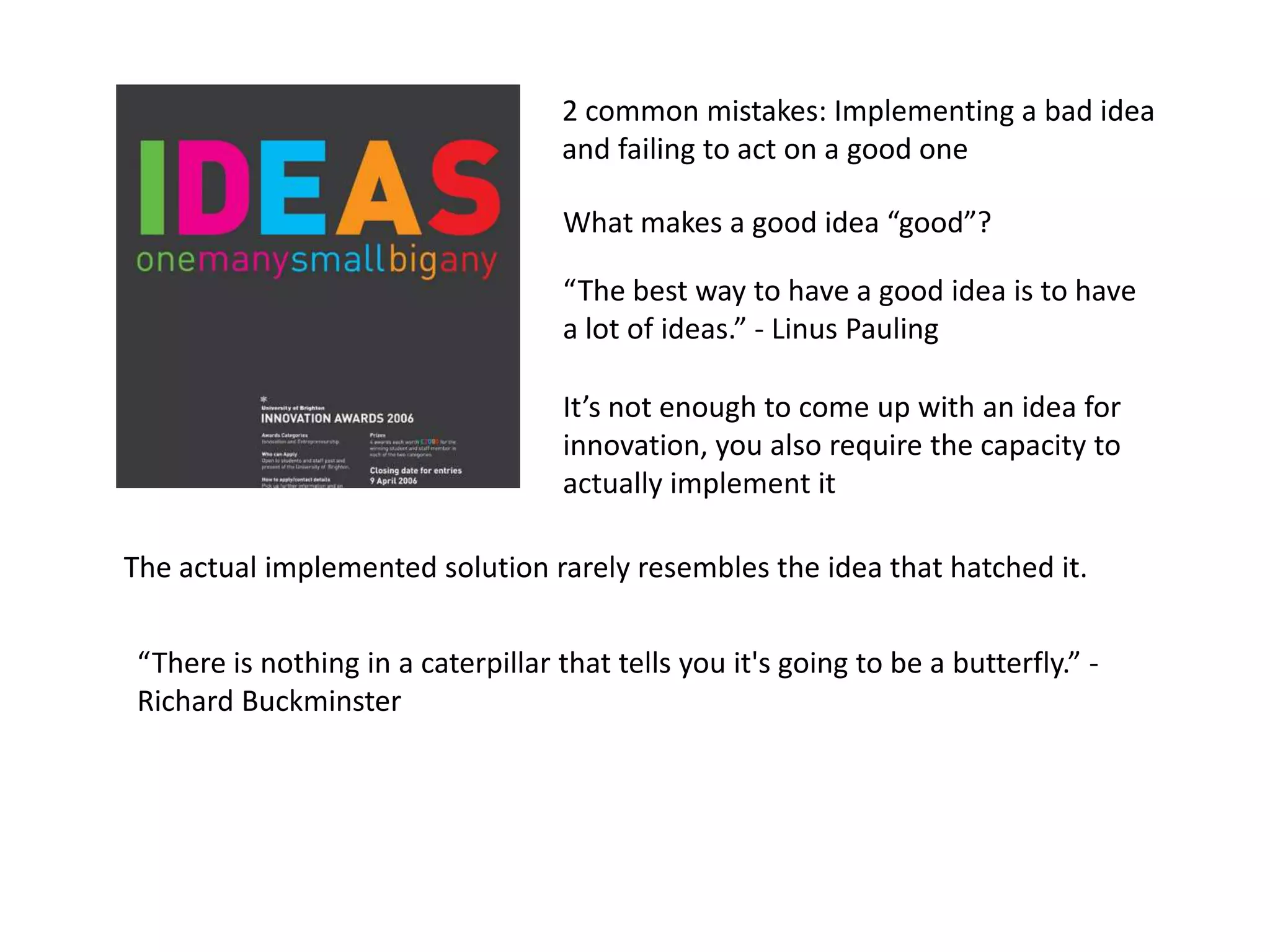
2 common mistakes: Implementing a bad idea
                                     and failing to act on a good one

                                     What makes a good idea “good”?

                                     “The best way to have a good idea is to have
                                     a lot of ideas.” - Linus Pauling

                                     It’s not enough to come up with an idea for
                                     innovation, you also require the capacity to
                                     actually implement it

The actual implemented solution rarely resembles the idea that hatched it.


 “There is nothing in a caterpillar that tells you it's going to be a butterfly.” -
 Richard Buckminster
Stay in touch:


            @LucLalande


                 http://ca.linkedin.com/in/luclalande

The Innovator's DNA - An Interpretation of the Five Skills of Disruptive Innovators

  • 1.
    Worldview of the “front-end” ofinnovation: people, ideas and systems driving innovation
  • 3.
    About the Study Primarypurpose was to uncover the origins of innovative – and often disruptive – business ideas. 8-year collaborative study of disruptive innovators Hundreds of Inventors, Founders and CEOs of innovative companies Innovative companies defined as those having an “innovation premium” where a company’s market value cannot be accounted from cash flows of its current products or businesses in its current markets. Study focused on individual creativity as opposed to company strategy Pattern of behaviors emerged/Discovery Quotient
  • 4.
    What is thisstudy important? Innovator skills are portable. They matter as much for management, intrapreneurship and entrepreneurship : 90 – 8 – 2 “rule” It will stimulate your creativity and inquisitiveness It will assist you to generate better ideas It will give you a competitive advantage
  • 5.
  • 6.
    The ability togenerate innovative ideas is not merely a function of the mind, but also a function of the exercise of behavioral skills.
  • 7.
    Discovery Skills Delivery Skills Questioning** Analyzing Observing** Planning Networking** Detail-oriented implementing Experimenting** Disciplined executing Associating ** behaviors that generate the data and insights that fuel associative thinking
  • 8.
    Business Discovery Delivery Stage Skills Skills Startup Growth Maturity Decline
  • 10.
    "You don't inventthe answers, you reveal the answers by finding the right questions.“ - Jonas Salk “The important and difficult job is never to find the right answers, it is to find the right questions. For there are few things as useless – if not dangerous – as the right answer to the wrong question.” - Peter Drucker, The Practice of Management
  • 11.
    Questioning Innovators ask 1)more questions and 2) more provocative questions than non-innovators Questions that describe the territory explore what currently is/what caused. Questions that disrupt the territory use “why?”, “why not?” and most importantly “what if?” “What if?” questions are especially important. By Imposing/Removing constraints forces out-of-the-box thinking because it ignites new associations. Questions alone do not produce innovations
  • 12.
    Questioning Combine questioning withother discovery skill behaviours (observing, networking and experimenting). Tips: • Engage in QuestionStorming • Cultivate question thinking • Track your Q/A ratio • Keep a question-centered notebook
  • 14.
    "The real voyageof discovery consists not in seeking new landscapes but in having new eyes." - Marcel Proust
  • 15.
    Familiarity, habits androutine dull our observation skills
  • 17.
    Observing Vuja de –a sense of seeing something for the first time even though you have seen it many times before. IDEO – “Pretend to be an anthropologist” Pay attention to “workarounds” as a source of innovation opportunity/Look for surprises Understand all dimensions of “getting the job done” – functional, social and emotional Change your environment/Be open and patient/Engage your senses
  • 19.
    Networking Innovators go outof their way to meet people with different perspectives. Innovators are idea networkers whereas non-innovators (delivery) are resource networkers 2/3 of jobs are known through private channels/some of the most valuable insights are locked-in these channels Understand network topology /hubs and links Know the most people; know the right people; know the most people who know the right people
  • 20.
    Networking Understand value networkingversus utility networking Attitude matters: What can this person do for me? (utility) vs How can I help this person in some way? (value) Networking is not “working a room” Prepare for networking/social media tools such as Twitter and Linkedin can be very useful
  • 21.
  • 22.
  • 23.
  • 25.
    “The core skillof an innovator is error recovery, not failure avoidance.” - Randy Nelson, Dean of Pixar University
  • 26.
    Experimenting Other discovery skillsyield information about the past/present but experimenting tells you something about the future. Experimenting is seen as the best differentiator between an innovator and a non-innovator Experiments rarely turn out as expected/significant learning opportunity Virtually every disruptive business evolved through a series of experiments (Google)
  • 27.
    Experimenting Experiments can becostly investments of time/money; maximize your other discovery skills to reduce # of/raise quality of experiments Practical tips for experimenting: • Take things apart (physically/figuratively) • Try new experiences/develop new skills • Test new ideas or prototypes Well-designed experiments should validate/invalidate closely-held assumptions about the way things work
  • 29.
    To design somethingreally well you have to get it. You have to really grok what it’s all about. It takes a passionate commitment to thoroughly understand something – chew it up, not just quickly swallow it. Most people don’t take the time to do that. Creativity is just connecting things. - Steve Jobs
  • 30.
    Associating Associational thinking isnot the same thing as pattern recognition Unlike the other four discovery skills, associating is a cognitive not a behavioural skill The best predictor of associating skills was how often people engaged in the other four discovery skills Output of other four discovery skills feed the potential for creative associations
  • 31.
    Associating Tips for developingyour associating skills: • Zooming in and zooming out (from pixel to big picture) • Lego thinking (think of ideas as building blocks that can be recombined in novel configurations) • Force new associations • Take on the persona of a different company • Generate metaphors • Build your own curiosity box (IDEO); Notebooks
  • 32.
    2 common mistakes:Implementing a bad idea and failing to act on a good one What makes a good idea “good”? “The best way to have a good idea is to have a lot of ideas.” - Linus Pauling It’s not enough to come up with an idea for innovation, you also require the capacity to actually implement it The actual implemented solution rarely resembles the idea that hatched it. “There is nothing in a caterpillar that tells you it's going to be a butterfly.” - Richard Buckminster
  • 34.
    Stay in touch: @LucLalande http://ca.linkedin.com/in/luclalande